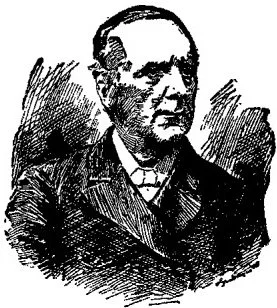
YOUR preaching and teaching must be in harmony with the Word of God. I am a Quaker by extraction, and I glory in it, especially when I know what they have been in this country. I dissent from them because I believe they went wrong when they magnified the Holy Spirit to the exclusion, in many cases, of the Word of God. And with all love I would say that if there is one danger ahead for the Salvation Army of the present day, it is lest they should magnify the work of the Spirit of God in experience, apart from the Word of God taught to their converts. Remember that the Holy Spirit is like a locomotive, the Word of God like the steel rails; and you must have the steel rails of the Bible as well as the steam power of the Holy Ghost. Let the Holy Ghost fill you, but He will work along that Book. And I hold that the fact that the Holy Spirit elects to work through that Book is its most complete vindication against all that modern critics have to say. As long as the Holy Ghost is prepared to stand by it and to work by it, I hold it to be in an incomparable sense the word of the living God to man. I am well satisfied to accept it all, Jonah and the fish included.
Baptist Principles of Religious Liberty Pamphlet Endorsed
“Baptist Principles of Religious Liberty,” by Geo B. Wheeler, an advertisement of which appears on another page, is destined to accomplish great good in stirring up the pure minds of Baptists to earnestly contend for the faith once delivered to the saints along the lines of “soul liberty.” The author has received warm endorsements of his pamphlet from prominent Baptist preachers and editors, college presidents and professors, both north and south.
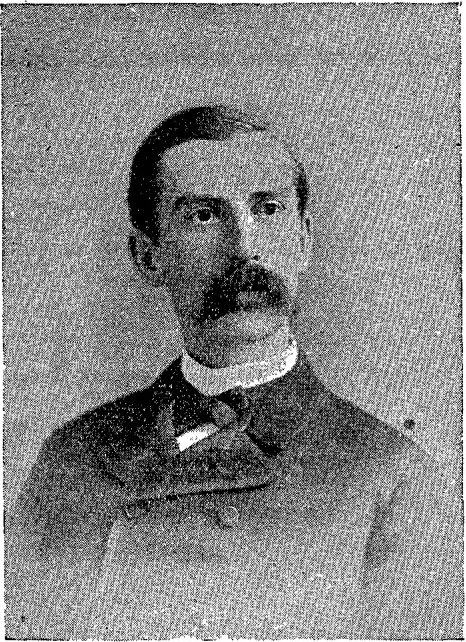
Rev. Arthur S. Burrows, whose ringing words on Church and State we print on another page, writes thus of the pamphlet:—
“My Dear Mr. Wheeler:—
“I thank you for your courteous permission to peruse your “Baptist Principles of Religious Liberty.” They are righteous, because based upon the principles of Christ. They are essential, because the only assurance of both individual and national life. Your statement of these principles is a fresh inspiration to simple Christianity, pure church membership, and patriotic citizenship.
“Accept a contribution of mine during 1896, and my best wishes.
“Sincerely yours,
“ARTHUR S. BURROWS.”
Church and State.
By Arthur S. Burrows
By Rev. Arthur S. Burrows.
THE fourth principle for which a Baptist Church stands is, that we refuse and oppose all connection between Church and State, believing that the State has no right to control religion. Conscience must be left untrammeled and so protected as the inalienable right of all, mankind being accountable to God only for its exercise. Each is to follow personal conviction of duty in obeying God, without interference, and each is bound to extend the same right to all others without distinction. We believe that civil government is of divine appointment for common human good [Rom. 13:1-5], that we are to render tribute and honor where due [Romans 13:6, 7], and that we are to pray for rulers and magistrates [1 Tim. 2:1-4]; but we claim that Jesus Christ, whom God has exalted as King of kings and Lord of lords, is the prince of the converted conscience [James 4:12].
REV. ARTHUR S. BURROWS.
Baptists stand for religious freedom among all citizens and repel all State distinctions for political ends. Soul freedom is the bulwark of religious liberty, the inevitable outgrowth of the New Testament principle that each must hear for himself, must repent for himself, must believe for himself, must confess Christ for himself, must be baptized on his own confession [Romans 14:22]. We come into this world one by one, we must go to Christ one by one for his pardoning grace, and we leave this world one by one to be rewarded according to our works if we be Christ’s, and to be judged if we be not Christ’s [2 Corinthians 5:10]. Hence the State has no authority over the religious beliefs and observances of men, whether orthodox or heretic, atheist or heathen.
Applied Christianity.
“Applied Christianity” is a phrase that is made much use of just now in discussions relating to social and political themes. It is spoken of as if it were a sort of new science, that needed to be quite fully explained before ordinary people could be expected to grasp its meaning.
But the Bible constitutes a text-book on applied Christianity, and anyone who will read and believe what it says, will know exactly what applied Christianity is; and on the other hand, whoever will not seek to this314source of knowledge on the subject, cannot know what it is, no matter how much he may be told of what somebody says it is.
The Bible teaches that Christianity is itself an applied thing,—that it is manifested in no other form. For according to the Word of God, Christianity is not a creed, or a round of forms and ceremonies, but a manifestation of the life of Christ. It is the application of the wisdom, the power, the righteousness of God Himself, to the individual, through faith in Christ. It is the application of Divinity to humanity. This will of course be seen and felt in the community which environs it.
This is “applied Christianity,” by the agency of the Holy Spirit. It is impossible for man to apply Christianity to anything. Nor is any application of Christianity needed further than that which it is the office of the Spirit to make.
If the Trumpet Should Sound.
From the “Ram’s Horn,” Chicago.
The Lord himself shall descend from heaven with a shout, with the voice of the Arch-angel and with the trump of God. I Thess. 4:16.
THAT is one of the few prophecies which are unfulfilled. Unlike some of those of old, it is not veiled in the language of mysticism and symbol. It is as plain and explicit as words of one syllable can make it. It is as sure of being fulfilled as those prophecies have been which foretold, with surprising minuteness, the birth of Christ and his impressive death. It is as sure of being fulfilled as was that prophecy concerning the destruction of Jerusalem, which, indeed, came to pass with shocking realism. What if the trump should sound to-day, or when Christmas bells peal in celebration of the nine hundredth anniversary of Christ’s birth, what would Gabriel and his host of angels find were they to bring to the great ingathering the nations of earth from the east, and the west, and the south, and the north?
Tearful vision for the Master. They would bring him a thousand million souls, two thirds of the world’s number who, nineteen centuries after his death and resurrection at Calvary, never heard that he had lived. He would also find his nominal church, not one and united as he charged it to be, but broken up into one hundred and eighty or more distinct sects or divisions, working (so far as they work at all), without practical harmony and often with warring envy. He would find three thousand churches in America alone belonging to what are known as the more evangelical bodies absolutely without a single accession by confession of faith last year. He would find the world in which the church moves and is supposed to exercise its influence, plunging in a frenzied pursuit of riches, or pleasure, or empty fame. He would find, in short, just about such a scene as our artist pictures on page one. If the trump should sound there would not be mountains nor hills enough in the world to hide the terrified throng who would call upon these to hide them, but who are living from moment to moment as if life was an everlasting play day or a dream. It will yet appear that it is a solemn reality.
Keeping the Sabbath Holy
THE best thing that any individual can do for the Sabbath, is to keep it holy.
National Christianity.
By M. E. Kellogg
BY M. E. KELLOGG.
A WRITER in the Christian Advocate, lamenting the destruction of the Armenians by the Kurds and Turks, and suggesting as the only possible way for the prevention of further atrocities the union of Great Britain and the United States against Turkey and Russia, says: “Of course, Christian America is horrified to think of the weary tramp of myriad feet over the blood-stained track to far-away Siberia, fearful dungeons, dismal mines, the lash, the sword, the torture; but, notwithstanding all this, Russia has done much good in Central Asia, and it certainly is not just to call her a little better than Turkey.” This was an allusion to what some other writer had said of Russia in the same paper.
After reading the above true description of Russian barbarism which this writer has portrayed, we can but wonder at his own conclusion that it is not just to call Russia “little better than Turkey.” What does he want to call her? No better? No; he conveys the idea that Russia is a good deal better than Turkey.
The probabilities are that should this same writer desire to go on a Christian mission to either of these countries, he would prefer to go to Turkey, knowing that he could preach Christ freer from interruption in Turkey than in Russia. Religion is free in Turkey. And any man is free to preach his religion, provided he does not make his religion the means of stirring up rebellion against the government. In Russia any religion besides the Established Church is not allowed. Every other religion than the Greek Russian church is itself under the ban.
What, then, makes Russia so much better than Turkey? Nothing but the supposition that Russia, unlike Turkey, is a Christian nation! The good she has done in Central Asia is that she has conquered certain weak Mohammedan States and annexed them to her empire. But why go to Asia? What good has Russia done in Europe? How does she treat those who preach the gospel there? For them the road to Siberia is always open and always thronged. Russian cruelties, banishments and persecutions are made in the name of Christ, and not in the name of Mohammed. Should Russia gain possession of Turkey, the American missionaries now laboring in that country would have to leave immediately; and should the Armenians or Mohammedan Turks rise in rebellion when under the Russian government, the Russian Cossack would, under the orders of his “little father,” the White Czar, show himself equal to the Bashi Bazouk and the Kurd.
National Christianity means but little, whether in Russia or the United States. To write it on paper looks well; but to be appropriately written, it should be written with blood,—not ink,—for it always has meant and always will mean persecution and death to dissenters. When Christian America is horrified at Russian persecutions, and Christian Russia is delighted with them, it is time that this national Christianity be analyzed to see of what it is composed. A close inspection will reveal in national Christianity a large amount of pride, priestcraft, bigotry, and love of power, and only the thinnest tinsel of Christianity to cover it—in fact, nothing but the name.
If the national Christianity of the United States is not as bad as that of Russia, it is because it is not yet so firmly established. Let national Christianity once be firmly fixed here, and this land will be a dreary place to the dissenter, who, perhaps, will be glad to seek an asylum under the government of some generous Mohammedan such as have ruled in the past. Yet, strange to say, the desire for a national religion, by law duly recognized and established, is very pleasing to many Americans.
Pulpit Thunder and the Fisherman's Adage
The Rev. Blustering Boanerges, who beats more dust out of the pulpit cushion than he does sin out of the hearts of his hearers, should bethink himself of the fisherman's adage that “when there is thunder the fish go to the bottom of the sea.”—New York Observer.
The Chinaman was Right.
“Bible Echo.” Melbourne, Aus.
A CHINESE grocer in Sydney, says the Sydney Daily Telegraph, of March 18, when asked by a “city missionary” to sign the Churches’ Sunday-closing petition, carefully inquired what the petition meant. “To enforce the closing of all shops on Sunday.” “Oh, me close every Sunday and all holidays.” “Then sign, and make those close who do not.” “No, me no sign; me close myself, not trouble about anybody else.” The Chinaman was right. There was evidently more religious freedom slumbering in his bosom than was manifested by the “missionary” who asked him to sign the petition, or the Sanhedrimitish “Council” that sent this “missionary” out with its gospel of compulsion.
Baptists and Christian Citizenship.
By Geo. B. Wheeler
From “Baptist Principles of Religious Liberty,” by Geo. B. Wheeler.
The Christian Endeavor Convention which met at Boston, July, 1895, in which the Baptists were largely represented, declared itself as standing for Christian citizenship:—
“Christian Endeavor stands always and everywhere for Christian Citizenship.”—Official Report, Fourteenth International Christian Endeavor Convention, Boston, 1895, p. 345, Resolution Six.
Christian citizenship, as defined by the Christian Citizenship League, an organization endorsed by the president and secretary of the Christian Endeavor Society, is:—
“To reveal Jesus Christ as the Saviour of the nation as well as of the individual.”—The National Christian Citizenship League Constitution, Art. 2.
“Christian citizenship maintains the supreme right of Jesus Christ to rule municipal and national as well as private life.”—The Christian Citizen, (Chicago), October, 1893, p. 7.
The heading to a call recently sent out by the Christian Citizenship League, reads:—
“In the name of the Lord of Hosts. A summons to the followers of Christ to unite against his enemies.”—The Christian Citizen, October, 1895, p. 3.
We give two quotations from the call to show its character:—
“The forces of evil are organized, aggressive, insolent, triumphant. Is it not time to marshal the hosts of righteousness in battle array?” “If the prayer, ‘Thy kingdom come. Thy will be done in earth, as it is in heaven,’ is ever answered, the people of God must do a twofold work; as in Neh. 4:16-18 where, trowel in one hand and sword in the other, they simultaneously rebuilt the walls of the holy city, and fought the enemy.”
Do not these statements clearly indicate a turning away from the power of God which is the gospel, to the carnal weapons of civil warfare, for the purpose of accomplishing the will of Christ here upon earth? And yet this call was endorsed by a large number of the leading clergymen of the country, including many prominent Baptists.
At the Christian Endeavor Convention, held at Washington, D. C., July, 1896, great prominence was given to the subject of Christian citizenship. Fifty-three pages of the Official Report are devoted to this theme, besides the space devoted directly to its kindred theme,—compulsory Sunday observance. Baptists were largely represented in this convention. It is a marvel that Baptists could acquiesce in the sentiments expressed on that occasion, and printed in the Official Record One statement reads as follows:—
“One purpose of this great Christian Endeavor movement is to enthrone Christ in our national life. . . . To illustrate: Christ got into our national life when the Pilgrim Fathers, in the cabin of the ‘Mayflower,’ entered into that solemn compact, setting forth that they had undertaken that perilous voyage for the purpose of planting a colony for the glory of God and the advancement of the Christian faith, and pledged themselves to frame civil institutions with that end in view. To that pledge they and their descendants were loyal for the next five generations.”
Is it possible that Baptists have forgotten what they suffered under this attempt to “enthrone Christ in our national life”? Have they forgotten the cruel scourging and banishment they suffered under it? or have they repudiated the principles of separation of Church and State for which their fathers struggled and suffered for those five generations? If Roger Williams were here, would he acquiesce in this “Christian Citizenship” movement? or sit in silence while the principles for which he strove and sacrificed are repudiated? Can it be possible that the Baptist church will confirm the enemies of Christianity in their charge that as soon as a weak and persecuted church becomes strong, it repudiates its plea for liberty, and uses the civil power—the weapon of its persecutors—to oppress its dissenting brethren? Verily the editor of the Indiana Baptist speaks the truth when he says:—
“Roger Williams should be on earth again to teach some Baptists that ‘the civil magistrate has no authority to punish the breaches of the first table of the Decalogue.’”—Indiana Baptist, April 18, 1895.
Holding Back vs. Stirring Up Strife.
By Baxter L. Howe
BY BAXTER L. HOWE.
THE Lord is worthy to receive glory and honor and power, because he created all things, and for his pleasure they are and were created. Rev. 4:11.
When man sold out to Satan, the Lord, whose delights were with the sons of men (Prov. 8:31), loved man so much that he “emptied himself” (Phil. 2:7, R. V.) and came to the earth to seek and to save that which was lost.
That which God is more interested in than anything else in this world, is his people (Deut. 32:9), and when he divided the nations and separated the sons of Adam (verse 8) at the tower of Babel (Gen. 11:8), he determined the times before appointed, and set the bounds of their habitation (Acts 17:26), that they should seek the Lord; and if they should feel after him they would be sure to find him, for “he is not far from every one of us.”
He gave all life and breath and all things; and when man sinned he put himself just as close to him as it was possible to get, even taking upon himself man’s flesh and blood. Heb. 2:14.
God not only delivered up his Son for us all, but with him freely gave us all things. Rom. 8:32.
All the hosts of heaven are studying the plan of salvation (1 Peter 1:2; Eph. 3:10), and are ministering for them who shall be heirs of salvation. Heb. 1:14. They316are God’s host (Gen. 32:2), and Jesus is their Captain. Josh. 5:15. They know all things that are in the earth. 2 Sam. 14:20. They listen for the word of command from their Prince and hasten to do his bidding. Ps. 103:19–22.
These ministers of God defeat the purposes of proud kings and turn the plans of nations to naught. 2 Chron. 32:21. When the angel who is placed in charge of any nation holds no longer with that nation, that nation goes to ruin. Dan. 10:20.
When a prince or ruler of any people rebels against the interests of God’s people, the angel that is in charge of that field is held or bound in that place until he is able to influence the mind of the head of that nation in favor of God’s cause, or is released by his Captain.
This truth is plainly set forth in Daniel 10. The prophet was fasting and praying for three full weeks (verses 3, 4). His prayer was heard from the very first and Gabriel was sent to answer it. The prince of Persia withstood him until his prince, Michael, came and released him (verses 12, 13, R. V. margin).
At the golden altar in the first apartment of the heavenly sanctuary, but near to the entrance of the second, the prayers of the saints are presented. Rev. 8:3. From this altar the prophet heard the voice of Michael that released the angels that had been detained in the country of the Euphrates, holding back the powers from engaging in general war. Rev. 9:13–15. The angels obeyed the command and the powers were turned loose.
From the pages of history, beginning with July 27, 1449, and continuing “an hour, a day, a month and a year” (391 years, 15 days), the student reads the account of slaughter, carnage and ruin that went with and followed in the track of “Apollyon,” the “Destroyer,” of prophecy,—the “Sultans” of history.
The “sure word of prophecy” points out the year, and even the very day,—Aug. 11, 1840—when the Sultan should surrender his independence. History records the fact of the fulfillment of that prophecy. From that time he has been restricted in his operations.
Why a stay in his awful work? Because Christ, about this time, was to enter upon his last work in the heavenly sanctuary for a lost world.
As he came before the holy law of God, to finish his work as priest, and saw ruin on every hand in the earth, he gave command to the angels to hold, not only the powers in the valley of the Euphrates, but in the world, until God’s work should be finished. Rev. 7:1–3.
The powers may gather, statesmen may tremble, and the daily news may proclaim a general war inevitable; but God has said to the angels, “Hold the four winds (war and strife) until my servants are sealed in their foreheads.”
To another he has said, “Go through the midst of the city and set a mark upon the foreheads of those that sigh and cry for the abominations that are done in the midst thereof.” Ezc. 9.
Christ came to seek and to save the lost. To us he says again, “Peace be unto you: as my Father hath sent me even so send I you.” John 20:21.
Then let every minister in the land, let every Christian, stop proclaiming war, stop stirring up the powers to strive with one another, and unite with all heaven in the work of holding the strife. Let them take the gospel of Christ, which is the power of God to save men (Rom. 1:16), and go to sinners as Christ did.
Now is the time for every one who believes in the God that created the heavens and earth to stop presenting their petitions—prayers—to State or national legislatures, to kings or emperors, and to come boldly to the “Throne of Grace” and find help; for this is a time of great need. “Cursed is the man that trusts in man, that maketh flesh his arm.” Jer. 17:5.
Let every one who knows God take up this law, even the law of ten commandments written in stone, and go as Paul did to the Corinthians, clothed with the spirit of the living God, and unite with God, Christ and the angels in writing it upon the fleshy tables of the heart. 2 Cor. 3:3. Then will they be workers together with God. 1 Cor. 3:9.
A Bold Statement of Papal Doctrine.
Michigan “Christian Advocate,” May 1.
In the Michigan Catholic, of 26th ult., appears an article on “Freedom and Catholicity,” signed by “Veritas.” After speaking of the freedom and justice of the American Government, and some of the principles underlying civil power, the writer concedes that the Roman Catholic church derives benefit from the American form of government, especially as to spiritual progress and administrative facilities, but thinks that the Republic, in guaranteeing equal rights to all churches and special privileges to none, restricts the inherent power of Romanism. He then says:—
“The State has no national church, and therefore she regards all churches as equal, i. e., as an organized society; consequently by the law of equity she concedes to none the privileges she does not allow another, and so the Catholic church, while enjoying a freedom common to others, is restrained from her own lawful power to suppress heresy. This, in itself, is an evil. However, the remedy is not in the power of the Catholic church under existing conditions, so instead of stamping out heretical doctrines, which is one of her missions, she strives by every possible means to infuse a true Catholic spirit into the individual, and even goes so far as to carry her crusade against error into the enemies’ camp, by conducting missions to non-Catholics.”
It is well understood that the Roman Catholic church considers it “one of her missions” to “stamp out heresy” and it is on this very account that Protestant Americans prize their form of government. Thank God that under it there can be no such bloody suppressions of heresy as the persecutions of the Albigenses, the holocausts of the317Inquisition or the massacre of St. Bartholomew. The world has seen enough of that sort of thing. Heresy may be provoking and even hurtful, but the Roman Catholic method of suppressing it is repugnant to every sense of right and justice. Because that church still claims “her own lawful power to suppress heresy,” we are devoutly grateful that a more just and humane civil power has stepped right in and practically says with Luther—“To burn heretics is contrary to the will of the Holy Ghost.”
Cleveland Baseball Club Tests Ohio Sunday Law
SUNDAY, May 16, the Cleveland baseball club will make a test of the Ohio Sunday law by attempting to play a game in that city. Chief of Police Abbott was notified that the large crowd which would be present to see the game would be likely to mob the police if the latter interfered with the exhibition, and he replied, “I shall have an adequate force present to prevent the game, and if necessary the police will be supplemented by the militia.” The president of the Cleveland ball team has announced that in case of such interference he will transfer the club to Detroit.
Christian Principles and Politics.
How can Christian principles be brought to bear upon political life? The question is one that demands an answer, for we are being continually exhorted to attend to this as one of our Christian duties.
The principles of conduct of the Christian life are, Repentance and confession of sin, and faith in Jesus Christ. The power of God operating through faith, produces in the life of the believer the “fruits of the Spirit,” which are, “Love, joy, peace, longsuffering, gentleness, goodness, faith, meekness, temperance.” Gal. 5:22, 23. In the Christian life the ever present, overshadowing fact in each case is, “I am crucified with Christ; nevertheless I live; yet not I, but Christ liveth in me” (Gal. 2:20); and Christ living in the believer conforms the life perfectly to God’s standard of righteousness, the Ten Commandments.
This is Christianity; and we are told that this must be brought to bear upon politics. It is built entirely upon repentance, and faith in the Word of God. And we have never yet discovered any principle of politics which necessitate confession of sin, while it is certainly obvious that faith in Jesus Christ may be exercised by persons of any and all political parties, without affecting their political views in the least, save as it may lead them to give up politics altogether.
Every principle of Christianity grows out of faith in Christ as the Saviour of man from sin; every step in Christian life must be taken by faith in Christ. But of this faith politics knows nothing.
Distributing the Special Sentinel to Grand Army Veterans
By Editor
You ought to see to it that every Grand Army Veteran in your vicinity has a copy of the special Sentinel of April 29. We will mail them to your friends at the rate of one cent per copy if you will send names and addresses.
League of American Wheelmen Opposes Sunday Bicycling
THE “League of American Wheelmen” have put themselves on record as opposed to Sunday bicycling; but it is reported that California and some other Western States are not in harmony with the organization on this point, and may form a league of their own.
Majesty of the Law: City Sues Itself
THE “majesty of the law” was vindicated recently in New York City, it is said, in the following manner:—
“The city of New York wished to get some property for the approach to the new bridge across the East River. The city owns the property, but the only way that it could be obtained for this purpose was for the city to sue itself in condemnation proceedings. This was duly decided, the Supreme Court has affirmed it, and the city of New York now pays twenty-nine thousand dollars to itself for the land.”
Detroit Judge Bars Bible Readings in Schools
A Detroit (Mich.) judge has granted a mandamus against the use of “Readings from the Bible” in the public schools of that city. The Michigan Christian Advocate, of May 15, says that this is a point scored by “opponents of the Word of God.” But the Word of God itself teaches the equal rights of all classes of people.
TO OUR PATRONS:
By Editor
Write names plainly.
Remit by P. O. Money Order, or Express Order, or by Bank Draft on New York. Personal checks are not desired.
Make all Orders and Drafts payable to Pacific Press Publishing Co., not to the editor or any other individual.
We will receive Postage Stamp in small quantities and any kind of good money. Defaced coins will not be taken. If paper money or coin is sent, register the letter.
Invaluable to Bible and History Students
By Alonzo T. Jones
THE EMPIRES OF THE BIBLE
FROM THE TIME OF THE FLOOD TO THE BABYLONIAN CAPTIVITY.
By ALONZO T. JONES.
Recent research in Babylon and Egypt has brought to light many valuable historical records that were inscribed in stone by the very men living in those ancient times. These records and the Bible history of the same time are woven together in one connected story. Another important feature of the book is the tracing in a series of twenty-one maps, the course of those empires. The design of the book is unique, and every student either of Bible or history will find it invaluable.
410 Pages. Cloth, Post-paid, $1.50.
PACIFIC PRESS PUBLISHING COMPANY,
39 Bond Street, New York City, N. Y.
Kansas City, Mo. Oakland, Cal.
AMERICAN STATE PAPERS
A Book for the Times.
A most valuable work on the subject of religious legislation in the United States, from the foundation of the Government to the present time.
It includes the various prominent acts, both State and national, relating to subjects of religion, such as Bills of Rights, Amendments, Treaties, Sunday Observance, etc. In it are found various Memorials, Petitions, and Remonstrances; House and Senate Reports on Sunday Mails; documents on “The Sphere of Civil Government,” “The Rights of the Jew,” “Religion in the Public Schools,” “Civil Laws Against Blasphemy,” “Christianity and the Common Law,” “Sunday Legislation,” etc., etc.; Judicial Decisions on Sunday Laws and the Bible in the Public Schools. It also contains in an appendix the provisions in the Bills of Rights of all the States, relating to the rights of conscience, and
The Sunday Laws, Complete,
OF ALL THE STATES AND TERRITORIES.
There are also running footnotes all through the book, containing the comments and statements of eminent men.
368 pages. Price, best binding, $2.00, Cheap edition, $1.25.
PACIFIC PRESS PUBLISHING CO., 39 BOND STREET, NEW YORK.
Kansas City, Mo. Oakland, Cal.
BY LAND AND SEA
—An Ideal Book of Travel.—
BY LAND AND SEA
A JOURNEY THROUGH FIVE CONTINENTS.
STARTING from the interior of the United States, the reader quickly finds himself transported, as it were, to the scenes of the journey, the several stopping places being California, Hawaii, New Zealand, Australia, India, Egypt, Palestine, Italy, Switzerland, Germany, Denmark, England, and Holland. The aim of the narrative, which has been written almost wholly from original notes and observations, has been especially directed to the object of presenting the life and nature of those regions, apart from the mental instruction and its inherent features of intellectual entertainment. The author has happily found, in the object lessons of life under its various phases and conditions, illustrations of moral truths, which are portrayed in a manner at once instructive and attractive. The book contains 392 pages, embellished with over 100 original, full-page engravings designed especially for this work, and numerous part-page illustrations, and is furnished in the following bindings:—
Fine silk-finished cloth, embossed in gold and colored ink, marbled edges $2.25
" " " " " " gilt titles 2.75
Full Russia Leather, gold side and back titles, gilt edges, extra finish 3.90
PACIFIC PRESS PUBLISHING CO.,
39 BOND STREET, NEW YORK.
Kansas City, Mo. Oakland, Cal.
The Stomach: Its Disorders and How to Cure Them.
By J. H. KELLOGG, M. D.,
SUPERINTENDENT OF THE BATTLE CREEK (MICH.) SANITARIUM.
This book presents in a nutshell what every person ought to know about the stomach, its functions in health, the symptoms produced by disease, and the best methods of cure. The long experience of the already well-known author in the treatment of stomach disorders, in his supervision of the Battle Creek Sanitarium, makes this a work of inestimable value, not only for the sick but those who desire to keep well.
THE FOLLOWING ARE LEADING CHAPTER HEADINGS:
The Organs of Digestion,
The Systematic Treatment of Indigestion,
Important and New Discoveries Relating to Digestion,
Remedies for the Home Treatment of Dyspepsia,
General View of the Digestive Process,
Quacks and Nostrums.
The Maladies of the Modern Stomach,
Foods, The Digestive Fluids
Treatment of Dyspepsia,
The Symptoms Dyspepsia,
The work is illustrated with more than one hundred and thirty cuts, including eleven full-page plates, three colored plates, etc.
This work ought to be in the hands of every dyspeptic.
PRICE, Cloth, $1.50. - - Half Buffing, $2.00.
MODERN MEDICINE PUBLISHING COMPANY,
Battle Creek, Mich.
THE NATIONAL SUNDAY LAW.
Arguments in behalf of the rights of American citizens, presented by A. T. Jones in opposition to the Blair Sunday Rest Bill. A thorough catechism upon the subject of Church and State. 192 pages. $0.25
Address, PACIFIC PRESS PUBLISHING CO., 39 BOND STREET, NEW YORK CITY. Kansas City, Mo. Oakland, Cal.