It seems that Sunday legislation is in the very air. Such work is going on in every direction, Maine not excepted, notwithstanding she has hitherto prided herself on her liberality, and boasted of her constitution, which guarantees to every man the right to worship God according to the dictates of his own conscience. But in Maine, as well as elsewhere, the ministers realized that something must be done, as they were losing their power with the people to get their attendance at church. Hence a union committee was appointed for inter-denominational effort to secure better Sunday legislation. Of that committee, Rev. Mr. Wharff, of Rockland, Professor Denio, of Bangor Theological Seminary, Rev. E. T. Adams, of Winthrop, Mr. Purrington, of Augusta, and Rev. W. S. McIntire, of Biddeford, met in Lewiston to map out plans of procedure. As the result of that meeting, there were three thousand five hundred circular letters sent out containing this blank form of petition:—
To the Honorable Senate and House of Representatives of the State of Maine:
We, the undersigned, citizens of [ ] in the State of Maine, respectfully petition your honorable body to enact such laws as will prohibit Sunday excursions by railroad companies and steamboats, and properly regulate Sunday traffic.
These blanks were sent to pastors and church people all over the State of Maine, asking them to procure signatures thereto; and in addition to sending out the petition the committee voted to request the pastor of each church in Maine to preach a sermon some Sunday in December on the subject of Sabbath observance. Thus the Sunday question has been greatly agitated throughout the State of Maine since Dec. 1, 1892.
A bill was presented to the legislature early in the present session, asking that laws be enacted to prohibit railroad and steamboat excursions, and to properly regulate Sunday traffic. The bill was referred to the Committee on Legal Affairs, before which a hearing was granted February 7. Ministers of the various denominations were well represented, and pleaded earnestly in behalf of the bill, claiming that it was the poor laboring man they were endeavoring to throw the protecting arm of the law around. Professor Denio, the principal speaker in defense of the bill, said in his closing remarks:—
Give us a law to protect Sunday and the Church will do the rest.
The word “rest” revealed the evil motive behind the whole movement, notwithstanding he tried to conceal it by claiming it was the poor laboring man whom he wished to see protected. If there be any query in the minds of any of the readers as to what the word “rest” means, let them go to Tennessee, and behold those who have procured a law to protect Sunday, dragging Christians to jail and compelling them to work upon the public highway by the side of criminals, all because they dare to worship God according to the dictates of their own consciences.
The bill was defeated. The committee voted unanimously to give the petitioners93leave to withdraw—which meant death to the whole thing, at least so far as this bill was concerned.
While it is true they were defeated in this bill, the spirit behind this Sunday movement is by no means dead. This defeat has made the churches all the more determined. They are now discussing the matter more vigorously than ever before, and doubtless two years hence will bring more influence to bear upon our representative men. They are already denouncing with pen and voice the legislature at Augusta for so far forgetting their position as to treat such a measure with laughter and ridicule. It is being heralded far and wide by the press to-day that the Maine legislature laughs at a bill aiming to suppress violation of the Sabbath. And doubtless many honest men and women are thus led to believe, who have not investigated for themselves, that our representative men have forgotten their position when they treat with indifference religious measures which are brought before them by the ministers in whom many of the people have implicit confidence, and think that their pastors know and understand the relation that the Church and State ought to sustain to each other.
It is not my purpose to attempt to discuss the question as to whether Sunday is or is not the Sabbath, but the vital question is, What ought our State government to do about it? And what is true of this State is true of every other State in the Union, and of the United States as well. Religious legislation is opposed to the constitution of our State, as well as to the natural right of every citizen of this our commonwealth.
The constitution of Maine forbids the establishment of any religion by law; hence, if our legislators should have passed the Sunday bill, they would have violated the constitution of Maine, and thus would have stepped beyond their jurisdiction. What right has any legislature to meddle with religious matters, anyway? Such things should be left where they belong—to the family and the Church. There should be an absolute separation of State and Church. The union of the Church and State in the past has been fraught with peril. What we want is a free Church and a free State. The union of Church and State has always worked to the utmost disadvantage. Christ said, when asked whether or not it was right to pay tribute to Cæsar: “Render therefore unto Cæsar the things which are Cæsar’s; and unto God the things that are God’s.” Thus he separated Church and State, and who will dare put together the things which he has so distinctly separated?
Do you not see that if the Maine legislature had passed the proposed Sunday bill it would have violated the principles of true Christianity as taught by Christ himself, as well as the constitution of Maine? For just as soon as any State attempts to legislate in behalf of religion it is meddling with that which it has no right, and when any legislature does by law establish any phase of religion it has formed an unholy union with the Church, and to the extent that it legislates, just to that extent it has established a State religion. Therefore is it not doing injustice to thus accuse our representative men of forgetting their position because they refuse to meddle with the Sunday question?
The representatives are elected by the people to attend to matters pertaining wholly to Cæsar and his subjects, and not to things that pertain to God and his people. God’s people are not of this world. It is true they are in the world, and should, so long as they are in the world, obey the laws of Cæsar,—that is, if Cæsar does not go beyond his jurisdiction and pass laws which will abridge the rights and suppress the conscience of a people whose citizenship is of another country. If Cæsar does do that which he has no right,—make laws which will in themselves conflict with the right to worship God according to the dictates of one’s own conscience—then I say that it is the duty of the citizen to maintain his allegiance to God, although he may meet a fate similar to Daniel, and the three Hebrew worthies.
If ministers have been called of God and ordained by Jesus Christ to preach the gospel, then is it not their duty to give themselves wholly to the preaching of that gospel, and leave our legislators to attend to matters pertaining to that which is civil? We read that the “gospel of Christ is the power of God unto salvation to every one that believeth.” Hence, would it not be more consistent with the profession of those who claim to have been called to the ministry, to give heed to the injunction of Christ, and go and preach the gospel to the railroad and steamboat men and get them to believe it if they can, than to clamor for laws to compel them to believe and obey it?
What is all this clamoring for a Sunday law for, anyway? We have now upon the Maine statute books law enough, if put in force, to stop railroad and steamboat excursions, and regulate all Sunday traffic. Here it is:—
Whoever on the Lord’s day keeps open his shop, workhouse, warehouse, or place of business; travels, or does any work, labor, or business, on that day, except works of necessity or charity; uses any sport, game or recreation; or is present at any dancing, public diversion, show, or entertainment, encouraging the same, shall be punished by a fine not exceeding ten dollars.
Would it not be well for those who are laboring so industriously for a Sunday law to protect the laboring man, as they claim, to see that the laws now upon our statute books are enforced before asking that any more be enacted? In the face of the fact that we now have such strenuous Sunday laws upon our statute books, we are forced to the conclusion that it is not so much a law to protect either Sunday or the laboring man that is wanted, but a law to compel. M. G. HUFFMAN.
Curious Ideas of Liberty.
EUROPEAN governments entertain curious ideas with regard to liberty of conscience—that is, freedom of religion, which is theoretically conceded by every one of their constitutions. In the Prussian Diet the Minister of Public Instruction declared the other day that parents who sent their children to school were at liberty to have them taught any creed they pleased, providing it was a positive creed. He, however, denied the legal right of agnostic parents to have their offspring brought up according to the doctrines which they profess. In Austria, the government draws the line at Methodism, while in Spain the recent troubles which have taken place in connection with the attempt to open a Protestant place of worship in Madrid show plainly that the Peninsular government, while guaranteeing the liberty of conscience prescribed by the constitution, draws the line at Protestantism. The truth is, that there are few people or governments who do not draw the line against religious liberty somewhere, resembling therein Oliver Cromwell, who proclaimed that all creeds should be tolerated, but added that if anybody thought that he was entitled thereby to celebrate mass in Great Britain he would find himself speedily mistaken.—New York Tribune.
A Congressman's Protest.
[Representative, W. W. Bowers, of California, in reply to a clergyman, among his constituents, who writes him in favor of the Sunday closing of the World's Fair, expresses himself earnestly and wisely, as reprinted below. Why can not all congressmen see that this is religious legislation demanded by mistaken churchmen, and forbidden by the Constitution? Or do they all know it and ignore the fact?]
Dear sir:—I have yours of the 20th inst., regarding Sunday closing of the World's Fair.
It is not usual for members to reply to such letters, for they come in such numbers—from both sides of the controversy—that it is impossible. But I have disposed of the mail that has come to me in the House this afternoon, and must sit here to vote on the bill now under discussion, and will occupy the time in answering your letter.
It is much like hundreds of others received. You say that you “want your representative on record as opposed to any violation of the explicit command of God.”
You are asking a good deal of me, to fill such a bill. Do you do it? Do you know any one who does?
But who is to say what are “the explicit commands of God?” Who among the contending sects is authorized to pronounce the law for others? The history of the world shows that for centuries the people of one religious sect burnt the people of other sects at the stake in public for the sole reason that they differed in opinion as to what were the “explicit commands of God.” The reformer who broke away from “religious bigotry”—as soon as he acquired the power—burnt those who differed from him in religious belief. They tell us the Puritans came to this country to “escape religious persecution,” and to “worship God according to the dictates of their own consciences.” But they tortured those whose consciences did not dictate in the same line with theirs.
It seems to be taken for granted that the days of religious persecution, when men were thrown into prison and cruelly treated because of their religion, are long past. Would to God they were. We are especially fond of boasting that under the American flag civil and religious liberty is guaranteed to all citizens. The boast is a lie. The evangelical churches of Arkansas and Tennessee have made it a lie. The shameless persecutions, engineered by these churches, of Christians in those States, whose only offense was the exercise of the right under the Constitution to select one's own day, whatever day it may be, and to work the other days. And Congress is prohibited by the supreme law of the land from interfering between these citizens making laws establishing the religion of one and prohibiting the religion of the other. Yet this is unquestionably what Congress attempted to do in its World's Fair Sunday legislation.
In all the history of the world the94blackest pages—the saddest—are those whereon are recorded the cruelties, the horrible murders committed by those who spread and enforce their religion with the sword. Those who in these days seek to enforce their religion upon others by employing the sheriff's posse are just as cruel and infinitely meaner than those who used the sword.
Can not the evangelical churches see that their very existence depends upon the absolute liberty of the citizen in all matters of religion, upon the utter absence of all religious legislation, of laws regulating and establishing religion? Can they not see the danger they invite by letting down the constitutional bars and demanding that the Nation enter upon a system of religious legislation?
Do they not realize that just as surely as they do let down those bars and open the gates, the “mother church” will make the laws, and they will not be in accord with evangelical doctrine?
Are they blind to the signs of the times, deaf to the public, bold avowals of the managers of mother church?
The preservation of civil and religious liberty in this country depends wholly upon the absence of religious legislation.
I believe the best citizen of the United States—the best man in the world—is the real Christian whose religion has taken all the cruelty out of his heart and filled it with love of his fellow-men—that has taken all the devilishness out of his disposition; who, rejoicing in his freedom to worship God according to the dictates of his own conscience, freely accords to others the freedom he enjoys; who, if he can not persuade others by reason and argument to believe as he does, never thinks of employing the sword, the sheriff's club, or the prison to compel them. And the worst man—the most dangerous man—is, and always has been, the religious bigot who would force his religion upon others by the sheriff's club and the prison's discipline; and the more conscientious he is the more dangerous he is.
As for me, I shall keep my oath, as I interpret it by the ordinary meaning of the English words used in the Constitution, and shall strive to keep up the bars, and the gates closed against the religious legislation demanded by mistaken churchmen—and forbidden by the Constitution of the United States.
Very truly yours,
W. W. BOWERS.
Let Us Encourage Them.
The Ledger, of Noblesville, Ind., has a correspondent who appreciates the principle of truth and equity for which the Seventh-day Adventists stand. The evolution of this principle is that which makes for righteousness. To oppose its progress is to defend and strengthen the powers of unrighteousness. This is so clear that it is only the blind who do not see it. Let these blind followers of the blind consider what ditch it is into which they will fall. The Ledger correspondent says:—
“I see Comrade Rev. E. Bailey says I come to the front to espouse the cause of the Adventist; he is right. I am always ready to defend the Christians who are persecuted for righteousness. The Adventists are right so far as any command by Christ or his disciples. Constantine who became Emperor of Rome was a convert to Christianity, and previously had been a pagan, and the pagans had many gods and from the names of their gods, we have the names of the days of the week, (1.) Sunday, god of the sun; (2.) Monday, goddess of the moon, wife of the sun; (3.) Tuesday from Tuisco, god of war; (4.) Wednesday, from Woden, god of the Germans; (5.) Thursday from Thor, the god thunder; (6.) Friday, the female deity, who presides over love and matrimony; (7.) Saturday, for the god Saturn, one of the planets.
“The greatest crime that man can be guilty of is to murder innocent persons; and that by an ecclesiastical law, called the Inquisition, in which millions of innocent men, women and children were put to death, because their religious faith did not agree with the majority.
“Any law that will punish innocent persons for their belief is a species of inquisitorial law. The Constitution of the United States, Amendment, Article 1, is, ‘Congress shall make no law respecting an establishment of religion, or prohibiting the free exercise thereof, or abridging the freedom of speech or of the press; or the right of the people peaceably to assemble and petition the Government for a redress of grievances.’ Any and all laws of the States compelling any one to keep a day set for religious purposes is unconstitutional. All prosecution for violation of such laws is punishment by an inquisition to that degree.
“Now I understand the Adventists are universally opposed to all such laws. They are right; that was the intention of the framers of the United States Constitution under which every citizen is free and equal. The Government should protect all religious organizations in their meetings and assemblies. We have made more advancement in history, science and literature in the last fifty years than was made in one thousand when we had an Inquisition. The Adventists are evolving, let us encourage them. They are standing for good works.
“Jamel Oldacre.”
What Principle?
By Grant Adkins
In a communication to the writer, regarding the closing of the World's Fair by congressional action, the Hon. John C. Houk, of Tennessee, says:—
I do not hesitate to say that I shall vote in the future as I did in the past—to close the World's Fair on Sunday, for the reason that I am opposed to its opening on principle, and because my constituents are opposed to it.
Pray tell what is the “principle” on which our honored representative wishes the Fair closed on Sunday by congressional dictation? Is it the “principle” of the United States Constitution, which says: “Congress shall make no law respecting an establishment of religion or prohibiting the free exercise thereof”? Or is it the “principle” of the Declaration of Independence which says: “We hold these truths to be self-evident, that all men are created equal; that they are endowed by their Creator with certain inalienable rights; that among these are life, liberty, and the pursuit of happiness”? Or is it the “principle” laid down by George Washington, that “Every man who conducts himself as a good citizen, is accountable alone to God for his religious faith, and should be protected in worshiping God according to the dictates of his own conscience”? Or is it the “principle” of the lowly Nazarene, as is formulated in the Golden Rule?
The moment that Congress voted to close the Fair on Sunday it did then and there violate the “principle” of the United States Constitution and by so doing did “establish” by law a Sabbath for a religious purpose, and in so doing did commit the Government of the United States to a religious combination to decide Sunday-school difficulties and Church affairs. And that constitutes an establishment of religion in this land by civil law, and is, therefore, contrary to every sentiment and principle of Americanism.
We do not care a snap for the Fair being either closed or open on Sunday. What we oppose and object to is having it done by legislation. Congress has no religion to give anybody, and therefore has no right or business to say how, when, or where or whether man shall worship God at the World's Fair, any more than in Dublin, Ireland. Now, as the day is established and that by Congress too, the next step to be taken will be to say how it must be observed. But we need not worry, our representatives will settle that question in due time.
Again Mr. Houk says:—
But so far as Chicago is concerned, I believe the closing of the World's Fair on Sunday will be the worst thing that could happen to her.
Nevertheless, he is going “to vote in the future” as he did in the past, to close the Fair on Sunday, still “believing it would be the worst thing that could happen to her.” Yet, he must vote for it on “principle,” although it would bring on Chicago the worst thing in the world. Now the worst thing in the world is sin; and if Sunday closing produces that, Sunday laws would be the cause, and this is no strange since they originated with the “man of sin.” It follows that the “principle” Mr. Houk wishes the Fair closed on is a principle from which the “worst thing” springs, and that is just exactly the kind of “principle” underlying all Sunday laws, from the first, enacted by Constantine A. D. 321, down to the one enacted by the American Congress in 1892. Perhaps if Mr. Houk had read carefully the Constitution of his country, and the Bill of Rights of his State, he might have discovered another and a worthier principle, namely, the principle of religious liberty
GRANT ADKINS.
Fountain City, Tenn. Jan. 30, 1893.
Dr. Talmage and the Greek Church.
By A. SMITH
When Dr. Talmage visited Russia last summer, he suddenly became enamored of the Russian autocrat and the Russian State religion. Going as the almoner of American charity to the destitute and suffering thousands of that famine-stricken empire, and only seeing them through the high functionaries of the State and the church, the glory and honor of the occasion evidently perverted his vision with reference to facts recorded by many writers, some of them actual witnesses of the scenes they portray, and strangely agreeing, if their statements be mere fabrications, to the fines, imprisonments, and banishments that await the Jews, the Stundists and others, who, from conscience toward God, do not believe or practice the tenets of the popular church; and to the principles of human nature that will sometimes assert themselves even in the savage, in deeds of noble generosity, and in the refined and enlightened, in acts of cruelty95and oppression.
Appearances are sometimes deceptive; for we can only judge of them by their external contact with our interests. Concerning the fervor of the Russian Greek, Dr. Talmage says:—
I have traveled in many lands, but I tell you plainly, as I told Emperor Alexander III. in the palace at Peterhoff, that I had never been so impressed with the fidelity to their religion of any people as by what I had seen in Russia, and especially among her public men. I said respectfully to a Russian, when I saw him cross himself: “What do you do that for?” “Oh,” he said, “when I do that I always say, ‘God have mercy on me!’”
By the same logic, Mohammedanism, Catholicism, and Hinduism might be made commendable to some of the reverend doctors of a popular Protestant church. In making out a list of this character, diabolism, by right, should stand at the head. I am here only speaking of the merits of these various systems of belief and practice as judged by the fervor of their devotees.
The only proper standard by which to judge of the merits of any system of religion, professedly Christian, is by the Bible; and the only scale of godliness by which its membership can be properly judged is that of the life and character of our Lord Jesus Christ, the great Exemplar of his people for all time. No amount of human tweedling, though it may influence the judgment of man, can give a shadow of variation to the impartial judgment of God.
Russia, to-day, furnishes an excellent example of what a union of Church and State will do. Those who dare dissent, even covertly, from the national religion, do so at the imminent risk of imprisonment or banishment. And this condition of things would be much worse than it is were it not for the benign light of religious liberty shedding its bright rays from the star spangled banner of our own fair land for a hundred years upon the Old World.
But will not the hope of the oppressed millions of the Orient fail within them when they see religious freedom assassinated here in the very capital of our country? The votaries of Catholicized Protestantism have obtained control of our Government, and in the near future they will use it to enforce their will upon all our citizens who can be coerced by fines, imprisonments, and threatened death. And our danger has lain most in the fact that the people generally would not believe that these things were coming. They could not see, and many will not now believe, that if it is possible for Congress, at the back of the Church, to legislate upon one religious question, they can also legislate upon any other religious question under the sun if they will. And precedents indicate that they will when the Church bids them do it.
A. SMITH.
Complete Dictionary
By Right Rev. Samuel Fallows
OF
SYNONYMS AND ANTONYMS.
BY RIGHT REV. SAMUEL FALLOWS, A. M., D. D.
With an appendix, embracing a dictionary of Briticisms, Americanisms, colloquial phrases, etc., in current use; the grammatical uses of prepositions and prepositions discriminated; a list of homonyms and homophonous words; a collection of foreign phrases, and a complete list of abbreviations and contractions used in writing and printing. 512 pages, cloth, $1.00.
SACRED CHRONOLOGY.
By Sylvester Bliss
BY SYLVESTER BLISS.
This work treats of the Elements of Chronology, the different systems, and the various eras, and gives the chronology of the principal events recorded in sacred history from the creation, till the death of St. John. It also contains a vindication of the numbers of the Hebrew Scriptures. As an aid to investigation it is invaluable. The book has been thoroughly revised, and an entire chapter added, on the
PEOPLING OF THE EARTH.
This chapter is an exposition of the tenth chapter of Genesis, and gives an outline of the beginning of history and
THE ORIGIN OF NATIONS.
No student of history can well be without this book. 300 pages, cloth binding, with side stamp, $1.00.
Address all Orders to
PACIFIC PRESS PUBLISHING COMPANY,
12TH & CASTRO STS.,
OAKLAND, CAL.
43 BOND ST.,
NEW YORK.
The Munson Typewriter
A Chicago Product.
Latest and Best.
SPEED—Wonderful.
TOUCH—Light and Elastic.
WEIGHT—Without Case 11 Pounds 12 oz.
KEYS—Thirty, with Ninety Characters.
KEYBOARD—Universal, Easily Learned.
ALIGNMENT—Perfect and Permanent.
TYPE WHEEL—Steel and Interchangeable.
LANGUAGES—Seven.
I have had a Munson typewriter in constant use for over a year, and
“I have had a Munson typewriter in constant use for over a year, and consider it in many respects, the best typewriter in the market. It is small, light and compact. It is as handsome as a watch, and looks more like an ornament than a thing of use. The Munson will do anything that any other will do, and as quickly and well, if not quicker and better.”
J. A. WALDRON,
Frank Leslie’s Illustrated Newspaper, New York City.
“After a year’s use of the Munson typewriter, I heartily pronounce it as being unexcelled by any machine in the market. In the direction of clearness and beauty of type, and alignment, it is without a rival.”
L. J. LIVELY, Manager,
D. Appleton & Co., Chicago.
“The Munson is certainly the equal of any machine for speed and general efficiency as an office machine; and when it comes to traveling there is nothing like it.”
DR. E. J. WAGGONER, London, England.
“I like the Munson machine very much. It is doing me good service, and I can recommend it to all who want a typewriter.”
O. A. OLSEN, Pres. S. D. A. Gen. Conf., Battle Creek, Mich.
“I would not exchange my Munson typewriter for any typewriter on the market.”
L. C. CHADWICK, Pres. I. T. & M. Soc., Bridgetown, Barbadoes.
Address, The Munson Typewriter Co.,
162 La Salle St., Chicago, Ill.
Or, A. F. Ballenger, Special Agent,
28 College Place, Chicago, Ill.
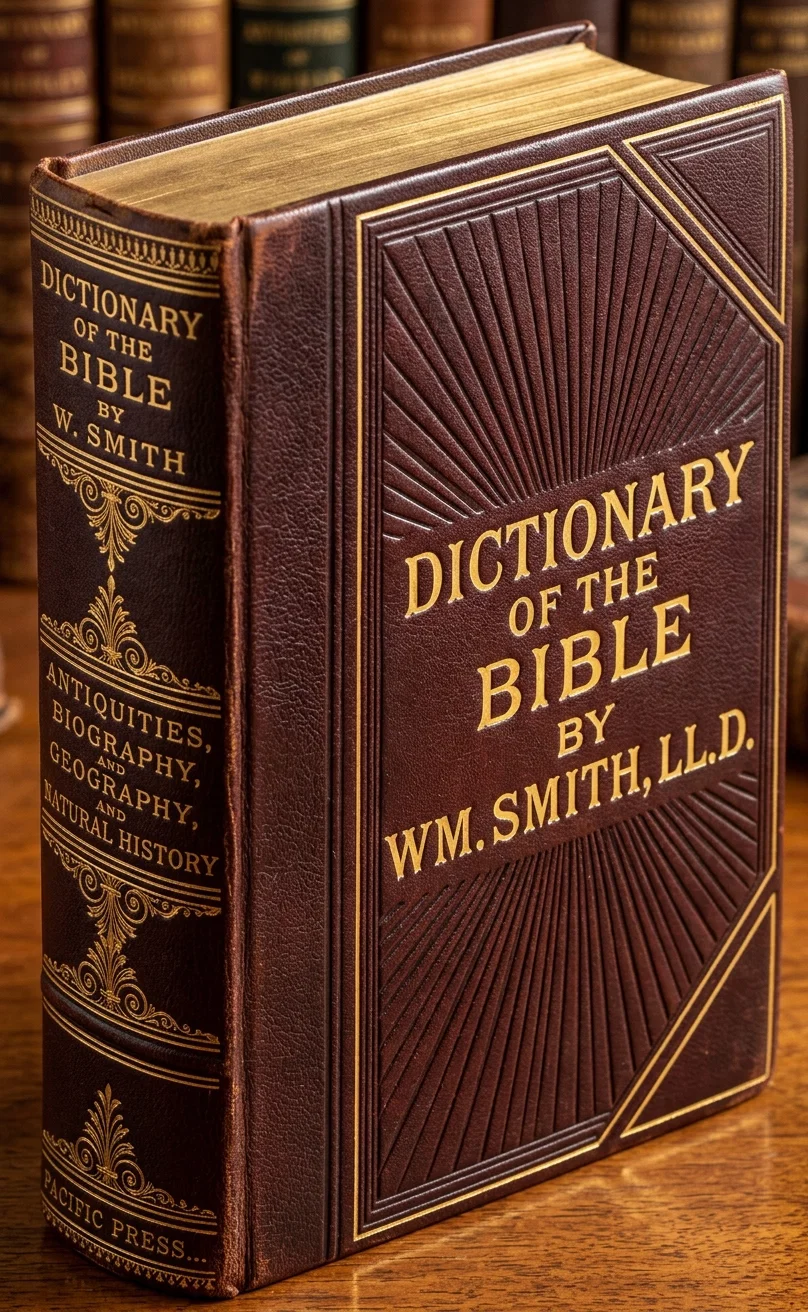
SMITH'S DICTIONARY of the BIBLE.
EDITED BY WM. SMITH, L.L.D.
COMPRISING ITS ANTIQUITIES, BIOGRAPHY, GEOGRAPHY, AND NATURAL HISTORY.
Price, $2.00.
This work contains every name in the Bible respecting which anything can be said; over 500 engravings, and is a complete guide to the pronunciation and signification of scriptural names; the solution of difficulties of interpretation, authority and harmony; also a history and description of Biblical customs, manners, events, places, persons, animals, plants, minerals, etc., and comprises a most complete encyclopedia of Biblical information.
Address all Orders to
PACIFIC PRESS PUBLISHING COMPANY,
12TH & CASTRO STS. 43 BOND ST.,
OAKLAND, CAL. NEW YORK.
THE BATTLE CREEK SANITARIUM
For more than sixteen years the Battle Creek Sanitarium has maintained a Health Food Department, at first for the benefit of its patients and patrons, later, and for more than a dozen years, with increased facilities, to supply the general public.
Our goods are shipped to every part of the world—to Australia, New Zealand, India, Persia, and other foreign countries, as well as to all parts of the United States; and in every instance they have demonstrated their wonderful keeping properties. The following are a few of the hundreds of testimonials received from persons who have for years made use of our foods.
CONNECTICUT.
We have used your “Health Foods” in our family for three years, and can not get along without them. Having been troubled with dyspepsia and chronic inflammation of the stomach, I find that your Granola, Avenola, Wheatena, and Gluten are the only foods that I can eat with safety.
WM. M. MERWIN.
OHIO.
Our baby is a testimonial to Sanitarium food. She is ten months old, weighs twenty-eight pounds, and is as ruddy and healthy a specimen as can be seen. She has actually gained flesh while cutting her last two teeth. Her flesh is firm and sound, and she is very strong.
MINNESOTA.
We have twins, and the little fellows are thriving nicely. The infant food agrees with them perfectly, and I have recommended it to many who are bringing up babies “by hand.”
D. W. McCOURT.
We are constantly improving our foods, and adding to our list as the result of experimental researches conducted in the Sanitarium Laboratory of Hygiene and our Experimental Kitchen. For the latest descriptive circular and price list, address,
SANITARIUM HEALTH FOOD CO.,BATTLE CREEK, MICH.
ATTRACTIVE TRUTHS IN LESSON AND STORY.
A series of outline lessons with illustrative stories and Scripture verses for the use of those who are inexperienced in teaching the young. It is suitable for use in childrens' meetings and for home teaching. Cloth, $1.25.
PACIFIC PRESS PUBLISHING COMPANY.
12th & Castro Streets,
OAKLAND, CAL.
43 Bond Street,
NEW YORK.
IN Our Day, for March, Mr. Crafts makes this confession:— We observe with shame that scarcely any petitions are now going to Congress in regard to the exclusion of liquors [from the World's Fair], although this was asked by the great evangelical national bodies, representing forty millions of our population, and the Catholic Total Abstinence Society besides, and could be carried to victory like the Sabbath closing if the action of national bodies should be followed up by a snow-storm of letters to senators and congressmen.
Mr. Crafts’ shame is not without reason, and yet it is probably not nearly as deep as it should be. For years the “great evangelical national bodies,” as Mr. Crafts styles them, have been professing great concern for the temperance cause, but they have never showed their faith by their works. The liquor traffic is confessedly the greatest evil that threatens our country, but the energy of the churches has never been directed to fighting it. When, however, an unintentional slight was about to be put upon the Church by opening the World’s Fair on Sunday, a day dedicated to religion not by divine authority but by the Church, Congress was overwhelmed by petitions and letters demanding action for the protection of their darling institution. But the most impassioned appeals fail to rouse the churches against the drink evil!
A CORRESPONDENT writes from Grand Island, Florida, of the intolerant spirit manifested at that place in reference to the teachings of the Seventh-day Adventists. A minister of that denomination has been holding meetings there for several weeks, which aroused the Methodists to call some of their ablest ministers from other parts of the State and make appointments to refute the scriptural doctrine as it had been presented. When the Seventh-day Adventist announced that he would review these Methodist ministers, there appeared the next morning, on the bulletin board, in the village post-office,—the most public notice that could have been given,—the following:—
We, the organized White Caps of Grand Island, hereby notify the Rev. Mr. Crisler, to leave this place by next Monday morning, or stand the consequences which shall surely follow. Take heed lest you be caught. SECRETARY OF W. C. CLUB.
This is the same style and form of address with which R. M. King, of Tennessee, was favored before and during the pending of his different trials for Sunday labor. In his case the arrest and persecution was at the instigation of members of the Methodist Church. Some of those actively connected with the persecution in Henry County, Tenn., are also Methodists. Is it possible that such things as these meet with the approbation of the Methodist denomination at large?
It is not on record yet that any Seventh-day Adventist has been intimidated by these threats. Mr. Crisler himself says:
I shall review Dr. Anderson to-morrow night, and if I can not use the house, the services will be held outside in the woods. The weather is warm here now so that this can be done. I do not apprehend any trouble; yet we do not know what may occur. One thing is certain, we are here in the work of the Lord and his interests are our interests, and if he chooses to have us suffer for his sake, then we want to suffer.
These seem to be the words of a servant of God. Would it not be well for those professedly Christian persecutors to stop and consider lest they be found to fight against God.
Do not fail to read, "True to Their Principles," printed on page ninety-two. It is a protest by the Seventh-day Adventists against religious legislation on their own behalf in Tennessee.