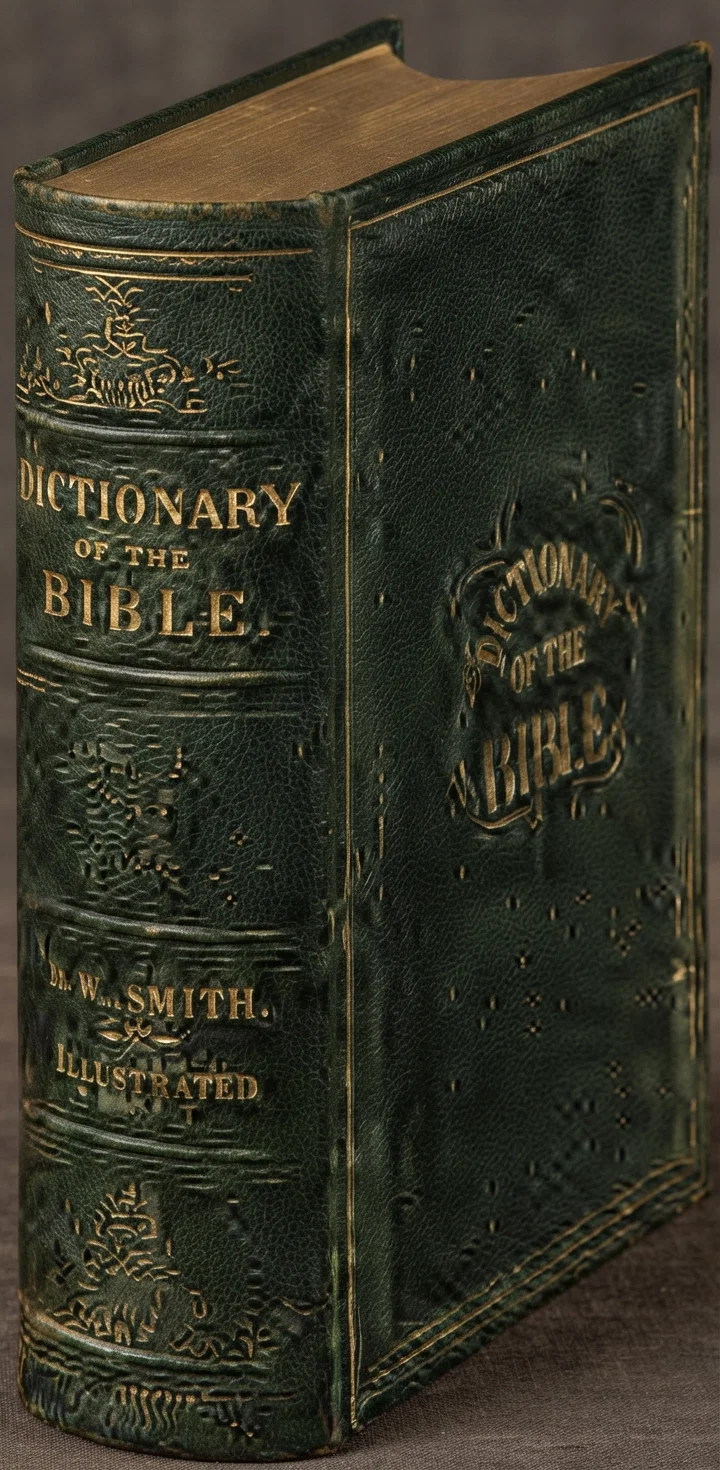
By Dr. Wm. Smith
Size, 6 1/4 x 9 1/2 x 2 1/2 inches
1017 pages
Illustrated
It contains a full description of every custom, place, plant, mineral, animal, etc., and a biographical sketch of every individual mentioned in the Bible
Publishers' price, bound in cloth, $4.50
Our price, post-paid, with the SIGNS, one year, $2.25
Book sent free for five new yearly subscriptions and one renewal at $1.00 each
If you want a real help in the study of prophecy, you will find it in Dr. E. J. Waggoner's book,
The Parker Jointless Fountain Pen
Is a constant comfort
A continual source of satisfaction
A thing of beauty
A joy forever
Having no shoulder where the
fingers and thumb hold it, but
gently tapering, it handles like an
ordinary penholder, and is fitted
with a good gold pen
NO
screw to break
nozzle to get "stuck"
joint to leak
ink on your fingers, and
chance for the buyer to rue
his bargain
Makers' price for pen, $2.50
Our price for pen and SIGNS one
year, $2.50
Sent free for five new names
Address
# SIGNS OF THE TIMES
Oakland, Cal.
Measuring Mission Costs Against Worldly Spending
FROM San Francisco we hear of the expenditure of $56,000 in welcoming home one regiment of Californians, and the cost of the triumphal arch alone, built in New York for the Dewey parade, is $30,000. Last year the work of the whole West India Mission was carried on for just about what that arch cost, while that of the Peking Mission, or of six other missions that might be named, was conducted on a sum considerably less. Of all her twenty-seven missions, only two receive an annual outlay from the Presbyterian Church beyond what was lavished on that single regiment. When the church is estimating the price of sending the Gospel to a lost world, she must hold up her measuring line against such facts as these. —Woman's Work for Woman.
PERIODICALS WANTED.
By Editor
ANY and all of our denominational publications, for depot distribution. Address, post-paid, Alie Seat, Trinity Mills, Dallas County, Texas.
SIGNS, Sentinels, and tracts, for distribution at the close of meetings. Send clean ones, post-paid, to Mrs. L. Wightman, box 114, Rushville, N. Y.
CLEAN copies of the SIGNS, Sentinel, Instructor, and Life Boat, for distribution. Address, post-paid, Walter A. Erb, 511 Canary Street, Dunkirk, N. Y.
SIGNS, Sentinels, Youth's Instructors, Health Journals, and tracts, for distribution. The need is most urgent just now. Send, post-paid, to E. P. Auger, Corinth, Miss.
ANY of our denominational tracts and papers published in the English language. Can make use of a large number in missionary work. Address, post-paid, T. D. Wallar, 218 Missouri Street, Joplin, Mo.
ANY number of the World's Harvest issue of the SIGNS OF THE TIMES, new or old. I want the new ones to sell, and the old ones to give to those who would like to have them, but are too poor to buy. I am not able to buy the papers myself. Please send, post-paid, to A. T. Simons, Spartanburg, S. C.
APPRECIATED.
CIRCLEVILLE, N. Y., Dec. 6, 1899.
SIGNS OF THE TIMES, Oakland, Cal.: The Bible Dictionary you sent me as a premium was received the 19th of November. I can but express my thanks to you, as it is the most complete and comprehensive of any I have ever seen. I do not see how you can afford to offer such a valuable and costly work at so low a figure as for five subscriptions.
Your brother, GEO. SANDS.
See our advertisement in another column.
FOR SALE.
To suit. From 5 acres up. The best orange and lemon land in the State. Soil from 6 to 10 feet deep. Free water-right. Terms to suit. This land adjoins Dr. G. A. Hare's ranch. Also 80 acres bottom land, 65 acres alfalfa, sub-irrigated. Free water. It will pay those who want good homes to investigate.
Address, JAS. N. KILGORE,
Kingriver, Fresno Co., Cal.
The Winning of Margaret
How Margaret and her skeptical friend Ralph were converted. A well-told story.
Price, $1.00 per 100.
PACIFIC PRESS PUBLISHING CO.
New York City Oakland, Cal. Kansas City, Mo.
"Prophetic Lights"
By Editor
Heavy paper-cover edition . . $0 50
SIGNS, one year . . . . . 1 00
Both, post-paid, $1 25
Book free for one new yearly subscriber and one renewal at $1.00 each
THE RELIGIOUS EDUCATION OF THE CHILD.
By MRS. C. M. SNOW.
We have heard of a parent who said, “If I clothe and feed my boy, my duty is done.” Some parents, however, realize that the education and training of their child are as much their duty as to supply its temporal needs. Yet of these a large number devote their time to the mental and physical improvement of the child. If they “keep him straight” during the week, and see that he is in his place at school promptly every Sabbath morning, they have a satisfied feeling of “well done” on their part, and leave his spiritual education to the teacher.
That promptness is a great help to the teacher every one knows who has greeted tardy pupils. They are welcome, and yet their entrance occasions an interruption. A synopsis of the lesson so far recited must be given to the new-comer, and thus the study for the hour delayed. And how short a time an hour is for Bible culture!
Let us think of a mountain rivulet as it comes sparkling, dancing down over its rocky bed. Each day a deeper channel is worn. Some farmer wishes to use a piece of land over which it glides, so turns the chattering stream aside into another course. For one hour each week he changes its current into another channel, the remainder of the time allowing it to run as of yore. How long a time will elapse ere any permanent change is effected?
Even so the child comes laughing down the stream of life. Life seems to him a joyous, playful thing. Yet hourly, momentarily, he is marking out the course in which his future is apt to flow.
How carefully, prayerfully, then, should the parent guide in this work! It is a burden he can not lay down for even a moment—except at the foot of the cross. “Cast thy burden on the Lord, and He shall sustain thee.” And only by taking counsel of the divine Teacher can the parent rightly direct his child.
Not by arbitrary command or hasty reprimand can the parent assist in this important work of character forming. Often a mere mischievous impulse is changed into absolute evil by a stern, angry rebuke—from one who has the child’s best good at heart.
When desiring to change the course of the brook, the little stream was not admonished or reprimanded; its embankments were so changed that it would easily flow in the desired course.
Can not this be done in child life? When the watchful eye of the parent detects a wrong tendency in his child, can not its environments be so changed that true correction will be accomplished, so that the failure shall not grow13into a fault? In this way the beautiful chord of love between parent and child would be saved from the discord that often mars its harmony and jars on the sensitive heart of the child. Its thoughts can imperceptibly be drawn into another channel.
A little boy who was considered quite unmanageable, caused considerable anxiety to his teacher by his inattention in Sabbath-school. One day she made a happy discovery. He was passionately fond of ships. From this center she could lead his interest almost anywhere. And what a wide field of knowledge could thus be opened up to him in the life of Christ and His apostles!
Have you ever noticed from how many avenues the precious truths of the Bible may be reached? By forming an intimate acquaintance with each pupil you will find some theme especially attractive to him, by means of which you can lead him to the great storehouse of knowledge.
In preparing a dinner the cook carefully mixes the various ingredients. Dishes are prepared to suit the appetite of the different members of the family.
In preparing our Sabbath-school meal equal care should be used. The taste of each pupil should be considered, and some ingredient be added to suit his case especially. If this is not done, the meal may cause spiritual drowsiness in some, and will likely be untasted by others.
All children can not be treated alike. One who is so fortunate as to be—and know that he is—his mother’s pet and darling, should not meet with the somewhat reserved courtesy which is most appreciated by another.
Some boys who are worried at home by a fretful, overworked mother (who loves them better than does any one else on earth, but is too tired and impatient to show her love) will be bound firmly to his teacher by wisely-chosen words and looks of appreciation.
The florist studies his plants individually, and apportions to each the conditions most conducive to its welfare. One requires shade, another heat; one moist earth, another dry. Shall we give less attention to these plants that we are rearing for heavenly transplanting?
The work of the mother and teacher is the most responsible, the most holy on earth. The minister works largely with those whose character is already formed. But Jesus and the angels share their sacred work of molding character with the parent and the teacher. Then how tenderly, how judiciously, should they seek unitedly to do this work! Neither is sufficient of himself alone.
As partners in business affairs hold long and earnest consultations as to the most efficient means of procedure, so will this firm, with Christ as the senior partner, hold sweet counsel together. The parent will feel that he can not travel heavenward alone. At the gates of pearl he will be able to say, “Behold I and the children which God hath given me.”
“And the King shall answer and say unto them, Verily I say unto you, Inasmuch as ye have done it unto one of the least of these My brethren, ye have done it unto Me.”
MRS. C. M. SNOW.
AN EVENING COLLOQUY.
By A. Smith
ONE evening in midwinter several men were gathered round the stove in the only store of the village of B., discussing the topic of most general interest at that time, —the “revival” in the B. church.
Mr. Jones said he had no confidence in it; for he certainly knew that the members of that church showed very little confidence in or love for each other, and, in fact, that they had frequent tiffs and quarrels, but he could see no evidence that they were trying to “make up” for such things.
“For some reason,” said Mr. Jennings, “they don’t seem to have the ‘power,’ as they called it in my younger days, and to make up for it they sent for an evangelist, who could tell sensational stories and sing opera music to get the people excited to ‘make a start’ to serve the Lord. I’d rather hear the plain Bible truth preached, that calls sin by its right name, and says, ‘Thou art the man.’”
Said Mr. Wilson: “There’s old man Day, a member of the church. He gets his blacksmithing done at my shop, but never has ‘quite enough change’ to pay his bill, but ‘will pay next time.’ I have chalked down the small deficiencies, and now they amount to about five dollars. When I hear him talk religion in meeting, I seem to see chalk marks all over him; and what he says only makes me hate his religion the more.”
“Well,” said Mr. Ainsworth, “that’s something like the case of Brown, the miller, another member of the church. One day I took a grist to his mill, and I noticed that the measure with which he tolled the grist had a large knot-hole in the bottom, over which he had nailed a piece of tin on the outside. Of course every time he tolled a grist he stole that knot-hole full of grain each time he filled the measure. I just figured a little on that matter, and made out that he took, in that way, about fifty bushels of grain a year that did not belong to him; and so every time I hear him pleading with sinners to ‘come forward, and give themselves to the Lord,’ he appears to me to be full of knot-holes, and covered with the smut of wheat.
“There’s one member of the church, however, that I believe is a true Christian, and that is old man Lee. I like to hear him talk in meeting; for every word seems to express true piety, humble, Christlike piety. I have had a good many business transactions with the old man, and have always proved him to be honest and fair. One day he came to my place to buy some apples, and said he, ‘What do you ask for those nice hand-picked winter apples?’ ‘Fifty cents a bushel,’ said I. ‘But,’ said he, ‘do you not know that such apples have just advanced in price to sixty cents? I am willing to pay that.’
“Well, I thought that, since the old man was so honest, and poor too, I would give him big measure. So I piled in the basket all the apples I could make lay on; but he began to lay them off, saying, ‘Neighbor, that is neither right nor reason; just weights and measures are the Lord’s delight.’”
“He doesn’t force his religious views on one’s attention by talk and argument; but he just lives out his profession every day, and almost always has a text of Scripture ready to fit any occasion. I never pay half as much attention to what the minister reads from the Bible as I do to what old man Lee quotes, and I don’t forget it very soon, either.”
“What Ainsworth says,” said Mr. Gray, “reminds me of Mrs. Thompson, a member of the C. church. I was at Thompson’s one evening, when a neighbor lady, also a member of the church, came in with a large head of cabbage. ‘How much do you ask for it?’ said Mrs. T. ‘Six cents,’ said the neighbor. (Cabbages were dear then.) ‘That is not enough, sister; that cabbage is worth ten cents,’ said Mrs. T., and she paid her that amount.”
“I’m always watching church-members,” said Mr. Gaylord, “as I suppose we all are, to see how they will act under a pressure of provocation; and, particularly, I like to say something complainingly about the weather. With most of them it is too hot, too cold, too dry, or too wet, etc.; but old man Lee is always satisfied with the weather, and tells all the good things about it he can; for says he, ‘It is just such weather as my Father in heaven is pleased to send.’”
“There’s Mrs. Bayne, a member of the B. church,” said one; “she frets and scolds at home, but at church she talks like a minister. When I hear her appeals to sinners, I think, ‘Isn’t she tonguey? No wonder she can scold.’”
“Old man Lee keeps Saturday for Sunday, as we all know,” said another; “and, somehow, I never get sight of him, especially on Saturdays, without calling to remembrance all about what he and his people teach concerning their peculiar faith; and I am forced to admit that it is Bible truth. Of course the best of those church-members make mistakes, or do wrong sometimes (for to err is human); but when they own up to it, and do all they can to make matters fair and square, I have confidence in them; and when they talk religion, I feel that there’s something in it worth having.
“No, poor sinners can’t live on spiritual candy, and sweetcake, and froth, and chaff. We want the Bread of life. We want to hear something definite and scriptural about sin and salvation, about Christ and Calvary, and the love of God.”
A. SMITH.
Grandville, Mich.
A LESSON.
A LITTLE elbow leans upon your knee,
Your tired knee, that has so much to bear.
A child's dear eyes are looking lovingly
From underneath a tangled thatch of hair.
Perhaps you do not heed the touch
Of warm, moist fingers holding yours so tight;
You do not prize your blessing overmuch;
You almost are too tired to pray to-night.
But it is blessedness. A year ago
I did not see it as I do to-day.
We are so dull and thankless, and too slow
To catch the sunshine till it slips away.
And now it seems surpassing strange to me
That, while I wore the badge of motherhood,
I did not kiss more oft and tenderly
The little child that brought me only good.
And if some night when you sit down to rest,
You miss the elbow from your tired knee,
This restless, curly head from off your breast,
This lisping tongue, that chatters constantly;
If from your own the dimpled hand had slipped,
And ne'er would nestle in your palm again,
If the white feet into the grave had tripped,
I could not blame you for your heartache then.
I wonder now that mothers ever fret
At little children clinging to their gown,
Or that the footsteps, when the days are wet,
Are ever black enough to make them frown.
If I could find a little muddy boot,
Or cap, or jacket on my chamber floor,
If I could kiss a rosy, restless foot,
And hear its patter in my home once more,
If I could mend a broken cart to-day,
To-morrow make a kite to reach the sky,
There is no woman in God's world could say
She is more blissfully content than I.
But, ah, the dainty pillow next my own
Is never rumpled by a shining head!
My singing birdling from its nest has flown;
The little boy I used to kiss is dead.
—Anon.
EAT PURE FOOD AND ENJOY GOOD HEALTH
The Battle Creek Bakery has been in operation for nearly twenty years, and is engaged in the manufacture of Health Food Crackers, Biscuits and Cereola,—strictly high-grade goods at reasonable value. There are very few crackers and biscuits manufactured at the present day that are a strictly pure article. The vast majority are shortened with lard, inferior grades of butter, or the various compounds. The common (so-called) Butter Crackers, so extensively used, are lard-shortened goods. We offer to the public a variety of pure crackers and biscuits in which none of the above articles enter, only the best obtainable stock being used. The high quality and rich nutty flavor of these goods make them standard on the market with an increasing demand wherever introduced.
Our variety comprises the following:—
Cereola, Gem Oatmeal, Lemon Cream and Fruit Biscuits, Whole Wheat, A and B Graham, and New Era Butter Crackers, and Cream of Cereal Coffee. We believe there is no better substitute for coffee and tea on the market than Cream of Cereal.
Ce-re-o'la is a food composed of a variety of the best grains, and is ready for immediate use by the addition of milk or cream, fruit juices, or may be eaten dry. Many have used this (only) for the third meal with good results and sweet sleeps, while other foods would cause distress and wakeful nights. Try it, everybody. A sample box of these goods will be sent, express or post-paid, upon receipt of 35c in stamps or money-order.
We make a business of supplying the trade, and recommend you to ask your grocer for them, or if you can not obtain them thus, send direct to the Battle Creek Bakery, Battle Creek, Mich. For the southern states, we have an agency established at 243 South Boulevard, Atlanta, Georgia, I. A. Ford, manager, to whom all communications for that territory should be addressed.
Battle Creek Bakery, Battle Creek, Mich.
FLY SHUTTLE GARPET LOOM
The best, handiest, easiest running, cheapest, and most durable
FLY SHUTTLE GARPET LOOM
In the world,—100 yards a day. Catalogue free.
EUREKA LOOM CO.
5018 Main St., Battle Creek, Mich.
When you write, please mention the SIGNS OF THE TIMES.
SECRETS OF SUCCESS
By Rev. Francis E. Clark
By Rev. Francis E. Clark
Good advice to business boys by nearly 100 business men of Portland, Maine. They all answer the following questions: 1 What are the most essential conditions of true success at the present day? 2 What are the special dangers from a practical business man's view, threatening the young man of to-day? Contains many helpful items from these business men's own experiences. An invaluable aid to every boy, whether in school or employed in an office. Nearly 50 pages, printed on good paper, bound in cream pebble grain, stamped in green and silver. Sent postpaid for only 25 cents.
Every boy should read this book.
Send for our special illustrated book catalogue FREE.
Address: THE WERNER COMPANY, Publishers, Akron, Ohio
SOME RECIPES.
By John Harvey Kellogg
Vermicelli Nuttena Pie.—Slice eight ounces nuttena into a saucepan; add one pint of water, cook slowly ten minutes; rub through a fine-mesh soup strainer; add two eggs beaten well, and a little salt. Cook six ounces of vermicelli in plenty of boiling water, for twenty minutes; strain away the water; add as much water again, and again strain it off. Have a pie dish ready, greased. Cover the bottom with a thin even layer of vermicelli, then a layer of nuttena, and alternate till all is used up. Mix three tablespoonfuls, heaped up, of nut or almond butter to a cream with one pint of water; add three beaten eggs, and salt to taste; turn this custard over the pie mixture. Sprinkle a little sifted granola on top and bake thirty minutes. This is sufficient for eight persons. Average cost, 32½ cents.
Vegetable Roast.—Bake six medium-sized onions to a rich brown, add one pint of boiling water, half a pint of tomatoes, one tablespoonful of one hundred per cent. gluten meal; cover the pan with a piece of greased paper, and return to the oven. Cook fifteen or twenty minutes longer, remove from the oven, and strain off the gravy. Put half a pound of granola in a mixing-pan, pour one pint of the onion gravy on the granola, keeping the remainder to serve with the roast. Salt to taste. Beat three eggs and add them, mixing well. Have a half pound of nuttolene, nuttose, or mucose sliced very thin. Grease a one-pound bread-pan (one with a false bottom); cover the bottom with a layer of the mixture, place a layer of the sliced nuttolene on that, then a layer of the mixture, then a layer of the nuttolene, and so on until all is used. Finish with the granola mixture on top. Bake thirty minutes. Turn out, cut in slices as you would roast beef, and serve with the gravy. The eggs and onions may be omitted if not liked, and lentil and tomato gravy substituted.
American Rarebit.—Slice one-half pound nuttose into a saucepan, add one-half pint of water, and cook for ten minutes. Then rub through a strainer. Mix three tablespoonfuls of almond butter to a cream as for table use; add one pint of boiling water, and stir this cream into the nuttose. Cook for five or six minutes. Add the yolks of two and one whole egg well beaten, gradually stirring as you do so; salt to taste, and serve on toast.
Nuttose on Toast.—Mince one onion and cook it in a quart of milk fifteen or twenty minutes. Mince (not chop) one-half pound of nuttose; strain away the milk from the onion, bring to a boil, add the nuttose, and cook with a slow heat thirty minutes. Bring to a boil and thicken with three tablespoonfuls of braided flour (flour mixed with water); salt to taste, and serve on toasted bread or on zwieback dipped in warm milk for one second. The beaten yolk of an egg added just before serving improves this dish. This is sufficient for six persons, with average cost of thirty cents.
Nutlet in Cream.—Steep one onion in two quarts of milk for twenty minutes; remove the onion; add two heaping tablespoonfuls of flour; slice one-half pound of nutlet in six pieces, and simmer them in the cream for twenty or thirty minutes. Salt to taste, and serve on zwieback with plenty of the cream sauce. This is sufficient for six persons. Average cost, 25 cents.
Macaroni Pudding.—Boil six ounces of macaroni in one quart of milk or water, with the rind of a lemon, until tender. Remove the rind. Beat four eggs, add one-half pound sugar, one pint of milk, and one-half pound of seedless raisins. Beat well, and add this custard to the macaroni. Pour it into a dish; cover with a crust made of one kitchen spoonful of nut butter and two cups of flour. Rub together and moisten with water as for ordinary pie paste. Cover the macaroni with the paste. Bake twenty minutes.
J. E. PATTERSON.
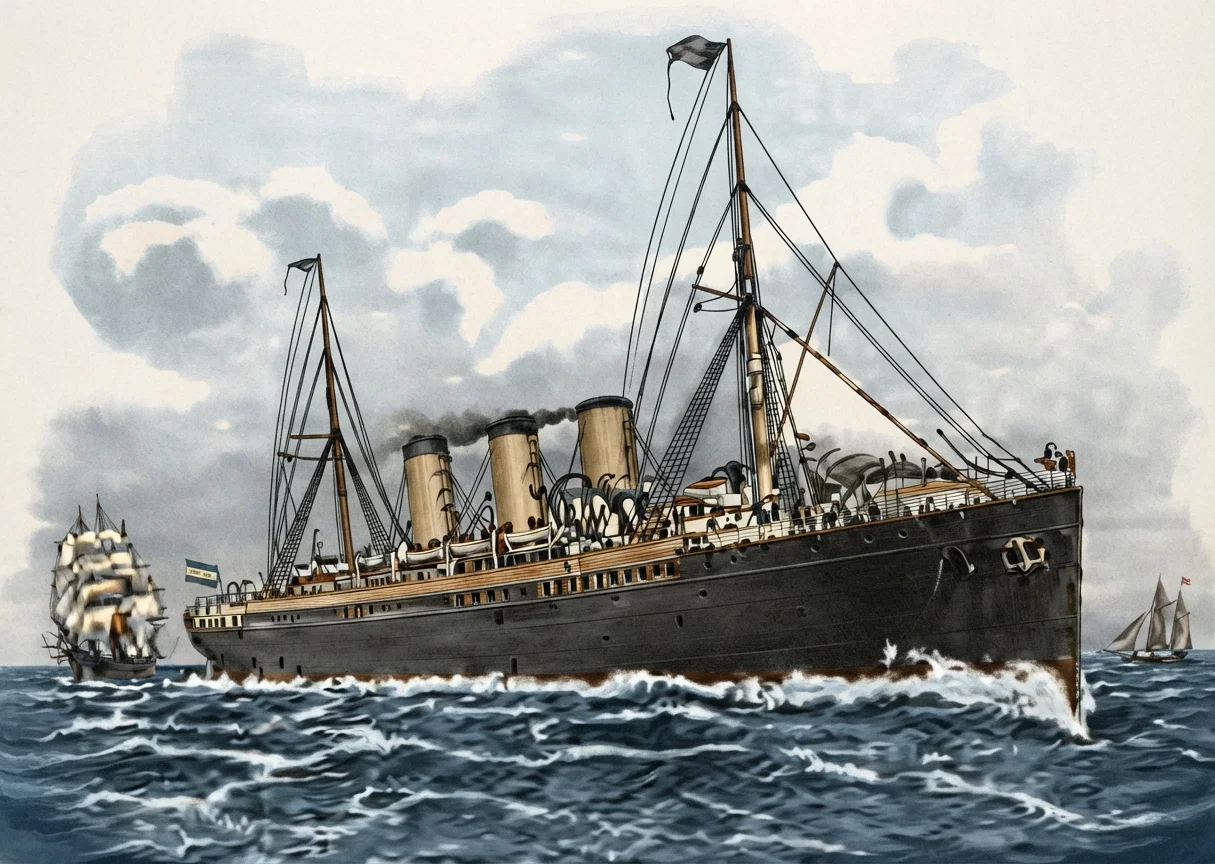
The Oceanic.
HAWAII
OCEANIC STEAMSHIP CO.
TO THE WONDERLANDS
OF THE PACIFIC
Samoa, New Zealand, Australia
Send for our illustrated pamphlets:
"HAWAII," 10c; "TALOFA, SAMOA," illustrated with colored plates, 20c
J. D. Spreckels & Bros. Co.
114 MONTGOMERY ST. SAN FRANCISCO
Serviceable to One Another
By Marcus Aurelius
MEN are born to be serviceable to one another; therefore either reform the world or bear with it.
Suffering for the Lord
“THERE are people who boldly assert their willingness to suffer anything for the Lord, who can not eat a cold dinner without growling to save their lives.”
5 So He cometh to a city of Samaria, called Sychar, near to the parcel of ground that Jacob gave to his son Joseph; and Jacob's well was there. Jesus therefore, being wearied with His journey, sat thus by the well. It was about the sixth hour. There cometh a woman of Samaria to draw water. 8 Jesus saith unto her, Give Me to drink. For His disciples were gone away into the city to buy food. The Samaritan woman therefore saith unto Him, How is it that Thou, being a Jew, askest drink of me, which am a Samaritan woman? 10 (For Jews have no dealings with Samaritans.) Jesus answered and said unto her, If thou knewest the gift of God, and who it is that saith to thee, Give Me to drink; thou wouldest have asked of Him, and He would have given thee living water. 11 The woman saith unto Him, Sir, Thou hast nothing to draw with, and the well is deep; from whence then hast Thou that living water? 12 Art Thou greater than our father Jacob, which gave us the well, and drank thereof himself, and his sons, and his cattle? 13 Jesus answered and said unto her, 14 Every one that drinketh of this water shall thirst again; but whosoever drinketh of the water that I shall give him shall never thirst; but the water that I shall give him shall become in him a well of water springing up unto eternal life. 15 The woman saith unto Him, Sir, give me this water, that I thirst not, neither come all the way hither to draw. 16 Jesus saith unto her, Go, call thy husband, and come hither. 17 The woman answered and said unto Him, I have no husband. Jesus saith unto her, Thou saidst well, I have no husband; 18 for thou hast had five husbands; and he whom thou now hast is not thy husband; this hast thou said truly. 19 The woman saith unto Him, Sir, I perceive that Thou art a prophet. 20 Our fathers worshiped in this mountain; and ye say, that in Jerusalem is the place where men ought to worship. 21 Jesus saith unto her, Woman, believe Me, the hour cometh, when neither in this mountain, nor in Jerusalem, shall ye worship the Father. 22 Ye worship that which ye know not; we worship that which we know; for salvation is from the Jews. 23 But the hour cometh, and now is, when the true worshipers shall worship the Father in spirit and truth; for such doth the Father seek to be His worshipers. 24 God is a Spirit; and they that worship Him must worship in spirit and truth. 25 The woman saith unto Him, I know that Messiah cometh (which is called Christ); when He is come, He will declare unto us all things. 26 Jesus saith unto her, I that speak unto thee am He.
Golden Text: "God is a Spirit; and they that worship Him must worship Him in spirit and in truth." John 4:24.
NOTE.—The lesson section includes John 4:1-43. Learn by heart verses 10 and 14; Rev. 22:17; and Isa. 55:1. It would be well in teaching this lesson to contrast the interview with Nicodemus and this with the Samaritan woman, noting the difference in character, rank, and intelligence, and the difference in the method of teaching the two.
SUGGESTIVE QUESTIONS.
(1) To what city did Jesus and His disciples come on their journey to Galilee? What was particularly noted of this locality? V. 5. (2) What well-known landmark existed at this place? What was Jesus' physical condition as He reached the well? What did He do? What time of day was it? V. 6. Note 1. (3) Who came to the well to draw water? What favor did Jesus ask of her? V. 7. (4) Where were the disciples of Jesus at this time? V. 8. (5) How did the Samaritan woman show her surprise at this request? Why was it natural for her to ask such a question? V. 9. Note 2. (6) How did Jesus reply to her query? V. 10. Note 3. (7) By what statement did the woman show that she did not understand the deep meaning of Jesus teaching? What two questions did she ask Him? Vs. 11, 12. (8) What did Jesus say of the water from the well by which He was sitting? V. 13. (9) With what did He compare it? What effect would it have upon him who partook of it? What would it really become in the individual? V. 14. Note 4. (10) Hearing these words of the Saviour, what question did the woman ask Him? What is still shown by her question? V. 15. Note 5. (11) What did Jesus tell the woman to do? V. 16. (12) What reply did she make? How did He answer her? V. 17. (13) In what way could it be said that she had spoken truly? V. 18. (14) What statement did these words of Jesus lead her to make? V. 19. (15) How did the woman seek to turn the conversation from herself? V. 20. Note 6. (16) What remarkable statement did the Saviour then make to her? V. 21. (17) What did He say of the worship of the two peoples? V. 22. (18) What time had now arrived in the history of the religious world? V. 23. (19) What worship only is acceptable to God? V. 24. Note 7. (20) What shows that this woman knew somewhat of the Old Testament prophecy? What would He do when He came?15V. 25. (21) What plain declaration did Jesus then make to her? V. 26.
NOTES.
1. About the sixth hour.—According to Jewish reckoning, this would be at noon. If the Roman reckoning is here used by John, as some have thought, then it was evening when this occurred. Both views are held, but the weight of evidence is in favor of the Jewish reckoning, placing the time of the Saviour's discourse at noon.
2. Jews have no dealings with Samaritans.—That is, no relations of hospitality, such as a request of this kind would be understood by them to imply. The Jews and Samaritans had business relations one with another, but no social intercourse whatever. "The wonder of the Samaritan woman was that a Jew should seek, by asking and receiving drink, to make a friendly compact with a member of a hostile race."—Trumbull. In the East the giving and receiving a drink of water was equivalent to a covenant of hospitality—a compact, however, which was not to be considered indissoluble.
3. If thou knewest the gift of God.—That is, if she had known Him, who was the Gift of God. This has a double significance. In the East water was called "the gift of God." Christ, the living Water, was then the real, living Gift of God; and if she had known Him, she would have asked for the real "gift of God,"—the real water, the water of life.
4. Shall never thirst.—"Jesus did not convey the idea that merely one draught of the water of life would suffice the receiver. He who tastes of the love of Christ will continually long for more; but he seeks for nothing else. The riches, honors, and pleasures of the world do not attract him. The constant cry of the heart is, 'More of Thee.' And He who reveals to the soul its necessity, is waiting to satisfy its hunger and thirst. The cisterns will be emptied, the pools become dry; but our Redeemer is an inexhaustible Fountain. He in whom Christ dwells, has within himself the fountain of blessing."—Desire of Ages.
5. Give me this water.—She was not asking Him for the water of Jacob's well, for she had been drinking of that continually, and yet her words seem to imply that she was still thinking of material water. The words, "Neither come all the way hither to draw," show that she was thinking of the burden of carrying water and coming so far for it. But before Jesus can give her that water, He must reveal to her her own condition, and create in her soul a thirst for righteousness. He led up to this by telling her to go and bring her husband.
6. Our fathers worshiped in this mountain.—With this statement the Samaritan woman sought to turn the conversation into another channel. She would bring up the controversy that had existed so long between Jew and Samaritan. The Samaritans wished to join with the Jews in the erection of the temple in the time of Ezra, and as the Jews would not allow this, they built a temple of their own in Mount Gerizim. Here they worshiped in accordance with the Mosaic ritual, but without wholly renouncing idolatry. Tho their temple was destroyed by their enemies, they still clung to their form of worship.
7. Must worship in spirit and truth.—"Not by seeking a holy mountain or a sacred temple are men brought into communion with Heaven. Religion is not to be conformed to external forms and ceremonies. The religion that comes from God is the only religion that will lead to God. Wherever a soul reaches out after God, there the Spirit's working is manifest, and God will reveal Himself to that soul."—Desire of Ages.