It is said of Jesus that “he is despised and rejected of men; a man of sorrows, and acquainted with grief; and we hid as it were our faces from him; he was despised, and we esteemed him not.” Isa. 53:3.
Although Jesus was the Creator of heaven and earth, and was adored and obeyed by angels and the countless inhabitants of the starry worlds, he laid aside his glory to save rebellious man, who, in turn, was ashamed of the Lord of glory, and rejected him, his only hope.
Jesus said of himself on one occasion, “The foxes have holes, and the birds of the air have nests; but the Son of man hath not where to lay his head.” Matt. 8:20. At length he was arrested as a criminal, mocked, scourged (publicly whipped), and crucified. If such was the treatment that Jesus received in this world, what must his followers expect but like treatment. “As he is, so are we in this world.” 1 John 4:17. “If the world hate you, ye know that it hated me before it hated you.” “If ye were of the world, the world would love his own; but because ye are not of the world, but I have chosen you out of the world, therefore the world hateth you.” John 15:18, 19. Paul says, “All that will live godly in Christ Jesus shall suffer persecution.” 2 Tim. 3:12.
Such was the treatment awarded our Saviour while he was upon earth, and such is the prediction concerning his followers after him. Many illustrious examples in fulfillment of the prophecy are on record. Take, for instance, the case of the apostle Paul. Speaking of his experience in the Gospel, he says, “Wherein I suffer trouble, as an evil doer, even unto bonds.” 2 Tim. 2:9. Of himself and fellow-laborers he says, “Even unto this present hour we both hunger, and thirst, and are naked, and are buffeted, and have no certain dwelling place; and labor, working with our own hands; being reviled, we bless; being persecuted, we suffer it; being defamed, we entreat; we are made as the filth of the world, and are the offscouring of all things unto this day.” 1 Cor. 4:11-13. Paul and his co-laborers suffered these things because they chose to walk as Christ walked in this world.
Of the apostolic church it is recorded, “For as concerning this sect, we know that everywhere it is spoken against.” Acts 28:22. And so at the present day the church that will not adopt worldly methods and worldly fashions in carrying forward her work, will be no more esteemed than was the church of the first century. It will not be a popular church, but quite probably the Spirit of Jesus will be seen in its efforts, for “the meek will he guide in judgment; and the meek will he teach his way.” Ps. 25:9.
TWO GIRL FARMERS.
By Emma H. Adams
BY EMMA H. ADAMS.
In the city of Los Angeles, near the southern suburbs, stands one of the few early American homes yet remaining in the lower metropolis of California.
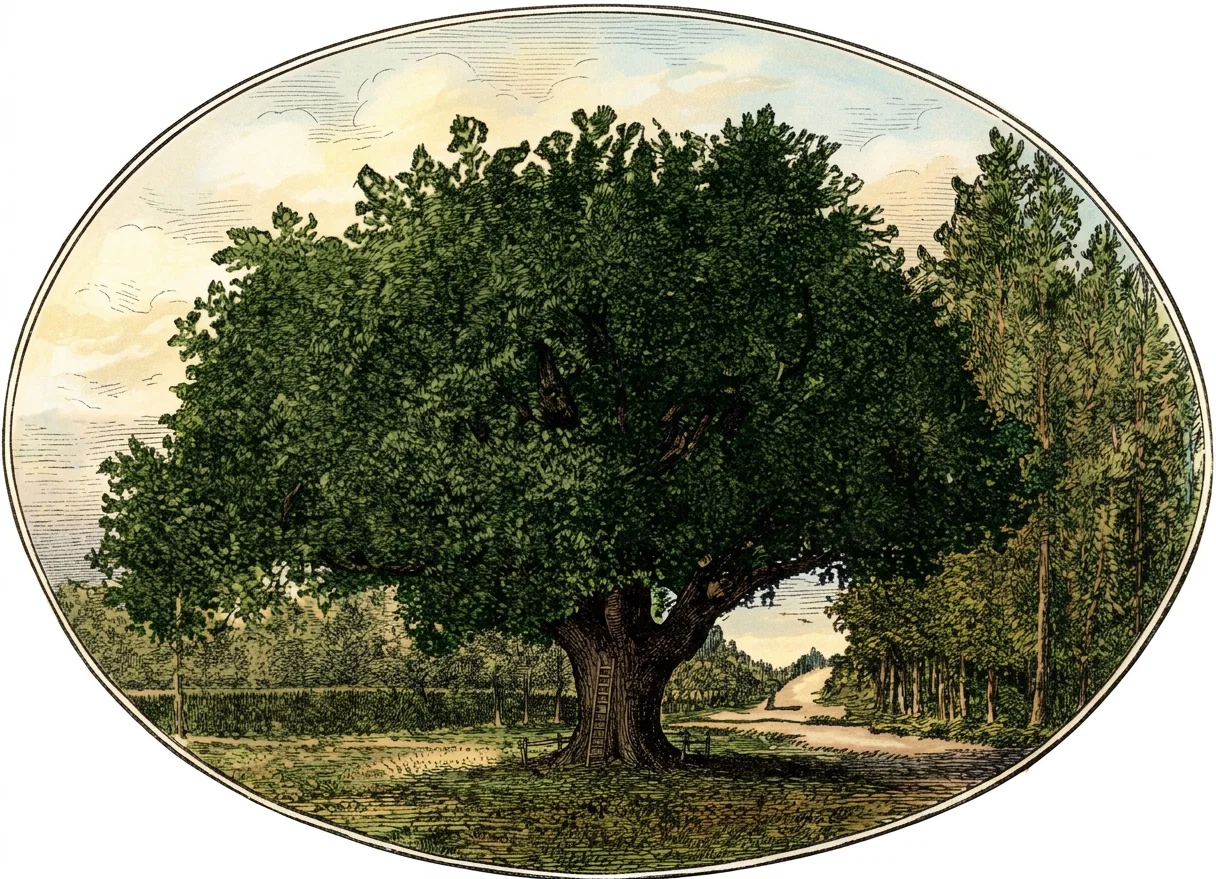
The house, a frame structure, is surrounded with venerable trees, live oaks chiefly, which impart an antique air to the premises. Like other specimens of that tree on the Pacific Coast, these oaks have thrust out massive branches which turn hither and thither, forming great elbows, and offering secure seats for a half dozen gleeful boys and girls, at the same time.
The writer recalls a breezy afternoon when one of these obliging growths was fairly alive with little people in high spirits, yet as safe from falling as would birds have been on the same kindly boughs.
The owner of the charming house, a native of the Empire state, and a delightful woman, emigrated to the coast, via Panama, in the early gold days of California.
Mounted upon one of the comical-looking burros then so indispensable to all kinds of traffic across the dreaded isthmus, the then young girl made the provoking trip at the head of a long cavalcade of persons and parcels bound for numerous California points. On the way, certain rarely interesting incidents occurred, but these not pertaining to our subject, must remain yet longer a part of the unique unwritten history of emigrant life on the Isthmus of Panama.
Sharing the home of this pioneer woman, to-day, are two little granddaughters and their parents. The former, Grace and Katie Mellia, are respectively thirteen and eleven years of age. Being active mentally to an unusual degree, something quite unaccounted in the way of employment had to be devised for these girls. After much serious thinking on the subject by the senior members of the household, miniature farming was suggested as a solution of the problem.
“This form of amusement,” said the guardians, “promises several excellent results,—abundance of exercise out-of-doors, greater contentment at home, the cultivation of taste in the young farmers, the forming a habit of observing the interesting operations of nature, and the acquirement of knowledge which will prove useful to them in the future.”
Accordingly, from one side of the ample ground surrounding the dwelling, territory was laid off for two small farms, the soil of which was remarkably fertile. Both little properties lay open to the genial sunlight all day long.
Grace became the freeholder of a parallelogram fourteen feet long by six feet wide, while Katie held the title to an estate somewhat smaller and having irregular boundary lines.
The youthful proprietors were encouraged to carry out their own ideas as to buildings, fencings, variety of crop, and class of stock.
Not long ago the writer paid a visit to these tiny homesteads. The results of the experiment had then become both satisfactory and highly interesting.
Each farmer possessed a miniature residence, barn, and carriage house, the necessary farm vehicles and implements of husbandry, several “hired hands,” a variety of horses and other stock.
Grace had bisected her acres by constructing between the parts a broad avenue, graded smoothly, and kept nicely trimmed along the margins.
One-half of the domain was devoted to orchards of fruit trees, “because,” as the owner informed us, “in Southern California fruit trees are highly remunerative property.” Chief among these were the peach, plum, apricot, and lemon. The buildings, a diversity of grains, and a line of table vegetables occupied the remainder of the estate.
The dwelling, a rustic cottage with sharp gables and constructed of slender eucalyptus branches laid up skillfully, was an attractive affair. Pierced by a single door in front and by one window in the rear, it was adorned with smilax and other vines wonderfully thrifty.
On the cool north side of the cottage was the well, dug in the genuine soil, over a foot in depth, and half filled with sparkling water. Therefrom the refreshing fluid was drawn, not in a “moss-covered bucket,” but in a tiny tin pail, depending from an old-fashioned well-sweep.
Mexican custom in Southern California demands that in every house there must be an oyer—a tall, bulging jar with a small aperture at the top—in which water is kept always cool for drinking purposes. This convenient custom Grace had adopted. Hence there stood in one corner of an airy little summerhouse near, one of these quaintly-shaped vessels, serving an important purpose on warm, busy days.
From the cottage, graveled avenues led away on either hand to streets bounding two sides of the little freehold. In front, a lawn extended, mantled thickly with Kentucky blue grass, and framed in by trees, eucalyptus, pepper trees, and geraniums. On a small area next this lawn, waved a crop of fragrant chrysanthemums, “Grace’s favorite flower.”
In the rear, there flourished a field of that beautiful plant which the dark-skinned Latin people called lino, but which the energetic Anglo-Saxons named “flax.” Every feathery stalk of the crop shot out of the ground as erect as young hollyhocks, while over the delicate green surface rolled waves of golden sunlight, driven by the brisk March wind.
Farther away, with a broad driveway intervening, stood the barn, roofed neatly with eucalyptus bark, and containing lofts for hay and stalls for horses, while in the tiny farmyard wandered the young agriculturist’s “blooded stock”—every creature fabricated out of tin.
In the garden, a “hotbed” was making a success of rooting a variety of choice rose slips. There also, as the seasons arrived, other11plants were started on the way to welcome fruitage or to beautiful flowering.
A fencing of strong twine outlined the little domain. Strong, short posts were driven at the corners. To these the cord—“drawn taut, so as not to sag,” as Grace remarked—was carefully tacked.
In one of the driveways, as if just returning from doing an errand, appeared “one of the hands”—a tin man—perched upon the high seat of a tin market wagon. He seemed to exert himself to the utmost to hold in the powerful black draft horse—fashioned out of tin—which he was driving.
Inquiry brought out the statement that the “hand” had been to town “for supplies.” In the vehicle were his purchases, supposed sugar and crackers, one box of each.
Katie, barely less experienced than Grace as an agriculturist, conducts her farming operations according to methods of her own. In laying out her land she departed entirely from the rectangular plan. The residence occupies the center of a circular space, which is fenced around by a flourishing hedge of ground-ivy.
Lying all around the mite of a dwelling are areas of rye, oats, alfalfa, and bright flowers. These areas are irregular in form and size, and are bounded by curves instead of by straight lines.
The dwelling, artistic in style, and roofed deftly with eucalyptus bark, was originally a cracker box of the ordinary size. Of its humble origin, however, it gives not the slightest hint, so dainty yet so homelike is it.
Other buildings on the premises are a barn, carriage house, and commodious shed for stock. Tied in one of the stalls, at the hour of my visit, stood the family carriage horse, a handsome, mettlesome light gray, which once formed part of a promiscuous stock in a toy shop. I was gravely informed that “an engine and train of cars aroused not the slightest fear in the creature,” and consequently he was “perfectly safe for women and children to drive.”
Near the cottage, tossing their shapely heads, and stamping the ground impatiently, was drawn up a span of splendid black tin horses, attached to a shining spring wagon. The vehicle contained sundry provisions, destined, we presume, to relieve some family in distress.
In the plotting of their ground, in the selection of their crops, in the choice of fruit and flowers, not less than in the effective ornamentation of the lawns, these bright young girls had exhibited marked difference in taste and judgment. There was manifested throughout an individuality and independence of mind which was the most suggestive feature of the whole scheme. In the keeping their premises faultlessly clean, however, and in the housing their farming implements carefully from fog and rain, they were a unit.
Now, lest it be inferred that, while merely playing at farming, the young toilers had acquired no real knowledge of the pursuit, it should be said that such inference would be far from truth.
They understood well at what seasons many kinds of crops should be sown or planted. They knew that some soils and some situations are better adapted to certain kinds of crops than are others. They had learned that in favorable localities in Southern California successive crops of oats, alfalfa, and some varieties of vegetables may be raised annually. Both were familiar with the methods of starting plants from cuttings, and of propagating roses and other shrubs under glass.
Both knew to what extent and how often fertilizers should be applied to soils in need of them. They were aware that for some purposes fertilizers in liquid form are preferable to the same material in a dry state.
Not to mention its physical benefits, their play farming led these children to become earnest observers and students in the delightful realm of plant life. And not this only. Thereby their thoughts were elevated, though unconsciously, and their appreciation of the exquisite beauty and variety of the things they were growing was greatly increased, as was also their reverence for the exceeding power and skill of Him who spoke simply, and the world of vegetable wonders came into being.
GREAT PRETENSIONS.
By W. W. G.
THE California State Sabbath Association would fain convey the idea that opponents of their efforts for a state Sunday law are an insignificant minority. But the facts would rather place the association itself in that position. The last popular vote on that subject (1882) gave about seventeen thousand majority in favor of repealing the old state law. And, although every Legislature since that time has been importuned to reënact the measure, its advocates have not been able even to bring it to a vote. But the latest evidence that the Sabbath Association’s attempt to pose as the great majority is sheer assumption, is found in its own membership. Although the effort to reorganize the dormant association was made last May, with a great flourish of trumpets, yet at their meeting held October 31 the secretary could report but forty members, and but a small proportion of these had paid the annual due of $1.00. The occasion of this meeting had been extensively advertised for fifty miles around San Francisco, a territory including fully one-third of the state’s population, yet not over a hundred persons were sufficiently interested to attend—and these were not all friends of the cause. It was also stated that ministers who were members of the Executive Committee had not attended any of the meetings of the committee, the operating of the association’s affairs being left mainly to the president and secretary, a couple of superannuated and decidedly feeble ministers. According to the addresses, papers, and resolutions delivered, read, and passed at this last meeting, the members pretended to deem the enactment of a state Sunday law the one all-important means for the preservation of the Christian religion and the advancement of the popular welfare in this state, yet none of the really active men could be induced to take official responsibility for the furtherance of such a great work. So the invalid president was required to shoulder the additional duties of field secretary. Such are the straits of a so-called state association that poses as representing the majority of the people, and resolves that the minority must not oppose its work.
All special Sunday laws are religious legislation, and therefore not within the purview of any legislative body. It is safe to say that not one feature of the Sunday legislation usually demanded would be called for by any person or persons were not Sunday deemed a religious day. And the California Sabbath Association admits the religious character of such legislation by the plea that it is for the protection of the Christian religion and the protection of the day as the Sabbath. These are the main pillars of their arguments, the plea for the workingman’s rest on that particular day being of the same character, as they do not manifest any special concern for the working classes with respect to any other time or season. But even were the subject of the Sabbath a legitimate one for civil legislation, and were it a question that could properly be decided by a majority, the California Sabbath Association would, if logical and consistent, cease its great pretensions and its implied slurs at the opposition of the “minority.”
W. W. G.
Habits Are Soon Assumed, Hard to Break
“HABITS are soon assumed; but when we strive To strip them off, ’tis being flayed alive!”
MY NEIGHBOR.
By Margaret E. Sangster
My neighbor met me on the street;
She dropped a word of greeting gay,
Her look so bright, her tone so sweet,
I stepped to music all that day.
The cares that tugged at heart and brain,
The work too heavy for my hand,
The ceaseless underbeat of pain,
The tasks I could not understand,
Grew lighter as I walked along,
With air and step of liberty,
Freed by the sudden lift of song
That filled the world with cheer for me.
Yet was this all! A woman wise,
Her life enriched by many a year,
Had faced me with her grave, true eyes,
Passed on, and said, “Good-morning, dear!”
—Margaret E. Sangster.
TOUGHENING THE FEET.
Those who wear boots or shoes the year round, in almost every case have tender feet. A long walk tires them, and the friction of the shoes or stockings blisters the skin, and they have no end of trouble. Now the feet are such important members that they should always be kept in first-rate condition, of course; one of the best remedies is going barefooted a little while every day. Pastor Kneipp advises this for health’s sake, and has set thousands of rich and fashionable people at it all over Europe and a few in America. They are advised to walk on wet grass, on stones, and in the snow even in winter for a very few moments. This latter is a very severe remedy, suited only to those who have robust minds and plenty of will power. Those who can not do these things are made to walk in their bath tubs with a few inches of water in them. A foot-bath tub answers every need.
Still another remedy is to dip the feet in cold water at night and let them remain a moment; the next morning to dip them in again, letting them remain a few seconds longer; the next morning keep them in a little longer yet, and continue this till you can leave them in a minute or so without taking cold. In this way a person can become accustomed to the cold water, and he will not take cold from this cause. But be it thoroughly understood that the “hardening” must be done carefully; while in the water and after removing them the person must rub and massage them with his own hands for some time, and dry them well. The toes must be stretched, pulled, and separated thoroughly, so the blood will go into and out of them rapidly. In this way any delicate foot may be hardened, health promoted, and colds prevented or cured.—Journal of Hygiene.
EXPERIMENTS IN TIGHT LACING.
The evil effects of tight lacing have been discussed and demonstrated well nigh ad nauseam, though the exhortations to reform have not so far received the amount of attention from the fair sex that their importance and the persistence of the reformers would warrant. It has fallen to Dr. Lauder Brunton to afford a further demonstration of the pernicious effects of this practice, in a way at once original and somewhat entertaining.
A CALIFORNIA LIVE OAK.
In the course of the investigations carried out by him, in conjunction with his colleagues of the Hyderabad Commission, on the vexed and highly technical question of chloroform versus ether, it occurred to him to try what effect a mode of dress which was likely to interfere with respiration would have in causing sudden death under an anaesthetic. The experiments were carried out on female monkeys. A monkey belonging to this sex was enveloped in a plaster of Paris jacket to imitate stays, and a tight bandage was then tied around the abdomen so as to imitate the band which would sustain the petticoats. It is with mingled feelings of curiosity and sympathy that we learn of the result of the experiments, which is reported to have been “very marked indeed,” so much so, that several of the monkeys died very quickly.
Dr. Brunton added that the survival of some of the animals experimented upon was probably due to the fact that the diaphragm is able to compensate to a large extent for the enforced loss of chest movement; nevertheless, if our lady friends do not take this lesson to heart, and learn from the fate of these tight-laced monkeys how serious a thing it is to handicap nature in the endeavor to simulate the graceful outline of the wasp, the medical philanthropist may well despair of ever being able to bring reason to bear on dress.—London Medical Press.
The Necessity of Mental Cultivation
“AS THE soil, however rich it may be, can not be productive without culture, so the mind without cultivation can never produce good fruit.”
Root Beer Discussed at Michigan Convention
Root beer received attention at the First District Convention, Michigan, in an address by Mrs. Emma R. Greene. It elicited much talk among Detroit dailies, which put forth the thought, common among white-ribbon women, that it is the preparation and sale of so-called innocent drinks that causes the downfall of many of the youth of our country.—W. C. T. U. Bulletin.
Cruelty to Animals in Public School Lessons
THE fad of teaching children in public schools to cut holes in cats, dogs, rabbits, etc., in order to prove facts which no one disputes, is thoroughly reprehensible. Cruelty is the certain work of deviltry; every practice of it is evil and contrary to the fundamental principle of Christianity, which is love.—Church Union.
SALONICA, IN MACEDONIA.
By J. Henry House
BY REV. J. HENRY HOUSE, D.D.
Salonica, recently reoccupied by the American Board as a center for work among the Bulgarians of Macedonia, is the Thessalonica of the Acts of the Apostles. It is a city of great antiquity, and is interesting alike for the memories which it awakens of ancient Greece and Rome, and for what it recalls of the history of the apostle Paul and the Christian church since his day. . . .
This city was, until within a few years, the possessor of two triumphal arches erected in the time of the Roman emperors. The oldest one, which spanned the Via Egnatia at the western extremity of the city, without doubt existed in Paul’s time, and he probably passed under it in going out of the city to Berea. Upon this column was the inscription referring to the “Politarcs,” which is exactly the name (a strange one to scholars) which Luke gives to the rulers of the city in the Acts. This arch was pulled down to furnish materials for the quay. The larger part of the stone upon which was found the inscription has been placed in the British Museum.
The Arch of Constantine still spans the Via Egnatia at the eastern extremity of the city. Upon each of the bases are very interesting sculptured bass-reliefs in stone, though somewhat injured by fires and the hand of time. The figures represent a Roman triumph. Although the arch goes by the name of Constantine, a Danish antiquarian, who spent a good deal of time in studying it, believes it to belong to the time of the Emperor Galerius (305–311 A.D.).
Between the Rotunda and the sea one may still see the open space called the Hippodrome, where thousands of the city’s inhabitants were massacred by order of Theodosius the Great, who in consequence was not allowed by Ambrose of Milan to partake of the communion for eight months.
Salonica is still called Thessalonica by the Greeks. Its history, which is of surpassing interest to the scholar and the Christian, seems to reach back into the dim ages of mythology. Opposite the city, and across its beautiful bay, rises among the clouds the majestic Olympus, the fabled home of the gods. Of the city under its earliest names of Emathia, Holia, and Therma, very little is known. Cassander, the husband of the sister of Alexander the Great, is said to have rebuilt and beautified Therma and to have changed its name to Thessalonica, that of his wife. We have time for only a hint as to the history of the city.
Xerxes encamped here with his great army on his way to Greece. The great orator Cicero spent some time in banishment here, and some of his letters were dated from this place. Anthony and Octavius rested here after the battle of Philippi, and made the place a “free city.” But to the Christian other memories are more precious than these. Here the great missionary Paul walked, preached, and founded a Christian church. Twelve feet below the present street at the Arch of Constantine was found the marble pavement of the13very same street upon which, doubtless, the apostle walked. His repeated visits to the city, together with his sufferings here for Christ’s sake, entitle it to the name of the Apostolic City. The important work which the Christians of that apostolic church wrought in this whole district is understood by what Paul says of them in 1 Thess. 1:7, 8: “So that ye were ensamples to all that believe in Macedonia and Achaia. For from you sounded out the word of the Lord not only in Macedonia and Achaia, but also in every place your faith to Godward is spread abroad.” All through the Christian ages this city has held a commanding position with reference to the Christianity of the whole district of Macedonia. One of its archbishops, Eustathius, was reputed to be the most learned man of his age (twelfth century).
From a missionary point of view the city is of special interest to us in our work for the Bulgarians, in the fact that it was the birthplace of the two great Slavic missionaries, Cyril and Methodius. These two gifted brothers gave up their lives to missionary work among the Bulgarians and other Slavs, especially the Moravians. They were the authors of the Slavic translation of the Scriptures (ninth century), and Cyril gave his name to the alphabet which is now used by Russians, Servians, and Bulgarians, which is called the Cyrillic (or Kyrillic). These two brothers are to-day the patron saints of literature and education among the Bulgarians. They are supposed to have led the king of the Bulgarians to the Christian faith about 865 A.D., and afterwards to have worked among the Moravians.—Missionary Herald.
RELIGIOUS AND EDUCATIONAL INTERESTS OF SOUTH AFRICA.
By S. N. H.
BY S. N. H.
From what has already been said respecting the colonies, quite an idea may be gathered of the religious status of the country. The primitive Dutch are the religious element in this country. But they are necessarily narrow in their views. It was the same element that first went to the American shores at the same time these came to this country. But here they were isolated from the rest of the world, surrounded by natives who had no fear of God before them, and without any civilization whatever. What the United States would have been had the circumstances been the same as here, may be gathered from the Blue Laws of Connecticut, the banishing of the Baptists, the whipping of the Quakers, and the burning of the witches. This was an inheritance of the Papacy. And, still more, from the spirit which now manifests itself to persecute, can be seen what is in the hearts of those who have the power to persecute. It is always dangerous to any country or people for the religious element to sway the power of the state. It was so in the beginning, and it is so in the end.
But the coming of the English to South Africa, and their establishing a more civilized rule, greatly helped the religious element in this country. There is no state religion here, and all denominations have equal privileges, except in regard to that one element which at the present time is cursing the enlightened world, namely, Sunday laws. These exist in Cape Colony, in Natal, and in the South African Republic. In Cape Colony, it is principally against the opening of shops and stores, the sale of goods, hunting, etc. It is about the same in Natal. But in the South African Republic they are much more oppressive. The one who sells a pound of sugar or a loaf of bread is subject to a £5 fine and imprisonment; but by some arrangement mining operations are carried forward on all of the seven days. Yet in each of these colonies strenuous efforts are made yearly to make the Sunday laws more oppressive. They do not as yet include those who observe the seventh day; but there is an unseen power that is moving them onward in this direction.
Mission stations are scattered in all of the districts where the natives are under the protection of the English, in various lands, of which we have said but little in previous articles. Much might be said concerning them, but in a few words it can be said that the English are among nearly every tribe, trading and dealing with them in various ways. The missionaries are also there, seeking to plant the Gospel; so that among nearly all tribes they know of the work of the Gospel. But the influence of the unprincipled white man greatly neutralizes all such efforts. And now there is being worked up a sentiment that, as these efforts fail, we want religion established by law, especially on the Sunday question. Now is the golden opportunity to carry the truth in among all the tribes in South Africa. The governments of Cape Colony and Natal do all they can from their standpoint to encourage education among the colored population. They stand ready to aid any educational institution on certain conditions. Among these conditions are, no religion shall be forced upon any pupil. Another condition is, the teachers shall give evidence that they are competent in their calling. The education of the colored race is not encouraged outside of the English colonies as it is here. But there is nothing to prevent it, if others will take the responsibility of going forward with the enterprise.
But with the religious element itself, it is much the same as it is in every portion of the world. The attention of the religionists everywhere is now strongly turning towards the civil power for the enforcement of Sunday observance, as though if that one step were taken, then a great feat would be accomplished towards the desirable end of the conversion of the world. But there are Mordecais in the gate that in some way must be disposed of, as they are a hindrance in this direction. When the power of the Holy Spirit fails to accomplish what they so much desire, they seek the power of the civil arm to do the work.
The liquor traffic is a terrible enemy to South Africa. It yields a profit to the vender, and, as long as this is the case, men will continue to sell it. In many instances there are laws against selling liquor to colored men, but as long as it is sold in the country at all, the colored man will get it. Khaman, the Christian chief, has thus far kept it out of his country, but it has been by a direct appeal to the queen of England, and by various resources to which he has resorted. There is a strong feeling in some circles that if liquor can not be purchased, many persons will be deterred from settling in the territory. While it is so nearly universally used, there is some truth in this. The majority of the world are on the wrong road. It is the minority that are traveling the narrow way to heaven. And the broader the road is made among any people, so the evil customs and practices can enter, and the people be allowed to commit certain crimes, so much the more can men be induced to settle who wish to indulge in such crimes. But the road to heaven is a narrow one, and few there be that go in thereat.
Particular schools, where the Christian religion is taught, such as have an extensive influence, might be mentioned, but time would not permit it in such a series of articles as we have written for the Signs. It is true, however, that every method of teaching, every means that men can invent to convert the natives, is utilized here in South Africa. Some of these methods prosper; and, in fact, there are no means or methods used but succeed in the hands of some. It is not by might nor by power, but success in the advancement of the kingdom of God is by the power of the Holy Spirit. So the poorest methods in the hands of the devoted, trusting missionary, succeed, while the best methods in the hands of those who do not have the fear of God before them, fail. There are valuable schools in South Africa; there are noble men who have given their lives and talents to educate, Christianize, and civilize the natives, and they have seen success attend their efforts. There are many more who have come with the best of motives, found the work discouraging, and left the field. Some of the schools and missions which began small, and worked through the most discouraging times, are now popular, and have done a noble work. Others have not been so prosperous. But such is South Africa where the country has been opened to European civilization.
THE CRY OF THE HINDU.
WEARY are we of empty creeds,
Of deafening calls to fruitless deeds;
Weary of priests who can not pray,
Of guides who show no man the way;
Weary of rites wise men condemn,
Of worship linked with lust and shame;
Weary of custom, blind, enthroned,
Of conscience trampled, God disowned;
Weary of men in sections cleft,
And Hindu life, of love bereft,
Woman debased, no more a queen,
Nor knowing what she once hath been;
Weary of babbling about birth,
And of the mockery men call mirth;
Weary of life not understood,
A battle, not a brotherhood;
Weary of Kali-yuga years,
Frightened with chaos, darkness, fears.
Life is an ill; the sea of births is wide,
And we are weary. Who shall be our guide?
—Gospel in All Lands.