GOD’s promises are many and great, and exceeding precious. We have every encouragement to take these promises at their face value and trust absolutely in them, or, rather, trust God absolutely to fulfil His promises. But our trust in God should by no means be limited to His promises. There come, in the course of one’s life, situations and experiences which, so far as one can see, are not related to and relieved by any outstanding divine promise. Just here is a call for trust of the highest, fullest kind; that is, to trust God where there are no promises. After all, we are called to trust, not in the promises of the Lord, but in the Lord. And, verily, we can not trust in God’s promises in any great way until we have learned first to trust in Him. Having learned to trust in Him, it is easy and natural to trust in His promises, and to trust Him where there are no promises.—Word and Way.
Salvation by Grace Through Faith
It is not difficult for men to believe that salvation is by grace, but it is hard for the human heart to believe that salvation is by grace alone. Men want to contribute something to their own salvation. They do not desire to acknowledge that they are utterly unable to do anything to merit salvation. But eternal life is the gift of God. Where anything is given in payment for a thing received, it ceases to be a gift and becomes a purchase. Who can claim that he has any possession, spiritual or material, that is acceptable to God as the price of salvation? If man could claim any credit for his own salvation, then discord would be introduced into the “new song” which the redeemed sing in heaven, in which they ascribe all the glory of their salvation to the “Lamb that was slain.” That soul sees the truth clearly who has learned to say, “Saved by grace alone.”—Christian Observer.
Sin Destroys
A LARGE bald eagle was shot in the Alleghanies. When the hunter went to examine the prize, he was surprised to find one of the eagle’s claws held firmly in a strong steel trap having a chain five feet long, both of these showing the marks of the blows given them by the eagle in his efforts to free himself. Altho the trap and chain had not been heavy enough to prevent the eagle from flying, they wearied the bird, and brought it within reach of the rifle. This is but an illustration of how men and women of talent and education, capable of attaining and holding positions among the highest and best, are entrapped and chained by sin, and rendered incapable of rising to the heights they might have gained.—Homiletic Review.
The Peril of Half-Way Effort
By Ellen G. White
HALF-WAY work with you will not advance you one step toward heaven. Indecision soon becomes decision in the wrong direction. Many decide to serve themselves and Satan, by not making determined efforts to overcome their defects of character. While many are petting sinful propensities, expecting to be overcomers sometime, they are deciding for perdition.— E. G. W.
International Christian Citizenship Conference
By Editor
REPORTS direct from this Conference held in Portland, Oregon, June 29 to July 6, this current year, will appear next week. In this issue we wish to lay before our readers the genesis of the movement, when it originated, its principles, and what it proposes.
1. This is the second conference of the kind that has been held. The first was held November 16-20, 1910. It is a product of the National Reform Association, originating with them, and planned and fostered by them throughout. According to its president, Dr. Henry Collin Minton, the National Reform Association “was born in 1862, in the midst of the agonizing throes of the great Civil War.” Its first national meeting was held in 1864. Not very much was done during the war period, but since that it has been very active in its propaganda, spreading its principles over the United States by tracts, books, and various publications, and to quite an extent by its regular organ, the “Christian Statesman,” which bears this inscription: “Published by the National Reform Association, Publication Building, Pittsburg, Pennsylvania.”
The National Reform Association is a product of the Reformed Presbyterian Church, and most of its officers and leaders have been Reformed Presbyterians. The well-known names of Jonathan Edwards, A. N. Milligan, J. C. K. Milligan, S. F. Scovel, M. A. Gault, Dr. McAllister, T. P. Stevenson, stand out very prominently in the records of the National Reform work as active
and leading men, and these are all, if we mistake not, members of the Reformed Presbyterian Church. The origin of this will carry us back to Scotland. We need not enter into that. Suffice to say that the doctrines of the Reformed Presbyterian Church are the doctrines that are advocated by the National Reform Association, and the object of the National Reform Association is primarily the object of the National Christian Citizenship Conference, or, as it is called, the World’s Christian Citizenship Conference. That we are not leading our readers astray in these general remarks, is clearly indicated by almost every “Christian Statesman.” For instance, in December, 1912, Rev. R. C. Wylie, D.D. LL.D., one of the editorial staff of the “Christian Statesman,” says in an article: “While the National Reform Association is the prime mover in the organization and management of this conference [that is, at Portland], it will not be merely a meeting of the Association.” But he tells us in the same article: “No obscure place will be assigned in this conference to the National Reform Association, or to its principles and methods.” The principles of the Association are also stated in the same article by Dr. Wylie. He says: “This Association, as the readers of this journal well know, holds to a well-defined set of political doctrines. These are the following: God is the Source of all political authority. Jesus Christ is the Ruler of nations. The Divine Will is supreme in political affairs.”
These principles are also stated in almost every issue, if not every issue, of the “Christian Statesman” itself, in its prospectus. For
instance, in April, 1913, we have this statement: “The ‘Christian Statesman’ is a monthly magazine of 48 pages designed to promote needed reforms in the action of the government touching the Sabbath, the institution of the family, the religious element in education, the oath and public morality as affected by the liquor traffic and other kindred evils, and to secure such an amendment to the Constitution of the United States as will declare the nation’s allegiance to Jesus Christ and its acceptance of the moral laws of the Christian religion and to indicate that this is a Christian nation, and place all the Christian laws, institutions, and usages of our government on an undeniable legal basis in the fundamental law of the land.” That is the object of the “Christian Statesman,” and the “Christian Statesman” is the organ, or mouthpiece, of the National Reform Association, and the National Reform Association is the parent of the World’s Christian Citizenship Conference. The object, therefore, of the Christian Citizenship Conference is the object of the National Reform Association.
When the movement first started, it was ridiculed by some of the great and strong journals of the United States, like the New York “Independent,” but the Association has been doing very valiant and faithful seed sowing, and some of its principles, specifically those regarding Sunday laws, have been adopted by various political conventions of the Prohibition Party, the W. C. T. U., the Y. P. S. C. E., Sabbath associations, and various other bodies.
In the “Christian Statesman” of January, 1913, the principles of the National Reform Association are editorially set forth as follows:
“(1) Almighty God is the Source of all power and authority in national life; (2) Jesus Christ is the Ruler of nations; (3) The Divine Will is the supreme standard of moral conduct for both citizens and nations.
“There are three other principles which are corollaries of these: “(1) Nations are moral beings, since they exist in the realm of moral law and are subjects of God’s moral government. (2) Nations can do right and wrong, have a moral character, are either righteous or unrighteous. (3) Nations receive rewards or penalties, according to their character and conduct.”11
Needless to say, there is great difference of opinion among eminent modern Bible students and great thinkers regarding these principles and the conclusions which the National Reformers draw from them. They question very seriously as to whether government has any duty whatever apart from enforcing civility, teaching common civic morality. They question seriously as to what an amendment to the Constitution of the United States will mean. It will be either a dead letter or operative; but if it is operative, who will interpret what the nation’s allegiance to Jesus Christ means? What tribunal will declare what are the moral laws of the Christian religion? By what terms can a Christian nation be defined? What are “the Christian laws, institutions, and usages of our government”? and if there are such things as that, why are they made more sacred by placing them in the fundamental law of the land? We will enlarge upon simply one of these items. Take, for instance, acceptance of the moral laws of the Christian religion, as manifesting the nation’s allegiance to Jesus Christ.
What are these moral laws? There is an abundance of articles in the “Christian Statesman” in the aggregate which advocate that the Decalogue shall be declared to be the law of the land. But there are various ways of looking at the Decalogue. There are large Christian bodies, like the Disciples, who hold that the Decalogue is as a code of laws abolished. The fourth commandment of the Decalogue declares that “the seventh day is the Sabbath of the Lord thy God.” Roman Catholics have one interpretation of the Decalogue, Protestant Christians another. What tribunal will tell us what the true interpretation of the Decalogue is? If it is to be left to every man’s conscience, we have that already, but it can not become a part of the fundamental law of the land and embodied in the statutory laws of the nation without clearly defining something.
Of course the National Reformers tell us that it is not proposed to deliver the country over to an atheistic power, or to a perverted religious power; but in a nation like the United States the majority rules, and it is not an inconceivable thing to believe that the majority may become infidel or atheistic. According to the drift of higher criticism and the hold that it is getting upon the masses, such a condition as that would not be surprising at all, and may be expected. What would we expect from a nation who held to the skeptical views regarding the Bible and Jesus Christ that the ultra-higher critics do at the present time? Roman Catholics hold the balance of power in a great many states of the Union. In some states they are in the majority. Supposing that in a test case, under the Initiative or Referendum, the matter shall come to a decision as to what church represents Christianity. What is there to hinder the Roman Catholics in such states from demanding and compelling a recognition of the Roman religion? In other states Protestants would be in the majority, and they would declare that Protestantism was the religion of that state. They might select one of the many Protestant sects as the exponent of such religion. We need not follow the logical conclusion of these things that might be expected. The reader can easily see that confusion would certainly result, if not something which is far worse.
What would be the result to him who transgressed, or proved rebellious regarding these fundamental laws? Naturally they would be considered the most sacred laws in the government. Naturally the penalty for their transgression would be the severest penalty.
Yet we are willing to concede that our National Reform friends believe that they are working for the best good of the country. They think the outworking of their plans would result in good, but sincerity and honesty are not all that is necessary in such a case as that. The principles lying back of all these efforts are of immense importance. These will be brought out in later articles. Surely an association that is working for such things demands the attention of the people of the country. A convention which will call together, as it is said that this one will, two thousand delegates from various parts of the world, ought not to be given mere passing consideration; the citizens of the United States themselves ought to understand what is meant by Christian citizenship. We wish to do all in our power to enlighten those who are seeking to know what these things mean, and the articles which will appear in our next and succeeding issues will help, we believe, greatly along these lines.
Hid Among the Stuff
“HID AMONG THE STUFF”
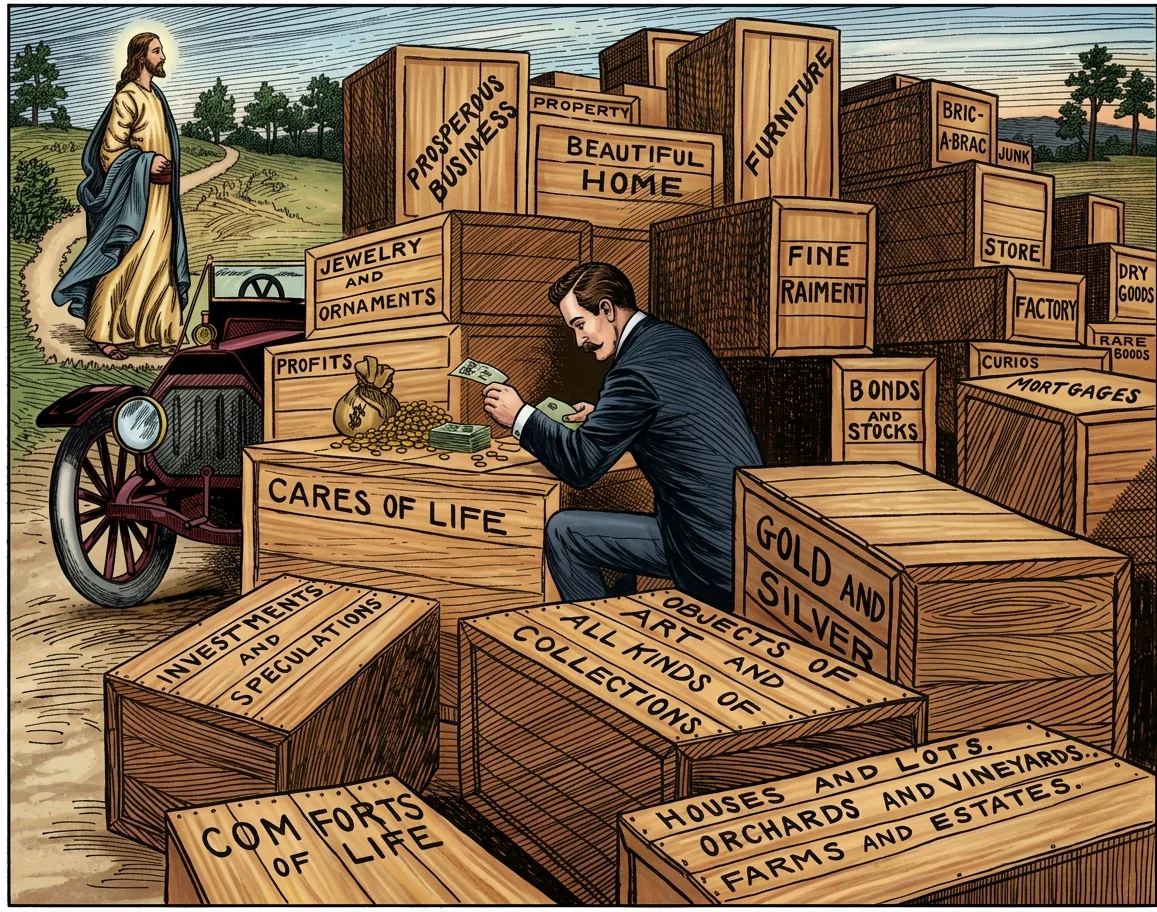
Many centuries ago a finely formed young man, a giant in stature, was divinely called to a very important position. When the time came that he should be presented before the people, they hunted for him a long time in vain, and finally he was found in the encampment hidden “among the stuff.” His modesty, or his sense of his unfitness, had much to do, no doubt, in leading him to do this. While the parable does not fit in every respect, yet it is wonderfully suggestive in these days. God is divinely calling young men now,—not only young men but old men,—men prominent in life, men of all sorts of nationalities and physique. He is calling them as truly to a kingship as He called Saul of old. He is calling them to a work vastly more important than anything that this world can furnish. He is calling them to a crown more illustrious and enduring than that of the British Empire. He is calling them to riches that can not corrupt, which thieves can not break through and steal. He is calling them to an inheritance that shall never pass away. He is calling them to a work that is worthy of all ambition, all effort. He is calling them to a character that is worthy of the crown and the inheritance which He shall give. How sad it is that so many of those that are called will be found at the last great day to be “hid among the stuff”! Prosperous business, beautiful homes, gold and silver, houses and lands, orchards and vineyards, cares of this life, and a thousand other things have brought heart and mind and physical powers into abject slavery, and God is forgotten. Christ comes, but they do not hear Him. He seeks them, but they are willingly hidden, and He will not force them to be His. He passes by, they do not know that He has been there, but sometimes the great day of awakening comes, and they find that He has passed by forever, and the call, vital and weighty with things of eternal import, has passed forever. God wants you, young men, old men, people of all classes and kinds, to enter His service.
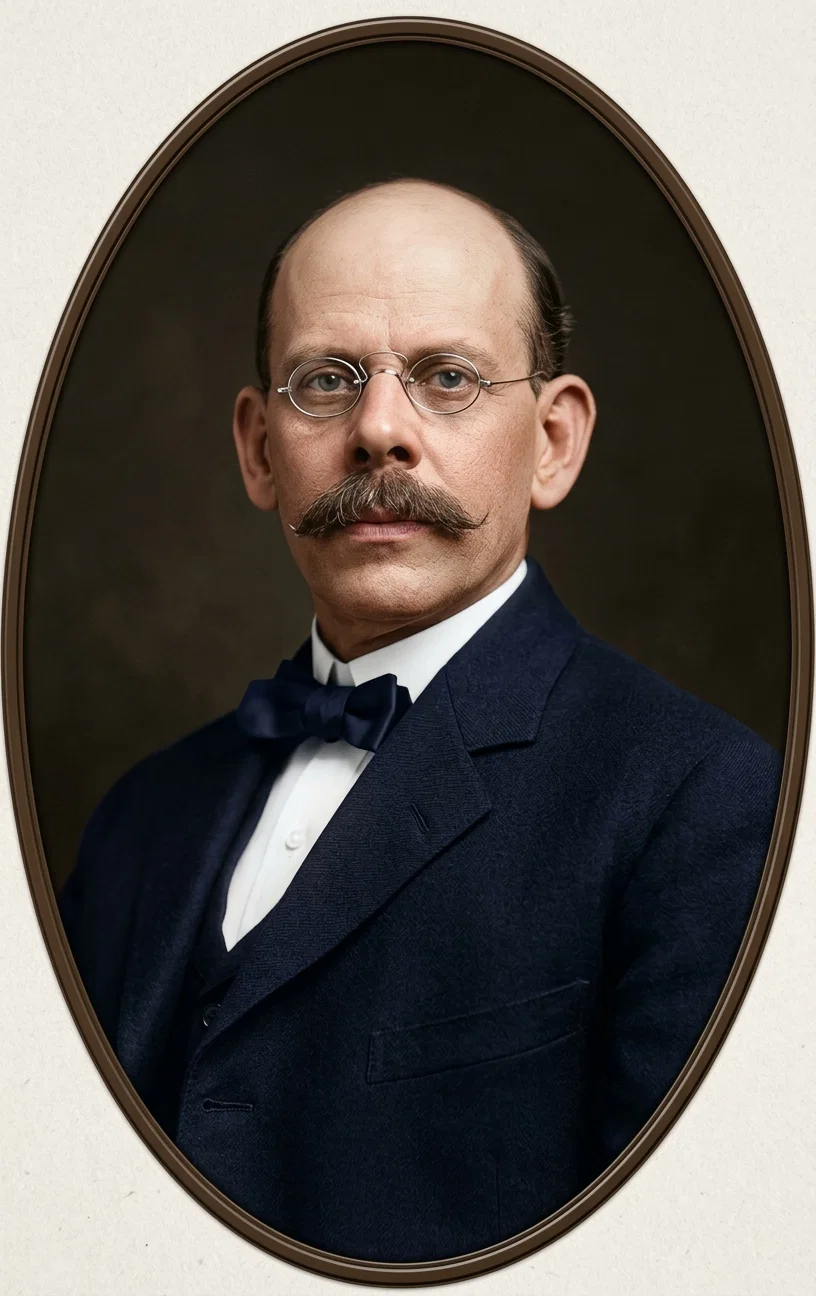
Rev. J. S. Martin, Secretary of the National Reform Association.
World’s Christian Citizenship Conference Preliminaries
From Our Own Correspondent
[This report, from Mr. J. R. Ferren, reaches us just as we are closing the forms. We regret that it is necessary for us to abbreviate it, but it is done in the address of Dr. Coyle, excerpts from which we will give later. More next week. Ed. S. or T.]
UNDER the auspices of the National Reform Association, the second World’s Christian Citizenship Congress, declared by the leaders of this movement to be “in many respects the most significant gathering of Christian forces thus far in history,” opened at the Multnomah Stadium, Portland, Oregon, Sunday afternoon, June 29. Fully five thousand people crowded the great amphitheater when Rev. Henry Collin Minton, of Trenton, New Jersey, president of the conference, called the conference, and invited Dr. R. C. Wylie, of Pittsburg, Pennsylvania, to open the program with a Scripture reading. To greet the representatives gathered from many parts of the United States, and many other countries, there were present Governor West of Oregon, U. S. Judge C. E. Wolverton, Mayor Elect H. R. Albee, and County Judge T. J. Cleeton. Each of these gentlemen spoke in appreciative terms of the expected uplift morally and spiritually which may come to Portland through the influence of this Christian Citizenship Congress.
Dr. J. S. Martin, of Pittsburg, Pennsylvania, general secretary of the National Reform Association, in responding to the words of welcome, set forth briefly the aims of this convention. In part, he said:
“We are here this afternoon for the purpose of conferring. This is not a convention whose action is to be binding upon all who attend and participate. It is rather, as the name indicates, a conference, for the comparison of views and the mutual exchange of practical ideas of leaders of Christian thought and action the wide world over. Liberty of thought and liberty of expression within the limits of Christianity are to be granted to all who are here present. It is furthermore a citizenship conference, not an ecclesiastical conference, altho there are many distinguished ecclesiastics here. There are likewise many here who are representatives of various moral reforms and Christian organizations, not, however, as propagandists. All are here as citizens. And they are here for the purpose, as you have heard, of discussing these great moral problems with which government is all the while dealing, and of very necessity must deal; and therefore, must deal with them on some basis and according to some standard.
“It is here again, note you, a World’s Christian Citizenship Congress, as has been indicated by more than one of those whose welcome was heard. We are discussing these great problems here before us which are of concern to all of us and to the whole world, indeed not upon a materialistic basis, or an economic basis merely, nor may I say on a basis of humanitarianism, but on a distinctly Christian basis. We believe that there is one great solvent of these problems, and that is applied Christianity; and in so far as the governments of the world have to deal with these problems, that they must apply religion, the Christian religion, to these problems in order that they may ultimately and finally be solved. Moreover, this, as you will observe, is a world conference, not a sectional conference, not a national conference, but a world conference. How rapidly indeed the world is becoming one. Broad men are to-day thinking in world forms, and speaking in world terms, and acting in world’s thoughts. There is a world’s public opinion, a world’s conscience, if you will, and all civilized nations hold themselves more or less amenable to this world-directing age. We have world music, art, sanitary, and business conferences. We think that it is about time for the Christian patriots of the world to declare at one gathering such as this that the world’s greatest interests are not culture, art, etc., but the world’s greatest interests are moral and religious. We think that indeed it is about time for the Christian patriots of the world to declare that only by obedience to the moral laws of the Christian religion can even the material fabric of any country be made secure. We have felt that the time has come when the Christian patriots of the world should unite indeed in avowing their allegiance as citizens of their several countries to Him who is King of Kings and Lord of Lords, and declare our desire and our purpose to indeed lay this whole wide world at His feet. Such is the purpose of this conference.”
“I Am for Men” was the subject of an address by the Rev. Robert F. Coyle, of Denver. He declared that the tendency of the age is to overvalue property — things — and undervalue men.
Comparison Is Drawn
“Our courts, our politicians, our journalists lean more toward the money side of things than toward the side of men and of human life. The obscure sinner against property is punished to the limit, while the capitalist who sins against human life, in mine and mill, is exonerated — and frequently honored with a seat in the legislature or in Congress.”
The Rev. U. T. McCrory, of Pittsburg, addressed the conference on the subject “Government of the People, for the People, and by the People,” reviewing some of the principles of government which have made possible the growth and development of the United States of America.
How Father Cured His Horse
“WELL,” said Reuben, the story-teller, “father always wanted a horse because the folks in Greene lived scattered, and he had so far to go to attend funerals and weddings and visit schools, you know; but he never felt as if he could afford to buy one. But one day he was coming afoot from Hildreth, and a stranger asked him to ride.”
“Father said, ‘That’s a handsome horse you’re driving. I should like to own such a horse myself.’
“‘What will you give for him?’ said the man.
“‘Do you want to sell?’ says father.
“‘Yes, I do, and I’ll sell cheap, too,’ says he.
“‘O, well,’ says father, ‘it’s no use talking, for I haven’t the money to buy with.’
“‘Make an offer,’ said he.
“‘Well, just to put an end to the talk,’ father says, ‘I’ll give you seventy-five dollars for the horse.’
“‘You may have him,’ says the man, as quick as a flash, ‘but you’ll repent of your bargain in a week.’
“‘Why, what ails the horse?’ says father.
“‘Ails him? He’s got the Old Nick in him, that’s what ails him,’ says he. ‘If he has a will to go he’ll go; but if he takes a notion to stop all creation can’t start him. I’ve stood and beat that horse till the sweat ran off me in streams. I’ve fired a gun close to his ears. I’ve burned shavings under him. I might have beaten him to death or roasted him alive before he’d have budged an inch.’
“‘I’ll take the horse,’ says father. ‘What’s his name?’
“‘George,’ said the man.
“‘I shall call him Georgie,’ said father.
“‘Well, father brought him home, and we boys were pleased, and we fixed a place for him in the barn, and curried him down and fed him well; and father said: “Talk to him, boys, and let him know you feel friendly.”
“‘So we coaxed and petted him, and the next morning father harnessed him and got into the wagon to go. But Georgie wouldn’t stir a step. Father got out and patted him, and we brought him apples and clover-tops; and once in a while father would say, “Get up, Georgie,” but he didn’t strike the horse a blow. By and by he says: “This is going to take time. Well, Georgie, we’ll see which has got the most patience, you or I.” So he sat in the wagon, took out his skeletons—’
“‘Skeletons?’ said Poppet, inquiringly.
“‘Of sermons, you know. Ministers always carry around a little book to put things into they think of when they are out walking or riding or hoeing in the garden.’
“‘Well, father sat two full hours before the horse was ready to start; but when he did, there was no more trouble for that day. The next morning it was the same thing over again, only Georgie gave in a little sooner. All the while it seemed as if father couldn’t do enough for the horse. He was around the stable, feeding him and fussing over him, and talking to him in his pleasant, gentle way, and the third morning, when he had fed and curried him and harnessed him with his own hands, somehow there was a different look in the horse’s eyes. But when father was ready to go, Georgie put his feet together and laid his ears back, and wouldn’t stir. Well, Dove was playing about the yard, and she brought her stool and climbed up by the horse’s head.’
“‘Dove, tell what you said to Georgie that morning.’
“‘I gave him a talking to,’ said the little girl. ‘I told him it was perfectly ’diculous for him to act so; that he’d come to a real good place to live, where everybody helped everybody; that he was a minister’s horse, and God would not love him if he was not a good horse. That’s what I told him, and then I kissed him on the nose.’
“‘And what did Georgie do?’
“‘Why, heard every word I said; and when I got through he felt so ’shamed of himself he couldn’t hold up his head, so he just dropped it till it almost touched the ground, and he looked as sheepish as if he had been stealing a hundred sheep.’
“‘Yes,’ said Reuben, ‘and when father told him to go he walked off like a shot. He has never made any trouble since. That’s the way father cured a balky horse. And that night, when he was unharnessing, he rubbed his head against his shoulder, and told him, as plain as a horse could speak, that he was sorry. He’s tried to make it up with father ever since for the trouble he made him. When he’s loose in the pasture, father has only to stand at the bars and call his name, and he walks up as quickly as an old sheep.’
“‘He likes to eat out of a plate,’ said Dove; ‘it makes him think he’s folks.’—Golden Censer.
The Theater
[From an article on “The Minister and the Theater,” by Dr. A. C. Dixon]
THE purpose of the stage is to teach people how to act a part; the purpose of the church of Christ is to teach them how to be real.
The purpose of the stage is to amuse; the purpose of the church is to save.
The symbol of the church of Christ is the cross; the symbol of the stage may well be the jester’s bauble.
The purpose of the stage is to make money, and managers are not slow to do so, even at the expense of good morals; the purpose of the church of Christ is to make character, and good morals are not for sale at any price.
The stage gives what the people want, and, sad to say, the worst plays often draw the biggest crowds; the purpose of the church of Christ is to give what people need, regardless of its popularity.
The stage ministers to the “lust of the flesh, and the lust of the eyes, and the pride of life,” which “is not of the Father;” the purpose of the church of Christ is to crucify these things.
The stage is a caterer; the church of Christ is a prophet.
The stage in its tragedies glorifies revenge; the church of Christ teaches forgiveness of enemies and the patient endurance of wrong.
The tendency of the stage is to make people childish in their feverish desire for diversion; the work of the church is to make people childlike in their faith and love and simplicity of character.
The tendency of the stage is to keep the race in its childhood of self-gratifying amusement; the work of the church is to lead the race into the manhood of self-sacrificing achievement. The footlights are suggestive of the fact that the lower tendencies of human nature are there brought into prominence; the church of Christ would magnify the head-light and heart-light that reveal and develop the higher attributes of our being.
In a word, the real church is the incarnation of the spirit of Christ, pure, humble, self-sacrificing, and forgiving; the stage is the incarnation of the spirit of the world, lustful, proud, selfish, and revengeful. And what God hath put asunder, let no man join together.
Country versus City Life
In the North Atlantic States, in 1910, forty-eight per cent of the people lived in small towns and country districts, comprising ninety-nine per cent of the land; and fifty-two per cent lived in cities of 300,000 and over, comprising the remaining area of one per cent. The lure of the great city, a theme saturated with tragedy, has been written of many times. Frederick L. Hoffman, actuary of the Prudential Life Insurance Company, in a recent pamphlet, points out that longevity and diminished liability to disease are decidedly favored in the country. The typhoid fever mortality rate is higher in the country than in the city, but the difference is much less than has often been assumed. Altho the mortality from malaria has been higher, and in many places no doubt still is so, mosquito elimination has greatly reduced the number of cases of malaria in rural districts. While influenza, dysentery, apoplexy, paralysis, heart-disease, and peritonitis also seem more common in the country, some of these are diseases of old age, and the difference is undoubtedly due in great measure to the larger proportion of old persons in the country, the young having migrated to the city. On the other hand, the causes of death more common in the city are venereal diseases, cancer, alcoholism, meningitis, enteritis, bronchitis, the pneumonias, tuberculosis, cirrhosis of the liver, appendicitis, Bright's disease, and death from violence. It is hardly to be hoped that emphasis on the greater healthfulness of the country will influence any one who is determined to enter city life. No appeal of this or any other kind has hitherto13proved effective in the history of civilization. But it is encouraging to the dweller in the country to know that his chances for long and healthy life are better than those of his brother in the city.— Journal of the American Medical Association.
Bibles in Real Morocco Binding
This is a new leather, noted for its flexibility, beautiful appearance, and durability. All Real Morocco bindings are calf lined, making practically a double cover. They give entire satisfaction.
REFERENCE BIBLES
“INDIA PAPER” EDITION, MINION (Size, 6¾ x 4¾ inches)
P100x — Real Morocco, divinity circuit, calf lined to edge, silk sewed — $ 4.25
MINION, BLACK-FACED (Size, 7¼ x 5 inches)
P101x — Real Morocco, divinity circuit, calf lined to edge, silk sewed — 5.50
BREVIER, BLACK-FACED (Size, 7 x 4¾ inches)
P102x — Real Morocco, divinity circuit, calf lined to edge, silk sewed — 6.00
BREVIER, SELF-PRONOUNCING (Size, 7¾ x 5¾ inches)
P103x — Real Morocco, divinity circuit, calf lined to edge, silk sewed — 6.00
CONCORDANCE BIBLES
“INDIA PAPER” EDITION, MINION (Size, 7¼ x 5 inches)
P104x — Real Morocco, divinity circuit, calf lined to edge, silk sewed — 5.25
BREVIER, SELF-PRONOUNCING (Size, 7½ x 5 inches)
P105x — Real Morocco, divinity circuit, calf lined to edge, silk sewed — 7.00
Bibles.— Remember that we are headquarters for anything in the Bible line. Pacific Press Publishing Assn., Mountain View, California.
A BARGAIN
If taken soon, $1,150 cash will buy a house two blocks from Fernando Academy. Lot 100 x 150 feet, set to oranges, lemons, grapes, and olives. A six-room house with cellar, woodshed, and city water. Address W. J. Dart, 2006 Thomas Avenue, Fresno, California.
FOR SALE IN LOMA LINDA
By M. C. Chapman
Large California house, 3 large lots; 60 bearing peach trees, several kinds bearing grape-vines, over 200 red gum trees two years old; pumping plant and 3,300 gallon tank for irrigating, water comes from creek running through place; barn and chicken yard. Church school within 3 blocks. M. C. Chapman, Loma Linda, California.
Midsummer, “What to Do First” and “Digestive Disorders” Number
OF
LIFE and HEALTH
The Magazine that tells you how to prevent, as well as cure disease
AUGUST FEATURES
Beautiful Front Cover
What to Do First; for Burns, Drowning, etc.
Digestive Disorders — How to Remedy
Sunlight and the Body
What Is the “Staff of Life?”
Is Alcohol Never a Food?
What to Do for Hay-Fever
First Aid for Asphyxia or Drowning
The First Thing to Do for Burns
Friedmann Tuberculosis Treatment
Questions and Answers Department etc.
June edition sold out by May 28; July by June 20. Second edition of 10,000 for July now printing
$1.00 a year
10 cents a copy
Many agents make from $2.00 to $5.00 a day. Apply for agency to-day. Address nearest agency or
LIFE AND HEALTH
Washington, D. C.
The Surest Purest Method of sealing jellies and preserves is by the use of Parowax
(Pure Refined Paraffine)
It’s so easy. Just melt and pour over the cooled preserves. Seals absolutely air tight.
Guaranteed under the Pure Food and Drugs Act.
Dealers Everywhere
Standard Oil Company (CALIFORNIA)
SAN FRANCISCO
BEAUTIFUL SCRIPTURE POST-CARDS
Put up in packages. 60 cents clear profit on every 90 cents invested. Send in your order at once while we make this great offer. Handsome Bible Text Mottos, $3.65 per 100 prepaid. Waterbury Specialty Co., Pomona, California.
FOR SALE
A six-room cottage in Mountain View, with modern conveniences. Half acre, with assorted fruit and nut trees, also several varieties of table grapes, all bearing. Terms easy. Address Advertising Department, SIGNS OF THE TIMES, Mountain View, California.