THE brethren at Urbana, Iowa, have about completed a new house of worship.
AT Massena, Iowa, a few weeks ago ice was cut in order to prepare a place for the baptism of candidates.
IT is reported from Oklahoma City that twelve persons have recently united with the church, whose attention was attracted to the doctrines we hold by literature placed in the distributers.
NEAR Tustin, Mich., our people have a church in the country, where Elders R. C. Horton and J. E. Evans recently held meetings, which resulted in ten starting out to serve the Lord.
"THOU therefore, my son, be strong in the grace that is in Christ Jesus. And the things that thou hast heard of me among many witnesses, the same commit thou to faithful men, who shall be able to teach others also." 2 Tim. 2:1, 2.
ELDER E. E. ANDROSS gives very encouraging reports of meetings held in various parts of Southern California, in which Elder Haskell took a leading part. Elder J. H. Morrison took part in the extended meeting at Los Angeles.
ELDER R. S. DONNELL, president of Upper Columbia Conference, gives the following report of labor in that Conference from June 1 to December 31, 1893: Baptisms, 96; added to the churches, 144; signed covenant in new fields, 44.
A NOTE from Prof. E. C. Keck in the Review of January 30 states that the grand jury of Gainesville, Ga., had found bills against himself and Elder W. A. McCutcheon for violation of the Sunday law of the State, and that their cases would come up in the city court the third Monday in this month.
ELDER WM. COVERT, president of Vermont Conference, writes, under date of January 26, that he was visiting his family in Indianapolis, but spending part of his time among the churches in that field. He expected to return to his Vermont charge about the 10th inst. His address is 190 N. Winooski Avenue, Burlington, Vt.
SISTER ALMIRA RUOFF, writing of the work in South Africa, says: "The school year at Claremont Union College has been a prosperous one, and the students have made good progress, not only in the class work but in the 'Home' domestic work as well. Considering the fact that white children in Africa are not raised to do housework, it is remarkable how proficient they have grown in household duties in one short year."237
BROTHER J. W. KELCHNER, formerly a laborer in California Conference, now in Georgia, writes of the institute held at Atlanta: "I was not a little surprised to find gathered here over a hundred workers from different parts of the Southern field."
SISTER M. A. HASKELL, wife of Elder S. N. Haskell, died at Napa, Cal., January 29, aged 81 years. She had been an invalid during sixty years of her life, and twelve years confined to her bed. She embraced the doctrines held by Seventh-day Adventists forty years ago, and died in the blessed hope.
A SABBATH school of twenty-six members was recently organized at Lakeside, Cal., by Brother BAXTER HOWE. He reports a combined effort of three ministers—Methodist, Christian, and United Brethren—to break down the Bible doctrine of the Sabbath, and notes that when they got rid of the Sabbath, they had neither Christ nor the Bible left. Such a result would be but a natural consequence.
THE GATHERING CALL.
By D. E. W.
BY D. E. W.
“When He putteth forth His own sheep, He goeth before them.”John 10:4.
The gathering call of God is sounding;
Away to the fields, then, let us go;
With ripened grain the fields abounding,
Thrust in thy sickle and reap them now.
Haste! ye idlers in the vineyard;
Oh, hasten! hasten! why delay?
Hear, oh, hear the Master calling,
“Go and reap the fields to-day”!
Why in a napkin fold the talent
He has given you to use?
Why stand ye all day idly waiting,
And thus the Master’s trust abuse?
Highland Park, Ill.
International S. S. Lessons.
"So they read in the book in the law of God distinctly, and gave the sense, and caused them to understand the reading."—Neh. 8:8
LESSON VIII.—SUNDAY, FEBRUARY 25, 1894.
[NOTE.—The questions which follow are merely suggestive for the student on the leading points of the lesson; it is presumed that the thorough student will think of many more as he studies the subject. References, where verses alone are given, always refer to the lesson scripture printed above. All other references are given in book, chapter, and verse. The text printed is that of the Revised Version, not because it is especially preferred, but because it is not found in every family, as in the common version.]
1. And it came to pass after these things, that God did prove Abraham, and said unto him, Abraham; and he said, Here am I.
2. And he said, Take now thy son, thine only son, whom thou lovest, even Isaac, and get thee into the land of Moriah; and offer him there for a burnt offering upon one of the mountains which I will tell thee of.
3. And Abraham rose early in the morning, and saddled his ass, and took two of his young men with him, and Isaac his son; and he clave the wood for the burnt offering, and rose up, and went unto the place of which God had told him.
4. On the third day Abraham lifted up his eyes, and saw the place afar off.
5. And Abraham said unto his young men, Abide ye here with the ass, and I and the lad will go yonder; and we will worship, and come again to you.
6. And Abraham took the wood of the burnt offering, and laid it upon Isaac his son; and he took in his hand the fire and the knife; and they went both of them together.
7. And Isaac spake unto Abraham his father, and said, My father; and he said, Here am I, my son. And he said, Behold, the fire and the wood; but where is a lamb for the burnt offering?
8. And Abraham said, God will provide himself the lamb for a burnt offering, my son; so they went both of them together.
9. And they came to the place which God had told him of; and Abraham built the altar there, and laid the wood in order, and bound Isaac his son, and laid him on the altar, upon the wood.
10. And Abraham stretched forth his hand, and took the knife to slay his son.
11. And the angel of the Lord called unto him out of heaven, and said, Abraham, Abraham; and he said, Here am I.
12. And he said, Lay not thine hand upon the lad, neither do thou anything unto him; for now I know that thou fearest God, seeing thou hast not withheld thy son, thine only son, from me.
13. And Abraham lifted up his eyes, and looked, and behold, behind him a ram caught in a thicket by his horns; and Abraham went and took the ram, and offered him up for a burnt offering in the stead of his son.
14. And Abraham called the name of that place Jehovah-jireh; as it is said to this day, In the mount of the Lord it shall be provided.
15. And the angel of the Lord called unto Abraham a second time out of heaven, and said,
16. By myself have I sworn, saith the Lord, because thou hast done this thing, and hast not withheld thy son, thine only son:
17. That in blessing I will bless thee, and in multiplying I will multiply thy seed as the stars of the heaven, and as the sand which is upon the seashore; and thy seed shall possess the gate of his enemies;
18. And in thy seed shall all the nations of the earth be blessed; because thou hast obeyed my voice."
Golden Text.—"By faith Abraham, being tried, offered up Isaac." Heb. 11:17.
SUGGESTIVE QUESTIONS.
1. Give a synopsis of the events between this and our last lesson. Note 1.
2. After Abraham left the land of the Philistines, what did God do with respect to him? Verse 1.
3. What was the test which the Lord used to prove him? Verse 2.
4. How promptly did Abraham obey? Verse 3. Note 2.
5. Whom did he take with him? Verse 3.
6. How long was he on his journey? Verse 4. Note 3.
7. When they reached the place, what did he say to his servants? Note 4.
8. Where did Abraham and Isaac then go? Verse 6.
9. When they were going to the place, what did Isaac ask his father?
10. When they came to the place, what did Abraham do? Verse 9. Note 5.
11. After laying Isaac upon the altar, what did Abraham do?
12. How was he kept from slaying him? Verse 11.
13. In what language did the Lord approve his course? Verse 12.
14. How did God provide an offering? Verse 13.
15. What did Abraham call that place? Verse 14.
16. Because of Abraham's faith, how did the Lord238again assure him of his blessing? Verses 15, 16. See note 6.
17. What did the Lord further promise in regard to Abraham and his seed?
18. Who is this seed?
"And if ye are Christ's, then are ye Abraham's seed, heirs according to promise." Gal. 3:29.
NOTES.
1. Our last lesson took in the destruction of Sodom and Gomorrah. The remainder of the 19th chapter gives us an account of the incestuous origin of the nations of Ammon and Moab. In chapter twenty we have an account of Abraham's sojourn among the Philistines, the history showing that Abimelech had the knowledge of the true God, and that that nation had a much higher regard of morality than the other nations of Palestine. In chapter twenty-one we have recorded the birth of Isaac; the mocking of Isaac by Ishmael; the sending away of Hagar, and God's mercy to her in the wilderness. The last part of the chapter records the separation from Abimelech, the king of the Philistines, which brings us to our lesson of to-day.
2. And Abraham rose early.—In the promptness of Abraham's obedience was shown his perfected faith in God. When God first promised that his seed should be as the stars of heaven, Abraham thought it would have to be through his trusted servant. The Lord corrected him upon this, and told him it should be from his own seed, and then Abraham and his wife thought it must come through his maidservant. While he believed God, he believed his own works and wisdom must have a part in the fulfillment of God's promise. The Lord again told him that his seed was not to come in that way, but that Sarah, his wife, should bear the child of promise; and Abraham believed the Lord. And now that that son had grown to be a young man, God tested the faith of his servant again, and said unto him, "Take now thy son, thine only son, whom thou lovest, even Isaac, . . . and offer him . . . for a burnt offering." If Abraham had not had faith in that God who had guided him through all his past life, he would have hesitated and waited, and human wisdom would have found some excuse by which to evade the plain command of God. But Abraham did not even hesitate; he did not put it off in the morning, as naturally he would have done. Strong as was his love for his son, his simple faith in God's wisdom was more, and he promptly obeyed. That is what simple faith always does.
3. On the third day.—Notice the strength of the test. Many men do brave things through impulse. The decision is made at once and the act is soon over; but Abraham had, during his long three days' journey, time to ponder God's command and think of the terribleness of the sacrifice. One writer has said: "Side by side the father and son journeyed in silence. The patriarch, pondering his heavy secret, had no heart for words. His thoughts were of the proud, fond mother, and the day when he should return to her alone. Well he knew that the knife would pierce her heart when he took the life of her son. That day—the longest that Abraham had ever experienced—dragged slowly to his close. While his son and the young men were sleeping, he spent the night in prayer: still hoping that some heavenly messenger might come to say that the trial was enough, that the youth might return unharmed to his mother; but no relief came to his tortured soul. Another long day, another long night of humiliation and prayer, while ever the command that was to leave him childless was ringing in his ears. Satan was near to whisper doubts and unbelief; but Abraham resisted his suggestions. Even now he did not murmur against God, but strengthened his soul by dwelling upon the evidences of the Lord's goodness and faithfulness."—Patriarchs and Prophets, p. 151. Saw the place afar off.—God evidently gave Abraham some sign by which he would know it. He told him to go to the place that he would afterward tell him of, and when Abraham saw the place afar off, he knew it. It might have been a cloud of glory, the presence of holy angels hovering over Mount Moriah. It is interesting to know that upon this very spot the temple was afterward built.
4. We will worship, and come again to you.—In this expression is shown Abraham's faith, for we certainly would not accuse him of telling a falsehood. He certainly expected to offer up Isaac as the burnt offering, and he therefore knew that Isaac would have to die. But he also knew that God said the promised Seed should come through Isaac, and he therefore believed that God would raise Isaac from the dead. "By faith Abraham, being tried, offered up Isaac; yea, he that had gladly received the promises was offering up his only-begotten son; even he to whom it was said, In Isaac shall thy seed be called; accounting that God is able to raise up, even from the dead; from whence he did also in a parable receive him back."
5. Bound Isaac his son.—Evidently Isaac submitted to God's will in this as did Abraham, for he was a young man, and doubtless strong enough to resist his aged father. The binding was evidently done without a struggle, for Isaac had faith in his father and in his father's God.
6. As the faith of Abraham grew stronger, God's promises were given brighter and fuller, and when Abraham endured his supreme test of faith, God confirmed his promise with an oath. Not that Abraham especially needed it, but he did it in order to give hope to those who should live after Abraham. "For men swear by the greater; and in every dispute of theirs the oath is final for confirmation. Wherein God, being minded to show more abundantly unto the heirs of the promise the immutability of his counsel, interposed with an oath; that by two immutable things, in which it is impossible for God to lie, we may have a strong encouragement, who have fled for refuge to lay hold of the hope set before us."
WHAT A SUBSCRIBER SAYS.
By Editor
THE following is a sample in some respects of many letters which come to us at this office:—
DEAR "SIGNS OF THE TIMES:" Your welcome weekly visit to our home always brings us something interesting and elevating, and we would miss you more than any other of our papers. We take the Inter-Ocean and the Patriotic American, but we would rather miss them both than the SIGNS OF THE TIMES. In fact, we think the SIGNS is the best weekly religious paper we have ever read, and the longer we read it the better we are pleased with it. I think if a person were induced to sign for one year that they would be a subscriber ever after.
PERIODICALS WANTED.
By Editor
D. A. CORKHAM, of Hantsport, N. S., says that he can use tracts and envelopes for missionary work in that town and other places. By this is meant, I suppose, those packages of tracts which have been put up in envelopes for loaning. It does not matter to him if these tracts have been used and are a little soiled, because he can use them among the fishermen. They should be sent postage prepaid.
MRS. E. A. PASCOE, 12 North Wyoming Street, Butte City, Mont., solicits copies of our periodicals and tracts for distributer work.
DOES THIS MEAN YOU?
By Editor
WE notice on examination of our SIGNS list that many clubs and single subscriptions expire during the month of February. We feel sure that none want to miss any of the valuable instruction that is being printed from week to week in the SIGNS. We therefore advise early renewals, thus saving a break in the series of articles.
Please notice the date on your address label of this number, and if your time has about expired please renew at once. This will save us trouble, as well as yourself.
CHURCH SERVICES.
All of our churches, especially on this coast, who desire their regular weekly services announced in this column, may have it done by reporting through the proper officers.
Oakland.—Church at corner of Twelfth and Brush Streets. Regular preaching services or Bible study, Sunday at 7:30 P.M., Friday at 7 P.M., and Sabbath at 11 A.M. Sabbath school at 9:30 A.M. Sabbath. Prayer and missionary meeting Wednesday at 7:30 P.M. All are cordially invited.
San Francisco.—Church at 914 Laguna Street. Regular preaching services at 7:30 P.M. Sunday and 11 A.M. Sabbath. Sabbath school at 9:45 A.M. Prayer meeting Wednesday 7:30 P.M. Missionary meeting Thursday 7:30 P.M. Seats free.
Los Angeles.—Church at 143 Carr Street. Preaching service Sunday evening 7:30. Missionary meeting Wednesday evening 7:30. Sabbath school on Sabbath at 9:45, and preaching service at 11 A.M. All are welcome.
East Portland, Oregon.—Church, No. 507 East Ankeny St. Services every Sabbath 11:30 A.M. Sabbath school 10 A.M. Missionary meeting evening after Sabbath 7 P.M. Prayer meeting every Wednesday evening 7 o'clock. All welcome. Seats free.
Washington, D. C.—Church on Eighth Street between F and G Streets, N. E. Regular preaching service at 11 A. M. Sabbaths. Sabbath school 9:15 A. M. Sunday, 7:30 P. M., Bible study. Prayer meeting Friday at 7:30 P. M. All are welcome.
H. W. HERRELL, Clerk.
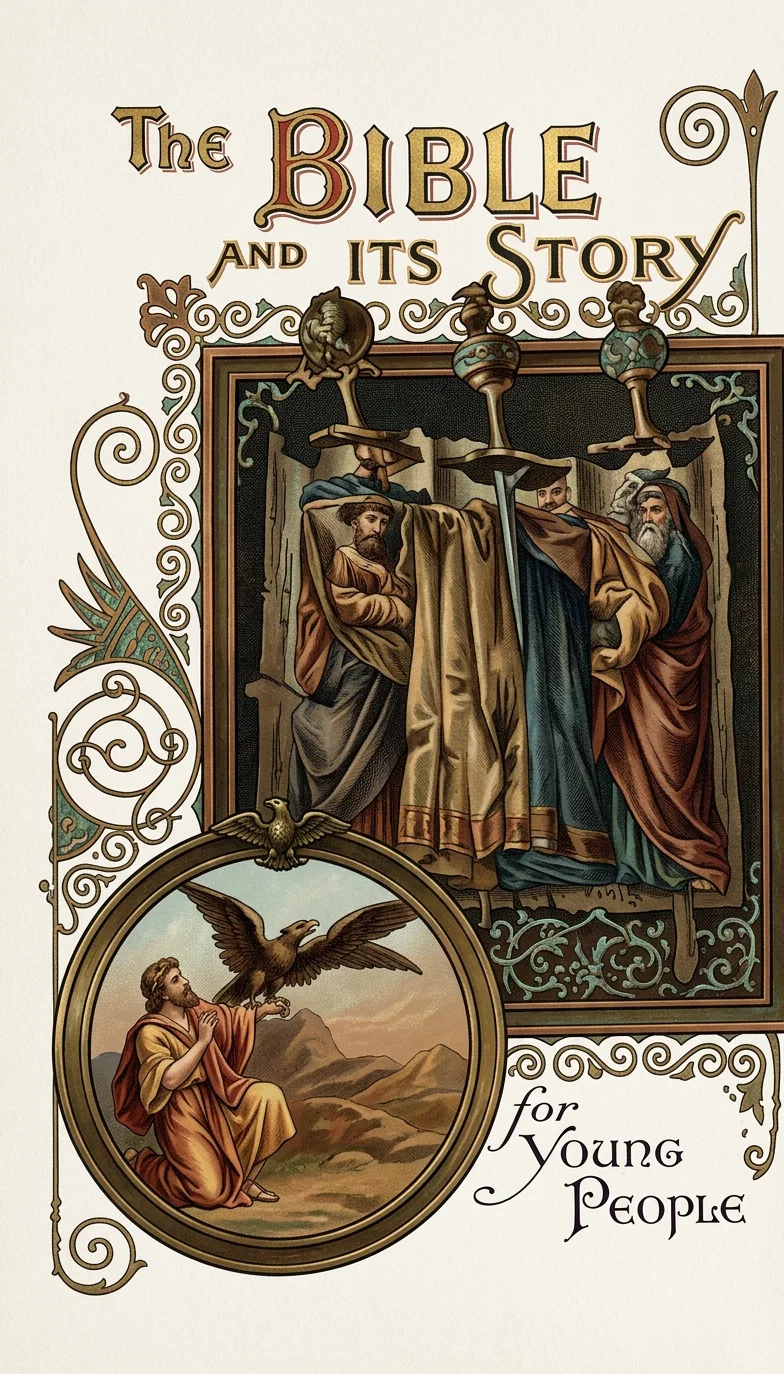
THE BIBLE
By Josephine Pollard
AND ITS STORY
BY
JOSEPHINE POLLARD
Author of "The History of the New Testament in Words of One Syllable;" "History of the Old Testament;" "Battles of America."
This volume has been published to assist parents, guardians, and teachers in the religious instruction of those under their charge by enabling them to place in the hands of children a book which would tell the Biblical story without one objectional sectarian bias. It is an object that has been steadily in view throughout its preparation has been to present a connected narrative of the sacred events consecutively arranged in the order of their occurrence, and described in such simple language as could be easily understood by youthful readers. It is believed that no more correct, complete, and accurate recital of scriptural history has ever been made for the use of the young.
The book comprises 276 pages. There are 250 illustrations (many of them full-page), of which a list is prefixed to the volume. Especial attention is called to the Index, which occupies twenty-two double columns, and contains upwards of two thousand references to the text. The great fullness of this of itself render the volume invaluable to all who desire that a familiar knowledge of the incidents of the Bible may not be acquired at too early an age.
This work is the only full, complete, reliable and readable History of California. Commencing with the very first account of the country found in old records, it traces the development, illustrates the progress, and shows, step by step, how this became what it now is, the "Golden State" of the Union. All is related in a plain, steady, direct and fascinating style, and so arranged and fitted together as to form a continuous and harmonious story. There is not a dull page in the book.
The strictest regard for truth is preserved and authorities are cited for every statement, such a number of references are given as to form a good index to California books.
Over 400 octavo pages. Cloth, $3.50. Morocco, $6.00.
Says the author; "I have made no effort to compile dry, consecutive details of contemporaneous history, but simply to sketch a picture, imperfect as it may be, of life in California as I found it, while yet in its primitive, pastoral solitude, in contrast with the populous and thriving civilization which I have seen grow up around me."
Capt. Swasey is believed to be the oldest continuous resident of San Francisco.
The book gives the biographies of over 60 pioneers who came to California before the discovery of gold; and also of over 20 of the "men of '49," whom the author terms "argonauts" in contradistinction to those who came to California before the discovery of gold.
THE SECOND ADVENT.—Assorted Tract Package No. 3, contains 96 pages; price, 10 cents. Subjects considered—The Coming of the Lord, Is the End Near? Can We Know? The Signs of the Times, The Judgment, and The Second Advent of Our Lord. Address, Pacific Press, Oakland, Cal.
And Jesus, full of the Holy Spirit, returned from the Jordan, and was led by the Spirit into the wilderness during forty days, being tempted of the devil.
And he did eat nothing in those days; and when they were completed, he hungered.
And the devil said unto him, If thou art the Son of God, command this stone that it become bread.
And Jesus answered unto him, It is written, Man shall not live by bread alone.
And he led him up, and showed him all the kingdoms of the world in a moment of time.
And the devil said unto him, To thee will I give all this authority, and the glory of them; for it hath been delivered unto me; and to whomsoever I will I give it.
If thou therefore wilt worship before me, it shall all be thine.
And Jesus answered and said unto him, It is written, thou shalt worship the Lord thy God, and him only shalt thou serve.
And he led him to Jerusalem, and set him on the pinnacle of the temple, and said unto him, If thou art the Son of God, cast thyself down from hence: for it is written,
He shall give his angels charge concerning thee, to guard thee: and,
On their hands they shall bear thee up, lest haply thou dash thy foot against a stone.
And Jesus answering said unto him, It is said, Thou shalt not tempt the Lord thy God.
And when the devil had completed every temptation, he departed from him for a season.
And Jesus returned in the power of the Spirit into Galilee: and a fame went out concerning him through all the region round about.
And he taught in their synagogues, being glorified of all.
And he came to Nazareth, where he had been brought up; and he entered, as his custom was, into the synagogue on the Sabbath day, and stood up to read.
And there was delivered unto him the book of the prophet Isaiah. And he opened the book, and found the place where it was written,
The Spirit of the Lord is upon me, because he anointed me to preach good tidings to the poor; he hath sent me to proclaim release to the captives, and recovering of sight to the blind, to set at liberty them that are bruised,
To proclaim the acceptable year of the Lord.
And he closed the book, and gave it back to the attendant, and sat down; and the eyes of all in the synagogue were fastened on him.
And he began to say unto them, To-day hath this scripture been fulfilled in your ears.
And all bare him witness, and wondered at the words of grace which proceeded out of his mouth; and they said, Is not this Joseph's son?
LESSON SUMMARY.—This lesson is sufficiently outlined by the heading. Associate it with the fourth chapter of Luke, and you will know where to turn for some of the most valuable lessons that the Bible contains.
Where did Jesus go after his baptism?
What did he there endure for forty days?
At the close of the forty days' trial, when he was exhausted with hunger, what did the devil say to him?
What did Jesus reply?
What did the devil show to Jesus?
What did he offer him? and on what condition?
What claim and authority did he assert?
What did Jesus say to this?
Where did Satan next take Jesus?
How did he fortify his temptation?
How did Jesus meet his temptation?
After failing in all these attempts, what did the devil do?
Where did Jesus then go?
How well known did he become?
What did he do?
What did he do when he came to Nazareth?
What book was given to him?
What prophecy of Isaiah did he find?
When he closed the book, what were the people doing?
What did Jesus begin to say unto them?
How did the people receive his words at first?
What effect did his gracious words have on them?
NOTES.
1. The order of the three great temptations is given differently in Matthew from what it is in Luke; but there is not the slightest contradiction between the accounts. It seems evident that Matthew has given the exact order in which the temptations occurred, for the greatest temptation of all,—the one in which Christ called Satan by name, and told him to get behind him,—is by Matthew given last. Luke simply gives the facts, without indicating anything about the order of their occurrence.
2. In Luke's narrative we have an item that is not given elsewhere, and which is sometimes overlooked, namely, that Jesus was being tempted during all of the forty days of his fast. At the close of the forty days' fast, when Jesus was enfeebled and emaciated by hunger, the devil brought his greatest temptation to bear.
3. "It is written that man shall not live by bread alone, but by every word that proceedeth out of the mouth of God." The way in which Jesus met this temptation is an illustration of this scripture. He gave us an example of how to meet temptation. It is not by parleying with it, not by will power, but by the word of God. The Holy Spirit will bring the word to mind in time of temptation, providing we have made a study of it. It is thus that when the enemy comes in like a flood, the Spirit of the Lord lifts up a standard against him. Isa. 59:19. Jesus "did no sin, neither was guile found in his mouth;" and in this, says the apostle, he was an example to us, that we should follow his steps. 1 Peter 2:21, 22. Accordingly, the beloved disciple says: "We know that whosoever is born of God sinneth not; but he that is begotten of God keepeth himself, and that wicked one toucheth him not." 1 John 5:18. How does he keep himself so that the wicked one does not touch him?—By the "shield of faith, wherewith ye shall be able to quench all the fiery darts of the wicked." Eph. 6:16. But "faith cometh by hearing, and hearing by the word of God." Rom. 10:17. Therefore it is by the word of God that we are to be kept from sin.
4. It will be noticed that Jesus stopped short in the prophecy which he read from Isaiah. Compare Luke 4:18, 19 and Isa. 61:1, 2. He had come to preach the acceptable year of the Lord. He was also anointed to proclaim the day of vengeance of our God; but that was not his work then. He "came not to judge the world, but to save the world." John 12:47; 3:17. The scripture that was fulfilled in their ears that day was wholly a message of mercy, and as such it would be a response in the hearts of the people. "And all bare him witness." Involuntarily they uttered the "amen" with which the Jews were accustomed to respond. In their case was manifested the power of the simple word of God. They could not but be melted by it, until they hardened their hearts by unbelieving questions.
5. "THE SPIRIT OF THE LORD IS UPON ME," ETC.—All this was fulfilled hundreds of years ago. That is, all the liberty that Jesus came to bestow was then available for the men of Nazareth. The deliverance was for them. Then certainly there is no reason for us to think that we must wait till some future time for its fulfillment to us. Who are they that are bound?—It is all who are in sin. When the Jews boasted of their freedom, Jesus said: "Everyone that committeth sin is the bond servant of sin. And the bond servant abideth not in the house forever; but the Son abideth ever. If therefore the Son shall make you free, ye shall be free indeed." John 8:34-36, Revised Version. Christ came to proclaim freedom from sin to them that are bound by sin. The thought of such a possibility is almost too great for the mind to grasp, yet we have the word of God for it, and must believe it. But the power does not rest in man. It is "not by might, nor by power, but by239my Spirit, saith the Lord." Zech. 4:6. When we take God into the account, then it is not too much to believe that men may be perfectly freed from sin. No limit can be set to his power. The things that are impossible with men, are possible with God. Then shall we not yield ourselves wholly to him, submitting to him every moment, that his divine power, which brings to us all things that pertain to life and godliness (2 Peter 1:3), and which also keeps us in the way of life and godliness (1 Peter 1:5; Jude 24, 25), may abide with us continually?