The Youth’s Instructor, Vol. 35, No. 17.

HORACE GREELEY

The Youth’s Instructor

Apr 27, 1887

S. D. A. Publishing Association · Battle Creek, Mich. · Apr 27, 1887

HORACE GREELEY.
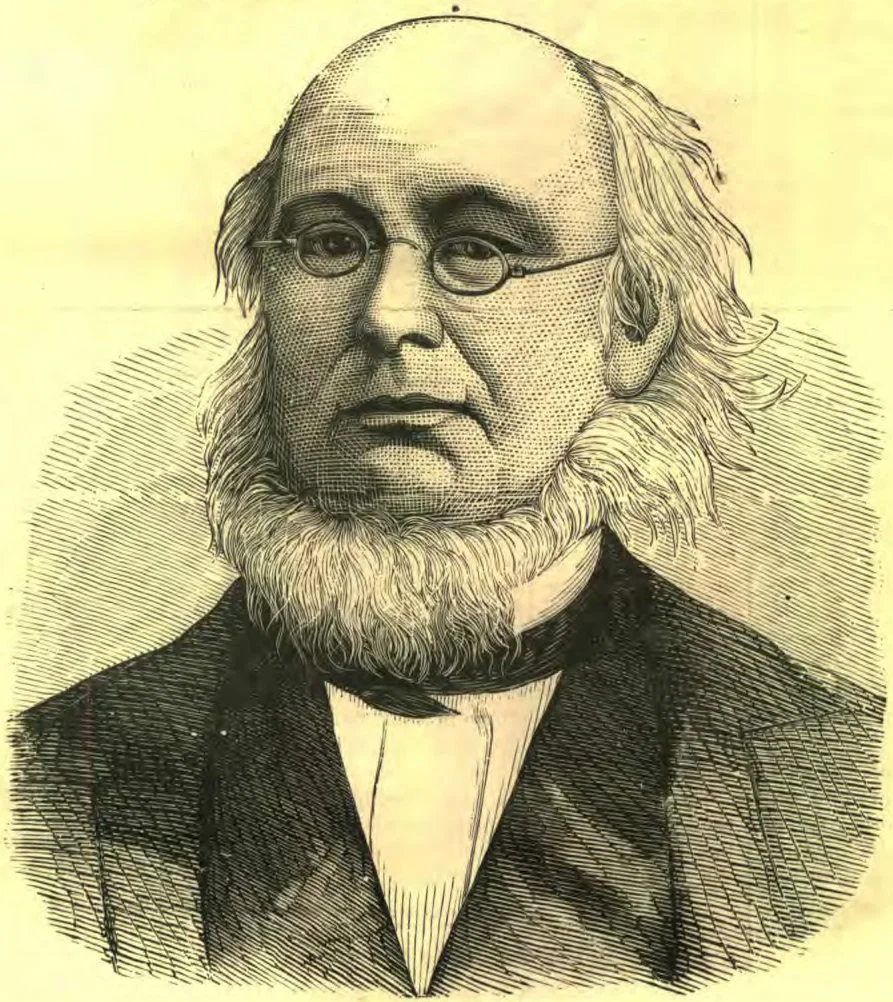
SOMETHING over seventy years ago there lived in a settlement of Scotch-Irish in Londonderry, New Hampshire, a lad by the name of Horace Greeley. He was a sickly child, often under medical treatment; but the tender care his mother was called upon to bestow on him only endeared him to her the more. “I was,” he wrote in after years, “her companion and confidant about as early as I could talk; and her abundant store of ballads, stories, anecdotes, and traditions was daily poured into my willing ears. I learned to read at her knee,—of course, longer ago than I can remember; but I can faintly recollect her sitting spinning at her ‘little wheel,’ with the book in her lap whence I was taking my daily lesson; and thus I soon acquired the facility of reading from a book sidewise or upside down as readily as in the usual fashion,—a knack which I did not at first suppose peculiar; but which, being at length observed, became a subject of neighborhood wonder and fabulous exaggeration.”
In those early days when spelling was the principal thing taught in the district school, young Horace made himself a neighborhood fame in this direction. “The spelling matches,” he says, “usually took place in the evening, when I could not keep my eyes open, and should have been in bed. It was often necessary to rap me sharply when ‘the word’ came to me; but I never failed to respond; and it came to be said that I spelled as well asleep as awake. I apprehend that this was more likely to be true of some others of the class; who, if ever so sound asleep, could scarcely have spelled worse than they did.”
As Horace grew stronger, he was obliged to do his part toward wrestling a living from their stony, sterile New England farm. But farming then was not the science which it has since grown to be; and the lad’s ambitious, active mind could find little that was congenial in this employment. “Our farmers’ sons escape their fathers’ calling whenever they can,” says Greeley, “because it is made a mindless, monotonous drudgery, instead of an ennobling, liberalizing, intellectual pursuit. Could I have known in my youth what a business farming sometimes is, always may be, and yet generally shall be, I would never have sought nor chosen any other. In the farmer’s calling, as I saw it followed, there was neither scope for expanding faculties, incitement to constant growth in knowledge, nor a spur to generous ambition. To preserve existence was its ordinary impulse; to get rich, its exceptional and most exalted aim. So I turned from it in dissatisfaction, if not in disgust, and sought a different sphere and vocation.”
When about fourteen years old, Greeley bade adieu to the farm, and entered a printing office; for from early childhood he had, as he said, “loved and devoured newspapers.” He worked at printing until he became accurate and proficient at the trade; and when barely twenty-two, he, in company with another young man, set up a small printing house in New York City, where he had come two years before with but ten dollars in his pocket. It would be too long a story to recount all his successes and failures before he fairly launched out in the great enterprise of his life,—the founding and editing of the New York Tribune, a political paper which wielded great influence in the abolition of slavery and other social and political reforms. “Writing,” as he says in his Autobiography, “the plainest and squarest Anglo-Saxon I know, and often speaking of political opponents, their works, ways, and words, in terms that could by no possible stretch of courtesy be deemed flattering,—terms, doubtless, sometimes misjudging and undeserved,”—he made himself many bitter enemies, but also many warm friends.
His journalism lay very near to his heart. “Fame,” he says, “is a vapor; popularity an accident; riches take wings; the only earthly certainty is oblivion; no man can foresee what a day may bring forth; while those who cheer to-day will often curse to-morrow; and yet I cherish the hope that the journal I projected and established will live and flourish long after I have moldered into forgotten dust, being guided by a larger wisdom, a more unerring sagacity to discern the right, though not a more unfaltering readiness to embrace and defend it at whatever personal cost; and that the stone which covers my ashes may bear to future eyes the still intelligible inscription, ‘Founder of the New York Tribune.’”
In 1872 Mr. Greeley ran for President, but was defeated in the election of General Grant. The intense excitement preceding the election, together with the sickness and death of his wife, told severely on Mr. Greeley, both mentally and physically. He sank beneath the strain, and died Nov. 29, 1872, closing sixty-one years of the most incessant toil for the benefit of his countrymen.
Like many other men of strong convictions and generous impulses, he sometimes made mistakes, but we may admire his willingness to help the needy, his industry, and his unswerving integrity to be true to his convictions regardless of the political favors he might lose by so doing. W. E. L.

VIOLET'S OLD SHOES.

“O MAMMA!” exclaimed Violet, as she ran into her mother's room just before breakfast one beautiful Sabbath morning in the beginning of winter, “my new shoes which came home after I was abed and asleep last night are ever so much too small, and I cannot possibly wear them! Why, they are just a nice fit for Laura!”
Laura was her sister, two years younger, and much smaller.
“Then we shall have to give them to her,—she will soon need them,—and order a new pair for you. I fear that I must have told the shoemaker to send her size, instead of yours,” replied Mrs. Ramsey.
“But that will not help me any now. Just look at these old ones; they are not only patched, but really broken in one or two more places. I can't possibly wear them to church or Sabbath-school. Just fancy such shoes peeping out from under my pretty new garnet dress!” exclaimed Violet, tearfully.
“Then wear your serge school dress.”
“Oh, mamma! What should I look like?”
“Does God look at one's clothing?”
“No, ma'am; of course not; but I don't want to go to Sabbath-school actually shabby. It will not do any harm if I stay home just this once,—will it?”
“I thought you were going to call and take those neglected Parker girls to school to-day,” was Mrs. Ramsey's apparently non-committal answer.
“I was going to; but as Rosa is eleven years old, and has never been yet, I think she can wait one more Sabbath. Need I go, mamma?”
“You may do exactly as you choose, Violet; I will leave it to your own will and your own conscience.”
That would have been a perfectly satisfactory answer, Violet thought, if her mamma had only left off that one last word—conscience.
She tried to persuade herself that conscience could have nothing to do with her shabby clothes; but somehow there was a verse or two of the New Testament which would come into her mind: “Do ye look on things after the outward appearance?” “Whose adorning, let it not be that outward adorning of plaiting the hair, and of wearing of gold, or of putting on of apparel; but let it be the hidden man of the heart in that which is not corruptible, even the ornament of a meek and quiet spirit, which is in the sight of God of great price.”
“Oh dear!” sighed Violet, after a few moments' meditation, “If I really had the ‘meek and quiet spirit’ which my Father prizes, I suppose I shouldn't care if the girls did stare at my shoes!”
The result was that, at Sabbath-school time, Violet, in her school frock and shabby, though well-blacked shoes, rang at Mrs. Parker's door-bell.
Rosa and Hatty Parker were the daughters of irreligious parents, who seemed to think that their poverty and distress was good excuse for scorning God, instead of a reason for fleeing to him for assistance and comfort. Rosa was in the same class at school that Violet belonged to, and, as they were both among the best pupils there, they had formed quite a friendship.
“Good morning, girls!” said Violet, as she entered the room where all the Parker's were assembled. “You see, I've come for you to go with me to-day, as you promised you would.”
Rosa and Hatty exchanged glances with their parents; then their father said, rather gruffly:—
“I don't know as my girls care to go among so many fine folks.”
“We are not fine!” cried Violet, in amazement.
“Where is the pretty new dress you were going to wear to-day?” Rosa asked, as her father said no more.
By way of reply, Violet told the truth, adding:—
“When mamma leaves anything to my conscience, I am sure there must be a real right and wrong somewhere in the matter. So I came to the conclusion that God would not look at my clothes, and that to forsake my duty just because people would criticise me, showed that my religion must be only skin-deep.”
“Mamma,” said Rosa, “may Hatty and I go, after all?”
“Yes,” replied Mrs. Parker; then, turning to Violet, she explained: “I've felt real reproached sometimes because I never sent my children to church or Sabbath-school. I always went when I was Rosa's age. But we are so poor that I can't make them look as nice as other children do. Still, if they're willing to go shabby,—and if you can go in your old shoes, I'm sure they ought to,—and you don't mind taking them, it is all right. If you had come here to-day, as Rosa said you were going to, in your silk dress and plush jacket to match, I should not have insisted on their going. Poor people are proud, and don't like to put their rags alongside of other people's finery.”
When Violet reached home, she said:—
“Mamma, if you are willing, I think I shall never wear fine clothes to Sabbath-school again. Rosa and Hatty were so interested to-day! but, just think, if I had been ‘dressed up,’ they would not have gone with me. Was that silly of them?”
“I don't like to judge others too harshly, Violet. The Golden Rule will make us tender even of our weaker sisters' silly or ignorant prejudices; for as Christ came to heal the sick, not the well, so must we try to teach the ignorant, not the instructed, by our words and deeds.”—S. S. Times.

THE HOME THAT IS HAPPY.

THE burdens are lightened That many hands bear, And pleasures are brightened That many hearts share, And the home that is happiest, Brightest, and best, Is where they all labor, And where they all rest.
Where no care-worn father The brunt of work bears. And no gray-haired mother Is burdened with cares; Where no tired elder sister Is helper alone, But each one is busy Till all work is done.
But helping each other In labor or play, In happiness ever The years pass away; For pleasures are brightest That many hearts share, And burdens are lightest That many hands bear.

OSTRICHS AND THEIR FEATHERS.

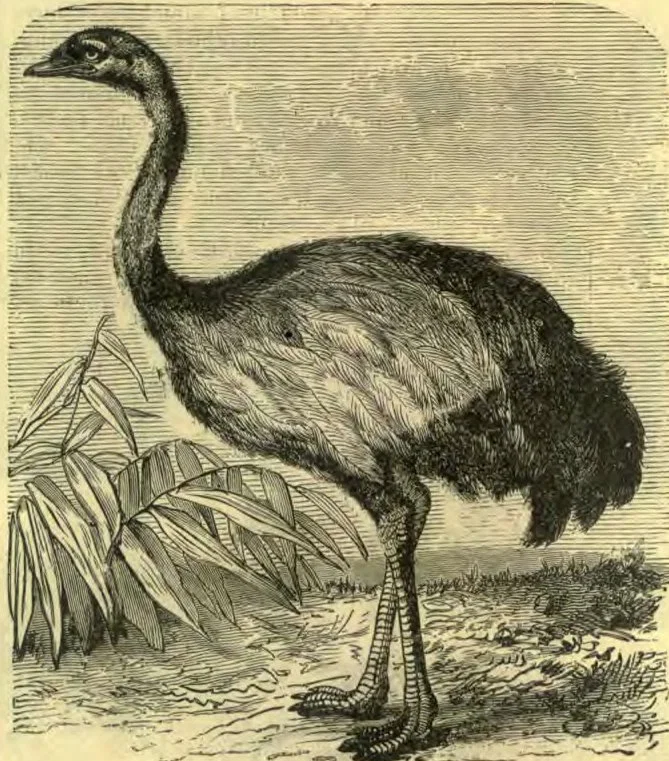
THE ostrich is a native of the sandy deserts of Africa and Arabia, and is the largest of birds, the male being about eight feet in height to the top of his head, and weighing some three hundred pounds. The plumage is glossy black in the male, and gray in the female; the wings are adorned with two rows of beautiful white feathers, and the tail feathers are also white. The muscles of the wings are very small and useless, but those of the legs are of prodigious strength, so that it not only “scorneth the horse and its rider,” but can strike a blow with its foot that often causes death.
The male in captivity is very ferocious, and many men have been killed by them. Some are so fierce that if they see a man in the distance, they will charge after him, and if they cannot get at him, will throw themselves on the ground and beat their heads about in paroxysms of fury. When wild, they are correspondingly as timid, and disappear on the approach of danger. The cry of the male exactly resembles the roaring of a lion, for which it is often mistaken. While bellowing, its neck swells to four times its ordinary size. It is an intensely stupid bird. Job 39:14-18 tells us more about the ostrich.
In South Africa the ostrich is raised for its feathers. The breeding birds are kept in small paddocks, generally a pair in each paddock. The eggs are taken away as soon as they are laid, and placed in incubators to be hatched out. The eggs are not left, because the hen does not pay much attention to them, except to tread on them occasionally. The cock bird does the sitting. In their wild state the hot sand and sun do much of the incubating, and the male bird sits on them through the night. The eggs weigh about three pounds, and are equal to three dozen hen’s eggs.
Every eight months the birds are ready to be plucked. A sack is thrown over their heads, and they are placed in a specially prepared box, and made fast. Then they are stripped of all their wing feathers, and their tail feathers are also dragged out. The operation is very painful, and the poor bird plunges and kicks at every pluck. When finished, the bird is a sorry sight. The large white plumes are cut; they are too large to pull, being as thick as a pencil and growing deep into the flesh. A week after, the stumps are pulled out with pincers. This is much the same as having a tooth out, and the birds bleed profusely.
The feathers are then sorted, washed, and starched, and sent to London. Here they are sold by auction, and then sorted again and sold to the modistes, who prepare them for the fancy stores. The feather is again fixed up, and made to suit some young lady’s hat, who little knows all the suffering and labor her feather has cost. The feather undergoes a great change in its descent from the bird to the hat. One never sees a whole plume in a hat, but the supposed feather is one made up of a number of pieces stuck together and curled.
The ostrich farmer is at the mercy of the ladies; if they take a fancy for feathers, his business is good, but if, on the other hand, feathers are not fashionable, the poor farmer has a hard time.
FRANK HOPE.

THE POOR MAN'S WELL.

AMONG the Azores, is situated the beautiful Island of Fayal, with its orange-groves and profusion of flowers. But, notwithstanding the fruit and flowers, there is one thing which Americans who live there miss sadly, and that is fresh, cool water. There are no lakes or ponds, such as we have here; and so the people have to use rainwater, which they save in large tanks or cisterns.
There are a few wells on the island, which, as the water rises and falls in them twice in every twenty-four hours, are called “tide wells.” But there was a time, many years ago, when the people had neither cisterns nor wells, and were obliged to get water from hollows in the rocks. And this is the story of the first well:—
The year 1699 was a year when scarcely any rain fell. The grain did not grow, the cows and sheep died from thirst, and many of the poor people also. Now there was a very rich man on the island, who had come here to live many years before, from another part of the world.
Though he was so rich, and might have done much good with his money, he was so stingy and so hard, that the people did not love him at all. But his bags of silver and gold did not buy him water; and at last the thought came to him, “Why! I will dig a well, as people used to do in my country. I will dig it on my own land, and no one shall have a drop of the water but myself.”
So he hired men to come and dig the well; but he paid them only a little money, and was very unkind to them. They dug and they dug; but no water came. At last they said they would work no longer unless their master would promise them some of the water; and he promised them the use of the well for half of every day.
Now they dug with more patience; and one morning as early as six o'clock, they suddenly found water. They claimed the privilege of using the well the first six hours, and the master dared not refuse. As they were drawing the water, they noticed that it began to grow lower and lower in the well; and at twelve o'clock, the master's hour, none was left.
He was very, very angry, and said he would never give the men any work again. However, at six o'clock that night, they again demanded the use of the well. He mockingly asked them if they expected the water would come for them, and not for him. Nevertheless they went to the well; and, to the master's awe and wonder, it was full of water.
At midnight, the master again tried to get water from the well, and, as before, found it empty. He now felt afraid, believing that some divine power controlled the action of the water. He went to the church and vowed, before God, that if the water should come again next morning, he would dedicate it to the poor forever.
In the morning, when the men visited the well, there was the fresh water awaiting them. The master kept his vow, and thus the well became “The Poor Man's Well.” To this day the water rises and falls in it twice in every twenty-four hours.—E. H. S., in the Nursery.

SPEAKING TO GOD FOR US.

A CLASS was asked one day: “What is intercession?”
A little boy answered: “It is speaking a word to God for us, sir.”
That is what Christ does for us now he has gone up to heaven. Our prayers are poor, and mixed with much of sin, but if they come really from the heart, he will offer them up to his father without a flaw. For Christ’s sake, God will freely give us all things.
There was a noble Athenian who had done the State great service, in which he lost a hand. His brother, for some offense, was tried and condemned, and about to be led away to execution. Just after the sentence had been pronounced, the other came into court, and without speaking a word, held up his maimed hand in sight of all, and let that plead his brother’s cause. No words could have been more powerful, and the guilty one was pardoned.
So, I think, if Christ did not speak a word for us, but only held up to his Father’s view that pierced hand, it would plead for us as we could never plead for ourselves. It is for Christ’s sake only that we are forgiven and made dear children of that blessed household above.—Youth’s World.

Never a Day Without Kindness

NEVER, never a day should pass Without some kindness kindly shown; This is a motto, dear laddie and lass, To think upon daily and take for your own.

SERMON ENOUGH FOR A SABBATH.

A LITTLE shoe-black called at the residence of a certain man, and solicited a piece of bread and some water. The servant was directed to give the child bread from the crumb-basket, and as the little fellow was slowly walking away and sifting the gift between his fingers for a piece large enough to chew, the man called him back and asked him if he had ever learned to pray.
On receiving a negative answer, he directed him to say, “Our Father,” but he could not understand the familiarity.
“Is it our father—your father—my father?”
“Why, certainly.”
The boy looked at him awhile and commenced crying, at the same time holding up his crust of bread, and exclaiming between his sobs, “You say that your father is my father; and do you give your little brother such stuff to eat when you have so many good things for yourself?”

THE GYPSIES

“The gypsies have come,” the children eagerly announce; but who or what they are, probably they know but very little, farther than that they are a wild, roving class of people, who live by thieving and unlawful gain. It is not only in our own country that this singular race puts in an appearance; but bands of them are scattered through all European countries, through the greater part of Asia, and the northern part of Africa; and even Australia has been visited by them, it being estimated that there are some millions of them, all told.
They were at first called “Egyptians,” from which it is supposed the word gypsy is derived. Besides the latter name, each nation among whom the gypsies have sojourned has given them a name expressive of some peculiar trait or traits of character, or some names denoting their origin, so that probably they have a greater variety of names than has any other class of people. It is interesting to read their history, as written by those who have made the subject a study, and so we give you the benefit of the following quotation from the S. S. Classmate. It reads:—
“In the early part of the twelfth century a tribe of people appeared in Europe who were described by a writer of the period as ‘Ishmaelites and brasiers, who go peddling through the wide world, having neither house nor home, cheating the people with their tricks and deceiving mankind, but not openly.’ They were altogether unlike Europeans in their manners, language, and appearance, and were at first supposed to be Egyptians. Various stories were soon set afloat to account for their presence in Europe, and for their continual wandering from place to place instead of settling down in fixed abodes. Those people who believed the strangers to have come from Egypt were easily persuaded that they were the descendants of men and women who had refused to entertain the Virgin mother, with her husband and the infant Jesus, when they fled from the cruelty of Herod, and that for this want of hospitality they had been condemned to wander about the world to the end of time. When this idea gained ground, a great amount of sympathy was shown to the unhappy outcasts who were suffering for the sins of their forefathers, and the ‘Egyptians’ were quite clever enough to take advantage of the state of public feeling.”
“It did not take long, however, to discover that the ‘Egyptians,’ or ‘gypsies,’ as they were afterward called, were not very worthy of the kindness shown to them. They were undoubtedly clever, and made themselves exceedingly useful in many ways. They bought and sold horses, worked in metals, and impressed the minds of the ignorant peasant-folk by their fortune-telling. They were supposed to possess immense wealth, and pretended to be of high rank, calling themselves dukes and counts, and traveling about in great state. But when it was proved that their arrival in a district was usually followed by a mysterious disappearance of the poultry, and that the horses which the ‘nobles’ bestrode so proudly were occasionally obtained without the knowledge or consent of their European owners, people were not so ready to think well of the strangers.”
“It is not now possible for us to decide from what country the gypsies really did come, but it is considered by those who have studied their language and customs that they are certainly an Asiatic race, and in all probability were a tribe of Hindoos. Their language, which they call ‘Romany,’ is peculiar, and is supposed to contain about five thousand words. Very many of these words are similar to those still used in Hindostan. ‘Shaster,’ for instance, is the Hindu for ‘holy book,’ and the gypsies always call the Bible by that name. They have also picked up words in almost every country through which they have traveled, so that their language is now a curious and interesting mixture.”
“The gypsies have not at the present time any distinctive costume, but they retain all their old Eastern fondness for gay colors and jewelry. They are not at all particular as to food, refusing nothing which can be called eatable excepting horse flesh. Tobacco they cannot do without, and the children are taught to smoke as soon as the mother weans them. They enjoy very good health, and despise medicine, using only brandy, saffron, or onions, as remedies for their few ailments.”
“They do not profess any religion, but, for the sake of gain, the mothers will allow their children to be baptized into the church of any country in which they happen to be living. They have, however, picked up scraps of religious knowledge from time to time, and one of their quaint customs is to burn a small fire on Christmas day in honor of our Lord, of whom they say that ‘He was born and lived like a gypsy.’”
“The gypsy girls are well known on the Continent as accomplished dancers. They also profess to tell fortunes, as their English sisters do; while the old women, profiting by their extreme ugliness, gain a great influence over the simple peasants by pretending to be witches, possessed by supernatural powers. The men employ themselves in various ways, mending pots and pans, doctoring cattle, and dealing in horses. In some countries, such as Roumania, they work in the fields, and many of them are skillful as locksmiths and goldsmiths. The Turks at one time tried to train them as soldiers, but they were not of much use, owing to their hatred of any kind of restraint.”

FAITH

LESSON 4.—DANGERS OF UNBELIEF.

1. What kind of men did Moses select to spy out the land of Canaan? Num. 13: 2, 3.
2. What charge did Moses give them? Verses 17-20.
3. What report did these men bring back? Verses 27-29.
4. What evidence did they show of the fruitfulness of the land? Verse 23.
5. Is there any evidence that these men did not give a correct description of the land and of the people?—They greatly exaggerated every discouraging feature. Num. 13: 32, 33; Deut. 1: 28.
6. In what did their sin chiefly consist?—Probably in not believing God, who had promised to give them the land.
7. How was this unbelief more fully developed? Verses 30, 31.
8. What effect did this have upon the congregation? Num. 14: 1-4.
9. What was the language of faith upon this occasion? Verses 8, 9.
10. What was the difference between the reasoning of the ten spies and the reasoning of Joshua?—One reasoning was based on what God had said he would do, and the other upon outward appearances.
11. What did God say to those who disbelieved his word? Verses 28, 29.
12. What further denunciation did God utter concerning them because of their unbelief? Verses 30-33.
13. How did God show his approval of Caleb’s faith? Verse 24.
14. What became of the men who brought the evil report? Verse 37.
15. Why was their sin greater than the sin of the people?—Because of their position, which gave them influence with the people.
16. Why were these things written? 1 Cor. 10:11, 12.
17. Are we then in danger of committing the same sin? Heb. 4:11.

CLEAR TEACHING.

“I TAKE it to be well worth the while,” says Prof. Tyndall, in an essay on the “The Scientific Uses of the Imagination,” “for the scientific teacher to take some pains, and even great pains, to make those whom he addresses co-partners of his thoughts; to clear his own mind in the first place from all haze and vagueness, and then to project into language which shall leave no mistake as to his meaning—which shall leave even his errors naked—the definite ideas he has shaped.”
This I take to be the secret of successful teaching. What will conduce to good teaching in the college recitation room, before the law class, in the theological school, will certainly hold good in the Sabbath-school. Every Sabbath-school teacher should thoroughly understand himself what he is about to teach—fathom its depths, ascend its heights, go through it and around it.
It is said of the philosopher Newton that he regarded nothing as really achieved until the truth stood out in a clear and steady light. As our lamented Bishop Clark said, this is not an endowment. It is something that is acquired. It comes by hard work.
In a school once the Saviour’s words, “Let him which is on the house top not come down to take any thing out of his house,” formed the lesson of the day. To a scholar’s question, “What would they be doing on the house tops?” the teacher replied, “Shingling, of course.” This is fact, not fiction. The writer of this article personally knows the boy, who is now a man and an honored minister in our church, and his want of respect for that teacher remains with him yet. Ignorant of oriental customs and habits, is it not an insult to the intelligence of our Sabbath-school scholars for a teacher to go unprepared to instruct? For of what use is a teacher unless he gives instruction?
Will not the vexed question, “How shall we retain our advanced scholars in the Sabbath-school?” be answered as our teachers advance in intelligence? Let the fountains be clear, and the streams will be clear also. O, may the spirit of study, of research, come down on all our teachers! May their aim be to acquire clear and accurate ideas of truth themselves, and to impart them to the young who need them!—S. S. Journal.

THE VICTOR.

He who sits at home and dreads To brave the foeman's steel, Will never wear the golden spurs That wait the victor's heel.
But he who fights with manly heart Where'er he findeth sin, Shall march, a conquering hero, home; He can not fail to win.
—A. M. Libby.

Sagacity of Dumb Animals.

We sometimes speak of the “dumb” brutes. Dumb they are, so far as speaking is concerned, but they are not all of them dumb in understanding. There are some beasts which understand the commands of their masters, given in several different languages. We once saw an elephant in the Zoological Garden in Amsterdam, Holland, which obeyed every command of its keeper, although the orders were given in Dutch. That is, he understood Dutch better than several of the spectators did. The same animal would, doubtless, soon learn the meaning of the same orders when given in English or in any other language.
Bayard Taylor, the great American traveler, says, “Animals have much more capacity to understand human speech than is generally supposed. The Hindoos invariably talk to their elephants, and it is amazing how much the latter comprehend. The Arabs govern their camels with a few cries, and my associates in the African desert were always amused whenever I addressed a remark to the big dromedary who was my property for two months, yet at the end of that time the beast evidently knew the meaning of a number of simple sentences. Some years ago, seeing the hippopotamus in Barnum’s Museum looking very stolid and dejected, I spoke to him in English, but he did not even open his eyes. Then I went to the opposite corner of the cage and said in Arabic, ‘I know you; come here to me.’ He instantly turned his head toward me; I repeated the words, and thereupon he came to the corner where I was standing, pressed his huge, ungainly head against the bars of the cage, and looked into my face with a touch of delight while I stroked his muzzle. I have two or three times found a lion who recognized the same language, and the expression of his eyes, for an instant, seemed positively human.”
A good illustration of animal sagacity is seen in the use which the antelope makes of the prickly pear. That ugly, fleshy little cactus, with its sudden summer glory of crimson and golden blossoms, fulfills a strange purpose in the animal economy of the prairies. In itself it appears to be one of the veriest outcasts among vegetables, execrated by man and refused as food by beast; yet if it were not for this plant, the herds of prairie antelopes would fare badly enough; for the antelopes, whenever they find themselves in straits from wolves or from dogs, make straight for prickly pear patches and belts, and there, standing right out on the barren, open plain, defy their swift but tender-footed pursuers to come near them. For the small, thick pads of the cactus, though they lie so flat and insignificantly upon the ground, are studded with tufts of long, fierce spines, and woe to the wolf or dog that treads upon them. The antelope’s hoofs, however, are proof against the spines, and one leap across such a belt suffices to place the horned folk in safety.—Exchange.

A SUGGESTIVE MOTTO.

On the dial of a house at High Lane, near Disley, in Cheshire, is the inscription, which also is to be found on other dials, “Begone about your business;” concerning which not very civil, if good, advice a story is told in Notes and Queries. It seems the dial was removed many years since from the Inner Temple; and when it was put up in that place there was some discussion among the Benchers as to what motto it should bear. The Benchers agreed to hold a meeting to take into consideration what the motto should be; and the artist was to send at a certain hour to the library to inquire on what they had determined. The Benchers forget all about the matter, and when a messenger came, he found in the library only a cross old gentleman poring over an old book. “Please, sir,” said the messenger, “I am come for the motto for the sun-dial.” “What?” said the testy old gentleman; “why do you disturb me? Begone about your business.” Away went the messenger, and gave this word to his master; and he, either by design or mistake, engraved it in large letters under the dial, “Begone about your business.” The Benchers, when they saw it, determined that no motto could be more appropriate—that chance had done their work for them even better, perhaps, than if their memory had served to enable them to do it for themselves, and so there it remains.—Selected.

Kyoto Buddhist Temple Rebuilt With Women's Hair Ropes

A Buddhist temple, burnt twenty years ago, is being rebuilt in Kioto, Japan. It is of most expensive wood, and will cost $3,000,000. More than a ton of large ropes, made of their own hair, contributed by the women of Japan, will be used to haul the timbers for the temple to their places. This temple is to be a Mecca for the faithful all over the Empire.
Continue reading: JOHNNIE'S REASONS