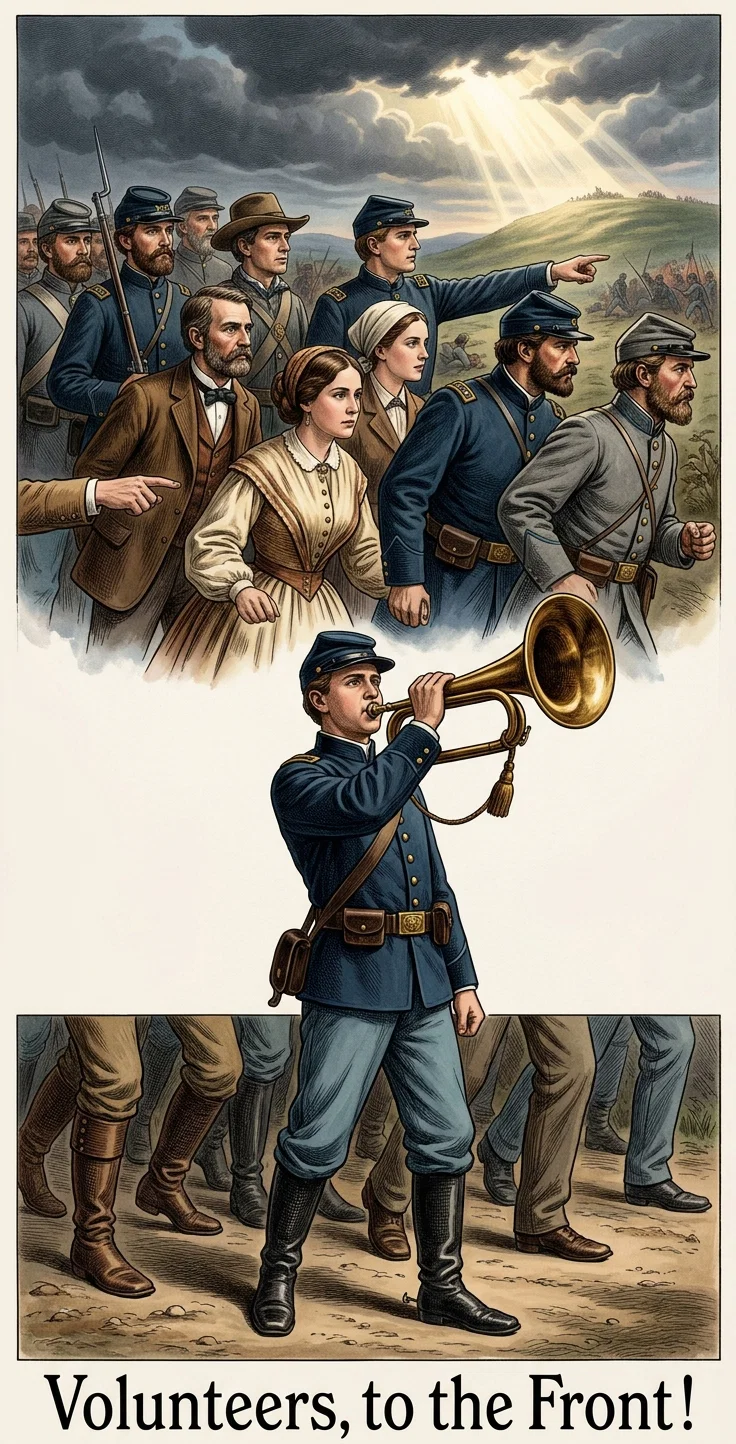
The year which has elapsed since our last Missionary Volunteer day has surely brought us a much clearer and broader view of the purpose for which our organization exists. This new vision has increased our responsibilities, and it has also enlarged our possibilities. What we need to-day is greater unity and enthusiasm in our organized work and greater emphasis upon the supreme motive—soul-winning.
Missionary Volunteer Officers
Above all else we must keep before our own minds and the minds of our members that this must be an intensely spiritual department. Our great aim must be deeper spirituality. The most technically perfect organization, the best conducted meetings, the most carefully planned missionary campaigns, and astonishingly large reports will avail little without the quiet, mysterious, omnipotent working of the Holy Spirit, constraining and leading in it all.
“And if I have all faith, so as to remove mountains. . . . And if I bestow all my goods to feed the poor, and if I give my body to be burned, but have not love, it profiteth me nothing.”
We especially as leaders must maintain a keen realization of the true ideal of success in this work. Our inexperience has sometimes caused us to feel elated over our success when we had large reports to send in of literature circulated, money raised, and visits made. Or we have felt that we were enjoying great prosperity when we had excellent programs, and all the young people attended and manifested an interest in the society.
While all these things are good and encouraging, they are by no means conclusive evidence that our society is meeting the mind of God. Let us ever remember that the supreme test of success is soul-winning. Ten souls won to Christ or saved from discouragement during this year may mean more in eternity than ten million dollars raised or ten million pages of tracts distributed.
However, this ideal must not lead us to do haphazard work. Everything should be conducted in the most orderly, systematic manner, with conscientious, painstaking care. So far as consistent, every line of work proposed and every method and plan devised should be carried forward perseveringly and enthusiastically. Every young person in your society should receive your thoughtful and prayerful consideration, and you are to study and plan, patiently and untiringly, to enlist every individual in active service for Christ.
What a solemn thought that, young and inexperienced as you may be, God has given you the privilege of helping to train and prepare those still younger or less experienced for his work.
The Young People
This story is told of Sir William Napier: As he was sitting in his tent near the scene of battle studying the plan of attack, a young officer hastened up to the door of the tent with a regimental flag, and cried, “Sir, I have taken one of the enemy’s standards!” Sir William appeared not to hear till the young man repeated still louder, “Sir, I have taken one of the enemy’s standards!” The old general turned to him with flashing eyes, and thundered, “Sir, go and take another!”
During the past year we have made some progress, victories have been gained, and a measure of success has attended our work, but these should only spur us on to more earnest effort. Must we not confess that in view of our present meager achievements and our solemn responsibilities we are still half-hearted and lukewarm?
John Wesley said, “Give me a hundred preachers who fear nothing but sin and desire nothing but God, and I care not a straw whether they be clergymen or laymen, they alone will shake the gates of hell and set up the kingdom of heaven upon the earth.” If this is true, where among our fifteen thousand Missionary Volunteers is Wesley’s hundred or Gideon’s three hundred to lead in this victorious work? Souls are to be won, and a power the world has seldom witnessed is soon to be imparted to those who refuse to become careless or discouraged.
“Why did Christ in his parable of the fig-tree, and later in his more severe miracle of the fig-tree, condemn religious barrenness so unsparingly?—Because if a man is a Christian he must of necessity bring forth much fruit. A Christian that is not making other Christians is as much a contradiction in term as a fire that is not warming or a flame that is not lighting. There is no more deadly peril for a Christian than being content with merely not doing wrong.”
We as leaders in this work pledge ourselves to do our best by God’s grace to make this preeminently a spiritual movement, and we appeal to you, the great army of young people of this denomination, to consecrate your lives to the great purpose of making this the most spiritual movement in the world. Deeper spirituality and more earnest personal consecration for the salvation of definite individuals is what we need and must have. Has God given you the joy of winning a mighty victory, of saving a precious soul? Then do not stop with this victory, “Go and win another.”
The Parents
As we take a retrospective view of this young people’s movement, no phase of its prosperity encourages us more378than the present attitude of many parents. In the early stages of the development of each department of our work, mistakes were made, which we could see clearly later on. The Missionary Volunteer Department is no exception; and as we think of the unfortunate experiences in certain places, the spirit sometimes manifested, and mistaken notions sometimes expressed, we do not blame some of our older brethren and sisters for fearing that this movement might result in estranging old and young, and in the end work an injury to the cause.
But we are glad that those days of uncertainty and apprehension are passing, and that with more experience and a much clearer conception of God’s purpose in the organization of the young people has come a better understanding between parents and children than ever before.
To-day you who are parents realize more clearly that God’s promise of Elijah to “turn the heart of the fathers to the children, and the heart of the children to their fathers” means that you are to take the initiative in this movement for the salvation and training of the children. It means that God designs to awaken in your hearts such a great love and burden for all our youth that you will enter into a new covenant with him; that you will by earnest prayer and tears and intercession plead with God for them; that you will give thought and prayer and encouragement and support to the organization urged by the spirit of prophecy for the purpose of enlisting and training the youth in practical missionary work.
And we as young people and children realize to-day that this is not a movement in which we may separate ourselves from you and work independently. We do not want such a movement. We know it is God’s purpose that we should profit by your experience and your loving counsel and encouragement. We want you to take new courage to-day and press on in this work, while we endeavor to lift the heavier burdens and be as helpful to you as we can. At the same time, we know that God has appointed us to do a special work that no one else can do—a work for other young people, which calls into action all our talent and ability to pray and plan and execute wisely for their salvation. This we are sure you will gladly encourage us in doing. And when we have unitedly cooperated with the Lord in fulfilling his word concerning this movement, we shall realize his promise, “Then will the Lord be jealous for his land, and pity his people.”
MEADE MACGUIRE.
Young People's Work
Conducted by the Young People's Missionary Volunteer Department of the General Conference
M. E. KERN - - - - - Secretary
MEADE MAC GUIRE - - - - Field Secretary
MATILDA ERICKSON - - - Corresponding Secretary
READING: “The Spirit of the Missionary Volunteer Movement,” by Meade MacGuire.
TALK: “Another Year of Progress.”
(For information see article under this title in the Youth’s Instructor of April 15.)
SONG: “Volunteers, to the Front!” as printed in this department.
READING: “Cooperation the Basis of Success,” by M. E. Kern.
SONG: “Christ in Song,” new edition, No. 510.
CLOSING PRAYER.
NOTE TO ELDER OR LEADER.— Sabbath, May 3, appointed by the General Conference Committee as Young People’s day, should bring a great blessing to your church. The work to receive special consideration at that time is an important one, and grows more and more interesting as it spreads over the world, gripping the hearts of thousands of young people and children, and leading them forth in personal service. The parts on the program should be assigned at once, so that they may be prepared thoroughly. Aside from the regular program, will not every member of your church devote a portion of Sabbath, May 3, to praying for the young people and the young people’s work and workers?
Cooperation the Basis of Success
By M. E. Kern
For many weeks previous to the fourth of March of the present year the whole city of Washington was in an attitude of expectancy. The coming of the new President and his inauguration seemed to be the chief topic of thought and conversation. Very elaborate and expensive preparations were made. Finally the great day came. The solemn ceremonies of inauguration, the great procession with its marching thousands from all parts of the country, and the multitudes of people attracted to the city by this national event, all served to make this a great day in American history.
But how insignificant is all earthly pageantry and power compared to the coming of the King of kings and Lord of lords, to bring to an end the reign of sin and to set up the kingdom of God which shall never be destroyed. And how anxiously should those who know that his coming is near “look for him”! And how earnestly should they labor to hasten his appearing! Many of the saints of God have sung, with Bonar,—
“Come, Lord, and wipe away
The curse, the sin, the stain,
And make this blighted world of ours
Thine own fair world again.”
Come, then! Lord Jesus, come!
This prayer is soon to be answered. Seventh-day Adventists know about it; and to them has been committed the solemn work of sounding the warning message. With what earnestness we should labor and pray that we may be true to our trust. How ready we should be to take up any work or make any sacrifice that our hopes may be quickly fulfilled.
Sabbath, May 3, has been set apart by the General Conference Committee as Missionary Volunteer day. On this day our churches are considering our Missionary Volunteer movement. Do we realize that this branch of our work has a very definite relation to the coming of Christ and the consummation of our hope? Note carefully the following:—
“With such an army of workers as our youth, rightly trained, might furnish, how soon the message of a crucified, risen, and soon-coming Saviour might be carried to the whole world!”—Education, page 371.
“This gospel of the kingdom shall be preached in all the world for a witness unto all nations; and then shall the end come.” Matt. 24: 14.
What conditions do we face to-day?—First of all, the whole world is open to the proclamation of the advent message; and the message is overdue. Second, we have within our ranks a great body of youth “who can do much if properly directed and encouraged.” It is the duty of the church, for the sake of her children and for the sake of the world, to do everything in her power to enlist and train these young people for service.
“God requires that the church arouse from her lethargy, and see what is the manner of service demanded of her at this time of peril. The lambs of the flock must be fed. The Lord of heaven is looking on to see who is doing the work he would have done for the children and youth. The eyes of our brethren and sisters should be anointed with heavenly eye-salve, that they may discern the necessities of the time.”—Mrs. E. G. White, in Review and Herald, Feb. 13, 1913.
Note again what wonderful result it is said will follow the proper training of our young people,—the speedy triumph of the message, which means the soon coming of Jesus. With this assurance, surely no advent believer can remain indifferent to this great educational phase of our work. When we realize that “very much has been lost to the cause of God because of inattention to the young,” we surely will no longer be guilty of this neglect.
The young people’s work is a matter which should concern the whole church. Ministers, overseers, parents, and church-members have all been admonished to take an active interest in the youth. The Missionary Volunteer Department of the General Conference or of any union or local conference was not organized to take from any one responsibility in this matter, but rather to help ministers, church officers, parents, and church-members to bear heavier responsibilities, and to accomplish greater results. There was young people’s work before these departments were organized, but the special study that has been given to the needs of our young people by departmental workers, and the plans that have been formulated, have given a tremendous impetus to this work. Just as the organization of our publishing work, for instance, has helped the whole church to do a marvelous work in the distribution of literature, so the organization of our Missionary Volunteer Department is helping the entire church to see its duty to the young, and how to accomplish the things needful.
And the key to success in this, as in all lines of church work, is cooperation. The Missionary Volunteer Department is a medium of exchange, where the best plans of successful workers are carefully collated and sent out to the entire field. Here continual study is given to this great problem from the standpoint of the entire field. Plans and methods for enlisting and training the recruits are suggested. But little can be accomplished without the hearty cooperation of the leaders and church-members.
The following outline of what needs to be done for our youth has been given by the president of the General Conference:—
“1. A study of their needs and interests by those of more mature years and experience.
“2. Laying wise plans and launching practical movements to meet their needs.
“3. Giving practical instruction on how to work for the young.
“4. Sending out strong influences for unceasing efforts in their behalf.
“5. Placing before them true ideals of life and service.
“6. Giving wise and firm direction to their energies.
“7. Training them, while young, in the Master’s service.
“8. Influencing them to enter school and lay a good foundation for their life-work.
“9. Finally locating them in permanent service.”
These various things are being attempted as a continuous effort. A glance at the scope of the movement makes it apparent that the work can be done only by the cooperation of the entire church and the personal touch of Christian workers of experience.
Concerning the value of the Missionary Volunteer Department and the need of cooperation on the part of church leaders, the General Conference president further says:—
“In the reorganization of our work, we have made many changes and have set on foot important movements, but none has given me the satisfaction that the creation of the young people’s department has19given me. I can not look upon our young people without having my heart greatly stirred. When I see how easy it is to turn from the right road into the wrong one; when I see the many allurements of the world; when I hear the sad wail from fathers and mothers at our camp-meetings because their children have wandered from the cause, and hear their earnest pleas for us to pray for their return, I feel that the young people’s department is one of the most important features of our administration.
“In view of this important work, I appeal to conference officers and ministers to take hold of it in hearty, active, positive cooperation. It should not require pressure from without to lead us to do all in our power to make the work of this young people’s department effective. A realization of the worth of our youth should cause us to put forth most earnest endeavors to carry into effect the plans of the department.”
Of parents it is said: “O, where are the fathers and mothers in Israel? There ought to be a large number who are stewards of the grace of Christ, who feel not merely a casual but a special interest in the young.”
And it is true, of course, in a special sense that the young people themselves must cooperate. As young people we should appreciate first of all that though we are young and without experience, God has called us to be “his helping hand.” We should appreciate the special efforts now being put forth by all our conferences in our behalf, and cooperate in every possible way to obtain the very best preparation for the purpose of doing others good.
In closing this reading, let the following earnest words from Mrs. E. G. White take hold of our hearts:—
“As a church, as individuals, if we would stand clear in the judgment, we must make more liberal efforts for the training of our young people, that they may be better fitted for the various branches of the great work committed to our hands. We should lay wise plans, in order that the ingenious minds of those who have talent may be strengthened and disciplined, and polished after the highest order, that the work of Christ may not be hindered for lack of skilful laborers who will do their work with earnestness and fidelity.”
M. E. Kern.
In Foreign Fields
Sivas, Asia Minor
I AM glad indeed to know that our medical missionary work is gaining strength, and will have a good part in the discussions at our General Conference sessions. Personally I am deeply interested in this branch of the message. My daughter is already a trained nurse, and I will, the Lord willing, make my son a medical missionary. Wherever I work, I try to awaken the interest of the believers in this line of missionary activity. One of my helpers in the Armenian Mission will devote himself to the medical missionary work. If nothing hinders him, he will sail to America this year to enter our Loma Linda College.
I am laboring now in the Armenian Mission field; but as all Turkey has been the field of my labor, I shall speak about the whole. Wherever we go, we find the people are prejudiced against us as preachers. As the religions or churches are national, whoever teaches a new religion is looked upon as an enemy to the nation. Such preachers are called “men stealers.” In my own experience I have seen that medical missionary work is overcoming these prejudices and leading us into homes which we could not otherwise enter.
Here in Sivas, while we were persecuted severely and even beaten, medical missionary work brought us before the honorable people, and even the government granted us a policeman to protect our meeting. The government physician-in-chief had a son who needed massage. When he heard from a patient to whom I was giving treatment that I knew how to give massage, he called me to treat his son. This opened the door to an acquaintance with the director of the police and with others. Some, hearing of the good results of the treatments, have called on me; but as my knowledge is very limited, I have not attempted to look after every case. If we had a lady physician in the city of Sivas, she would find much work to do, and could carry the message to the homes.
The same is true of other cities. Last year I labored in Tokad, and the people entreated me to secure them a good Christian physician who loved men’s lives. About two years ago I traveled in Armenia, and saw the poor condition of the people. If I were a medical missionary, I could help them much more. Everywhere sickness is sending many victims to the grave. The hearts of the people are softened when we do them good.
Z. G. BAHARIAN.
Norfolk Island, Pacific Ocean
I am very glad to hear of the plans for the development of our medical work, and I pray the Lord will bless abundantly. It would make a great difference to our work here if we had one of our doctors to work with us. All our missionaries should be given the opportunity of some training in simple treatments before going to the field. In the island work we are called upon to treat all kinds of diseases and complaints, from simple colds and accidents to malaria, lockjaw, consumption, etc. There is no need to bury one’s talents here, and such as we have will not rust for lack of use. How we do wish we had more to do with!
I trust that in the future an opportunity will be given every one who is preparing as a foreign missionary to receive practical instruction in medical missionary work. The workers already in the field no doubt find it difficult to get such help on account of the heavy expense involved in going long distances to secure it, and because of the pressing demands of the field, making it impossible to leave. If it were practical for suitable persons to visit the field and give instruction to the workers, such as is done in our canvassing work, profitable results would follow, I believe. When one of our brethren was going to the New Hebrides from the Sydney Sanitarium, he stopped off at Norfolk Island and gave my wife and me quite thorough instruction in massage. We have since been called upon almost constantly to give treatment, always with good results. Every help of this kind given a man in the field can be used.
Our health journals should be circulated widely. Such books as “Ministry of Healing” should be in the hands of every worker. How true it is the world over that the right arm of the message opens doors for the presentation of the truth!
A. H. FERRIS.
Nurses, Be True to Your Profession
By G. L. Brown
A few weeks ago the wife of a prominent man was brought to one of our sanitariums in a critical condition. Through the blessing of God upon the means used for the restoration of her health, she made a very satisfactory recovery. During one of the husband's visits while the wife was in the sanitarium, he expressed himself as much pleased with the way his wife had been treated, and said: "I am glad you people here are all Seventh-day Adventists. I believe there are no better nurses in the world than Seventh-day Adventists. I believe your people have a special work in the world in treating the sick."
I felt much impressed with the fact that our nurses who go out into the world to do private nursing and do not identify themselves before the world with the Seventh-day Adventist denomination, lose a great blessing. I have known nurses who nursed in homes for weeks and went away, and yet the family did not know there was such a people on the face of the earth as Seventh-day Adventists. It is a sad fact, but nevertheless true, that those nurses did not long remain loyal to the truth. They soon lost their interest in the things of God, and drifted into the world.
So I say, Be true to your profession. Be Seventh-day Adventist nurses, and be proud of it. Be the best nurses in the world, and let God have the glory for the results that are obtained by his working through you for the relief of suffering humanity.
G. L. BROWN.
Patmos and the Exile’s Problem
By Hilton Jones
To be hindered in the work, and yet not be impatient with God's way or doubtful that the work is going on,—that was the exile's problem on the little dry island of Patmos. And ever since, it has been the problem of many a man tempted to think himself forsaken.— Hilton Jones.
Whatever Sends Us to Christ
“WHATEVER sends us to Christ—be it grief, disappointment, or burden—is to that degree a blessing. No price is too great to pay for fellowship with Jesus.”
The Power of Persistent Effort
“There are few crooked things that a pull which is long enough and strong enough and earnest enough will not straighten out.”
Medical Missionary Department
By L. A. HANSEN
Conducted by the Medical Department of the General Conference
L. A. HANSEN - - - - Assistant Secretary
The World's Christian Citizenship Conference
By W. F. Martin
The next session of the World's Christian Citizenship Conference will be held in the city of Portland, Oregon. The conference will last for one week, beginning June 29 and closing July 6. It is hoped by the promoters of the conference to bring together a large number of delegates; the more optimistic hope for twenty thousand. These are to gather from all parts of the world. From seventy-five to one hundred speakers are listed on the program. These include some of the leading thinkers and speakers of the United States. In addition to these, there are to be noted speakers from other lands. It is hoped to have one speaker from each nation in the world. A glance at the list of speakers will impress one with the import of the meeting. From America are Pres. Woodrow Wilson, Hon. W. R. Stubbs (governor of Kansas), Anthony Comstock, Judge Ben Lindsey, Rev. Mark A. Matthews, J. Campbell White, Bishop Chas. W. Smith, and a large number of other leading ministers and laymen.
This meeting is being promoted by, and is to be held under, the auspices of the National Reform Association. Dr. Jas. S. McGaw, the national field secretary of the association, has established headquarters in Portland, and is making large preparations for the conference. The city gives a bonus of fifteen thousand dollars and furnishes a place for the meeting. The papers of the city are giving a great deal of space, freely advertising it. The railroads running into the city are placing the conference on their folders and dining-car menus as one of the principal gatherings for the year. All this, of course, is to advertise the city. A committee of one hundred has been organized to make preparations for the meeting. Pres. W. T. Foster, the head of Reed College, is chairman of this committee. E. L. Thompson, president of one of the leading banks, is chairman of the executive committee. One feature of the meeting will be the fourth of July celebration. The flags of all the nations will be carried in the parade, thus symbolizing the brotherhood of humanity and the harmony of nations. This will also indicate that the United States is the home of all people. As a further preparation for the conference, the publicity committee is arranging to cover the States of Washington and Oregon, arranging for meetings at churches, and to have announcements made of the coming event by all local organizations and by business men on their stationery, and through the press. It is claimed by the promoters that this will be the most significant gathering of Christian forces thus far in history.
The following significant statement is to be found in the first call issued: “It [the conference] will promote respect for law; will rebuke profanity and enhance the efficacy of the oath; will set public education in its proper relation to morality and religion; will help in securing the right of all to the day set apart for rest and worship by the Creator.” From this it will be seen that the well-known plans of the National Reform Association to have religion taught in the public schools and to secure the enactment of Sunday laws are to be a feature of the conference. The purpose of the conference was thus stated in the Christian Statesman for November, 1912: “The Second World's Christian Citizenship Conference will therefore serve the greatest practical use by not only awakening and deepening popular sentiment in behalf of Christian legislation, but by bringing to bear at the same time upon political organizations and governments some definite pressure that may lead ultimately to their open espousal of Christian political principles.” This seems to indicate a determination to enforce religious dogmas upon the politicians of the country, and a departure from the established principles of church and state separation which have always been a great feature of our government.
W. F. MARTIN.
An Oklahoma Sunday Bill Defeated
By I. A. Crane
The last of the five Sunday bills has been defeated. The history of these bills is about as follows:—
House Bill No. 59 and House Bill No. 208 were intended to amend the present law against Sabbath-breaking and to increase the penalty from one dollar to fifty dollars. Another bill to regulate roping contests had a Sunday proviso. A bill entitled “A Bill to Abolish the Office of Fish and Game Warden,” though innocent sounding, had a section prohibiting fishing or hunting on Sunday.
The bill, however, which gained the most notoriety was Senate Bill No. 329. This bill did not contain the word Sabbath. It prohibited shows, theaters, etc., on Sunday.
There was a very decided effort made on the part of ministers, churches, ministerial alliances, etc., to push it through during the regular session. It received favorable action by the senate committee on Sabbath, February 8. Many bills were ahead of it, but for some reason it was pushed to the front and passed the senate Sabbath, March 8. Not being present, I did not learn how the vote stood. Hardly expecting that it would be taken up before the special session which was expected to follow immediately after adjournment, we were rather surprised to find it rushed to the front and brought up for passage in the house on Monday, March 17, just before adjournment. Here it was killed by an amendment which made it inoperative in cities of over two thousand inhabitants. This secured its defeat upon final vote by a large majority.
It seems from to-day's paper (March 18) that other bills have Sunday clauses. In fact, it would seem that the eight-hour law, and perhaps many other laws, had been so worded as to exalt this rival of God's Sabbath. The governor and many other State officials and prominent men seem to be encouraging the ever-increasing popular move for the church to enter politics. This seemed to be the theme in the governor's address to-night to the State Sunday-school convention at this place, as well as at a mass-meeting here some days ago in celebration of the passage of the Webb bill by Congress. The church people are encouraged to expect anything they may demand.
One can hardly watch this feature of passing events and not see that the storm must soon burst for which we have long been warned to be prepared. The efforts of the Religious Liberty Department in Oklahoma have done much in this present agitation to place the truth before those whose minds have been awakened upon this subject.
Perhaps our efforts have considerable to do with keeping these bills from passing, but the lines are only becoming a little tighter drawn, and the enemy is becoming more determined. All who believe God's word must see that in Oklahoma as well as in other States, there needs but a concerted action at any time and liberty of conscience is gone. Only love of justice and right could induce one to espouse a cause so unpopular as ours. Men can not expect a return by way of votes from us, and few men in this day would desire thus to commit political suicide. Legislators will yield to the demand for a Sunday law. It is right upon us, and it is to be followed by the marvelous working of Satan. The end is near. Truly all things call upon us to seek a preparation to stand. May God keep us faithful to our trust.
I. A. CRANE.
News and Miscellany
Notes and clippings from the daily and weekly press
— A popular pastime nowadays with Continental aviators would seem to be flying trips by night over England. Daring air pilots in Germany or France leave their moorings at dusk, speed over the channel, and then circle over British cities and forts, flashing their lights to mystify and alarm the people below them. With the first indications of dawn the adventure comes to an end. The prowling birdman heads for home, houses381his machine before the sun is well up, and leaves the officials of England to report his incursion to the war-office in London. Reports of these night visits became so general, and were at the same time so disconcerting, that the government finally took official action and passed a bill prohibiting the passage of air-craft over certain specified areas. Air-craft violating this regulation will be fired on and otherwise warned away.
— The late Gen. William Booth never received a salary or pension from his army. A friend, at the time when the Salvation Army yet bore the title of “Christian Missions,” gave him £5,000, the interest of which he was to use for himself. The general was a very frugal man; he not only lived on that interest, but saved £400, which he bequeathed to the army. The capital was divided among his children.
— The annual report of Postmaster-General Hitchcock tentatively suggests the reduction of parcel-post rates and increasing the limit of weight beyond eleven pounds. It recommends that third and fourth classes of mail be consolidated, so that books and other printed matter may be forwarded by parcel-post. A proposed increase in the second-class rate, he says, would pave the way for the reduction of postal charge on letters to one cent an ounce.
— A new method of mining is being practised in German coal-shafts that is said to do away with dangerous blasting, while also avoiding much of the risk of spontaneous explosion of coal-dust. Deep holes are bored in the coal, and water is introduced into them by pipes under heavy pressure. The water finds its way through the coal fissures and opens them up until the mass is loosened, when it is readily removed while wet, without any dust or the use of any tools other than a light pick and a shovel.
— The German government is building war-ships of an entirely new kind, which will revolutionize naval warfare and send the Dreadnaughts to the junk heap more rapidly than ever. The new ship lies low in the water and fights end on. The only target it presents to the enemy's fire is a bow shield of such a shape and thickness as to be practically impenetrable. It carries a single gun of great power, which is shielded except in the moment of firing. Forty of these ships can be built for the price of one Dreadnaught.
— The yacht “Pennsylvania” has started out on one of the most adventurous voyages of modern times. The yacht is the property of the University of Pennsylvania and is bound for Brazil with a daring party who purpose penetrating to the far reaches of the Amazon and to the headwaters of many of its tributaries. The expedition is taken in the interest of science and humanity. They are out to seek what is known as “the lost world” in the basin of the Amazon. The yacht is in command of Capt. J. C. Rowen, U. S. N., retired, and the expedition is headed by Dr. William C. Larrabee, curator of the American section of the museum of the university. They will be gone about three years, and will penetrate into regions never before visited by white men.
“The Work of the Medical Missionary”
By Editor
A LEAFLET bearing the above title has been issued by the Medical Department of the General Conference. It contains the address given by F. M. Wilcox to the last graduating class of the Washington Sanitarium. Many of those who heard this address felt that it should be printed, and it is in response to this desire that it has been put in its present form. We believe that all our medical workers, as well as many others, will be pleased to have it. Address the Medical Department of the General Conference of Seventh-day Adventists, Takoma Park, Washington, D. C. There is no charge for the leaflet, but postage-stamps to cover mailing will be acceptable.
L. A. H.
State and Church
By W. W. Prescott
Reports, Notes, and Comments Pertaining to the Current History of Religious Freedom, and the Campaign "to Make America Catholic."