The Youth’s Instructor, Vol. LIII, No. 33

Our Visit in Russia—I

The Youth’s Instructor

Aug 15, 1905

Review and Herald Publishing Assn. · Washington, D. C. · Aug 15, 1905

Our Visit in Russia—I

The Baltic Provinces
BEFORE discussing any of the details with reference to our journey from Riga to the Caucasus, it may be interesting and helpful to take a short glance at that part of Russia which we have just been visiting—the Baltic Provinces. These shores are washed by the Gulf of Riga. There are three of these governments—Estland, Livland, and Courland—with a combined population of 2,388,000 inhabitants. In general, the land is low and level, although there is the so-called Livonian Switzerland, where the elevation is about one thousand feet in some parts. There are many streams and inland seas. There are also a large number of artesian wells, whose waters are utilized in dry seasons for irrigation purposes.

History

These three governments are among the more recently acquired lands of the czar. The Lettish tribes that dwelt here were conquered by the Knights of the Teutonic Order, and annexed to the so-called Holy Roman Empire, in the Middle Ages. Ivan the Terrible broke up the Lettish Confederation. Courland and Livland went over to Poland for protection, and Estland became subject to Sweden. The provinces embraced the Reformation in the first half of the sixteenth century. As in other parts of Europe, the results of this step were enlightenment, religious liberty, and equality before the law. Courland obtained these through the efforts of her own government; the Privilegium Sigismundi Augusti (1561) gave the people of Livland the Lutheran faith, a good educational system, self-government and taxation, the German law and courts, and freedom of conscience; in Estland, similar rights were conceded as the basis of the people's submission to Sweden. These local institutions were reassured when the provinces submitted to Russia in the eighteenth century, and for a hundred years they were carefully respected. Such a policy on Russia's part was well repaid by the loyalty of the German nobility; and the prosperity of the educational, judicial, and religious departments of the community was a great object-lesson to the other parts of the Russian empire. The bitter race feeling, the hatred of the czar's rule, the terrible revolutionary struggles, so evident in Poland, did not find any place in the Baltic Provinces.
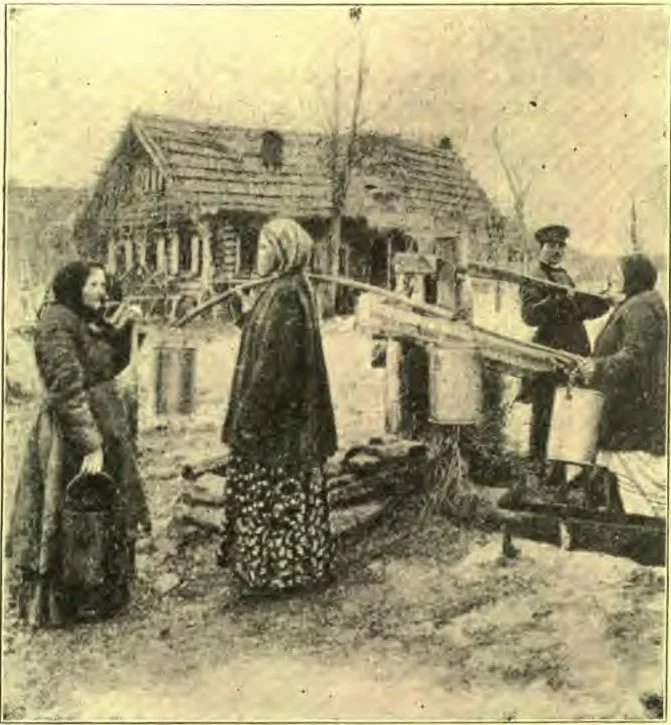
A SCENE IN RUSSIA
A SCENE IN RUSSIA
However, all this was changed by the Russianization which began in 1885, when Russia sought to inaugurate a religious movement which would supplant Protestantism with the Greek Orthodox faith, and would substitute the Russian language and law for the German language and liberties. Russian agents by skilfully stirring up the Lettish peasants against their German landlords succeeded in creating an insurrection of the people against the nobility in 1882. This local trouble offered a pretext for the interference of the Russian officials, and the end was that the freedom of these governments was lost between 1885 and 1889; and the mutual hatred between the Germans and Russians has wrought great harm to the heretofore peaceable provinces. The fine university at Dorpat, which had been a shining light in the educational world, was entirely remodeled and Russianized, so that it has now become of no educational importance whatever. On the most trifling pretext, Protestant pastors were deprived of their parishes, and no successors were appointed in their stead; to erect new Protestant churches was not allowed; pressure of all sorts was brought to bear to weaken the Lutheran Church, and to secure conversions to the Orthodox faith. The standard of the common schools has been lowered, for many qualified teachers were supplanted by persons whose chief educational virtue lay in the fact that they could teach the Russian language. At that time (1885) it is estimated that while seventy-three per cent of all the Russians could not read and write, yet in Livland less than three per cent, and in Estland about 2.3 per cent, were in this condition—certainly a very good record so far as education among the common people of the Baltic Provinces is concerned.
In naval affairs, the large harbor of Libau plays an important part, for here the government was constructing new dockyards at the time of our visit to these parts, and the czar himself called at that port to inspect these works that same year. The cost of the naval harbor here was about thirty-five million dollars. One reason why such tasks require so much capital is the lack of good natural harbors.

Our Work

Of course to the readers of this article, perhaps that which is of most interest is the progress of our own message in the Baltic Provinces. Here is a good part of the territory in the North Russian Mission. The persecution we have sometimes had to face here has been incited by religionists not of the Orthodox faith in Russia; but as the state has been anxious to check these powerful religious bodies in these governments, they have seemed to welcome anything that would, in their mind, tend to weaken this party. Now, we all know that the warning with reference to the soon coming of Christ, and the preparation necessary to meet him, must go to all the world, and that those who are really anxious to please their Lord through simple faith and obedience to his commands, will welcome the news of his expected return. However, those who say in their hearts, “My Lord delayeth his coming,” or those who feel free to believe that God does not mean what he says to us in his Word, will be found among those who seek in every way to oppose the glad tidings of Christ’s second advent; and it has worked just this way in these parts of Russia. So-called Protestants have felt it their duty to oppose our work, and to seek to incite the police authorities against us; but, finally, thinking to weaken the Protestant party, the Russian Senate allowed us the right of holding our quiet meetings, at least we have little interruption now, especially in such governments as the czar wishes to Russianize. Of course, it is simply a postponement of the time of reckoning to us, as we very well know from the study of history and prophecy. We have churches in Riga, Reval, Libau, Jurjev, and Weissenstein. Our membership here is one hundred forty-five. We are carrying on operations among the Germans, the Esthonians, the Lettonians, the Russians, and the Poles.
We believe that the great movements taking place in the far East, while they present many difficulties to us, will also be so overruled by the providence of God that more liberty and freedom will be accorded our work in this land.
In the next article we will speak of the trip to the southeast.
GUY DALL.

Spiritualism—Its Origin and Fruit

In a previous article we called attention to the fact that the claim of modern spiritualism to call up in the seance the spirits of the dead to communicate with the living, is a falsehood, for the “dead know not anything,” and have no “more a portion forever in anything that is done under the sun.” Eccl. 9: 5, 6. Hence any professed “materialization” by the “medium,” is nothing more or less than fallen angels masquerading in robes of light, with a lie upon their lips, to deceive souls.
What is now known as “modern spiritualism” first attracted public notice in the family of John D. Fox, Hydesville, near Rochester, New York, in 1848, and was then known as the “Rochester knockings.” Strange noises, raps, and muffled footfalls were heard. Chairs and the dining-room table were moved from their places. Questions were intelligently answered by means of raps, and the information imparted gave evidence of an intelligence of no ordinary character operating through an invisible agency, and claiming to be the disembodied spirits of the dead. Close investigation failed to reveal any fraud being practised, and the mysterious phenomenon remained inexplicable. From this veiled beginning the terrible thing has spread its deadly miasma throughout the earth. Its manifestations have been subjected to the most rigid human scrutiny, but this has not fathomed its mystery. Some of the workings of this invisible power have been a terror to the soul, and can not be the product of any jugglery or scientific manipulation. So great is its deceptive power that in a little over half a century it has gathered into its fold tens of thousands of the most learned and distinguished persons of the world.
Spiritualism comes to us clothed in the garb of religion. But what are its fruits? The Saviour says, “Ye shall know them by their fruits.” Matt. 7: 16. He admonishes us to “try the spirits whether they are of God” (1 John 4: 1), and says that if they speak not according to the Word, there is no light in them. Isa. 8: 20.
But look at the baneful fruit of this godless system, clothed, though it be, in the livery of heaven. Pages of its profane, atheistical teaching could be transcribed, but perhaps this is unnecessary. Suffice it to say that spiritualists do not believe in a real, actual, personal God who dwells in heaven, and is seated on a throne, but teach the pagan pantheism that everything is God—the flowers, the grass, pebbles, the sun, moon, stars, anything and everything; that his face is seen in the tiny flower; that Confucius stands higher as a teacher than Christ; that that ranting infidel, Thomas Paine, is above Christ in the spirit world; that there is no real, personal second coming of Jesus in the clouds of heaven. They deny the inspiration of the Holy Scriptures, stating that the Gospels are “vague, disgusting, inaccurate, and difficult to believe. They deny the divinity of God’s dear Son, and blasphemously affirm that “any just and perfect being is Christ.” The atonement is rejected, and the crucifixion said to be “nothing more than the crucifixion of the spirit.” They deny all distinction between right and wrong, and we are told that “sin does not really exist.” They teach that “man is his own savior, his own redeemer.” Its blasting influence tends to lower the pure standard of virtue and morality, and to open the gateway to the most unbridled iniquity. Moral fitness is no test of admission into its synagogue. Let its teaching but gain the ascendancy in the earth, and we shall behold a cage of every unclean and hateful bird. Such spawn and filth of demon control could be cleansed only by the eternal fire of the last day.
But modern spiritualism is not a new thing. We read in the Bible how anciently there were “soothsayers,” “witchcraft,” “sorcery,” “charmers,” “consulters with familiar spirits,” “divination,” “enchantment,” “magic,” and “necromancy.” It is from this foul bog that spiritualism has sprung. It is a member of this family. What is now called a “medium” was then known as a “witch,” who held pretended intercourse with the dead. Then, as now, they went to the dead for light instead of to the living God; they bowed before the sarcophagus instead of the altar. How the Lord regards this seeking unto “familiar spirits” he tells us in his Word. “Regard not them that have familiar spirits, neither seek after wizards, to be defiled by them: I am the Lord.” Lev. 19: 31. “And the soul that turneth after such as have familiar spirits, and after wizards, to go a whoring after them, I will even set my face against that soul, and will cut him off from among his people.” Lev. 20: 6. “A man also or woman that hath a familiar spirit, or that is a wizard, shall surely be put to death; they shall stone them with stones: their blood shall be upon them.” Verse 27. See also Deut. 18: 10-12. And in Rev. 21: 8; 22: 15, we learn that all sorcerers and unbelievers have their part in the lake of fire.
The revival of this deceptive, miracle-working power is a sign of the last days. The spirits of devils have gone forth into the whole world to gather them to the great day of God, and by means of the real miracles which they will have power to do, will deceive millions. Rev. 13: 13, 14; 16: 14. In the last days a miracle-working power is to resist the truth “as Jannes and Jambres withstood Moses.” 2 Tim. 3: 8. When Moses and Aaron appeared before Pharaoh, and Aaron cast down his rod and it became a serpent, the magicians were called, and they “did in like manner with their enchantments.” Ex. 7: 10-12. Satan is to be working “with all power and signs and lying wonders, and with all deceivableness of unrighteousness in them that perish” when the Saviour is revealed in the heavens, coming in power and great glory to deliver his people from the grasp of the enemy. That the world is ripe for this delusion is certain. Nearly all believe in the pagan doctrine of the natural immortality of the soul and the consciousness of the dead. And if the dead are conscious, why should they not return to the earth and visit those still living? This would be nothing strange or improbable. Satan laid the foundation for the consciousness of the dead on the lie he told in Eden, and from it has sprung all the terrible brood of errors, spiritualism included, which has cursed the earth. And in these closing hours of probationary time, Satan and all his fallen host, as angels of light, through means of modern spiritualism, are seeking to lead the world captive and into perdition at last. Only those who believe God’s Word shall escape. “Those who would stand in this time of peril must understand the testimony of the Scriptures concerning the nature of man and the state of the dead; for in the near future many will be confronted by the spirits of devils personating beloved relatives or friends, and declaring the most dangerous heresies.”—“Great Controversy,” Vol. IV, page 377, edition 1887.
G. B. THOMPSON.

Practical Things About Tithing—V

De Witt was not always a model boy in the home or neighborhood; but when he plainly saw an obligation due his Creator, there was no parleying with self. Thus we can see how, when instructed that a tenth of the means entrusted to his care did not belong to him, was only loaned to prove him, he readily returned to the Lord his portion whether it was much or little. As in the case of many children, it was at first only now and then a few pennies, but his nobility of character was shown in his practise of selecting the brightest ones as the tithe.
As he grew older and worked for wages, he was faithful in tithing all money received. God does not leave his honest, earnest children without showing them all the light and privilege which it is theirs to enjoy and put in practise in their lives. This was fulfilled in the case of De Witt, as is evidenced by a conversation between his mother and himself, as follows:—
Mother: I have been thinking very seriously about our tithing. It seems to me we have not been paying to the Lord all he requires as tithe.
De Witt: How can that be? I have paid one tenth of my wages, and I am sure you have tithed all you have earned.
Mother: In a sense you are right, but only partly so. Is twenty dollars a month all you receive for your work?
De Witt: No; I get my board and room and have my washing done. Do you think the Lord requires a tithe of these too?
Mother: After much thought on the subject I have so decided for myself, and am putting my belief into practise. It seems to me one should add to the money received all else he gets for his work in either board or anything for which money must be paid did he not so receive it.
De Witt: I can not see it as you do, mother, but I honor your convictions and your faithful practise.
So the weeks and months passed into years before the veil of semi-selfishness was removed from his eyes, and he saw how to solve the little problem in mental arithmetic something like this: If I work for twenty dollars a month, and besides that receive what is worth ten dollars, is not my obligation to God a tenth of thirty dollars—three dollars—just the same as it would be if my wages were thirty dollars, and after tithing it I were to use ten dollars with which to provide myself the necessaries of life? Thus satisfied, he set about making up past obligations, and ever since has considered it a privilege to tithe all he receives for services rendered.
Mrs. D. A. Fitch.

Revering God

“Favor is deceitful, and beauty is vain: but a woman that feareth the Lord, she shall be praised.”— Proverbs.
Go, maiden, turn the storied page Of distant, far, romantic age, And mark how fared the dames who hung On flattering words of kingly tongue; How at Napoleon’s jealous frown E’en his beloved queen went down; And how Eugenia, praised to-day, Saw her admirers turn away; Note how the proud old world beguiled Each cheated devotee, and smiled.
Then Beauty see, by gaping throng Crowned empress of the world of song, Drawing, as captives to her side, The royal sons of wealth and pride; Till Time, at last, resentful grown, O’er her his misty veil has thrown, And she, left wrinkled, weak, and old, Is mocked as “stupid,” “crabbed,” and “cold,” And while she turns her eyes to see, Her courtiers vanish utterly.
Ah, true the prophet’s words of old, Wrought out in sentences of gold! For earthly favor is but dross Though bought with years of pain and loss; Too oft those years of service prove The fatal shaft of jealous love; And Faith and Innocence implore In vain at heartless Tyrant’s door; Who dares too much of royal praise, With life the debt of envy pays.
But loving favor from our God, Though often proved by chastening rod, Is all unlike the grace of kings Or fickle Folly’s shouting rings; It changes not,—if we be true,— But comes each day as something new. For fool, for wise, for young, for old, ’Tis better chosen far than gold. Fear of the Lord—’tis strength for man That girds him safe for every plan.
Beauty must fade, and love decay; God’s precious grace endures for aye; And she who most our Father fears, Who loves him most, and most reveres, Shall win most true and heartfelt praise Through life’s swift, toilsome, fleeting days. Ah! may such praise as this be thine, Dear, loving child of truth divine! A woman praised for fearing God, For treading where the Saviour trod.
S. ROXANA WINCE.

Speaking a Word in Season

We are nearing the close of this earth’s history; soon we shall stand before the great white throne. Soon your time for work will be forever past. Watch for opportunities to speak a word in season to those with whom you come in contact. Do not wait to become acquainted before you offer them the priceless treasures of truth. Go to work, and ways will open before you.—Mrs. E. G. White.

Two Trifles

(Concluded)
The next day he was ready with his report. “Girls,” he began, “Mary wins in the argument about trifles, and as a result I’m feeling pretty mean about the business. I guess I’m the trifle in the case.”
Both girls laughed as they glanced at his six feet of length, and his great broad shoulders.
“Oh, it’s no laughing matter,” he said, good-naturedly. “This is the way it happened: Washington’s birthday you know, everything in town was closed, and I thought, as Al was living in a boarding-house, I’d better ask mother if I might bring him home the night before, and have him spend the day here with us; we were going to have a kind of celebration anyway, you know. So about seven o’clock that evening, just before I started for the travel lecture, I ran up to mother’s room. It was on the tip of my tongue to ask her if she wouldn’t include Al in the number of her guests, when I noticed she looked pretty blue. I know she whisked away a tear so I shouldn’t get sight of it. I pretended I didn’t see it, but I said, ‘Got some troubles, little mother?’”
Helen knew in just what a hearty, cheerful way he had said it.
“‘Not very many, dear,’ she said, but I didn’t feel like bothering her about anything then, and decided it would do just as well to bring Al home the following Saturday night and keep him over Sunday.”
Will looked dubious.
“But it didn’t do,” he continued. “Having nothing to keep him busy that holiday, Al went off with a crowd he had always before refused to join—a pretty gay set, I’m afraid. The man who had half promised him the position he’s been slaving for during the past year happened to see him with those people, and the next day he informed Al very curtly that, after due consideration, he found he had no place for him. Alson guessed why, and now he feels reckless, and says he might as well have the game as the name, might as well be really bad since he has to suffer anyway. He talked in a desperate sort of way this morning when he told me about it. Somehow I feel responsible for the whole thing because I hesitated about asking mother.”
Will looked thoughtfully across at the girls, whose faces expressed ready sympathy. Suddenly Helen exclaimed:—
“The night before Washington’s birthday, you say?”
“Yes.”
“Mother was nearly crying alone in her room?”
“Yes.”
“About seven o’clock?”
“Yes. Is this a cross-examination?”
“Then,” said Helen, sitting upright and paying no attention to her brother’s question, “it’s all my fault.”
“How?”
“Bridget was out that evening, and I had to stay home from the lecture to put away the dinner things, and I said I didn’t see why I always had to do such disagreeable things. I didn’t see why all our relations were rich, and why we had to be always scrimping and missing everything. Of course I repented in a little while and apologized. It made mother feel pretty bad I knew, but I didn’t think she minded as much as that, though.”
“It was a pretty serious mix-up all round, wasn’t it, sis?” Will spoke consolingly, but he looked worried.
“Well,” came Mary’s soothing tones, “you mustn’t take all the blame, for probably there were a great many more ‘little nothings’ that had something to do with it. Al must take his share, too.”
“Yes, perhaps,” said Will, “but we’ve got to take the blame that belongs to us.”
Helen was aghast at the enormous result of her few minutes’ irritability. Such outbursts were not common with her: There was a catch in her voice as she said, “Poor Al!”
Mary went directly to the heart of the matter. “It’s done,” she said. “It’s somebody’s fault, of course, but what’s to be done first to rectify it?”
“I don’t know, I’m sure,” Helen answered, musingly. “I have not had a thought of anything but the garden picnic for the last two days, and I don’t seem to have any idea but picnic in my head.”
“Oh, good,” ejaculated Mary. The joy of the discoverer shone in her eyes. “The picnic! That’s just the thing. Ask him, of course.”
Alson Jarvis had hidden the hurts of his schoolmates’ recent slights under a nonchalant manner. Each one, while it cut deeply, seemed to aggravate him to greater wilfulness. Well-bred as he was, he took no real pleasure in the sports of the company of which he had made a part since the loss of the position he so desired, and for which he had worked so faithfully. He felt himself disgraced and barred from the old associates, so, from pure discouragement, he continued with the new.
Helen Fairmont’s note of invitation came as a surprise.
DEAR ALSON [it ran], I am inviting, for Aunt Sue, a number of my friends to meet Miss Mary Sutton, my guest from Amosville. We are to have a garden picnic Thursday evening. I think you will enjoy meeting Miss Sutton as she has the same love for golf as you have, and I have already told her of the scores you made last summer. Yours sincerely,
HELEN FAIRMONT.
He read it with pleasure. Then the accumulated unkindnesses of his old friends came before him. A spirit of resentment took hold of him. No, they had shown how little they cared for him. Why should he go among them again? There was plenty of other company he could enter. But why had she asked him if she did not want him? Oh, well, they all were alike anyway. Even if she had not already done so, Helen would pass him by sooner or later like so many of the others. But Will Fairmont had stuck to him. Maybe he’d got his sister to pity him. Al winced at the thought. “I’m getting contemptible. Will Fairmont wouldn’t do that. Oh, well, I might as well be done with them all right now.” His eyes flashed defiantly. Then he caught sight of the little note.
“Friendly enough,” he said. “Sounds as honest and sincere as her brother.” Then he added: “I might give her the benefit of the doubt, I suppose. Yes, I’ll go if for no other reason than that she is Will’s sister.”
He went. And he enjoyed himself thoroughly, thanks partially to Mrs. Armour’s knowledge of human nature. Where others saw only weakness, she found smarting hurts. She felt he was on dangerous ground, that he was ashamed of himself, and that his self-pride and self-respect needed propping, and she immediately proceeded to prop them.
Helen’s grief over her own unsuspected part in his career resulted in an especial effort to make the picnic a pleasure and success for him. With that kindly compliance which is more common in those about us than we sometimes think, the other young people accepted the idea of Alson’s being one of them again, and he found himself, before the termination of the evening, on almost his old footing with them.
“Wasn’t it a success all round?” said Mary that night. “I congratulate you, Helen, on your ability to extend real hospitality. It was just lovely.”
“They did seem to have a good time, didn’t they? Al Jarvis was on my conscience all the evening. Do you think he enjoyed himself?”
“Yes, I do, Helen.”
“After what I did it was such a little return to make.”
Simultaneously the girls laughed.
“Trifles again! They keep bobbing up, don’t they? I suppose this is one of those of little consequence.”
“‘Time will tell,’ sententiously quoted Mary in a sleepy tone.”
Time did tell. Years afterward two successful lawyers sat in an office, one congratulating the other on his brilliant speech of the day.
“It might never have been, Will,” said Alson Jarvis, “if your aunt hadn’t somehow, without a single definite word on the subject, shown me the broken road down which I had about decided to travel through life. It was at a party she had in her grounds one night long ago for your sister and Mary Sutton. Do you remember it?”
Did he? Will’s heart glowed with pleasure and gratitude as he thought of the great result of Mary’s little suggestion about inviting Al.
How unlike this was the outcome of that miserable trifle which had played so important a part in the lawyer’s experience.—Elizabeth Golden, in The Wellspring.

Good Things to Cultivate

Good sunlight, good air, good ambition, Good water, good food, and good work. If coupled with other good habits, Will richly bless all but a shirk.
Good health gives a good, vigorous body To aid in the battle of life; Good heart and good mind and good conscience Will help one to win in the strife.
Good seed sown in springtime will flourish, If properly tended till fall, When harvests of good may be garnered, With no weeds to hinder at all.
Good boys into good men develop, And bless the old earth with good deeds That help make the weak and bad better; Then, boys, sow the very best seeds.
The good God, above you, is watching And waiting for you to decide; Good blessings for you he is keeping, O pray do not turn them aside!
Begin right away with the sowing, And cultivate everything good; When distant years harvests are showing, You'll clearly see why that you should.
BENJAMIN KEECH.

THE WEEKLY STUDY

Voyage and Shipwreck
Opening Exercises.
Scripture Lesson: Acts 27.
Texts for Personal Study: Ps. 107:23-31.
Reference Study: “Sketches from the Life of Paul,” pages 261-271.
Topics for Study:—
Leave Cæsarea.
Companions.
Touch at Sidon.
Sail south of Cyprus.
Arrive at Myra.
Change ships.
Reach Crete.
Admonished by Paul to remain.
Leave Crete.
Tempest.
Despair.
Paul’s courage.
Shipwrecked at Melita.
All delivered.

Notes

Locate carefully on the map the various places mentioned in this lesson, and ascertain as nearly as possible the route taken by the ship. Do not neglect the geographical study.
There are many practical lessons which can be drawn from a study of this lesson. Have you ever been tossed on the sea of trouble, in Adria as it were, when all seemed dark, and neither sun, moon, nor stars in many days appeared? Remember Paul’s experience, for it was written for our encouragement. The Lord did not forsake him. Note his words of faith in verses 22-25.
Though Paul was a prisoner, note who was the real “master” of those who were on board the ship. See verses 33-36. This aged servant of God, in chains, put courage and “good cheer” into the hearts of all. This is a lesson for us.
Note also the favor which the Lord gave Paul with the centurion. Verses 3, 43. The counsel which Paul was enabled to give, being followed, was the means of the lives of all being saved. Paul’s work was not done, and the Lord watched over him, bringing him to a place of safety.
Paul had as companions on this voyage Luke and Aristarchus. The counsel and prayers of these faithful servants must have greatly cheered the aged apostle in the trying circumstances which surrounded him.
“In the midst of that terrible scene, the apostle retained his calmness and courage. Notwithstanding he was physically the greatest sufferer of them all, he had words of hope for the darkest hour, a helping hand in every emergency.”
“For three months the ship’s company remained at Melita. During this time Paul and his fellow laborers improved every opportunity to preach the gospel. The Lord wrought through them in a remarkable manner, and for Paul’s sake the entire company was treated with great kindness; all their wants were supplied, and upon leaving they were liberally provided with everything needful for their voyage.”
G. B. T.

Report of Oakland (Cal.) Young People's Society

Our present Society was organized with the following declaration of principles as its foundation: “We, the undersigned young people of the Oakland Seventh-day Adventist church, being in hearty sympathy with the missionary recommendations passed by the recent General Conference Council, do hereby band ourselves together to assist, to the extent of our ability, in carrying on this mighty missionary campaign which is to know no cessation until this gospel of the kingdom is carried to every nation, tongue, and people.”
Our plan was to have just as little complexity and as few officers as possible, the main object being to bring all the members into active Christian work, outside of regular meetings, and to make these occasions times for reports of work done, and for the encouragement of fellow workers.
The principal lines of work to be taken up by us as a Society were as follows: distributing denominational literature, as outlined in the REVIEW AND HERALD of Oct. 13, 1904; visiting the inmates of hospitals, jails, and other institutions to which we have admission, and helping in Sabbath-school.
A large subscription list for the four special numbers of the Signs of last fall was made up by our members, and these papers were either sold or given away.
We find that one of the most interesting fields of labor is at the county hospital. We go in little companies to this place on Sabbath afternoons occasionally, and hold meetings to which most of the inmates come with eager faces and glad hearts. Visitors are rare, and we are received cordially. First, we hold a meeting for all those able to attend, and then we visit the wards, and sing for those who are unable to leave their apartments. Most of these people are old and very feeble, but they join heartily in singing and testifying.
As it is impossible for us to go such a distance very often, it would be an excellent place for our neighboring Young People's Societies to visit now and then, thus giving these willing-hearted and lonely people a chance to hear more of our truths.
The Colored Old People's Home at Beulah Park is another field. Little companies go as often as possible, and make visits similar to those made to the county hospital.
Some jail work has been done, although this is less fruitful than other lines. It is not always easy to secure admittance, and of course the people found in these places are the hardest to work with.
The King's Daughters' Home, a home for incurables, is supplied with reading-matter by members of the Society, and we find this to be an open door for work, as visitors are perfectly welcome at any time.
Our young people have taken hold of Sabbath-school work with enthusiasm, and now nearly all the teachers of the kindergarten, primary, and intermediate divisions of the Sabbath-school are from our numbers.
Interesting reports of individual work have been made. In the State secretary's quarterly report for quarter ending March 31, 1905, we find that active work has been done in missionary correspondence, visiting the sick, holding Bible readings and cottage meetings, taking subscriptions for literature, tract distribution, Christian Help work, and various lines suggested to individuals by their surroundings, associations, and circumstances.
Of late we have made a special study of The Family Bible Teacher tracts. Taking one of the twenty-eight leaflets of the series each week, we study it at the regular meeting, and then we circulate as many copies of it through the week as possible.
There is certainly a vast field of labor for each band of young people, and if we faithfully perform our duties as missionaries at home, we shall be well fitted for missionaries abroad, when such openings may be offered.
VIDA M. BARNARD.

The Sorrow That Nobody Mentions

“The sorrow that nobody mentions, The sorrow no one may share, Is the sorrow the dear Lord giveth His sweetest, tenderest care. He knows where the hurt is deepest, The tears of night and of day, And whispering softly, ‘I love you,’ Brushes the dewdrops away.”

The Relative Importance of Meetings and Work

THE relationship and the importance of meetings and work, depend largely upon the object of the meetings and the nature of the work done; and these depend upon the aim of the Society. If the aim of the Society is “The Advent Message to All the World in This Generation,” which I trust is true of each Society, then every meeting that is held will be educational, and will contribute directly toward the attainment of that object, and consequently will bear the relationship to work that cause does to effect. Viewed from this standpoint, meetings mean more than mere collections of people, as Webster defines them.
What is the significance of young people’s meetings? What is the meaning of the appeal that calls our young people together into companies “formed somewhat after the order of the Christian Endeavor Society”? Is it a call that as young people we may have some place to go to keep us from drifting into the world?—No! no! That may be, and I trust will be, the result, but the object is much more than that. It is to edify one another by an interchange of thoughts and feelings, to distribute and gather light, strength, and courage, by becoming acquainted with one another’s hopes and aspirations, and by unitedly offering up earnest prayers be refreshed and invigorated from the source of strength to labor more earnestly for the Master. It is that we may provoke one another to love and good works that Paul has told us to assemble together, and more often as we see the day approaching.
That we may heed the call of the hour and accomplish the work implied by the call, we need simplicity, meekness, confidence, and love,—simplicity of plans, meekness of spirit, confidence in ourselves and one another in the Lord, and love to God and man. Since these attributes are found only in Jesus, we need the Saviour first of all, last, and all the time.
Meetings are not to be made mere places of amusement and entertainment, where orations are delivered, speeches made, and interesting programs rendered. They may, however, be both instructive and interesting if rightly conducted. We have been told that “our meetings should be made intensely interesting,” but above all else, they should be pervaded with the atmosphere of heaven. That which is light and frivolous should have no place in them. The molding influence should come from those who have a living connection with heaven, instead of from unconverted ones.
That our meetings may be what they should be, wise planning, carefully devised ways and means on the part of a well-chosen committee, is also needed. If you wish success, be sure to avoid large committees, or committees selected to act independently of the president, which makes him a sort of machine to grind out a program of which he knows little or nothing. Surprises are a good thing sometimes, even in meetings, but to be successful the leader must be free to introduce them as the Spirit leads.
ANNA HIBBEN.
(To be concluded)
Continue reading: Tom Tompkins’s Start