The Youth’s Instructor, Vol. LIII, No. 33

Our Visit in Russia—I
Earlier text: Our Visit in Russia—I

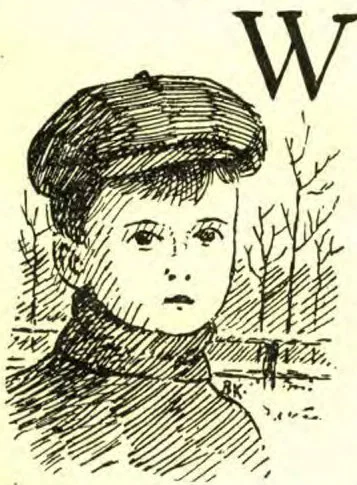
Tom Tompkins’s Start

WELL, it’s just what I’ve been expecting all along.” Mrs. Parsons gave a self-satisfied nod as her needle scratched the stiff gathers of the ruffle. “I knew something would come out one of these days to show Tom Tompkins’s real nature. I never saw a Tompkins yet that was trustworthy. It’s just as I’ve expected.”
Unfortunately Mrs. Parson’s comment was true, in so far as it applied to the Tompkinses in general; but I felt in my heart that in its relation to Tom Tompkins it was unjust, if not altogether false. Yet when I looked at her firmly set lips and heard the scratch, scratch of the needle as it laid those stiff gathers into submissive regularity, I suppressed the remonstrance that rose to my lips, and quietly bidding her good morning, kept my indignation to myself.
Tom Tompkins had grown up in our neighborhood. Until he was fourteen, there was nothing which particularly distinguished him from the rest of “the Tompkins tribe,” as the family was called in the neighborhood, unless it might be an added degree of indifference as to his personal appearance, or an even greater tendency to idleness than that manifested by the other six scions of the family tree. But at fourteen something happened to Tom.
Nobody seemed to know what that something was, but one morning he rang the door-bell at Mr. Casson’s elegant home, and informed the maid that he must see the gentleman of the house himself.
“I don’t know what he wants, sir,” the servant reported to her employer, who was enjoying his morning paper; “but he won’t go away, and he says to tell you it is very important business.”
Mr. Casson smiled as the lad was shown in. His appearance was not such as to indicate that he was the bearer of important news. His clothing was ragged, and he held his torn straw hat by inserting the fingers of one hand into a hole in its crown.
“I’ve come to tell you, sir, that I’m a-goin’ to make a start in life this mornin’,” Tom said. “I’ve been thinkin’ a lot fur a couple o’ days, and nights, too, mostly. There ain’t nobody that has any use fur us Tompkinses, an’ I’m goin’ to begin now an’ show ’em we’ve got somethin’ in us after all. I ’lowed you’d have somethin’ fur a feller to do in that big store o’ yourn, so I come to you first. I’m ready to begin work this mornin’, sir.”
Mr. Casson had listened to many remarkable business propositions, but this one struck him as the most original of them all. Here was a boy who for fourteen years had been considered the most worthless youngster in town, standing before the largest merchant of the place and coolly demanding a position in his store.
“If you can’t think of nothin’ right now,” Tom continued, “I’ll just go down to the store an’ just stay aroun’ until I see somethin’ to do.”
“It evidently isn’t a question of hiring you,” the merchant remarked, half-laughing. “You seem to have settled that little matter for yourself. What salary are you to receive?”
“Oh, that’ll be all right, sir,” Tom replied, missing the irony of the question; “you’ll do the right thing ’bout paying me. I hain’t got no worry ’bout that.”
Mr. Casson scratched his head, and then chuckled.
“Give this boy some work,” he wrote to the manager of the men’s clothing department. “Fix him up with a good suit, and set him at anything he can do. Pay him three dollars at the end of the first week, and send him to me.”
That was Tom’s start. For a very brief period his work was about what he had suggested—just staying around until he saw something to do. But it was not five minutes after he was on duty before he saw something to do. An old man had misplaced a bundle while making other purchases, and in an instant Tom was on hand to hunt for it. The clerks looked surprised at his “at home” manner, but he merely remarked, “I’m workin’ here now;” and as the suit he wore was the livery of the boys of the store, they concluded it was not best to interfere.
It was Tom’s eyes that first spied the missing bundle. He turned from the old gentleman, almost before the latter had time to realize that his package was once more in his possession, to amuse a little child who was fretfully clinging to her mother’s skirts, while she was trying to decide between two house coats.
“I wish you would have more such boys,” the mother remarked to the floor-walker, as she entered the elevator. The floor-walker mentally chalked down a credit mark for Tom. The woman was one of their wealthiest customers.
These were incidents of Tom’s first day as an employee of Casson & Company. Before his first week was up, he had won the good will of every clerk on the floor, and in less than a month he had gained their confidence, in spite of the fact that he was one of “the Tompkins tribe.”
But one morning, about a year after Tom’s awakening, there was trouble at the desk in the men’s clothing department. A ten-dollar bill was missing. The cashier could not account for the loss.
“I’ve been here all the time,” she explained to the floor-walker, “except early this morning, before any customers were in, when I ran up to the second floor to speak to my sister; but I was not gone three minutes, and besides, Tom was here, and said he would watch the money-drawer.”
It had not occurred to either the cashier or the floor-walker to suspect Tom until she had finished the sentence. Then their eyes met, and, though neither spoke, each knew the thought in the mind of the other.
The floor-walker turned away and called Tom to him. When the boy realized that he was suspected of the theft, his eyes flashed.
“I’ll go straight to Mr. Casson!” he exclaimed. “I won’t talk with you folks! You think because I’m a Tompkins, of course I’ll steal. It ain’t no fair sizin’ a feller up by what he has to be instid of by what he is tryin’ to be!”
And straight to Mr. Casson Tom went, closing his somewhat excited statement of the trouble with the same words:—
“It ain’t no fair sizin’ a feller up by what he has to be instid of by what he is tryin’ to be!”
Tom did not lose his place. But the incident leaked out, and Mrs. Parsons was not the only one who, with a wise nod of the head, pronounced judgment:—
“It’s just as I expected.”
Tom said nothing more about the matter, though the glances of suspicion which he met on every hand cut him to the heart.
One night, about two months after the ten-dollar bill had disappeared, the lock on the money-drawer in the men’s clothing department needed repairing. During the process the workman’s file slipped, and the end of it scraped along the top of the drawer. The workman noticed a ragged bit of paper hanging down, and, pulling at it, drew out a ten-dollar bill.
“Here, Miss,” he said, turning to the cashier, “you didn’t take all your money out of this drawer. Here’s a ten that was sticking to the top.”
The cashier did not wait until night to “make up cash.” She counted it at once. Yes, there was ten dollars too much. This must be the bill they had suspected Tom of taking.
Investigation showed that a sliver in the top of the drawer had caught into the bill in such a manner as to hold it securely hidden from view. Tom was vindicated, and Mr. Casson had a motto printed in big letters, and hung up on the wall over the cashier’s desk:—
“Judge a man not by what he has to be, but by what he is trying to be.”
Thus it was that Tom Tompkins got his “start.” He hasn’t stopped going up yet, so it is impossible to tell where he will finish. However, he is head cashier of Casson & Company’s store now, and the wise people who once shook their heads dubiously now nod them approvingly, and say,—
“It’s just as I expected.”—Epsworth Herald.

A Social Game

An Incident from Life

“Why, John Newsom! Who would have thought you were so straight-laced, you who are always trying to make others enjoy themselves?”
“And one would think we were committing murder from the look of horror on your face,” spoke another.
“You can not say there is any sin in a social game of cards. Come, explain yourself. We all have confidence in your judgment; so if you can show us any harm in playing without ‘stakes,’ let’s hear it at once,” said Harry Lane, the expert player.
Such were the replies to John’s expression of disapproval when he found several of his college chums in their room one evening engaged in a game of poker.
“Yes, we want to hear it,” “We’ll all listen to you,” “Ready to be converted,” came a chorus of voices.
“It costs me a great effort to relate this chapter of my life,” John began, “and I do so hoping and trusting that new light may be thrown upon this subject for you all. A few years ago we were living in Baltimore, where my father practised law and was regarded not only as one of the most eminent members of the bar, but a Christian whose influence was wide-spread. He was very liberal in his views, and did not think that a church could justly make rules in regard to amusements, but that each member should be guided by his own conscience. He said that if home were made attractive for boys, they would not seek doubtful pleasures elsewhere. So he had us taught all the games that he considered innocent. He said there was no difference in dealing bits of paper stamped with hearts or spades and those bearing the names of authors—that any game could be made sinful by being carried to excess, and we must learn self-control in all things.”
“Yes, I stand with him there,” “He was right,” “A man of sound judgment,” were the expressions of approval which greeted this portion of the narrative.
John Newsom proceeded gravely: “But listen. Cards soon became the most popular diversion, and my father taught us to play scientifically. Among the number of visitors at our card parties was Ernest Walton, a brilliant young man of enthusiastic temperament. He became fascinated with the game, and in a short time we called him our champion player. He never lost a chance, and I often laughed at his excitement when a game was almost lost or won.”
The speaker paused for an instant, and the expression of pain on his face deepened, exciting the sympathy of his listeners, who were now thoroughly interested and far from a laughing mood.
“Once Ernest proposed playing for money,” continued John; “but my father sternly prohibited this, telling how sinful and dangerous was the habit of gambling. Then I saw his imminent peril, and begged him to abandon cards. He laughed scornfully, and replied: ‘I thought you were at least consistent, John. You who taught me how to enjoy the game should not now give this advice.’”
“But I can’t understand,” said Harry Woods, who possessed great self-control and took life easily, “why some persons will let a sport run away with them.”
“You must remember,” replied John, sadly, “that we are not all similarly constituted. Ernest never came to our house again, and we soon heard of his gambling with disreputable characters. I determined to make another effort to reclaim him, when he suddenly removed from the city with his unhappy mother. When I was visiting in Washington, about a year later, I met a man who bore some resemblance to my former handsome friend Ernest. I thought, ‘Could dissipation have effected such a great change in so short a time?’ I saw that he recognized me, and I spoke affectionately to him; but he indignantly refused my friendship, and scornfully upbraided me. ‘No,’ he said bitterly; ‘I’ve had too much of you, John Newsom. You and your father have been my worst enemies. Now I have fallen to the lowest depths. I have broken my mother’s heart, and no power on earth can save me. Take this memory with you through life.’ When he had finished, he turned abruptly and left me. This is all of the story that I am able to relate; for my feelings, then and now, can not be expressed. Yes, my conscience will reproach me through life.”
There was silence for some moments. Harry was the first to speak. “I, for one, will never play another game. I do not fear for myself, but I might be the cause of another’s ruin. Let’s burn the cards. What do you say to this, boys?”
The reply in the affirmative was unanimous. As John saw hearts, spades, and clubs turn to ashes, it seemed a slight atonement for his past mistake.—Frances Leigh, in Children’s Visitor.

Insects and Their Habits, and What Harold Learned About Them

“O UNCLE FRANK! Is that your microscope? May I see it?”
“Certainly you may, though there is not very much to see about the instrument itself; but it is able to show you many wonderful and beautiful things;” and Uncle Frank carefully adjusted beneath the lens, on a small piece of clean glass, something which looked no larger than a tiny speck of dust.
“What are we going to see first, uncle?” cried Harold, enthusiastically. “O, let’s put something under the glass! see, here’s a little bug on the window; I guess it’s a ladybug. Let’s put him under.”
“I have something fixed, already; that bug is much too large; you can see it very well without a glass. But come, I told you I had something ready now; can you tell me what it is?”
“I didn’t see as there was anything at all on the glass you put under—but O, O! uncle! isn’t it pretty? What can it be?”
“It is only that little speck which looked like a bit of dust. They are the shells of a tiny animal, called fossil infusoria. You will be astonished when I tell you that many high mountains are composed chiefly of these little creatures and others of the same nature. There is a very large deposit in the State of Virginia, and if you were to examine the most minute particle of this dust through the glass, you could count many of them.”
A FOSSIL INFUSORIAN WITH SYMMETRICAL SHELL
All this time Harold was gazing at the pretty shells, as beautifully marked and shaded as if traced by the pencil of a famous artist, and, indeed, each delicate line was traced by the finger of the great Master Artist, whose eye delights in beauty.
“The little animals which made these tiny shells their home, died long ago, and their houses—myriads of them—compose the foundation and substance of the imperishable mountains. Even great cities are built upon these tiny coffins, and, again, they are sometimes ground to powder and sold for polishing. Indeed, the shells of these creatures are more thickly spread over the earth than are the bones of the large animals. Nor is this all, Harold; even the very air we breathe is sometimes filled with these minute shells.”
“I suppose it is not healthful to breathe such air, is it, uncle?”
“No, it is quite harmful. I remember once as I was sailing near the Cape Verd Islands, the air seemed hazy and thick; so I examined some of the brown dust which settled over everything, and found that it contained very many of these tiny shells. They are called fossil because they are the bony remains of an animal, and infusoria because they were first discovered in water where there was decomposing vegetable matter present, and it was supposed that an infusion of vegetable product was necessary in order to produce them. This idea, however, has been proved false. But do not forget that there are very many different kinds of these delicate creatures.”
“I would like to see some real live ones,” said Harold, eagerly.
“Well, well; I am much pleased that my young scientist is so intensely interested. I rather expected it, however, and so I have been preparing a few real live ones, as you call them, especially for your entertainment. You see, a few days ago I just took a little handful of sage leaves and poured over them a cup of clean rain-water, and—well, you shall see the result;” and Uncle Frank placed under the eyepiece of the instrument a thick glass containing a little cavity into which he carefully placed a drop of the prepared water.
“There; what do you see now, my lad?”
“O uncle! the drop of water is just full of the oddest little fish; they don’t look much like fish either, but they are swimming about just as lively as if they were in a big pond of water. O! O! there goes a large one! wait,—he’s still now,—I guess he’s tired.”
“Look close, and see if you can’t see his blood circulate,” said Uncle Frank.
“O, I can! I can! he keeps his tail going, but he is resting, and I can see right through him, and something is just rushing on the inside of him,—but it can’t be blood, for it isn’t red,” declared Harold, who began to feel that he was quite a scientist.
“No, it’s not red, but it is all the blood he has, and it keeps the tiny creature alive as much as your red blood keeps you alive.”
“But where did you get these little midgets, uncle? were they in the sage leaves?”
“O, no, the eggs were floating in the air, and the rain brought them down with it, and then they hatched,—that’s all. I put the leaves in because the eggs seem to hatch better in water prepared this way, though a little wisp of hay will do as well.”
But the study hour was up now, and Uncle Frank placed his valued microscope back in its case.
MRS. L. D. AVERY-STUTTLE.
(To be continued)

“My Peace I Give Unto You”

O, WONDERFUL gift of the Saviour,— Sweet peace as a river to flow,— His latest, best gift ere he left us To drink of the cup of his woe!
'Tis fraught with divinest compassion, With courage and fervor it glows, Or it falls on my heart like a cadence That lulls to the sweetest repose.
O not like the world doth he give it! It soothes in the world's darkest hour, And comes to my soul with refreshing, Like sunshine in silence and power.
A gift from the greatest of givers, Unlike to earth's tarnishing gold, O come to the mount of his blessing, And take of this treasure untold!
MRS. P. ALDERMAN.

INTERMEDIATE LESSON

IX—The Five Thousand Fed

(August 26)
LESSON SCRIPTURE: Mark 6: 30-46; John 6: 14-21.
MEMORY VERSE: “Be of good cheer: it is I; be not afraid.” Mark 6: 50.
“And the apostles gathered themselves together unto Jesus, and told him all things, both what they had done, and what they had taught. And he said unto them, Come ye yourselves apart into a desert place, and rest a while: for there were many coming and going, and they had no leisure so much as to eat. And they departed into a desert place by ship privately. And the people saw them departing, and many knew him, and ran afoot thither out of all cities, and outwent them, and came together unto him. And Jesus, when he came out, saw much people, and was moved with compassion toward them, because they were as sheep not having a shepherd: and he began to teach them many things.
“And when the day was now far spent, his disciples came unto him, and said, This is a desert place, and now the time is far passed: send them away, that they may go into the country round about, and into the villages, and buy themselves bread: for they have nothing to eat. He answered and said unto them, Give ye them to eat. And they say unto him, Shall we go and buy two hundred pennyworth of bread, and give them to eat? He saith unto them, How many loaves have ye? go and see.”
“One of his disciples, Andrew, Simon Peter’s brother, saith unto him, There is a lad here, which hath five barley loaves, and two small fishes: but what are they among so many?”
“And he commanded them to make all sit down by companies upon the green grass. And they sat down in ranks, by hundreds, and by fifties. And when he had taken the five loaves and the two fishes, he looked up to heaven, and blessed, and brake the loaves, and gave them to his disciples to set before them; and the two fishes divided he among them all. And they did all eat, and were filled.”
“When they were filled, he said unto his disciples, Gather up the fragments that remain, that nothing be lost.”
“And they took up twelve baskets full of the fragments, and of the fishes. And they that did eat of the loaves were about five thousand men.
“Then those men, when they had seen the miracle that Jesus did, said, This is of a truth that prophet that should come into the world. When Jesus therefore perceived that they would come and take him by force, to make him a king, he departed again into a mountain himself alone.
“And when even was now come, his disciples went down unto the sea, and entered into a ship, and went over the sea toward Capernaum. And it was now dark, and Jesus was not come to them. And the sea arose by reason of a great wind that blew. So when they had rowed about five and twenty or thirty furlongs, they see Jesus walking on the sea, and drawing nigh unto the ship: and they were afraid. But he saith unto them, It is I; be not afraid. Then they willingly received him into the ship: and immediately the ship was at the land whither they went.”

Questions

1. After the death of John, where did the disciples of Jesus gather? What did they relate to him? Where did Jesus invite them to go? Why did they need to rest?
2. How did Jesus and his disciples seek to go away? Who saw them go? What did the people do?
3. When Jesus and his weary disciples arrived at the “desert place,” whom did they find gathered there?
4. When Jesus saw the people, how did he feel toward them? Why? What did he begin to do?
5. When the day was nearly ended, who came to Jesus? What anxiety filled their minds? Where did they advise Jesus to send the people?
6. What did Jesus tell his disciples to give to them? What question did they ask the Master? What did Jesus now ask them? How much food was found in all that company?
7. What command did Jesus then give? How were the multitude divided? When Jesus had taken the five loaves and the two fishes, what did he do?
8. Who distributed the food? How many ate? Did they have all they wished? How much was left after all were served? What important lesson in economy did Jesus teach at this time?
9. What was said by those who had seen the five thousand fed? What did Jesus perceive? Where did he go? Where had he sent his disciples? At what time had they begun their journey?
10. What arose on the water? When they had struggled for a time against the storm, what did they see? Why were they afraid? How did Jesus calm their fears? How did they receive him? Where did they immediately find themselves?

(August 26)

IX—What Is the Tithe? When and Where Should It Be Paid?

(August 26)

MEMORY VERSE: “He hath showed thee, O man, what is good; and what doth the Lord require of thee, but to do justly, and to love mercy, and to walk humbly with thy God?” Micah 6: 8.

Questions

1. What instruction does the Lord give concerning the use of our substance? Prov. 3: 9.
2. From what portion of the substance should the tithe be paid? Ex. 22: 29; note 1.
3. What is the tithe? Gen. 14: 20; note 2.
4. Should the fact that it is difficult to determine the exact amount of tithe, lead us to neglect the payment of tithe?
5. What was the arrangement in Hezekiah’s day for receiving and paying out tithe?—A treasury and a treasurer. 2 Chron. 31: 11-15; note 3.
6. Where are we to-day commanded to bring our tithe? Mal. 3: 10.
7. What promise is made to those who do this? Mal. 3: 10-12.
8. For what purpose should the tithe be used? Num. 18: 21; note 4.
9. How are other needs in the church to be supplied? Mal. 3: 8; 1 Cor. 16: 2.
10. How is the amount of offerings to be regulated? 2 Cor. 9: 7.
11. In all these matters what does the Lord require? Micah 6: 8.

Notes

1. Not only does the Lord ask a tenth, but this tenth is to be taken from our income as the first-fruits. When one neglects to pay the tithe until the close of the quarter or the close of the year, the sum looks very large, and it is often a temptation to pay less. Upon the receipt of means, the tithe should always be taken out first, and laid aside as sacred to the Lord, and as soon as possible sent to the treasury.
2. The tithe is one tenth of all man’s income. What is the meaning of the word “income”? Webster defines it as follows: “That gain which proceeds from labor, business, or property of any kind; the produce of a farm; the rent of houses; the proceeds of professional business; the profits of commerce or of occupation; the interest of money or stock in funds, etc.; revenue; receipts; especially the annual receipts of a private person or corporation from property; as, a large income, a limited income.”
This is a very different word from “increase,” which means to “become greater in bulk, quantity, number, degree, value, and intensity,” etc.
The definition of income is very clear. Man’s income is what comes in as gain from all sources, rents, labor, business, or property, interest, proceeds of stock, salary, etc. One tenth of all that income God claims as his own, with which he proposes to sustain his ministers.
3. “Great objects are accomplished by this system. If one and all would accept it, each would be made a vigilant and faithful treasurer of God, and there would be no want of means to carry forward the great work of sounding the last message of warning to the world. The treasury will be full if all adopt this system, and contributors will not be left the poorer.”
4. “The portion that God has reserved for himself is not to be diverted to any other purpose than that which he has specified. Let none feel at liberty to retain their tithe to use according to their own judgment. They are not to use it for themselves in any emergency, nor apply it as they see fit, even in what they may regard as the Lord’s work.”—Mrs. E. G. White.

Promises for the Children

[THE special texts to be memorized can not be put in heavy type, as the office has disposed of all it had. Italics will be used instead. We hope there are many who are fixing these texts in mind. They are worth more than gold or silver. Only one little girl has written me of learning the texts; but I am sure she can not be the only one who is doing so.—Ed.]
1. What promise is connected with the fifth commandment?
“Honor thy father and thy mother: that thy days may be long upon the land which the Lord thy God giveth thee.” Ex. 20: 12.
2. What does the Lord promise to children who harken unto him?
“Come, ye children, harken unto me: I will teach you the fear of the Lord.” Ps. 34: 11.
3. What is the fear of the Lord?
“The fear of the Lord is the beginning of wisdom.” Ps. 111: 10.
4. How does the Lord look upon a wise child?
“Better is a poor and a wise child than an old and foolish king, who will no more be admonished.” Eccl. 4: 13.
5. What did Jesus do for the children?
“And he took them up in his arms, put his hands upon them, and blessed them.” Mark 10: 16.
6. How may each one receive the blessing of Jesus now?
“And all things, whatsoever ye shall ask in prayer, believing, ye shall receive.” Matt. 21: 22.
7. What promise is given to each one who keeps the commandments of God?
“Blessed are they that do his commandments, that they may have right to the tree of life, and may enter in through the gates into the city.” Rev. 22: 14. EMMA S. NEWCOMER.

The Shutting of Doors

THE shutting of a door is a little thing, and yet it may have infinite meaning. It may fix a destiny for weal or for woe. When God shut the door of the ark, the sound of its closing was the knell of exclusion to those who were without, but it was the token of security to the little company of trusting ones who were within. When the door was shut upon the bridegroom and his friends who had gone into the festal hall, thus sheltering them from the night’s darkness and danger, and shutting them in with joy and gladness, there were those outside to whose hearts the closing of that door smote despair and woe. To them it meant hopeless exclusion from all the privileges of those who were within, and exposure to all the sufferings and perils from which those favored ones were protected.
Here we have hints of what may come from the closing of a door. Life is full of illustrations. We are continually coming up to doors which stand open for a little while and then are shut. An artist has tried to teach this in a picture. Father Time is there with inverted hour-glass. A young man is lying at his ease on a luxurious couch, while beside him is a table spread with rich fruits and viands. Passing by him toward an open door are certain figures which represent opportunities; they come to invite the young man to nobleness, to manliness, to usefulness, to worth. First is a rugged, sun-browned form, carrying a flail. This is labor. He invites the youth to toil. This is already passed far by, unheeded. Next is a philosopher, with open book, inviting the young man to thought and study, that he may master the secrets in the mystic volume. But this opportunity, too, is disregarded. The youth has no desire for learning. Close behind the philosopher comes a woman with bowed form, carrying a child. Her dress betokens widowhood and poverty. Her hand is stretched out appealingly. She craves charity. Looking closely at the picture, we see that the young man holds money in his hand. But he is clasping it tightly, and the poor widow’s pleading is in vain. Still another figure passes, endeavoring to lure and woo him from his idle ease. It is the form of a beautiful woman, who seeks by love to awaken in him noble purposes, worthy of his powers, and to inspire him for ambitious efforts. One by one these opportunities have passed, with their calls and invitations, only to be unheeded. At last he is arousing to seize them, but it is too late; they are vanishing from sight, and the door is closing.
This is a true picture of what is going on all the time in this world. Opportunities come to every young person, offering beautiful things, rich blessings, brilliant hopes. Too often, however, these offers and solicitations are rejected, and one by one pass by, to return no more. Door after door is shut, and at last men stand at the end of their days, with beggared lives, having missed all that they might have gotten of enrichment and good from the passing days.
A true Christian home, with its love and prayer and all its gentle influences, is almost heaven to a child. The fragrance of the love of Christ fills all the household life. Holiness is in the very atmosphere. The benedictions of affection make every day tender with its impressiveness. In all life there come no other such opportunities for receiving lovely things into the life, and learning beautiful lessons, as in the days of childhood and youth that are spent in a home of Christian love. Yet how often are all these influences resisted and rejected. Then by and by the door is shut. The heart that made the home is still in death. The gentle hand that wrought such blessing is cold. Many a man in midlife would give all he has to creep back for one hour to the old sacred place, to hear again his mother’s voice in counsel or in prayer, to feel once more the gentle touch of her hand, and to have her sweet comfort. But it is too late. The door is shut.
Many young people fail to realize what golden opportunities come to them in their school-days. Too often they make little of the privileges they then enjoy. They sometimes waste in idleness the hours they ought to spend in diligent study and helpful reading. They might, if they would, fit themselves for high and honorable places in after-years; but they let the days pass with their opportunities. By and by they hear the school door shut. Then, all through their years they move with halting step, with dwarfed life, with powers undeveloped, unable to accept the higher places that might have been theirs if they had been prepared for them, failing often in duties and responsibilities—all because in youth they wasted their school-days, and did not seize the opportunities that then came to them for preparation. Napoleon, when visiting his old school, said to the pupils, “Boys, remember that every hour wasted at school means a chance of misfortune in future life.” Thousands of failures along the years of manhood and womanhood attest the truth of this monition.
These are but illustrations. The same is true in all phases of life. Every day doors are opened for us which we do not enter. For a little time they stand open with bidding and welcome, and then they are closed, to be opened no more forever. To every one of us along our years there come opportunities, which, if accepted and improved, would fit us for worthy character, and for noble, useful living, and lead us in due time to places of honor and blessing. But how many of us there are who reject these opportunities and lose the good they bring us from God! Then one by one the doors are shut, cutting off the proffered favors while we go on unblessed.
There is another closing of doors which is even sadder than any of those which have been suggested. There is a shutting of our own heart’s door upon God himself. He stands at our gate and knocks, and there are many who never open to him at all, and many more who open the door but slightly. The latter, while they may receive blessing, yet miss the fulness of divine revealing which would flood their souls with love; the former miss altogether the sweetest benediction of life.
This sad sound of closing doors, as it falls day after day upon our soul’s ears, proclaims to us continually that something which was ours, which was sent to us from God, and for which we shall have to answer in judgment, is ours no longer, is shut away forever from our grasp.
The years that are gone we can not get back again, but new years are yet before us. They, too, will have their open doors. Shall we not learn wisdom as we look back upon the irrevocable past, and make sure that in the future we shall not permit God’s doors of opportunity to shut in our faces? — J. R. Miller.
Continue reading: The Letter Box