Your ShelfYour Projects

Signs of the Times, Vol. 6, No. 20.

GOD'S ABHORRENCE AND TREATMENT OF SIN
Earlier text: MATTHEW XXIV

NOBLE, RICE CO., KANSAS.

SINCE my last report, a few days ago, a family of First-day Adventists have commenced to observe the Sabbath. They seem to be very grateful for the truth. Eleven whole families have now embraced the truth here; there is not a divided family among them all. R. F. BARTON.

DISTRICT NO. 4, NEBRASKA.

The quarterly meeting for this district was held with the Richmond church. The attendance was larger than at any other meeting yet held there. Their new sod church proving too small, we pitched our forty-foot tent on Sunday morning, and had a good meeting in it. The Spirit of God was present throughout. Two were baptized, and united with the church here. The brethren pledged $74 on the tent fund. A health and temperance club was organized.
CHAS. L. BOYD. GEO. B. STARR.

NORTHERN EUROPE.

I REMAINED in Skien three weeks to help Bro. Jasperson. When I returned to Christiana, Bro. Rosqvist had been preaching in my absence with good success. During Easter week we had nine sermons. The friends brought an offering for the minister, as is customary. It amounted to $28.47.
Sabbath evening six brethren and sisters were baptized. This makes twelve in all since New Year's. The next day, the first Sabbath in April, we met to celebrate the ordinances of the house of the Lord; and 56 brethren and sisters took part in these sacred rites. These were very precious seasons to us. We have now 138 members of the congregation united by certificate. The church of S. D. Adventists in this place was formed June 7, 1879; 98 persons have during this time been united with us in full membership. Of these, three have died, three have left for other countries, and two have apostatized; thus we have 90 members left. Of these again five are in Sweden, three in other parts of Norway, and two on the sea, which leaves us about 80 at home.
Last Thursday one of the Bremen Ocean steamers left this harbor with 1,100 passengers bound for the United States direct, 400 of whom were Scandinavians. By invitation from the agent, Bro. Svenson, two of us went as far as Drobak, a journey of two hours. Thus we had an opportunity to preach a farewell sermon to the friends. We were permitted to gather on the quarter-deck, above the saloon. This was a precious opportunity for us. Besides this, Mr. Svenson caused Norwegian, Swedish, and German tracts to be distributed among the passengers to the amount of Kr. 20 ($5.36).
The same evening we held our church quarterly meeting. The Sunday-school has had an average of 78 members, and 62 in attendance during the quarter. The average membership of the Sabbath school has been 109; average attendance, 90. Thus we have had during the winter about 140 scholars in both schools. This is very encouraging, both to scholars and teachers.
The report from the tract society showed 56 members, of whom 34 had been active. They had secured during the quarter 69 subscribers for Tidernes Tegn, sold 1,192 papers, 69 pamphlets, and 32,544 pages of tracts; in all about 40,000 pages. They have also distributed 117 papers and 2,496 pages of tracts, written 16 letters, and visited 15 families. The sales amounted to Kr. 218.88 ($58.66), which was Kr. 25.13 more than the cost of all tracts and papers.
The tract society in this city, consisting now of only 34 active members, has sold, during the nine months since its beginning, tracts and papers for $201.19. Besides this, our colporter has sold tracts averaging $2.68 per week.
In Denmark the battle goes well. The Lord is blessing Bro. Brorsen's patient and self-sacrificing labor. The churches in Alstrup, Tylstrup, Hellum, and Dronninglund are prospering. The brethren west of Veile are faithful and active, and new ones have come into the truth near Aarhus and Ribe, and in other places. Bro. Kristensen has commenced to render acceptable help in preaching. Yet there is need of more laborers; many doors and hearts are being opened. On Sjælland there is also a better prospect of doing good than there has been in the past.
Christiana, April 14, 1880. J. G. MATTESON.

LETTER FROM QUEENSTOWN.

It was with the greatest pleasure I received the copies of the work entitled "SIGNS OF THE TIMES," addressed to me at Fort Beaufort, and forwarded to me from there to Queenstown where I now am. I will use my utmost endeavors that they have a wide circulation both here in the Town, and District. I should be pleased if you would send them to those of my friends, to whom I have spoken on the subject, and who would be glad to get them indeed. Hoping that you may receive Divine assistance in your good work, and that it may be the means of bringing many to the Savior, I am yours, gratefully.

MENDON, OHIO.

I am still holding meetings at this place, with some interest. Two were baptized yesterday; others are keeping the Sabbath; and still others are at the point of decision. I have sold several dollars' worth of books, and obtained some subscribers for periodicals. The Methodists have granted us the use of their house,—a favor for which we are very grateful. G. G. RUPERT.

JASPER CO., MISSISSIPPI.

I CLOSE my labors at this place this evening. Have delivered seventeen discourses, and the interest is good. Seventeen adults are keeping the Sabbath, and a Sabbath-school of twenty-six members has been organized. Others speak of joining next Sabbath. Ten copies of the weekly Instructor will be taken for the school.
I think this a good field of labor. The people are anxious to hear, though there is some prejudice. I should like to have ministerial help. I think it is greatly needed; it looks as though a great work might be accomplished here. If any of the brethren have reading matter that they can send me at Bladen Springs, Ala., it will be thankfully received. I shall return here again soon, and look after the interest. Brethren, pray for the cause in the far South. April 26. J. M. ELLITT.

CLEBURNE, AND PLANO, TEXAS.

APPOINTMENTS were so arranged that I was enabled to attend the church quarterly meeting at each of these places. I labored to build up the spiritual interests of the churches, and to promote among the members greater zeal and activity in the different branches of the work; and I was encouraged to see such a general response, and such a willingness to move forward all along the line.
At Cleburne one was added to the church and two were baptized.
At Plano, one was added to the church, and five were baptized. Here we were pleased to meet the brethren Taylor, late Baptist ministers, and glad to find them well established in all the truths of the message. We hope the success attending Bro. Hunter's labors the past winter will inspire others to put forth greater efforts, and manifest more zeal, in true missionary labor.
R. M. KILGORE.
Terrell, April 23, 1880.

CALDWELL, SUMNER CO., KANSAS.

APRIL 1 to 25 I labored in this vicinity. A few had been keeping the Sabbath here for some time, and had awakened quite an interest, especially on the Sabbath question. As the result of our effort, ten embraced the truth. A church of fifteen members was organized, also a Sabbath-school of about twenty members. They take a club of ten Instructors; and four copies of the Review, three of the Signs, and one of Good Health, were subscribed for. Sunday, the 25th, seven were baptized. Our meetings closed in the evening, with the celebration of the ordinances. Both of these meetings were seasons of deep interest. A solemn spirit of conviction appeared to rest on the congregation, and the people of God enjoyed a large measure of his blessing.
We were loth to leave that part of the country. Two other places were pressing in their invitations for preaching in their neighborhoods, where the prospect appeared good to have raised up other churches with a comparatively small amount of labor; but labor among the churches called me on. May the Lord of the harvest send more laborers into the fields which are already ripe for the harvest. J. H. Cook.

UNDER THE SHADOW.

"WELL, what kind of a meeting to-night?"
It was the minister's wife who asked this, as the minister entered the parsonage sitting-room direct from the Thursday evening prayer-meeting.
The minister sighed wearily.
"Oh, about as usual; Deacon Abbot asked the prayers of the church for his son."
A look of righteous indignation flashed into the minister's wife's face.
"Poor Deacon Abbot?" she sorrowfully exclaimed.
"Poor Hal, I should say," the minister answered.
"Why, what do you mean?" she spiritedly rejoined, taking up the cudgel in behalf of the deacon. "What do you mean? Deacon Abbot is a bright and a shining light, surely. His prayers and exhortations bespeak him to be a most saintly man. I think he is greatly to be pitied in Hal's going to the bad as he does."
"Prayers and exhortations shine only one way," answered the minister, almost bitterly, "and"—
But here, on the principle that a thought of angels causes sound of the rustle of their wings, or that speaking of a less admirable being is certain to bring him behind the door, came an interruption in the person of the talked-of deacon himself.
"I felt that I must unburden my troubles to somebody, brother Harrison," he said. "That young scapegrace is bringing down my grey hair in sorrow to the grave. I'm ready to wish he'd never been born. To-night, while I've been in the courts of Zion serving the Lord, he's been down to Turner's serving the evil one. It seems pretty hard, when I've labored in the kingdom for five-and-forty years, giving my testimony everywhere and not witholding my substance from the spread of the gospel, to have my child defy me like this, and set his feet to destruction. I've threatened the boy and expostulated with him, but I might as well talk to the wind or the rain, he's that headstrong and unmanageable. O dear! O dear! O wretched man that I am!"—and the deacon groaned and wrung his hands.
After the wail and the call were ended, the minister proceeded to don overcoat and hat.
"Where are you going?" surprisingly inquired the minister's wife.
"To look for the lost sheep gone astray," answered the shepherd of souls, passing into the street.
Down through the heart of the village he took his way to Turner's saloon, where nightly, amidst the shuffle of cards, the clink of glasses, the ribald jests and maudlin laughter of wicked men, Hal Abbot might be found.
By a fortunate coincidence, just as the minister passed the building Hal came out, and started in the direction of his home. Earlier than usual he had left the place, and as not always, was quite himself.
The minister seeing him, though himself unnoticed by Hal, turned, and retracing his footsteps, presently joined the young fellow. In outward appearance he was a goodly specimen of young manhood. His bright, handsome face carried, in the moonlight, a winning grace. It was indeed a woful pity that with all his inborn attractiveness and ability he should, at twenty, choose to be walking with rapid steps the downward path.
Pleasantly the minister accosted him, then linked his own arm through his, and as they strolled along chatted cheerily on indifferent subjects. Hal evidently expected a sermon with a personal application, and was consequently rather cold and unresponsive. At length, however, his companion's urbanity won upon him, and before he realized it, with so much tact the conversation managed, he was telling his story.
"It began with my very life, Mr. Harrison," he said. "I remember when I was a mere baby being pushed away from my father's knee with a frown and an impatient gesture. He never caressed me, he never smiled upon me, nor took the slightest interest in my play and amusements. My boyish romping and chatter made him nervous; he couldn't nor he wouldn't stand 'such an everlasting din,' and his entrance into the house became to me the signal for restraint and silence. I learned to feel his absence a relief, and to dread his presence. As I grew older he seemed to regard me simply as his tool, made for no other purpose than to do his work. He never encouraged me nor praised me, but on the slightest occasion, and without any occasion even, scolded and punished me. 'Spare the rod and spoil the child' was one of his favorite maxims, and he was for ever talking about breaking my will. His pride led him to give me a respectable education, and that is about the only thing he ever did give me. Many a time I've been mortified with poor and old-fashioned clothes among well-dressed boys whose fathers were not so well-to-do as mine. I never had any money to spend, except for the barest necessities, and was held accountable for the outlay of every penny. So long as he could, he kept me bound to him in servile fear, and when I got old enough to dare to break my bonds, I naturally made the most of my liberty."
"He thinks now that I'm going straight to ruin, asks the prayers of the church in my behalf, gets all the pious old hypocrites in the town to labor with me, sets himself up as a martyr in being the father of such an unworthy son, and declares he'll give his whole property to the missionary societies if I don't immediately mend my ways. Perhaps I am going to ruin—and I don't care much if I am—but he has himself to thank for it, and my blood will be on his garments in the day of judgment—should there ever be a day of judgment. If my mother had lived," (the young fellow's hard tone softened a little) "or I had had a sister, or there had been in my home the thinnest atmosphere of love and sympathy, it would have been different. But the old house is duller than a jail, and the old man uglier than Satan, so I go" (nodding over his shoulder toward Turner's) "where things are livelier, and folks more agreeable."
"There, sir," after a brief pause, giving a sarcastic laugh, "I've drawn his picture to the life—the godly Deacon Abbot'—that's what people call him—who is a pillar in the church, and prays and exhorts so fluently, and gives his dollars by the score to convert the heathen. Fireside piety appears to be at a discount with nineteenth century saints. Deliver me from Christians, if he is a sample"—and again the young men's derisive laughter broke on the solemn stillness of the moonlit night.
With an ache in his own heart, the minister reasoned and pleaded long and earnestly with misguided Hal.
Reporting the interview on his return to the parsonage, the pastor remarked, with rather clerical heat, that his first duty of the morrow should be to visit Deacon Abbot, and endeavor to convince him that he was not in a thoroughly sanctified state, with all his attainments.
"It is dreadful, it is awful," he said, "that so many, many professors and possessors of our holy religion, by indulging in some grave fault or evil habit, make their profession and possession of none effect, so far as it regards their associates. Hard as it may sound, I believe souls sometimes go down to perdition because of the sins of Christian men and women."
"Deacon Abbot means to be a good man. The Lord's grace is undoubtedly in his heart. Right grandly he lets his light shine in some directions, but toward his own home it is shut out by irritability and moroseness and avarice. Under the shadow which these have cast upon his life, poor Hal has almost made eternal shipwreck. Almost; thank God it is not quite. I think he will yet be saved, though the narrowness of his chance should be to us, every one who has named the Master's name, as a warning from the heavens."—A. E. C., in Examiner and Chronicle.

IF WE KNEW.

If we knew the woe and heart-ache Waiting for us down the road, If our lips could taste the wormwood, If our backs could feel the load, Would we waste to-day in wishing For a time that ne'er can be? Would we wait in such impatience For our ships to come from sea?
If we knew the baby-fingers Pressed against the window-pane, Would be cold and still to-morrow— Never trouble us again— Would the bright eyes of our darling Catch the frown upon our brow? Would the print of rosy fingers Vex us then as they do now?
Ah, these little, ice-cold fingers! How they point our memories back To the hasty words and actions Strewn along our backward track! How these little hands remind us, As in snowy grace they lie, Not to scatter thorns, but roses, For our reaping by and by!
Strange we never prize the music Til the sweet-voiced bird has flown! Strange that we should slight the violets Til the lovely flowers are gone! Strange that summer skies and sunshine Never seem one-half so fair As when winter's snowy pinions Shake their white down in the air!
Lips from which the seal of silence None but God can roll away, Never blossomed in such beauty As adorns the mouth to-day; And sweet words that freight our memory With their beautiful perfume, Come to us in sweeter accents Through the portals of the tomb.
Let us gather up the sunbeams, Lying all along our path; Let us keep the wheat and roses, Casting out the thorns and chaff; Let us find our sweetest comfort In the blessings of to-day, With the patient hand removing All the briers from our way.

EARLY IMPRESSIONS.

The importance of early right impressions upon the mind has been dwelt upon by numberless writers, but it is not on that account to be passed by. The three millions of fathers and mothers in our land need to be constantly reminded of it. Happy would it be for our land, and for the world, if putting them in remembrance could secure right action on this most important subject.
Dr. John D. Godman, the distinguished professor of anatomy and student of natural history, was bereaved of both his parents when he was about a year old. His aunt took care of him till he was six years old, when she died. She was a woman of uncommon piety, and the impressions made upon his mind were never effaced. It is true that he was for a season led into infidelity; but those early impressions, though obscured for a time, were at length the means of leading him to Christ. He became an eminent Christian as well as an eminent scholar. During his last illness, he was often heard to speak in raptures of his aunt, and to say, "If I have ever been led to do any good, it has been through the influence of her example, instructions, and prayers." That influence, be it remembered, was exerted before he was six years old!
Dr. John D. Godman
It is greatly to be regretted that Dr. Godman was not spared to execute a plan which he had formed. "This was," said he, "to relate a few curious incidents from among the events of my most singularly guided life, which could not have failed practically to illustrate the importance of inculcating correct religious and moral principles, and improving the mind therewith from the very earliest dawn of intellect, from the very moment that the utter imbecility of infancy begins to disappear."
Christian parents, are you taking care to make right impressions upon the minds of your children? Has it been your object to have the first ideas they are capable of forming, connected with God and duty? Have you done all you could by example, instruction, and prayer, to make upon the infant mind impressions which may lead them to the Lamb of God? — Christian Counselor.

Keep it to Yourself

You have trouble—your feelings are injured, your husband is unkind, your wife frets, your home is not pleasant, your friends do not treat you fairly, and things in general move unpleasantly. Well, what of it? Keep it to yourself. A smouldering fire can be found and extinguished; but when the coals are scattered, who can pick them up? Bury your sorrow. The place for sad and disgusting things is under the ground. A cut finger is not benefited by pulling off the plaster and exposing it to somebody's eye. Things thus covered are cured without a scar; but once published and confided to meddling friends, there is no end to the trouble they may cause. Keep it to yourself. Troubles are transient, and when a sorrow is healed and passed, what a comfort it is to say: “No one ever knew it until it was all over.”—Sel.

A Willing Heart Finds Work Anywhere

A WILLING heart can find its work anywhere and everywhere. We sometimes think we should do more if we were better placed; but if we are not doing what we can where we are, we should not. He who is “faithful in little,” says Christ “will be faithful in much.”

ITEMS OF NEWS.

-A strong coalition against the government has been formed in the congress of Spain.
-The London Times expresses its opinion that the fishery difficulties can be amicably and speedily settled.
-The keeper of Bird Rock Light, in New Brunswick, and his son, were frozen to death while fishing, says a report of May 22.
-A report from Rome says many Jesuits are preparing to come to America when the decrees against them are enforced.
-On the night of May 23, seventy buildings were burned in Edinburgh, Pa. More than one hundred families were left homeless.
-Five Mexican robbers are to be surrendered to the Texan authorities; the first satisfaction offered for all the outrages on the border.
-In Pittsburg, Pa., May 18, Blake and Lacy's planing mill, with four acres of material, 4,000,000 feet of lumber, were burned. Loss, over $200,000.
-"The powers" have prepared a demand on Turkey for reforms which will look toward the payment of interest on her loans. If carried into effect it will kill her outright.
-A very severe famine prevails in Hungary. The Austrian government has given orders to stop emigration which was increasing because of the famine, so they must stay and starve.
-Rev. Dr. Tyng, of New York, now in his 81st year, has retired from the pastorate on a pension of $5000 a year. Those for whom he has labored feel it a privilege to care for him, now that he can no longer care for them.
-The Christian Union, edited by Henry Ward Beecher and Lyman Abbott, expresses its belief "that the judgment day has already arrived, that there is no resurrection of the body, and that the dead pass immediately from death to judgment.
-The House of Representatives voted $20,000 for the digging of two experimental wells in Colorado, east of the mountains, on lands of the Government. If they are successful, it is expected thereby to open up the agricultural resources of the country.
-The news from St. Petersburg confirms the report that the sentence of Chung How has decided Russia to recall her Charge d'Affaires from Peking, and place her subjects in China under the protection of the United States. The papers say "it looks like war."
-A thousand cotton spinners wrecked and set fire to a mill in Barcelona, May 22, but the police and military quenched the flames and arrested the leaders of the mob, when order was restored. The Prefect has issued a decree to dissolve every trade union in Catalonia.
-Immense fields of ice spread from the west coast of Newfoundland to Cape Canso, and a fleet of nearly a hundred sail are delayed from getting up North Bay. Two large Norwegian barks were lost near Rose Blanche, N. F., but the crews were saved. It is supposed that many more vessels will be lost, as the ice is very heavy.
-The German Ultramontanes are resolved to recommence war against Bismarck, and stir up the Catholic population against the Government. The first important meeting of the Catholics has been held at Dortmund, Westphalia, at which 20,000 persons were present, including many noblemen and influential leaders.
-Cardinal Jacobini has been instructed by the Curia to inform Prussia that the Pope disapproves of the permissive system in the bill amending the laws, and withdraws the concession made in a brief to the Archbishop of Cologne regarding the notification to be made to the Prussian Government of the appointment of priests, declaring it void
-A most terrific storm has occurred in Georgia. A report from Columbus of May 22, says: From Friday at 5 A. M. to Saturday at 5 A. M., 9.92 inches of rain fell, eight and a half inches falling in ten hours. All railroads are broken up and no trains arrived or departed to-day. The river rose fifteen feet in two hours. Great damage was done.
-A terrible railroad accident occurred on the narrow gauge, or Pacific Coast Railroad, on Sunday afternoon, May 23, about three miles from Santa Cruz. A train was rounding a sharp curve at high speed, when three flat cars, crowded with excursionists, jumped the track. Thirteen persons were killed, and several others soon died of injuries. Besides these about forty were injured, many of them seriously.
-Last week we reported the destruction of a village in Northumberland Co., Pa., by fire. Now we receive the following news from Coudersport, the county seat of Potter Co., Pa.: At 3 o'clock May 18, a fire broke out in the rear room of Shebbins Brothers' store, used for storing oil. The town was without water supply or fire apparatus, and nothing could be done to check the fire, which burned rapidly. By 5 o'clock every dwelling, store, and place of business in the town, except four, were laid in ashes.
-Africa is said to be larger than both North and South America, and its central regions, where missions are now being planted, to have twice the population of the United States. Lake Victoria Nyanza is reported to be larger than the whole State of New York; and the African trade, in ivory alone, to be worth more than $7,000,000 a year. Dr. Means, recently returned from his exploring "visit to the leading people" of the geographical and missionary societies of Europe, says the maps of Africa hanging in the rooms of the Church Missionary Society "led Messrs. Speke and Grant to go out as explorers." He also tells us of "a young Englishman of wealth, who having been hunting in Africa, becoming converted on his return to England, has now gone as a missionary at his own expense."
-Out of twelve Democratic candidates for the Cincinnati School Board at the recent election seven were Roman Catholics. And yet Romanism is the virulent, persistent and unscrupulous enemy of public schools. Both priests and laymen are exerting every energy to destroy the system! Priest Hunt, a Romanist in New York, only six weeks in the United States, had the effrontery in addressing his congregation to say: "Your public schools are the occasion of leading innumerable souls from the path of virtue." Thus foreigners who come to our country, which is the asylum for the oppressed of all lands, begin at once to reform our institutions!—S. F. Advocate.

BATTLE CREEK SANITARIUM.

Institution Founded 1866......4000 Patients Successfully Treated.
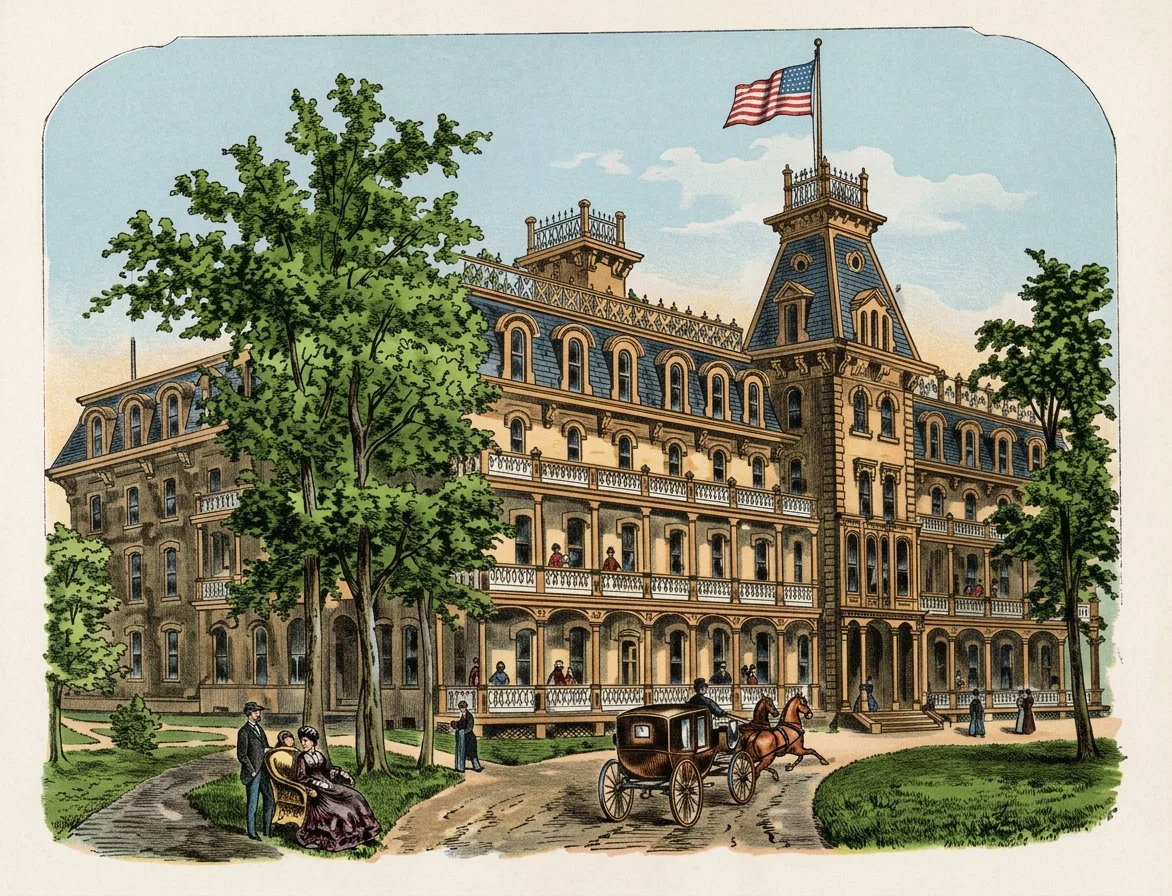
THIS INSTITUTION, for completeness of appointment, and extent of facilities, is unrivalled in this country. Its splendid arrangements for HEATING AND VENTILATION, together with special appliances for regulating the humidity of the atmosphere, makes this Institution UNEQUALED AS A WINTER RESORT FOR CHRONIC INVALIDS.
Even persons suffering with pulmonary difficulties do much better here than in Florida.
All known useful remedies for disease are employed, including Turkish, Russian, Vapor, Electro-Thermal, Electro-Vapor, all kinds of Water Baths, Sun Baths, Swedish Movements, Electricity, etc., etc.
Terms very reasonable. J. H. KELLOGG, M. D., Medical Superintendent.
Address for Circulars:—SANITARIUM, Battle Creek, Mich.

GOOD HEALTH, FOR 1880.

THIS POPULAR JOURNAL enters upon its fifteenth volume with the most flattering prospects not only of a continuance of the prosperity which has attended it in the past, but also of a great increase of patronage, although it already enjoys

THE LARGEST CIRCULATION OF ANY HEALTH JOURNAL IN AMERICA.

The interest of the journal for 1880 will be greatly increased by a series of practical articles from the well-known pens of

ELDER AND MRS. WHITE.

Whose contributions in the past have done so much to increase the popularity and the usefulness of the journal.

A SPLENDID PREMIUM BOOK

Is offered to new subscribers. Address, for specimen copy:—
GOOD HEALTH PUBLISHING CO., Battle Creek, Mich.
Or:—SIGNS OF THE TIMES, Oakland, Cal.

RURAL HEALTH RETREAT.

THIS INSTITUTION is located about two and a half miles from St. Helena, Napa County, California, at the

CRYSTAL SPRINGS.

The water is clear, pure and cool. The facilities for heating water, and bathing, are unsurpassed. The situation is both pleasant and healthy, it being about 300 feet above the valley. The scenery is unsurpassed for beauty, including a view of valley and mountain. The building is spacious, and the table accommodations are first-class.
The institution is just opened.
The medical department is under direction of E. J. Waggoner, M. D., who has had experience in practice in the Medical and Surgical Sanitarium at Battle Creek, Mich.
Those who seek medical treatment under favorable and health-giving conditions, and those who seek a pleasant resort from the heat and business of the city, cannot fail to be pleased at the Retreat.
Terms reasonable. For particulars address A. B. ATWOOD, ST. HELENA, CAL.

THANKFUL.

One woman for twenty-six years—we know the fact—with cramps of rheumatism, had lain upon a bed, suffering continually. She had lost the use of every limb. She had not seen the sunlight, except the little that streamed into the window, for all these years. She hadn't seen for years a green blade of grass or a green leaf, and as you climbed up the rickety stairs and got into a garret you would hear a cheerful voice, and what would she tell you? Ask her about her state, and she would say, "Oh, I am so thankful." Thankful for what? For the use of one thumb, because, with a little hook fastened upon that thumb, she could turn over the leaves of the Bible that would be placed within her reach, and helpless, and suffering, and poor as she was, she was thankful.—John B. Gough.
Continue reading: BOOKS, PAMPHLETS, AND TRACTS, ISSUED BY THE SEVENTH-DAY ADVENTIST PUBLISHING ASSOCIATION, AND FOR SALE AT THIS OFFICE