Last week reference was made to the object of this great gathering, and some expressions uttered by its speakers, showing the method by which it is hoped to gain their object. As before stated, they hope to secure an amendment to the Federal Constitution of this country which will permit the courts to decide criminal liability on the basis of Christian requirements.
Wrong Reasoning
The logic by which this demand is reached is unanswerable when one admits the premises assumed. Then, too, their antecedent proposition is so boldly asserted, and with such apparent pious candor, that few stop to question its firmness. The result is that their assertive methods of reasoning win many to their standard. As a sample of their process, I quote some of the opening words of a speech by Rev. W. I. Wishart in the Academy of Music. Said he:
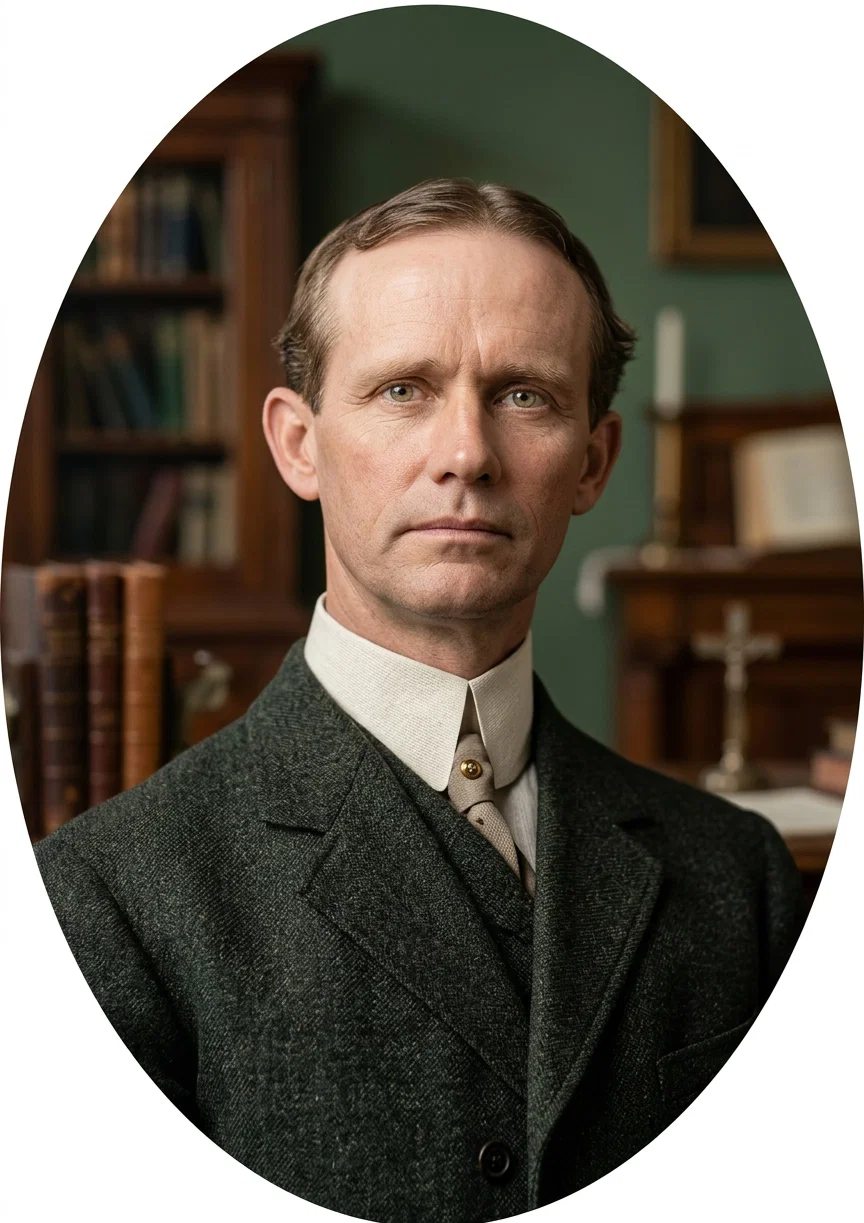
Rev. John Royal Harris, a prominent National Reformer, pastor of Shady Avenue Presbyterian Church, Pittsburg, Pennsylvania
“In the first place, I take it for granted that the nation is a moral personality; that it is a being with an intelligence, a conscience, and a will. I take it for granted, in the second place, that the nation, being a moral personality, is accountable to the moral Governor of the universe. I assume this without argument.”
There is the basis of their whole system of reasoning. But any unbiased mind can readily see that a nation is not a personality, except as it is the aggregation of many personalities, and these of an extremely variable nature. To speak of this multiplicity of fluctuating units as a single moral individuality, is to beg the question, and to provide no foundation for the ultimate conclusion. But each succeeding step in their trend of thought rests on this unsustained and questionable elementary proposition.
American Academy of Music, Philadelphia, where the great mass-meetings were held
Unless this can be maintained, their whole structure falls to the ground. To assume to call into unity of action by civil enactment all the minds of a nation, on the ground that they constitute a single moral personality, would be as futile and childish as to chase after the shadows of the rainbow. But these men say that while personal religion is all right, in the words of Dr. Carson, they feign to believe that
“It is not enough for individuals within the nation to accept and adopt the Gospel spirit. The nation as a moral personality must make the Sermon on the Mount its code.”
Let us briefly examine this statement. It admits that individuals WITHIN a nation constitute the nation itself. How then can a nation, made up of many single units of individuals, form the Sermon on the Mount into a national CODE, except it be by first analyzing the sermon itself, and then specifying the requirements of its parts? But this is not all. Having done all this, the whole thing could then be formed into a code only by legislative enactment, which would give it the authority of civil law. Then pity the poor soul so rash as to assert his right of private judgment regarding the Sermon on the Mount. Who can fail to see that the end of all such manipulation of Bible teaching would place the individuals of a nation in the same plight as were the people of the Dark Ages?
Result of Such Legislation
This would be not only religion and the state intertwined, but it would be sectarianism in secular government, and clearly hostile to the very spirit of Christianity itself. That this would be so, is shown by the statement of one speaker who said:
“The Jew is without a country; and shall we allow the Jews to compel us to run our country according to their views?”
This sentiment can be construed to mean but one thing, and that is that the Jews, constituting but a very small per cent of the people of the nation, instead of being permitted to influence any public utility, must yield to an ideal Christianized (?) form of government, regardless of their religious preferences. And if the Jew is thus forewarned of what he may expect under the anticipated system of government, is it not reasonable to expect that all dissenters, Christian or otherwise, would receive a like treatment?
One speaker at the Christian Citizenship Conference deplored the treatment Jews are receiving in Russia. But there is no assurance, after the words quoted above, that the régime proposed by this movement would treat them a whit more humanely, to say nothing of Christianity. He who advocates the invasion of the sacred rights of the individual conscience, be he Jew or Mohammedan, declares himself hostile to the original doctrine of American citizenship, and also departs from the very first doctrine of Christianity, which requires one to love his neighbor as himself.
After quoting a portion of the old Coronation hymn, “and crown Him Lord of all,” as tho these words proved his point, Mr. Wishart assumed that Christ is even now Lord over the “great political entities which we call nations,” and that He is in fact King of “this great American republic.” For this reason, he asserted, the name of Christ, and the code of His government, should find recognition in the fundamental law of the land.
A New Vicegerent of Christ
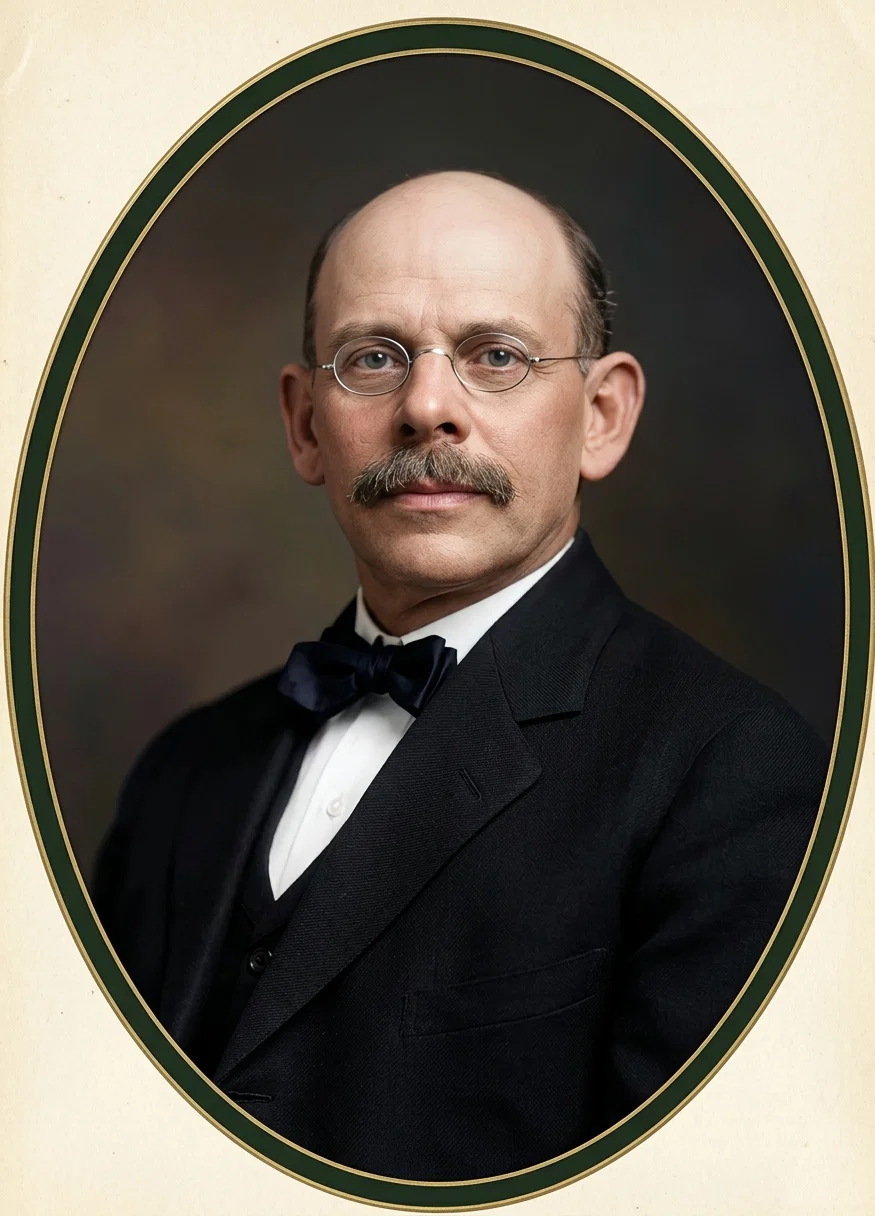
Rev. J. S. Martin, general superintendent National Reform Association, and pastor of College Hill Reformed Presbyterian Church, Beaver Falls, Pennsylvania
If it be true that the nation is already Christian, as was constantly stated, then why12the need of putting a notice of that fact on paper? If the nation is really Christian, will not that be readily seen by the spontaneous actions of its individual parts? But they say there are saloon-keepers, and fallen women, and corrupt politics, and a multitude of other iniquitous things which need to be suppressed. But will the suppression of these by force of civil law make Christians of those who are now responsible for this state of things? And that proves that the nation is NOT Christian, despite the declaration of the federal Supreme Court.
But in the event of securing the desired change in the Constitution of the nation, which is to give a “system of morals clearly defined, and definitely established,” who is to administer the laws in harmony with that altered Constitution? Will Christ do so in person? O no, the church is to do that,—those who claim to represent Christ on the earth. So then, by this there is to be set up here another,—the REAL VICEGERENT OF CHRIST, to administer His government. Yet these people deny that their plan of government would in any sense be a union of church and state.
What Success Means
To look at the true side of this matter, it proves to be but the question of how human beings may seize the power which belongs to God, and so become “like the Most High,” by reigning over their fellow men. Let this movement succeed, and the history of the Dark Ages can not fail to be repeated, because men will not have laid off their human nature, and so will advantage themselves by their opportunities as they have ever done. Let the warning be taken up and sounded loud and clear, that all may see the dangers which confront the nation, and that they may prepare themselves for the final conflict, which will terminate in the Lord Jesus appearing to punish the wicked for their temerity, and to reward the righteous for their loyalty to Him.
J. O. CORLISS.
——★ ★——
Death of Mrs. Mary Baker Glover Eddy.—Mrs. Eddy, “discoverer and founder of Christian Science,” died of old age, probably hastened by pneumonia, at 10:45 P.M., December 4, in her 90th year. She was born July 16, 1821. She had three husbands, Glover, Patterson, Eddy. From the second she was divorced. The others died. Her first school in Christian Science was called then the “Massachusetts Metaphysical College.” She organized her first church in 1879, known as the “Mother Church.” Her belief was decidedly spiritistic. As stated by Alfred Farlow:
“Mrs. Eddy is still conscious of individual existence, and will continue to advance until perfection is attained. She is still carrying on her own work. Her passing away has been a mere transition into another state. We do not use the word ‘death,’ for this reason.”
By Mr. Frank W. Gale:
“Mrs. Eddy still lives, and her life-work still continues.”
How long will it be ere some person will claim to be inspired or controlled by Mrs. Eddy’s spirit? Certainly, the way is left wide open for it. And how long will it be before many able leaders like Mrs. Stetson will break Christian Science into fragments? This is ever the tendency of every movement built around a human personality. Christian Science is now at one of its strong testing points.
The editor of the “Appeal to Reason,” Mr. Fred Warren, was sentenced some time ago in the United States Circuit Court of Kansas to six months’ imprisonment and a fine of $1,500 for sending through the United States mails envelopes offering $1,000 reward to any one who would kidnap Ex-Governor Taylor of Kentucky, and return him to Kentucky authorities. The United States Court of Appeals at St. Paul affirmed the sentence. We can
not see why Mr. Warren should be prosecuted for instigating kidnapping when the Government was guilty of the act itself. This decision of the Court of Appeals will make lots more Socialists. Of course, it will be said that the crime is against the postal laws, but it will be difficult for many to see how it was.
An editorial in an exchange, referring to Professor Cockerell’s theory that man has a hundred thousand years of life on this planet, demurs, and says “that we are going down at a rate so rapid that a few centuries at the most will finish us up. . . . We have not one chance in a hundred for race permanency as compared with mammals lower in the scale,” and the editor is probably correct; but how does this comport with his theory that God lives in every one of us? Is not God able to overcome this lack of vitality? Somehow the two theories do not seem to hold together.
A pontifical decree to be embodied in a new code of the canon law of the Catholic Church will restrict the fifteen thousand priests and bishops of the United States from engaging in financial enterprises, even in those which have a charitable phase. It is thought the ruling will have marked effect in Southern Europe, where hostility is shown against those of the clergy engaged in manufacturing. It is rumored that early in the new year the Italian government will propose the abolition of the article of the constitution which proclaims Catholicism the religion of the state.
The International Sunday-school Lesson Committee has been severely criticized by a Presbyterian minister at the last session of the Sunday-school conference held by that church. The lessons prepared by “the Sunday-school lesson trust” were criticized “chiefly because they did not teach enough about salvation and slighted the presence of sin in life.” A petition will be sent to the committee supplying the lessons, to remedy the defect.
In addressing the abbot and several Roman Catholic dignitaries in the Benedictine Monastery at Beuron recently the German emperor said: “The governments of Christian princes can only be carried on according to the will of the Lord. The altar and throne are closely united and must not be separated.” The official organ of the Vatican expresses great delight because of the kaiser’s favorable view of church and state union.
Recently the town of Lamro, South Dakota, was moved two miles across the prairie to Winner, nearer the railway. More than fifty substantial buildings, some as large as fifty by ninety feet, and about one hundred private residences, had a transprairie ride, drawn mostly by traction engines. On one building seventy-two horses were employed in its removal, their movements being as uniform as an army.
The Associated Women Students of the University of California have passed resolutions adopting a new code of etiquette which endorses the simple life. Hereafter, the co-eds state, it will be utterly bad form for callers to remain after 10:30 o’clock. It will also be considered impolite for any woman student to go out in the evening without making known her destination.
Peter Lawler, a youth of Brooklyn, New York, an incessant cigarette smoker, has become a raving maniac. For the past three years he has been smoking on an average one hundred cigarettes a day. This incident shows to what extent the brain may be affected by the tobacco habit, and that the mental power of even moderate smokers is injured by the indulgence.
The Socialist gains in the United States over 1908 are put by them as 423,877 votes, quite uniform throughout the country. They are splendid missionaries in propagating their faith. No sooner was election over than they began again. Would that Christians were as much awake. The Independent remarks that the bee is their fit emblem.
A method of felling trees with no other means than a wire and a motor has been devised by a clever German inventor. The use of a wire heated by electric current has long been known, but the process has been simplified by causing the wire to become incandescent through the work that it does itself.
Religious papers of various denominations come to our table, some of them with many pages of advertisements, at from $2.00 to $3.00 a year. There are but few of any worth which are cheaper. Considering the matter it contains, the instruction it gives, the SIGNS OF THE TIMES is one of the cheapest papers in English speaking lands to-day. Now is a good time to subscribe.
It is said that a thousand miles of barbed wire fence is to be erected between this country and Mexico, to prevent the straying of cattle across the border, to keep cattle diseases in the country where they originate, and to make it harder for criminals to pass from one land to the other. For the latter purpose the fence will be patrolled by both Mexican and United States troops.
In consequence of the stubborn nature of the czarina’s illness, which is a combination of various complaints, the German emperor has consented to an endeavor to cure the empress by means of hypnotism. She will be hypnotized by a famous German specialist and told she is “the happiest woman alive.”
Perley E. Davis, a graduate of the Massachusetts agricultural college at Amherst, has won the world’s record for corn growing, and was awarded the $500 grand prize offered by the Bowker Company at the Worcester Corn Exposition. He grew 103¼ bushels of crib-dry yellow flint corn on one acre.
The corn crop of the United States this year is placed by the Government at 3,121,381,000 bushels, exceeding last year’s crop by 350,000,000, and it is also of superior quality. There is a falling off on the wheat crop of 45,000,000 bushels. The yield of most other staple crops was above par.
Frederick Wilhelm, heir to the German throne, has been sent by his father, the kaiser, to make a tour of India and the Far East. The prince is accompanied by a royal suite made up of the smartest men in the German army, and goes loaded with largess to all.
Seventy-five per cent of the population of Portugal can neither read nor write, says an exchange. This, too, in spite of the fact that the Roman Catholic Church dominated the nation for centuries. Ignorance and suppression of the Bible go hand in hand.
A petition signed by 150,000 Spaniards asking for absolute religious freedom instead of mere tolerance now existing for non-Catholic denominations in Spain has recently been presented to Conde de Romanones, president of the legislative chamber.
New Testaments to the amount of 1,490 copies have been presented to the sailors of the Japanese fleet in San Francisco. They were donated by the Golden Gate Christian Endeavor, people of the San Francisco churches, and the American Bible Society.
Three hundred twenty-three cans of contraband opium, valued at fifty dollars each, was burned at El Paso, Texas, by order of the Federal Court. The opium has been seized during the last few months, and several men have been imprisoned.
The whole of Manchuria is officially declared to be infected with bubonic plague, but not with cholera as has been erroneously reported. Stringent action has been taken to prevent the spread of the epidemic.
Dr. John Hurley, of Boston, has announced a new anesthetic which permits operations on the brain, eye, or ear while the patient is conscious. The operation is said to be both bloodless and painless.
Fifteen hundred Roman Catholic priests in France have renounced the priesthood and the Romish Church in the last ten years. A large number have followed their example in Austria.
Shiloh: the Man of Sorrows
By Mrs. L. D. Avery-Stuttle
By Mrs. L. D. Avery-Stuttle
XLIV.—Plotting the Death of Lazarus
“O, Jazer! Whither goest thou at such a pace, man? Art thou pursued by the furies of Gehenna?”
“Is it thou, Demas? Wherefore dost thou mock me?” And the scribe, scarcely slackening his pace, hurried onward.
“Stop, man! for it is thou alone to whom I am sent by my master, even Annas the high priest; and, verily, I had thought to find thee at thine own house, whither I was sent!” exclaimed the servant, breathlessly hastening to overtake the scribe, and placing a rude hand familiarly upon his shoulder.
As if resentful of the fellow’s boldness, and trying to avoid him, Jazer shook off the detaining hand almost fiercely; for he was in no mood to converse with any one, least of all an emissary from the palace of Annas. And so he turned hurriedly down an unfrequented street. But the sound of pursuing footsteps at last caused him to halt and turn his head impatiently.
“Look thou, fellow, I care not for speech with thee to-night, for my soul is sore vexed. Leave me, that I may commune with mine own heart!” And Jazer turned his uneasy, fiery eyes upon the man.
“Thou wast not in such hot haste when thou didst accept the bribe of the high priest, my master, to-day,” sneered the other. “Wherefore art thou so lofty, as if already thou didst sit in the Sanhedrin? Verily, I know thy hidden secret, and the naughtiness of thine heart, O Jazer!” And Demas laughed boisterously.
The sun had already set on that eventful day, and the streets of the busy city were growing dark.
The scribe turned desperately, like a hunted animal. “What wilt thou? Deliver thine errand, and depart.”
“Now thou speakest wisely, O Jazer. Why shouldest thou avoid me? Serve we not one master? Now will we sit here, even under the shadow of the great tower of Antonio, and I will tell thee my business, that no man may know but thee and me.” And Demas lowered his voice to a deep whisper, and again grasping an arm of the scribe, forced him to be seated with him, on a piece of limestone rock which lay in the shadow.
“Forget not, O Jazer,” admonished Demas, “that thou hast sold thyself to do the work of Annas and Caiaphas, as well as I; and truly the high priest payeth us handsomely. He hath already promised me half a talent of silver for the work I am to do for him, and he will give to thee even more, Jazer, if thou do thy work well.”
At mention of the silver, the deep eyes of the scribe gleamed with a greedy light, and the tones of his voice changed to those of fawning cordiality as he made answer:
“Verily, a scribe of the holy temple could not serve the interests of Israel better than by doing the bidding of the high priest.”
“Of a truth thou art a man of wisdom, O Jazer. Now I know that thou art also a friend of the man Lazarus, of Bethany—as indeed am I. But thou knowest, O Jazer, that after having walked from his sepulcher at the call of the Nazarene, this man is a constant proof of the power of the Necromancer. Indeed, many already believe on Him on account of this day’s work—and that which their own eyes have seen.” And Demas waited the reply of the scribe.
“Verily, Demas; but I shall declare unto all men, that this Nazarene worketh miracles through Beelzebub. Will not the common people believe the words of a scribe of the holy temple?”
For reply, Demas, the Sadducee, bent his body until his lips almost touched the ear of the scribe, and hissed:
“The man Lazarus must die! Come thou to-night, at the seventh hour, to the palace of Annas; and behold, Shaphan the rabbi of Nazareth will be there also, and two or three of the Pharisees. There it shall be told thee what thou shalt do. Behold! the high priest hath bidden thee.”
The next instant Demas arose, and without further word, hurried away down the darkening street, leaving the scribe alone.
It was a motley company that gathered at the seventh hour that night in a secret chamber of the palace of the high priest. This was to be a meeting in which every man present was accounted equal. There was to be no formality—no dignity. Annas and Caiaphas, about whose pompous persons to the ordinary Jewish mind was thrown a sort of sacred halo, on this night had opened the door of the inner chamber of the luxurious palace as cordially to the hired assassin as to priest or scribe. The utmost secrecy was preserved, and the door swung not upon its hinges except by permission of the doorkeeper—a trusted servant of Annas, whom we recognize, even in the dim light, as none other than the man Demas.
At length the stated number had arrived: Jazer the scribe, Shaphan the rabbi, and one other,—a burly ruffian of immense size whom Demas called Rufus.
This man, whom these sanctimonious priests would have scorned even to recognize at any other time, upon this occasion was welcomed. We have heard nothing from this man Rufus since the day of the murder of the prophet of the wilderness. We can not forget the part he acted in that horrible tragedy, nor that this is the son of Varro.
Besides these, there were present two or three others of the chief priests and Pharisees. In spite of the seclusion of the chamber, the lateness of the hour, and the improbability that any mortal ear could overhear their words, the conversation was carried on almost entirely in whispers.
“Of a truth,” began Annas, “we all know that the peace of Israel is in danger; and if we allow this Nazarene to go unpunished, all men will run after Him, and the Romans will come and take away both our place and our nation.” And Annas stroked his white beard nervously.
“What shall we do then?” asked the high priest, coming to the point in question cautiously; for every human heart, however hardened, must tremble at the bare suggestion of robbing another of life,—that wonderful thing which none but the Almighty can give.
“What shall we do?” repeated Caiaphas; “for this Necromancer endangereth the peace of the nation. I am told that this day He hath brought the appearance of a man—even Lazarus of Bethany—from his sepulcher.” And Caiaphas raised his bulging eyes uneasily toward the scribe Jazer.
“The miracle was performed in sight of all the people, O Caiaphas!” responded the scribe impulsively.
The high priest raised a warning finger at the speaker, who cowered before him, and added quickly: “The high priests are the messengers of Jehovah, appointed by Him to safeguard the best interests of Israel. Surely we can best serve Him by doing their bidding. And of a truth,” he added, rolling his sunken eyes sanctimoniously upward, and nervously adjusting the broad phylactery upon his arm, “it hath been decreed aforetime that the sorcerer must die; for even thus saith Moses in the law.”
“The scribe hath well said!” responded Annas; “and since the man Lazarus but showeth forth the power of the Nazarene, is it not for the best interests of the nation that he die also?”
“But how shall we bring about the end of these pestilent fellows—these troublers of Israel?” It was Shaphan, the rabbi of Nazareth, who put the question.
“Is it not to settle this point that we are bidden to-night?” suggested Demas, the doorkeeper; “and see, I have brought Rufus, one of the guards of Herod, who hath lately come down from Tiberias to Jerusalem, with his master, before the Passover. I have brought him that he may do thy bidding, O Annas; for verily, all men believe that this Jesus of Nazareth will go up to Jerusalem to the feast, that He may be crowned king.”
“What do ye require of me?” interrupted Rufus, “and what will ye give me, O ye priests of Israel? Tell me of a certainty, that I may know; for ye be well able to give me my price, and to line my pocket with silver.”
“The man Lazarus, of Bethany, must die!” explained Annas, in a hoarse whisper. “What is thy price?”
“But if I be not able!” exclaimed the ruffian mockingly, stretching out his giant arms toward the high priest.
“Thou art able,” replied Caiaphas patronizingly.
“But who is this Lazarus?—A pestilent fellow, I have no doubt; but how shall I know him?”
“Jazer the scribe knoweth him well, dost thou not, Jazer! and behold—”
“Will it not be best, O Annas,” interrupted Caiaphas, “on account of thine age and thy wisdom, to make known to these men those things which in thy wisdom—and mine—we have determined must be done for the safety of Israel?”
“And make thy words brief, O thou high priest,” haughtily demanded Rufus, “for I am minded to return unto Herod, my master, before the rising of the sun.”
“Verily, then,” declared Annas boldly, stroking his long white beard with his wrinkled fingers, crossed by the straps of the phylactery, “verily it hath been determined that this scribe Jazer shall visit the house of Lazarus at Bethany, to-morrow, as the sun goeth down, and behold, Jazer shall walk with him in the garden. They two shall be alone,—they two. And thou, Rufus, shalt pass by that way, and smite him—the man of Bethany—that he die; for behold, he troubleth Israel. And verily, if he die, we shall declare boldly that he hath been all the time dead. And thou, Shaphan, thy part shall be to follow up this Sorcerer of Nazareth, thou and Demas with thee—for behold, He hath gone down to Ephraim, near the wilderness of Judea—and inform us of His whereabouts, that we may apprehend and bring Him to trial, that He may die. So shall the land rest!” And Annas rolled his fiery eyes sanctimoniously upward.
“What dost thou advise, Rabbi Shaphan?” questioned Caiaphas, well knowing the jealous nature of the rabbi. But this astute teacher had not been consulted soon enough, and he feared that the scribe Jazer was receiving a more important commission than had been accorded to himself; accordingly, he felt minded to disagree with the counsel already given, and even to go so far as to suggest an entirely different mode of procedure.
“Seest thou not, O Caiaphas,” replied the rabbi, assuming an air of superior wisdom, while his beady eyes gleamed craftily, “seest thou not, that if there be marks of violence upon the man’s body, we can not say that he died of fever, and hath been all the time dead? And now the Passover is at hand; and this Nazarene Sorcerer will come up to Jerusalem. And behold, it hath been told me that Simon the leper maketh a feast for Him, because He hath healed him also by His necromancy; and surely, now, the household of Lazarus will be there, for they be friends—”
“But what wouldest thou, man?” snarled Rufus; “because I be a soldier of Herod Antipas, dost thou think me able to smite all the company which shall be gathered at the feast?”
“Thou shalt smite no man—thou art a heathen dog!” hissed the rabbi, quite forgetting the presence of the high priest in his jealous anger. “I know thee! Aha! Aha! Thy father is a Samaritan dog, and thy mother a Roman. Lazarus of Bethany shall die, but not by thy hand!” Then turning to Caiaphas, half apologetically, Shaphan continued: “I know that the young man Lazarus loveth13sweet wine; and behold, I be already invited to the feast of Simon. Let me alone, that I, even I, Shaphan the rabbi, may confound the words of this man Lazarus, at the supper; for who understandeth the traditions of the fathers, better than I, a rabbi and a Pharisee? And now, what think ye? Is it not better for an Israelite to die by the poison of the cup, than by the sword of this heathen, as did the Baptizer of the wilderness?”
“Verily, it is best, O rabbi; thou hast well said,” assented Caiaphas.
“Thy words are fitly spoken!” echoed Annas; “and if these pestilent fellows but die, we care not by whose hand they perish.”
“But, by the gods of Rome—the gods of my mother,” snarled Rufus, rising threateningly, and moving toward the door, “unless ye pay me well for my silence, surely ye shall find that Rufus hath a tongue!”
Caiaphas hastily rose, and conducting him to the door, thrust a handful of yellow coin into his hand, whispering:
“Behold, this shall buy thy silence!”
The ruffian nodded his burly head, and was gone.
(To be continued)
Our Bible Band Appreciated
Thus one of our band, who recently fell asleep in Jesus, had written, a short time before—and her sentiments are echoed by many others:
“May I take a little of your precious time to tell you how much I enjoy my Bible readings? I have been able to follow them regularly except one week while my eyes were being treated. But I caught up as soon as I was able. The dear old stories I learned at my mother’s knee tasted so good, and how precious promises that recall help in times of need, making my heart rejoice. And now we are reading and following the footsteps of the blessed Master, and I am seeing new beauties all the way.
“I wish I could say to my brothers and sisters who think they have not time for reading: Give God the first time; I mean before the work of the day begins, when the little ones are gone to school, even wash days and ironing days. The work will go easier when the heart is fed. How the great lifting promises would help the weary mother.
“Yours in the blessed hope,
“S. A. LLOYD.”
THE BOY PUZZLE
By Rev. Joseph F. Flint
A Picture Book for Mothers
By Rev. Joseph F. Flint
BUT this book is not written alone for mothers. Every father, in fact all who have an interest in the welfare of the boys of this nation will find a wealth of help and encouragement in this presentation of the boy question. The author goes to the bottom of things and shows very clearly where the trouble lies if your boy or your neighbor's boy goes wrong.
As the hope of this Republic lies in our boys a careful reading of “The Boy Puzzle” will do much to help solve the difficulties that confront us.
217 Pages, beautifully bound in cloth, post-paid, 75 cents
Pacific Press Publishing Association
Mountain View, Cal.
Portland, Ore. Calgary, Alberta Kansas City, Mo.
Mrs. Stuttle's HOME SERIES
These three books by Mrs. L. D. Avery-Stuttle furnish to the parent a much-needed help in the instruction and entertainment of their children
Making Home Happy
Pictures before the reader in interesting story form the relations that should exist and the lines of influence that should be guarded and cultivated in every home. (200 pp.)
Making Home Peaceful
Is the sequel to the above, and every one reading the first book will want to learn more about "Deacon Beardsley's" family, and how an unhappy home was made peaceful. (227 pp.)
Those Bible Readings
While especially suited to the needs of the young, there is an attractiveness in the arrangement and presentation of these readings that will hold the interest of all, old and young. (206 pp.)
These books are beautifully bound and may be obtained singly at 75 cents each, or the entire set of three for $2.00.
Pacific Press Publishing Assn.
Mountain View, California
Portland, Ore. · Calgary, Alberta · Kansas City, Mo.