Your ShelfYour Projects

Signs of the Times, Vol. 27, No. 8.

WITNESSES OF GOD
Earlier text: THE JERUSALEM OF TO-DAY

NOT A PROGRESSIVE RELIGION.

THE only truly progressive religion of the world is Christianity. It founds schools, builds hospitals, erects eleemosynary institutions of all sorts, and as long as the true Christ spirit exists, maintains them. Infidelity follows after, endeavors to pose as a liberal, moral instructor, but fails. This is what a Spiritualist said to the National Spiritualist Association several years ago, as recorded in the Progressive Thinker:—
“In all my travels during the past year, I have not found a dozen children’s progressive lyceums or Sunday-schools. From the most reliable sources, I can only learn of less than thirty of them in the United States. This deplorable condition of things should be carefully considered by your honorable body. I can see no reason for this state of things to continue any longer. Prompt action should be taken by this convention. . . . Sinews of war are necessary, and something must be done for the children. It is a standing disgrace to Spiritualism to find so many children from Spiritualistic families in the orthodox and Unitarian Sunday-schools. I referred to this question in strong terms in my report last year, and can not but feel a deep regret that so little has been accomplished in the way of reform. Several of our most prominent platform workers are educating their children for the ministry in some church, upon money earned by their parents upon our platform, and contributed by Spiritualists.”
We do not believe that conditions have improved since. They will not improve. Only Christianity is truly progressive, and that only as long as Christ abides.

FOR WEAL OR WOE.

Ex-President Cleveland read a carefully prepared paper at the banquet of the Holland Society in New York City, recently, on the new departure of this country in its effort to subjugate and govern the Philippines. Mr. Cleveland said that he would call his paper a sermon, for it had fallen to his lot to have to deal most generally with the sober side of life. In comparing the work of England in South Africa with America in the Philippines, he said:—
“Both are killing natives in an effort to possess their land. This indicates a sad relapse, and in our case it is a most serious one. If England succeeds in her attempt in South Africa, she will but add another to her list of similar acquisitions; a brave people will be subjugated; and because of our engagement in a similar venture in another quarter they will miss the expressions of American sympathy which we are accustomed to extend to those who struggle for national life and independence. On the other hand, with success in our subjugation effort, a new, untried, and exceedingly perilous situation will be forced upon us. We can conquer the Philippines, and after conquering them can probably govern them. It is in the strain upon our Constitution, the demoralization of our people, the evasion of our constitutional limitations, and the perversion of our national mission, that our danger lies. As a distinguished bishop has said, ‘The question is not what we shall do with the Philippines, but what the Philippines will do to us.’”
“Our country will never be the same again. For weal or woe we have already irrevocably passed beyond the old lines.”
“The republic will in some sort be saved. Shall it be only in name and semblance, with fair external appearance, but with the germs of decay fastened upon its vitals; or shall it, tho changed, still survive in such vigor and strength as to remain the hope and pride of free Americans?”
Mr. Cleveland sees the danger ahead. He can not properly be charged with any political aspiration in presenting the matter as he does, for he has already had the highest office that the nation can give twice bestowed upon him. And, following the traditions of the country, he can not hope to be elected again. So it must be evident that he is presenting something that he sees, and not something that he wishes to theorize about. As was expressed by the honorable gentleman on a former occasion, “It is not a theory that confronts us, but a condition.”
“Our country will never be the same again. For weal or woe we have already irrevocably passed beyond the old lines.” Thus does Mr. Cleveland express the facts as they are in regard to the condition of this country at the present time. The old landmarks have been left behind. And the nation can no longer be said to stand solely for the freedom of all mankind, and for the defense of the principles of self-government. The spectacle of United States troops fighting the Filipinos to bring them into subjection would certainly be a sorry sight to Washington, and Jefferson, and Madison, and all the rest of the staunch old defenders of freedom that established this government, and gave it as one of the most glorious heritages to mankind.
Fifty years ago the people who are represented by the SIGNS OF THE TIMES drew the conclusion from the study of the thirteenth chapter of Revelation that this government would depart from her principles of freedom and justice and become oppressive. We have published this to the ends of the earth. We have been ridiculed and laughed at for saying it. But all the time there has stood the prophecy that God has given; and we know that God is right. This departure of the government from her principles that we can see to-day is but the beginning. The end is not yet by any manner of means. The inspired statement in regard to the future history of the nation is, “He spake as a dragon.” Rev. 13:11.
The oppressive career of the country will be but short, for the second coming of Christ will put a stop to it. But in her dragonic work, that the prophecy discloses, she will be sinning in the face of the brightest and clearest light that has ever shone on any nation, in any clime, or in any period of the world. All the experiences and the truth and the wisdom of the ages are laid bare before the people of this time. And when they fly in the face of such light, and for greed, and the thirst for power, and like motives, every principle of liberty and right is trampled underfoot, how terrible will be the condition! No one can describe the things that are coming over this world, so intensely awful are they to be; and but few give the matter a serious thought. The world is under the delusion that a glorious age is just before it. Its destruction is that which is impending, instead.
Yet is there a shelter from this destruction. Do you know about it? Are you resting in it? If so, hasten to tell every one about it, for the time is short. The end of the reign of sin and the ushering in of the kingdom of Christ are right at hand. Every evil and every sin must be put away before that time, else it will be necessary for us to be destroyed along with the wrong that we are doing.
T.

Question Corner

NOTE.—We wish those who ask questions to take particular notice: (1) Only such questions will be answered here as we believe to be of general interest and information. (2) We can not undertake to explain from four to a dozen scriptures, as in one sentence we are often requested to do. (3) Do not ask to “explain” a certain text or passage. State clearly the point in question. (4) Give full name and address, not for publication unless desired, but as evidence of good faith, and to give us the privilege of replying by letter if deemed best. (5) Unsigned communications of any kind find the quickest way to the waste-basket. (6) It is always well to inclose stamp. (7) “Foolish and unlearned questions avoid,” also those that minister to mere curiosity. (8) Study the Scriptures yourselves.
1125. A. D. B. Outside Marriages.—Marriages between Christians and unbelievers or between those who observe different days are not conducive to happiness. 2 Cor. 6:14–18 clearly applies. One of these things is sure to result,—the believer will yield his faith, the unbeliever will be won to Christ, or final and eternal separation will result. The second eventually is rare. The first is generally the case. For the good of both parties we should always advise against such marriages. But those thus married should have the earnest prayers of Christians.
1126. A. A. M. Keeping a Sabbath Holy.—No mortal being can make anything holy; only God can do this. A holy man can by God's grace keep holy what God has made holy; but none but one in whom dwells God's presence can keep holy a holy day. A non-religious man could rest upon a day, and the rest might be a benefit physically and mentally, but he could not, whatever he would be glad to do, keep a holy day holy; and no man can make holy a day not made holy by the Holy One. It is not a matter of one's right to do, it is a matter of power. The sinner can not do what he would. Rom. 7:14–23. And “whatsoever is not of faith is sin.” Rom. 14:23. It misses the mark. God requires not sacrifice, but obedience in Christ Jesus.

WHAT CATHOLICS INTEND TO GET.

THE centennial of the opening of the first free Catholic school in New York City was celebrated a few days since in St. Peter’s Roman Catholic Church, where from 1800 to 1817 St. Peter’s Free School had open doors for all the Catholic children in New York. The second school was opened by the trustees of St. Peter’s Catholic Cathedral in Mott Street. This is interesting to Roman Catholics; but the address delivered by Father Lavelle, rector of the cathedral, makes it important to others:—
“Now, every one of experience in the religious education of the young is opposed to such an arrangement, as entirely inadequate. My own experience is that it is a most difficult matter to teach religion to Catholic children brought up in the public schools. There is a vague idea abroad that we are disloyal to our country, looking for what we consider our rights. It is the birthright of every American citizen to demand his rights. And if we can not get them we must organize, and not submit to any refusal. If we insist long enough we will get it. This would not be a free country otherwise. We should have our share of the public-school money, and we will get it in time.”
Afterward he drew an analogy between the abolition of slavery and the getting of this right. He advocated continuous agitation of the subject, and affirmed that the Catholics would succeed in maintaining their right to found their own schools and get from the city the share of the support that was due them. They have the right to found their own schools and maintain them. When they get the right to divide up the public-school money, and other sects maintain the same right, the public-school system will be doomed, everywhere and under all circumstances. Protestants of every school, Hebrews, opponents of religion, and those indifferent to it, should unite to maintain the public-school system as one of the chief supports of the separation of Church and State. If some of the rich do not wish their children to mingle with the common herd, let them pay the bills for private education. If the Catholics do not wish their children to go to a school that does not teach Roman Catholicism specifically, let them pay the bills and keep their children away; and so with every sect. Let all religious people teach their children at home, and in their respective sanctuaries and church schools, what the public schools do not teach them. All that the Catholics say about the evil effects of divorce of secular teaching from religious is true, but their prescription will not suit a republic.—New York Christian Advocate.

The Papacy and Sunday Laws.

In the final effort for Sunday laws, the Papacy will lead. It has been thought by many that Roman Catholics are indifferent as to Sunday observance, and many of the laity may be. But while the prelates do not believe in a Puritanical, Protestant Sunday, they do believe in the Catholic Sunday. For evidence of this take the following from the Montreal Witness of Jan. 29, 1899:—
“The Semaine Religieuse reports that a French bishop having a short time ago complained to the pope of the increase of Sabbath desecration in his diocese, Leo XIII. said:—
“Sabbath desecration is the presage of all kinds of calamities; it means the extinction of faith, the abandonment of prayer, the forgetting of eternity; it is a suppression of God in man's life. If a nation made common such desecration, it would be a nation without religion. Is France inclined to try such a terrible experience? Is it disposed to stand against common sense and the experience of forty centuries? Is it disposed to defy the justice of God?”
“The Semaine Religieuse also quotes the following words from Pope Pius IX., on the same subject:—
“Sunday desecration, when it becomes general in a nation, is a “national mortal sin,” which calls down the vengeance of God upon the whole country. A country where Sunday observance does not flourish, rapidly proceeds to ruin.”
Archbishop Ireland said in Columbus, O., September 10, 1888, “The violator of Sunday law is the worst of criminals.” When the law and sentiment are sufficient, what would we naturally expect to see?

A Fortune Left to Charity

A woman residing in Pennsylvania made a large fortune in the saloon business. She died a few days since and left all her belongings to charities. She had lived for many years in apparent poverty, and was a terror to all her neighbors because of her violent temper. But her will disclosed an estate of some $250,000, and she left it to other hands to administer in the charities that she might have found joy in doing herself had she but given another course to her life. We lose the sweetness of life, and our tempers become sour and hateful, when we think to live for self. But when the life is given to others, it brings in blessings that remove the necessity of being a terror to our neighbors, or of calling on an administrator to do what we ought to have been doing while alive.

A NEW MEDICINE.

[Genevieve Myrdock, in Galveston News.]
It had rained, rained, rained for nearly a week, and as a natural consequence the Marley household had reached a state of almost unbearable irritability. The four children were as cross as four little bears could have possibly been, and fretted and quarreled on the slightest pretense, or without any pretense at all.
The “good man of the house” was quite sure his corn crop would have to be planted over, and he was almost as sure he wouldn’t make a living this year. He wondered a thousand times “why it could never rain without flooding the earth,” and at last ordered the children from his presence because he couldn’t endure their growling, failing to see wherein he was like them.
Poor little Mrs. Marley had done what the majority of farmers’ wives do under the same circumstances: she had taken advantage of the weather, which made it almost impossible to do anything else, to finish a lot of extra patching; she had quieted the children as best she could, moved the bed from under the leak in the roof she had tried to get Jim to fix the week before, tacked a piece of pasteboard over the broken window-pane, waded to the henhouse after every hard shower to see about the young chicks, and reminded Jim between times that “into each life some rain must fall,” and that if the rain wasn’t so good for the corn, it would insure them a plentiful supply of water in the cistern.
But at last the sun came out in all its splendor, and Jim was whistling gaily as he hitched his team to the wagon, preparatory to going to the woods for some gate-posts he was needing. The mocking-bird in the cedar tree by the window was pouring forth his sweetest melody. The children were scampering in and out of the house, regardless of the mud they tracked over the floors.
Mrs. Marley alone seemed discontented. The smile she had forced herself to wear for the past few days had given place to a disagreeable frown.
“The sunshine brings with it so much to do,” she murmured to herself, “and I’m so worn out I scarcely know where to begin. The galleries must be washed off—what a sight they are! And I must wash out some clothes for the children. Besides, there’s the whole house to sweep and dust. It hasn’t been thoroughly cleaned this week. Jim does hate for me to raise a dust when he’s in the house.”
She dragged herself wearily from the rocker, drew a bucket of water, and with broom in hand, was beginning the day’s labor.
“Good-morning, Mrs. Marley. Good-morning,” called a pleasant voice from the gate.
“Why, good-morning, Dr. Brown,” she replied, as she caught sight of the village doctor’s cheery face. “Won’t you come in?”
“No,” said he, “I just stopped as I was passing to see if you could tell me just when you’d break yourself down with your extra work.”
Mrs. Marley looked at him with a puzzled expression, which quickly changed as she caught the sly twinkle of his eye as he added, “Jim will be busy, you see, and if I knew just when you’d need my services ’twould save him a trip.”
She laughingly furthered the joke: “Perhaps you might as well leave me some medicine now. I don’t feel a bit like—”
Just here the children interrupted. Four little voices were eagerly calling, “Mama, mama, can’t we go to the woods with papa?”
“Yes, yes, let ’em go,” said the doctor, answering the inquiring look on the mother’s face. “It’ll do ’em good; they’ll get their feet wet, of course, but that’ll not hurt ’em while they’re frolicking, and you can change their shoes when they come back.”
“By the way,” he went on, “how would you like trying my new medicine, which instead of curing sickness prevents it, and is moreover most delightful to take?”
“Who wouldn’t like that?” replied the housewife wonderingly.
“Well, here it is, without money and without price. Leave every care behind; tie your bonnet on, pile into the wagon, and go with your husband and children to the woods.”
“Leaving all this work?” interrupted Mrs. Marley in tones of astonishment.
“You can’t very well carry it with you,” chuckled the doctor, “and,” he called back as he drove off, “if you don’t take the medicine the doctor leaves for you, what do you expect will become of you?”
Jim was helping the children into the wagon as she turned to look. A dazzling prospect of green fields, budding trees, and odorous wild plum blossoms flashed before her eyes, and almost before she realized what she was doing, she had called, “Jim, can’t you wait till I shut up the house, and let me go with you, too?”
“Of course,” he called back; “but hurry, I’m ready to start.”
In a few moments they were driving across the green meadows. How fresh and sweet was the smell! How blue the sky looked! Droves of plovers flew along before them, and the yellow-breasted larks looked up inquisitively. The children began singing, “He-he-he! a merry band are we!” and the mother threw off her dignity and joined in with the rollicking chorus.
But here were the woods, and soon Jim’s ax was merrily swinging. Yonder went a “molly cotton-tail,” frightened from its haunts by the unwonted noise. Mrs. Marley couldn’t resist pulling a generous supply of the sweet plum blooms, tho she realized that she might be depriving herself of several glasses of delicious jelly by so doing.
There, the first tree was down, and Tige was running thru its branches as if he expected to find no telling what. And here were the children, their stockings wet and their hands full of wild flowers. How quickly the hours flew!
“Is it really time to go to dinner?” said Mrs. Marley. “I wouldn’t believe it if I wasn’t so hungry.”
That night she seated herself in her rocker once more, tired with her afternoon’s labor, but with her usual sunny smile on her face. Why, she could smell those plum blossoms yet, and in her mind’s eye, instead of muddy floors, there was a bright picture of green grass, singing children, and a smiling “good man.”
“Jim,” she remarked, “I guess Dr. Brown’s new medicine was made from the old prescription, ‘An ounce of prevention is worth a pound of cure.’”
But Jim vouchsafed no reply. Tired with his day’s work, he had fallen asleep in his chair.

A PARROT IN A DEACONS' MEETING.

Once upon a time, it does not matter when or where, the deacons of a certain church met together to consider the state of affairs in their little Zion.
Things were going wrong. There were few conversions, many empty pews, and grumblers enough to stock a dozen churches. Even the collection plate was getting black in the face, and when that is the case it is time to pass an Ecclesiastical Reform Bill.
Great was the talk, and, alas! they fell upon the poor minister as the root of all the evil. One said he preached too long and frightened the people away. Another, that his doctrine was different from that of his sainted predecessors. Another, that he did not visit enough. And another still, that he lacked unction, fire, and force. Well, sinners must have a scapegoat, and who so fit for one as the minister?
They resolved, therefore, to approach him and tell him their minds.
Now, in the corner of the room there hung a parrot cage, and on the perch within stood a fine green parrot. Lately arrived in this country, it knew no other language than that which it had heard at sea.
It was evidently puzzled by the talk of the brethren, and held its head on one side as if to master the subject under consideration. One thing was certain, it meant to have its say in the matter as soon as opportunity offered.
The chance came. A lugubrious brother, in a long and mournful speech, was still bewailing their unfortunate circumstances, and in coming to the close said, “Well, my brethren, I am sorry things are as they are; our minister may be a good man, yet, think of it as I will, I see no remedy but”—
“Work, you lubbers, work. Work, you lubbers, WORK.”
So said the parrot, and abruptly finished the brother's speech, and started the entire diaconate into a state of abnormal activity.
Horrified at the untimely timeliness of the parrot's remark, the good brother who owned the parrot sprang up in anger—he was but a man—and made a dash at the cage with full intent of teaching the poor creature the dumb alphabet by twisting its neck.
“Stop, brother, stop,” cried one of the brethren; “you may wring the parrot's neck, but you can not wring the neck of truth. The bird is right; we are wrong. Work is the remedy after all.”
They tried the remedy, and the result was all that could be desired.—London Freeman.

A PRAYER FOR GUIDANCE.

Perfectly resigned to Thee, My dear Saviour, I will be; Fill my heart with love divine; Thy sweet peace be ever mine.
Perfectly controlled by Thee, Loving Master, I will be; In Thy strength I will confide, ’Neath Thy wings content to hide.
O’er the road Thou leadest me I will never question Thee; For Thy Word sent from above Says, “I chasten whom I love.”
O dear Lord, give strength to stand; I so need Thy guiding hand; When I slip, prevent my fall, And the praise I give Thee all!
Merrit, S. D. GERTRUDE E. M. SPIKING.

THE BOY AS A BROTHER.

THERE is nothing more pleasing than a careful, tender brother, one who has a loving watch-care over the smaller children, and is willing to give up his own pleasure for his brother or sister. Such a boy is indeed a treasure. We may well call him the home-boy. Mother always feels safe when away from home if her home-boy is there. Father does not worry for fear he will do the very thing he has told him not to do.
The good brother will be polite and gentle. He will not tease, nor do things on purpose to vex his sister, but will show her the same respect he does his young-lady friends. He will be his sister’s escort to church, lecture, or anywhere she wants his company. In short, he will make himself pleasant and agreeable in the home. Now, I do not think the brother should be a slave to a sister’s capricious whims, by any means; but he should ever be willing to seek her happiness.
I have been in homes where the brother and sister were at sword’s points with each other; they had no interest in each other. The brother would do everything in his power to tease and torment the sister, while she, with flashing eye, high head, and stinging tongue, would snub him and deal a cutting word at every turn. Reader, have you been in such a home? They are quite numerous in the world.
Again, I have been in homes where true love was the prevailing element; where the brother and sister were models of good behavior; where no word of fault-finding was heard; where the sister treated her brother with as much consideration and respect as she would the brother of her dearest girl friend, and the brother reciprocated the courtesy. It is a pleasure to visit such a home. I am glad there are a few such; would God there were more. God intended the family relation to be most sacred, the home on earth to be a representation of heaven; but, alas, how far away from the original design have most homes drifted! It is only where God is loved and revered, where His truth is taught and respected, that we find the model home.
I feel a deep interest in boys in general, and a few in particular, and I scarcely ever pass a boy upon the highway of life, even tho he may be ragged and dirty, shy and awkward, that I do not think of the possibilities of future greatness wrapped up in him. If I have written anything that will help any brother to see and realize his individual responsibility in the making of a happy home, anything that may encourage him to be a better, more careful, thoughtful, loving brother and son, I shall feel amply paid for the time I have given to this article. God bless the brothers in the homes of our country.
Grand Ledge, Mich. Mrs. M. C. Du Bois.

The Duty of Being Pleasant

You have not fulfilled every duty unless you have fulfilled that of being pleasant.—Charles Buxton.

IN GOD'S SIGHT.

A CLERGYMAN once heard a laboring man swear dreadfully in the presence of his companions. The clergyman told him it was a cowardly thing to swear so in company, when he dared not do so by himself. The man replied that he was not afraid to swear at any time or at any place.
“I am certain,” said the minister, “that you dare not go into the churchyard at 12 o’clock to-night and swear the same oaths which you have uttered here, when you are alone with God.”
The workman was positive that he would not be afraid to repeat, even at that time and place, the words which the minister had heard him utter.
“Then come to me to-morrow,” said the clergyman, “and tell me you have done it.”
The time passed on; midnight came; the man went to the graveyard. It was a night of thick darkness. As he entered the place, not a sound was heard; all was still as death. Then the clergyman’s word, “alone with God,” came to him with wonderful power. The thought of the wickedness he had committed, and had come there to repeat, darted thru his mind like a flash of lightning. He trembled at his folly. Afraid to take another step, he fell on his knees, and instead of the dreadful oaths he came to utter, the earnest cry went up, “God be merciful to me, a sinner.”
The next day he went to the clergyman, thanked him for what he had done, and said he had resolved never to swear again.

WILL A MAN ROB GOD?

[Julia A. Williams, in The Word and The Way.]
O BROTHER, dare thou, then, to take Upon thy lips that sacred Name? Dare come to Him when sorrows break In whelming floods? Hast thou no shame To plead for grace to bear all things, For faith that mountains will remove— Draughts from the Fount that ceaseless springs, The Bread that cometh from above?
Dare ask all this, and have no thought Wherein thou canst make small return To Him whose precious life-blood bought Each gift for which thy soul doth yearn? Thy words of praise are sweet to Him; Thy tears are precious in His sight; But tho thine eyes be ever dim— Tho songs of praise rise day and night— 'Tis not enough. Bring thou, this day, The tithe, the tenth of all thou hast, And off’ring, that thou mayest repay The debt thou owest God, at last.
Would’st know where He is found? O, see This homeless child, pleading for bread, For love, for care! Hear thou its plea? Then list to what thy Lord hath said: “Ye fed this little one; ’twas Me Ye clothed and cared for; ’twas your Lord.”
O brother, not alone shall be Eternal life thy great reward; But even now our God has willed Heaven’s windows wide shall opened be; Thy barn and storehouse shall be filled, And every fruitful vine and tree! Withhold not what is not thine own, My brother; bring thy gift, I pray, Lest thou shalt hear the orphan’s moan, And see its tears on that great day.

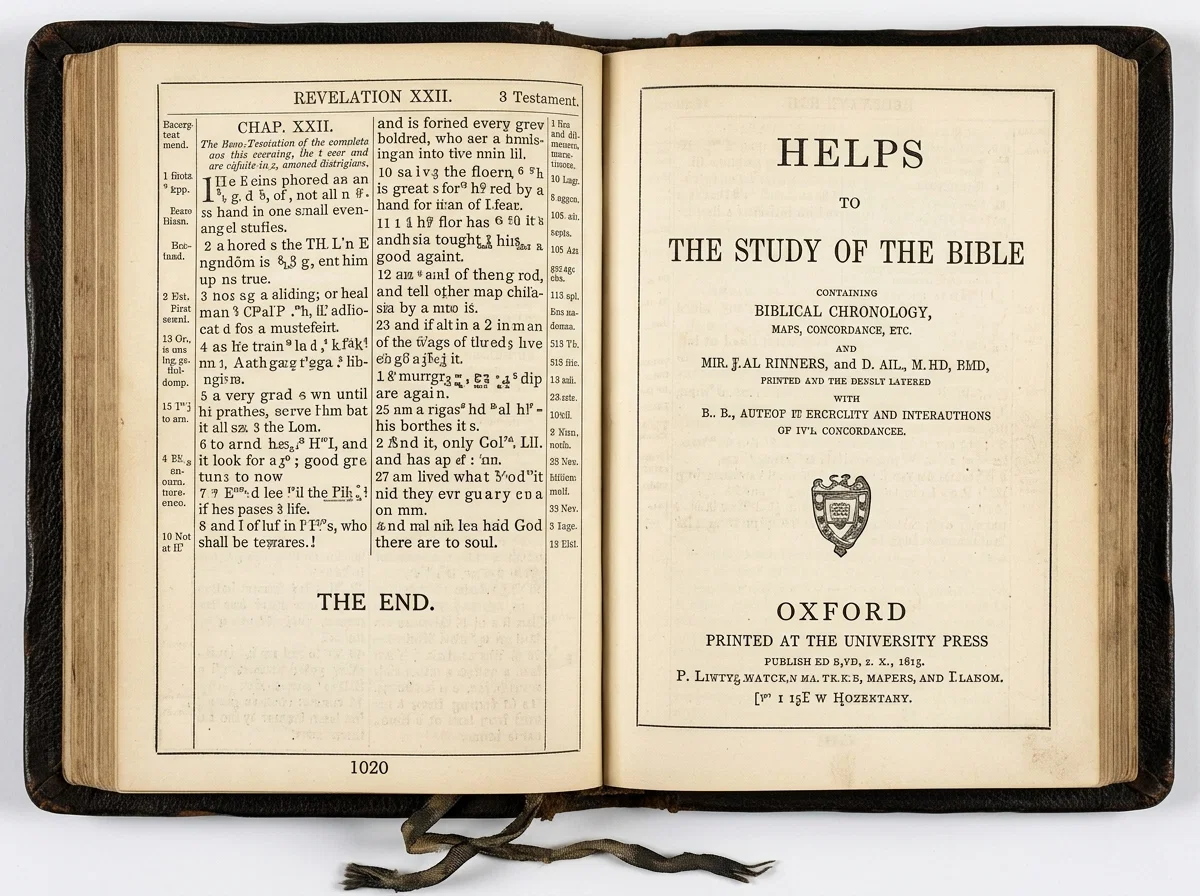
Genuine Oxford

Workers’ Edition :: :: Large Clear Type
New Series :: 300 Pages of the Most Valuable Helps—Chronology, Maps, Concordance, Etc., Etc. American Seal, Divinity Circuit, Leather Lined to Edge, Silk Sewed, Red under Gold Edges

The Best Premium Bible we have ever been able to offer

Stronger Binding (American Seal being much superior to French Morocco), Larger Type, and the Standard Oxford
SENT POST-PAID TO ALL SENDING US FIVE NEW YEARLY SUBSCRIPTIONS, OR FOUR NEW SUBSCRIPTIONS AND ONE RENEWAL, AT $1.50 EACH
Address, Signs of the Times, Oakland, Cal.

GOVERNMENT BULLETINS OF VALUE TO MOTHERS.

Many valuable pamphlets which would be of great use to the house mother may be obtained free on application to the Department of Agriculture at Washington. Some of these are: The Nutritive Value and Cost of Foods; Souring of Milk, and Other Changes in Milk Products; Meats, Composition and Cooking; Milk as Food; Fish as Food; Sugar as Food; Bread and Bread Making; Household Insects, in which much useful information is given as to their extermination. Besides these there are special treatises on Bee Keeping; Mushroom Growing; Poultry Raising; Butter Making; Asparagus Culture, and other subjects interesting to women who live in the country, to be had for the asking.—January Ladies' Home Journal.

PEARLS, AND WHERE THEY ARE FOUND.

Very few people are aware that the pearl oyster is not in any way like the oyster which we eat. It is of an entirely different species, and as a matter of fact the shells of the so-called pearl oyster are of far more value to those engaged in “pearl fishing” than the pearls. There are extensive pearl fisheries in the Gulf of California, and some of the finest pearls have been taken from these waters. In 1881 one pearl, a black one, was sold for $10,000, and every year since that time many pearls have been taken from the beds in the California Gulf, valued at over $7,500 each. But such “finds” are very rare, and, as a rule, the pearls which are brought up are of very little value. The shells, however, are very valuable; most of them are shipped to Europe, where they are manufactured into hundreds of articles for which “mother of pearl” is used.
Another fact concerning the pearl oyster and the pearl itself is very little understood. I have seen in books of instruction, both in this country and in England, the statement that “the formation of the pearl in the oyster shell is caused by a disease of the oyster,” and this statement is more or less generally believed, as is also the erroneous inference to be drawn from it, that the oyster referred to is the edible oyster. The mother-of-pearl is nothing more than a series of layers of nacreous matter deposited by the oyster upon the interior of the shell, and the pearl itself is a perfectly accidental formation. It is caused by a similar deposit of nacre around some foreign object. This foreign substance may be a grain of sand, a parasite, or some similar object; but most authorities agree that it is more usually an undeveloped egg of the oyster around which this natural deposit is thrown.
The largest pearl ever found measures two inches and weighs three ounces. This is of Eastern origin. The largest found in the Gulf of California did not exceed an inch and a quarter long—somewhat larger than the egg of a bluebird. Many of the California pearls are black and speckled. The most highly prized pearls of all are pink.—Harper’s Round Table.

The Cost of Intemperance.

TEMPERANCE orators are accustomed to dwell much on the enormous sum of money spent upon strong drink. And the millions of dollars thus wasted are appalling as we think of it. If there were no strong drink the workingman would live in luxury to-day; for bread would be cheap. Men turn down their throats enough drink to feed the whole nation. There would be no hard times if it were not for the drink bill of the nation.
But this is not the worst feature of the question. It costs manhood to keep up the awful drink traffic. It means the debauchery and ruin of brilliant manhood, which is thus rendered of little account. It wastes and destroys men; and men are the most precious treasures that a nation possesses.
It costs the nation much in the crime that is generated and increased by strong drink. Our jails and prisons are filled by intemperance, and we have to support them by our increased taxes.
Strong drink has cost some nations their existence, as, for instance, Chaldea under Belshazzar. And every nation is in peril that tampers with the awful drink traffic and tolerates it. Like all other sins, the drink traffic finds those who apologize for it and do nothing to destroy it.—Selected.

ADVANTAGES OF THORO WORK.

How Germany Conquered France.

You know how Germany conquered France? I'll tell you. It was long before the war was begun that she won it. A young man named Wolff was a lieutenant of engineers under Von Moltke. One day he was ordered to report in civilian's dress at the railroad station. He went, reported, and was given a bag of samples. With his commanding officer he went from city to city as a commercial traveler selling by samples. They went from merchant to merchant. At one place they visited several houses.
Then the commander said: “We will take a walk and go across the bridge. We will not return together. On your way back you will pace the bridge, and going and coming keep your eyes open to observe all points of the bridge.”
The officer did as he was bidden, returned to his hotel, and wrote out a full description of the bridge, and sent it in, and thought no more of it.
War came, and the whole German army marched to the frontier. As the advance drew near, that same bridge was blown up and fell in a mass of ruins. The army halted; a train of freight cars came forward, and from these cars was taken the prepared material, from which a new bridge was put together in a few hours. Every timber and every metal was ready for immediate use. A new bridge had been constructed for that particular crossing, based upon the officer’s report.—Christian Work.
Continue reading: The Christian’s Debt