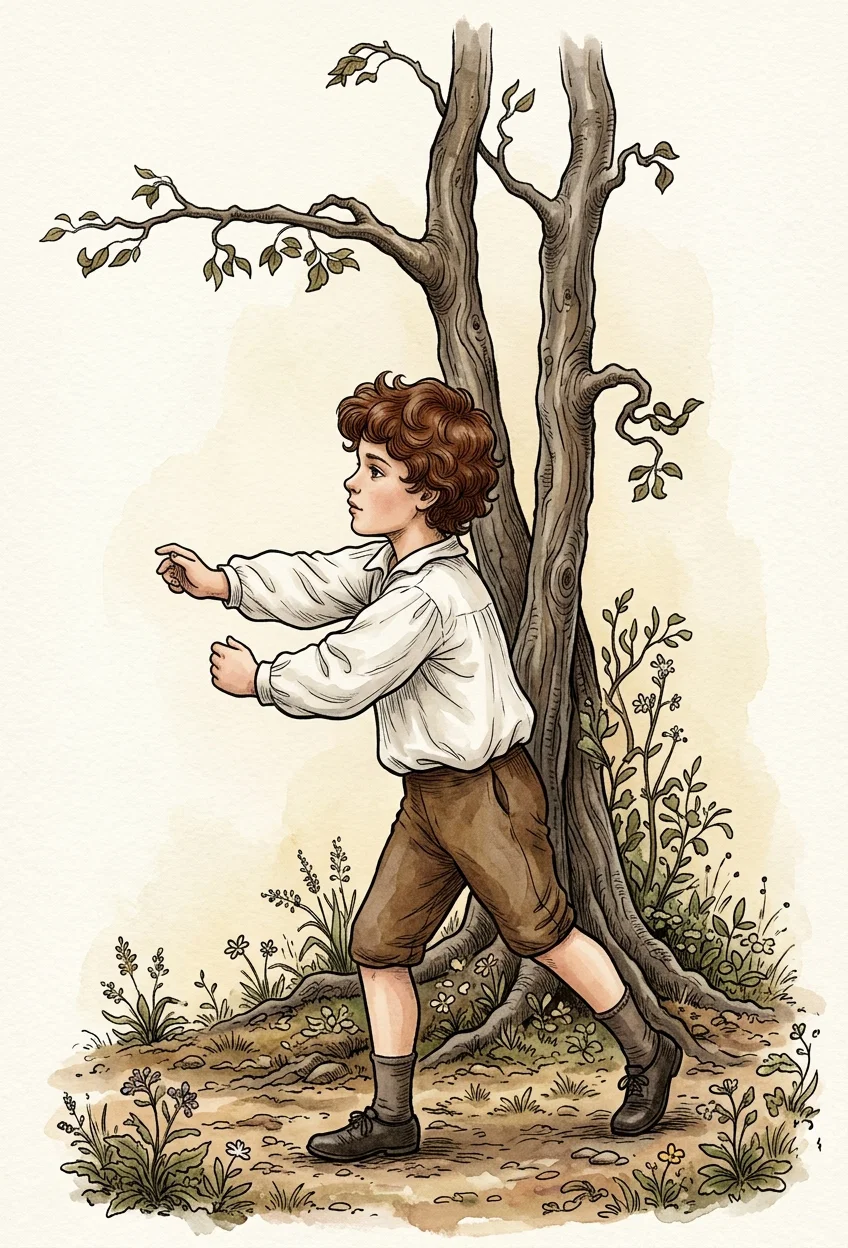
54 “Now when they heard these things, they were cut to the heart, and they gnashed on him with their teeth. But he, being full of the Holy Ghost, looked up steadfastly into heaven, and saw the glory of God, and Jesus standing on the right hand of God, and said, Behold, I see the heavens opened, and the Son of Man standing on the right hand of God. But they cried out with a loud voice, and stopped their ears, and rushed upon him with one accord; and they cast him out of the city, and stoned him: and the witnesses laid down their garments at the feet of a young man named Saul. And they stoned Stephen, calling upon the Lord, and saying, Lord Jesus, receive my spirit. And he kneeled down, and cried with a loud voice, Lord, lay not this sin to their charge. And when he had said this, he fell asleep. And Saul was consenting unto his death.
8:1 “And there arose on that day a great persecution against the church which was in Jerusalem; and they were all scattered abroad throughout the regions of Judea and Samaria, except the apostles. And devout men buried Stephen, and made great lamentation over him.”
Golden Text.—“Pray for them which despitefully use you, and persecute you.” Matt. 5:44.
SUGGESTIVE QUESTIONS.
(1) What was the effect of Stephen's words upon the Jewish council? How did they manifest their anger? Verse 54. Note 1. (2) To whom did Stephen look in this time of sore trial? What encouragement did he receive? Verse 55. Note 2. (3) Then what additional testimony did he give? Verse 56. Note 3. (4) How was the wrath of Stephen's persecutors further manifested? Verse 57. Note 4. (5) Where did they take the condemned disciple of Christ? Then what did they do with him? Verse 58. Note 5. (6) Upon whom did Stephen call as he was being stoned? Who were the principal executioners? Verse 59. Note 6. (7) What appeal did he make in behalf of his persecutors? What followed this earnest prayer? Verse 60. Note 7. (8) Who is mentioned as consenting to Stephen's death? In connection with Stephen's martyrdom, what was the experience of the church? Ch. 8, verse 1. Note 8. (9) What is said of Stephen's burial? How were the brethren affected by his death? Verse 2. Note 9.
NOTES.
1. The words of Stephen had the same cutting effect on the Jewish council as had the speech of Peter on a former occasion. See ch. 5:33. This was because they resisted, rather than yielded to, the Spirit by which he spoke.
2. The rage of Stephen's enemies had no terror for him. He knew whom he trusted, and, looking away from the maddened throng, he turned his gaze heavenward to Him whom he served. He did not fear what man could do unto him (Ps. 118:6), and his faith and courage were rewarded in the hour of trial by the further assurance of the Master's presence.
3. Under the inspiration of this glorious sight, Stephen gave positive testimony to the resurrection and ascension of Christ, by declaring that he could even then behold Him through the opening heavens.
4. Stephen's defiant repetition before the council of the very testimony they had been endeavoring to have quashed, was more than they could endure. So in demoniacal frenzy they rushed upon him, closing their ears to the truth. This action was “with one accord;” it was a unanimous vote.
5. The stoning of Stephen was an illegal execution. The Jewish council did not have authority to put any one to death without the sanction of the Roman governor. They had grown more emboldened after their success in securing the condemnation of Christ by intimidating the governor. Now they dared to disregard this authority altogether. The sentence seems to have been the angry cry of a mob, rather than the deliberate decision of a court. The execution was an instance of brutal murder. Saul, or Paul, at whose feet the executioners left their garments, was a member of the council, and consented unto his death. Ch. 22:19, 20.
6. Stoning.—For the sin of blasphemy, of which Stephen was accused, the Lord had given direction to Moses as follows: “Bring forth him that hath cursed without the camp; and let all that heard him lay their hands upon his head, and let all the congregation stone him.” Lev. 24:14. “The rabbins state that the culprit was stripped of all clothing except a cloth about the loins, and was thrown to the ground from a scaffold about ten feet high by the first witness; the first stone was cast by the second witness on the chest over the heart of the criminal, and if it failed to cause death, the bystanders completed the execution.”—Davis' Bible Dictionary. In Stephen's case the principal executioners were the perjured witnesses.
7. As was his Lord, Stephen was falsely accused, illegally condemned, and taken outside the city and executed. Like Him also, Stephen prayed for those who thus cruelly treated him. “He fell asleep” is the inspired testimony as to the condition of mankind in death. See also Dan. 12:2; John 11:11–14; 1 Thess. 4:13–18.
8. “Were Scattered Abroad.”—This was a remarkable instance of Satan's overreaching; for when the brethren were scattered from Jerusalem, they went to various other places. The Lord overruled the enemy's work for good, making the wrath of man to praise Him. (Ps. 76:10.) Had it not been for this persecution, the disciples would have remained in Jerusalem instead of heralding the truth to the world.
9. “Devout Men.”—Note the difference between the burial of Stephen and of Ananias and Sapphira. “Devout men carried Stephen to his burial,” while the young men who did the common work about the temple buried Ananias and his wife in a merely perfunctory manner. In his burial Stephen was honored as was his Master.
LESSON X.—MARCH 8.—THE PARABLE OF THE TALENTS
NOTE.—In the preparation of these lessons all Scripture references, and the pages of “Christ’s Object Lessons,” should be thoroughly studied first, then the questions. The questions are not the lessons. They are only for the purpose of finding out what we have observed while studying. More of the preciousness of these lessons will be obtained if the lesson is studied each day throughout the week. In the parables of Jesus there is salvation from sin for every type of sinner—from the Pharisee to the prodigal. The notes are wholly selected from such portions of “Christ’s Object Lessons” as apply to each lesson.
14 “For it is as when a man, going into another country, called his own servants, and delivered unto them his goods. 15 And unto one he gave five talents, to another two, to another one; to each according to his several ability; and he went on his journey. 16 Straightway he that received the five talents went and traded with them, and made other five talents. 17 In like manner he also that received the two gained other two. 18 But he that received the one went away and digged in the earth, and hid his lord’s money. 19 Now after a long time the lord of those servants cometh, and maketh a reckoning with them. 20 And he that received the five talents came and brought other five talents, saying, Lord, thou deliveredst unto me five talents: lo, I have gained other five talents. 21 His lord said unto him, Well done, good and faithful servant; thou hast been faithful over a few things, I will set thee over many things; enter thou into the joy of thy lord. 22 And he also that received the two talents came and said, Lord, thou deliveredst unto me two talents: lo, I have gained other two talents. 23 His lord said unto him, Well done, good and faithful servant; thou hast been faithful over a few things, I will set thee over many things; enter thou into the joy of thy lord. And he also that had received the one talent came and said, Lord, I knew thee that thou art a hard man, reaping where thou didst not sow, and gathering where thou didst not scatter; and I was afraid, and went away and hid thy talent in the earth; lo, thou hast thine own. 26 But his lord answered and said unto him, Thou wicked and slothful servant, thou knewest that I reap where I sowed not, and gather where I did not scatter; thou oughtest therefore to have put my money to the bankers, and at my coming I should have received back mine own with interest. 28 Take ye away therefore the talent from him, and give it unto him that hath the ten talents. 29 For unto every one that hath shall be given, and he shall have abundance; but from him that hath not, even that which he hath shall be taken away. 30 And cast ye out the unprofitable servant into the outer darkness; there shall be the weeping and gnashing of teeth.”
SUGGESTIVE QUESTIONS.
By what did Christ again represent the kingdom of heaven?
Where did the man go? Unto whom did he deliver his goods? For what purpose?
How were these gifts distributed? Did any receive more or less than he was capable of using? How did each servant treat his gift?
On his return, what did the lord do? What report did each bring?
What reward did he bestow upon the one who had received five talents? The one who had received two talents? How did their rewards compare with their faithfulness?
What did he who had received one talent say? How did he thus bring judgment upon himself? What reply did the lord make? What was done with his talent? How did his sentence compare with his unfaithfulness?
What is naturally expected of one to whom goods have been entrusted? How much do we possess that does not belong to the Lord?
What lesson is taught in this parable? What warning does it contain for those who think that the smallness of their gift excuses them from service? What encouragement to faithfulness?
Why was this lesson given? What condition does it show will exist in the church just before the coming of the Lord?
Mention the many gifts that may be included in the talents. What practical lesson does this parable teach?
CHRIST AND THE SABBATH: Or Christ in the Old Testament and the Sabbath in the New
by Elder James White. Paper covers, fifty-six pages, sent post-paid for ten cents. Address, PACIFIC PRESS, Oakland, Cal.
We can Teach you MUSIC AT HOME DURING SPARE MOMENTS
The illustrations furnished with each study of instructions are beautifully photographed, making the system extremely interesting and thorough.
It is not necessary that you should have any previous knowledge of music to become a pupil of our School. If you are anxious to learn any of the following branches of
A postal card will bring you full information. Testimonials will be furnished if requested.
Address Department E
Mozart School of Music
DAYTON, OHIO
FRESH IOWA SEEDS
6 Pkgs. Flower Seeds, post-paid 5c
9 Pkgs. Garden Seeds " 10c
2 Crimson Rambler Roses " 25c
Iowa Grown $1.25 per bu. Seed Corn at Sacks Free.
POTATO SEED: Early Ohio Red Rivers $1.50; Early Six Weeks 1.40 per bu.
OUR 1902 CATALOGUE FREE
Address F. C. CRAVES SEED CO. MAXWELL, IOWA
PURE FOOD MAKES PURE BLOOD
PURE FOOD MILL
A mill that enables your cook to do the work of three mills on one combination mill, is up-to-date and economical. It grinds grains, makes nut butter, cuts up meats, figs, dates, pulverizes coffee, drugs, salt, etc.
Price $4.00
For circulars, terms, etc., address WILL T. DAWSON, Battle Creek, Mich. 117 Manchester Street
The Overland Limited
When you go East, take
“The Overland Limited”
Via UNION PACIFIC RAILROAD
Less Than Three Days to Chicago
Four Days to New York
Leaves Oakland Daily at 10:36 A. M.
“The Fast Mail”
Three and One-half Days to Chicago
Both Pullman and Tourist Sleepers through to Denver, Kansas City, Omaha and Chicago Daily without Change. Leaves Oakland at 6:44 P. M.
EVERY DAY IN THE YEAR
PERSONALLY-CONDUCTED TOURIST EXCURSIONS TO THE EAST EVERY WEDNESDAY AND FRIDAY EVENINGS
Steamship Tickets to and from all points in Europe by all trans-Atlantic steamship lines
H. V. BLASDEL, Passenger Agent
1160 Broadway, Oakland, Cal.
THREE BOOKS for CHILDREN
Wood's Natural History
A two-hundred-and-fifty-page edition, fully illustrated, of animal description and stories, by the Rev. J. G. Wood. A delight to any child. Cloth bound, with colored cover illustration.
Price, 40 cents
Black Beauty
A FINE new edition of the story of a horse as told by himself. Contains two hundred and fifty pages, is illustrated, and well bound in cloth. Price, 60 cents
Botany for Children
“A GROUP of young people were seated on the steps of Mr. Stone's piazza. They were sisters and brothers, and cousins, and—one aunt. But Aunt Mary was a host in herself. One look into her face, and you would agree with her brother, who often declared that, ‘Everywhere Aunt Mary went, the girls were sure to go.’ Boys, too, he might have added, and even the unruly ones seemed to find a place in her heart and grow better there. Walks and talks with Aunt Mary were the reward of duty well done.”
This is the way this book opens up, and the studies in botany are all taken during the walks with Aunt Mary.
It is just as profitable as interesting, and this is saying much.
Well bound in cloth, illustrated sufficiently to make the lessons clear.
Sent post-paid for $1.00
Modern Spiritism
This little book treats upon the origin, development, and final result of modern spiritualism, or spiritism as it is often called. The author, Mr. W. A. Colcord of Sydney, Australia, has studied this subject carefully, and states his conclusions in a brief, interesting way that you will appreciate reading.
Limp cloth, vest-pocket size, 25c net
Miracles and Delusions
According to Asa Oscar Tait, author of this book, there is a genuine and a counterfeit Christian science. He believes we will soon be in the midst of a gigantic struggle between the two, and that during this struggle miracle-working power will be everywhere manifested by both sides. The sources of these supernatural manifestations, and the distinguishing features of each, are clearly pointed out in a chapter entitled, “Trying the Spirits.” A volume that will repay careful study.
Cloth, 50c net; paper, 15c net
Pacific Press Publishing Company: OAKLAND CALIFORNIA
TRACTS with MESSAGES
The following tracts have a place in the world's literature: They each have distinctive messages for to-day, and should be circulated widely.
Sound an Alarm
Bible Students' Library No. 167
An interesting treatise on the signs of our times, increase of wealth, labor troubles, intemperance, physical and material ills, general unrest and perplexity in the field of religion and the war preparations.
IT IS ILLUSTRATED
Price 72c per 100 copies
The Name
“Here the man came up, such a transformed face! and with tears of joy he said, ‘It is all true, missis, all true what you told me. My wife wants to know, but I did not know if I might tell her.’
‘Evidently he felt so wondrous a power might be too sacred to speak of, and had a dread of its being withdrawn.
‘Oh, yes!’ I said, ‘you may tell her all.’
‘Then, wife,’ he said, lowering his voice to an awed whisper, ‘It’s a Name, just a Name.’ Then turning to me, ‘May I tell the Name?’ On my assenting, he breathed rather than uttered the word, ‘Jesus.’”
THE ABOVE IS A QUOTATION FROM “THE NAME”
Apples of Gold Library No. 72
The Fall of Babylon
Bible Students' Library No. 169
Price $1.00 per 100 copies
How the three great divisions of Babylon, which are shown to be systems of worship, have fallen, and have utterly rejected saving truth.
IT CONTAINS TWENTY-FOUR PAGES, AND IS ILLUSTRATED
Address Your State Tract Society, or PACIFIC PRESS Publishing Company
Oakland, Cal.
11 W. 20th St.
New York City
18 W. 5th St.
Kansas City
Missouri
FROM THE CHILDREN.
By Ivan C. Collins
Windfall, Ind., Jan. 25, 1902.
Editor SIGNS, Dear Sir: I accept your offer in the last issue of your paper. If you will send me ten copies of the SIGNS, I will sell them and invest the proceeds in more papers.
I am ten years old. My papa is a minister, and I want to help in the missionary work. Yours for Christ, Ivan C. Collins.
A Young Paper Agent
By Leroy Carroll
Baker City, Oregon.
Dear SIGNS: In reading the SIGNS I see you offer to send ten copies of the SIGNS free, as a starter, to any one who will promise to work for you. I believe I could sell a good many papers. So if you will send me the ten copies free, I will work for you and do all I can. Your friend, Leroy Carroll.
(Age ten years.)
FROM A MOTHER.
Milton Junction, Wis., Jan. 27, 1902.
Editor SIGNS, Dear Brother: Noticing your offer to the children in the SIGNS dated January 22, I write to say that you may send us ten copies, which will be sold and the money sent to pay for more. Our little boy is not yet seven years old, but has sold a great many SIGNS and distributed other papers for nearly two years, and enjoys the work very much. He has sold quite a number of the “War and Wealth” issue, and is now anxiously waiting to begin work with the new ones. Please send them to Vernon Brown at once. Yours in the work, Mrs. M. L. Brown.
Are there not other children who would like to sell a few SIGNS each week, outside of school hours? We know you can succeed if you will try. Here is an opportunity to earn some missionary money.
Send us your name and address, and we will send you ten SIGNS of the latest date, free of charge, to start you out.
Address SIGNS OF THE TIMES, Oakland, Cal.
THANK YOU.
By Editor
The Signs of the Times motto for 1902 is, an increase of a thousand subscribers per month. Thus far this has been more than realized, in fact 2,592 additional subscriptions have been received during the past six weeks. We appreciate this very much, and extend thanks to our friends whose assistance has made this increase possible. This will but stimulate us to make the paper better than ever before.
We hope no one will forget our offer to accept from those taking a club of five or more papers—for which they pay but $3.50 per year—single subscriptions to their friends for 83 cents per year.
SIGNS OF THE TIMES, Oakland, Cal.
A Religion of Doing.
Christianity is not a religion of professing, but of doing. If the tree bear not fruit, if the faith produce not works, if the profession does not issue in deeds, it is not Christian. This is the lesson of the Word taught over and over again. The fruitless fig-tree was made to wither, as it deserved. The son who said, “I go not,” but went, was preferred to him who said, “I go,” and went not. Jesus said, “My Father worketh hitherto, and I work.” “He that looketh into the perfect law, the law of liberty, and so continueth, being not a hearer that forgetteth, but a doer that worketh, this man shall be blessed in his doing.” James 1:25, R.V. God wants doers, not drones.
“Act, act in the living present,
Heart within and God o’erhead.”
Now is the time to work while it is day; for the night cometh, when no man can work.
Misquoted Scripture and Fatalism
Misquoted or half-quoted Scripture is the cause of leading many a poor soul astray, or rather settling them in their already estrayed condition. For instance, many have been settled into a lukewarm inactivity and self-satisfied carelessness by the partial quotation of Rom. 8:28. We often hear people encouraging themselves in a wrong course, and we often hear of their being encouraged by others not to be concerned about things that are wrong, because “we know that all things work together for good.” To quote just those words of that text is to minister a rank delusion. Yet it is quite frequently done, even in the pulpit. Those words by themselves constitute the doctrine of fatalism, and are used in support of that error by those who want to believe that it is not necessary to make any special effort for their own salvation or the salvation of others. What the text really says is, “We know that all things work together for good to them that love God, to them who are the called according to His purpose.” All others are wicked, and the Word says, “The face of the Lord is against them that do evil, to cut off the remembrance of them from the earth.” Ps. 34:16. God first loved us, and gave His Son to die for us, and all His promises of good toward which all things work together, are to those who reciprocate His love by accepting His overtures of mercy. And “this is the love of God, that we keep His commandments; and His commandments are not grievous.” 1 John 5:3.
Adventists Still Faithful
Referring to the article, “Not a Weighty Argument,” on page 7, it may be well to remark that hundreds have been Adventists much longer than Mr. Canright was, testing it as he never tested it, and are Adventists still. They have found God’s Word faithful, and have no desire to depart from its plain, simple teachings as exemplified in the life of Jesus our Lord.
Not a Pleasant Visitor
Not a Pleasant Visitor.—Writing from Durban, Natal, Pastor G. W. Reaser adds to an exceedingly interesting letter this item: A woman near that place, hearing a disturbance in her fowl-house one night, went out to see what it might be. She found there a python sixteen feet long and nine inches in diameter. It was killed by a gun-shot. That is rather worse than America can produce.
Two Books Soon to Be Published
By Editor
There are two books now in press in this publishing house which will be of interest to our readers. One is entitled, "Modern Christianity and Modern Science," by Geo. E. McReady Price. It is an incisive, trenchant, and Christian review of the present conflict between the Bible and "science falsely so called." The other is the "History of Sunday," told largely by its friends, compiled by C. H. Edwards. Both of these books are receiving last corrections, and will soon be out. We shall have more to say later.
The Truth Shall Make You Free
Jesus said of the devil: “He is a liar from the beginning.” When God said to Eve that if she disobeyed she should “surely die,” He told her the exact truth. He desired that she should see this truth as He saw it, and so be established. When the serpent said, “Ye shall not surely die,” he told a lie, and knew that he told a lie. He did not desire the woman to think as he did, but to think as he wanted her to think. He told his falsehood; Eve listened. He suggested; she received, and was hypnotized, and became a slave. The Lord desires a people who will serve Him freely, gladly, with an unchained will. Satan seeks to enslave to his own will every soul he can induce to yield to his lying suggestions. There is but one escape from his snares—“the truth shall make you free.” “If the Son therefore shall make you free, ye shall be free indeed.”
Restoration of Temporal Power.
In a sermon in St. Patrick’s Church, Washington, Dec. 16, 1900, Archbishop Ireland is reported to have predicted that at no remote day the “Italian people and Christendom at large would give back to the papacy its wonted dignity and liberty.” It looks as tho events just now were hastening to the fulfilment of the noted prelate’s prediction. It will be a step toward the healing of the deadly wound, which the Word declares shall be effected.
Labor and Prices
Labor and Prices.—According to Dunn's Review, a commercial paper which makes a study of prices, it costs the average common man over 28 per cent. more to live now than it did four years ago. That is especially true in the western part of the country, which has fallen directly under our observation. Prices on all commodities of life, with scarcely an exception, have greatly increased the last two years in Oakland. Rents are decidedly higher, and houses exceedingly scarce. Labor is more generally employed, but not a few find harder times.
Four Excellent Articles
By Editor
We have just received from Mrs. E. G. White four practical Christian articles, as follows:—
A Lesson for Mothers (two numbers), Brotherhood, In the Race for Eternal Life.
These with many other excellent articles will appear soon. They will do you good; they will help your neighbor.