If all love’s gifts of grace or power
Lay spread before my choice this hour,
What should I claim as life’s best dower?
Dear God, how should I know?
Unfailing love from sun to sun?
Unfailing wealth, in honor won?
Unfailing health—all gifts in one?
Nay, all of these may go.
For love that comes our lives to bless
Must evermore be counted less
In grace and might and tenderness,
Than gifts that from us flow.
And health the tender soul may drain
Of power to share the sufferer’s pain,
And strength is weakness, power is vain,
That soothes no human woe.
And wealth of treasure, land, or gold,
Is only sweet to have and hold
When streams of mercy manifold
In ceaseless gifts o’erflow.
So, from the dazzling, tempting three,
How can I choose? Choose thou for me;
Give or withhold, but let me be
Content God’s will to know.
Give love until I love outpour,
Give pain till those whose hearts are sore
May know for them I suffer more
Than for my own small woe.
Give wealth, but not for selfish greed,
But for the sad world’s pain and need;
Give thou thyself, then, rich indeed;
All else may come and go.
—Selected.
The Fountain With the Cup
A CERTAIN man placed a fountain by the wayside, and hung a cup near by with a little chain. He was told sometime afterward that a great art critic had found much fault with the design of his fountain. “But,” he asked, “do many persons drink at it?” Then they told him that thousands of poor people, men, women, and children, slaked their thirst at his fountain. He smiled, and said that he was little troubled at the critic’s observations. He only added a hope that on some sultry summer day the critic himself might fill the cup and be refreshed.
The Bible is the fountain with the cup. Just now there seems to be an unusual number of critics. Some friends of the fountain seem to fear lest confidence be shaken, and its honor be decreased. But we may be sure of this, that from the standpoint of its munificent Designer the only question is, “Do many persons drink at it?” and that God, the giver of the fountain, is satisfied with the knowledge that multitudes of earth’s weary, wistful souls are slaking their thirst from its life-giving flow. O that men who are troubled with doubts and questionings and skeptical thoughts about the Bible would calmly examine it for themselves! O that in a candid, teachable frame of mind they would take it up and read it!—Selected.
Burying One’s Talents
THERE is room enough on earth to find graves for the finest abilities and noblest powers. The ground which received one talent will also receive the five. Every man can be his own sexton. You can easily find a spade to dig a grave for your talents and abilities, your money and your time. But understand that in burying your talent you are burying yourself; in burying aught that God has given you, you are burying part of your very life.—Joseph Parker.
Christ in the Home
PEACE to this house! O Thou whose
way
Was on the waves, whose voice did stay
The wild wind's rage, come, Lord, and
say,
Peace to this house!
Thou, who dost all our sorrows know,
And when our tears of anguish flow
Dost feel compassion, come, bestow
Peace on this house!
“Peace to this house,” come, Lord, and
say,
Come to us, Lord, and with us stay,
O, give, and never take away
Peace from this house!
— The Shadow of the Rock.
Fashion and Its Service
By L. A. S.
L. A. S.
IN a recent article contributed to The Independent, a French dressmaker, who, after learning her art in leading Paris establishments, came to this country, and has for some years served people of wealth and fashion in New York City, tells the following about the origin and purpose of the changing fashions in dress. Having spoken of her entry as an employee into a prominent Paris establishment, she says:—
“It was not very long before I found out just how the fashions are made. There are three great establishments in Paris that lead all others. These have very clever men working for them as designers of cloaks, hats, and dresses. These designers not only know all the recent fashions, but also all the fashions that there were in the world hundreds of years ago. They have books full of pictures to help them, and what they try to do is to make the women change their dresses just as often as possible. That’s the reason they keep changing the fashions.
“Each time they make a new fashion, they make it just as unlike the one that went before as can be, so that things that are six months old look ridiculous, and the women all over the world who are trying to follow the fashions put the old dresses away, even though they have been worn only once or twice. One time the sleeves are big at the shoulders and narrow at the wrists, and at another time narrow at the shoulders and big at the wrists. One time the dress is tight at the waist and another time loose, and there are all sorts of changes in the size, shape, and hang of the skirt; and in addition, all the changes of fashion in colors and materials.
“The keynote of fashion making is change, for the women all over the world are watching Paris, and they say, ‘You might as well be out of the world, as out of fashion.’ The greater the changes, the more dresses sold.
“When these great milliners have decided on the new fashions, they get some of the best-known women in the city to lead off with them. These women are given magnificent costumes of the newest design to wear, and, in some cases, are even paid for wearing them. Of course these women are great beauties, and when they appear in the parks, or at the opera, all the other women envy them, and all those who can, run away and get something of the same kind.”
Of the kind of characters which in her experience she found to be associated with love of display, she speaks thus:—
“Many of our best customers were Americans. They were all very rich, and we heard that everybody in America was rich. They drove up to our shop in carriages and automobiles, and they wanted dresses like those of the queens and princesses. Some of them spent whole weeks in our shop.
“Part of the time I had to help try on, and heard a great deal of the conversation of these ladies. It was all about dress and money. They said that Paris was just like their idea of heaven, though the ones who said that had seen very little except our shop. They were mostly daughters of working people, common laborers, butchers, and shopkeepers who had grown rich some way, yet they were more haughty and proud than our own aristocrats. In fact, they were pretending to be aristocrats. I remember one of this sort who declared that she hated America because it was a republic, and contained so many common people. She was sorry that France was a republic, and hoped it would again soon have a king. Our forewoman always agreed with all the customers, and she agreed with this one till her back was turned. Then she said:—
“‘What a fool that woman is! She is coarse enough for the fish market, yet she thinks she can make people believe she is an aristocrat. I wonder what she is proud of.’”
As illustrating the martyrdom women are willing to inflict on themselves in order to be fashionable, she relates the following:—
“Some of our customers suffered greatly in their efforts to be fashionable, for fashion takes no account of the natural shape of the human body. It did not matter so much to the thin women, because all they had to do was to stuff their figures, but some of the stout women were martyrs.
“One very beautiful woman was fat, and would not acknowledge it, as she had been quite slim. “‘My waist measure,’ she said, ‘is twenty-four inches.’
“She insisted on this, and made two of us girls pull her corset strings till we secured the right girth.
“‘My! that was a job! The squeezing must have hurt her awfully. She was gasping for breath and perspiring rivers, but she would not give up.
“When we sent the dress home, she brought it back.
“‘It doesn’t fit,’ she said.
“‘Where?’ asked the proprietress.
“‘The waist is too small.’
“‘The waist is twenty-four inches. You gave that yourself as your measurement. All you have to do is to have your corsets tightened as they were on the day when you were measured.’
“The poor lady looked at us, and we all nodded assent. We had heard her insist that twenty-four was her measurement. Soon she was again in the hands of the tighteners, gasping and perspiring.
“When the corsets were well pulled in, the dress fitted like a glove, but the poor lady’s face was the color of blood, and she could hardly speak.
“‘I m—m—must—have—been mistaken!’ she gasped.
“‘Certainly!’ said our proprietress. ‘I never saw a better fit.’
“The poor lady staggered away trying to look comfortable. I don’t believe she could wear that dress, though, as she was growing stouter.”
Which is better,—to be a devotee and martyr of fashion, living for display which squanders money and excites feelings of envy, hostility, or contempt in the minds of others? or to live that other life which God’s Word commends to us, in which the service of others is the chief aim, and the adorning sought is the inward adorning that commands the respect of man and of God? What folly to shrink from the service of God, and yet be a willing slave of Fashion.
A Mother’s Remarkable Testimony
By A Mother
For several years we lived the “life beautiful”—the life of perfect trust in God. We contracted no debts, we tithed the little money which came into our hands. Our greatest desire was to serve God with such service as should be well pleasing in his sight. We counted it a joy to sacrifice for the One who had made the great sacrifice for us. We praised him continually for permitting us to labor in his vineyard, and in those days he gave us many souls for our hire. But dark days came, and darker still, and my cry went up to God, but the heavens seemed as brass. Satan saw his opportunity, and tempted me. Stealthily came the suggestion, “God does not care for you!” Finally bitterness and rebellion crept in, and we were drifting away from that which we had once loved. The Bible was wilfully neglected, and prayer was unuttered. The once quiet, happy home became one of unrest.
I saw with anxiety the change in my children’s characters. I was daily12grieved and surprised at the outbreaks of temper and the lawlessness of their behavior. I had ceased to read the Word of God to them, and to carry them with me to the throne of grace.
But the Spirit of God was striving mightily with me, and sometimes I would say: “I will go back to Jesus.” Then, with greater intensity, I would say: “No, I will not go!” He has cast me off! He has not delivered me from my troubles! He does not care!”
And so the battle raged, until, from battlings within and strivings without, I was almost undone. One day, when my patience was exhausted, and my boy had been repeatedly reprimanded and punished, I dropped everything and talked with him. That was another thing I had ceased doing. I talked with him, but not in anger, as usual, for my heart yearned over him, he was so naughty, and seemed to be actuated by such an evil spirit. I put my hands on his shoulders and asked him to look into mother’s eyes and tell her why he was so naughty. The tears came, and as he looked through them into my face, he answered: “O mother! I don’t know why I am so naughty. I try not to be, but at night it always seems to have been a bad day.” Then, breaking into sobs and drawing closer to me, he continued: “If you would only read the Bible and pray with us every day, as you used to, I believe I should be a better boy. But it’s hard to keep trying and trying to do right all by myself!” The arrow flew straight home, piercing my mother-heart to its very center. I saw uncovered before me my responsibility for the evil triumphing over the good day by day in my boy’s life. I was deeply touched by the sublime faith of my precious child.
While I was terrified and compelled to acknowledge the effect of my own spiritual condition as reflected by my children, it was hard to go back to Jesus. I still felt rebellious regarding circumstances which he could change, and then, besides, I had robbed him of my service and that of my children. I had robbed him of daily praise and thanksgiving and the incense of sweet living. I was humiliated as I recalled all these things, and felt myself unworthy.
At this time the deaconess happened in—no, nothing ever “happens” to God’s children, estranged and rebellious though they be. She discovered my wretched condition, and freely laid bare her own quivering heart, that I might further know how God sometimes deals with his own, and yet loves them. Over and over she whispered: “Though he slay me, yet will I trust him,” and, “Whom the Lord loveth he chasteneth.” She urged me to go back to church and to the Sunday-school, but I explained that this was impossible, owing to family duties.
The home department work, ever borne upon the hearts of the deaconesses, came to her mind as filling my need, and so she begged me to take it up for my children’s sake as well as my own. I finally promised her that I would, and, after I began reading the Word and talking with him as I used to do, I stooped again to lift my cross, for I was ready to carry it if He willed it so; but he had put his own broken body underneath it, and has carried it for me ever since.
It has become the custom of our house to bring the Bible to the table at the lunch-time, when the freshness of the morning has worn away, and there is need of new strength, that the afternoon’s work may be well done. The children look forward to this time, and we never get closer together or have a richer blessing than when reading God’s Word and speaking to him, his Holy Spirit brooding over us all.—A Mother, in Sunday School Times.
Habit
THERE was once a horse that used to pull around a sweep that lifted dirt from the depths of the earth. He was kept at the business until he became old, blind, and too stiff in the joints to be of further use. Then he was turned into a pasture, and left to crop the grass, without any one to bother him. But every morning the old horse, after grazing a while, would start on a tramp, going round and round in a circle, just as he had been accustomed to do for so many years. He would keep this up for hours; and people would often wonder what had got into the head of the animal to make him walk round and round in one place when there was no need of it. It was the force of habit; and the boy who forms bad or good habits in his youth will be led by them when he becomes old, and will be miserable or happy accordingly.—Christian Observer.
Optimism a Creed
ALTHOUGH Dr. Oliver Wendell Holmes never practised medicine, those who knew him intimately say that he cheered more sinking invalids, cured more sick people, and did more good, even from a medical standpoint, than many of his young physician friends. The secret of his power lay in his overflowing cheerfulness and kindness of heart. He scattered “flowers of good cheer” wherever he went. With him optimism was a creed. “Mirth is God’s medicine,” he declared; “everybody ought to bathe in it. Grim care, moroseness, anxiety—all the rust of life—all ought to be scoured off by the oil of mirth.” Everywhere, and on all occasions, he emphasized the value of cheerfulness. “If you are making a choice of a physician,” he said, “be sure you get one with a cheerful and serene countenance.” For the sunniness of his disposition the genial optimist gave credit to his childhood’s nurse. She it was who taught him never to dwell on unpleasant incidents. If he hurt his toe, or skinned his knee, or bumped his forehead, she would not hold his mind on the hurt by pretending to punish the floor or the chair, or whatever he had fallen against, but would immediately claim his attention for some pretty object, or charming story, or happy reminiscence. He began to store his sunshine in youth, and all through the years of his long life he scattered it wherever he went. If you want to be happy, and to make others happy, be cheerful.—Northwestern Christian Advocate.
The Human Skin
THE importance of keeping the pores open, and the skin in a clean and healthy condition can not be too highly estimated. The skin does a work similar to that of the lungs, and by perspiration carries off from the body much that would prove injurious if suffered to remain. It also contributes to an equable temperature of the body. Ordinarily, the quantity of sweat given out in a day by a man is about one pound and a half. Inattention to these points will give rise to many disorders of the system. The surface of the body is covered with scales like those of a fish; a single grain of sand would cover one hundred and fifty of these scales, and yet a single scale covers five hundred pores, through which the sweat oozes like water through a sieve.—Selected.
ASeasonable Beverage
RIPE strawberries, crushed, 4 cups.
Water, 4 cups.
Lemon, sliced very thin, 1.
Powdered sugar, 2 cups.
Mix the strawberries, water, and lemon together, and let stand in glass or earthen jar for two hours. Strain through a coarse cloth, and add the powdered sugar. When sugar is dissolved, strain, and keep on ice until served.—“The Vegetarian Cook Book.” (See advertisement on second page.)
The New Republic of Panama
A NATURAL interest is being taken just now in all facts pertaining to the new republic of Panama. According to “The Statesman's Year Book,” for 1904, the extreme length of Panama is 480 miles, and its breadth varies between 37 and 110 miles. The total area is 31,570 square miles, and the population, according to an estimate of 1898, is about 340,000. The inhabitants are of a mixed race, comprising Spanish, Indian, and negro elements. The capital of the State, Panama, on the Pacific coast, had, in 1902, about 28,000 inhabitants; and Colon, or Aspinwall, on the Atlantic coast, 3,000. Another Atlantic port of some importance is Bocas del Toro. Although manufacturing or other industries scarcely exist in Panama, there is a certain amount of hope and encouragement in the statement that a small factory for soap is one of its struggling enterprises,—Northwestern Christian Advocate.
The Measure of Sacrifice
THERE has been many an Abraham who has given his son in sacrifice to God; many a Sarah who yielded up her only child. The value of the offering is the measure of the faith that is behind it
Our Peruvian Field
By E. W. THOMANN
E. W. THOMANN
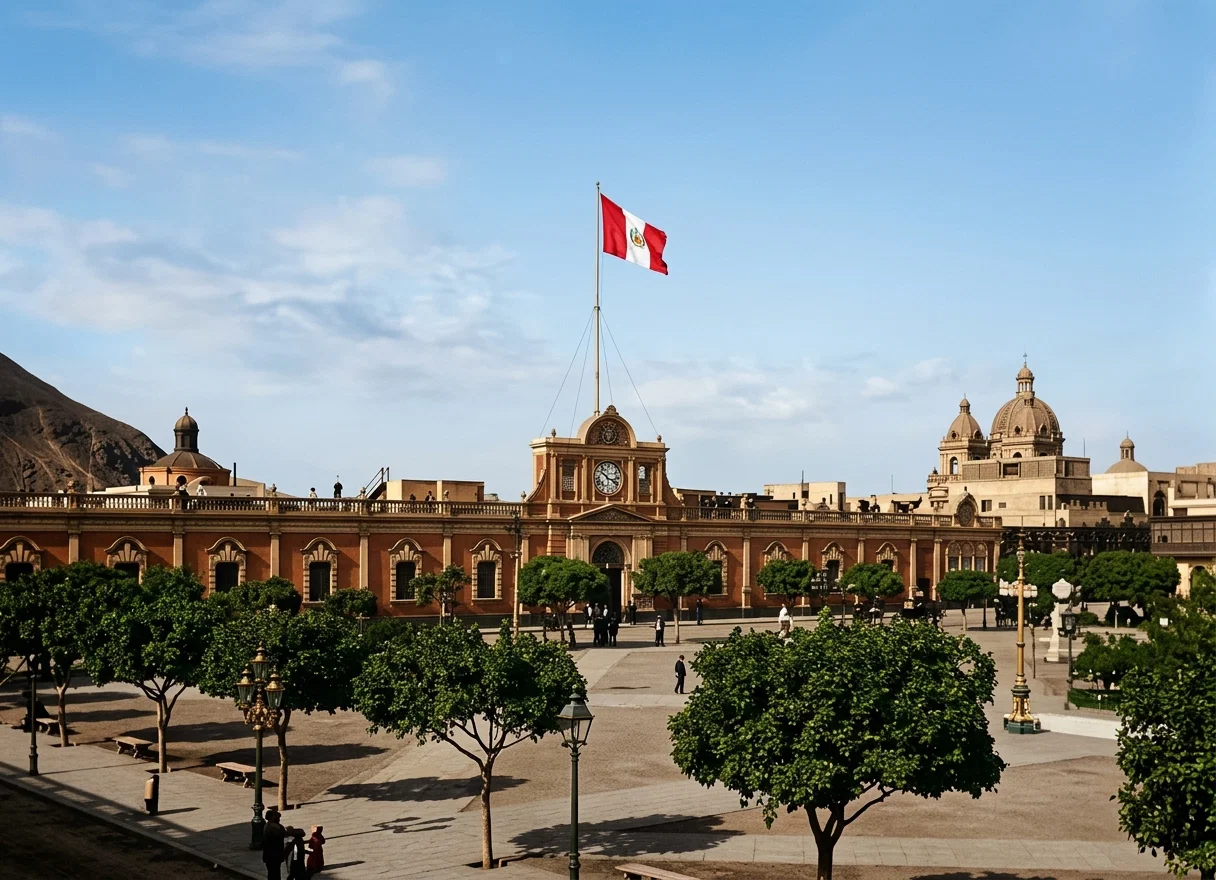
PERU is one of the republican States of South America. It is a large country, located on the west coast, and extending from the fourth to the eighteenth degree south of the equator, and from the seventieth degree west to the Pacific Ocean. On the northern border it touches the republic of Ecuador; on the east, Bolivia; on the south, Chile; and on the west, the sea.
It has about three million inhabitants. These are of different nationalities. First, there are the native Indians; second, the descendants of the Spaniards that governed the country for several centuries; third, the negroes who have been brought there as slaves by the Spaniards, and who, after gaining their freedom, remained in the land; fourth, a mixed class, between Spaniards, Indians, and negroes; and fifth, foreigners, who for different purposes (generally that of making money) settled in the land. Among these foreigners the Chinese and Italians form the largest number, but nearly everywhere people may be found who speak English, French, or German.
VIEW IN LIMA
Like all Catholic countries, Peru is one of the most retrograded to be found in the so-called civilized world, notwithstanding its natural riches. The people, trained and governed mostly by priests and nuns, know but little of what liberty is or means; and when some of them do get free, they do not know what to do with liberty. The next thing one finds is that they have gone over to infidelity (or what they call freethinking ), or to some other perverse system, as spiritualism, theosophy, or something worse if possible. They are all in a condition where they need the Son of God, the Saviour, to be truly free. John 8:36.
As will be understood, there are not in Peru as many facilities and things which conduce to comfort as there are in the United States or in other advanced countries. Yet there are several lines of railroads, steamboat and sailboat lines, telegraphs, telephones, postal service, daily papers, etc. Roads and traveling facilities can everywhere be found, if one will be satisfied with what there is. Where there are neither railroads nor ships, traveling is generally done on horseback or muleback, and in this way baggage is carried too.
In some parts can be found different kinds of factories, mostly managed by foreigners. The principal agricultural products of the country are sugar, rice, cotton, and tobacco; but many kinds of fruits and other agricultural products may be obtained. The soil is generally very fertile and productive. As rains and sunshine help in cultivating the ground, much can be obtained with very little work. Cattle are raised in great numbers in different parts. In minerals Peru is also very rich. But as the people generally are accustomed to receiving nearly everything from mother nature without work, they do not like to do much. Where hard work is required, one will find mostly strangers or negroes. A traveling scholar, describing Peru, said, “It is a beggar sitting on a bank of gold.” And that is nearly true.
Ever since Spain began to send soldiers to subdue these countries or regions discovered by Christopher Columbus, the agents of the Vatican have been oppressors and usurpers over all the people under their dominion. Many of the more enlightened are tired of the Romish priests, and desire something better. They, like the Athenians, raise an altar to the unknown God. Acts 17:16-31. But they can not find him if they that know him go not to tell them what kind of being he is. The liberal political parties are already working to separate the church from the state and to secure religious liberty, but on the other hand there are movements to impose the mark of the beast. There are already some local laws that require Sunday-keeping to some extent in commercial and industrial matters. They take the United States for their example in this. Rev. 13:11-17.
It is high time for us to take to them the light of the message that God has given us to carry to all nations, kindreds, and people. Rev. 14:6-14; Matt. 24:14.
Until the present time very little has been done for Peru. Some of our brethren have been there a short time, and about thirty have already accepted the truth. If we could have workers there, many would accept the last warning, and stand ready to meet the Lord when he comes in the clouds of heaven, in the glory of his Father, with all his holy angels. Luke 21:36; Matt. 25:31.
Brethren, we are debtors to this people. 1 Cor. 9:16; Rom. 1:14. It is our privilege and duty to let the light shine among them, that they may glorify our Father in heaven. Matt. 5:14-16. Not only should colporteurs and ministers be sent, but the brethren who can work in mines, engage in business, agriculture, or the trades, etc., would be a blessing; they would be blessed if they would come here to stand among our new-born brethren as backbone home Christians, that the strong winds should not overthrow those who are not prepared to stand alone. Eph. 4:14.
Two Years in China
By J. N. Anderson
J. N. ANDERSON
We have just passed another Chinese New-year, and I am reminded of the fact that it is just two years since the first of us landed in this strange land. It is only a short time—too brief indeed for serious retrospection, and yet it does us all good to recall our Father's gracious dealings with us, and to review our own shortcomings as well as our God-given victories. Surely it is refreshing and inspiring to recount all the undeserved blessings which the Lord so lavishly bestows upon us, and which become more real and tangible as we look back upon them.
The past two years have brought many unexpected experiences to us; but whether adverse or favorable, God has sustained us, and will continue to do so until the work is finished.
To the Lord's final commission to go and evangelize the world is linked the14unfailing promise that he will be with his own to the end of the world. I am sure all our workers in China have found this promise fulfilled in their individual experience.
We have now actually in the field, counting the wives of missionaries, no less than thirteen workers, and to this number must be added several native helpers, who, in such a field as China, act a leading part in carrying the gospel message. Already the Lord has, through the labors of Brother and Sister Pilquist, given us several converts, some of whom are being trained as workers. To this good beginning, as the readers of the REVIEW will remember, was added last fall a re-enforcement of four physicians and two nurses, who are now heart and soul in the work as far as it is possible for them to be, since it must not be forgotten that without the language little can be accomplished. These new workers, together with Brother and Sister Pilquist, are at Sin Tsai Hsien, a city of fifteen thousand inhabitants, in the ancient province of Honan, almost due north of Hankow, with a distance of about three hundred miles intervening.
It is the heart of China geographically, as it is the center of the great Mandarin-speaking population that constitutes about three fourths of all China, and this fact at once throws a clear light on the meaning and value of our foothold in Honan. The work there was inaugurated by Brother Pilquist, who joined our forces one year ago. And as the missionaries who lately entered there took this as God's opening and call to them, so may still others see in it a definite call to give or to come in person to this great, needy field.
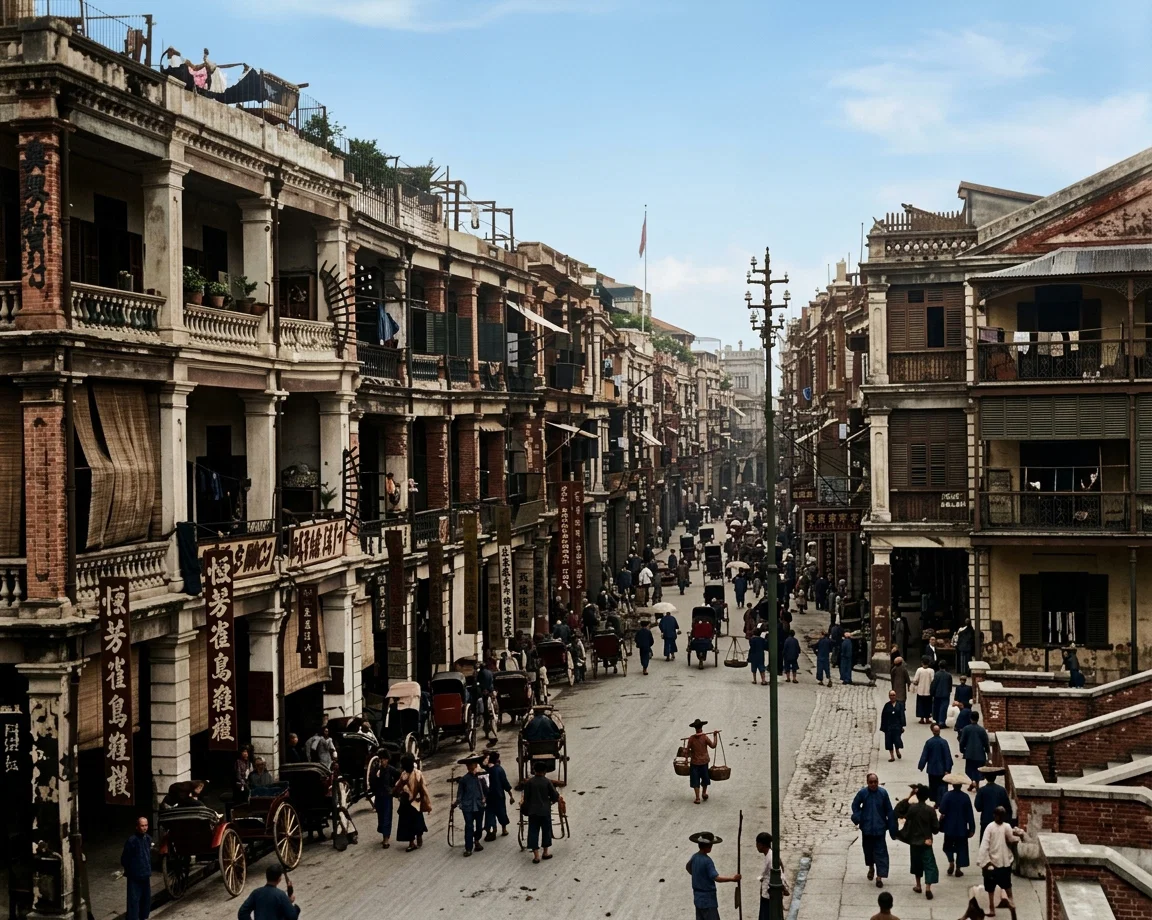
Our work in the south, separated, as we at present make the distance, from our workers in Central China by about seventeen hundred miles, might at first thought seem to be a different field, and a distant and separate work. Such, however, is not the case. We, too, are in China. And, with the exception of the colportage work done by Brother Wilbur in Hongkong, our efforts are directed toward China and the Chinese; though it should not be forgotten that the people here are Cantonese, so called from the metropolis of south China.
And while they write and read the same characters as in all other parts of China, their spoken tongue is as different from that of central China as French is from English. These Cantonese are the most intelligent and most enterprising Chinese. And although in point of numbers they do not exceed twenty-five or thirty millions, yet as they are found in considerable numbers in Western lands, their relative importance far exceeds their numerical strength.
Brother and Sister Wilbur, who came to China one year ago last fall, have been in Hongkong since last April, where they are doing colporteur work in connection with their language study. In this way a considerable number of our books and periodicals have been put into the hands of the people. They are making progress in the Chinese language, and ere many months pass by will be prepared to make a beginning among the natives. As it requires much time and no little means to prepare workers for active labor among the Chinese, it is decidedly unprofitable and unwise to retain them in such a place as Hongkong after they are once prepared. Hence, our plan is to get a new worker for Hongkong, and so relieve Brother and Sister Wilbur for definite Chinese work. But where is the man to take their present place?
Miss Thompson conducted an Anglo-Chinese school for almost one year, until it had to be closed last August on account of her failing health. Her physical strength was seriously reduced by that insidious disease, malaria. This has, however, almost entirely disappeared, and arrangements are being made for her to open a school for Chinese girls, to begin the first of April. As the Lord has provided the means for this special work, and all the arrangements are nearly finished, we feel assured that it will prove a success, and be a blessing to our work. It will be a day-school for the present, as we are not yet prepared for a boarding-school. The teaching, in the main, will be done by a Chinese lady teacher, but the whole enterprise will be under the immediate direction of Miss Thompson. Religious instruction will form a part of the daily study, and we hope in this way to win souls for eternal life. It will also be the means of training natives as Bible workers. And these we must have if we will reach China's women.
As for Mrs. Anderson and myself, our time and strength have been occupied with the study of the language, together with a general oversight of the work. Since coming to Canton last April, our progress in the language has been steady, though not so rapid as might be desired. We have deferred getting out literature until we were able to judge of its merit and accuracy. And, furthermore, without a working knowledge of the language, it would be well nigh useless to attempt to use literature, even if we could be assured that it was good. All this will, however, very soon be removed, as the strange characters and speech of this people are gradually yielding to our steady application, which we hope will, under the blessing of God, bear fruit in laying a good foundation for the work in China.
I have secured a hall, in which I shall within a few weeks begin to teach publicly the Lord's message. Although by no means familiar with the Chinese speech, I feel that it is time to make a beginning, and that every such effort will serve to hasten my preparation for a better and more effective work.
Apart from several sailors in the British navy, who have been led to the truth since we came to China, there is a young Chinese in Hongkong who has definitely decided to stand by this message. He acted as servant for us while we were in Hongkong. He has resigned a good position in a British shipping firm, and now proposes to come to Canton and enter a Baptist academy to prepare himself for future usefulness in the work.15While in school, he will be closely associated with us, and so be a help to us in our meetings.
It is thus seen that the Lord is going out before us, opening doors which invite and urge us to enter. We can but praise God for all that has been and is being done, and with glad hearts renew our consecration to the blessed cause. We have a foothold in two of the eighteen provinces of this empire. Surely this is a cause for rejoicing. And yet these beginnings unconsciously extend the horizon of our vision with reference to the magnitude of the work to be done in this Chinese world; and, accordingly, we are constrained to lay the situation before our people, and pray the Lord of the harvest to send forth laborers into this part of the vineyard. It should never be forgotten that all new missionaries must spend, even under favorable conditions, from one to two years in the study of the language before they can enter upon active and aggressive work. The point in this is that if we wish to see new workers at work in China at a given time, they should be sent out about two years prior to the fixed time.
The situation here in Canton calls loudly for at least two new workers before the end of the present year, who can at once prepare for the work which is opening up in this province. And this is emphasized by the fact that my responsibility to the work in general prevents me from carrying on a regular and systematic work in any one place. With our present attainments and experience in this field, we can profitably receive and assist new workers, who can thus be spared much of the delay and misunderstanding which invariably came to us who had no one to look to for counsel and assistance.
Hongkong needs a man, whose coming can not be delayed beyond next fall. Such a man is needed to relieve Brother Wilbur of his work for the Europeans, in order that he may take up work for the Chinese, for which he will be prepared by that time. The man needed in Hongkong should be a good, wide-awake canvasser and Bible worker. Along with this, there is really a call for a physician, who can open up treatment rooms and introduce our health literature, as well as our health foods, which are already quite well known and favorably received in that island colony. Shanghai, the New York of the Orient, also needs one of our Christian physicians—a man of sterling qualities, who can open up our work in that cosmopolitan city. Such a work in Shanghai could not fail of success.
Other places might be mentioned, but these are the most pressing. Are there not loyal, consecrated young men and women who feel that God is calling them to enter these openings? Be sure that you hear the voice of the Master, before coming. But once you have heard that voice, let nothing divert you, but come in the spirit and power of God's message.