Your ShelfYour Projects

Review and Herald, Vol. 84, No. 8.

Our Trust
Earlier text: Kathleen’s Sacrifice

R. A. CALDWELL

Siam

R. A. CALDWELL

In our little world—for it is very small compared with the Eastern world with its teeming millions—we very seldom think of the great continent of Asia, much less of the small countries, such as were visited by the writer not so very long ago. But Siam should not be considered small. While it certainly is not so large nor so thickly populated as China or India, or many places that one might name, still it has a population greater than that of Australia by at least one million people. In this country, as elsewhere, the crying need is for a living Christ, a risen Saviour.
There are many Buddhist temples to be seen everywhere. And about one hundred miles from Bangkok is a footprint supposed to be Buddha’s, solitary and indestructible in the rock. The yellow-robed priests, with their shaven heads, are often met on the streets.
Only of late years have the people awakened to study Western methods and languages. While English is not spoken to any great extent, still some of those with whom I came in contact could speak a little English, and subscribed for (English) Good Health, in preference to the larger religious books, though perhaps it was because the price of the latter was beyond their reach.
Several missionary societies are at work in this country, the most active being the American Presbyterian, which has established several schools, and also has a good printing-press.
The people are not very cleanly in their habits. The majority are fond of chewing the betel-nut—so much so that their black teeth are much in evidence.
The women usually wear their hair short. The lower garment of both men and women is the same. It is like a roller towel, endless, only wider. It is passed around the body, and then between the limbs, and secured in front at the waist. It has the appearance of loose pantaloons. The men often have European garments, including head-gear. They all have stockings and shoes, which, often being white, present a pleasant contrast to the very often gay-colored lower garment and the more sober garments lately acquired.
About three weeks were spent in Bangkok, and that scripture, “Lift up your eyes, and look on the fields; for they are white ready to harvest,” impressed me as very applicable to Siam.”

Japan

Kobe.—We had a very interesting time with the tent this season, and we regret that our force of workers is so small that we can not make such an effort oftener.
The two young men who have been working in Takasaki the past few months have fallen in love with their work. For years we have tried to get our native brethren to take hold of the canvassing work, but this is the first time an effort has really proved satisfactory. Sometimes they would take hold of it spasmodically, always without much result.
Last January when these brethren went to Takasaki, I spent a few days with them there, getting them started in the work. We got a map of the city, and with this as a guide made larger maps of the main divisions of the city, large enough so we could mark each house on them. Then in a book we made a careful record of just what papers and tracts had been placed in each house, and when, also entering any other items we thought might be of interest. From time to time I have visited them, to counsel with and encourage them, and we all feel much pleased with the results.
At first we voted to print four hundred extra copies of our paper, for the use of these two young men. They placed them in the houses, then when the new papers came out, they exchanged them for the old ones, using the old ones to extend the work. The scarcity of papers has retarded their effort somewhat, but from now on we will give them one thousand copies. They will leave Takasaki soon, and go to Maebashi; but they will run down to Takasaki to supply the new papers to those who have promised to buy them. It costs only eleven cents for a return ticket on the cars between the two cities.
Hearing of the work of these brethren, some of the others have caught the spirit. One brother away up in the north sent in word, saying, “I wish to work in this place as they have been doing in Takasaki, so send me one hundred copies of the paper.” I hope to visit him before long, and help him what I can in planning his work. Many of our native brethren might be doing acceptable work, but they do not know how. They need training, and some one to lead them and show them the way.
One of the decisions of our committee recently has been to make the Owari No Fukuin a semimonthly, instead of a monthly paper as heretofore. I think this is a timely step.
Elder Field and I are now on our way to visit Korea. We will also visit a number of places in the southern part of Japan. We are glad that there are so many encouraging features in the work. Of course there are discouragements, also; but it is the Lord’s work, and he is able to take care of and finish it. We are all of good courage, and are looking forward with a great deal of pleasure to the hope of soon having one of the General Conference men here with us, to help with his counsel.
W. D. Burden.

In Southern California

At the time of my last report I had just closed my meetings at Los Angeles. From that point I went to Loma Linda, some sixty miles east, where our people have not only a sanitarium, but a school of about forty students. I remained there from December 13 to 19, giving seven talks to the students and helpers, and one talk in the parlor to the patients. The Lord gave freedom in speaking the word.
Much has been said of “beautiful Loma Linda,” but one must see it to know what it is. I will say this much, I never read a description of it yet equal to the reality.
From December 20 to 26 I was at San Diego and Paradise Valley, holding five meetings at the former and four at the latter place. I found many new converts at San Diego, who seemed to enjoy a rehearsal of the Lord’s dealings with this people. The same was true of the meetings at Paradise Valley. In former days this valley was a most beautiful spot, but some years of drought and lack of water has marred that beauty. Now, with an abundance of water, it is regaining its former beauty. The site of our sanitarium there is indeed beautiful. With its mild, healthful climate, I do not see why it may not expect a fair share of patronage.
Sabbath, December 29, I was again at Fernando, and spoke twice to a full house on the early sacrifices in the cause, and the opposition parties that have arisen, and how they came out. From Fernando, on Sunday, December 30, I came to Santa Barbara. There I spoke twice in the afternoon on the gift of prophecy as connected with the third angel’s message. That evening I took the train for Mountain View. I had been for five weeks in a milder climate than Mountain View. In that five weeks I had held forty-two meetings, more labor than I had put forth in the same length of time in ten years. As the train came on the way, I realized that I was much exhausted in strength. When I arrived at home, on the morning of December 31, the mountains on both sides of the place were covered with snow, and the air was so chilly that it seemed almost impossible for me to get warm even by a hot fire; in short, I had an attack of la grippe, from which, on this twentieth day of January, I have not fully recovered. The snow has remained on the mountains to this date. On the Hamilton Range, near the observatory, it is reported that there are drifts fifteen feet deep. The oldest settlers say, “The like of this was never known here before.” We have had cold, disagreeable storms since the last day of December.
Well, this earth is waxing old, as well as the people upon it. May a realizing sense of this lead many souls to look with earnest longing for that better world now soon to be ushered in.
J. N. LOUGHBOROUGH.

China

SIN YANG CHEO, HONAN.—The Chinese say that when one wants to write an essay, it is necessary to fill up with Chinese sentences, and then write them off as fast as possible, before forgetting them. We have found this true, to a great extent. This is the only way to learn the literary style. By a study of rhetoric, literature, and grammar, in English, one is able to write by a literary method. In China there is a literary style to the language, but no grammar from which to learn it, so the only thing to be done is to memorize some of the best literature produced. Then in writing one can call up an example for comparison as to the arrangement of words in a sentence.
A committee of some of the oldest students of the Chinese language met together last summer, and have retranslated the four Gospels. We have just received this book from the press, and it is undoubtedly the best production yet put forth, since it has a definite arrangement all through the text, and will be looked upon as the standard style of the future Mandarin language. Since receiving it, I have memorized a chapter of Matthew's Gospel each day. Even in this new edition we have found the same old errors with reference to the translation for “soul,” the word used being one that means to the Chinese an ethereal spirit that can not be seen. In the old edition this term is used in translating Rev. 6:9, also 20:4. In both cases the prophet John says that he saw the souls. Surely the Lord sometimes allows men to go beyond their reason, that the truths of the Bible may not be covered up; for in some cases error lies so close to truth, in their translation, that were it not for some of these instances, the real truth might be concealed from some.
Brother and Sister Allum are beginning to talk Chinese to the help here. They are just the right age to learn the language, and we only wish that we had as many such young men and women as are in one of our schools, all studying the language, preparing for mission work here in China.
It made our hearts glad to meet Brother and Sister P. J. Laird. They came up to Sin Yang Cheo, and paid us a visit, before going to their field in Hunan. Brother Westrup was here, also, and we had a blessed time together. Brother Laird has his heart set on spreading this message just as far as possible among the missionaries of his former society. There are about three hundred of them.
We invited Brother Laird to speak on Sabbath to the Chinese. They understood him very well. And we conversed together, and found that our dialects were very similar, the Hunanese being well understood here, and the Hunanese being understood in Hunan. In fact, the Mandarin language is to China like English to the world. Nearly everywhere you go in the empire there are some who understand it, and in the fifteen provinces it is the spoken language.
Brother Laird had a small tract translated while in Japan, by a scholar who has accepted present truth there. Dr. Perrine-Laird has adapted herself already to the Chinese food, and seems to enjoy it.
At present we are living in an ordinary Chinese house that has not been overhauled, while the printing-office is being built. Things go very slowly at best, since securing the deed is a long, tedious process, it having to go through the hands of so many officials. Brother and Sister Westrup have just gone up to Shang-tsai Hsien. Dr. and Mrs. Selmon were down to Hankow last week, and stopped a day with us. We see each other only about once in three months, and we make good use of the time.
All of us here have had malaria, but were sick only from one to three days with it. Owing to the wet season in this part of Honan, malaria has been more prevalent than for years, and has been of the severest type. We are all feeling well now. H. W. MILLER.

Recent Actions of the General Conference Committee

In recent meetings of the General Conference Committee the following actions of general interest were taken:—

SWEDISH WORK

The superintendent of the Swedish work in the United States, Elder S. Mortensen, was recommended to visit the West, looking after the interests of the work among Swedish-speaking peoples.

WEST INDIAN UNION SECRETARY AND TREASURER

In response to the call of the West Indian Union for an experienced secretary and treasurer, Brother Harold H. Cobban, assistant in the General Conference Treasury Department, volunteered for the service, and the committee arranged with him to prepare at once to go to the West Indian field.

EVANGELISTIC SONG-BOOK

The following-named persons were appointed as a committee on selection of hymns for a song-book for tent and evangelistic services:—
F. Griggs, W. A. Westworth, W. A. Colcord, C. C. Lewis, R. W. Parmele, H. R. Salisbury, H. C. Lacey, J. S. Washburn, W. W. Prescott, Wm. Simpson, L. Warren, F. E. Belden, C. H. Edwards, C. H. Jones, M. C. Wilcox, Dr. W. A. Ruble, D. E. Scoles, H. S. Shaw, J. W. Beardslee, B. F. Stureman, Mrs. W. A. Ruble, Mrs. W. H. McKee, Mrs. Rhoda Dunlap, Mrs. Vesta J. Farnsworth, Mrs. Andrew Nelson.
The following executive committee on the hymn-book matter was appointed: F. Griggs, chairman; W. A. Westworth, secretary; C. H. Edwards, Mrs. W. A. Ruble, W. A. Colcord.
It is hoped that the work of this committee will be sufficiently forward to enable the results to be laid before the General Conference Committee council, to be held in May.

SABBATH-SCHOOL AND YOUNG PEOPLE’S CONVENTION

The importance of the Sabbath-school and young people’s work, and the need of opportunity for those leading out in these lines of work to meet for counsel, led the committee to recommend the Sabbath-school and Young People’s Department of the General Conference to call for and arrange a Sabbath-school and young people’s convention, to be held in July of this year, to be attended by such representatives of these branches of the work as may be able to gather together. W. A. Spicer, Secretary.

The Missionary Yacht “Sentinel”

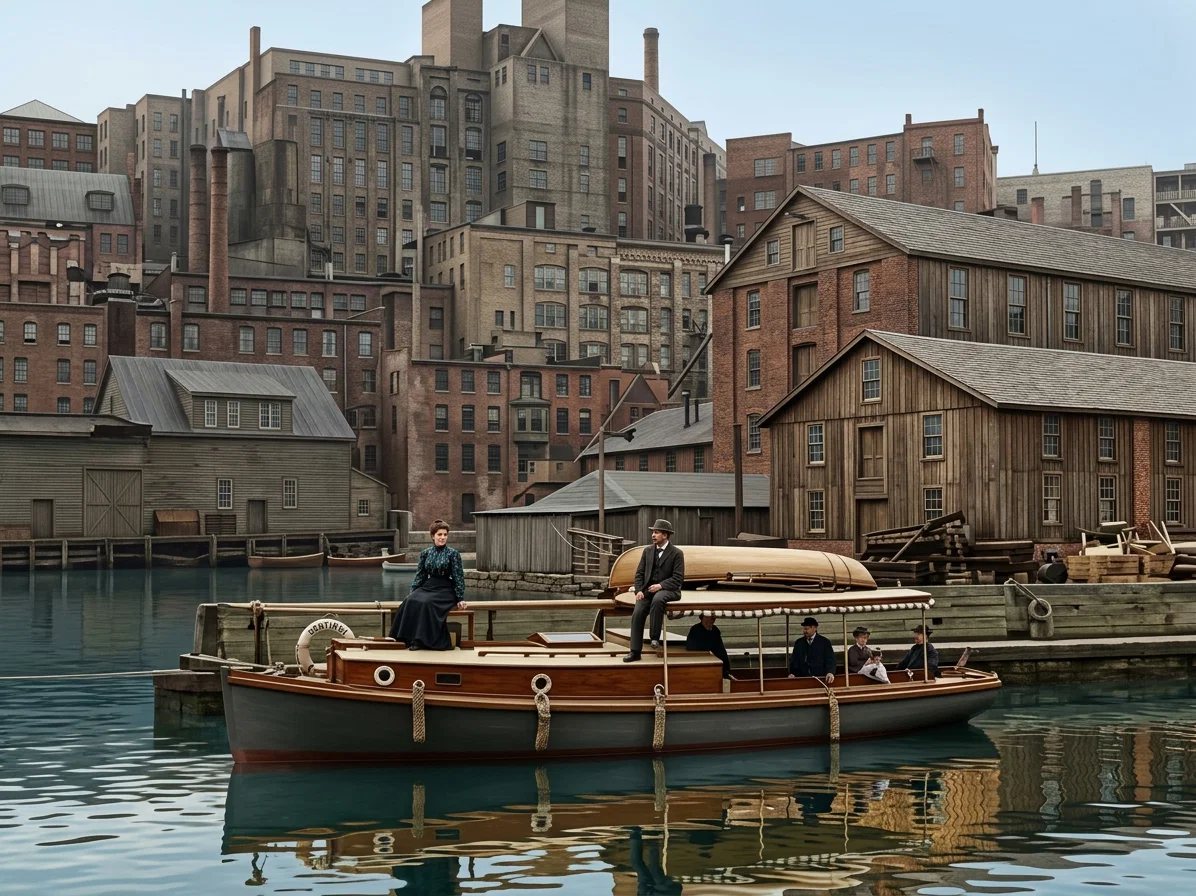
THE YACHT “SENTINEL”
In June, 1897, I received a call to connect with the ship missionary work in New York harbor. At that time Captain Christiansen was engaged in visiting among the sailors and distributing literature upon the great vessels coming into the harbor from all parts of the world. Soon after reaching New York, Captain Christiansen was called to Europe; this left the yacht “Sentinel” in our care. For seven years my wife and I have been connected with this work, and not without success. The Lord has greatly blessed our efforts in spreading a knowledge of the third angel’s message, and many have accepted with joy the light thus brought to them. Some of those embracing present truth are now elders of churches, some are in schools, preparing themselves for the ministry, while others are faithful lay members. Bundles of the REVIEW, Signs, and tracts of different kinds have been placed on ships visiting all quarters of the globe, and many of these packages have been left on isolated islands of the sea. In truth, the work being done by the “Sentinel” is a foreign missionary work done at home.
Three years ago the yacht was rebuilt. We then received a call to labor in Boston harbor. While there, by a vote of the Atlantic Union Conference, a new engine was procured for the boat. After remaining in Boston about two years, it was decided that we should make a trip via New York up the Hudson River, and through the old Erie Canal, to Buffalo, spending the summer of 1906 in this large lake port. Accordingly, after some delay in installing the new engine, we left Boston the first of last June. From that city to New York there are several light-ships stationed along the coast. These are usually manned with a crew of sixteen men, and the light-ships are often stationed as far as fifteen miles out at sea. Reading-matter is appreciated by these men, and we succeeded in placing a supply upon nearly every light-ship. All along the Erie Canal literature was put aboard the canal-boats met and passed, also left with lock tenders. We know that some of these papers reached hearts that appreciated the truths they contained.
We began our harbor work at Tonawanda. This place is fifteen miles down the Niagara River, toward the Falls, and is considered the largest lumber port in the world. Here and at Buffalo during the summer and fall we sold the sailors many of our larger books, such as “Great Controversy,” “Bible Readings,” etc. Much smaller literature was also distributed, and many Bible readings were held with captains and their crews. One Danish sailor who bought “Great Controversy,” said, “I am almost persuaded to obey God.” If faithful, we believe we shall meet in the kingdom many for whom we labored in the great lake port harbor of Buffalo last summer.
Late in the fall we returned to New York City, intending to go down the Atlantic Coast and spend the winter at Richmond, Va. The Lord has permitted circumstances to prevent our going farther than Philadelphia, where we are at present, working among the ships and people at this place.
The accompanying picture shows the “Sentinel” lying at the locks at Lockport, N. Y. Upon the deck are Mrs. Johnson and the writer. Below are Mrs. Wm. Buckland, sister of the late Elder R. F. Cottrell, and her daughter, Hattie, wife of the late Elder D. A. Ball. The boat is thirty-three feet long, ten foot beam, with a cabin six feet high. In the sides of the cabin are book closets. The lockers contain papers in large quantities. The boat is provided with a toilet, and over the engine and pilot wheel a canopy has lately been built, which adds greatly to our comfort. The gasoline engine is one of the best and latest improved makes, of thirteen-horse-power.
We feel grateful to God for the blessing attending the work of this little missionary yacht in the past, and ask an interest in the prayers of all his people that it may still continue to sow the seed beside all waters, believing that after “many days” fruit will appear to the praise of Him who has commanded us to labor for souls while yet it is day.
CAPT. J. L. JOHNSON.

German East Africa

The following letter is from Brother Enns, who has charge of our new mission station in German East Africa, the third which we have in operation in that field:—
“Our work here is threatening to overflow. I now have about one hundred pupils in the school, and fifteen in the boarding-school; thirty have applied, but because we lack means and lodging room, I counseled them to wait until we have more buildings. We must enlarge soon. They are pressing and begging, asking if they may not stay. To-day one kept on until I could not refuse him. The boys are quite bright; they are doing well in their studies. Most of them are the sons of chiefs, who will succeed their fathers.
“A neighboring missionary also has had the same trouble that we have had in our other stations,—the natives leaving,—but these see now that in leaving they did an unwise thing, as the ones who remained have been making advancement; so those who left are returning.
“I plan to limit the number of boarding pupils to thirty, and later, when I make a selection, to twenty-five. No doubt, when they see that we are in earnest, the number will fall below this; but later on, those who belong to the better class, and are willing to do something, of course, will step in, and such really constitute our ‘only hope.’ Through them we hope to be able to reach the hearts of the people. We have already seen some fruit of this from those staying at Mamba. The father of one of our smallest boys said to me: ‘My little child told me not to worship my father, but God, and I shall not do so any more.’ Another Kilango, a chief, who has a son in Gonja, brought his other boy to me the other day. When some started out to the dance, to worship their ancestors, he called them back, and asked what were their wishes. Then he gave them an earnest talk about the foolishness of worshiping their ancestors—dumb objects—and leaving the God of heaven. Then he said to his boy, in their presence, ‘My son, if I die, whatever else you and the boy at the other mission do, be sure never to commit the folly of worshiping my skull; but follow the God of these Europeans, who is in the heavens.’”
“We are not here without our conduct’s being watched by the natives. May God grant us grace that we may live a life worthy of imitation on their part, so that we can say with Paul, ‘Follow me.’ What else can these poor heathen do? They can not read Moses and the prophets. What they see, however, will influence them. They do not trust men’s words. They are used to boasting and lying. Every word they hear they take as a fable and a lie. Many times they have said to me in so many words, ‘You lie.’ When they do not say it, because of their fear of white men, they often think it in their hearts. And when something has been told them which comes to pass, they do not forget to tell the person, ‘You told the truth when you said that.’”
“The following letter Chief Kilango wrote me from the way, when he left: ‘Sir, as I have this chance to send this letter to you, because I met this man who goes to you, I tell you again: In two weeks I come back to see my son. Teach him the great Word. If he does not follow, punish him. Don’t spare him till he knows every word. Teach him thoroughly. I love you with all my heart and body. Kilango, Chief. When I shall send you a letter again, you know that in three days I will follow. Till we meet again.’”

Oakwood Manual Training-School, Huntsville, Ala.

WE believe the readers of the REVIEW will be glad to know of the progress of the work at the training-school. It will be remembered that last October the main building of the institution was destroyed by fire. Plans were immediately made for rebuilding, not one large building, but five of smaller size, and better adapted to the needs of the work. Faithful carpenters, assisted by the students, soon began work, and one of the new buildings, known as Manual Arts, has been completed for about a month.
Workmen are now busily engaged in making cement blocks for the new Study Hall, which will contain chapel, recitation rooms, and business offices. The foundation of this building is nearly finished. Excavating for the boys' dormitory is also in progress.
When these new buildings are completed, the school will be in a better position than ever before to do the work especially appointed it.
It is the aim of the management to make the work self-supporting as far as possible. With this in view, very careful efforts will be put forth the coming season on the farm and garden. It is the plan to raise a good supply of general farm produce, and also a large amount of garden truck for near-by markets.
We are also raising some choice nursery stock, seeds, bulbs, etc., in order to furnish more work to worthy students who desire to get an education, but who have no money whatever with which to pay their expenses. These we can not turn away. They must be helped.
Having perfected arrangements with a reliable Northern seedsman, as well as with one of the large nurseries of the South, we are enabled to supply all varieties and kinds of trees, plants, seeds, and bulbs at very reasonable prices. By sending us orders, we believe many can give assistance to the work, and at the same time benefit themselves. We shall be glad to correspond with any in regard to this matter.
Also if any have choice flowering roots, cannas, gladioluses, dahlias, or shrubs which they would be glad to give to the school, we hope they will kindly let us know. We desire to add new varieties to our list.
We are greatly encouraged by the arrival of several new students, who seem to have an earnest desire to prepare themselves quickly for the work of God. We desire the prayers of all that this important work may be directed and carried forward in harmony with God's will. W. J. BLAKE, Principal.

S. G. HUNTINGTON

Utah

The work in this field is making encouraging progress. Recently sixteen have been baptized within our conference, while nearly half as many others have been reported as keeping the Sabbath. During the last quarter one new Sabbath-school of twenty-three members has been organized, while our Sabbath-school membership has been increased fifty-six. Our tithes are also on the increase. The laborers, and also our brethren throughout the State, are of good courage.
As all are aware, this is the land of Mormonism, Salt Lake City forming the Mecca of this peculiar people. It has been the writer's lot to labor in different parts of the home field and Canada, but without exception the Mormon element is the most difficult to labor with of any he has ever met. Mormonism, however, here is not what it is represented to be by its missionaries in the East and elsewhere. Missionaries pretend to use the Bible, but here it is virtually thrown aside, and the writings of Joseph Smith, the founder and first prophet of this cult, are substituted in its stead. This, of course, Mormons will deny, but nevertheless it is a fact.
In the big tabernacle, with its seating capacity of eight thousand, the praises of Joseph Smith are declared every Sunday. A few weeks ago the writer heard one leading speaker assert, in substance, that “next to Jesus Christ as the world's benefactor stands Joseph Smith.”
Would space permit, we might note many interesting things about this people and their religion. That they are deluded goes without saying. The elders, bishops, and those in authority domineer over the laity like masters over their servants. Priestcraft, therefore, predominates to a superlative degree, and it is this that makes the people so hard to reach. But God has a people here also, and it rejoices our hearts to see some taking their stand for the truth. About half of those who have recently stepped out into the light of truth were Mormons.

S. G. HUNTINGTON

Field Notes

On the last Sabbath of the year, three were baptized at St. John's, Newfoundland.
Elder Wm. Covert reports the organization of a church of fourteen members at Aurora, Ill., January 12. Others living in the country near will probably join soon.
Brother J. C. Harris, at work among the churches of northern Illinois, reports two baptized at Watseka, and one at Pittwood, besides two taken into the church.
From Indiana Brother U. S. Anderson reports the addition of two members to the New Hope church; and Brother B. Hagle reports several new converts to the faith from his meetings near Rochester.

Atlantic Union Conference

Received on the $150,000 Fund up to Feb. 12, 1907

Atlantic Union Conference

Central New England Conf. ..... $480.42 Chesapeake Conference ........ 115.50 Eastern Pennsylvania Conf. .... 280.91 Greater New York Conference .. 81.50 Maine Conference ............. 160.97 New Jersey Conference ........ 164.45 New York Conference .......... 588.50 Southern New England Conf. ... 516.73 Vermont Conference ........... 527.83 Virginia Conference .......... 202.12 Western Pennsylvania Conf. .... 304.73 West Virginia Conference ..... 136.11 Western New York Conference .. 16.00 Total ....................... $3,575.77

Canadian Union Conference

Maritime Conference .......... $ 1.00 Quebec Conference ............ 6.00 Ontario Conference ........... 3.00 Total ....................... $10.00

Central Union Conference

Colorado Conference .......... $232.35 Iowa Conference .............. 648.52 Kansas Conference ............ 488.37 Missouri Conference .......... 31.80 Nebraska Conference .......... 861.90 Wyoming Conference ........... 191.35 Total ....................... $2,454.29

District of Columbia

Washington churches .......... $1,052.51

Lake Union Conference

East Michigan Conference .... $ 384.67 Indiana Conference .......... 1,800.71 North Michigan Conference ... 80.70 Northern Illinois Conference . 836.94 Ohio Conference ............. 1,638.62 Southern Illinois Conference . 618.46 West Michigan Conference .... 1,443.25 Wisconsin Conference ........ 1,197.30 Total ....................... $8,000.65

North Pacific Union Conference

Conference not specified ...... $297.30 British Columbia Conference .... 10.00 Montana Conference ............. 86.70 Upper Columbia Conference ...... 692.16 Western Washington Conference .. 456.42 Idaho Conference ................ 41.90 Western Oregon Conference ....... 289.96 Total ....................... $1,874.44

Northern Union Conference

Alberta Conference ............ $ 59.80 Manitoba Conference ........... 64.00 Saskatchewan Mission Field .... 5.85 Minnesota Conference .......... 1,906.94 South Dakota Conference ....... 553.22 North Dakota Conference ....... 751.23 Total ....................... $3,341.04

Pacific Union Conference

Arizona Conference ........... $ 15.00 California-Nevada Conference .. 170.09 Southern California Conference 45.05 Utah Conference ............... 10.00 Total ....................... $240.14

Southern Union Conference

Alabama Conference ............ $ 5.00 Tennessee River Conference .... 24.60 Florida Conference ............ 32.95 North Carolina Conference ..... 12.25 Kentucky Conference ........... 9.40 Cumberland Conference ......... 12.84 Louisiana Conference .......... 72.95 Mississippi Conference ........ 3.00 Tennessee River Conference .... 1.00 Total ....................... $173.99

Southwestern Union Conference

Arkansas Conference ........... $ 85.50 Oklahoma Conference ........... 309.20 Texas Conference .............. 321.42 Indian Territory .............. 3.00 Total ....................... $719.21

Unknown

Unknown ...................... $143.20

Foreign

Australia .................... $122.45 China ........................ 3.00 South Africa ................. 128.16 Jamaica ...................... 3.17 Yukon Territory .............. 10.00 England ...................... 249.65 Gold Coast, West Africa ...... 10.00 Mexico ....................... 1.50 Costa Rica ................... 1.00 India ........................ 9.60 South America ................ 23.35 Switzerland .................. 5.81 Panama ....................... 1.00 Total ....................... $568.69
Grand Total ................. $22,153.93
All remittances should be made to the treasurer of the State conference wherein the remitter resides. If, for any reason this is not possible, then remittance should be made to I. H. Evans, Treasurer, Takoma Park, Washington, D. C., and not to the Review and Herald Publishing Association.
I. H. EVANS, Treasurer.

Current Mention

— Five persons are reported frozen to death near Sturgis, S. D.
— An earthquake of considerable violence was felt throughout the vicinity of Charlottesville, Va., on the 11th. The tremor lasted about twenty seconds.
— Mob elements of Odessa, angered by their defeat at the recent primary elections for the Douma, are openly threatening a massacre of the Jews. Fearing a wide-spread attack on the Jews, the authorities ordered all theaters, saloons, and cafés closed the night of February 14.
— The liberals of Cuba are protesting against the plans of the provisional American government for the increase of the military forces of the island. They also object to the formation of a militia of any kind, and the enlistment in the army of other than native Cubans. Secretary Taft has ordered the postponement of the decree providing for the increase of the rural guard of Cuba.
— The San Francisco mayor and board of education called to Washington for conference over the Japanese school situation, have steadfastly refused to yield the point without material concessions affecting the Japanese coolie immigration. At the urgent solicitation of the President and Secretary of State the Senate has adopted a provision of the pending immigration bill which will practically exclude Japanese laborers after Jan. 1, 1908. There seems to be no question but that the House will concur. In this case Japanese pupils of school age may attend the schools of San Francisco. Naturally we hear of general dissatisfaction in Japan with the arrangement.
— Robert Cortez, an Italian justice of the peace of Paterson, N. J., was killed while opening a box containing an infernal machine sent him by express. He had for years been active in securing the arrest of Italian criminals.
— Closely following the announcement by Rockefeller of the largest single gift ever made to philanthropy, comes the announcement by the Standard Oil Company of the largest single advance ever made in the wholesale price of oil.
— At the recent elections in Russia the peasants showed great interest and activity, fully seventy-five per cent of qualified peasants voting. Many poor men were chosen as delegates to the body that will select the actual members of the douma.
— Four passenger coaches of the electric Harlem express were rolled down an embankment on a curve near 201 Street, New York City, at midnight of February 16. Twenty passengers were killed, and fifty others seriously injured.
— Lyndhurst, the country home of John Wanamaker, near Jenkintown, Pa., was destroyed by fire February 8. The estimated loss is one and a half million dollars. The art gallery contained some of the rarest prints and most valuable paintings in existence. Among the few paintings saved were “Christ Before Pilate” and “Christ on Calvary,” valued at $250,000.
— S. A. Alexandrovsk, governor of Penza, Russia, was shot as he left the theater, February 8. In seeking to elude arrest, the assassin killed two policemen, but, being trapped, committed suicide. A few days later terrorists succeeded in placing an infernal machine with clockwork attachment for exploding in the chimney of the chamber occupied by Count Witte; but it was discovered two hours before the set time.
— A very large sun spot has been observed for a few days. Its estimated area is 3,540,000,000 square miles. It is visible to the naked eye about sunrise and sunset. Astronomers throughout the country are watching the spot with interest, both on account of its unusual size and since it has appeared unexpectedly and at a time when such phenomena are rare. Periods of sun spots and of unusual electric disturbances have been observed to synchronize, and the latter are thought to be the result of the former. The theory is brought forward to account for lightning and heavy thunder accompanying a blizzard at Pittsburg, Pa., February 14.
— Capt. Henry H. Whitney, of the coast artillery, sent to Pennsylvania to inspect the National Guard reports to the War Department, that “the Ninth and Thirteenth Infantry, Pennsylvania National Guard, located in the very home of unionism, are confronted by the intense antagonism of mine-labor organizations, as well as of independent military and so-called patriotic organizations, there now being some thirty-seven of these companies in the Scranton-Wilkesbarre district. I am informed that these companies are wearing a uniform like that of the regular army; that they are gradually and quietly acquiring arms, and that their active hostility to the National Guard constitutes a serious menace to State authority and to law and order.”
Continue reading: Graysville (Tenn.) Sanitarium