A SENTINEL pacing by the prison hearing slight but unusual sounds within, stepped to the door to listen just as the keeper swung it open. He was swept down as the captives, with Heber in the lead, burst out in their rush for freedom; but not before he had uttered a shrill cry of alarm, which was taken up and repeated again and again along the walls of the city. From every side came the soldiers running, but the escaping slaves, knowing that they were safe only in concerted action and in flight, tarried not for combat, but ran swiftly for the gates.
A group of sentinels from the walls gathered quickly to intercept them, but, when they saw the solid line of spears, held by strong and determined men, rushing down upon them, they scattered in wild disorder.
Heber, knowing the strong force of guards that would be at the gates, resolved on strategy; placing his hand to his mouth he gave the royal messengers’ cry for “open gates.” The ruse succeeded, for the guards, confused at the call and not knowing but the company running rapidly toward them with weapons glistening in the moonlight might be soldiers, swung the gates wide, not discovering their mistake until, after clanging them shut again, a detachment of the king’s troops dashed up.
But, once on the broad highway that stretched smooth and level to the borderland of Goshen, the fugitives, with a good start in advance of the soldiers, possessed every advantage, and the latter soon abandoned the pursuit.
On along the highway the fleeing ones sped, passing the stripped orchards and desolated fields and occasionally a broken-down obelisk, or idol that lay prone in disgrace, no longer worshiped.
But when they began to near the homes of the Israelites, the scenes changed; fields were green and verdure abundant; the grievous marks of the plagues were not to be seen here. God’s protecting hand had covered His people and their possessions.
Now within their own land, the lads separated, each going direct to his own home.
The Assyrians, grateful for freedom, would accept no place of refuge, but would flee on to their own country; and Anathpherah hastened to join his family, who had secretly gone on before and found a place of protection with the Hebrews, as many of the Egyptians had done, believing the God of the Israelites to be the true God and declaring allegiance for ever to Him.
The hearts of Heber’s parents had grown heavy with anxiety and grief as the evening passed and their first-born had not been restored to them. The Passover supper had been eaten, and with feet sandaled and burdens bound, they awaited departure.
The children had fallen asleep exhausted with the excitement and preparation, and now, in the deep, oppressive silence and suspense of waiting, they kept their vigil. It seemed so long since darkness had gathered, and finally, when their weight of anxiety for the absent one, who would be the victim of the destroying angel, seemed greater than they could bear, they bowed in importunate intercession to their Creator.
As they were thus engaged they heard the sound of running feet and then a knock at the door. Words would fail to describe their joy and relief as their son burst in upon them, and with deep gratitude to God they clasped him to their hearts. It was not long till his story was told, and though the midnight could not be long distant, he begged to lie down. “Sleep has not touched mine eyes these two nights past, thinking how to escape if the keepers should fail us; I am weary with running also. I am not afraid,” said he. “Let me sleep.”
His parents now continue the watch, their anxiety removed, but as midnight draws near they are stricken with an unknown dread. The mother sits beside her boy listening to his deep, heavy breathing that witnesses to his exhaustion. The moments drag wearily; they longed to know the exact hour, but the stars must not be consulted, for God had bidden them not to leave their dwellings, lest they die.
Suddenly, like the stab of a knife, comes the first cry, a horrible, agonizing, shuddering scream that dies away into a broken wail. Paleness stamps their faces as they rise trembling to their feet. The father grasps the oil taper, and its grim, ghastly light flickers on the face of their first-born as he lies sleeping a troubled sleep, half conscious of fearful things.
The parent sets the lamp on the table again and breathes once more deep and full, grateful withal.
The hour is passed, the blood is efficacious, the release has come. Again a cry is heard, then another, hoarse and agonizing. Then other screams intermingle, until there is no distinguishing, and with all else is heard the sound of hurrying feet as the Egyptians, frantic with anguish, hurry to the homes of the Hebrews and beg them to depart out of the land. With face blanched with horror, Pharaoh is called to look upon the dead face of his first-born. The grief and remorse of counselors and courtiers was terrible; unitedly their cry was for the Hebrews to depart, “for,” said they, “we all be dead men.”
“Children, awake,” cried the father, “Heber, arise; it is the hour now of which God spake; gather the burdens. Who knocks? The elder? Is it the time of which Aaron spake? Yea, the tread of feet is sounding! It is the release! Rejoice! It is the release, the release!”
(The End.)
A DIFFERENT OUTCOME.
About forty years ago a man with a young family was in a state of great discouragement. A friend gave him a glass of brandy. He sought the stimulant again. He became a visitor to a saloon. He left the great city, and opened a saloon of his own in a small town in the great Northwest. To-day his sons are saloon-keepers. His daughters married men like their own brothers. This family has never uplifted one soul. They have been a curse to the town and a large community round about the town. Men have left their saloons drunk, and been killed before reaching home. Murders, arson, quarrels, poverty, and heartache are the result of their life-work.
Less than half forty years ago a college student invited a classmate to Sunday-school. The classmate became a Christian, and for fifteen years has been preaching the Gospel. Nearly a thousand souls have found Christ through his influence, and he is a blessing in every community in which he lives. No discouraged soul meets him, but a look into his face, a grasp of his hand, a word of cheer from his lips, even the knowledge of his brave, unselfish life, gives new strength and courage.
“Influence never dies”—the influence exerted yesterday, to-day; to-morrow. Seemingly unimportant, yet it never dies. The influence still goes on of the brilliant Aaron Burr and the degraded, common dram-seller. The influence of the recorded words of three thousand years ago to the seemingly defeated Trojans, and the influence of the words and the brave cheer of the Christian pastor of to-day can never die.—Selected.
A Cure for Lamp Troubles
If you have any trouble with lamps—any trouble whatever—send for my Index. I know of no lamp-disease that it does not cure immediately.
Costs nothing.
MACBETH, Pittsburgh.
Discounted Musical Instruments on Easy Payments
Brother L. I. Sage, who is in the music business at Ventura, California, has agreed to sell pianos, organs, and small instruments on easy payments at one-third discount to all readers of the SIGNS OF THE TIMES. Direct all correspondence to L. I. Sage, Ventura, California.
THE GUIDING OF PROVIDENCE.
BEING forbidden to preach the Gospel in Cape Town, Barnabas Shaw bought a yoke of oxen and a cart, and, putting his goods in the wagon, he and his wife seated themselves therein, and headed the lowing kine towards the interior of the country, not knowing whither they went. Thus they journeyed on day after day, till they had traveled three hundred miles. On the twenty-seventh day of their13journey they encamped for the night. They discovered a company of Hottentots halting near them. On entering into communication with them, they learned to their astonishment that this band of heathen, headed by their chief, was journeying to Cape Town in search of a missionary to teach them “the great Word,” as they expressed it. Had either party started a half day earlier or later they would not have met.—Selected.
THE FIRST JOURNEY TO THE WEST INDIES.
As the two pioneers of Moravian missions set out on their journey to the unknown West, they must have looked to all who met them more like pedlers than missionaries; for they traveled afoot, wore quaint, three-cornered hats, carried bundles on their backs, and had only about thirty shillings in their pockets. Nevertheless, the pace was rapid—about thirty miles a day. As they trudged along on their way to Hamburg, they paid passing calls at the house of Christian friends, who promptly advised them to return. What was the good, they argued, of rushing blindfold to certain death for the sake of a wild dream that would never come true? From one friend only, the Countess of Stolberg, on whom they called at Wernigerode, did they receive any encouragement. She brought them a Halle box of texts, and asked Dober to draw one out. He drew the verse from the forty-fifth psalm: “Hearken, O daughter, and consider, and incline thy ear; forget also thine own people and thy father’s house!” To the Countess these words seemed of good omen. “Go, then,” she exclaimed, “and even if they kill you for the Saviour’s sake, is He not worth it all?” The message was just what Dober needed. Years afterward he still remembered it fondly. “It was like balm on my head,” he wrote.
In about three weeks the two friends arrived at Copenhagen, and presented themselves at court. Their arrival created quite a sensation. Never before, in the opinion of friend and foe alike, had such a pair of foolish enthusiasts been seen. Instead of indifference and friendly remonstrance they had now to face ridicule and opposition. Still worse, the way seemed absolutely barred. The directors of the Danish West Indian Company, to whom Zinzendorf had given them letters of introduction, actually refused them a passage out, on the ground that they would not be able to make a living when they landed. The information on which they had built was now declared to be worthless. Antony Ulrich himself turned traitor. He had completely lost his old fervor and anxiety. He denied all that he had previously said about his brother Abram and his sister Anna. He declared that neither they nor any other slaves had the slightest desire to hear the Gospel; and joined in the chorus of protest against the brethren’s folly.
Von Plesz, the king’s chamberlain, asked them point-blank what they intended to do.
“We shall work,” replied Nitschmann, “as slaves among the slaves.”
“But,” protested Von Plesz, with perfect truth, “that is impossible; it will not be allowed. No white man ever works as a slave.”
“Very well,” replied Nitschmann, “I am a carpenter, and will ply my trade.”
“But what will the potter do?”
“I,” persisted Nitschmann, “shall do work enough to keep both.”
“If you go on like that,” exclaimed the chamberlain, “you will stand your ground the wide world over.”
If the brethren had undertaken their task in a mere spirit of self-will, they would surely have given way; but the call of God still rang in their ears. The more they found themselves forsaken by men, the more unreservedly they threw themselves upon the Lord. Again they consulted their text-books, and again the Word of God proved refreshing manna to their souls. “Hath He said, and shall He not do it? or hath He spoken, and shall He not make it good?”
As the days of patient waiting rolled on, the brethren’s resolution overcame all obstacles. The tide of opposition had reached high-water mark, and now turned in their favor. The indifference around them changed to interest, and the mockery to admiration. Before long they had nearly the whole court on their side. The Queen of Denmark expressed her good wishes. The princess Amalie invited them to the court, and gave them a Dutch Bible and a sum of money. The chamberlain offered Nitschmann some more, and, when he refused, slipped it by kindly force into his pocket. The physician gave them a spring-lancet, and instructed them in the art of blood-letting. The court chaplains spoke openly in their favor. The royal cup-bearer found them a Dutch ship on the point of sailing for St. Thomas. The negro Antony turned with the tide, and gave them a letter to his brother and sister; some friends provided them with carpenters’ tools; and finally a statesman, whose name is unknown, urged them onward with the words: “Go, in the name of the Lord. Our Saviour chose fishermen to preach the Gospel; and He Himself was a carpenter and a carpenter’s son.”
And so, with many friends to wish them God-speed, the two pioneers set sail. As the ship put off, the brethren in Herrnhut were celebrating the holy communion. The voyage lasted over two months. The weather was stormy, the crew were godless, and the captain called himself an atheist. As they crossed the line the brethren received the usual facetious novice’s ducking, amid roars of drunk laughter. Yet all the while they kept a brave heart. They studied their Dutch Bibles, preached to the crew, and helped in the working of the ship; and, when the ship’s carpenter spoiled a cabinet, David Nitschmann made a better, and so won the captain’s good-will. In vain the sailors told them gruesome stories of the horrible diseases that attacked white men in the West Indies; in vain the captain expressed his belief that preachers preached for money. Instead of arguing, the brethren began their missionary labors there and then. They talked to the cook about his soul’s salvation, and watched by the bunk of a sailor who was sick. “On the whole,” wrote Nitschmann, “the people were very kind, but we sorrowed for their blindness. Not one on the ship knows the Lord, and we long for Christian fellowship.”
And now, as they drew near to their journey’s end, a curious incident took place. For some reason of his own the captain wished to put in at St. Eustace, but, as this would have caused still further delay, Leonard Dober prayed the Lord to prevent it. Nor was his faith put to shame. Again and again the captain tried to land; and again and again the wind blew him off. He was forced to steer for St. Thomas; a week later the ship cast anchor in the harbor; and the first Moravian missionary journey was over. The day was Saturday, December 13, 1732; the hour was mid-day; the sun blazed brightly overhead. The harbor was one of the finest in the world. For the first time since they left Herrnhut they felt really downcast. The text for the day seemed almost a mockery—“The Lord of hosts mustereth the host of the battle.” As yet the host consisted of two poor men, and the prospect was far from promising.
Next day, however, the good work began. They sought and found Abram and Anna, and read them Antony’s letter. It contained the words: “And this is life eternal, that they might know Thee the only true God, and Jesus Christ whom Thou hast sent.” With this as their first text the brethren preached their first sermon to the slaves. In spite of the fact that they spoke in a halting mixture of Dutch and German, they succeeded in making their message plain. The poor slaves clapped their hands for joy. The first seed was sown; the work was begun; and for the first time in history the slaves of the West Indies heard of the Christ who loved them from the lips of men who loved them, too.—Selected.
WATCHMAN, WHAT OF THE NIGHT?
By Edward A. Collier
[Edward A. Collier, in New York Observer.]
From Orient lands and islands fair
Long shrouded with the gloom of night,
Breathes, through the dark and silent air,
The cry of longing for the light.
O Watchman, who on Zion’s hill
Dost search the skies with eyes intent,
What of the night, so long and chill?
When will the weary hours be spent?
What of the night of sin and grief,
The night of ignorance and fear?
Is there no dawning of relief?
Doth not some morning-star appear?
O, yes; lift up your longing eyes!
The morning cometh swiftly on;
The Sun of Righteousness doth rise;
The shades of night will soon be gone.
But, soul, thou must thyself awake,
And welcome His first dawning ray;
Else will the light thy heart forsake,
And leave thee to thy darkening way.
And, Christian, thou must not forget
To send afar the Gospel light,
Lest, tho “the morning cometh,” yet
Of thee be said—“and also night.”
A NATIVE'S WORK FOR NATIVES.
Few lives have had more mysterious experiences than Pandita Ramabai, the mother of India's widows and orphans. A visit to her home at Khedgaon was one of the most profitable events of my tour.
Ramabai was born of Braman parents in Gungamal in 1858. She was carefully educated by her father, who was a man of remarkably advanced views. She learned many of the dialects of India, besides gaining a thorough knowledge of Sanskrit. Through her intellectual attainments she gained the highest title possible for a woman, Sarasvati, “goddess of wisdom.”
After her husband's death she became deeply concerned for the suffering of the child-widows, and went to England to secure training. It was there she was led to Christ. Soon after her conversion she came to America to plead for her oppressed sisters. On May 28, 1887, an association was formed to support a school for high caste girls for ten years. That night she was found sobbing in her room, and exclaimed, “I am crying for joy, that my dream of years has become realized.”
Since that day Pandita Ramabai has had many thousands of girls in her school. Her love and devotion to them has made her life the most fragrant in India. One of the girls, in telling how she was led to Christ, said, “It was seeing Ramabai's great love.”
A lady missionary, with her little girl, was stopping a few days with Ramabai for rest. There was considerable weighing on the Pandita's mind at that time concerning the care of the school. One of the girls had been unruly, another was ill. One night the missionary's daughter was taken ill, and she carried the child into the yard where it might have fresh air. She was startled to see a form walking on the flat roof of the house, and occasionally bending down. She was on the point of crying out, when she discovered that it was Pandita Ramabai. It was past midnight, and she was spending the quiet hours laying her troubles before her heavenly Father. She would walk awhile and think, then kneel down and tell God about them. Thus it is that her work has been so blessed.—The Ram's Horn.
A MISSIONARY'S HEALING OF LEPROSY.
By Kate Bushnell, M.D.
THE Pittsburg Christian Advocate says: “Friends of Miss Mary Reed, the heroic missionary, who, a number of years ago, contracted leprosy in the prosecution of her work and then resolved to devote herself to missionary labor among this unfortunate class, will be interested in this extract from a business letter to this office from her father, who resides at Beckett, Ohio. It will be remembered by our readers that several years ago Miss Reed experienced a remarkable relief, if not full and permanent cure, from the disease in answer to prayer.
“Mary has been granted a furlough for eighteen months for a rest. Not that she is ill, only tired and needs rest. She is on her way to Palestine to be gone a year, having sailed from Bombay, February 15. We are hoping she will come home before her return to India. It is wonderful how her health has improved. There has not been any outward mark of the dread disease on her for eight years. She says she never had better health in her life. She has been visiting Miss Harvey and Mrs. Dr. Scott, missionaries down on the plains. They made no difference with her from other guests; she is not isolated from any one. An assistant was procured to take her place at the asylum during her absence. How good the Lord is to her and to us!”
Now the skeptical will begin to say that nothing ever ailed Mary Reed! Mrs. Andrew and I saw her in India in the autumn of 1900 at Mussoorie and at Debra Dun. Then she was looking in perfect health. We also, at Mussoorie, saw good Dr. Condon, civil surgeon at that station. He had been her physician, and prayed much with her for her healing. He described to us in detail, as one physician to another, the exact degree of progress her disease had made before the Lord began to heal her. He absolutely ascribed without reserve all her improvement to the Lord’s healing power. He was not a man to be deceived as to the nature of such a disease, after his long life as a physician in India. In fact, the disease had made such inroads, according to his description of it to us, that any intelligent physician who had ever seen leprosy could scarcely have mistaken the nature of the trouble for anything else.—Kate Bushnell, M.D.
OUR WORK AND WORKERS.
After a course in the school at Cooranbong, N. S. W., Brother S. W. Carr has gone to Fiji to take charge of a training-school for Fijian natives.
In the Workers’ Bulletin Brother J. O. Beard reports the addition of four members to the church in Winterset, Iowa, and one to the church in Eddyville.
A new industrial school has been decided upon by New York Conference, to be located in Cattaraugus County, twelve miles south and west of Salamanca.
Under the recent labors of Brethren Chas. Scholl and N. P. Jenson among the Germans of Chicago, seven persons have been baptized, and several others have been convinced of the truth of the message presented to them.
The West Michigan Herald says that in the Grand Rapids church, November 5, orders were taken for 600 copies of the special SIGNS and 399 copies of the November Life Boat. On the following day six persons were baptized.
One of our workers tells of a man who bought a copy of our book, “Bible Readings,” and not liking it, he traded it for an old pistol. As a result of the trade the book came into the hands of readers who were interested in its contents, and in a short time ten persons were keeping the Sabbath.
The Eastern Tidings, published in Calcutta, says that Brother Meyers writes encouragingly of the work in Burma. Our Burmese brethren have two tracts on present truth, translated ready for the press. The subject of one is the “Law of God Written in the Heart,” and the other “The Second Coming of Christ.”
In the Nebraska Reporter, Brother L. Johnson notes the organization of a church at Valley, with six members. Also the baptism of four candidates at Tekamah, and three at Omaha. He also reports the organization of a Scandinavian church of twenty-four members at Omaha, October 29. Eight of these had formerly belonged to the English church.
The new industrial academy at Harvey, N. D., was opened November 2. The grounds comprise 160 acres, and the present building is a structure 30x40 feet dimensions. This is a two-story building, with dining-room and kitchen in the basement, and attic sleeping rooms. The students will erect a boys’ home, under their instructor, and still other necessary buildings will be added.
A report of Union College work, in the Workers’ Bulletin, says that a lively interest has been manifested in the periodical campaign, 355 sets of the special SIGNS being taken, besides 355 copies of the infidel number of the Life Boat, and 160 sets of the Southern Watchman. November 14 several companies of students went into the city and out into the surrounding country, and sold many copies of the papers.
The executive committee of East Michigan Conference has decided to establish an industrial academy at Holly, a central position in the conference. A building suitable for beginning the work, and seventy-seven acres of land, have been secured, and it is designed to have school work commence with the first of the year. Prof. J. G. Lamson, a well-known and successful educator, is to have charge of the new institution.
From far-away South Australia we hear this good word: “The missionary work done by our church members is bearing good fruit. Too much can not be said in favor of circulating our tracts, papers, and books which contain truth for this time.” Brother W. Woodford also notes, in the Union Conference Record, the addition of seven members to the church at Broken Hill, and one to the lately-organized church at Panaroo.
Writing to the New York Indicator, Brother B. E. Connerly, of Porto Rico, says: “We have baptized two, two more are ready for baptism, and altogether there are thirteen or fourteen on the island who are keeping the Sabbath. Three of the new ones—a Methodist minister, his wife, and brother-in-law—of Arecibo, we have never seen, as they were convinced through reading the paper, and the personal work of Brother Moulton. We have seen the real working of the Spirit of God in the lives of the ones baptized, and others have seen it too and marveled.”
From Seattle, Wash., Brother H. C. J. Wollekar writes that the church in that city had actively engaged in the work of the missionary campaign. Quite early in the movement they had ordered 900 sets of the special SIGNS and the special German and Scandinavian papers. This makes 3,600 copies in all. At the time of writing, Brother Wollekar had sold 120 copies of the special SIGNS No. 1, and some of the foreign papers. In connection with this work he took two yearly subscriptions for the SIGNS, and writes: “I am having some precious experiences as I go from house to house, talking with the people and placing the saving truth for these times in so many homes.”
Of the sanitarium for colored people, located in Nashville, Tenn., Brother J. E. White writes that, while it is the only institution of the kind in all the world, it “is struggling along in a rented building, handicapped for almost every facility, and certainly needs immediate assistance. Notwithstanding the difficulties under which it labored, this sanitarium has accomplished wonders, and is obtaining recognition among the wealthiest and best class of colored people in the South.” At present it is located in the crowded district of the city, but it must have a place in the suburbs or in the country where quiet can be maintained for prominent, overworked colored people throughout the South.”
“HOW TO GIVE FOR MISSIONS.”
By Geo. D. Watson
BY GEO. D. WATSON.
THERE is no special difference between giving money to support and to carry forward the Gospel work in foreign missions and giving money to any other religious work; but probably very few of those who give money to foreign missions do it in such a way as to accomplish the best, or to get the greatest blessing on their own souls. God is mightily working in these days in heathen lands for the saving of souls, and while it seems more and more difficult to save sinners in the home land who have rejected the Gospel, there seems a great break up among the millions of China and India and other lands, and they are calling for missionaries and Bible teachers in great numbers. It looks as if a great Pentecost is about to fall upon the mission work in heathen lands, and thousands are turning from their idols and asking for baptism, and to be instructed in the faith of Jesus, and there never has been a time when the professed Christians in Europe and America should pour out their money as just now, to push the pure Gospel in distant lands.
Give prayerfully. It is not always the amount of money that is given that accomplishes the best results, but it is the money given in the right spirit, and in the right way, that reaches the right spot at the right time, and is so blessed by a special providence as to accomplish God’s will. There is not too much money given to foreign missions, and yet it is a sad fact that thousands of dollars that are given are practically wasted, just as in war, only a small per cent. of the powder and shot that is used in a battle ever accomplishes any execution. So it is in the money that is professedly given for the work of God. In the home land hundreds of thousands of dollars are given to build fine churches in which there never has been and probably never will be a single case of real salvation. Such money was not given in prayer, or at least not in that perfectly humble prayer that God accepts and answers. So remember, the mere act of giving the money by itself is not what tells, but it is the special providence that accompanies the money, and this is secured by earnest, constant prayer on the part of those who give. The salvation of souls is the end to be reached in all missionary work, and that is a supernatural thing which can be accomplished only by the Holy Spirit. The gift of the money is but a means to that end, and hence the necessity of earnest prayer on the part of those who give, that their money may be so ordered by God’s providence as to be the means of saving souls.
Coldest City in the World
The coldest city in the world is said to be Yakutsk, in Eastern Siberia. It is the great commercial emporium of East Siberia, and the capital of the Province of Yakutsk, which in most of its area of 1,517,063 square miles is a bare desert, the soil of which is frozen to a great depth. Yakutsk consists of about 400 houses of European structure, standing apart. The intervening spaces are occupied by winter “yoorts,” or huts of the northern nomads, with earthern roofs, doors covered with hairy hides, and windows of ice. Caravans with Chinese and European goods collect the produce of the whole line of coast on the Polar Sea between the parallels of 70 and 74 degrees, from the mouth of the River Lena to the furthest point inhabited by the Chookchees. A colporteur of the British and Foreign Bible Society last year made a tour of eleven weeks down the Lena, which is 3,000 miles in length, visiting Yakuts, and selling gospels in their own language to the Yakuts in the villages along the banks of the river.—Christian Work.
Tibet
Tibet.—Tibet, the “Great Closed Land,” is surrounded by missionary stations where devoted men and women are watching and waiting for opportunity to enter and preach the Gospel. Some of them in Moravian stations are 10,000 feet above sea-level. At present, while the land is inaccessible, they try to win the confidence of Tibetans who come over the border for trade, and they employ all means for making impressions of truth. This persistence of the missionaries is slowly telling upon the exclusiveness of the people. When Tibet opens in the name of the Lord this preparatory work will show its value.—Selected.
WANTED FOR MISSIONARY WORK.
(Always prepay postage.)
ANY of our denominational literature. Address, C. S. Bassett, 1606 Pacific Avenue, Atlantic City, N. J.
Our denominational tracts and papers, especially the Capital and Labor number of the Signs, and other special issues of the Signs and Southern Watchman. Address, E. W. Webster, Columbia, S. C.
LATE, clean copies of the Signs, Review, Life Boat, Good Health, and tracts. Address, Newton B. Jenkins, Blythewood, S. C.
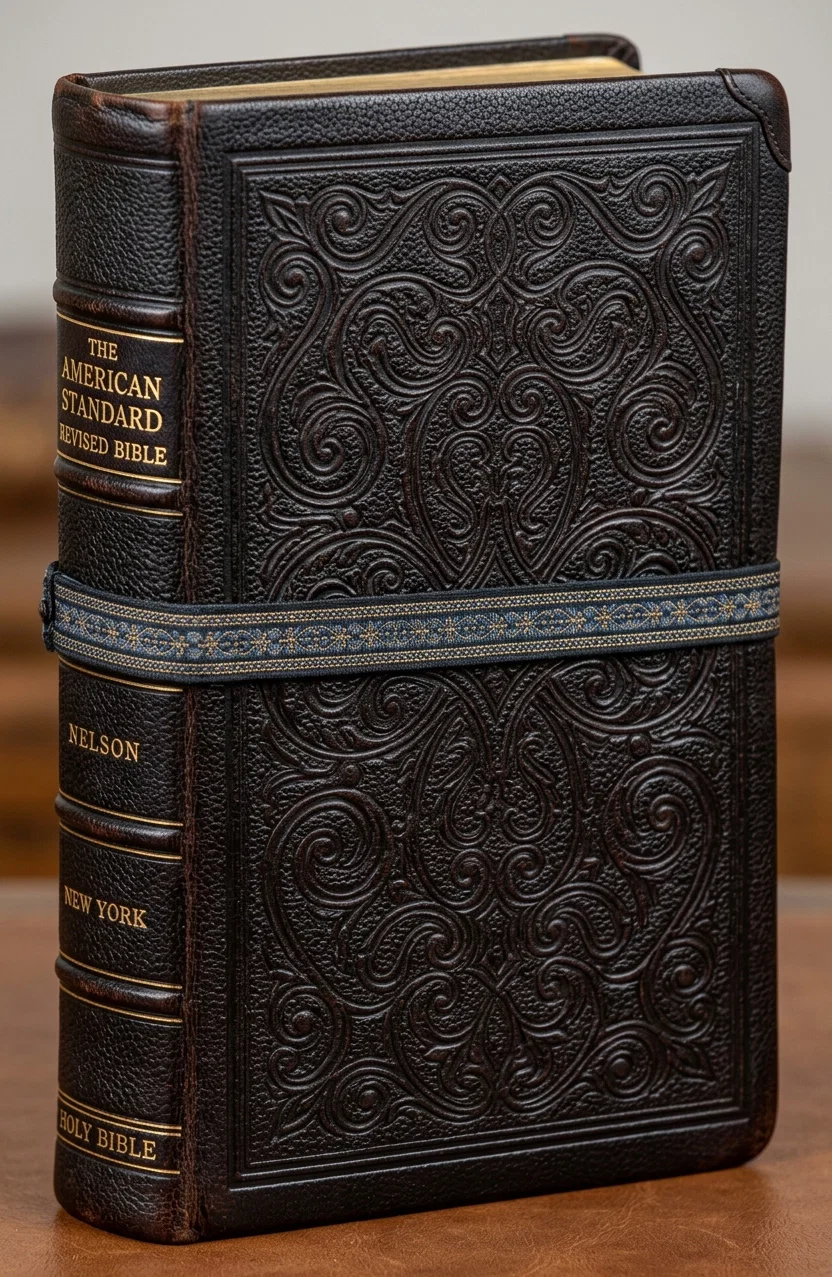
THE AMERICAN STANDARD Revised Bible
“The most excellent translation of the Holy Scriptures ever published in the English tongue.”—The Interior.
Besides publishing the American Standard Revised Bible in a large variety of sizes and bindings, we also publish about 400 styles of the King James Version.
“The Standard translation of the Bible for the English speaking world.”—Sunday School Times.
Published in over 70 styles, prices 35c. to $12. Teachers’ Edition, $2.25 to $10. New Testament alone, 15c. to $2.50. Sold by all booksellers.
Thomas Nelson & Sons, Publishers37 East 18th Street, New York