Your ShelfYour Projects

Review and Herald, Vol. 90, No. 47.

Special Club Rates
Earlier text: North American Division Council

The Fujinki

MRS. F. H. DE VINNEY
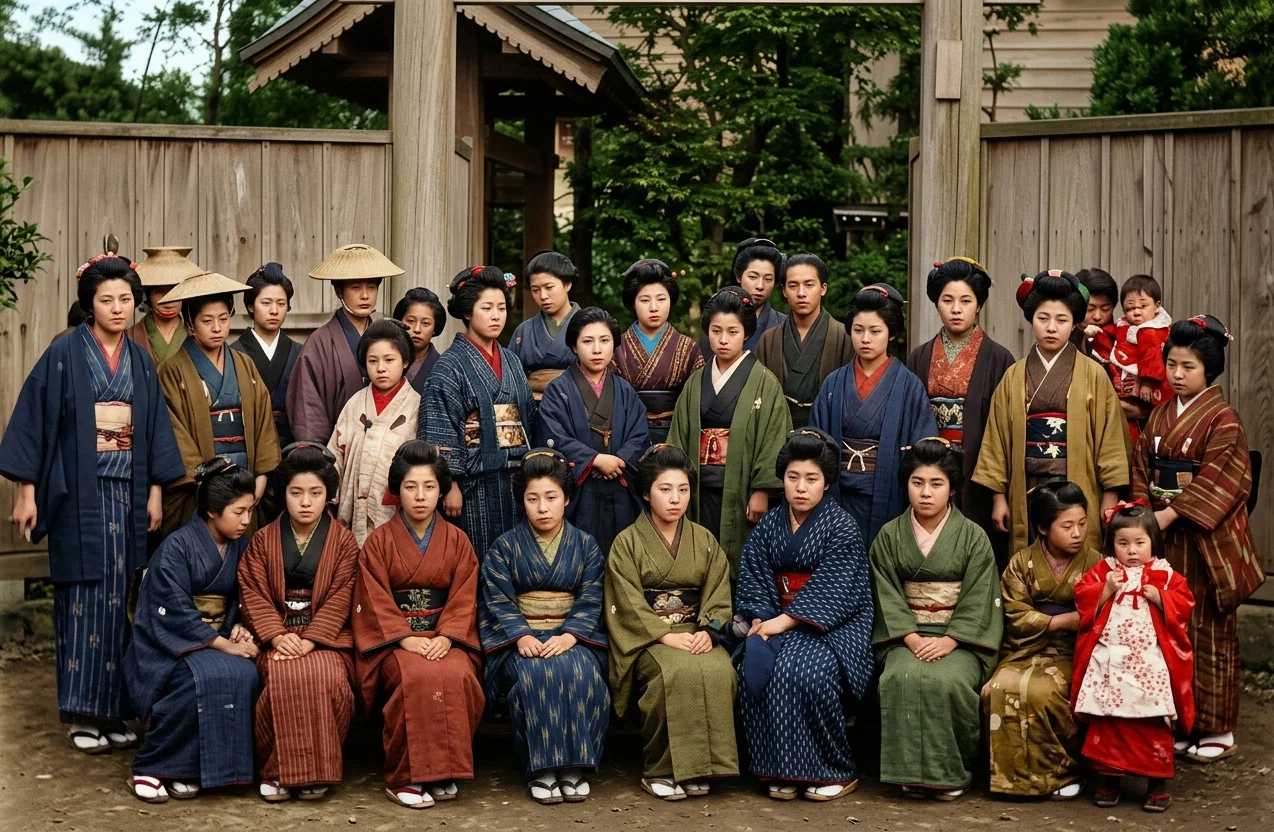
In the fall of 1910 a few foreign ladies of the mission met, in a little upper room of a tiny Japanese house, with the young ladies of the training-school, and organized our first Fujinki, or woman's society. Since that time four more societies have been organized, and two more are about ready to organize in connection with our mission stations. Our aim is the development of all our sisters as working factors in giving this great message of mercy to the millions of Japan now in the bondage of sin and the darkness of heathenism, besides giving relief to all kinds of suffering, feeding the hungry, clothing the naked, caring for the sick, teaching right habits of living, and, above all, pointing the people to the great Source of life—our precious Saviour and Friend.
A MEETING OF LADIES’ SOCIETY IN JAPAN
From all our societies come cheering reports of blessings obtained from the rich experiences gained while following the example of Christ, going about doing good. Sister Kobayashi, the wife of our Japanese laborer at Nagasaki, recently sent us the news that having found a sick woman and ministered to her needs the way was opened to tell her the sweet old story of Jesus, the Great Physician, and now she who was sick is made whole in body and spirit. We praise the Lord and take courage as the interest in this work increases among our own people and as we see others attracted to it. We begin to realize what great possibilities for good the Master is opening before us.

Recognizing Nobleness in Others

ONLY a starved soul sees the worst side of people. If we find ourselves constantly noting the unworthiness of people we meet, we may well take alarm—not over their condition, but over our own. We need to remember that “the ability to recognize nobleness in others indicates a measure of nobleness in oneself;” and if there seems to be very little nobleness in the world, it is a bad symptom of our own condition.—Selected.

FREDERICK M. ROSSITER, M. D

The Gospel of Health—No. 7

FREDERICK M. ROSSITER, M. D

THE degenerative diseases are chronic in nature, and are attended with degenerative changes of the tissues of the organs involved, such as the brain and the nervous system; the heart and the circulatory system; the decay of the teeth; diseases of the stomach, liver, intestines, and kidneys. All these diseases are on the increase.
The cause of this increase in all degenerative diseases can be summarized in one word, and that word is intemperance. Excesses in eating and drinking, alcoholism, smoking, sexual excesses, excesses of mental strain and worry, and the burden of sin, overexertion of the mental and physical forces, with abuse of all life's forces,—these are the reasons why so few attain to old age even though they may have been born with the capacity to live threescore and ten years. With a practical appreciation of our present knowledge of healthful living, most of the mortality between forty and seventy years could be prevented.
The Bible promise of life is seventy years (Ps. 90: 10), but by reason of strength or effort ten years more may be added. If this is true at seventy years, then certainly the exercise of preventive measures and living in accordance with laws of health at the prime of life will add many years of usefulness to one's life as a reward for right-doing.
Prevention is greater than cure, and it is more important. It is one thing to say this, and another to practise it. One of the great difficulties before physicians and sanitarians today is to get people who enjoy a reasonable degree of health to see the importance of guarding the health, and to deny themselves of pleasures that will surely and eventually bring on disease.
Some time ago while talking with a State health commissioner, he remarked to me that the indifference of those who are not sick to matters that pertain to the health of the individual and of the community is a very discouraging feature in the work of the State boards of health. Some States have equipped a train made up of several coaches, for the purpose of giving free demonstrations on matters pertaining to health and hygiene, in order to get people to take better care of the health and to help in the prevention of diseases. In this way some States have accomplished very gratifying results. On the other hand, some State boards have been discouraged by the little interest the masses take in these efforts. It is a very hard problem to get people to practise the conservation of health when they are feeling fine and disease seems far away.
This condition is represented in the message given to the Laodicean church, which says in action, “I am rich, and increased with goods, and have need of nothing.” This sense of self-security is just as dangerous to the health of the body and the community as it is to the health of the soul. To have health and to maintain it require continual watchfulness and vigilance.
The enemy of all righteousness is on the track of every man, woman, and child to tempt them to indulge the senses, and in every way to neglect the health. In this way the mind is weakened and distracted by sickness, and so there is a diminished desire for truth, and also a decreased susceptibility to truth. For this reason the world is full of sickness and misery and woe and death. The words of Paul to the Romans are literally true when he says “that the whole creation groaneth and travaileth in pain until now.” Do you know of a family where every member enjoys good health all the time? Observation seems to justify the conclusion that it is difficult to find a man or a woman of forty years or over whose health has not been impaired in some manner. This is the time when those who in the vigor of life have said, “I can eat anything, I can do anything, nothing seems to hurt me, I am tough as an ox,” find out that things do hurt them, that they have more days of indisposition than formerly, that the health is not what it once was. What woe and misery and desolation is in the world because people love darkness rather than light!
The great remedy for this condition of things in the world is the gospel of health, which the Lord has committed in a special sense to this people. This truth has been gradually unfolding during the past fifty years, until now we have a most wonderful constellation of principles so complete that every phase of living is covered. The light we have today on matters pertaining to health is much greater than that committed to the children of Israel. Our responsibility is correspondingly much greater. With Israel perfection of character was not a condition of entrance to the promised land, but with the people of this generation it is. It is no doubt for this reason that light has been so abundantly given on how to care for the mind and body. In 1 Thess. 5: 23 we read: “And the very God of peace sanctify you wholly; and I pray God your whole spirit and soul and body be preserved blameless unto the coming of our Lord Jesus Christ.”
A blameless soul and spirit is one that is perfect. A blameless body therefore will be one that is free from disease, one that is in health.
I do not believe that the saints of God in the last days of the message are going to be invalids, pale, and ethereal, and transparent. They are going to be men and women who have health, vigor, and endurance,—a people who, because of obedience, are vitalized by the Holy Spirit, and for that reason can accomplish things.
Religion in the world is looked upon as something for the soul of man, but as having nothing particularly to do with the body. I have had patients who resented the idea that the rules of religion should be applied to the uses made of the body. The opinion is current that the soul belongs to God, but that the body belongs to man to use as he sees fit. The devil has made men think this all through the ages; or, if he could not make them believe it; then he has pushed them to the other extreme, causing them to believe that they can beautify the soul by torturing the body and heaping every abuse upon it.
“Our bodies are Christ's purchased property, and we are not at liberty to do with them as we please. Man has done this. He has treated his body as if its laws, had no penalty. Through perverted appetite its organs and powers have become enfeebled, diseased, and crippled. And these results which Satan has brought about by his own specious temptations, he uses to taunt God with. He presents before him the human body that Christ has purchased as his own property; and what an unsightly representation of his Maker man is!”—Testimonies for the Church, Vol. VI, page 369.

Put This in Your Bible

HERE is a handy table, which it would be well to cut out or copy for reference in your Bible studies:—
A day's journey was about twenty-three and one-fifth miles.
A Sabbath day's journey was about an English mile.
A cubit was nearly twenty-two inches.
A hand's breadth is equal to three and five-eighths inches.
A finger's breadth is equal to one inch.
A shekel of silver was about fifty cents.
A shekel of gold was $8.
A talent of silver was $538.30.
A talent of gold was $13,809.
A piece of silver, or a penny, was thirteen cents.
A farthing was three cents.
A mite was less than a quarter of a cent.
A gerah was one cent.
An ephah, or bath, contained seven gallons and five pints.
A hin was a gallon and two pints.
An omer was six pints.—Selected.

Constancy to Purpose

THE secret to success is constancy to purpose.—Disraeli.

City Work in Albany, N. Y.

Since our last report through the REVIEW regarding the forcible closing of the tent effort in this city early in September, we are glad to report continued blessing and results under the good hand of our God. The writer has received hundreds of letters in the past few weeks both from our own people and from others. The account of our trouble with Rome was published in papers that go to all parts of the United States; hence letters have come from many sources.
A great opportunity has come for our work in this city, not only to present the question of the Papacy, but also to state just where we stand on the great truths of the Bible. On the night of October 15, the Guardians of Liberty arranged a meeting in one of the large halls of the city, in which a number of prominent ministers took part. The writer delivered the principal address, on “True Americanism.” At the close of the service, we sold about three hundred Protestant and Liberty magazines, and that evening’s offering for the expense of the meeting was forty-three dollars. We felt that a good work was done, for this and other meetings have brought our work into prominence in this city. I think we are safe in saying that there is not a city of this size in the country where our people or our message is more generally and favorably known than here.
By invitation of some patriotic societies in the city of Schenectady, N. Y. (thirteen miles from Albany), I have just arranged to deliver two lectures there on November 6 and 20. The lectures will be on Rome in prophecy and Rome as it is in America. A letter from the chairman of the committee this morning says, “Bring a good supply of the Protestant Magazine,” and we shall gladly do so.
The question is sometimes asked, “Is it not very expensive to work the cities?” We have proved it to be a very paying proposition here. In less than two years this church has risen from a small body, meeting in a private house and scarcely able to hold itself together, till now it is the first church in the conference financially. The tithes and offerings now paid by this church are sufficient to place our work on practically a self-supporting basis. Besides this, we have a beautiful church building, valued at more than $20,000. The pews, organ, carpets, pulpit furnishings, etc., are all of good quality, and are paid for.
CHURCH BUILDING AT HAGERSTOWN, MD.
God has blessed the work and is still blessing us, but the secret of it all is found in the fact that the whole church is working together in harmony and love. The first week of the Harvest Ingathering campaign the church handled nearly one thousand copies of the REVIEW, and the returns show an average of about ten cents a copy. These cities are full of honest, God-fearing souls who are waiting for the light of this truth. The popular ministry is losing its hold on the people, having failed to teach the simplicity of the gospel. Our opportunity is here to lead the people back to the old paths.
The value of the public press in our work cannot be overestimated. Only today I was talking to a woman whom I had not met before, although she attended a number of my meetings. She said that she sent most of the sermons as published in the papers this summer to a minister and his wife in the country, and that they are much interested. Next Sabbath a man will be taken into the church who became acquainted with the truth through the newspapers this summer. He never attended the tent-meetings.
We solicit the continued prayers of our people, especially for the important lectures to be given on Romanism this winter.
E. L. CARDEY.

G. W. CAVINESS

Mexico

TORREON.— As our brethren, will remember, we have a nice little company in this city. One year ago in August it was my privilege to baptize seventeen, and early in this year indications were that a number of others were awaiting baptism. But since the uprising in Mexico City in February, which resulted in the death of Madero and the establishment of a provisional government, Torreon has been almost completely cut off from communication with the outside world.
The revolution has been more extensive in the northern part of the country than in any other. During these months we have prayed that the Lord would keep the brethren, and that the way might be opened for us to visit them, and at last we have received word from them.
A sister came with about three hundred American refugees who reached Monterey a short time ago. She met Brother Robles and told him that the brethren are all well and of good courage, and that there is a good outside interest. One sister who accepted the truth about a year and a half ago wanted to enter the work. We were trying to make arrangements to give her instruction and to start her out in the Bible work, but on account of conditions have been unable to do anything about it. However, she has been working, and as a result about thirty are interested in the truth.
We earnestly hope that peace may be restored by some means, and that we may be able to visit these believers. We also hope that our brethren will prayfor our people in Torreon, for recently the place fell into the hands of the revolutionists, and the government here will be making every effort to retake it, so that it will be the storm-center for a while. We trust that the same strong arm that has preserved the believers there will continue to be their protection, and that a little way from this we may see the work advanced there, and a goodly number added to the company.

G. W. CAVINESS

Maryland

HAGERSTOWN, — The accompanying photograph shows the Seventh-day Adventist church recently dedicated at this place. For fourteen years the work has dragged in Hagerstown, the believers having no suitable place of worship. To-day we feel thankful for what our eyes see as an answer to prayer. The workers felt that it would be an honor to God and a step forward if we could have a church building. In counsel with other conference workers it was decided to move forward by faith. God worked on the hearts of his children. The church took hold in earnest, and many a sacrifice was offered the Lord for the sake of hastening his tabernacle to completion. Those not of our faith seem as anxious as the church-members to see the building finished, and gave many hours' work, for which we feel very thankful. The building and ground, together with the furniture, is valued at $4,300. We hope to see the property entirely free from debt before the close of this year. We cannot but praise God, from whom all blessings flow. HUGH L. PEDEN.

The Opportune Moment

The best time to mold the heart and mind for eternity is not in middle life or old age, neither is it in youth, but in childhood. I have been brought to realize this of late as never before.
The Scripture, in Prov. 22: 6, tells the story, and the sooner we believe this, and put it in practise, the better it will be for our children, and the more of them will be saved in the kingdom. It is no theory. Read it. “Train up a child in the way he should go: and when he is old, he will not depart from it.” God has spoken. Will we heed him?
Webster says that childhood covers the time from infancy to puberty, or from one to twelve or fourteen years. This is the time to make lasting impressions upon the mind; for then it is the most impressionable. The child has perfect faith and trust; skepticism has not been developed. The child believes what he is told. He assimilates it, and it becomes a part of his very life.
The margin gives it, “Catechize a child in the way he should go.” This implies a questioning, and firmly instilling into the child’s mind, so that he will remember the things he should know. The great Catholic Church has done this for centuries. Everywhere it has its parochial schools, and its traditions are so thoroughly instilled into the minds of the children that but very few ever turn away. It actually fulfils this scripture, and catechizes, and indelibly fixes in the minds of its children its doctrines which it wishes them to carry through life.
Shall Seventh-day Adventists be less anxious about their children’s salvation (when God has committed to us such a glorious truth) than are people governed by tradition? Why are many of us so indifferent, and willing that the world shall educate our little ones, at this most critical moment of their lives? Is it because there is a public fund for this purpose, and it costs us nothing to send them to the public school? But in too many instances it has been an expensive schooling, costing the lives of our loved ones and many a bitter sorrow. They, perhaps, are now grown, and we content ourselves that we are not responsible; but we are: we turned them over to the world to educate, and they went to the world. Better a thousand times make any sacrifice and live in the most humble way and give the lambs of Christ protection from the wolves, than to thrust them out to the mercy of those who know not nor care for God’s precious truth for this time. May the Lord awaken us to a sense of our responsibility.
What made Timothy a man of such strong faith and trust in God? Was it not because he had not had seeds of doubt sown in his heart through a worldly training? The Scriptures had been the basis of his education, as we read in 2 Tim. 3:15: “And that from a child thou hast known the Holy Scriptures, which are able to make thee wise unto salvation through faith which is in Christ Jesus.” Even from his infancy, his grandmother Lois instilled into his mind faith in God and his Holy Word. So strong was Timothy’s faith that he lived to glorify God, and we are told in 2 Tim. 1:5 that his faith was unfeigned. He was all he professed to be. What an example of Christian education, or home and church-school work!
These things were written for our learning; and, if this kind of instruction accomplished so much for Timothy, is it not possible for it to accomplish the same for our children today? Is it not worth the trial and the sacrifice? and should we not give it a test?
There should be many more church-schools in this denomination than there are at the present time, and when we see these things as God sees them, we will not be content to give our children over to Babylon to be educated. If we do, to Babylon they will be very likely to go finally.
Could we have only one class of schools from the kindergarten to the college, we would better discard all but the church-school, for here the foundation is laid for the future education. Give every child a good church-school education, and if he can go no farther, he has a good foundation for this life and the life that is to come. Train up a child in the right way, and he is likely to follow that way; even if for a time he may be drawn away, he will return to the faith of his childhood.
But in saying this I do not say that we should have only church-schools, for we ought to have the intermediate schools, the academies, and the colleges; but the church-school lays the foundation upon which to build a Christian education, and when the child’s mind has been awakened, and a desire created for true education, it is easy to lead him on to our higher schools, and thus make our church-schools feeders for our academies and colleges.
May the Lord stir us to action and to a realization of the importance of giving the children an opportunity of laying a good foundation for a Christian education by placing them in a good church-school.
W. J. STONE.

Foreign Mission Bands in Our Schools

REPORTS are coming in from several of our denominational schools indicating an active interest in the work of Foreign Mission Bands. Mount Vernon College reports a second-year study class of fifteen, and the prospect of a large first-year class. Pacific Union College also reports the organization of a band.
There had never been a Foreign Mission Band as such at the Washington Foreign Mission Seminary. As it seemed that a bond of union between those going out to foreign fields would be especially valuable in this school, a meeting was called at the writer’s home, Sabbath afternoon, October 25, at 4 P. M. Twenty-six persons were present. All were heartily in favor of the formation of a band; and some expressed regret that it had not been organized last year. Five present had been members of such bands in other schools, and they spoke of the help they had received through that means. The matter of organization was then taken up. Mr. James Robison was chosen leader, and Miss Scharffenberg secretary; and a committee was appointed to draw up a written constitution.
This committee reported at a meeting held Sabbath, November 1, at 2:30 P. M., at the Seminary. The constitution presented embodied the suggestions on organization made at the interschool meeting held at the time of the General Conference (see REVIEW AND HERALD, Sept. 4, 1913). After slight amendments the constitution was adopted. With the election of Mr. Clarence Moon as assistant leader and Mr. Coffin as assistant secretary, the launching of the Foreign Mission Band was completed. One provision of the constitution will interest a large number of our workers in foreign countries. This is that article which gives honorary membership to those who, having gone from the Washington Foreign Mission Seminary, are now in foreign fields. It is desired to keep in touch with such in order that the band may pray intelligently for them, and that news of their successes may kindle a brighter flame of missionary interest in those who have not yet gone out.
We shall be glad to supply other schools with this constitution for inspection and comparison. A further report will be made as soon as we hear from other schools. L. L. CAVINESS, Interband Secretary.

M. G. NUNES

Texas

CHIRENO.—In June I came to the Sand Hill district, six miles from Chireno, a small town in the eastern part of the State. There are about four hundred persons in this colored settlement. At the close of an interesting series of meetings eleven persons took their stand for the truth of God. Before they were fully established and organized, I was called away, and could not return for three months. Only five remained faithful, and work once broken in this way is hard to repair.
I held meetings in the schoolhouse. At first many were afraid to attend, and finding that cottage meetings would be received more kindly, I announced three. The attendance was good. The work has gone hard, but I am glad to report that two others have embraced the message, and our Sabbath-school has a membership of fourteen. Although prejudice is strong, the Lord is working for us, and I expect to remain here until we have a strong company established. Pray for us and our work.

M. G. NUNES

Field Notes

FOUR new Sabbath-keepers are reported in Camden, Maine.
SEVEN new members have been added to the church at Elk Point, S. Dak.
THE Penden Chapel Seventh-day Adventist church was recently organized in northern Missouri.
A NEW church building at Ford, Ky., was dedicated the last Sabbath in September.

After Many Days

“CAST thy bread upon the waters: for thou shalt find it after many days.” Eccl. 11:1.
The following extract from a letter just received from Brother H. W. Johnson, field missionary agent of Wisconsin, affords a good illustration of the way the above text is being fulfilled in our colporteur work. Hoping it will serve as a stimulus to urge others on to greater endeavor in the circulation of our large books, we pass it on. He says:—
“I met a family the other day that is now rejoicing in the truth. In 1888 a canvasser sold the man a copy of ‘Daniel and the Revelation,’ and after reading it he could not shake off the impression it made on him. About two years ago the book was reread, and others sent for, which led the family to take their stand and begin the observance of the Sabbath before they knew another Adventist.”
Just think of it! We are still reaping the fruits of our book sales in 1888—a quarter of a century ago. Our books are good seed and are adapted to anyclimate. If for any cause the soil is not conducive to growing when they are first planted, as in the above case, they will keep and patiently wait, abiding their time.
To place these books in the homes of the people means a harvest of believers, even though it be “after many days.” Shall we not do more to strengthen this important work by dedicating ourselves to service? W. W. E.

East German Union

Our Young People’s Work in Other Lands—No. 1

East German Union

In our East German Union we have fifty-four young people’s societies at present, with a membership of 1,289. We know of forty souls who have been brought into the truth through their efforts. This, of course, is only a small beginning, but we hope that this part of the work will also develop. Our young people take great interest in our mission fields beyond, and at the same time they take great interest in our home work.
We find that this work is the best preparation for our pupils who intend to go to the school in Friedensau. It is good for them to go out into the fields. We study the mission fields in the young people’s societies, also the needs of the fields, and when they go out they know all about the fields. It helps us greatly to keep up the missionary spirit in the school. H. F. SCHUBERTH.

West German Union

We have in the West German Union twenty-nine young people’s societies, with a membership of 432. Our young people are doing very well. The organization is not only a blessing to them but also to the churches. The young people bring new life into the churches, because they are working very hard to distribute our literature. They are going out with our papers, and are holding Bible readings with young people who are coming to the meetings. Quite a number of young people accepted the truth last year through the labor of our young people in the churches. They are doing an excellent work, and we do all we can to support the young people’s work in our field. In our larger churches we have young people’s societies, each numbering from forty to eighty young people. We have in our union quite a number of large churches. Several of which have from one hundred and fifty to two hundred members each; and in all these churches we have good organized young people’s societies. They are doing well, and we shall try to do all we can to sustain and support the young people’s societies in our union. J. G. OBLAENDER.

Central German Union

As our union is new, a large report is not expected. We have about twenty-five young people’s societies. I can speak especially of German Switzerland, where my labors have been principally with the young people. There we have two lively societies. Their missionary work is done on Sundays. Early in the morning, six o’clock or half past six, they meet in some part of the city and then they launch out; leaving the city more or less to the missionary society of the church, they go out to the outside places and take whole villages during one Sunday and spread their literature and tracts.
In their meetings they have different studies. Bible readings on present truth are being taken up, some history, and also the biographies of the pioneers in the mission fields. Thus the missionary spirit is being kept up. It is very interesting to enter some of their meetings. I always take great pleasure in being with them.
Since we have only five societies in Switzerland, we shall endeavor in the near future to organize a few more, so that this work will advance as churches are being organized. Our young people are of good courage in the Lord, and press forward to save souls. In Austria we have many hindrances, but the young people are accordingly energetic. Recently they reported that through their efforts five persons were united to the church. O. E. REINKE.

Danube Union

Our work among the young people is not very old. It started about three years ago, but we can report good success. We have a nice church in the city of Budapest, with over a hundred members, and the majority of these are young people. We also have a nice church at the city of Bukharest. There are over two hundred members in Bukharest now, and I suppose about half of them are young people. We have young people’s societies in other cities of Hungary and the Balkan States, especially down in the southern part of Roumania where we have a German church; and I think the only church-school that exists in the southeastern part of Europe is down there. The laws of the country are such that we are not able to develop this work, but where we can, we have prospering societies of young people. Our young people take a great interest in selling our literature.
We have many languages to deal with in that country. This is one obstacle in our way, but we are anxious to get leaders in all the different languages. Since not much of this kind of work is done by other denominations, our prospects for the future are bright and our young people take hold of the work. They interest themselves in missionary work not only at home but also in our mission fields. We are thankful for what we have already been able to do, and we believe that this work will develop much more in the near future. J. F. HUENERGARDT.

Scandinavian Union

We have been trying to do some young people’s work for five or six years, but especially since our last General Conference have we tried to work in harmony with the general plan. We have made some headway and had some success. We have companies in Denmark, Norway, and Sweden, and a few in Finland. In some large cities in Sweden the young people are interested in selling literature and getting money for our missions. We have about three or four hundred young people who are working, and we hope we can do better in the future. We are interested in this work. J. C. RAFT.

Latin Union

We have a good number of nice young people in our Latin Union. Most of them are in Switzerland, because this is the place where we have the most members. They are very much interested in the young people’s work. We have a few societies. They meet regularly and try to learn all they can. They have lessons in language, music, geography, history, and Bible. A good many of the young people canvass some every week. They do that especially on Sunday, as that is the only day when they have time to do it. They also hold Bible readings, and in places like Paris visiting the hospitals is a good work. Some young sisters and brothers go to the hospitals and sing to the sick people, and this is very much appreciated. When they can they also take flowers along with them and distribute them to the sick. This is a good work, because when the people come out of the hospital they usually want to meet those young people who brought some sunshine to them. We hope that a greater work will be done for the young people. L. P. TIECHE.

Russian Union

We have young people’s meeting in the large cities. The young people take a great interest in the cause and in doing missionary work. We find that when there are no ministers present, the young people’s meetings are always well attended. They have a program, with music and recitations, and even conduct Bible readings.
Outsiders often attend the meetings and feel that it is a treat. Sunday evening is a very opportune time. It is the best evening in the week, and we give it to the young people. Our house seats two hundred people, but often three hundred and more crowd in. One evening when I made a call as to how many wanted to dedicate their lives to the Master and go anywhere, twenty-eight stood up. I took them alone and asked them what they would do or could do. Some were sent to school and others into the work. All were glad to do something.
We find this work hard because we have no literature in their language. J. T. BOETTCHER.

Missionary Volunteer Department

M. E. KERN - - - General Secretary
C. L. BENSON - - - Assistant Secretary
MATILDA ERICKSON - - - N. Am. Div. Secretary
MEADE MACGUIRE - - - N. Am. Div. Field Secretary

Publishing Department

N. Z. TOWN — General Secretary W. W. EASTMAN — N. Am. Div. Secretary

Tennessee Persecution Revived

I TRUST that our brethren everywhere will remember in prayer the brethren in Tennessee who have been arrested, indicted, and cited to appear before the court for trial on the third Tuesday in December. We who have the management and defense of their cases in charge, especially desire your prayers that the Lord may guide us in wisdom and sound judgment, so that mercy and justice may prevail and the cause of truth be vindicated.
Elder J. W. Norwood, president of the Tennessee River Conference, who is investigating the cause of the arrests, writes that Brother J. S. Rooker, on the eighteenth of May, went to his bottom farm, which is located one and one-half miles from any house and three miles from the public road. On his way to the farm, Brother Rooker met one of his neighbors, who was driving his cows out of the woods to the pasture. The neighbor inquired what he was going to do, and Brother Rooker answered that some of his corn needed attention, and he was going to see to it. The neighbor then asked him if he did not think he was doing wrong in breaking the law of the land. After a short talk over religious liberty principles, the two parted. This neighbor was foreman of the grand jury which indicted him. Brother Rooker's son was brought before the jury,and the indictment followed. His daughter is to be a witness at the trial.
We are planning to scatter religious liberty literature like the leaves of autumn, and to carry on lecture and newspaper campaigns, so that the public mind may be informed and the people see the principles involved in these issues. We need your cooperation as well as your prayers. We ought to put the book "American State Papers" and the Liberty magazine into the hands of every judge and lawyer in Tennessee, but we have no funds with which to do it. The Tennessee River Conference can do something along this line, but not all that needs to be done. In view of the shortage of our funds, we trust that you will give a liberal offering when our next annual collection is taken up for the Religious Liberty Department work on the fourth Sabbath in February, 1914.
The enemy is becoming very active in all sections of the country. Last week a judge in Trenton, N. J., exempted orthodox Jews and Seventh-day Adventists from fines for Sunday-law violations, whereupon the judge was so severely censured for his action by the churches and the people through the newspapers and otherwise that he felt obliged to reverse his decision. This shows what public sentiment can and will do.
Now is our opportunity to mold public sentiment in favor of religious liberty principles, and make friends for our cause. Let us be up and doing while we have opportunity, putting forth every possible effort to enlighten our friends and neighbors in regard to the principles at stake in these matters.
C. S. LONGACRE.
Continue reading: Education for the Ministry