Your ShelfYour Projects

Review and Herald, Vol. 88, No. 29.

The Cricket’s Song
Earlier text: Is Tea a Temperance Drink?

A Mute but Eloquent Macedonian Cry

THEO. VALENTINER
Since the days of Paul many Macedonian cries have gone out to Christendom; but never have they come from more directions, oftener, or in quicker succession than in our own days. The Word of God is being fulfilled; and those who were not God's people are now, in all lands, asking for the one true God.
In his all-wise providence, as the time for a quick, closing work has come, and in harmony with his word that there should be delay no longer, God has opened all countries, and with the open doors has also given a hunger and thirsting after the glad tidings. Ethiopia is stretching out her hands; the isles of the sea wait for his salvation; from all peoples, nations, and tongues comes the call: “Come over, . . . and help us.”
Soon the night will be here, when no man can work. Whoever, therefore, desires to have a part in this great work, or to put his means into it, must act promptly. After the work is done, our help and our money will be of no use. In heaven, with all its privileges and joys, one privilege will no longer be ours,—the privilege of bringing sinners to the Lord. That must be done here, and now.
Sometimes people speak of hard fields and of easy fields; and often that field is deemed hardest whose people have never heard of the true and living God. But is that so? Has not experience taught us that such souls often accept the Lord Jesus and his truth more readily than those who have known of him, but have had simply a form of religion, in which they trusted? While the heathen trusted in vain gods, others have been taught to trust in the precepts and ceremonies of their church. That was the case with many of the Pharisees, the strictest sect of the Jews; that has been, and is to-day, the case with many who belong to so-called Christian churches. According to Paul's admonition to Timothy, this “form of godliness” will especially prevail in the latter days.
There was a time when even Martin Luther trusted in the doings of self, or self-righteousness, instead of in Him who is made unto us righteousness, wisdom, redemption, and sanctification,—Jesus, and him crucified. Saul did the same before he became Paul. But he who could make a Paul out of a Saul, and who made a great Reformer of Martin Luther, can do the same thing to-day in any soul that does not resist his Spirit. Therefore, “where sin abounds, grace doth much more abound.” God's power is sufficient to regenerate any heart he can help, whether by many or by few.
In the past I have read of what professed heathen and professed Christians have done to become “saints,” and to try to make sure their entrance into the kingdom; how they have afflicted themselves, done all kinds of penance, etc., in their attempt to save themselves. But I had to go to Colorado to get among people, for the first time in my life, with whom such things happen in so gross a form that one must hear and see in order to believe and comprehend that such things are possible,—although a finer form of self-righteousness is a daily occurrence.
Near Swink, Colo., about six miles from Rocky Ford, poor, ignorant Mexicans afflicted themselves in so horrible a manner, especially during Lent, with the thorny cactus plants, that the blood ran down in streams from their tortured bodies. Often the long, sharp thorns broke off in their flesh, causing inflammation, and sometimes death. In the latter event it is believed that the person is surely saved. This torture is followed by others. The most common is that of climbing, with bare knees and feet, half a mile or more over a rough road, strewn with cactus plants or thorns,—a painful procedure every foot of the way. This affliction generally closes with a feast, at which eating and drinking, after the long fast, is the main attraction. Often great excesses are indulged in, and all this is done to make sure of salvation. The feast expresses the joy of the people over the salvation which they think they are sure of.
Twelve miles from Rocky Ford, poor, ignorant Mexicans were found tied to crosses, and unmercifully scourged with these cacti by others. Mr. —, of that city, and members of his family were witnesses of this sad spectacle, which he related to me one evening while I made a visit at his home. All such things these poor people submit to, because they desire to be saved, and this is represented to them as being necessary.
Now it is true that we should crucify self daily, but not in this way. We should crucify our sinful lusts and desires; but that can be done only through the Spirit of God. Affliction of self helps not at all, and gives to-day as little satisfaction as it gave in Martin Luther's time, or as it gives in heathen lands.
Is not this conduct of these Mexicans an eloquent appeal, or Macedonian cry, to our young people to prepare to work for such poor souls? Whoever saves one soul has done more than he would have done by gaining the whole world. The Mexicans are easily won, if their confidence can be secured; and God, for whom nothing is hard, seems to bestow especial grace. I know of a case near Swink, where, a few years ago, the only child of a poor Mexican mother was taken sick. The doctor gave no hope, and the despairing mother sought aid of an American neighbor, who had had a remarkable experience in praying for some children who were ill. The mother asked this woman to pray that her child might be made well. But the lady answered that she had no burden, she could not pray for it. If the child recovered, it would be raised in her heathen, Catholic way, and not to the glory of God. The mother implored her, but in vain. Finally the Christian woman told the mother that she ought to give herself to the Lord Jesus, and promise him to bring up the child for him if he would heal it. Then this poor mother, actuated by her love for her child, threw herself on her knees, and for the first time in her life she prayed, in simple, plain words, but with such fervor that the lady was astonished. A mother's love induced her, in spite of her inbred prejudices, to give herself to Jesus, and to pray. Soon afterward prayer was offered for the healing of the child, and the Heavenly Father heard, and the child recovered.
When the doctor came the next morning, he was astonished to find the child alive, and all the more when he saw it was well. He had given it but a few hours to live, and now asked what other doctor had been called, and what medicine had been given. When told that the child was healed, he expressed his unbelief, but admitted that it seemed a miraculous healing.
God will certainly give power to all who hear and answer the Macedonian cries in this and other countries. Who feels a burden to go into needy fields to serve as God's representatives in building the temple of God, and point poor souls to the great Sin-bearer, the Physician who can save all that come to God through him? God will certainly do a great work when his children in faith go to work solely for his honor,—in a faith which is effectual through the knowledge of all the good that we have in Christ Jesus. Philemon 6, German Version.
College View, Neb.

Among the Greek-Speaking People

MRS. R. S. GREAVES
Three years ago we landed at Smyrna, a city of three hundred thousand inhabitants, chiefly Greek in language; but there are many Mohammedans, Armenians, and Jews, as well as a fair representation from many other countries, as may be seen from the presence of British, French, Italian, Austrian, and Russian post-offices, established here by these nations.
The Greek language, as here spoken, is called Romauka; it is a sorry mixture, with very little resemblance to the written language, which is scarcely understood except by the educated class. Yet the missionary must learn the good language; for if he should attempt to teach religious subjects in the common tongue, the people would have little respect for his work.
The poorer class are very superstitious, and it is often impossible to persuade them to take literature, even as a gift. On two occasions, when a young sister in the truth and I were selling and giving away tracts, we were surrounded by a little crowd of angry women screaming at us to go away; and we imagined they would make short work of us were it not for their fear of the Turkish policemen. My associate in this work was soon after compelled by ill health to give it up, and it did not seem advisable for me to go alone. But two young men have since faithfully scattered our good tracts over practically all the city, including the Mohammedan part. The first canvasser was one who had recently accepted the truth, and he steadily continued his work amid such incidentals as having his ears boxed, his tracts torn, water poured on him, etc. He is now in our school in Constantinople, to be trained for further work.
The other canvasser shares in the distinction of a brother in China (recently mentioned in the REVIEW) in being called “the end of the world” (to telos tou kosmou), and feels thankful for this evidence of the effect of his labors. He recently returned home from a canvassing trip to a neighboring village, bringing with him a young Protestant brother who had heard a little about the Sabbath, and who readily accepted the truth on that point, as he heard it from our canvasser. He remained in Smyrna for some time, in the house of our brethren, being instructed in the truth; then after his baptism, he returned to his village to make known the good tidings there.
Some of the Protestants here have shown a Christian spirit toward us, while others have manifested the usual opposition to the law of the One whom they profess to worship. One native Protestant pastor (Armenian) teaches his flock the well-known theory of these latter days, that the law is abolished; while another (a Greek) reproached one of our young men for praying in his church after having begun the observance of the Sabbath, saying that a Mohammedan, Greek Orthodox, Armenian, or Jew might pray in his church, but not a Seventh-day Adventist.
Yanina, where we are now living, is in Turkey, just a little north of the Greek border. This is a town of about thirty thousand inhabitants, and contains a large Turkish garrison. Nearly all the people, including the Mohammedans, speak the Greek language. The Greek Orthodox Church has a strong hold on its people; but here as in other places it seems that the form of godliness is considered to be the main thing. The general idea was fairly well illustrated by a young business man of the town in a recent conversation with my husband. After a short general talk, the latter offered him some tracts. “O,” he said, carelessly, “I don’t care much for religious reading; that isn’t in my line.” Then, seeming a little fearful of being misunderstood, he added, “But I’m a good Christian, though. I belong to the Orthodox Church.”
When we read in the REVIEW of the earnest desire for the truth shown by the heathen of Africa, China, and other places, we think how thankful we would be to see more of this spirit here. Many of the people have so much of the feeling of being rich, and increased with goods, and having need of nothing, so far as spiritual things are concerned, that they have scarcely patience to express their contempt of the idea of having missionaries sent to them. But it has already been demonstrated that the Lord has some bright jewels here, and we believe there are many more. We are thankful for the prayers of the Lord’s people that he will give wisdom, and hasten his work in this land as in all others.
  • Austrian Post-Office, Yanina, Epirus, Turkey.

Another Field Entered

W. C. HANKINS
Although Formosa at present belongs to Japan, it was formerly a part of China, and by far the larger part of its population are Chinese, about three million of whom speak the Amoy dialect. It is only one night's ride by steamer from Amoy to Tam-sui, Formosa; so, as the language is the same, it was thought best to make it a part of the Southeast China Mission.
Since the Japanese have been in possession of the island, they have built good roads and railroads, and have widened the streets of the cities, besides cleaning up in general. A large quantity of tea is raised in Formosa, and shipped either to Japan or direct to foreign countries. Sugar-making is also carried on quite extensively, and the manufacture of camphor is one of the leading industries.
We have wished for some time to enter this field, and last fall we sent two of our Chinese workers there to spend a few months in taking subscriptions for our Chinese periodical, selling tracts and calendars, and obtaining what information they could concerning openings for work. They returned a short time ago, having taken nearly three hundred subscriptions for the paper, besides selling some hundreds of copies of the same, and about nine thousand copies of the Sabbath Calendar. They reported that it was a good land, and that we were well able to go up and possess it in the strength of our God.
There are only two Protestant missions in the island,—the Canadian Presbyterian working the northern half, and the English Presbyterian in southern portion. Although our workers made no special effort to reach the Christians, the advent of this new doctrine among them caused considerable comment. The fact that our workers were on the island, and something of what they believe, were soon well known among all the churches.
A few weeks ago, while on our way to the Swatow general meeting, we met two young preachers from Formosa who had subscribed for our paper. They inquired minutely about what we believed; and as we were delayed nearly two days by a fog, we were able to have several good Bible studies together.
Thus a few of the seeds of truth have been sown in this new territory. We hope that you will pray with us that the Lord of the harvest may send laborers to work in this portion of his vineyard, that many precious souls may be gathered out for his kingdom.
Kulangsu, Amoy.

The Enduring Words of Christ

You never get to the end of Christ’s words; there is something in them, always behind. They pass into proverbs, into laws, into doctrines, into duties, into consolations, into hopes; but they never pass away; and after all the use that is made of them, they are still not exhausted.—Dean Stanley.

Our Mission Boat “Herold” on Victoria Nyanza
B. OHME
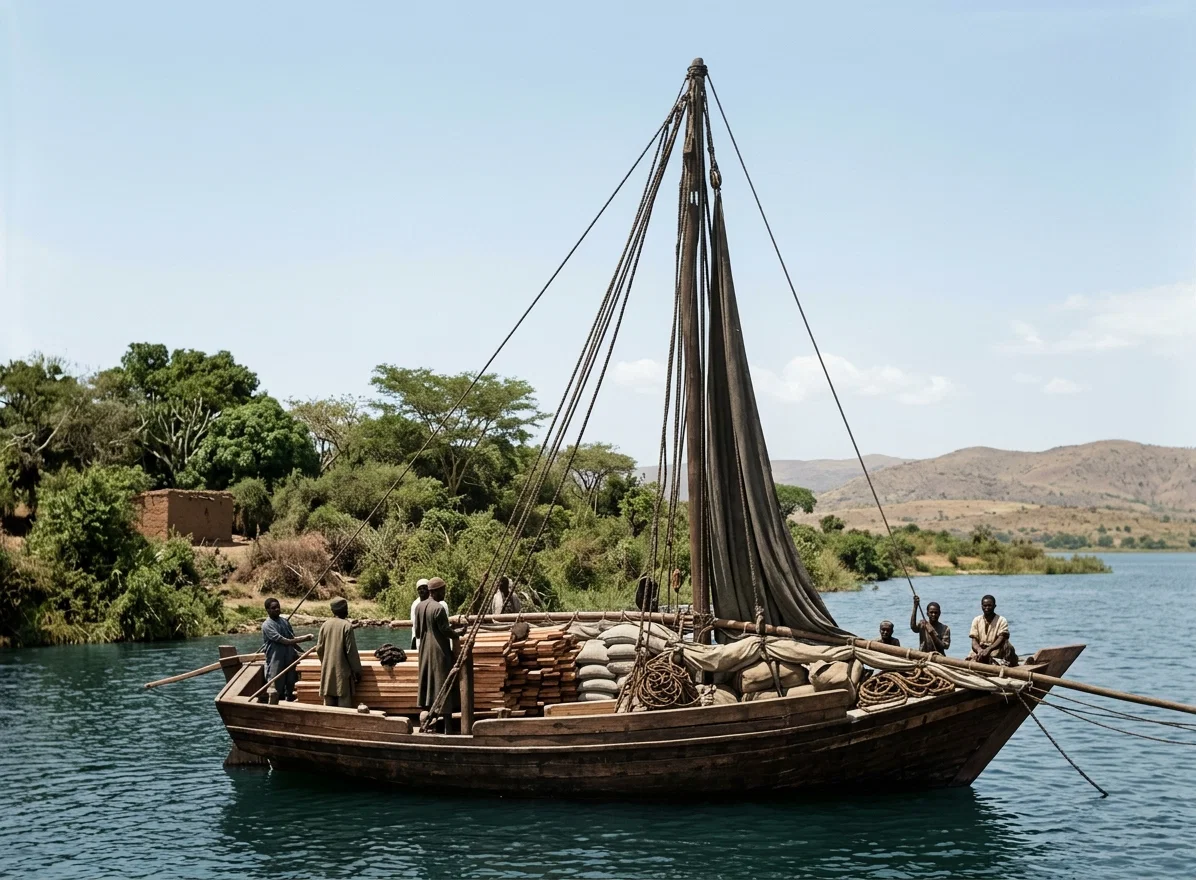
MAJITA and Nyabangi, where we have mission stations on Victoria Nyanza, are business towns, and can be reached only by smaller sailing craft from either Shirati or Muansa. The problem of transportation has been one that has caused our local mission committee to request the European Division of the General Conference to permit us to purchase a small sailboat of our own, that we might not be dependent upon the services of the Indians, in whose hands this local shipping business has heretofore largely centered. While visiting our district with Brother E. C. Enns last January, we had an opportunity to secure such a sailing-vessel as would meet our needs for about five hundred dollars. As this boat had been built only eight months previously, and was made of very hard wood, it ought to do us service for six or seven years, with but few repairs. This craft is ten meters long and three and one-half meters wide. One of the stipulations made at the time of the purchase was that we should have a captain, a pilot, and five sailors,—all black men,—who were thoroughly acquainted with the lake, and would be able safely to navigate the boat. Their combined wage is sixty rupees monthly.
MISSION BOAT "HEROLD," USED AT VICTORIA NYANZA MISSION, EAST AFRICA
This small craft has made us independent of others, so that we can do our own transportation business at any time. We now have three stations, and within a year or so we hope to have seven or eight new stations in this region; so this boat will be of great advantage to us in transporting lime, cement, lumber, sheet-iron roofing, and so on. We expect that during the present year the vessel will pay for itself.
In the district between Majita and Shirati there are six or eight inhabited islands, some of which are quite large, while others are smaller. We plan to reach these by the aid of this boat, and thus we shall be able to occupy this territory with schools. Thus the little boat will become actually what its name indicates,—a herald of the truth and of the gospel of God.
During the first three months of its service, the “Herold” has cleared about seven hundred rupees. We thank God for the financial blessing he has granted this department of our mission work, and we pray that in his providence the “Herold” may become the means of aiding many souls to find an entrance into the harbor of peace.
Post Shirati, German East Africa.
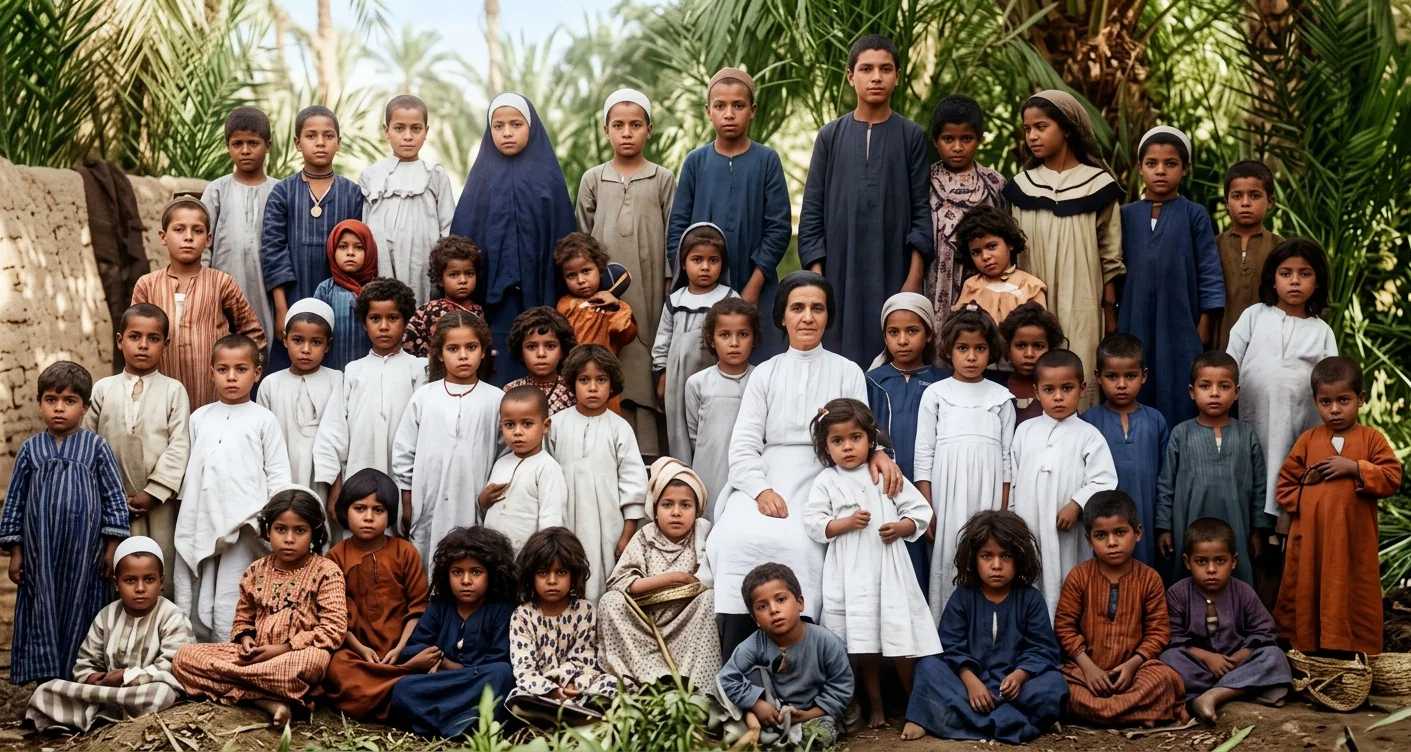
MISSION SCHOOL AT LUXOR, EGYPT

Luxor, Egypt

A. A. ELSHAHEED
I OWNED a plot of ground in a very bad location here in Luxor. This I sold for a good price, and by adding to the sale price $360, I bought a house, with fruit-trees and a garden, in another part of the city.
I had a great burden for that poor quarter of the town in which there were neither religious meetings nor a school. My daughters were graduated in the American Mission school, and the youngest volunteered to teach. She opened the school in January, 1911. The last of April the school had an enrolment of sixty, with an attendance of fifty. At present there are attending the school twelve Moslems, some Copts, and a number of Protestants. We have seventy enrolled. There is a good attendance at the meetings, also the Sabbath-school held on Sunday afternoon.
Success is sure, because the work is God's. I have had many hard experiences in the past, but God was with me, and delivered me. Pray for the cause in Egypt.

Christ Our Saviour

N. W. VINCENT
WHEN enemies of righteousness Our ruin would complete, We cry to God in our distress, This ancient prayer repeat: “Help, Lord, we perish!” Holy One, Stretch forth thy mighty arm! On earth now let thy will be done, O shield thine own from harm!
Precious the merits of our Friend! His blood can still atone. Dear Saviour, save us to the end; We trust in thee alone! Give us thy Holy Spirit, Lord, To help us loathe the wrong; O sanctify us through thy word, Our Life, our Strength, and Song!
Caney, Kan.

The Grace of Human Tenderness

TENDERNESS does not mean weakness, softness, effeminateness. It is consistent with strength, manliness, truth, and bravery. It does not show itself alone in the touch, but in unselfishness, thoughtfulness, considerateness, forbearance, patience, long-suffering. But however it shows itself, it is as the bloom on the peach, as spring showers on the earth, as the music of the angels stealing down on the plains of Bethlehem. You may not have much of this world's wealth to distribute, but you may give something far better, and spend a useful and beneficent life, if you will practise this lesson of shedding around you the grace of human tenderness in word and act and by the spirit of your every-day life.—F. B. Meyer.

The Sabbath

ELIZABETH MESEROLL REDFERN
O HOLY day! God's day of rest For aching limbs and toil-warped brain, For fainting souls new life to gain; From labor's call, from lure of gold, From worldly taint, a day to hold. O truce of God! sweet day of rest!
Hinsdale, Ill.

Ten Days in Memphis, Tenn.

A few years ago we planned to have a city mission training-school in Memphis, Tenn., but an unexpected call to California prevented our working there at that time. About two months ago we visited Memphis again, and were pleased to see the strong church which has been gathered out in that city through the efforts of Elder J. S. Washburn and others. During our visit, arrangements were made to hold a ten days' Bible institute with the church, June 16-26.
Friday morning, June 16, we found a company of our brethren and sisters gathered in the tent on Mississippi Street, ready for the nine o'clock Bible study. The attendance from the first was excellent, notwithstanding the fact that the tent was some distance from most of their homes. I occupied the hour from nine to ten each morning; Elder W. R. Burrow, the president of the conference, occupied the second hour, giving an interesting and profitable line of study; Mrs. Haskell occupied the hour from eleven to twelve; and Elder J. S. Washburn spoke each evening. The weather was warm, but the people gathered early and remained to the close each day, thus showing their desire to become more thoroughly acquainted with God's Word.
The Southern Publishing Association kindly furnished literature at a reduced rate where quantities were purchased by our brethren to sell to their neighbors and friends. Elder Burrow had a quantity of literature on hand; and as there was a call for it, we offered for sale at the close of the first meeting bundles of “His Glorious Appearing” worth two dollars for one dollar, and in a few minutes all were sold, and more were called for. This was repeated with other books until the stock on hand was exhausted, and more literature was ordered. The books were not only purchased, but many were sold in the city before the close of the institute.
It is nearly thirty years since the spirit of prophecy said that publications containing the truth should be scattered like the leaves of autumn. We have only a short time in which to sow the seed; soon it will be forever too late to labor for souls. “Heavenly angels have long been waiting for human agents—the members of the church—to cooperate with them in the great work to be done. They are waiting for you. So vast is the field, so comprehensive the design, that every sanctified heart will be pressed into service as an instrument of divine power.”—“Testimonies for the Church,” Vol. IX, pages 46, 47. Thousands of our lay members are anxious to work, but they do not know how to begin; they are waiting for some one to help them to get started. The members of our churches form a vast army; and when they are set to work, the harvest will soon be gathered. We have never found any church more willing to work than the brethren and sisters of Memphis.
We also held some meetings with our colored brethren in Memphis during the institute. We found their hearts full of love for the truth. They are very much in need of a meeting-house that will properly represent the truth in that important center. There are over sixty thousand colored people in Memphis, and over ninety thousand in that county. Surely there is a great work to be done in Memphis for the colored people as well as for the white. It is one of the most enterprising cities of the South. The palatial residences of Memphis will compare favorably with those of any other city of America. We were glad to see the good company of workers stationed in Memphis, and trust that the force will not be lessened until the work is done for the thousands who are now ignorant of the truth. The message comes: “Seek to save the men of wealth, . . . Persuade men to lay up their treasures beside the throne of God.”
The great palaces reared in all our large, enterprising cities must be entered by the truth. Who can do this work more effectively than the lay members of our city churches? “If every church-member were a living missionary, the gospel would speedily be proclaimed in all countries to all peoples, nations, and tongues. . . . Those in the highways and byways of life are to hear the gospel message. Church-members are to do evangelistic work in the homes of their neighbors.”
We leave Nashville this week for Portland, Maine. Two years ago the call was made to work the Eastern cities, where the first angel's message was preached with such power. Portland, where Sister White was first chosen for her life-work, was mentioned as a place to be worked. We were then carrying heavy responsibility in California, and were not free to respond to the call. When we laid down the heavy burdens carried for the past three years, my wife and I were both in need of rest, and have carried no heavy work for the past three months. Now we feel a burden to labor in Portland, and are going there, hoping that by the help of the Lord we may do something to proclaim the message in that city.
S. N. HASKELL.

North Texas Camp-Meeting

THE time for this annual gathering, which is to be held this year at Dallas, Tex., August 3-13, is near at hand, and I hope all our people of this conference are preparing to attend. I need not quote to you the Testimonies which have been given so often as to the necessity of our attending these important gatherings. Our own experience has taught us something of the spiritual value of these occasions—the blessings received in attendance upon them, and the great loss to those who do not attend. Indeed, only those who attend can appreciate what is missed by those who do not attend. Let none of our members stay away this year.
I know with the severe drought we have again this year, which is the third in succession, many will be inclined to feel that they can not afford to attend this meeting; but I wish to say that in view of the times in which we are living and the conditions surrounding us, we can not afford not to attend the annual gatherings of God's people. We shall have good help from the General Conference; and in addition to the help these men always bring us, we shall have reason to expect especially good things this year, as they will come directly from the European council, bringing with them the latest news of progress in the regions beyond, the most recent developments of God's leading in the great world-message committed to us. Ours will be the first meeting Elder G. F. Watson, our union conference president, will attend after landing in this country; and no doubt he, with other General Conference laborers who will accompany him, will have many inspiring things to present to us.
Although we are to have good help, let us not depend upon this for the heart-work and spiritual blessings we must have from God. No man can do for us that which God alone can do when we humble ourselves before him, and confess and put away our sins. He says, “Ye shall seek me, and find me, when ye shall search for me with all your heart.” Let us do this in preparation for this camp-meeting.
A good camp-ground, with a fairly good grove, and within one block of the street-cars, has been secured in the northeast part of Dallas. There will be plenty of room and shade, and a place for teams, with as good pasture as this kind of year affords. We expect the usual reduced railroad rates and all other accommodations and facilities as heretofore. Tents will be provided at the usual rates. Full instruction concerning all these matters, with directions for reaching the grounds, will be given later.
I close this article with an earnest appeal for a large representation of our young people and children at this important meeting. Our young people and children and their work have come to occupy a large place in this message. Without them we would not only feel lost at camp-meeting, but the work would sustain an irreparable loss. Besides the part they contribute toward the success of the meeting, their own spiritual interests and souls' needs demand their attendance. But they can not be expected to come if their parents do not attend. Come, parents, with your children. Good help has been provided for them. Do not allow yourselves to be cheated out of what God has for you by remaining away.
W. A. McCUTCHEN.

Tent-Meetings for the Colored

MERIDIAN, MISS.— We arrived here on June 12 to join the Meridian tent company. Elder N. B. King also arrived a few days later to assist. On account of the delay of our tent, we did not begin meetings as early as we had expected. The first meeting was held on the twenty-seventh, a goodly number being present. All seemed very much interested in the discourse.
The tent has a good location, being surrounded by the best class of colored people in the city. This is the first effort that has been made here for the colored people, and there are thousands waiting to hear the truth. We believe that many of these will come into the ark of safety during these meetings.
The annual camp-meeting for the State will be held here August 30 to September 10. We trust that all our colored brethren who are able to do so, and who live within a reasonable distance, will attend. Let all who come plan to be present at the beginning of the meeting, and join us with the determination to make this the best camp-meeting we have ever held. Our hearts are full of gratitude to God for his manifold blessings, and we solicit your prayers for the success of the work here.
J. C. MILLER.

Camp-Meetings in Eastern and Western New York

New York Conference

THE New York Conference held its annual camp-meeting at Riverside Park in the city of Rome, June 8-18. About one hundred tents were pitched, and from two to three times this number of campers were in attendance throughout the meeting. This was one of the prettiest encampments I ever saw. The park, situated on the banks of the Mohawk River, afforded an excellent location. The conference had just purchased a large number of new tents, and these were pitched with good taste and in excellent order, presenting a very pleasing appearance. Adjacent groves furnished excellent opportunity for meditation and private devotion. Excellent sanitary facilities were provided, and the sanitary regulations were exceptionally good. A variety of good food was served in the dining-tent, which was liberally patronized.
The regular conference business was transacted at this gathering. Elder J. W. Lair was again elected president; and J. E. Jayne, B. M. Garton, H. F. Taylor, Cortland Green, J. H. Rice, and C. S. Coon are associated with him on the executive committee. F. N. Johnson was reelected secretary and treasurer.
The preaching was designed particularly to bring about a deeper consecration of heart and life to the service of God. This effort met with a hearty response on the part of the people. With few exceptions the entire company consecrated themselves anew to God, confessing sin, and seeking for a greater measure of his keeping power. Twenty-nine persons were baptized at the close of the meeting.
The preaching was divided among several ministers from outside the conference and the local workers. The interests of South Lancaster Academy were presented by Prof. C. S. Longacre, and met with a hearty response on the part of the people, who appreciate the valuable work this institution is doing for its youth. Similarly, the work of the Melrose Sanitarium was presented by Brother J. G. White. Elder W. B. White was present during a portion of the meeting, but was obliged to leave for the European council.
Resolutions were passed favoring the earnest prosecution of the work in the conference, particularly in its large cities. Ten per cent of the conference tithe was devoted to the work of missions. A fair attendance of the citizens was present at the evening meetings. A deep interest was developed on the part of many in the sale of our publications, and a large force of workers will go out into the field to carry our literature to the homes of the people.
It was my privilege at this meeting to meet a number of old friends with whom I was associated in the early days of my ministry twenty years ago. It was pleasant to find so many still faithful to God, and determined to triumph with this work. I was also gratified at this meeting to meet Elder J. E. Jayne, who resumes ministerial work in this conference.
The faithful workers in this field will need the special help of God as they go up to the many large towns within this territory; but we are confident that they realize this need, and that they will make God their wisdom and strength as they enter upon the summer’s work. The Lord is blessing the work in the New York Conference, and we hope for great things for it in the future.

Western New York Conference

This meeting was held in Central Park, Dunkirk, about forty miles south of Buffalo, June 22 to July 2. A number of buildings in the park were utilized, as well as tents, affording altogether very convenient camping facilities. This likewise was a beautiful encampment, and its convenience to adjacent groves offered facilities for seeking and finding God, which were faithfully improved. This meeting was unique in that there were no business interests to consider, the conference business session having been held several months before. From the beginning of the meeting an excellent spirit was manifested. For the most part, those who came seemed to realize that they were at the meeting for one express purpose,—to secure a closer connection with God. In this purpose they were not disappointed. While the evening meetings were largely devoted to the consideration of some of the leading features of our faith, the meetings throughout the day were devoted to questions of practical godliness, impressing the people with the necessity of finding God, and plainly and simply pointing out effective ways for seeking him. The excellent spirit of harmony and lack of criticism proved that the Spirit of God was present with his people. Many found a new experience in him, and returned to their homes, and to the environment from which they had come, with new courage, and with a new power in their hearts with which to meet the old trials before which some had gone down to defeat. Nearly a score of persons were baptized at the close of the meeting.
The publishing work was presented, and as a result several devoted themselves to the circulation of literature in the future. The local school at Tunesassa, which has been doing good work in the education of the young people of this conference, was considered, and our people showed a deep and practical interest in it.
Several ministers who were present from outside the conference united with the local workers in securing the results obtained. Here, too, it was my privilege to meet with old-time friends, whom I had known years ago, and with them consecrate my life anew to the service of the Master. Elder H. W. Carr and his united and devoted workers have in this conference a great and important field of labor, and one which promises excellent results for the future.
The work in Western New York has been embarrassed in the past by distracting influences. These, however, stand now fully revealed in their true character, so that none need be deceived. We shall hope for great progress in this conference in the next few years.
F. M. WILCOX.
Continue reading: North Dakota Camp-Meeting