The Youth’s Instructor, Vol. 29, No. 33.

THE SEA-WALL PRISON

The Youth’s Instructor

Aug 17, 1881

S. D. A. Publishing Association · Battle Creek, Mich. · Aug 17, 1881

THE SEA-WALL PRISON
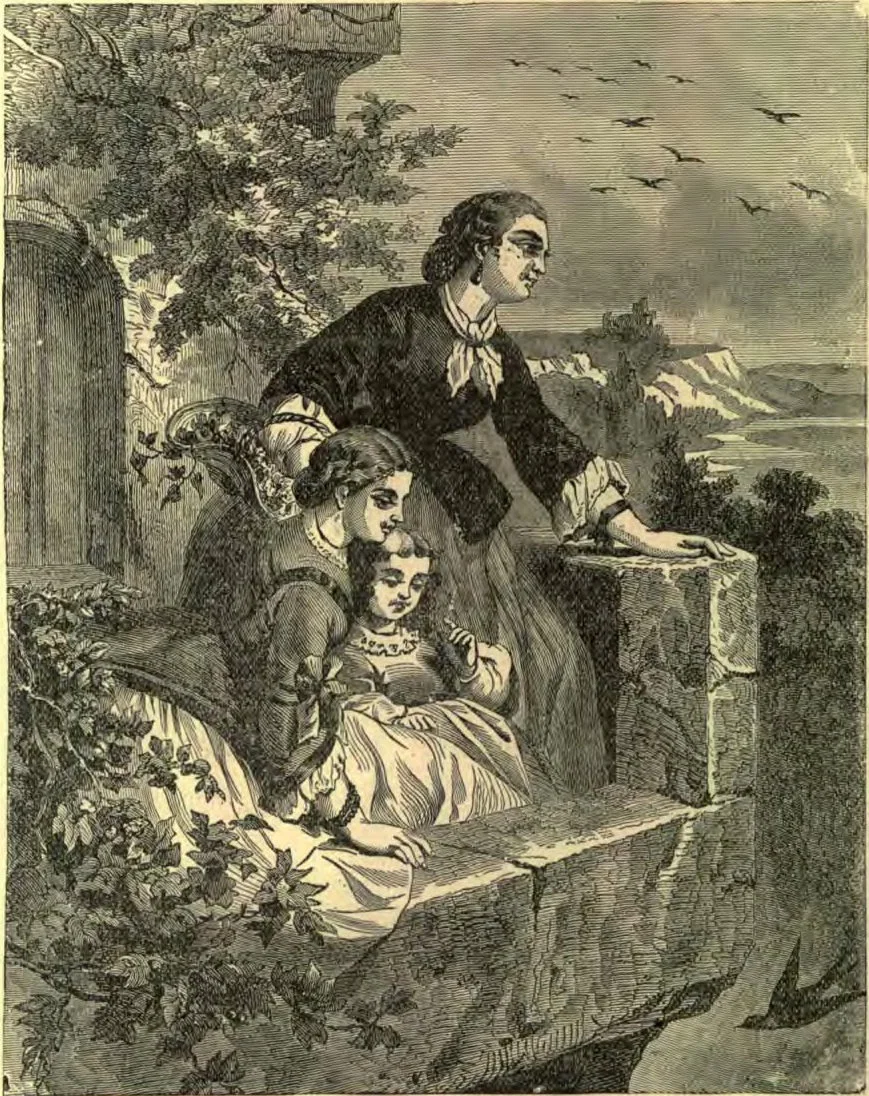
Little Mary went with her mother and her aunt to spend a season in St. Augustine, Florida. She had always lived in the city of Boston, and the quaint old stone buildings, and the narrow streets of the Southern city were curious enough to the little girl.
Day after day she wandered through the streets with her mother, asking questions about the many curious things which she saw; and though her mother was feeble in health, she never tired of answering the little girl’s questions and of telling her stories about the town.
“Is it true,” asked Mary one day, “that this was the first city built in the new world?”
“It is,” said her mother, “and some day, when you are a little older, you will learn all about it in your history.”
“But you will tell me the story about the Sea-Wall Prison, won’t you?” said Mary.
“If it is a pleasant day, we will go out to the old castle on the sea-wall to-morrow, and then I will tell you the story,” answered her mother.
The next day dawned bright and clear, and the little girl was astir almost as soon as the sun was up. After she had eaten her breakfast, she started out with her mother and her aunt, who had provided herself with a basket to gather some leaves from the rare old vines which grew on the castle walls. A short walk brought them to the castle, where they ascended a flight of tumble-down, stone stairs to the top of the wall, a few feet from a door which opened into the castle. The door opened with but little trouble, and they passed through a long hall, in the middle of the building, to another door which opened to a kind of veranda, overlooking the sea. The wild vines which grew from the ground on the other side of the wall, had climbed up the sides of the building, and hung down over the veranda, forming a cool shade from the rays of the sun. The little girl found a pleasant seat for her mother on the outer wall of the veranda, and after resting a short time, the mother began her story.
“Just below where we are sitting, in the side of the wall,” she said, “is a little door opening into a small room, about large enough for a man to turn round in. The door is the only opening to the room, and it is so constructed that a person cannot get out of the room without help. An entrance to the room is made by approaching in a boat from below, and ascending on a rope ladder. When the wind blows strong from the east for several days, the water rises almost to the top of the wall and the little room is filled with water. The wall was built to keep the water from rushing back into the streets of the city, when the wind blows from the east in this way.
“Many years ago, a colony of French Protestants settled on the coast several miles north of St. Augustine, and they were prospering finely; when the governor of this place, who was a Spanish Roman Catholic, and a very bad man, hearing of the prosperity of the little colony, resolved to destroy it. So he fitted out several ships and started northward on his evil design. But the colony had heard of his intentions in some way, and they all put out to sea so as to be ready for him when he should come; but a storm wrecked their vessels, and most of the people were captured and cruelly put to death. The leader of the colony and several others escaped into the woods, but they were taken after a short time, and brought back to St. Augustine.
“Now,” said the cruel governor, when the prisoner was brought before him, “you are in my power, and I can do with you as I like. Your colony is destroyed, and you have nothing to return to; but I will give you one chance for your life. Give up your creed, and accept our faith, and your life shall be spared.”
“Never!” answered the brave man. “You have taken away everything that was dear to me in this life, but never will you take away my faith in the God who will give me a home in the world to come.”
“I will give you three days to make up your mind,” said the enraged governor. “In the meantime you shall be shut up in the Sea-Wall Prison.”
“The prisoner well knew the character of the governor, but his courage did not falter, and he was led away to the terrible prison. Every day for three days the guard came to him, asking if he would yield to the governor, and every time the answer was returned, firmly refusing to give up the right. On the night of the third day, the wind began to blow from the east, and by the evening of the next day, the water had risen to the top of the sea-wall.
“The governor died soon after, and the Sea-Wall Prison was entirely forgotten, until a few years ago, it was discovered by accident, and entered. The skeleton of a man, and a few old papers were all that was left to tell the story.”
The little girl had listened with breathless attention while her mother was telling the story, and when it was finished, she sat for some time looking at the swallows as they flew in and out from the crevices of the rocks; then, turning suddenly, she asked, “Mother, do you think that man died for Jesus?”
“I do,” said the mother; “and if he could die for Jesus, does not my little girl think that she could live for him?”
The little girl made no reply, but her mother knew from her thoughtful mood as they walked home together, that her story had not been without effect.
E. L.

THE ROCK AND TREE.

HIGH on the mountain's storm-rent side Above the flowing of the tide, Amid the debris from the flood Which the Spring rushed through the wood With furious rage and wondrous strength, Until it reached the base at length, Spreading destruction in its path, Like a grim giant in his wrath,— I found a tree of curious mold Standing above the hemlocks old, Which lay around, among the mass Of broken rock and thin, coarse grass. The roots, I saw, held in their grasp, Tightly locked as with metal clasp, Winding round and round it about A fibrous chain both tough and stout, A rock, whose rough and unhewn side These curious fetters strove to hide. The tightening arms had grown around The rock embedded in the ground, Until it seemed like a stony heart Whose strings no power on earth could part.
I thought of the time long ago, When the rock was not imprisoned so, But lay in its bed on the mountain side, Far up away from the flowing tide, Mighty in form and massive in mien, Surrounded by ferns and grasses all green, With a sapling small beside it, so weak That its great strong back it was fain to seek To sustain it during the wintry blast, Till its trunk was firm and its roots were fast, Leaning thereon as a little child Will cling to its parent strong and mild. Slowly but surely the root-strings spread, With gathering strength, and a grasp so dread, With insidious power and gentle grace, Till it held the rock in a strong embrace. Now it lies, fettered, in prison hold, ’Mid the grasses green and the trees so old.
Thus do evil habits grow Steadily, firmly, no matter how slow, Till the heart, once tender in childhood's hour, Hath yielded at last to the tempter's power, And lies imprisoned in fatal hold, Like the rock held fast in the tree-root old.
Had the woodman's ax long years ago Struck at the sapling and laid it low, It never had grown to a giant tree, Nor the rock would to-day a captive be. So should we sever the habits which bind, No matter how slowly, so surely they wind Round the young heart, till ’t is bound with a chain, Which resists every effort to cleave it in twain, Strike deep at the root, nor spare the stern blow That will at a stroke destroy the sly foe. Then will the heart remain pure and free, Unlike the rock held fast in the tree. —Christian at Work.

Books as Patient Masters of Instruction

A LEARNED writer says of books: “They are masters who instruct us without rods or ferules, without words or anger, without bread or money. If you approach them, they are not asleep; if you seek them, they do not hide; if you blunder, they do not scold; if you are ignorant, they do not laugh at you.”

SEEKING PROMOTION.

“I wish, father, you would find me a good situation,” said Thomas, earnestly. “I should like so much to be in business; but it seems so long to wait for a good place.”
Mr. Reed, lifting his eyes from the evening paper, looked at his son with some surprise, and then said, “I think you have a situation, Thomas!”
“Yes; but then I mean a good situation. The place I am in now is nothing, only to run messages all the time for everybody in the establishment; and then I am paid almost nothing.”
“And what sort of a situation do you want, Thomas,” asked his father.
“I would like,” said Thomas, “to be in some good office where I would receive a large salary, and not be under everybody, to run at their nod and call.”
“But that is why I placed you in your present situation,” said his father.
“You have every opportunity to rise to one of the best positions in the city, if you are only content to work and wait for it.”
“I am afraid I should have a long time to wait,” said Thomas. “Every place above me is filled; and they are all too well paid to resign very soon; and then I do not know how to work for promotion. Must I apply to the head of the firm? and what else have I to do to obtain it?”
“No, Thomas; that is not the work I mean. An application is about the last thing you should make to your employer; and, indeed, you may not be required to apply for anything, if you take the proper course.”
“Well, father, I will take any course that will procure promotion for me,” said Thomas, eagerly.
“Then there is hope that you will follow my directions if I tell you how to work. You say you have to run errands for every one in the place; well, that is just what I expected when you went there. I suppose it is not pleasant; it may be quite tiresome and discouraging; but then you gain a good knowledge of the city, become known to other firms; besides, you are not in the lowest place there, as you suppose, or you would not be entrusted to carry the mail to and from the postoffice. I was surprised when I heard that Mr. Edwards had entrusted you with that duty the third week after you went there. It shows me that he has confidence in your integrity, and I think you are getting promotion already.”
Thomas laughed at the novel mode of preferment, and informed his father that Mr. Edwards had no one else who cared to go or whom he could send for the mails.
“Perhaps he has quite a different reason for his action,” said the father. “Probably he does not care to trust some others who are above you, and whom he might send. Thomas, you must work well and carefully, whether it be running messages or carrying the mail, and you will soon discover that that is the work which will procure for you promotion.”
“But it is a very low beginning, father,” said Thomas.
“Yes, —. Let me see; were you with us last summer when we visited Baltimore, and went up to the top of Washington’s monument?”
“Yes, father, you remember we all went up, and little Fred was so tired he could hardly gain the top.”
“Do you recollect how we ascended? Were we lifted up from the street by an elevator?”
“No, father; you remember that a man let us in at the door; and we went up the winding steps; we had no light only that of a smoky lantern, and it was a long time before we reached the top.”
“And we got up at last,” said his father, “after patiently stepping one hundred and eighty times, one after the other; and were we not repaid at the top with the magnificent view which we enjoyed?”
“It was perfectly grand,” said Thomas.
“Now, Thomas, as you ascended that monument, so you must rise in business. You are now standing on the lower steps—you are on the steps—and there is nothing to hinder you, if your health is good, from standing on the top. But in order to succeed, you must cultivate several qualities, and the very first which you need to possess is contentment with what you already have. That does not mean that you are to have no ambition to rise; but rather that you must be willing to wait till your turn comes. Then, again, be willing to serve all who are over you; they may be no better than you, but they have a position above you, and are therefore your superiors. Remember that he is the best commander who himself is willing to ‘obey orders’ and serve those above him.”—New York Observer.

Ancient Britain: Æthelberht, Christianity, and Ina of Wessex

ANCIENT BRITAIN.—NO. 11.

We have been speaking of the time when the heptarchy, or seven kings, had passed away and lower Britain acknowledged one general ruler, or overlord, as he was then called. This king, Æthelberht, had just married a Christian wife from Paris, and espoused the cause of Christianity. From that time this whole country has been called England (Angle-land):
After the conversion of Æthelberht the Christian faith advanced very rapidly in the kingdom. The Kentish men crowded in great numbers to be baptized in the river Swale. Some of the under kings, especially those of Essex, and East Anglia did not like to be Christians, nor to let their people learn; and were very angry with those who listened to Augustine, and killed some of his friends.
Ina was one of the under kings of England ruling in Wessex. It is the portion now called Hampshire, and a part of Berkshire. Southampton is the entre-port of Hampshire. Ina’s kingdom was, however, extended toward the Bristol Channel. He established a strong wooden fort on the river Tone, on the same spot where now stands the Castle of Taunton. Ina became very fond of learning. He collected a silver penny from every house where the master could spare it, and sent all these pennies to Rome to pay for a school, that he might send the young men of England there to be educated; because they could at that time get better masters in Rome than in England.
These pennies collected by Ina for so good a use were called PETER’S PENCE: At first this money was used to pay for schools and for nothing else. In later times, by the laws of Edward the Confessor, about the middle of the eleventh century, every one possessing land or cattle of the annual value of thirty pence, was compelled to pay one silver penny as Peter’s pence. This was collected by the clergy, and sent to the pope of Rome. This law was abolished by Henry viii., in the former part of the sixteenth century. No other kingdom but England was even compelled to raise the Peter’s pence.
Since 1848 voluntary contributions have been raised for the pope in various countries, under the name of Peter’s pence.
Those whom Ina first sent to school in Rome, were young men to be educated as ministers. They were taught to read, write, count, paint pictures, to sing, construct churches, plant gardens, take care of fruit trees, etc. When those thus taught at Rome returned to Britain, they constructed large houses called Convents. They had schools in them for teaching the children and youth. They also had rooms where they allowed poor people who were traveling to sleep. They also cared for many who were sick. As these teachers did so much good, the king and people gave them money, and some land fit for corn fields and gardens, that they might have plenty for themselves and the school boys, and the poor.
Of these great buildings thus constructed, many are still standing. Some of them are called Abbeys. There is one called Netley Abbey, about three miles from Southampton, a portion of whose walls and buildings are still in quite a good state of preservation.
J. N. Loughborough.

NATURE'S MUG.

Who ever heard of a natural mug? Well, there is just such a thing in the West Indies. It grows on trees in hot climates where there is little rain. These mugs hold about a quart. When the dew and rain falls, it is received into the mug; and a valve closes at the top, and prevents evaporation. Birds are often seen to insert their beaks and procure water from them. This shows how good God is in thus providing a drinking-place for the little birds that live where water is hard to find. “They sow not, neither do they reap, nor gather into barns; yet your Heavenly Father feedeth them.”

I Walked Along the Forest Side

I WALKED along the forest side Where light the shadows chases, And blooms, my footsteps to betide, Sprang thick in truant places.
“Oh, tell me why your loveliness This lonely by-way graces!” They nodded back, “We grow to bless And fill up empty places” — Youth’s Companion.

TWO BUMBLEBEES.

Two bumblebees, in coats of gold, Once met upon a rose, I'm told, And searched its sweetness, fold on fold.
One was a grumbler; the other went About his work in rare content, For labor was his element,
“Buzz, buzz,” quoth one, “it doesn’t pay To toil so hard from day to day. Leisure is best; I’d rather play.
“Of what use is it, after all? Our labors unto nothing fall; The task is hard, the gain is small.
“We never share in what we hive; We work that idle men may thrive. I feel the sorest bee alive.”
“Buzz, buzz, good neighbor, would you then Be idle just because of men? Up! up! and to your toil again.
“Must he who labors, foolish elf, Think but to benefit himself, To heap with gain his narrow shelf?
“What makes our striving doubly dear Is that some others it may cheer, Known or unknown, afar or near.
“Such labor bringeth sweetest ease, And maketh too—the world agrees— The best of men, the best of bees!” —George Cooper.

SCENES IN THE LIFE OF CHRIST.

LESSON 30.—WHO ARE BLESSED.

“And seeing the multitudes, he went up into a mountain; and when he was set, his disciples came unto him; and he opened his mouth, and taught them, saying,
“Blessed are the poor in spirit; for their’s is the kingdom of heaven. Blessed are they that mourn; for they shall be comforted. Blessed are the meek; for they shall inherit the earth. Blessed are they which do hunger and thirst after righteousness; for they shall be filled. Blessed are the merciful; for they shall obtain mercy. Blessed are the pure in heart; for they shall see God. Blessed are the peacemakers; for they shall be called the children of God. Blessed are they which are persecuted for righteousness’ sake; for their’s is the kingdom of heaven. Blessed are ye when men shall revile you, and persecute you, and shall say all manner of evil against you falsely, for my sake. Rejoice and be exceeding glad; for great is your reward in heaven; for so persecuted they the prophets which were before you.”
“But woe unto you that are rich; for ye have received your consolation. Woe unto you that are full; for ye shall hunger. Woe unto you that laugh now; for ye shall mourn and weep. Woe unto you when all men shall speak well of you; for so did their fathers to the false prophets.”
“Ye are the salt of the earth; but if the salt have lost its savor, wherewith shall it be salted? it is thenceforth good for nothing, but to be cast out, and to be trodden under foot of men. Ye are the light of the world. A city that is set on a hill cannot be hid. Neither do men light a candle and put it under a bushel, but on a candlestick; and it giveth light unto all that are in the house. Let your light so shine before men that they may see your good works, and glorify your Father which is in heaven.
“Think not that I am come to destroy the law or the prophets: I am not come to destroy, but to fulfill. For verily I say unto you, Till heaven and earth pass, one jot or one tittle shall in no wise pass from the law, till all be fulfilled. Whosoever therefore shall break one of the least of these commandments, and shall teach men so, he shall be called the least in the kingdom of heaven; but whosoever shall do and teach them, the same shall be called great in the kingdom of heaven. For I say unto you, That except your righteousness shall exceed the righteousness of the scribes and Pharisees, ye shall in no case enter into the kingdom of heaven.”

QUESTIONS.

1. When Jesus had finished the work of setting apart the twelve apostles, where did he go? Luke 6:17.
2. What caused him to go again into a mountain? Matt. 5:1.
3. When he had seated himself, who drew near to him?
4. Did any one but the disciples listen to the sermon that followed? Matt. 7:28, 29.
5. With what words did Jesus begin his sermon? Matt. 5:3; Luke 6:20.
6. Why are the poor in spirit said to be blessed, or happy?
7. What blessing is promised to those that mourn?
8. What kind of mourners do you think must here be meant?—Those who love God, and mourn because they are not holy, or because they have to suffer unjustly.
9. What blessing is promised to the meek?
10. When the meek shall receive the earth, what other promises will be fulfilled?—The promises made to Abraham, Isaac, and Jacob. Gen. 12; 13; 17; 22; 26; 28.
11. What blessing will those receive who hunger and thirst after righteousness?
12. What must it be to hunger and thirst after righteousness?
13. What blessing will be enjoyed by the merciful?
14. What is promised to the pure in heart?
15. Who are the pure in heart?—Those whose thoughts are pure, and whose hearts are so set on God that they love everything which is good, and have no pleasure in anything which is bad.
16. What special honor is to be given to the peacemakers?
17. May we all share this honor?
18. What comfort is given to those who are persecuted for righteousness’ sake?
19. What must Christ’s followers do when men revile them, and persecute them, and say all manner of evil against them falsely for Christ’s sake?
20. Why are they to rejoice under such circumstances?
21. What did Jesus say to the rich? Luke 6:24.
22. What did he say to those who are full?
23. To what persons do you think this must refer?—To those who are satisfied with themselves, and do not hunger and thirst for righteousness.
24. What did he say to those who laugh?
25. Does this mean that it is wrong to laugh?—No; it must refer to those who make light of sin, and laugh at the threatenings of God’s word.
26. What did he say of us when all men shall speak well of us?
27. Does this mean that we should not like to have any one speak well of us?—No; but we should not want all men to speak well of us; for many people will not speak well of those who fear God.
28. What did Jesus say about the salt of the earth? Matt. 5:13.
29. What did he say about the light of the world?
30. What about the way in which candles are used?
31. What good precept did he then give?
32. Does this precept apply to us as well as to them?
33. How may we let our light shine?
34. What did Jesus say about destroying the law and the prophets?
35. What is meant by the law, and what by the prophets?
36. What did he say about the passing away of the law?
37. What did he say about keeping the commandments?
38. What did he say about the righteousness which we must have in order to enter into the kingdom of heaven?
39. What kind of righteousness did the scribes and Pharisees have?—They obeyed the commandments outwardly, but not from the heart. They did not truly love God, nor delight in doing good.

NEW-TESTAMENT HISTORY.

LESSON 43.—SOME OF CHRIST’S DISCIPLES FORSAKE HIM.

The Jews were displeased with Jesus for saying that he was the bread from heaven. “And they said, Is not this Jesus, the son of Joseph, whose father and mother we know? how is it, then, that he saith, I came down from heaven?” Then Jesus said, “Murmur not among yourselves. No man can come to me except the Father, which hath sent me, draw him.” In proof of this statement, he then quotes from Isa. 54:13, saying, “It is written in the prophets, And they shall be all taught of God;” and furthermore, “Every man, therefore, that hath heard, and hath learned of the Father cometh unto me.” It seems that this being taught of God has reference not only to the instruction received from the Scriptures, but to the influences of God’s Spirit as well, as may be seen by comparing Jer. 31:34; Micah 4:2; Heb. 8:10; 10:16; etc. These hard-hearted Jews could not receive Jesus because they rejected those holy influences which would aid them in understanding the Scriptures, and lead them to the truth. The lesson here taught seems to be this,—that we cannot appreciate the things of God, and render him true service, without the help which God gives through his revealed word, and the aid of his Holy Spirit.
The Jews seemed to want Jesus to bring manna from heaven; but he tried to show them that he had come to bring them what was far better than manna. He said, “Your fathers did eat manna in the wilderness; and are dead. . . . I am the living bread which came down from heaven. If any man eat of this bread, he shall live forever; and the bread that I will give is my flesh, which I will give for the life of the world.” Jesus here refers to the sacrifice of himself on the cross, and his words seem the more appropriate since they are supposed to have been uttered just at the time when the priests were slaying the passover-lamb at Jerusalem. This lamb was a type of Christ, the great sacrifice, and as the people were about to eat the flesh of this lamb, Christ applies the type to himself, and speaks of the eating of his own flesh. The Jews, feigning not to understand his meaning, pretended to be greatly astonished. But Jesus went on in still stronger terms, saying, “Verily, verily I say unto you, Except ye eat the flesh of the Son of man, and drink his blood, ye have no life in you. Whoso eateth my flesh, and drinketh my blood, hath eternal life, and I will raise him up at the last day. For my flesh is meat indeed, and my blood is drink indeed. He that eateth my flesh, and drinketh my blood, dwelleth in me, and I in him. As the living Father hath sent me, and I live by the Father; so he that eateth me, even he shall live by me. This is that bread which came down from heaven. Not as your fathers did eat manna and are dead. He that eateth of this bread shall live forever.” Christ’s fleshly body was nailed to the cross, and his blood was shed for the sins of men. To eat his flesh and drink his blood must be to so take hold on Christ by faith and obedience as to obtain and appropriate the blessings purchased by this great sacrifice. It cannot be true, then, that because Christ died for all, all must be saved. There is food and drink for all, but those who do not partake will not be nourished or sustained.
“These things said he in the synagogue, as he taught in Capernaum. Many therefore of his disciples, when they had heard this, said, This is a hard saying; who can hear it? When Jesus knew in himself that his disciples murmured at it, he said unto them, Doth this offend you? What and if ye shall see the Son of man ascend up where he was before? It is the Spirit that quickeneth; the flesh profiteth nothing; the words that I speak unto you, they are spirit, and they are life.” “Thus he instructed them that it was not his human flesh that would give life eternal, but faith in his words and in the efficacy of the sacrifice he was to make for the world. His teaching and example, his life and death, were the heavenly food that was to give them spiritual life and vigor.” Spirit of Prophecy, Vol. 2, p. 283.
“But there are some of you that believe not. For Jesus knew from the beginning who they were that believed not, and who should betray him. And he said, Therefore said I unto you, that no man can come unto me, except it were given unto him of my Father.
“From that time many of his disciples went back, and walked no more with him. Then said Jesus unto the twelve, Will ye also go away? Then Simon Peter answered him, Lord, to whom shall we go? thou hast the words of eternal life. And we believe and are sure that thou art that Christ, the Son of the living God. Jesus answered them, Have not I chosen you twelve, and one of you is a devil? He spake of Judas Iscariot the son of Simon; for he it was that should betray him, being one of the twelve. After these things Jesus walked in Galilee; for he would not walk in Jewry, because the Jews sought to kill him.”

QUESTIONS.

  1. What caused the Jews to be displeased with Jesus? John 6:41.
  2. What did they say?
  3. What did Jesus say to them?
  4. What scripture did he quote in proof of his last statement?
  5. What did he say that every man would do who had heard the Father, and learned of him?
  6. To what does this being taught of God seem to have reference?
  1. What scriptures favor this view?
  2. Why could not these hard-hearted Jews receive Jesus?
  3. What lesson seems to be taught by the words, “No man can come to me except the Father draw him”?
  4. What did the Jews want Jesus to do?
  5. What did he try to show them?
  6. What comparison did he make between manna and himself?
  7. What bread did he promise to give?
  8. To what did he refer in speaking thus?
  9. What made his words the more appropriate?
  10. What did the passover-lamb typify?
  11. How did Christ apply the type?
  12. How did the Jews receive these words?
  13. What did Jesus then say?
  14. How did he speak of the value of his flesh and blood?
  15. What did he say of him who should eat that flesh and drink that blood?
  16. How could the flesh and blood of Jesus be taken to represent the redemption purchased by him?
  17. What must it be to eat his flesh and drink his blood?
  18. What false doctrine is thus disproved?
  19. By what figure may this truth be illustrated?
  20. Where were these things said?
  21. What did many of his disciples say when they heard this teaching?
  22. What did Jesus say to them?
  23. What did he say about his words?
  24. What is said in the Spirit of Prophecy concerning these passages?
  25. What did Jesus say to his disciples concerning their faith in him?
  26. What did he say to the twelve when many of his disciples, being offended at his words, went back and walked no more with him?
  27. What reply did Peter make?
  28. What reference did Jesus make to the treachery of Judas Iscariot?
  29. Why did he refuse to travel and teach in Judea?

NOTE

“The murmuring of his followers grieved the heart of the Saviour. In openly rebuking their unbelief before the multitude, he had increased their disaffection, and many of them went back and walked no more with Jesus. He looked after these erring ones with eyes of pitying tenderness. They were greatly displeased, and, wishing to wound Jesus and gratify the malice of the Pharisees, they turned their backs upon him and left him with disdain. In doing this they made a fatal mistake of rejecting God’s counsel to them. It was such developments as these that made the Saviour a Man of sorrows and acquainted with grief. The consciousness that his kindness and compassion were unappreciated, his love unrequited, his mercy slighted, his salvation rejected, filled his divine soul with a grief that was inexpressible. Could these ungrateful disciples have discerned how God viewed their behavior to his dear Son, they would hardly have walked away so proudly and defiantly.” They were choosing darkness rather than light, because they were too vain and self-righteous to receive a merited rebuke, and too worldly to accept a life of humility in order to secure salvation. In the face of all his wonderful works, they turned away from Him, who, by the beauty of his doctrine and his mercy and benevolence, had called thousands to his side; who had relieved suffering humanity, so that entire cities and villages were freed from disease, and there was no work for a physician among them.
“The words of Jesus were scorned because he declared that outward professions and observances of forms would not avail; the work must reach the heart and bring forth fruit meet for repentance. The words that he addressed to his disciples are also spoken to the followers of Christ to-day. The same necessity exists for a clean heart and a pure life. Yet how many reject the warnings of God, spoken by his servants, and the close, practical truths pressed home to their hearts, because their lives are not in accordance with the will of God, because they perceive that an entire reformation is necessary, and are unwilling to take up the self-denying work, and are therefore angry because their sins have been discovered. They go away offended, even as the disciples left Jesus, murmuring, ‘This is a hard saying; who can hear it?’”—Spirit of Prophecy, Vol. 2, pp. 285-7.

A LITTLE LIFT.

“How much does a little lift lift up the heart?”
Down in the field that lay just a little way from the big farm-house, one bright summer afternoon, were four little girls gathering flowers,—the big white daisies, with their yellow centers; the pretty pink clover blossoms, filled with sweet honey; and the bright, golden buttercups,—flowers growing wild, to be sure, but none the less beautiful for that.
The sun shone down bright and warm; but the cool wind kept it from being hot; and every little flower nodded its head, and bent gracefully back and forth, as it passed. In the pasture beyond, a flock of sheep nibbled the soft grass, and over the children's heads flew the free little birds, flying far away, and then back again, because they had all the beautiful blue sky for their home.
“Let’s make a daisy-wreath for teacher,” said Susie Brown. “She looked so tired and sad to-day! Perhaps something’s the matter. My mamma always does things for people who feel bad, and it always makes them feel better.”
“I’ll pick some beauties!” cried little Sadie; “see if I don’t! I love teacher.”
“I’ll give all mine to you, Susie,” said Gracie, sitting down on a whole world of daisies, with one small foot under her, and picking out the biggest of all the handful as she spoke, “Won’t teacher be glad!”
Tiny stood looking, with a thoughtful look in her soft brown eyes. Her straw hat was trimmed with flowers. She did love them so! Every one seemed a treasure in her eyes, even though God had made so many of them that some people pass them by as common things, hardly worth a look. Tiny had such a pretty bunch in her hand! She carried them always about with her, and often went to sleep holding them tightly in her fingers.
“Teacher loves flowers,” at length she said; “and she says God loves them too, and made them to make people happy. Here are mine, Susie.
“We couldn’t make anything half so pretty, if we tried, could we? Mamma says every flower is made just as pretty, even little mites of ones way up on the mountains, where people can’t hardly ever go and see them; and every year God makes new ones in the same places, and always will.”
The wreath grew fast as the children talked, and Susie’s busy fingers wove the long stems together.
“Won’t she think it’s lovely?” said loving, gentle Tiny.
Up at the farm-house in a little room sat the tired, lonely teacher. Her life was not an easy one,—forty boys and girls, big and little, to teach every day in the small, red school-house a half-mile away.
The boys were often hard to manage, and some of the children were very dull scholars. She was only eighteen, and this was the first time she had ever been away from her pleasant home. She missed the dear father and mother, and her young brothers and sisters.
As she sat there sewing, she felt forsaken and discouraged; and the big tears gathered in her eyes, and fell down upon her work. Life seemed like a long hill which would never end.
The sound of little feet was heard at the end of the hall, and merry voices drew nearer, stopping at her door. Then came a knock, and a little voice said, “Teacher, please, may we come in? We’ve got something for you.”
She opened the door wide, and the four little girls crowded in, holding the long daisy-wreath carefully in their hands.
“See what we’ve made for you, teacher! We thought you felt sorry about something, and we wanted you to know that we loved you.”
Now the tears fell thick and fast, but they were happy ones. Somebody loved her, then; somebody had been thinking of her even when she thought herself unloved and forgotten.
“Thank you, my darlings,” she said, kissing them each in turn. “How much pains you have taken for me! It is so pretty, and makes me very happy!”
So the sunshine came back into one heart through the love and thoughtfulness of four very little girls.—M. E. B., in Well-Spring.
Continue reading: EASY LESSONS