“AND thou shalt teach them diligently unto thy children; and thou shalt talk of them, when thou sittest in thine house, and when thou walkest by the way; and when thou liest down and when thou risest up.” Deut. 6:7; 11:19.
One would suppose from the practice of most professors of religion, that the command ran thus: Thou shalt leave all religious instruction for the Sabbath-school teacher who must be responsible for his pupils, while parents are free to go on with their affairs solely during the week, but on the Sabbath they must be particular to have their children attend the Sabbath-school; and that here their duty ends when they see the lesson prepared and the child present.
There is a manifest error on the part of most parents on this vital point—the education of the young. The public funds and educational privileges, exonerate them in a great degree, from the onerous task of the secular education of their offspring; schools in every locality offer advantages for improvement, and parents lean too much even here upon public institutions, and teachers feel sadly the want of interest on the part of parents in the public schools, which exists to such a degree in many instances that the children lose their interest in educational matters.
The same principle is plainly manifest in the Sabbath-school; and S. S. teachers lament over the indifference of parents in the work of enlightening the young upon spiritual things; an apathy rests upon the public mind here, as in the department before alluded to, and it has a discouraging effect upon Sabbath-schools.
Could parents follow out the command in Deut. 6:7, the Sabbath-school would be tenfold more interesting and profitable. But as it is at present, the Sabbath-school is crippled in its influence upon the young, and parents are not generally aware of the cause of the difficulty. They look for the fruits of the teacher’s labor, and neglect their own duty.
The facts are these: The burden of the labor for the young rests upon parents, not upon teachers; and unless parents feel this, they will generally injure the good impression made by the teacher. One or the other of the parents, or both, should daily instruct their children in holy things. Children daily brought under an influence of this kind will bring encouragement to the teacher’s heart; and the parent so laboring, will find the Sabbath-school profitable to his children.
There is no duty spoken of in the Bible, more imperative than this, in Deut. 6:7; and none more pleasant and delightful, when well performed. None are exempt from this duty. The parent who professes to know God, makes a great profession; and if he cannot teach his children the way to God, whom he professes to love, he belies his profession.
It is idle to talk of disability (I address professing Christians). If the parent can read he can teach his child to read, and understand the book he loves. If he cannot read, he can teach his children the principles and facts of the glorious book of God; the willing and loving heart will and can make itself understood and felt.
Parents love their offspring. Let them act accordingly. Let parents bring to mind daily the Judgment day now present, and the rewards and penalties of the future. Let them daily realize their responsibility for the dear children whom God has graciously given them, and seek to God for help in training their little ones for God. If they have neglected this duty, let them bitterly bewail the loss, and speedily buckle on the armor to regain the battle.
But how shall I go to work? says some fond parent, who longs to see his family accompany him in his travels to the city of God.
Let me say that the writer of this does not feel competent to dictate or prescribe the exact mode. Circumstances differ; but the quotation at the head of this article is as specific as any one could wish. No amount of business can hinder the parent from obeying this command: “In the house, by the way, when thou liest down and when thou risest up.” The parent can talk out what he knows and feels on other matters. Let him do the same here, with zeal and constancy. Let him read and meditate with this great and noble object in view—the enlightenment of his children.
Begin, make the attempt. Ideas will flow in and you be surprised at what you can do. Thought begets thought, and you will be infinitely repaid and blest.
If I may be permitted to give my own plan for systematic instruction, I would say. Have a daily lesson for your children apart from family worship, exclusively for this object. Have your family devotions before you breakfast, and your lesson for your children immediately after breakfast; say some portion of that book which will most interest at the time, gradually leading them from narrative to principles and doctrines; always drawing out their knowledge, rather than displaying your own; never pouring in lectures, but rather say what will interest them to have you say more; and never tire or disgust them. Answer their questions so pleasantly and patiently that they will desire to ask of you again; and when they ask questions you cannot answer at the time, be sure to do it satisfactorily if you have to take time and research.
When your children find that you will take precious time to teach, and that you have a care for their spiritual interests which leads you to study and investigate for their improvement, they will see that you are in earnest, and that you mean what you say, when you talk of God and Heaven.
Children are close, and generally earnest, reasoners, and they appreciate any special labor in their behalf more than older people do; and when parents do their duty at cost of time and labor (personally do this), children will appreciate the gift far more than if it is done by proxy. None are more discerning than children, in discovering that the parent shirks his duty by delegating it to others; and it is this shirking of personal duty, this delegating some fancied unpleasant duty to others, which is peculiarly the parent’s duty, which this article is intended to oppose.
One of the greatest statesmen England ever produced, was educated at home, under the eye of a careful, judicious, competent instructor, who would not trust his only son to the temptations of a public school. But we would not recommend such a course in all respects, because that few parents are so well qualified as this parent was. But the principle we advocate is before you.
If the writer has been too explicit for some, and too general for others, pardon his error. You cannot withhold your candid assent to the principles herein advocated.
Now, dear reader, will you act? Will you begin now? Are you fearful that you have no ability, or have you no time? Think of eternity. Think of Heaven with its glories, and sometimes think of the penalties of neglected duty. JOS. CLARKE.
Christ our Guest.
By E. R. DEWEY
WE sometimes hear people express the wish, that they had lived in the days when Christ was upon earth, that they might have seen and conversed with him, or welcomed him to their homes and entertained him, if for only a few days or hours, even. What happiness it would be, and how greatly blessed would that household be, who thus received this distinguished guest. Did you ever try to realize how it would seem to have him an inmate of the family? To have him present every moment in the day? What feelings would it produce to have him a witness of your every word and act?
Would you go on with your accustomed, daily conversation? Would you relate the trifling gossip, or discuss the failings of your neighbors? Would you give way to little fits of petulance, when things went amiss? Would you wish to meet the reproving glance from his eye for such conduct?
How watchful would you be not to do anything that would grieve or offend him! How careful in choosing topics of conversation, to select only those which he would approve! How intently would you listen to every word which fell from his lips, striving in all things to carry out his wishes, and to follow him in every good word and work!
But may we not, even now, enjoy his presence? Yes, if we will but obey and love him; for he said, “If a man love me, he will keep my words; and my Father will love him, and we will come unto him, and make our abode with him.” And again, “Lo, I am with you alway, even unto the end of the world.”
Blessed assurance! that if we are truly the children of God, there is not a lonely instant when we are without his guardianship. What a comfort to the lonely ones who are striving to do his will.
It is to those who are possessed of holy characters, that this blessed promise is given; to those “who reflect the mind of Jesus, imbibe his Spirit, take his word as the regulator of their daily walk, and make his glory the great end of their being; to the humble, lowly, Christlike, Heaven-seeking Christian.”
If it be a worthy object of ambition to be loved by the great and good upon the earth, what must it be to have an eye of love ever beaming upon us from the throne of the Creator, and to have Christ for our friend and companion at all times. His is no fitful companionship—present in prosperity, gone in adversity. He never changes. He is always the same. His promises never fail. Then is it not worthy our best endeavors to secure him for our friend, and shall we not strive yet more earnestly to overcome every thing in ourselves, which is unlike Jesus, that our hearts may be made a fit place for him to grace by his presence? Then, indeed, we may have Christ for our ever-present Guest.
“Behold, I stand at the door, and knock; if any man hear my voice, and open the door, I will come in, and sup with him, and he with me.”
E. R. DEWEY.
Montpelier, Vt.
Slippery Places.
By Cuyler
SLIPPERY places for whom? For the impenitent and the ungodly? No. It is not for them that this friendly word of counsel is written. “Their foot shall slide in due time,” and unless they lay hold on the arm that is mighty to save, they will land in the depths of perdition. I am now thinking rather of the spiritual dangers which beset God’s people—those who have already made their vows to be the followers of Jesus. It is a sorrowful fact that much of the labor of every pastor is to exhort, to warn, to guide and to caution the members of his own church, and to keep them off the slippery places. And the saddest sound that smites on his ear, is the occasional fall of some poor backslider whose feet have slipped, and he has gone down, bruised and maimed and well nigh dead! . . . Let him that thinketh he standeth take heed lest he fall. Happy is that Christian who always remembers that on every path of life, there are slippery places, and who keeps so near to God that he may “hold him up” the moment he begins to slide. Even in the blessed season of their “first love,” young converts are in peril. They have not yet learned the sharp practice of the adversary.
1. Presumption is a weakness of youth—even of Christians in their spiritual youth. They overrate their own strength. They are very apt to feel like Peter when he uttered the vain-glorious vaunt, “Though all men forsake thee, Lord, yet will not I.” Brave boasting that! But listen for a moment, and you will hear a most terrible fall. Then Peter began to curse and to swear, saying, “I know not the man!” Poor Peter! bruised, bleeding, crest-fallen, as he goes away, weeping, into the garden; he has learned a sore lesson that he will not soon forget. He has learned what a miserable, weak creature Simon Peter is without Christ. Out into the solitude of the garden he goeth—not to hide his sin with the rope of the suicide—but to be reconverted. He repents anew, and does his first works, and gives his heart afresh to Jesus. From that garden he comes back a wiser, humbler, and a better man. Now there are tens of thousands of Christians who have had just such an experience as presumptuous Peter had.
2. Worldly prosperity is a very slippery place for a professing Christian. When a man begins to get rich in money, he is very apt to grow poor in grace. . . . When a church member gets wealth, his pride is very likely to swell with his income; he begins to feel independent of God; the higher he rises in prosperity, the more he leans like a tower whose altitude is too great for the breadth of its base. Every prosperous Christian ought to pray every night and morning, “O Lord! I am in a dizzy place. When my foot begins to slip, let thy mercy hold me up.”
3. A state of over-confidence is always a state of danger. We always feel uneasy for those who claim to have made wonderful attainments. Secret pride steals in, and saps their humbleness of mind and dependent faith. They grow presumptuous. “Who is afraid? Not I.” Other people may fall; not they. So Peter felt, and yet he was the very first disciple to desert in the hour of trial. We have always felt the most anxiety about those converts who enter the church with a very glib and fluent profession in which the little word “I” is painfully prominent. They are often the earliest backsliders. In Bunyan’s allegory, poor “Mr. Fearing” managed to reach the celestial city at last, though with a very sorry opinion of his own graces. Self-conceited “Mr. Presumption” was left lying on the road with a pair of iron fetters on his heels. God sees a secret pride in the hearts of his own people often, which needs to be chastised. We have no doubt this is the reason why sore afflictions are sent sometimes upon those who stand as eminent Christians before the world. God saw that they were going to stumble through over-confidence, and so, in mercy to them, brought them low. After their humbling afflictions, they became ten-fold stronger and holier Christians than they ever were before. A stoop has often saved from a fall.
4. In these days, many in our churches are in terrible danger from sinful conformity to the world. An elegant, luxurious style of living, parties of pleasure, wine dinners, opera houses, dancing and dressing and drinking entertainments, are certain death to those who are decoyed into them. We have never seen the Christian yet who could be trusted to stand firm on such slippery places. Sooner or later the devil trips him up. God has never promised to take care of his people in the theater, the ball room, or over the wine bottle. At fashionable watering-places, and in foreign travel, church members try to go as far over the line as they can and save their Christian character. “Only this once; we are away from home now; nobody knows us here.” Alas! when the tempter gets a professed Christian into such a net of sophistry and self-deception, he is already on the edge of the precipice. The man who does not feel every hour, “Christ sees me, and how can I do this sin?” has already begun to be a backslider. What is the safeguard? There is only one. It is this: keep close to God and keep away from danger. If the ice is thin, stay off of it, and you will not be drowned. If there is an under-current drawing you into sin, cry unto God for help, and swim out. When you feel a sinful inclination drawing you toward any place, or practice, or any pursuit, or any pleasure, then put your foot down firmly and say to yourself, “No; I will not go one inch further!” The safest rule for a child of God, is to practice a total abstinence from every thing that leads the footsteps into slippery places. Never go where you cannot ask Christ Jesus to go with you. Never do what you cannot ask Christ Jesus to help you to do! Never try to see how close you can drive to a precipice without going over. And if stern duty requires you to go where the path is dangerous, then remember the Psalmist’s prayer, “When my foot slippeth, O Lord, let thy mercy hold me up.”—Cuyler.
The Immortal Words.
“Heaven and earth shall pass away, but my words shall not pass away.” This declaration was furnished with a new and striking illustration in one memorial of the Chicago fire brought away by Mr. W. D. Banchor:
“Among the ruins of the Western News Company's establishment, where an immense stock of periodicals and books was reduced to ashes, there was found a single leaf of a quarto Bible charred around the edges. It contained the first chapter of the Lamentations of Jeremiah, which opens with the following words: ‘How doth the city sit solitary, that was full of people! how is she become as a widow! she that was great among the nations, and princess among the provinces, how is she become tributary! She weepeth sore in the night, and her tears are on her cheeks: among all her lovers she hath none to comfort her.’ And that was the only fragment of literature saved from the News Company's great depot.”
Religion in Common Things.—
As the same sunlight tints the flower and colors the rock—as it alternately sparkles in the dew-drop and shines in the broad ocean—so the true religious spirit is present in the humblest bargain, the smallest act, and the lowliest word of kindness, as much as in the grand songs of Hebrew bards and the profound teachings of St. Paul, those ancient headlands of Christian thought.
The United States in the Light of Prophecy.
By Uriah Smith
CHAPTER VII.
THE DRAGON VOICE.
From the facts thus far elicited in this argument, we have seen that the government symbolized by the two-horned beast must be some government distinct from the powers of the old world, whether civil or ecclesiastical; that it must arise this side the Atlantic; that it must be seen coming into influence and notoriety about the year 1798; that it must rise in a peaceful manner; that its progress must be so rapid as to strike the beholder with as much wonder as the perceptible growth of an animal before his eyes; that it must be a republic; that it must exhibit before the world, as an index of its character, and the motives by which it is governed, two great principles in themselves perfectly just, and innocent, and lamb-like; and that it must perform its work in the present century.
And we have seen that of these eight specifications, just two things can be said: first, that they are all perfectly met in the history of the United States, thus far; and, secondly, that they are not met in the history of any other government on the face of the earth. Behind these eight lines of defense, therefore, the argument lies impregnably entrenched.
And the American patriot, he who loves his country, and takes a just pride in her thus-far glorious record and noble achievements, needs an argument no less ponderous and immovable, and an array of evidence no less clear, to enable him to accept the painful conclusion that the remainder of the prophecy also applies to this government, hitherto the best the world has ever seen; for the prophet immediately turns to a part of the picture which is dark with injustice, and marred by oppression, deception, intolerance, and wrong.
After describing the lamb-like appearance of this symbol, John immediately adds, “And he spake as a dragon.” The dragon, the first link in this chain of prophecy, was a relentless persecutor of the church of God. The leopard beast which follows, was likewise a persecuting power, grinding out for 1260 years the lives of millions of the followers of Christ. The third actor in the scene, the two-horned beast, speaks like the first, and thus shows himself to be a dragon at heart; “for out of the abundance of the heart the mouth speaketh,” and actions are framed. This, then, like the rest, is a persecuting power; and it is for this reason alone that any of them are mentioned in prophecy. God’s care for the church, his little flock, is what has led him to give a revelation of his will, and point out the foes with whom they would have to contend. To his church, all the actions recorded of the dragon and leopard beast relate; and in reference to the church, therefore, we conclude that the dragon voice of this power is uttered.
The speaking of any government must be the public promulgation of its will on the part of its law-making and executive powers. Is this nation, then, to issue unjust and oppressive enactments against the people of God? Are the fires of persecution, which in other ages have devastated other lands, to be lighted here also? We would fain believe otherwise; but notwithstanding the pure intentions of the noble founders of this government, notwithstanding the worthy motives and objects of thousands of Christian patriots to-day, we can but take the prophecy as it reads, and expect nothing less than what it predicts. John heard this power speak; and the voice was that of a dragon.
Nor is this so improbable an issue as might at first appear. The people of the United States are not all saints. The masses, notwithstanding all our gospel light and gospel principles, are still in a position for Satan to suddenly fire their hearts with the basest of impulses. This nation, as we have seen, is to exist to the coming of Christ; and the Bible very fully sets forth the moral condition of the people in the days that immediately precede that event. Iniquity is to abound and the love of many wax cold. Evil men and seducers are to wax worse and worse. Scoffers are to arise, saying, Where is the promise of his coming? The whole land is to be full of violence as it was in the days of Noah, and full of licentiousness as in the city of Sodom in the days of Lot. And when the Lord appears, faith will scarcely be found upon the earth, and those who are ready for his coming will be but a “little flock.” Can the people of God expect to go through this period, and not suffer persecution? No. This would be contrary to the lessons taught by all past experience, and just the reverse of what we are warranted by the word of God to expect. “All that will live godly in Christ Jesus shall suffer persecution.” If ever this was true in the history of the church, we may expect it to be emphatically so, when in the last days, the world is in its aphelion as related to God, and the wicked touch their lowest depths of iniquity and sin.
Let, then, a general spirit of persecution arise in this country, and what is more probable than that it should assume an organized form? Here the will of the people is law. And let there be a general desire on the part of the people for certain oppressive enactments against believers in unpopular doctrines, and what would be more easy and natural than that such desire should immediately crystallize into systematic action, and their oppressive measures take the form of law? Then we have just what the prophecy indicates. Then is heard the voice of the dragon.
And there are elements already in existence which furnish a luxuriant soil for a baleful crop of future evil. But a few years ago three and a half millions of human beings were held in our country in a state of abject bondage, deprived of every vestige of freedom and every trace of manhood. But why refer to slavery, it may be asked, when it has already become a thing of the past? Slavery, to be sure, as a political measure, has been abolished. For the time being, the ballots and bayonets of its opponents have outnumbered those of its partisans. But has this changed the disposition by which it has heretofore been fostered? Has it converted the South? Have they been brought to look upon it as an evil which should be given up on account of its own intrinsic wrong? We would that we could answer these questions in the affirmative. But there are acts too patent to be denied, which show that the virus of this great iniquity rankles in the body politic; that the system of slavery has been given up by the people of the South simply as a matter of necessity; that if they had the power they would re-instate it again though they should rend and ruin the Republic in their attempt; and hundreds of thousands in the North would sympathize with them in the movement, and second them in their efforts. The disease is driven from the surface, but is not cured. It may be a source of serious trouble hereafter.
Political corruption is preparing the way for deeper sin. It pervades all parties. Look at the dishonest means resorted to to obtain office, the bribery, the deceptions, the ballot stuffing. Look at the stupendous revelations of municipal corruption just disclosed in N. Y. city: millions upon millions stolen directly and barefacedly from the city treasury by its corrupt officials. Look at the civil service of this government. Speaking on this point The Nation of Nov. 17, 1870, said:—
“The newspapers are generally believed to exaggerate most of the abuses they denounce; but we say deliberately, that no denunciation of the civil service of the United States which has ever appeared in print has come up as a picture of selfishness, greed, fraud, corruption, falsehood and cruelty, to the accounts which are given privately by those who have seen the real workings of the machine.”
Enumeration is here unnecessary. Enough crops out in every day’s history to show that moral principle, the only guarantee, in a government like ours, for justice and honesty, is sadly wanting.
And evil is also threatening from another quarter. Creeping up from the darkness of the dark ages, a hideous monster is intently watching to seize the throat of liberty in our land. It thrusts itself up into the noonday of the nineteenth century, not that it may be benefited by its light and freedom, but that it may suppress and obscure them. The name of this monster is Popery; and it has fixed its rapacious and bloodthirsty eyes on this land, determined to make it its helpless prey. It already decides the election in some of our largest cities. It controls the revenues of the most populous State in the Union, and appropriates annually hundreds of thousands of dollars raised from Protestant taxes, to the support of its own ecclesiastical organizations, and to the furtherance of its own religious and political ends. It has reached that measure of influence, that it is only by a mighty effort of Protestant patriotism that measures can now be carried, against which the Romish element combines its strength. And corrupt and unscrupulous politicians stand ready to concede to its demands to secure its support, for the purpose of advancing their own ambitious aims. Rome is in the field with the basest and most fatal intentions, and with the most watchful and tireless energy. It is destined to play an important part in our future troubles; for this is the very beast which the two-horned beast is to cause the earth and them that dwell therein to worship, and before whose eyes it is to perform its wonders.
And in our own better Protestant churches there is that which threatens to lead to most serious evils. On this point one of their own popular ministers who is well qualified to speak, may testify. A sermon by Chas. Beecher contains the following statements:—
“Our best, most humble, most devoted servants of Christ, are fostering in their midst what will one day, not long hence, show itself to be the spawn of the dragon. They shrink from any rude word against creeds with the same sensitiveness with which those holy fathers would have shrunk from a rude word against the rising veneration of saints and martyrs which they were fostering. . . . The Protestant evangelical denominations have so tied up one another’s hands, and their own, that, between them all, a man cannot become a preacher at all, anywhere, without accepting some book besides the Bible. . . . And is not the Protestant church apostate? Oh! remember, the final form of the apostasy shall rise, not by crosses, processions, baubles. We understand all that. Apostasy never comes on the outside. It develops. It is an apostasy that shall spring into life within us; an apostasy that shall martyr a man who believes his Bible ever so holily; yea, who may even believe what the creed contains, but who may happen to agree with the Westminster Assembly, that proposed as a test, it is an unwarrantable imposition. That is the apostasy we have to fear, and is it not already formed? Will it be said that our fears are imaginary? Imaginary? Did not the Rev. John M. Duncan, in the year 1825–6, or thereabouts, sincerely believe the Bible? Did he not even believe substantially the confession of faith? And was he not, for daring to say what the Westminster Assembly said, that, to require the reception of that creed as a test of ministerial qualification was an unwarrantable imposition, brought to trial, condemned, excommunicated, and his pulpit declared vacant? There is nothing imaginary in the statement that the creed-power is now beginning to prohibit the Bible as really as Rome did, though in a subtler way.”
“Oh! woeful day! O, unhappy church of Christ! fast rushing round and round the fatal circle of absorbing ruin! . . . Daily does every one see that things are going wrong. With sighs does every true heart confess that rottenness is somewhere; but ah! it is hopeless of reform. We all pass on, and the tide rolls down to night. The waves of coming conflict which is to convulse Christendom to her center, are beginning to be felt. The deep heavings begin to swell beneath us. ‘All the old signs fail.’ ‘God answers no more by Urim and Thummim, nor by dream, nor by prophet.’ Men’s hearts are failing them for fear and for looking after those things that are coming on the earth. Thunders mutter in the distance. Winds moan across the surging bosom of the deep. All things betide the rising of that final storm of divine indignation which shall sweep away the vain refuge of lies.”
Such are some of the elements already at work; such the direction in which events are moving. And how much farther is it necessary that they should progress in this manner, before an open war-cry of persecution from the masses, against those whose simple adherence to the Bible shall put to shame their man-made theology, and whose godly lives shall condemn their wicked practices, would seem in nowise startling or incongruous.
But some may say, through an all-absorbing faith in the increasing virtue of the American people, that they do not believe that the United States will ever raise the hand of persecution against any class. Very well. This is not a matter over which we need to indulge in any controversy. No process of reasoning, nor any amount of argument, can ever show that it will not be so. We think we have shown good ground for strong probabilities in this direction; and we shall present more forcible evidence, and speak of more significant movements hereafter. As we interpret the prophecy, we look upon it as inevitable. But the decision of the question must be left to time. We can neither help nor hinder its work. That will soon solve all doubts and correct all errors. U. S.
Seventh Part of Time, or, One Day in Seven.
By John H. Waggoner
Dr. Justin Edwards, in the “Sabbath Manual,” says the idea of the words six and seven, as used in the fourth commandment, is that of proportion; and this is the position of Mr. Preble and of all who claim that the Sabbath is merely the seventh part of time, and not the seventh day. But the word “seven” is not in the commandment, nor in any other passage of Scripture which speaks of the Sabbath. “Seventh” is always used, and this is an ordinal and not a proportional term. The words “sixth day” and “seventh day” are both used in Ex. 16; and if the assertion of Dr. Edwards will hold good in relation to “the seventh day” of Ex. 20, it will also in relation to “the sixth day” of Ex. 16. Indeed, his statement embraces both terms, and he asserts that they are both proportional.
There is a short method of testing the accuracy of the Dr.’s statement, as follows: If the seventh day means the seventh part of time or one day in seven merely, and not the order of its occurrence in the week, then the sixth day means the sixth part of time or one day in six, but does not indicate its position in the week. This is certainly true, if that theory is right, for it makes them both proportional.189
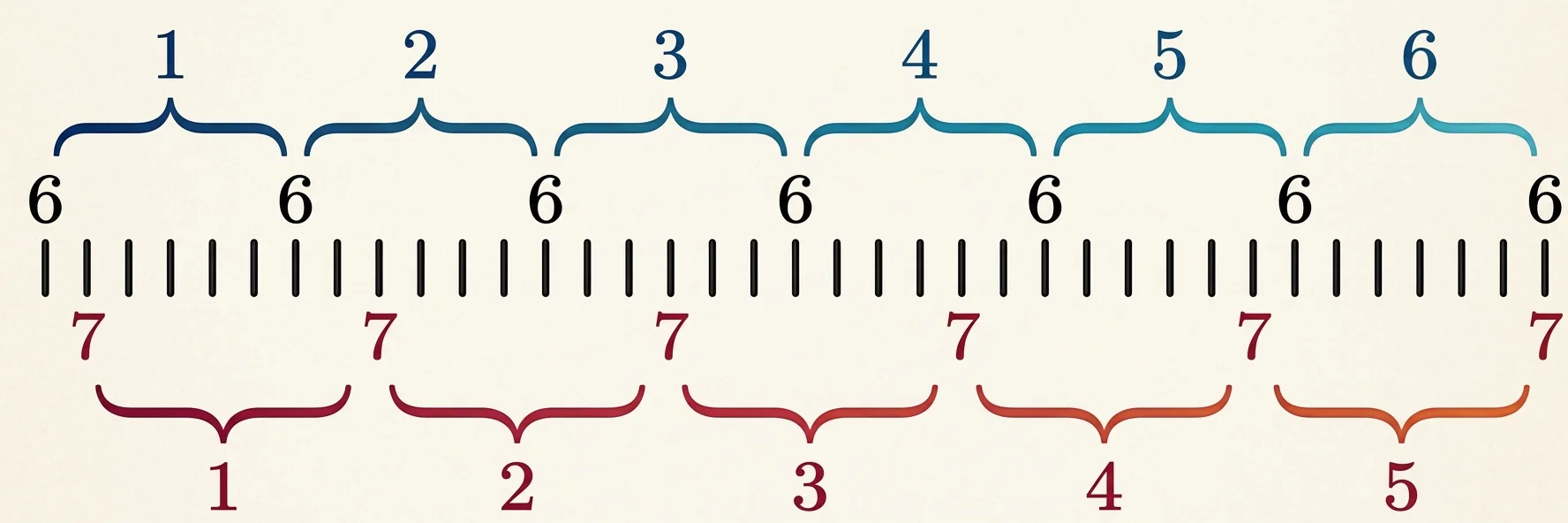
We will now suppose we are in the wilderness. This is the sixth day. Moses says, To-morrow is the Sabbath of the Lord, or seventh day. See verse 29. We take the first week of the falling of the manna for our starting point, when, according to the statement of this chapter, the sixth day and the seventh stood together; the latter immediately following the former. Now let us follow out this “proportional” system. As each day has a cycle of its own, we must count the cycle of each from each. Of course the cycle of the sixth day commences this sixth day, while the cycle of the seventh day commences to-morrow. Then the second sixth part of time would come in six days from this, while the next seventh part of time would come in seven days from to-morrow, with one full day between them. On that intervening day the manna which they had gathered the day before would corrupt, because it was not the seventh day; neither could they gather a double portion on that day for that was to be done only on the sixth day. Of course on that Sabbath they could have no food. The third sixth day would be followed by an interval of two days between that and the Sabbath; the fourth day, by an interval of three days, and so on to the sixth sixth day or sixth part of time, which would fall on the fifth seventh part of time. As this would be both sixth and seventh day, the cycles meeting here, one commandment would require them to gather a double portion of manna on that day, while the other would forbid their so doing! Nor could they have gathered any on the previous day for this anomalous sixth-seventh part of time, for that previous day was not a day on which they were permitted to do so. That this would be the case will be better seen by the following diagram:
The result would be the same in one more round, if the cycles were started on the same day. This surely traces the “proportional” idea to an absurd conclusion. But this is the legitimate conclusion of this seventh-part-of-time theory.
But there is another and still shorter method of showing the absurdity of this statement of Dr. Edwards, which is now followed by so many in their efforts to evade the truth on the Sabbath question.
If the terms sixth day and seventh day only mark proportions, then, also, the terms fifth day, fourth day, &c., only mark proportions. Who can deny this? Hence, as the seventh day means, not the seventh in order in the week, but the seventh part of time without regard to its place in the week, so the sixth day means the sixth part of time without regard to its position in the week. And, of course, the fifth day means simply the fifth part of time, ensuing regularly in five days; the fourth day means the fourth part of time; the third day, the third part of time; and the second day is the second part of time, or every other day! while the first day is every day!
With this argument from their premises, no fault can be found, and the conclusion is just and unavoidable.
But, answers our learned Dr., or whoever he may be that takes that position, this is a perversion; it destroys the week entirely, and subverts every calculation of time. Certainly; that is all true; and you knew it when you started out on your false theory of proportional days.