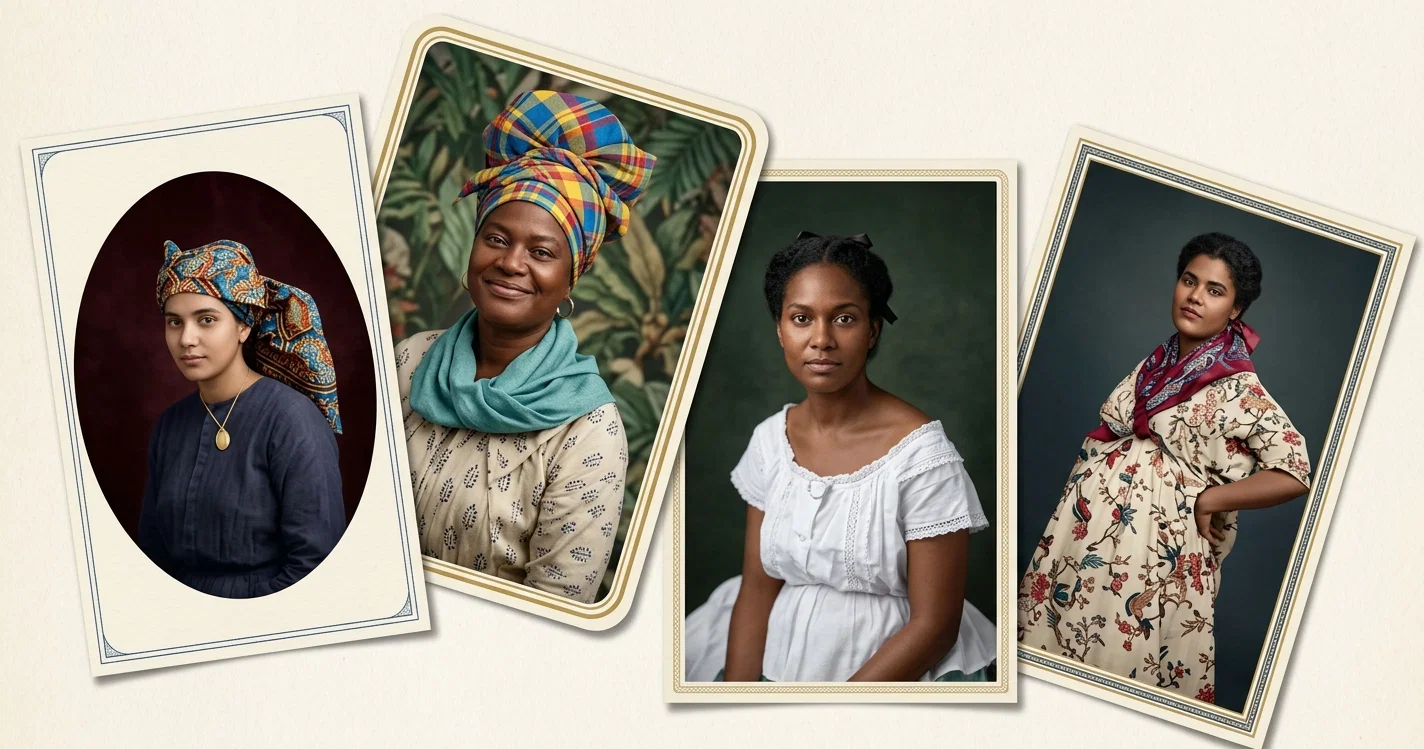
When a Hindu was asked if there was any point upon which all, however sectarian, were agreed, he replied, “Yes, we all believe in the sanctity of the cow, and the depravity of women,” and the Vedas declare woman to be an incarnation of sin.
A Sanskrit catechism reads thus:—
“What is cruel? “The heart of a viper. “What is more cruel than that? “The heart of a woman. “What is the cruelest of all? “The heart of a soulless widow.”
Another catechism reads thus:—
“What is the chief gate to hell? “A woman. “What bewitches like wine? “A woman. “Who is the wisest of the wise? “He who has not been deceived by woman, who may be compared to malignant fiends. “What is that which can not be trusted? “Woman. “What poison is that which appears like nectar? “A woman. “Who are fetters to men? “Women.”
“Blind sons support their parents, but a prince’s daughter extorts money from them.” That is, a son, however helpless, will care for his parents; but a daughter, however rich, will try to get all she can from them.
This estimate of women shows itself in all their social customs. The Indian wife must never appear in her husband’s presence with her face uncovered. She must leave the room if any other man appears. It is regarded as highly improper for a man to eat with his wife or any other woman, or to converse with one on terms of equality. The wife never addresses the husband by his name. To do so would be too familiar, an insult to his dignity. Some title of respect must be used, or, if they have a child, he may be addressed thru the child’s name, as the father of Kali, the father of Noni. If they have no child, she uses a respectful personal pronoun in addressing him or speaking of him to others. I had some very amazing experiences in trying to learn the husband’s name from the wife before I became acquainted with this custom. They can not be induced to pronounce it, tho some will venture to spell it, if they know how to spell. A short time ago in our Hindu girls’ school, one of the little mites insisted on skipping one word in her lesson. The teacher tried and tried to get her to pronounce it, but she as persistently refused. At last one of the older girls came to her rescue by explaining to the teacher that that was the child’s husband’s name, and how could she pronounce it?
A Bride of Eight.
Nurse Girls of the West Indies.
From the time she enters her husband’s home to the day of her death, the Hindu woman is practically a prisoner. If she goes out at all, it must be in a tightly closed conveyance, shut in from all observation. In her home itself there are many sources of discomfort and trouble. There may be two or more wives of the same husband. There are sure to be a mother-in-law, whose word is law, aunts, sisters, sisters-in-law, daughters, daughters-in-law, nieces,—some married, some widows,—people of all ages, and children of many degrees of relationship. Friction in such families is inevitable. However patient, gentle, and submissive the woman may be, many occasions for envy, jealousy, and discord are sure to arise. Under such circumstances, superstitious, ignorant, and without any elevating associations, it is inevitable that Hindu women should be liable to untold sorrow and misery.
In addition to all this is the added load of anxiety as to the possible sex of her child; for on that, over which she can have no possible influence, depends, to a great extent, her future weal or woe. If a wife gives birth to daughters only, Manu, the great Hindu law-giver, authorizes the husband to take another wife, and another, and another, until sons are born. It is not surprising, under these circumstances, that the blessing invoked on women over the greater part of India should be, “Mayest thou have eight sons, and may thy husband survive thee.”
But sad as the lot of the Hindu wife is, in some respects that of the widow is far worse. A father, in selecting a wife for his son, will prefer one out of a family in which boys are more frequently born than girls, and will avoid one in which widowhood is frequent; for next to the loss of caste, the presence of girls and widows in a family is regarded as the greatest misfortune. A son is the dearest possession of a family. His death is supposed to be caused by some sin committed by his wife, either in this or a former life. If he had not married her, his death would not have occurred. Therefore she is regarded as under the curse of the gods, and during the remainder of her life she is subjected to many hard and bitter experiences in expiation for her sin. Her only hope of release from her sufferings is death, or, what is worse, a life of shame, a refuge which thousands choose in preference to the intolerable torments of their widowhood.
Oftentimes in listening to the “old, old story” from the lips of a missionary, the Hindu women will exclaim, “Your Shastras must have been written by women; they speak so tenderly of us.” When Jesus was on this earth, the poor, the down-trodden, the oppressed, the ignorant, and the sorrowful, were those whom He most pitied and helped. He is the same yesterday, to-day, and forever; and if He were on earth to-day, ministering to mankind, I think He would turn most pitifully to the women and children of India, as the class most in need of His compassion and help. And yet at least nine-tenths of the one hundred and fifty million women in this dark land, to whom the Saviour’s love and pity go out so unceasingly, have never even heard that they have such a Friend, have never even heard the name of Christ. “How shall they believe in Him of whom they have not heard?”
The horrors of the famine and the devastation of the plague are written and talked of everywhere; but there is nothing so awful as these sorrowing millions living and dying without Christ. If our friends at home could only realize the wretchedness and the sorrow and the suffering of their Indian sisters; if they could only see them groping in the darkness of heathenism, without one ray of light, with none to teach them, no one to care for their souls, I am sure hearts would be touched, and many would be ready to say, “Here am I, Lord, send me.”
GEORGIA BURRUS.
Calcutta, India.
MISSION FIELDS AT OUR DOORS.
By E. J. B.
Porto Rico.
The beautiful island of Porto Rico is traversed from east to west by a line of hills or highlands. These are covered with vast forests, in which flowering trees of great beauty abound. The hills intercept the rain-laden northeast trade-winds; so while on the northern slope rains are abundant, on the southern slope severe drouths are frequent. The island, however, is well watered, having thirteen hundred streams, forty-seven of them considerable rivers.
The inhabitants are Spanish and persons of Spanish descent, Indians, Mestizos (Spanish and Indian), and Negroes, with an admixture of other elements.
It was Cuba that began the agitation in 1895; but the Porto Ricans have been involved in the consequences, and have had to suffer from the hard times.
The property-owners are a small class. They have withdrawn land from cultivation, thus throwing large numbers of people out of employment. And those who have work earn only from thirty to fifty cents a day. Poverty is evident everywhere.
“The market-places show it, for all commodities, such as articles of food, are sold in the smallest quantities. A squash is cut up into small pieces an inch square; meat is sold in little blocks for a few pennies. Small piles of beans and peas and potatoes, small baskets of smaller tomatoes, little messes of greens, invite purchase of the poor woman who haggles over the price of her comida, or dinner. This bit of meat, with the vegetables, is taken home and made up into soup over a little brazier of charcoal in the open court of the big house in which she has a room or two for her family. Many of the smallest children go naked, and one garment apiece serves for the older children and often for the mother and grown-up daughter.”13
Beggars are numerous. “All sorts of bodily deformities and diseases are displayed by them, such as blindness, twisted feet, dropsy, syphilitic sores covering the back, bruised legs, paralysis, and women carried in carts, or men seated by the wayside, hold up a maimed limb and beg for a pittance.”
Education is receiving attention, and the children are bright and anxious to learn. But “religion is not allowed a place on the curriculum; for it was found that pupils were kept an hour after school to learn the Roman Catholic catechism.”
A great need of the island is said to be a well-equipped general hospital. Many lives are lost for lack of proper medical care.
Surely Porto Rico, with her poverty and woe, and her deep need of Christ, appeals to our warmest sympathies. E. J. B.
LOVE FINDS SERVICE.
By Eben E. Rexford
What shall I bring to offer at Jesus' feet to-day, To prove how much I love Him, my debt to partly pay? All sinful and unworthy, I come with empty hands, And say, “Dear Lord, Thou knowest,” and know He understands.
But wherefore empty-handed? To-day the harvest waits, And we can all be reapers upon the Lord's estates; Each heart will thrill with gladness if, at the day's decline, It has a sheaf to offer, with “Master, mine is Thine.”
The heart that loves the Master some work for Him may find, It may be in the byways, and of the lowliest kind, But He will count it worthy, and tho the gift be small, He knows the love behind it, and that is best of all. —Eben E. Rexford.
THE PERFECTION Peanut Blancher
(Pat. Applied for.)
Is the missing link in the conveniences for making nut butter.
No nut mill is complete without one. Reduces labor nearly one-half. Will remove the skins and thoroughly clean 15 pounds of peanuts in five minutes. Weight, boxed for shipment, 20 to 25 pounds.
Regular price, $7.50. But in order to quickly introduce these machines, we will make a special introductory price of
$5.00
Good until July 30.
Send money by Post-office Money-Order, Express Money-Order, or Registered Letter. Be sure to write name and address plainly. Address
B. B. NEWMAN, 503 Harrison St., Tampa, Fla.
TESTIMONIALS
TO ALL WHOM IT MAY CONCERN:—
I had the privilege of witnessing B. B. Newman's Peanut Blancher in operation. An ordinary water bucket full of nuts was blanched in about five minutes. The work was thoroughly and satisfactorily done. I can heartily recommend the machine to any who are in need of such an instrument. Respectfully, 243 So. Boulevard, Atlanta, Ga. JNO. A. BRUNSAN
For the blanching of peanuts I have never seen anything to equal Newman's Perfection Peanut Blancher. I have seen the skins removed from twelve quarts of peanuts in five and one-half minutes, the work being done perfectly. It is self-feeding and can be operated by a child. C. P. WHITFORD. Box 508, Orlando, Fla.
THE BIBLE IN RUSSIA.
This immense empire stretches from Poland to Port Arthur, and includes nearly 140,000,000 of people, among whom the British and Foreign Bible Society distributes the Scriptures in over seventy different languages and dialects. The society’s total circulation in 1899 was 578,000 copies, half of which were either complete Bibles or New Testaments. Both Church and State in Russia show warm sympathy with the society’s work. Nearly eighty colporters are employed, who find a warm welcome in villages from the Russian clergy, and in barracks from the Russian officers. Many of these colporters receive free passes on the railways and steamboats, which form the main arteries of the empire. It is cheering to learn that the society’s privileges and exemptions in Russia have been recently revised, confirmed, and somewhat extended. For instance, Bibles in any quantity are transported free on all state railways, but over each private line not more than nineteen tons (!) of Scriptures per annum will be carried gratis. In 1899 Russian donations in money to the society amounted to £582. The vast provinces of Siberia are opening up each year more rapidly to colonists from Southern Russia. Its great iron road is creeping on eastward to touch the Pacific Coast. Translations of the Gospels are being pushed forward in several new languages spoken among the more remote Siberian tribes. We can praise God that His Word has such free course over the dominions of the czar.—Bible Society Reporter.
THE BEIRUT “PRESS” AND THE ARABIC BIBLE.
When the British Government publicly announced its intention to reconquer the Sudan by sending an expedition to Khartum, the Syria Mission foresaw a great increase in the demand for the Scriptures, as soon as the Sudan was open. The manager of the Press was at once directed to proceed to London in order to purchase a large and modern printing-machine, to be used exclusively for Bible work. Two years elapsed while the machine was being built, transported to Beirut, and set up ready for work. During those two years the English expedition had pushed victoriously up the Nile, and reopened the Sudan into the heart of Africa; and when the year 1900 opened, the Press had in hand orders from the Bible societies for over 40,000,000 pages of the Scriptures, more than can be printed and bound in a year and a half. Other orders have come, which will swell the output of 1900 beyond any year’s work in the history of the mission.
These are very tangible proofs of the fact that the Bible is to-day the most sought-after and best-selling book in the Arabic-speaking world—one-eighth of the human race.—Missionary Review.
Mission to Lepers in India and the East
THE mission to lepers in India and the East, founded in 1874, is now at work in fifty-six centers in India, Burma, Ceylon, China, and Japan, and is about to extend operations to Korea and Sumatra. It has twenty-four asylums of its own, fourteen homes for the untainted children of lepers, and aids ten other institutions. Of a total of 1,320 lepers and 188 untainted children under its supervision, gathered in nineteen institutions, from which statistics have been obtained, 1,147 profess Christianity, of whom 165 were baptized during 1899. In nineteen other institutions, not wholly under the control of the society, of 1,130 inmates, only 434 profess Christ, and only 30 were baptized during the year.
OUR WORK AND WORKERS.
During the latter part of May six members were added to the church in South Bend, Ind.
At the camp-meeting held at Waitsburg, Wash., which closed May 26, twenty-one candidates were baptized.
At Bloomville, Wis., two persons were baptized on the 12th ult. and four on the 18th, by Brother Swin Swinson.
A church of thirteen members, nearly all heads of families, was organized at Conde, S. D., May 26, where Brother E. G. Hayes has been laboring.
The city council of Boonville, Mo., have granted the free use of the beautiful park at that place for a camp-meeting and conference session. The meeting is announced for August 1-12.
Camp-meetings for July are announced as follows: Manitoba, at Carberry, 5-14; Louisiana, at Crowley, beginning on the 12th; South Dakota, at Custer, 16-23; Arkansas, at Rogers, 18-29; Kansas, at Burlington, 25 to August 5.
From the Indiana Reporter we learn that another of our aged ministers has fallen. Brother O. F. Guilford, of Clyde, Ohio, died May 21, in the seventy-first year of his age. He was a nephew of William Miller, leader of the advent movement of 1831-44.
A company of nine adherents to the faith is reported at Pleasant View, Ind., as a result of meetings held by Brother J. E. Collins. A small church building has been leased, with the privilege of purchasing at a low price, and arrangements are being perfected for purchase.
On the 9th inst., Brother George W. Reaser, for the past three years president of Upper Columbia Conference, left this city for South Africa. His special field of labor, as now contemplated, will be Pietermaritzburg, and Natal, in the colony of Natal. He is accompanied by his family.
In the Reporter of May 29, Brother A. I. Lovell says that the medical missionary work in West Superior, Wis., is “prosperous, both financially and otherwise. The people of the city to a large number have found by actual experience that there is genuine merit in the God-given measures for health restoration.”
There is to be a summer school and educational conference at Gull Lake, near Battle Creek, Mich., July 10 to September 3. The conference—a meeting of ministers, medical workers, and teachers—will be held July 10-20. The General Conference has arranged to furnish tents free to all who attend. For course of study, rates, etc., address E. A. Sutherland, Battle Creek, Mich.
When Jesus was laboring on earth to spread the Gospel message, He said of His preaching: “We speak that we do know.” Ministering in His name, our work is to “speak that we do know,” and only what we know. And how do we know what we speak?—By speaking only those things that are taught in the Word of Christ, the Scriptures of truth, things that He knew. When we say that “the seventh day is the Sabbath of the Lord,” and that “the coming of the Lord draweth nigh,” that it is “near, even at the doors,” we speak what we do know, because it is the Word of the Lord.
As this paper is being closed up, one week of the good camp-meeting in this city is past. The attendance is large, and a deep interest prevails. Sister E. G. White has spoken three times with power, altho on coming to the stand on Sabbath afternoon, she asked that those who had faith would pray that she might have strength and voice to speak. The prayer was answered in good measure; for her voice was clear and full, and she spoke for over an hour without realizing the length of time until reminded by her son. Brother A. T. Jones spoke Sunday morning and evening on the nations of prophecy, especially a comparison of the two great republics, Rome and the United States, and the formation of the image to the beast as depicted in the prophecy of Revelation 13. A deep interest was manifest on the part of the vast audiences present on both occasions. The subject was continued on the following evening by Brother J. O. Corliss, discoursing upon the three messages of Revelation 14. Brother H. Schultz, of Nebraska, is also present, and has given some very practical discourses. Brother W. S. Sadler, a prominent medical missionary laborer in Chicago, is giving special attention to the young people, in connection with ministers of the home conference and Brother B. L. Howe, of Honolulu. We look for good results from this large meeting.
Good Health
By Editor
Everybody wants it who hasn't it, but it is not always easy to get it
GOOD HEALTH is the leading health journal of the world, and no household should be without it. It is the purpose of this magazine to give scientific instruction to those who are well whereby they can keep well; to the sick whereby they may be able to get well. Subscribers are at liberty to ask questions, which are answered in the correspondence department by the editor.
A special offer is made to subscribers for the next sixty days. Send us a year's subscription to Good Health, $1.00, and the names of five persons who ought to be interested in the question of diet, and we will send you Good Health for one year, postage prepaid, and our
FAMILY BOX FREE
Just think of it! $1.50 worth of Battle Creek Sanitarium Food Co.'s and Sanitas Nut Food Co.'s cereal and nut foods, and other household necessities, and a year's subscription to Good Health, a 64-page magazine, 800 pages a year, all for $1.00. We could not do this only that the manufacturers have made us a present of these articles to use for this purpose, well knowing that the merits of the foods will secure for them sufficient trade to pay their expense. Cut out this clipping and send to us with $1.00 and we will do the rest.
N. B.—We do not pay freight or express charges. Have the goods go by freight. One Family Box weighs 14 pounds. Get six persons to join with you, which will make 100 pounds. Have all shipped to one address, and the expense will be but a few cents each.
GOOD HEALTH PUBLISHING COMPANY
Battle Creek, Michigan
VIRGINIA HOMES.
You learn all about Virginia lands, soil, water, climate, resources, products, fruits, berries, mode of cultivation, prices, etc., by reading the Virginia Farmer. Send 10 cents, for three months' subscription, to Farmer Co., Emporia, Va.
[Note to the Student.—These lessons are not designed to be exhaustive, but suggestive. In references to the “Desire of Ages,” in the lessons, the subscription edition is referred to. Those who have only the trade edition will find the matter in chapters 1, 4, 11, 27, 71, 77, 78; also read “Patriarchs and Prophets,” chapters 5 and 30. “Christ Our Advocate,” Bible Students’ Library No. 129 (price, 10 cents), and “Looking unto Jesus” (price, $1.00) will be found a great help. The SIGNS OF THE TIMES will have an article on the subject of each lesson this quarter by J. O. Corliss. Read these articles in connection with the study of the lesson. We have not space to print all the scriptures. Let the student study them carefully from the Bible. Those printed are from the Revised Version.]
1 “Now even the first covenant had ordinances of divine service, and its sanctuary was a sanctuary of this world.” “Now these things having been thus prepared, the priests go in continually into the first tabernacle, accomplishing the services; but into the second the high priest alone, once in the year, not without blood, which he offereth for himself, and for the errors of the people.” “And according to the law, I may almost say, all things are cleansed with blood, and apart from shedding of blood there is no remission. It was necessary therefore that the copies of the things in the heavens should be cleansed with these; but the heavenly things themselves with better sacrifices than these.”
17 “Wherefore it behoved Him in all things to be made like unto His brethren, that He might be a merciful and faithful High Priest in things pertaining to God, to make propitiation for the sins of the people.”
4 “Now if He were on earth, He would not be a priest at all, seeing there are those who offer the gifts according to the law; 5 who serve that which is a copy and shadow of the heavenly things, even as Moses is warned of God when he is about to make the tabernacle; for, See, saith He, that thou make all things according to the pattern that was showed thee in the mount.”
38 “Now this is that which thou shalt offer upon the altar: two lambs of the first year day by day continually. 39 The one lamb thou shalt offer in the morning; and the other lamb thou shalt offer at even; 40 and with the one lamb a tenth part of an ephah of fine flour mingled with the fourth part of an hin of beaten oil; and the fourth part of an hin of wine for a drink-offering. 41 And the other lamb thou shalt offer at even, and shalt do thereto according to the meal-offering of the morning, and according to the drink-offering thereof, for a sweet savor, an offering made by fire unto the Lord. 42 It shall be a continual burnt-offering throughout your generations at the door of the tent of meeting before the Lord: where I will meet with you, to speak there unto thee.”
7 “And Aaron shall burn thereon incense of sweet spices: every morning, when he dresseth the lamps, he shall burn it. 8 And when Aaron lighteth the lamps at even, he shall burn it, a perpetual incense before the Lord throughout your generations.”
SUGGESTIVE QUESTIONS.
What were connected with the worldly sanctuary? Heb. 9:1, last part.
Who performed this service? Whose service was it? Verse 6.
On whose behalf was it performed? Verse 7. (Heb. 7:27.)
Of what was the service of the earthly priest a type or shadow? Heb. 8:4, 5.
What, then, must be connected with the heavenly sanctuary? Heb. 9:1. Note 1.
What was the result to the person who refused to be separated from his sin? He was cut off. Num. 19:13, 20; 1 Cor. 3:16, 17. Note 4.
What was made necessary by this figurative transfer of sins to the earthly sanctuary? Heb. 9:22, 23. (Eze. 43:18-20.)
What is made necessary by the actual transfer of our sins to the heavenly sanctuary? Verse 23.
See article in another column “The Sin-Bearer.”
NOTES.
1. There were ordinances of divine service connected with the worldly sanctuary. These are described in Leviticus and Numbers, and briefly summarized in Heb. 9:6, 7. That sanctuary was a figure (verse 9), or pattern (verse 23), of the sanctuary, or true tabernacle, which is in heaven. Heb. 8:1, 2. And the services of the worldly sanctuary were an example or shadow of the services in the heavenly sanctuary. Verses 3-5. The worldly sanctuary and the service of the priests were to teach us by illustration in regard to the heavenly sanctuary and the work of our great High Priest.
2. “The daily service consisted of the morning and evening burnt-offering, the offering of sweet incense on the golden altar, and the special offerings for individual sins. And there were also offerings for sabbaths, new moons, and special feasts.”—Patriarchs and Prophets, page 352.
3. “The repentant sinner brought his offering to the door of the tabernacle, and placing his hand upon the victim’s head, confessed his sins, thus in figure transferring them from himself to the innocent sacrifice. By his own hand the animal was then slain, and the blood was carried by the priest into the holy place and sprinkled before the veil, behind which was the ark containing the law that the sinner had transgressed. By this ceremony the sin was, through the blood, transferred in figure to the sanctuary. In some cases the blood was not taken into the holy place, but the flesh was then to be eaten by the priest. Lev. 10:17. Both ceremonies alike symbolized the transfer of the sin from the penitent to the sanctuary. Such was the work that went on day by day throughout the year. The sins of Israel being thus transferred to the sanctuary, the holy places were defiled.”—Patriarchs and Prophets, chapter 30, paragraphs 33, 34. So the ordinances of divine service connected with the heavenly sanctuary are for the purpose of separating the sinner from his sins. “By faith the sins of the repentant are placed upon Christ and transferred, in fact, to the heavenly sanctuary.”
4. When a person sinned, the sanctuary was in a sense defiled, as brought to view in these verses; because it contained the law that had been transgressed. But until that sin was confessed, it did not become a part of the “iniquity of the sanctuary,” referred to in Num. 18:1; for the sinner still bore his own sin, and his own blood would be required to atone for it. But when confession was made, and his offering presented, the priest, through the blood, or the flesh, took the sin and bore it in a figure into the sanctuary. Thus the sinner was left free, and the priest stood responsible.