Your ShelfYour Projects

Signs of the Times, Vol. 24, No. 17.

THE GREATEST HUMAN PROPHET

Signs of the Times

Apr 28, 1898

Pacific Press Publishing Company · Oakland, California · Apr 28, 1898

THE GREATEST HUMAN PROPHET.
Man’s View.—If we were to ask of men their opinion as to the greatest prophet of sacred story (always excepting Jesus of Nazareth), some would say Enoch, some Noah, some Abraham, some Moses, or Isaiah, or Daniel, or Elijah, others Paul, or John. And surely these were all great men, made great by God’s grace, great in the influence they have exerted upon the church and the world.
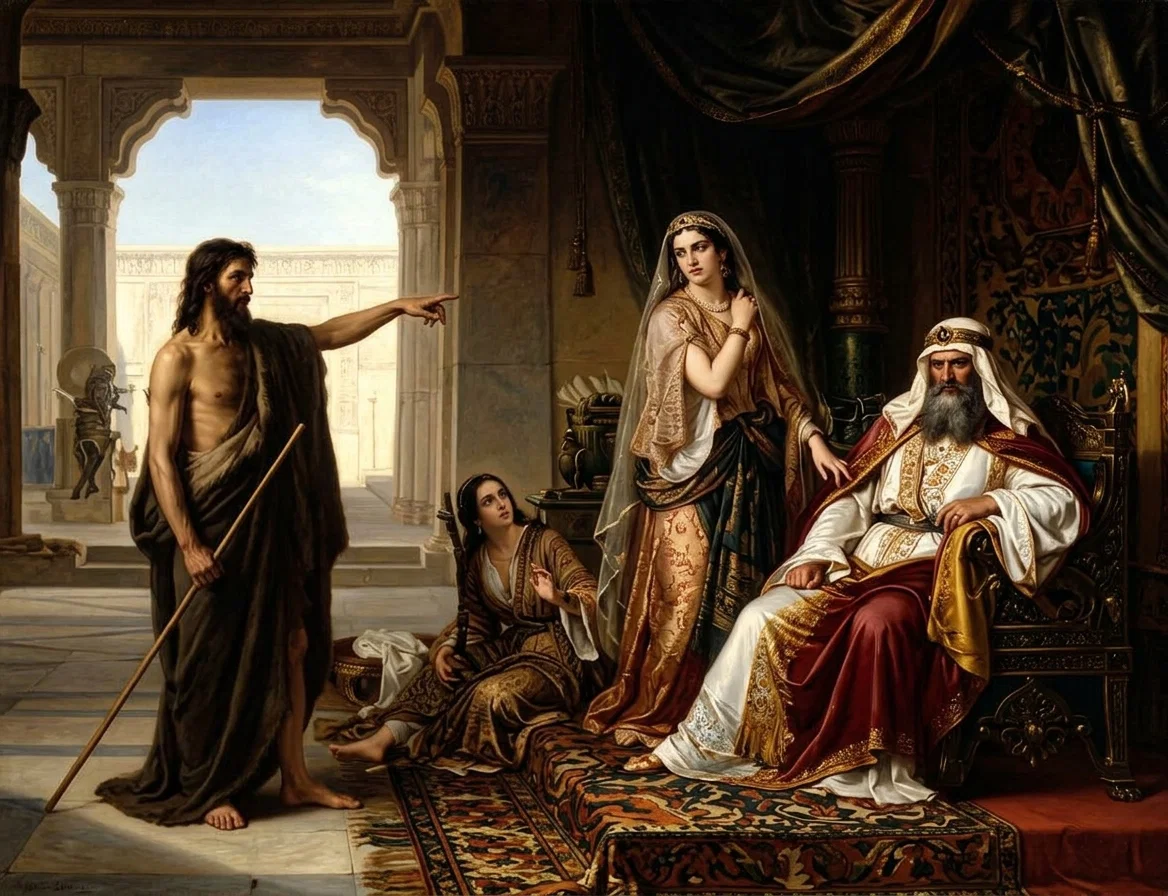
For John had said unto Herod, It is not lawful for thee to have thy brother’s wife. Therefore Herodias had a quarrel against him, and would have killed him; but she could not; for Herod feared John, knowing that he was a holy, and observed him; and when he heard him, he did many things, and heard him gladly. . . . executioner; . . . and he went and beheaded him in the prison.” Mark 6:18–27.
What Is the Divine View?—We ask the Word, and we are told: “Verily I say unto you, Among them that are born of women there hath not risen a greater than John the Baptist.” According to Him who should “not judge after the sight of His eyes,” a greater than all is John the Baptist.
Why the Difference?—Man sees not as God sees. The Lord sees chaff where we deem that we see wheat. He is the better judge of the relative fineness of the gold; for it is tried in His furnace. If America’s highest elevation, Mt. St. Elias, were placed beside Mt. Everest, it would not be counted worthy of consideration. Its shadow would be lost in the greater shadow of the king of mountains.
Looking at the matter from a wholly worldly consideration, the star of John the Baptist had the misfortune of dawning upon the world’s horizon just as the Sun of Righteousness was rising. The splendor of the star was lost in the glory of the sun. But from a divine view, this was a part of the preparation for the greater character.

In What Was He Great?

1. He Was Great in His Consecration.—“Filled with the Holy Ghost, even from his mother’s womb.” Trained by a godly father and mother when a child and youth, when he came to the years of accountability he early separated himself from the gay and thoughtless throng, from the covetousness and strife of the marts of the world, from the traditions, the vain scholasticism of the priests and scribes, and found in the study of God’s law and the solitudes of the Judean desert companionship with God and angels. “He was in the desert [wilderness] till the day of his showing unto Israel.” Here, amid the solitude of nature, under the bending, star-filled skies, he learned of man’s littleness and God’s greatness. He saw God in His works and in His Word. He saw the results of sin in the riven rock, in the barren land, in the dead tree and twig, in the savage beast, in every marring of the beauty of God’s handiwork. But above all these he saw God’s wisdom, goodness, love, and power to redeem, to restore, and to uphold.
2. He Was Great in Meekness.—Moses was meek. He learned it in his forty years’ schooling in the wilderness of Midian, keeping his flocks under the stars of God. John the Baptist learned meekness and humility in the wilderness of Judea. He saw God in His greatness, and doubtless over and over again came the inspired song of his lips, “When I consider Thy heavens, the work of Thy fingers, the moon and the stars, which Thou hast ordained; what is man, that Thou art mindful of him? and the son of man, that Thou visitest him?” He knew God, and, knowing God, he knew himself, and how small he was. Surely of whom can we learn as from God, in whom is all knowledge. This trait of character was exhibited in his work when he told of the Coming One, and when Jesus came to him to be baptized. To the multitude who thronged to hear him speak, he declared that he was not worthy to unloose the sandals of the One who was coming. To Jesus, he who was filled with the Spirit said, “I have need to be baptized of Thee, and comest Thou to me?” Yet he obeyed when the Master commanded—and without hesitation. When the priests and Levites sent a delegation to ask him who he was, he might have said that he was of the tribe of Levi and the son of Zacharias, a priest, authorized to speak, but he made no such claim. That he was not the Messiah, he plainly told them. Finally, to their insistent request, he replied, “I am the voice of one crying in the wilderness, Make straight the way of the Lord, as saith the prophet Isaiah.” The meek man knew his mission. He knew that the prophecy given seven centuries before was fulfilled in him. It was no hypothesis, no uncertain conclusion, no church dogma of succession of the priesthood. God had delivered the message to the meek man of the desert. The meek will He guide in judgment, and the meek will He teach His way.” John had listened to God’s voice in His Word and works; he was content to be a “voice” for God to the great, needy world.
3. He Was Great in Fearlessness.—So was Elijah the Tishbite, his prototype, and also a prophet of the desert. When a man has seen God, when God has accepted him, why should he fear mortal man? He had heard and received the word: “I, even I, am He that comforteth you; who art thou, that thou shouldest be afraid of a man that shall die, and of the Son of man which shall be made as grass; and forgetest the Lord thy Maker, that hath stretched forth the heavens, and laid the foundationsof the earth?” He bore a strong message to a strong people, whose hearts were hardened in pride and lust. To the great and learned of the leading sects, he preached the Gospel of repentance. They to be saved must repent, and “bring forth fruits meet for repentance.” Their place in the house of God would otherwise be filled, even from the very stones if necessary. More than this, John came before the proud, haughty, licentious, yet vacillating king, Herod Antipas. Herod was living in adultery with Herodias, the legal wife of his brother, Herod Philip. John said to him, “It is not lawful for thee to have her.” Such preachers are needed to-day,—men who can stand before kings and princes, and fearlessly, yet in the love of God, bear God’s message of reproof and healing. Men great in national, state, and municipal councils, members oftentimes of large and popular churches, are as licentious as Herod, in league with saloon-keepers, and are friends and companions of those who are corrupting and ruining the virtue of the youth of the world. Would to God that the watchmen in the various churches to which these men belong, would bear the same plain message that John the Baptist bore, “It is not lawful” according to God’s law; as Elijah did, “As the Lord God of Israel liveth, before whom I stand,” “ye have forsaken the commandments of the Lord, and thou hast followed Baalim.”
4. He Was Great in Unselfishness.—He did not long for the highest place. He did not worry and fear lest his greatness or ability should not be recognized. His burden was for God’s work. When our Lord came, and the wonderful message of power and healing fell from His lips, the great throngs left John and went to Jesus. His friends grew solicitous. Satan through them hoped to stir up jealousy. They went to John, and said: “Rabbi, He . . . to whom thou barest witness, behold, . . . all men come to Him.” But the prophet answered: “A man can receive nothing, except it be given him from heaven. Ye yourselves bear me witness, that I said, I am not the Christ, but that I am sent before Him.” “He must increase, but I must decrease.” John knew it. The light of the rising sun hides the brightness of the morning star. The star-worshipper may mourn, but not God’s star. Said John, “He that hath the bride is the Bridegroom [Christ]; but the friend of the Bridegroom [John the Baptist], which standeth and heareth Him, rejoiceth greatly because of the Bridegroom’s voice: this my joy therefore is fulfilled.” It matters not tho the greater glory eclipsed John’s light; he rejoiced in the added glory that had come to God’s people. The Saviour had come; he asked for no more—wanted no more.
5. The Greatness of His Work.—What wonder that God chose such a man for the immediate herald of His Son, the special messenger of the King of kings and Lord of lords, even tho that king came in lowly garb! Mighty, searching, humiliating, sadly joyful was indeed John’s work. He would not see the triumph. While yet our Lord was unrecognized save by few, John was cut off by Herod, cut off because he preached a Gospel of saving truth, which would have saved the one who killed him had it been received. No wonder that the demons of discouragement pressed upon his soul in the latter days of his prison life—not that he had doubt of the message he bore; he only questioned whether Jesus fulfilled it; but he asked not of the enemy or his agents, but of Jesus Himself. And Jesus did not reply in words, but let His own works witness to John’s message.
A Prototype.—Elijah was a prototype of John the Baptist. Elijah and John the Baptist are prototypes of the people of God who shall bear His last message to proud and popular churches, to the downcast, downtrodden, and poor of earth, to the vilest and hardest of sinful hearts. (See Mal. 4:5, 6; Matt. 11:7-14; Luke 1:17.) What must be the character of those who would be voices for God? Read the answer in the Book of God, of which these notes are the merest echoes. Yield to God everything, as did John. “Be filled with the Spirit.” “Receive ye the Holy Ghost.” Then will God’s messengers not be reeds shaken by the wind, liberal in all things save the pure Gospel of the Word; they will not be noted for the soft raiment of ease and luxury, proficient in all the manners of kings’ courts; but they will be voices for God, messengers of the Coming One, whose glory is soon to fill the earth. Blessed mission of life and light and love! Precious lessons are these which God gives us! O soul, study them in the light of God! And that you may do God’s work and herald His coming, “receive ye the Holy Ghost.”
X.

CHRIST’S INVITATION.

“Come unto Me, all ye that labor and are heavy-laden, and I will give you rest. Take My yoke upon you, and learn of Me; for I am meek and lowly in heart; and ye shall find rest unto your souls. For My yoke is easy, and My burden is light.” This invitation presented a direct contrast to the teaching of the priests and rulers. They laid heavy burdens upon men, enforcing ceremonies that reached to every step in life. The service of God was made a ritual burden, and the people were constantly under a sense of violation. They lived in continual unrest; for they could not possibly fulfil the requirements laid down by the priests.
The rigorous exactions bound on the Jews did exactly what Satan designed they should do. The people saw the impossibility of keeping man-made commandments, and this made them careless in regard to God’s commandments. The commandments of men were placed on a level with the commandments of God. Wearing so grievous a yoke, the people could in no way present to the world a correct representation of God.
The Sabbath was so cumbered with useless restrictions by the priests that its true significance was lost. It was made a burden, and its meaning was hidden by traditions and man-made rites. This was done by the priests because they knew that their want of true godliness must be supplied by an outward pretense of piety. Christ declared: “They bind heavy burdens and grievous to be borne, and lay them on men’s shoulders; but they themselves will not move them with one of their fingers. But all their works they do for to be seen of men; they make broad their phylacteries, and enlarge the borders of their garments.”
The rule of the Jewish priests was cold and loveless. Their many exactions could have originated only with the instigator of all sin. Christ said of these leaders: “Wo unto you, scribes and Pharisees, hypocrites! for ye pay tithe of mint and anise and cummin, and have omitted the weightier matters of the law, judgment, mercy, and faith.”
“Then spake Jesus to the multitude, and to His disciples, saying, The scribes and the Pharisees sit in Moses’ seat; all therefore whatsoever they bid you observe, that observe and do; but do not ye after their works; for they say, and do not.” It was the Lord’s appointment that the Scriptures should be read publicly every seventh month. During their captivity the Jews had not observed this command. They repented of their sins, and when they returned to Jerusalem, they made request to have the Scriptures read to them. A platform was erected, and Ezra read to them from morning till midday. But sin had increased, and at the time of Christ’s advent the priests taught for doctrine the commandments of men; and the people had become very ignorant of the Word of God.
Christ came to reveal God. He did not lay upon His followers so many exactions that they became discouraged, and by their actions taught that the law of God is a yoke of bondage. He invited the weary and heavy-laden to come to Him and find rest. He asked them to bring their cares and burdens to One who would indeed be to them a true helper. “Come unto Me, all ye that labor and are heavy-laden,” He cried. Let the yoke that is so galling to the neck be exchanged for My yoke. You have received incorrect ideas of what constitutes godliness. Learn of Me, and you will find rest unto your souls. “For My yoke is easy, and My burden is light.”
To-day it is claimed by some that the law of God is a yoke of bondage. But this is not so. The human additions to it are what makes it grievous to be borne. The law is holy, just, and good. But none can keep this law without accepting the righteousness of Christ. In His strength all may be wholly obedient. Through His grace they can show to the world a character like His, holding up by precept and example the high and holy standard of the divine law. They do not weave their own requirements with God’s, passing them off as genuine. They have learned in the school of Christ, and ever, as did Mary, they will sit at His feet. Thus they may be teachers of truth.
Jesus came to our world, His divinity clothed with humanity, to live a man among men. He came to live the law of God. When He came, He found that the only nation that claimed to have a knowledge of God, was mistaking tradition for truth, and pretense for piety. Interest in eternal things was well-nigh obliterated. Delusion was taught as truth. Eternal realities were obscured by phantoms. Satan had misinterpreted the Father.
Christ taught that temporal interests must be subordinated to the things of eternity. He urged men, instead of being all-absorbed in the things of time, to contemplate the life that measures with the life of God. He showed His followers the confederacy of evil arrayed against all who fix their eyes on heaven. He told them plainly that they were engaged in a warfare against Satanic instrumentalities, and that angels of God fought their battles for them, but that these angels could do nothing without the coöperation of humanity. He told themthat if they would do God’s service, they must be consecrated to Him. If they fought manfully in the battle of the Lord, they would receive immortality and a crown that would brighten through eternal ages.
In the warfare of good against evil, unseen, heavenly agencies are in the ranks of God’s servants. “Be of good cheer,” Christ said, “I have overcome the world.” With all heaven engaged in the warfare against sin, how can we be listless? Why not accept the help of the Holy Spirit, and fight as in the presence of the heavenly universe, looking undauntedly into the face of every foe, and saying with heart and voice: “Be of good cheer. Christ has overcome the world. Because He lives, we shall live also”? At every step we should advance heavenward, the eye fixed upon the crown of life, the hands employed in saving those who are ready to perish.
“Ye are the light of the world.” The rays of light, shining from the living stones in the temple of God, disturb those who are resting in false security. The world would gladly forget eternity, but it can not wholly succeed in doing this while there are men and women who cheerfully and gladly wear Christ’s yoke and bear His burden, singing as they carry them in His strength. Linked up with Christ, they are channels of light. Full of earnestness, love, and true Christlike sympathy, they reveal Christ to the world. Christ fills them with His Spirit; and they are indeed living stones, emitting the light of the Sun of Righteousness.
God has His chosen standard-bearers. They are precious in His sight, and as long as they hold aloft the banner on which is inscribed the commandments of God and the faith of Jesus, the trumpet gives a certain sound, and the attention of worldings is called to eternal realities.
These men and women are in harmony with Christ. Their lives are guided by His principles. They keep His commandments, not as if they were a galling yoke, but willingly, cheerfully. As they advance in harmony with the great standard of righteousness, they make melody to God in their hearts, singing as they walk in the way of happiness:—
“Blessed are the undefiled in the way, who walk in the law of the Lord.
“Blessed are they that keep His testimonies, and that seek Him with the whole heart.
“They also do no iniquity; they walk in His ways. . . .
“Give me understanding, and I shall keep Thy law; yea, I shall observe it with my whole heart.”
“My hands also will I lift up unto Thy commandments, which I have loved; and I will meditate in Thy statutes. . . .
“Thy testimonies are wonderful; therefore doth my soul keep them.
“The entrance of Thy words giveth light; it giveth understanding unto the simple.
“I opened my mouth, and panted; for I longed for Thy commandments.”
“Make me to understand the way of Thy precepts; so shall I talk of Thy wondrous works.”
This is the light in which we may regard the law of the Lord. Instead of giving the impression that the yoke of Christ is grievous, we may demonstrate the truthfulness of the words, “My yoke is easy, and My burden is light.”
Satan has arranged matters to suit himself. He has declared the religious life to be a life of exaction, of galling sacrifice. Shall we not strive to counteract this by revealing Christ as He is,—a compassionate Redeemer, who is constantly saying, “Come unto Me, all ye that labor and are heavy-laden, and I will give you rest”? Show the world that you keep the commandments of God because it is for your happiness to do so, even in this life. The reward of obedience is indeed pledged, in this life and the next. “Blessed are they that do His commandments, that they may have right to the tree of life, and may enter in through the gates into the city.”
MRS. E. G. WHITE.

WROUGHT BY PRAYER.

MORE things are wrought by prayer Than this world dreams of; wherefore let thy voice Rise like a fountain for me night and day. For what are men better than sheep or goats That nourish a blind life within the brain, If, knowing God, they lift not hands of prayer Both for themselves and those who call them friend? For so the whole round earth is every way Bound by gold chains about the feet of God.
—Henry Elliott Mott.

THE SPIRIT—HOW OBTAINED AND RETAINED.

AS IT is the purpose of God, which will certainly be fulfilled, to have all the existing intelligences of the universe one in spirit, we are now prepared to ask, How is one who has not the Spirit to obtain it? and how may one who has the Spirit retain it? It is not necessary at present to discuss whether our present relation to God is the one required by Him? It is sufficient to answer the two questions here proposed, as briefly as possible. The way to obtain the Spirit if we have it not, and to retain it if in our possession, is to follow the direction of the Master of the Spirit. As the Spirit of God is required, and we are not God, no exertion on our part can gain or keep it except it be that which God tells us to do. There is not a solitary thing besides this that we could do except to institute a system of “will-worship.” Then if it should happen that we are bad by nature, the more of this we practise the worse we become—the more unlike the Spirit we become—for right here comes in a principle recognized by all, viz., man is conformed to the image of the object worshiped. When we set up a system of will-worship, we make self our god. Then, as “the heart is deceitful above all things, and desperately wicked,” it follows that every iota of will-worship engaged in tends to make us more deceitful and more wicked. Therefore, we say again, that which is required of all, and all that is required of any, is to follow the direction given by the Giver of the Spirit.
But we are on earth. God is in heaven. He does not audibly speak to mankind in general. How then may we know His requirements? Since all who are to exist eternally are to possess the Spirit, and it is His desire that all exist eternally (1 Tim. 2:4), He certainly will give to all the opportunity of knowing how to obtain the Spirit. This He has done by giving us His Word—the Holy Bible. This Word is all-sufficient to direct us. As proof see 2 Tim. 3:15–17:—
“And that from a child thou hast known the Holy Scriptures, which are able to make thee wise unto salvation through faith which is in Christ Jesus. All Scripture is given by inspiration of God, and is profitable for doctrine, for reproof, for correction, for instruction in righteousness; that the man of God may be perfect, thoroughly furnished unto all good works.”
What more can any one ask than to be “wise unto salvation,” or “thoroughly furnished unto all good works,” or made “perfect”? This the Word does for each individual who accepts it fully. To accept it is to receive it as the living Word of the living God. See also Mark 16:15, 16 with 1 Peter 1:25, as further proof that the Word is all-sufficient.
As the Word of God is that which is to be followed to gain possession of the Spirit, and the following of it is all that is needed to retain it after it is gotten, therefore he who trusts the Word has the Spirit by virtue of trusting the Word. But if he has the Spirit by virtue of following the Word,—the direction for its possession,—then he who refuses to follow the Word can not have the Spirit. This reaches to the most minute particulars; for if one refuses to follow God’s Word in the least, he might as well refuse in all. This is put beyond all dispute in James 2:10, 11: “For whosoever shall keep the whole law, and yet offend in one point, he is guilty of all. For He that said, ‘Do not commit adultery,’ said also, ‘Do not kill.’”
The same authority is behind one word of God that is behind every other word, so he who defies the authority of God in one point would, under the same strain of temptation, defy the same authority on any and every point. Hence he who is guilty of this act—defying God by disregarding His Word—is said to be guilty of breaking all the commandments, altho he may in reality be guilty of breaking but the smallest. He therefore who does not listen to God’s Word has a spirit that is enmity against God instead of union with Him.
Let us not pass this too lightly by; for other things are here involved. If one refuses God’s way, he must accept some other way in its place. Having refused God’s way, the logical thing to do is to accept one’s own way. This he who has rejected God is sure to do. And no matter how saintly the one may appear who does it, nor how small the cause of stumbling, in rejecting the Word he is doing just what Satan did in the beginning.
As God’s purpose for the universe is complete oneness, the one who would work against God must work against that oneness. Since the means of fulfilling this purpose is His Word, the one who would oppose the purpose must oppose that by means of which the purpose is to be fulfilled, that is, he must oppose the influence of the Word. The first step which Satan must get one to take to lead him away from God is to refuse the Word. The second step is the logical result of the first. Having taken the first step—refused God’s way—the second step—taking one’s own way—can not be refused, it must be taken. Satan well knows that if he can get men to leave God’s way, they will take their own way, and all that remains for him to do is to shape their desires.
We will thus expect to see Satan work for the destruction of souls in the very way stated above: (1) He will try to destroy faith in God’s Word; (2) then those who lose faith will accept self instead of God, and, (3) he will thus gain complete control; for he can influence self, but not God’s Spirit.
The one great point for Satan to guard in the sinner is to keep him from heeding God’s Word. As long as he can successfully do this, he has him. It is because of this that when one is sent to preach the Gospel of reconciliation, the commission comes to him in thunder tones, “I charge thee therefore before God, and the Lord Jesus Christ, who shall judge the quickand the dead at His appearing and His kingdom: Preach the Word.” Then, as this Word reclaims the sinner, Satan always wages a war of extermination against those who preach and those who accept the Word.
As the purpose of God is complete union, the one who would work against God can bring only confusion or discord. It matters not what he may design, as long as he can not give that “one” Spirit, he can give but discord; besides, the only way to make his influence complete over his followers is to persuade each of them to take self for all, and then tempt them by drawing each away after his own desires. But as men are not alike, as no two of them have the same desires, who can not see that for each to follow his own wishes is confusion itself? We see, then, that the work of God is all for union; while the work of Satan is all for confusion. Can we wonder, then, if the Book of Truth should designate the work of Satan, when manifested on a grand scale, by the epithet confusion, or “Babylon”?
Babylon, then, is composed of that class who have refused God’s truth in some particular, and in its place taken their own way, and whom Satan is drawing away in different directions. Babylon is composed of those who have not the spirit of union. When the term is applied to anything that could fall, it must apply to Christians, for none but Christians could fall morally. C. L. EMERSON.

A HYMN IN THE NIGHT.

Dear Saviour, seal this heart of mine, Forever more to be A consecration wholly Thine; With Thy pure love, my life refine, And bind it unto Thee.
O, fill my soul with heav’nly love, And breathe its unction there! Descend, O blest, angelic dove, Bestow thy riches from above, Answer my humble prayer!
Then shall hope’s star-enkindling beam Its warmth my soul entwine, And faith shall part with radiant streams The cloud’s deep vail of gloom, with gleams Of light from the Divine.
Its clasp shall still the mourner’s sigh, Shall dry the mourner’s tear, And raise to heaven the dewy eye From shadows deep, the sunny sky Emerge with holy cheer.
God and His Son by man be known As never known before. When Faith and Hope and Love have shown Their righteous fruits, the earth shall own The truth’s victorious power.
VINA A. SUMNER.
Syracuse, N. Y.

UNION—IN CHRIST NOT IN MEN.

In these days there is no end to the advocacy and organization of “unions” and “unions.” The very air is full of the sentiment, and every community is full of the agitators of the principle along the lines of religious, political, business, and social unions. In no particular direction is the agitation more pronounced than in that of religious and reform work. Union is relied upon for success, by the earnest workers in every cause, but especially is this true in a marked degree in the cause of religious and moral reforms.
The truth of the adage, “In union is strength,” can not be denied; neither can the scripture be broken which says that “a house divided against itself can not stand.” Therefore, in no cause are union of purpose and union of action more fitting, essential, and absolutely necessary than in that of religion. Christ prayed that His disciples—those who learn of Him to follow Him—might be “one.” If the conditions are complied with, this prayer is as sure of answer in the present as at any time in the past or future. If we are truly learners of Christ and not of men, if we indeed “follow on to know the Lord” for ourselves, and are not satisfied with simply learning of men what they have learned of Him, we shall receive the most blessed answer to it in our own hearts and experience.
But with this prayer ever before us, and the possibility of its fulfilment theoretically recognized by professed Christians of every name, a condition exists which is in strange contradiction to the spirit and letter of it. And why?—Because a false idea of union has taken the place of the true. A union of men with men, an association of men professing union with Christ, has come to be accepted as indeed union with Christ. Human wisdom in some form is made the center and bond of the union, rather than Christ and His wisdom.
There is nothing to which the enemies of Christ point with more exultation than to the divided condition of so-called Christianity. Is this because Christ is divided? Rather, is it not because some are “of Paul,” and some “of Apollos,” “ministers by whom ye believed”? In other words, has not this condition been produced wholly by making men the center, and accepting human instead of divine wisdom?
One man of ability and devotion, in studying Christ—the “Truth”—has seen charming beauties in His character and teachings. He has not seen all there is in Him; but those features which have particularly attracted him he has presented to those about him. This was his duty, but in doing so, he failed to successfully direct the individual to the personal study of Christ for other and new beauties. He and His views of Christ become the center to which his hearers are attracted rather than to Christ. They behold only the glory which he beholds and portrays to them. They rejoice in the experiences in which he rejoices. There is not that individuality of experience and growth which would result from a more independent personal acquaintance with Christ and with God through him.
As there comes a natural settling down with satisfaction upon these views, and no further advance study invited, a denomination is formed; and it, rather than the simple life of the Saviour as a man, and as our personal example and teacher, becomes the embodiment of the principles which make up the individual ideal standard of Christian living.
TRUE UNION IN CHRIST. “And I, if I be lifted up from the earth, will draw all men unto Me.” John 12:32.
Others of equal ability and devotion in their study are attracted by other features of the “Truth.” The same process is carried out, and another and still another denomination is formed. Each of these has been organized upon the principle of union. It has, however, been a union of men in men, and not a union of which God and Christ alone are both center and circumference—the all and in all.
This popular sentiment of union is now embracing far more than the unifying of belief and practise within the denomination. The uniting of young people’s societies of the various denominations in the Christian Endeavor movement, the subject of “Church Federation,” which at the present is attracting so much attention, and other like moves, illustrate the more extensive application of the principle.
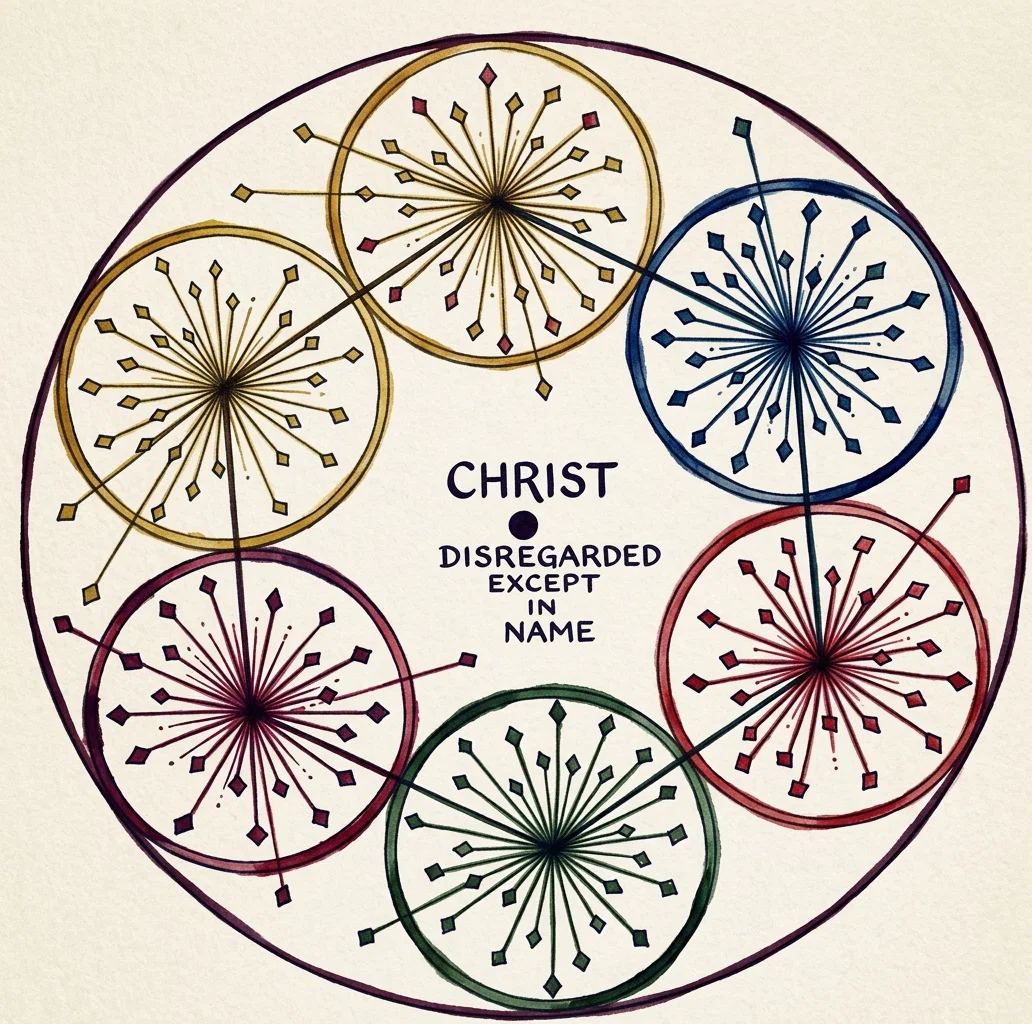
While this interest in and zeal for union result in something of a uniformity of sentiment and action upon particular points held in common by all, it is nevertheless only a union in name. It is at best only a flimsy covering to a mass of confusion and contradiction, both in doctrine and in life. It lacks the essential element of true union,—love for, and oneness in truth. It passes for union, because differences are suppressed in the interests of some measure upon which all are selfishly united, and to secure which they rely upon united human wisdom and strength rather than upon God alone.
And even tho such a union claims to be union in Christ, it must be wholly without Him so far as the element of union presented is concerned. Christ is the “Truth.” Anything, therefore, which knowingly suppresses or rejects any part of the truth for the sake of so-called union, to just that extent rejects Christ.
True union draws individual believers from diverse views and from different positions toward one center—the Truth. False union will form various centers about the true, each containing some point of truth, but more error, and then endeavor to unite these centers without the sacrifice of error. But this plan never works except by omitting the true center altogether. The true and false are presented in the accompanying illustrations.
The only “Christian union” which will endure, and that only which is worthy the name, is that in which each individual is in personal union with Christ, depending upon no one or nothing else for his “wisdom, and righteousness, and sanctification, and redemption.” Individual, independent dependence upon Christ is true union with Him as the source of all benefits, and with all true believers as recipients, together with us, of the same. “Neither pray I for these alone, but for them also which believe on Me through their word; that they all may be one; as Thou, Father, art in Me, and I in Thee, that they also may be one in Us; that the world may believe that Thou hast sent Me. And the glory which Thou gavest Me I have given them; that they may be one, even as We are one; I in them, and Thou in Me, that they may be made perfect in one; and that the world may know that Thou hast sent Me, and hast loved them, as Thou hast loved Me.”
FALSE “CHRISTIAN UNION” AND CHURCH FEDERATION.

“Say ye not, A confederacy, to all them to whom this people shall say, A confederacy; neither fear ye their fear, nor be afraid.” Isa. 8:12.
FALSE “CHRISTIAN UNION” AND CHURCH FEDERATION. “Say ye not, A confederacy, to all them to whom this people shall say, A confederacy; neither fear ye their fear, nor be afraid.” Isa. 8:12.
John 17:20-23. E. W. WHITNEY. Boulder, Colo.

“WITHOUT SPOT OR WRINKLE OR ANY SUCH THING.”

As I PASSED through a laundry recently, I watched the worker looking over a pile of clothes that had already passed through a washing. The greater part of them was clean, but on some of them were stains which the washing that had cleansed the others had failed to take out. To these stains the worker applied a fluid which removed them, leaving the garment clean and white.
As I passed by the mangle, I noticed how careful the worker was to smooth out the wrinkles before the clothes passed between the heated rollers of the wrangle; for if they were not smoothed out before, the pressure of the heated rollers served to make them only deeper and more distinct.
And then I thought of my life, and I prayed that the gracious Lord would apply the cleansing blood to the deep-set stains of my character, and make them white, lest the cleansing I have already received serve only to make them the more prominent. And as the worker smoothed out the wrinkles in the clothes, so I prayed my God to let His own gentle hand smooth out the wrinkles sin had made before He permitted me to pass through the heat and pressure of affliction and sorrow, lest the trial designed to smooth them out, should press them only the deeper, and make them the more permanent.
So does God desire His people to be made “without spot or wrinkle or any such thing.”
A. S. ERVANT.
Continue reading: INVISIBLE WALLS