ONCE when the disciples of Christ were calling the attention of the Master to the beauties of the temple at Jerusalem, he told them that the time would come when not one of the immense stones of which the temple was built should be left standing upon another. The disciples supposed that such a calamity as this would take place at the end of the world, and asked him when the temple would be destroyed and what would be the sign of the end of the world. Christ not only gave them the definite sign of the destruction of Jerusalem, but he also gave signs which were to precede his second advent and the end of all things. After speaking of signs in the sun, moon, and stars, he mentioned signs which were to be seen on the earth. Among others was “the sea and the waves roaring.”
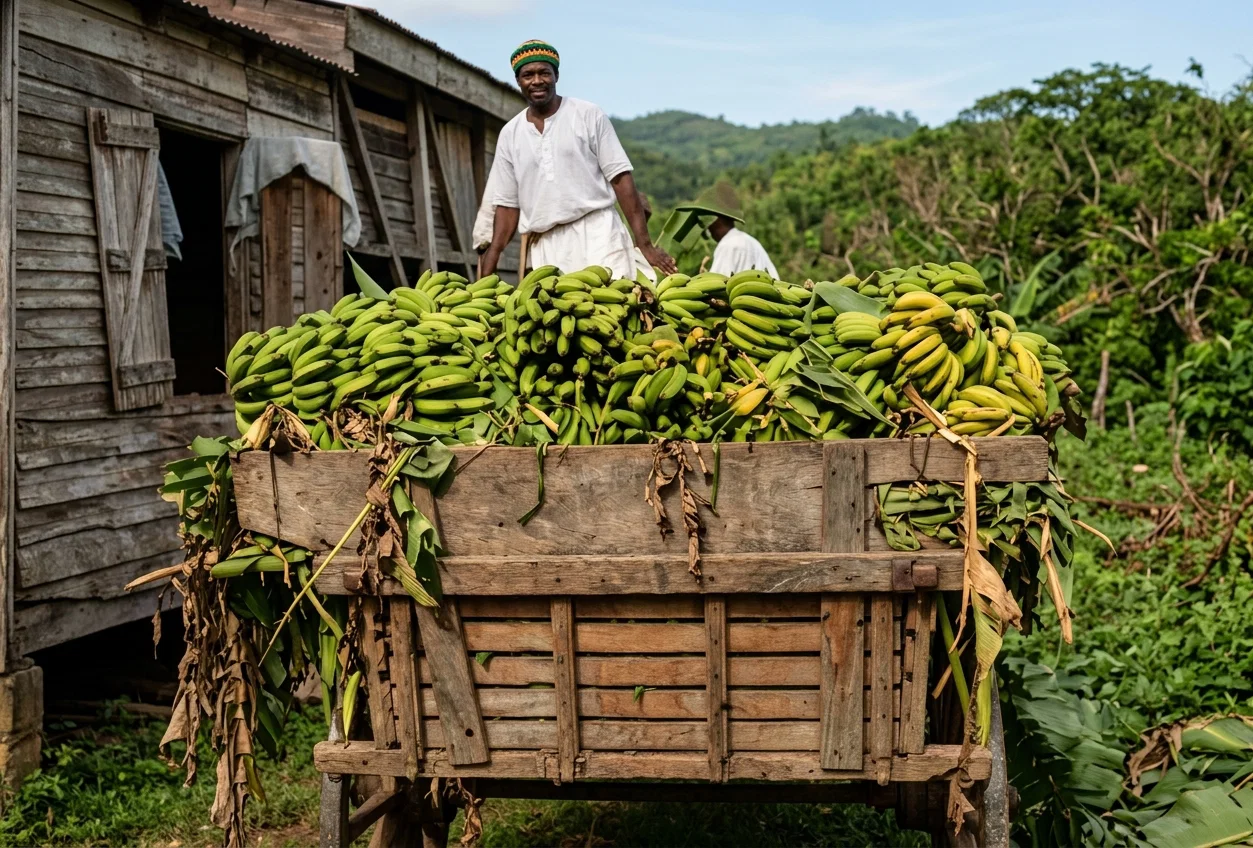
A fulfilment of this prophecy was seen in a great storm which occurred in the West Indies, doing great damage to property on the island of Jamaica. Brother E. R. Button, of Riversdale, Jamaica, sends a description of this storm and some of the damage it did. He says:—
‘The hurricane that swept the entire island of Jamaica on August 15, was certainly a severe one, and carried in its wake wreck and ruin everywhere. Our people, in common with others, suffered in many ways. Some of their homes were blown away, and their crops destroyed. They thus sustained a loss from which it will require many months to recover. So far as is known, none of our people on the island were killed.
Photo by E. R. Button
LOADING BANANAS SAVED FROM THE WRECKAGE
Photo by E. R. Button
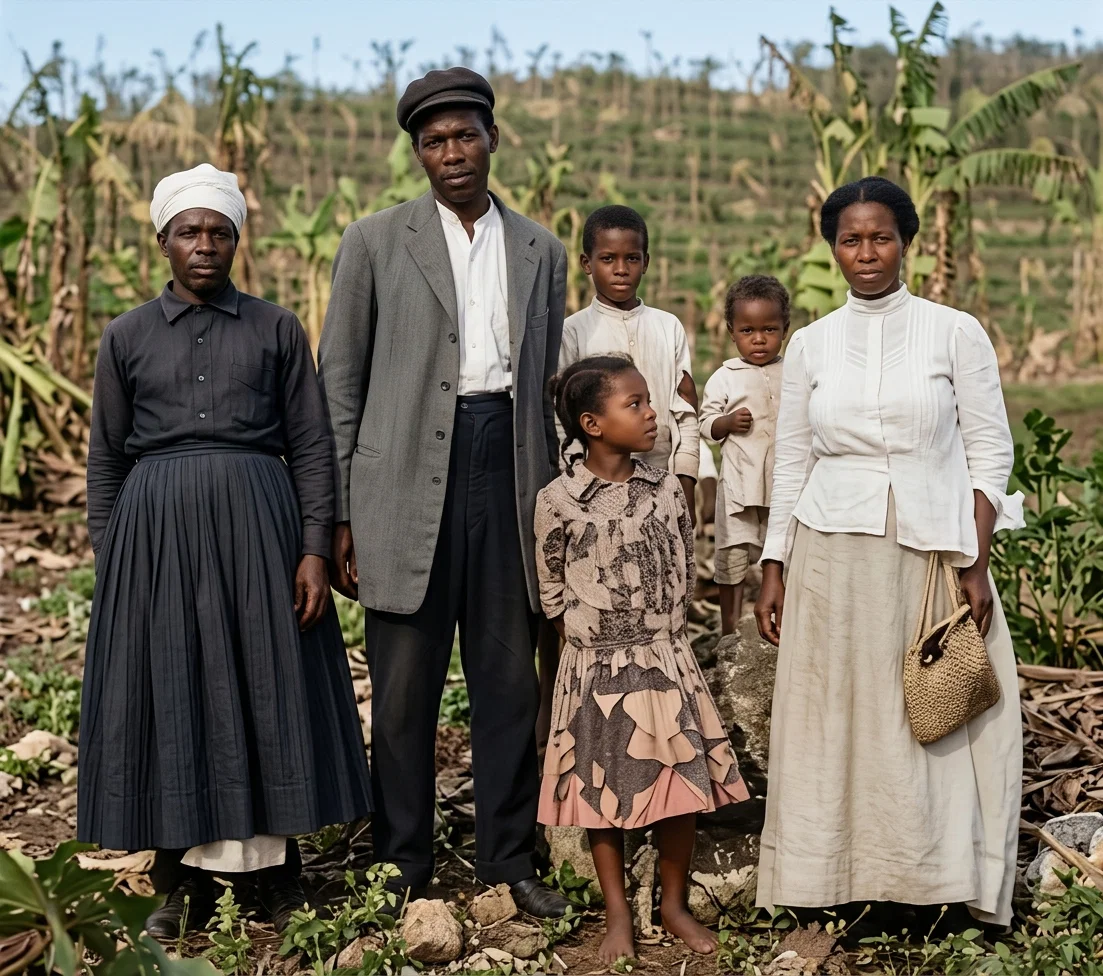
Seventh-day Adventist refugees, whose home
was destroyed.
Photo by E. R. Button
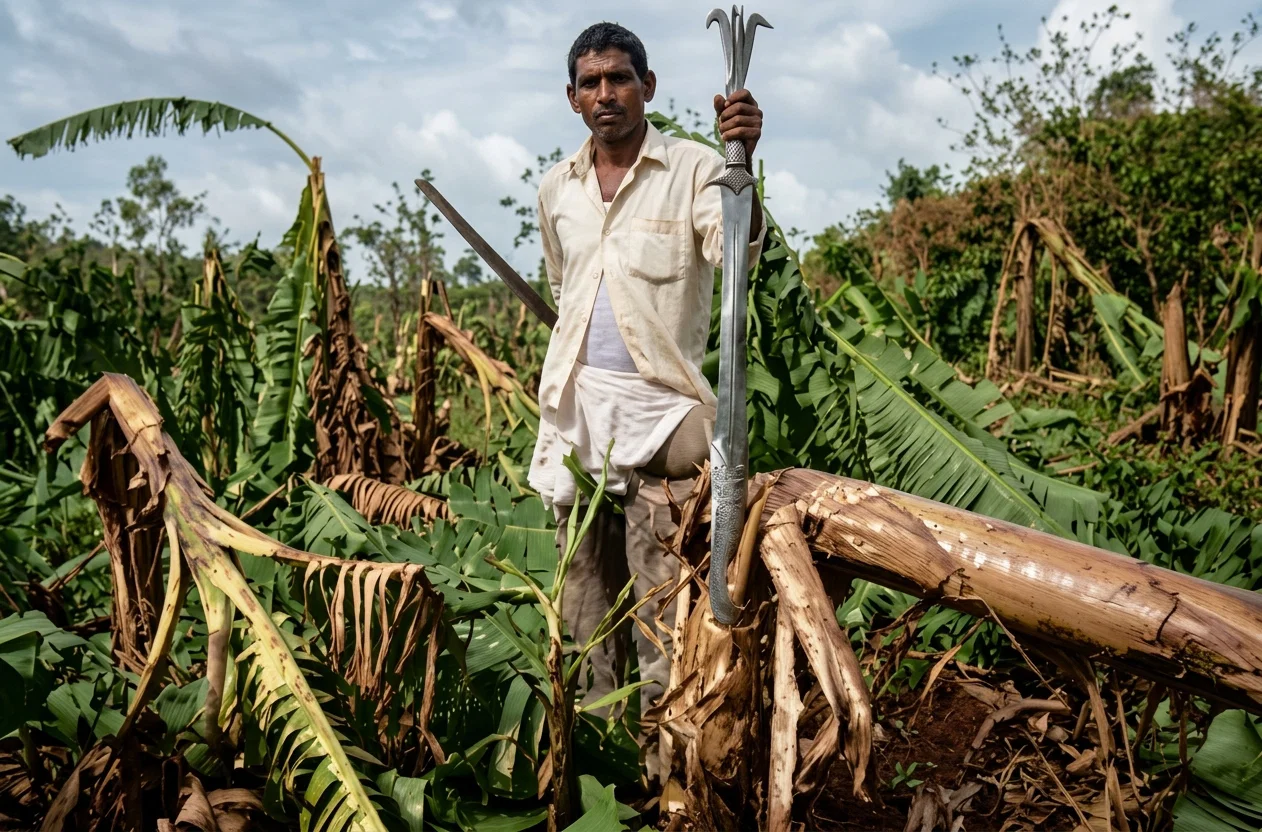
A STORM-SWEPT BANANA FIELD, A SAMPLE OF THOUSANDS OF ACRES
In the foreground is a coolie, cutlass in hand, ready to begin clearing away the wreckage.
“The accompanying half tones show something of the devastation. The entire banana walks, comprising thousands of acres, were leveled to the ground. It will be from ten to twelve months before a new crop will be ready for use. The coconut trees stood the storm fairly well, although many were blown down, and millions of the partly matured coconuts blown off. Others of the native fruits and vegetables were so badly damaged as to render them practically valueless.”
As the people of Jamaica have suffered such calamities in the past, Brother Button assures us that they are not discouraged, but are cheerfully beginning the work of clearing away the wreckage and getting ready for another crop a year hence.
When such calamities overtake God's people, they should be able to say with the psalmist: “The floods have lifted up, O Lord, the floods have lifted up their voice; the floods lift up their waves. The Lord on high is mightier than the noise of many waters, yea, than the mighty waves of the sea. Thy testimonies are very sure: holiness becometh thine house, O Lord, forever.” Ps. 93: 3-5. We can recognize that our God has all power. In speaking to Job out of the whirlwind, God asked him where he was when the Lord created the world and said unto the sea, “Hitherto shalt thou come, but no further; and here shall thy proud waves be stayed.” When God suffers the waves to become destructive, we should recognize it as the fulfilment of one of the signs which he foretold would be seen before his coming, and we should look up and rejoice that the return of our Lord and Master draws near.
L. L. C.
The Last of the Inquisition
IN the last issues of both the World Outlook, the organ of the Mission Board of the Methodist Episcopal Church, and The Bible in the World, the official organ of the British and Foreign Bible Society, a full page is devoted to a statement regarding the proclaiming of religious liberty by the government of Peru. The Outlook title is, “The Last of the Inquisition,” and the first paragraph reads: “Enraged at the success of a medical missionary near Lake Titicaca, a Roman Catholic bishop took the police out to the mission, had over thirty men and women arrested, tied to a long rope, and marched through the streets to the common jail.” Our people are very familiar with this recent mission history, and recognize at once that reference is made to the labors of Brother and Sister F. H. Stahl, through whose loving interest for the Indians, God has wrought this marvelous change in this hitherto intolerant country.
Caleb and Joshua
By R. D. QUINN
In the Promised Land
R. D. QUINN
*“AFTER the death of Moses the servant of the Lord it came to pass, that the Lord spake unto Joshua the son of Nun, Moses’ minister, saying, Moses my servant is dead; now therefore arise, go over this Jordan, thou, and all this people, unto the land which I do give to them, even to the children of Israel. Every place that the sole of your foot shall tread upon, that have I given unto you, as I said unto Moses.” Joshua 1:1-3.
The time had finally come when God would fulfil his promise made to Israel forty years before, “I will bring you into the land.” Joshua assembled all the people on the eastern bank of the swollen and angry waters of the Jordan. Viewed from a human standpoint, there was absolutely no way of crossing that stream. There were no bridges, boats, or ferries by which they could reach the farther shore. God was testing that generation as he had tested their fathers at the Red Sea. That they had learned the secret of success is seen by the way they moved forward until the feet of the priests who bore the ark were dipped in the brim of the water, and also by Joshua’s brief instruction to them on the eve before that memorable day when they crossed over, “Sanctify yourselves: for tomorrow the Lord will do wonders among you.” From this it would seem that the wonder-working power of God in behalf of his people depends on their moral and spiritual condition. One writer has said:—
“We all want to see wonders wrought by God,—in our own characters, that the fir tree may replace the thorn, and the myrtle the brier; in our homes, that the desert places may blossom with roses; in our churches, that they may arise and put on their beautiful garments. O for another Pentecost! O for a widespread revival of true godliness! O for the making bare of the right hand of the Most High! O to see converts fly as doves to their windows! And why is it that we strain our eyes for them in vain? Is it not because we have not sanctified ourselves? Sanctification means the cleansing of the soul, and the putting on of the white robes of purity and humility. We are not clean enough for God to use us. We are not humble enough to bear a great success. It is perfectly true that we can only be wholly sanctified by the God of peace. Holiness on its positive side is his indwelling and filling; but on its negative side it involves the putting away of known sin, or the being willing that he should cleanse it away from us by blood, or water, or fire.
“Is this our condition? Have we laid aside our weights as well as our sins? Are we cleansed from all filthiness of the flesh and spirit? Are we able to say with the apostle that we do not condemn ourselves in anything that we allow? If not, let us no longer complain that the days of wonders are over. We are ourselves accountable for their having vanished, like peace from the criminal and purity from the fallen. But if only each one of us were to sanctify himself, putting off the old man with his deeds, and putting on the new man, renewed daily in the image of Christ; forsaking every form of evil, and hating even the garments spotted by the flesh; yielding himself to the two-edged sword of our great High Priest, we should find that wonders would begin and never cease; that the tomorrows would only unfold greater and better things than ever before; that Jordans would cleave, and Jerichos would fall. Then the Land of Promise would lie open, with its immeasurable plenty, its oil and wine, its corn and honey, its precious, priceless stores.”
Concerning that miraculous crossing, the record says that “the people passed over right against Jericho.” The building of cities and temples is the result of apostasy from God. To this Hosea referred when he wrote, “Israel hath forgotten his Maker, and buildeth temples; and Judah hath multiplied fenced cities.” Hosea 8:14. This departure from God’s original plan began with Nimrod, whose very name signifies rebellion. From the time of the building of those first great cities in the plain of Shinar, notable among which were Babylon and Nineveh, until our own unparalleled age of centralization and city building, the devil has entrenched himself within these strongholds.
It was the cities that were great and walled up to heaven, and the giants living in them, that staggered Israel’s faith at Kadesh-Barnea, and delayed their entrance into the Promised Land for nearly forty years. The whole land of Canaan was Israel’s by deed of gift; but notwithstanding this, every square mile of it had to be claimed from the hand of the people who possessed it. “Every place that the sole of your foot shall tread upon, that have I given unto you, as I said unto Moses.” The country was theirs, but it had to be possessed; they must put their feet down upon it and claim it for God. This they had known for forty years, but those great and walled cities lying directly in their path had to be entered and taken before they could come into their inheritance.
“It came to pass, when Joshua was by Jericho, that he lifted up his eyes.” Behind him was the swollen Jordan. He knew that there was no way of retreat. Before him were the towering walls of Jericho. As he withdrew from the encampment to meditate and commune with God, he could not forget how, forty years before, the former generation had cried out for bondage in Egypt, or graves in the desert, rather than face the terrors of those walled cities. The record states that Joshua lifted up his eyes. It is well that he looked up. The outlook at times may be very dark, but the uplook is always bright. It was while Joshua was in earnest prayer that the Captain of the Lord’s hosts appeared and gave him directions for the taking of the city.
It is not difficult for us to understand these things, for spiritually we occupy a similar position. Standing on the very confines of heaven all these years, we are still confronted with the great cities of this world which have long been neglected, and have stood in the way of our onward march. We are face to face with these strongholds, these modern Hebrons and Jerichos. Our only way to the Promised Land leads directly through them. They must be warned. These great and wicked cities have been left to the last of the unworked and unconquered territory for God. But they must be entered, and the honest must be gathered out before the end shall come. God has demonstrated in the past that as long as there is one soul, even a Rahab, seeking after light, he will send his messengers to that one. If there is but one righteous man in Sodom, he will withhold his judgments until his messengers have brought him out. The nearest route for us to the Promised Land, dear pilgrim, is by the way of the cities. Let us be of good courage, for we are well able to go up and possess the land.
South Lancaster, Mass.
The Church’s Great Need
By Ellen G. White
MRS. E. G. WHITE
A REVIVAL of true godliness among us is the greatest and most urgent of all our needs. To seek this should be the first work at our camp meetings. There must be earnest effort to obtain the blessing of the Lord, not because God is not willing to bestow his blessing upon us, but because we are unprepared to receive it.
Our heavenly Father is more willing to give his Holy Spirit to them that ask him than are earthly parents to give good gifts to their children. But it is our work, by confession, humiliation, repentance, and earnest prayer, to fulfil the conditions upon which God has promised to grant us his blessing. A revival need be expected only in answer to prayer. While the people are so destitute of God’s Holy Spirit, they cannot appreciate the preaching of the word. But when the Spirit’s power touches their hearts, then the discourses given will not be without effect. Guided by the teachings of God’s Word, with the manifestations of his Spirit, in the exercise of sound discretion, those who attend our camp meetings will gain a precious experience, and returning home will be prepared to exert a healthful influence in the churches.8
The old standard bearers knew what it was to wrestle with God in prayer, and to enjoy the outpouring of his Spirit. But these are passing off the stage of action; and who are coming up to fill their places? How is it with the rising generation? are they converted to God? Are we awake to the work that is going on in the heavenly sanctuary, or are we waiting for some compelling power to come upon the church, before we shall rouse? Are we hoping to see the whole church revived? That time will never come.
There are persons in the church who are not converted, and who will not unite in earnest, prevailing prayer. We must enter upon the work individually. We must pray more, and talk less. Iniquity abounds, and the people must be taught not to be satisfied with the form of godliness without the spirit and power. If we are intent upon searching our own hearts, putting away our sins, and correcting our evil tendencies, our souls will not be lifted up unto vanity; we shall be distrustful of ourselves, having an abiding sense that our sufficiency is of God.
We have far more to fear from within than from without. The hindrances to strength and success are far greater from the church itself than from the world. Unbelievers have a right to expect that those who profess to be keeping the commandments of God and the faith of Jesus will do more than any other class to promote and honor, by their consistent lives, by their godly example and their active influence, the cause which they represent. But how often have the professed advocates of the truth proved the greatest obstacle to its advancement. The unbelief indulged, the doubts expressed, the darkness cherished, encourage the presence of evil angels, and open the way for the accomplishment of Satan’s devices.
The adversary of souls is not permitted to read the thoughts of men; but he is a keen observer, and he marks the words; he takes account of actions, and skilfully adapts his temptations to meet the cases of those who place themselves in his power. If we would labor to repress sinful thoughts and feelings, giving them no expression in words or actions, Satan would be defeated, for he could not prepare his specious temptations to meet the case. But how often do professed Christians, by their lack of self-control, open the door to the adversary of souls! There is great loss in every dissension. Personal friends of both parties take sides with their respective favorites, and thus the breach is widened. A house divided against itself cannot stand. Criminations and recriminations are engendered and multiplied. Satan and his angels are actively at work to secure a harvest from seed thus sown. Worldlings look on and jeeringly exclaim, “Behold how these Christians hate one another! If this is religion, we do not want it.” And they look upon themselves and their irreligious characters with great satisfaction. Thus they are confirmed in their impenitence, and Satan exults at his success.
The great deceiver has prepared his wiles for every soul that is not braced for trial and guarded by constant prayer and living faith. As ministers, as Christians, we must work to take the stumblingblocks out of the way. We must remove every obstacle. Let us confess and forsake every sin, that the way of the Lord may be prepared, that he may come into our assemblies and impart his rich grace. The world, the flesh, and the devil must be overcome. We cannot prepare the way by gaining the friendship of the world, which is enmity with God; but by his help we can break its seductive influence upon ourselves and upon others. We cannot individually or as a body secure ourselves from the constant temptations of a relentless and determined foe; but in the strength of Jesus we can resist them. From every member of the church a steady light may shine forth before the world, so that they shall not be led to inquire, What do these people more than others? There can be and must be a withdrawal from conformity to the world, a shunning of all appearance of evil, so that no occasion shall be given for gainsayers. We cannot escape reproach; it will come; but we should be very careful that we are not reproached for our own sins or follies, but for Christ’s sake.
There is nothing that Satan fears so much as that the people of God shall clear the way by removing every hindrance, so that the Lord can pour out his Spirit upon a languishing church and an impenitent congregation. If Satan had his way, there would never be another awakening, great or small, to the end of time. But we are not ignorant of his devices. It is possible to resist his power. When the way is prepared for the Spirit of God, the blessing will come. Satan can no more hinder a shower of blessing from descending upon God’s people than he can close the windows of heaven that rain cannot come upon the earth. Wicked men and devils cannot hinder the work of God or shut out his presence from the assemblies of his people if they will, with subdued, contrite hearts, confess and put away their sins, and in faith claim his promises. Every temptation, every opposing influence, whether open or secret, may be successfully resisted, “not by might, nor by power, but by my Spirit, saith the Lord of hosts.”
We are in the great day of atonement, when our sins are by confession and repentance to go beforehand to judgment. God does not now accept a tame, spiritless testimony from his ministers. Such a testimony would not be present truth. The message for this time must be meat in due season to feed the church of God. But Satan has been seeking gradually to rob this message of its power, that the people may not be prepared to stand in the day of the Lord.
What is our condition in this fearful and solemn time? Alas, what pride is prevailing in the church, what hypocrisy, what deception, what love of dress, frivolity, and amusement, what desire for the supremacy! All these sins have clouded the mind, so that eternal things have not been discerned. Shall we not search the Scriptures, that we may know where we are in this world’s history? Shall we not become intelligent in regard to the work that is being accomplished for us at this time, and the position that we as sinners should occupy while this work of atonement is going forward? If we have any regard for our souls’ salvation, we must make a decided change. We must seek the Lord with true penitence; we must with deep contrition of soul confess our sins, that they may be blotted out.—Review and Herald, March 22, 1887.
Organization and Health and Temperance
By George I. Butler
G. I. BUTLER
Organization
The growth of this message was rapid and continuous. In the early days there was no formal organization, even of churches. It was thought that when a person took his stand as an observer of the seventh-day Sabbath, in spite of the great unpopularity, opposition, and prejudice prevailing, he needed to give no further evidence of his desire to live according to all Bible truth. Little companies of believers met in private houses, barns, and other buildings, to worship God by singing, prayer, and the giving of testimonies. Being so few in numbers, and living so far apart, they rarely had preaching.
The number of believers, however, rapidly increased, and various conditions arose which demonstrated that steps must be taken to organize the work, and as early as 1853 Elder and Mrs. White wrote articles in favor of organization. But there was some opposition. Some felt it would be imitating the popular churches and becoming like Babylon. There was more or less discussion of the question, and as their number grew, it became more and more evident that something must be done.
In 1858 other articles were written, and action was further urged upon the believers. Yet there was lack of confidence, even among men of influence. One talented brother wrote an article in the REVIEW in opposition to further organization, and it was evident that there were many who felt opposed to a general system of organization, feeling that it would interfere with Christian liberty and be like the popular churches.
For the sake of brevity, it will not be advisable to give all the reasons why organization was so essential at this early period in our work. We can give only a very brief synopsis.
The legal holding of denominational property was an important reason. Meetinghouses, offices, and property owned by our people could be held legally only by properly organized bodies of officers. The organization of churches, conferences, schools, and various other societies was an absolute necessity. It must also be known who were recognized as true and genuine believers, and who9were not. It must be understood who were properly qualified to elect church officers, and to set apart men to the work of the gospel ministry. It was important to detect unworthy persons,—strangers who came to our little companies of believers professing to be ministers of our people when they were not; and therefore letters of introduction were required, showing who were our ministers or members. Many other reasons might be given.
Our leading brethren were guided by the Spirit of prophecy, which was a prominent agency in perfecting the system of organization among our people. Experience has demonstrated the great benefits of our simple but effective system of organization. “Order is heaven’s first law,” it is said, and without it we should be helpless. It is very doubtful if we could ever have had so complete a system as exists among us, but for the blessed gift of prophecy, which always counselled unity and gospel order. In the work of organization our people carefully studied the Bible, and sought to follow its instructions. We fully believe that no other denomination has a system of organization superior to ours.
Health and Temperance
There is, perhaps, no topic which is being given greater prominence in civilized countries in our day than that of health and temperance. The prevalence of disease everywhere and in every form makes the subject of health a live issue. Comparatively few enjoy perfect health. In all our world today, in civilized and uncivilized countries, disease holds sway. Multitudes are being swept away to premature death. Intemperance in one form or another prevails everywhere. Millions, yea, billions, of dollars are being spent for “that which is not bread.” Poisonous liquors, tobacco, and other unnatural stimulants, poisonous drugs of almost innumerable names and effects, and most destructive to health and life, are being taken into the human system. What will be the end of all this?
In the early period of the third angel’s message these issues were really forced upon our people in such a way that something had to be done. The work was small; the believers were poor; the ministers very few. The work was unpopular, and it seemed that all the world was against us. The burdens to be borne by our workers were heavy. The health of many of our best laborers was breaking down. Up to that time no special instruction on healthful living had been given. The believers lived about as other people lived, only none of them used alcoholic drinks or tobacco. The physical condition of our leading laborers became alarming.
At this stage of the work, God began to give heavenly light through visions given to Mrs. White. These great subjects of health and temperance were opened to her mind. Before this time she had not in her writings or studies made these topics especially prominent, but from now on during many years, even to nearly the close of her labors, these topics were constantly dwelt upon in her sermons and writings.
It is well known that Seventh-day Adventists have scores of health institutions established in different parts of the world. Some of them are large, and have a good patronage, a patronage that comes largely from the general public, though many of our own people go to them for physical benefit. These sanitariums have done an immense amount of good, and have been a blessing to multitudes of sufferers, physically and spiritually.
What has been the general benefit of the work of Mrs. White’s teaching in regard to health and temperance? We cite a few of the benefits realized:—
1. Great physical improvement was at once apparent in the health of our public laborers. By following the instructions given her, Mrs. White’s own health was much improved. Some of our most influential workers had practically become invalids, and could no longer labor, but these regained their health and served the cause of God for many years. Many saved themselves from sickness and physical breakdown, and thus conserved their strength, maintained their health, and prolonged their lives.
2. From the writer’s long experience and general acquaintance with our people in the different sections of our country, he is positive our people generally have been saved from much sickness, and have been able to preserve the health of their families by heeding the light given.
3. The financial benefits of health and temperance are worthy of consideration. The saving of doctors’ bills and the cost of drugs, which are a common expense in many families, is quite a large item. People embrace this truth who have been accustomed to drinking alcoholic beverages or to using tobacco. When they come among this people, these articles are necessarily laid aside. Here is a large saving in money, to say nothing of the moral benefit to the persons concerned. It is well known that the milder stimulants, tea and coffee, are not sanctioned among this people. Here also is a great pecuniary saving. There are many other savings in living expenses concerning which the brevity of this article forbids us to speak. In the aggregate these reforms involve considerable financial saving.
4. The moral uplift of this phase of the great reform movement as introduced to this people by the Spirit of prophecy must not be overlooked. It has the promise of the life that now is and of that which is to come. By following its teaching the mind of the believer is turned from the earthly to the heavenly, and his thoughts and character are elevated.
5. The subject of temperance is one of great prominence today. The battle against King Alcohol has been raging of late as never before in our country, and throughout the whole world. State after State has adopted prohibition of alcoholic drinks. Let the good work go on. Would to God every saloon in the land could be shut up forever. The writer rejoices that he belongs to a religious body, every member of which is a believer in prohibition and would be glad to vote for it. Seventh-day Adventists believe in a temperance which discards not only alcoholic drinks, but all other harmful stimulants,—tobacco in all its forms, tea and coffee, opium and all its derivatives, and many other drugs hurtful in their effects. Highly stimulating foods are also discarded. Grains, fruits, nuts, and vegetables form a wholesome dietary.
For the knowledge we have of this high plane of living we are largely indebted to the writings of Mrs. White. For these we thank God. They have greatly benefited us.
Bowling Green, Fla.
How Goes the Battle?
By C. P. BOLLMAN
C. P. BOLLMAN
How goes the battle, brother,
The fight 'twist right and wrong?
Are you any progress making?
Do you know the victor's song?
Are you daily overcoming
Varied foes, without, within?
Or are you weakly yielding
To temptation and to sin?
There's victory, my brother,
In Jesus Christ our Lord;
The power's not in human flesh,
But in his living Word.
'Tis faith that make us children;
'Tis faith that sets us free,
By faith we must be transformed,
If we like him would be.
The just by faith shall live, brother,
And living we must grow;
For we shall reap eternally
As day by day we sow.
'Tis faith that gives the victory
O'er sin and strife and woe;
'Tis faith that makes us joyful
As heavenward we go.
Forgetting the Things Behind
By J. R. Miller
Too many people forget to forget. St. Paul’s way was better. He forgot the things that were behind, whether mistakes or attainments, left them altogether in the past, and, stretching forward to the things that were before, he used all his energy and strength to attain and achieve them. We make our own years, and whether they are beautiful or not will depend on the kind of living we put into them.—J. R. Miller.
The Tongue of the Wise Is Health
“THERE is that speaketh like the piercings of a sword: but the tongue of the wise is health.”
Counselors of Peace
“DECEIT is in the heart of them that imagine evil; but to the counselors of peace is joy.”
The Lip of Truth
“THE lip of truth shall be established forever: but a lying tongue is but for a moment.”
Lying Lips Are Abomination to the Lord
“LYING lips are abomination to the Lord: but they that deal truly are his delight.”
Nagoya, Japan
By F. H. De Vinney
F. H. DE VINNEY
NAGOYA is two hundred and thirty-four miles west of Tokio, and is the fourth city of Japan in population and importance. Near here Kato Shirozaemon made his kiln in the thirteenth century, and originated the Japanese pottery art, and its chief products yet are porcelain and cloisonné. In the city is the famous Nagoya Castle, with the golden dolphins glittering in the sun from the top of the five-storied donjon. It is said that the fish scales were made from 17,975 pieces of old Japanese gold coins valued at $175,000. The castle dates from 1610, and is one of the best preserved in Japan, now being a detached imperial palace.
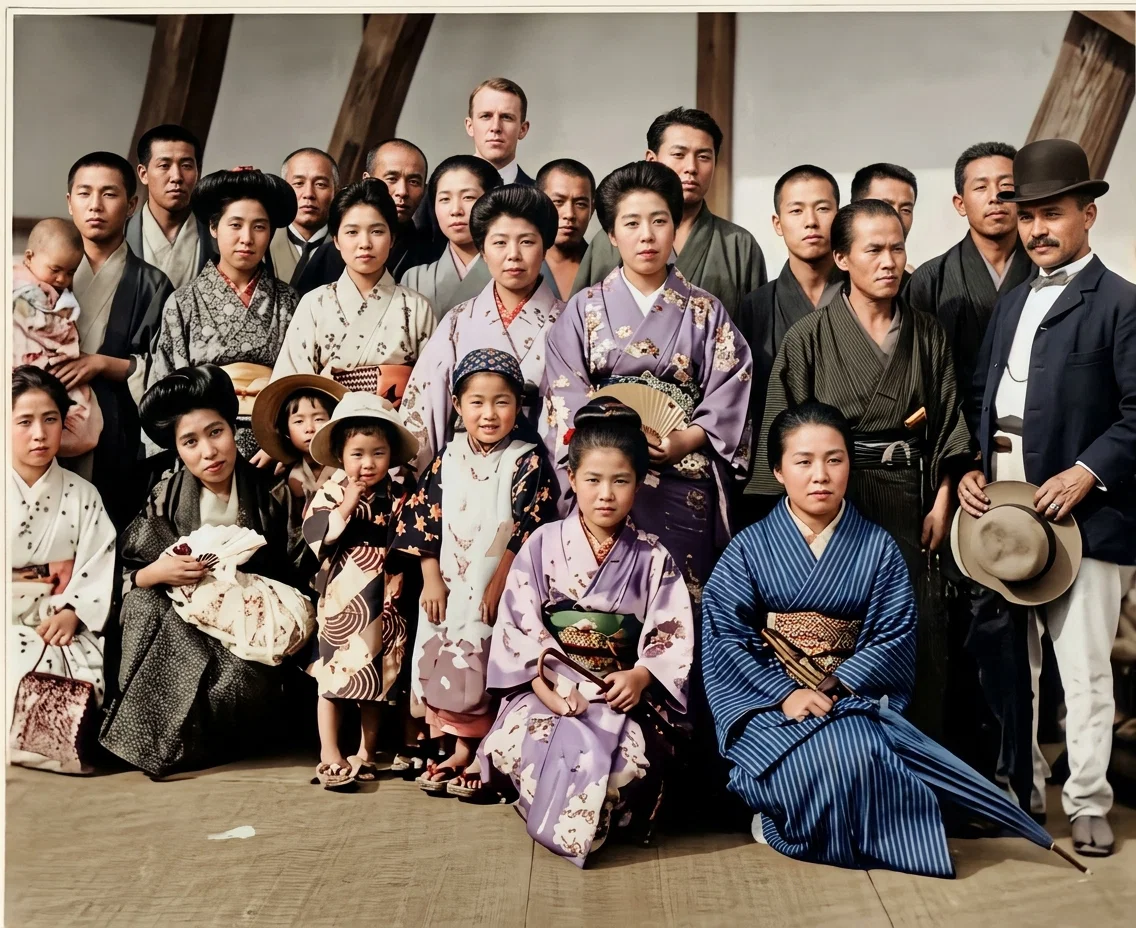
THE NEW CHURCH COMPANY AT NAGOYA, JAPAN
Our work in Nagoya began in the year 1911, when Brother Y. Watanabe went to the city to canvass and do Bible work. He found it very difficult to get started in Bible work, as no homes were open to him; but by perseverance he found here and there a person willing to come to his home to listen to the message, and occasionally he gained access to a home to study with some member of the family. This continued until the summer of 1914, when a tent and some additional workers were sent to assist him, and public work was begun to develop the interest which his private work had created.
Two series of meetings were held in different parts of the city the first season. This was repeated the second year, when Elder B. P. Hoffman, having been appointed director of that district, assisted in the tent work a portion of the tent season. In all, four public efforts were made with the tent, and each resulted in some taking their stand for the truth. After the work in the tent, the interest was followed up by personal work, and public meetings in a kogisho, or preaching place, where the little company have been meeting for worship and instruction on the Sabbath and midweek.
Among the first converts through the personal labors of Brother Watanabe was a business man of middle age, who, when a young man, was quite prominent in the agitation for a constitutional government. As the result of the violence of a few hot-headed ones connected with the movement, he with some others was arrested, tried, and sentenced to death. A number were executed, but he succeeded in obtaining a commutation of his sentence to imprisonment for life. After the promulgation of the constitution, he, having served ten years in a Hokkaido prison, was pardoned and given his liberty. During the second tent season, and since then, though entirely self-supporting, he has been doing the same work as a paid laborer of the mission, and much of the success of the work in Nagoya is due to his efforts and influence.
On June 22, 1916, in company with Elder T. H. Okohira, I went to Nagoya, where we met Elder Hoffman by appointment. In the evening the company of believers and interested ones were instructed in the ordinance of baptism, by Elder Okohira, and the next day all went out of the city nearly three miles to the riverside, where Elder Hoffman baptized six adults. On the morrow, Sabbath, an all-day meeting was held in the kogisho. Lunch having been provided, all remained through the day. After Sabbath school the Nagoya church was organized, with a membership of eighteen. Officers were elected and ordained. Elder Hoffman spoke on the ordinances of the Lord's house, after which they were celebrated by the new church.
This little company are well instructed in the points of our faith. They are full of zeal for the Lord's work, and we hope and pray that all may be faithful and help finish the work in Japan. The membership reported does not include seven or eight others who have come into the truth here through the faithful labors of the Nagoya workers, as they have removed from the city, and are members of other churches, but nearly all are connected with the mission as canvassers or Bible workers.
We greatly rejoice over the addition of this splendid church to the few we have in Japan. While not large in membership, it is as great a triumph of grace, and represents as great effort, as many a larger church in more favored fields.
While our work in Japan seems much like the gleaming of the field, yet we believe there are still many others just as precious as these, who will yet hear and obey, and the evidence the Lord gives us from time to time that he is with us, encourages us to press on and labor and endure to the end.