“There are other people. We are not the only ones. Some of the others live close to us, and some far away. We stand in certain relations to these other people. They have claims upon us. We owe them duties, services, love. . . . We can not rid ourselves of obligations to them, and say we owe them nothing.”
We often forget this in our daily life. It is so natural to think first of self that in our plans and thoughts we often forget others. This is especially the case in regard to our influence over the lives of those with whom we come in contact. We forget that every word we speak and every act we perform has an influence, the power of which we can never know, on the lives of our companions and friends. The power of life over life is something almost startling. There have been single looks of an eye which have changed a destiny. There have been meetings of only a moment which have left impressions for life, for eternity.
Then how careful we should be in what we say and do. Yet it is all forgetfulness. There is not one of us who would willingly throw an obstacle in another’s way to trip him up if we knew that he would be maimed for life, perhaps killed, in the fall. Yet in our inner lives, we often leave obstacles behind us in our path which cause many feet, less steady and sure than our own, to stumble and fall, perhaps never to rise again, and think nothing of it. We forget. If only we could know at the close of a day’s journey what obstacles of influence we have scattered along our path, bitter indeed would be our grief.
But, on the other hand, if we could see the sunshine, the happiness, the courage, which our influence has caused, on a day when we have not forgotten that there are “other people,” our own hearts would be filled with joy and fresh courage.
We all like to see others happy, and we like to help to make them so; we even give up our own pleasure to make them so, and yet we forget how much our influence has to do with others’ happiness, and many a time some other heart is wounded by some thoughtless word or deed of ours. “We are forever either adding to the world’s happiness and good, or to its pain, sorrow, and curse. We are always giving out influence.”
“No stream from its source
Flows seaward, how lonely soe’er its course
But what some land is gladdened. No star ever rose
And set without influence somewhere. Who knows
What earth needs from earth’s lowest creatures? No life
Can be pure in its purpose and strong in its strife
And all life not be purer and stronger thereby.”
“Every one of us casts a shadow. It goes with us wherever we go. It is not something that we can have when we want to have it, and then lay aside when we will, as we lay aside a garment. It is something that always pours out from our life like light from a lamp, like perfume from a flower. Without being conscious of it, we are always impressing others by this strange power that goes out from us. Others watch us, and their actions are modified by ours. Many a life has been started on a course of beauty and blessing by the influence of a noble act.” If we could only remember this from day to day, how careful we should all be! Do we not all want to be a help to some one else?—Of course we do. There is not one of us who would not do another a good turn when the chance occurs. Yet we forget; and many a time when thronged by many duties, we say an impatient word and make an impatient gesture which wounds some one, or damages our influence. Perhaps some are constantly watching us, and building their character from our pattern unconsciously. They respect us perhaps as being older, or having firmer principle; and when impatience, or perhaps even anger is manifested, how it sears their hearts! On the other hand, when they see kindness and love, it inspires the same graces in them.
This is well illustrated in the following anecdote:—
A little newsboy entered a railway car, and was soon fast asleep. Presently two young ladies came in, and took seats opposite him. The child’s feet were bare, his clothes ragged, and his face showed marks of hunger and suffering. The young ladies noticed him, and seeing that his face rested against the hard window sill, one of them arose, and carefully raising his head, slipped her muff under it for a pillow. This act of love was observed by an old gentleman in the next seat who, without a word, held out a coin to the young lady, nodding toward the boy. After a moment’s hesitation she took it, and as she did so, another man handed her a coin; a woman across the aisle held out some pennies; and almost before the young woman realized what she was doing, she was taking a collection, every one in the car passing her something. Thus from the one gentle act there had gone out a wave of influence touching the hearts of all in the car.
So it is with us. Not one deed is done without it carries an influence, either for good or for evil, to some other life, and not one word is spoken but it carries either a blessing or a curse to some other heart. O, how careful we should be! Let us not forget that there are other people; and they have hearts and souls as well as we. Let us always strive to make their burdens lighter and their lives brighter and happier. There is enough sorrow, disappointment, and grief in the world without our adding to it. Some one has said, “Our business with others is to help them to rise out of their faults. We are set together in life to make each other better.” Then let us never forget the other people, but always think before we speak one word or do one act, what its influences will be; and if it will not be a blessing, let us pause and leave that one word unspoken, that deed undone.
Then, how can we make sure of having an influence that shall be only a blessing? “There is no way but by making our life pure and good. Just in the measure that we are filled with the Spirit of God and have the love of Christ in us, shall our influence be holy, and a blessing to the world.” Remember there are other people.
Foolish Extravagances
By John Ruskin
I AM no advocate for meanness of private habitation. I would fain introduce into it all magnificence, care, and beauty, where they are possible; but I would not have that useless expense in unnoticed fineries or formalities—cornicing of ceilings, and grainings of doors, and fringing of curtains, and thousands of such things, which have become foolishly and apathetically habitual, things on which common appliance hangs whole trades, to which there never belonged the blessing of giving one ray of real pleasure, or becoming of the remotest or most contemptible use,—things which cause half the expense of life, and destroy more than half its comfort, manliness, respectability, freshness, and facility. I speak from experience: I know what it is to12live in a cottage with a deal floor and roof, and a hearth of mica-slate; and I know it to be in many respects healthier and happier than living between a Turkey carpet and a gilded ceiling, beside a steel grate and a polished fender. I do not say that such things have not their place and propriety; but I say this emphatically, that a tenth part of the expense which is sacrificed in domestic vanities, if not absolutely and meaninglessly lost in domestic comforts and encumbrances, would, if collectively afforded and wisely employed, build a marble church for every town in England.—John Ruskin.
The Causes of Depleted Energy
By Margaret Evans
MARGARET EVANS, M. D.
If you are disposed to grumble at everything about you, if trials annoy you, and you become irritable and “out of sorts” when little things go wrong, you may be sure an enemy is at work in the system. Your energy is being exhausted in some way, and your vitality is at a low ebb. A greater amount of force is being expended than the system can generate, and you should at once search for the cause. It may be traceable to imprudence in eating or drinking, or it may be due to overwork or overstudy. Do not begin to dose with this or that remedy which has been advertised in the daily papers or recommended by a friend, but carefully scrutinize your habits, and ascertain the cause of the indisposition. When this has been discovered and removed, a speedy disappearance of the morbid symptoms will follow. Your first duty is to find and remove the cause, whatever it may be, or it will leave you a physical and mental wreck.
No one can accomplish anything great in this world if any portion of the machinery of his body or mind is out of order. Immediate attention should be given to it if it is not working with that ease and perfection that a perfectly constructed and well-kept machine is capable of doing. Look well into the daily life, and find in what way the system is being robbed of its nourishment. No defective machine can turn out good work; and if some serious obstacle is clogging its wheels, the more one tries to use it, the greater will be the damage it suffers, and the more difficult to put it in proper repair. It may be that you are wearing yourself out with the excesses of fashionable dissipation, irregular habits of rest, late suppers, attendance at the theaters, evening parties, and the like.
Your condition may proceed from excessive smoking, or the using of stimulants. Tea and coffee have much to do with the depraved condition into which the nervous system often settles. Pastry and knickknacks lay the foundation for disease, and are the direct cause of a large amount of dyspepsia. Ices, wines, confectionery, and other highly indigestible material, only produce impoverished blood, and are in the highest degree detrimental to health. Nature is long-suffering, and in every possible way tries to build a bulwark against disease, but sooner or later the stomach remonstrates at such transgressions, and you are called upon to pay the penalty by suffering the pangs of indigestion, and an utter unfitness for the performance of the duties of life.
Perhaps your morbid condition is the result of improper habits of dress. Tight lacing is a most fruitful source of the numerous ills peculiar to women. Heavy, trailing skirts, suspended from the waist, pulling down on the hips, and dragging down the internal organs of the abdomen, are the direct cause of so many weak backs, side-aches, and various kinds of displacements.
Perhaps your mental faculties are being overtaxed. You may be burning both ends of your candle, sitting up late at night, and expending nervous energy by overstudy or worry, when both mind and body require rest. Do not go through life handicapped by loss of sleep and consequent inertia. Perhaps you need more physical exercise. Take it regularly, systematically, and at proper intervals. Good muscular development is attended with good digestion and a well-balanced nervous system.
Another means of undermining, the healthy tone of the system, which we have thought to be quite as important, is a guilty conscience. “So doth conscience make cowards of us all.” Distress of mind and remorse for guilt do not tend to make one physically well. Let us seek with Paul “to have always a conscience void of offense toward God, and toward men.”
An Incident
LAST winter in the city of New York, several intelligent and devotedly religious ladies resolved to gather together the poor, neglected mothers in a certain wretched quarter, and teach them how to fulfil their duties to their children.
A hall was hired, and the ladies went in turn on three afternoons of each week to lecture to their protégées.
During the first month they all pursued the same course. They came attired in handsome street costumes, greeted the women kindly, and then read a written lecture, in which the shortcomings of mothers were set forth, and the peril of neglect to their children was urged with earnestness, and sometimes with sternness.
The lectures seemed to produce little effect. The women resented the patronage and the advice, and only came again lured by the tea and cake which followed the lecture.
At last it was the turn of a bright and sensible young mother, who had a child a year old.
She entered the hall very simply dressed, carrying the boy in her arms, nodding and smiling to the women who crowded around her, as to friends.
“I thought you would like to see my baby,” she said. After the child had been petted and admired, she added, “It is healthy, as you see. I have had the advice of a good doctor, who has told me how to dress, and bathe, and feed it. I am going to give this advice to you. It is very simple.”
She showed them how to wash and care for a child, even to the sterilizing of the milk given it; and when she had finished, looking up at the eager faces, with tears in her own eyes, she said: “Now let us ask Jesus, who loved his mother, to help us care for our babies.”
A woman said afterward, “I never shall forget what she taught us, because she was just a woman and a mother like me.”
Jesus, when he would heal the sick, laid his hands upon them before he blessed them.—The Youth’s Companion.
Worried Mothers
Let no woman, overburdened with cares and labor, imagine that her case is peculiar, and under no circumstances should she envy childless mothers and unmarried women who have more quiet and leisure. There is no other way out of the hard place in which she finds herself than to go on and do the best she can, and hope for better times in the future. With intelligent care and judicious training now, these little ones who add to present labor, will all in a few years become helpers; but they will not grow up to it naturally—they must have line upon line, and precept upon precept, and, added to this, especially good example.
When advising the weary, exhausted mother to do the best she can, I by no means intend her to understand me as urging her to do all the work she can. That may be the worst she can do, by breaking down her health and adding to the cares and toils of others. There is such a thing as a wise selfishness. The most extravagant thing any woman can do is to waste beyond repair her own health and strength. There is no poverty so deep as that of the household where the mother is a helpless, irritable invalid. Better a disordered household than a discouraged one, and a woman—especially a mother—can not learn too soon and too thoroughly that she owes a duty to herself, and at the same time to her family, and that duty is to conserve her own energies and look after her own comfort. A household in which all the members, great and small, share alike, according to their ability, in the necessary work, is always a more cheerful, attractive one than that in which the one-slave method prevails. Let this truth be learned—the husband and children will love the mother more if she requires and accepts from them a reasonable amount of assistance in the daily routine of the home and housekeeping. Whatever else she may be, a wife and mother must be the ruling exponent of the peace and happiness of the home; she has no sort of right to deprive her family of her intelligent, patient guidance and oversight. In short, she must be more than a servant.—The Commoner.
The South and Middle Russian Meeting
By Guy Dail
GUY DAIL.
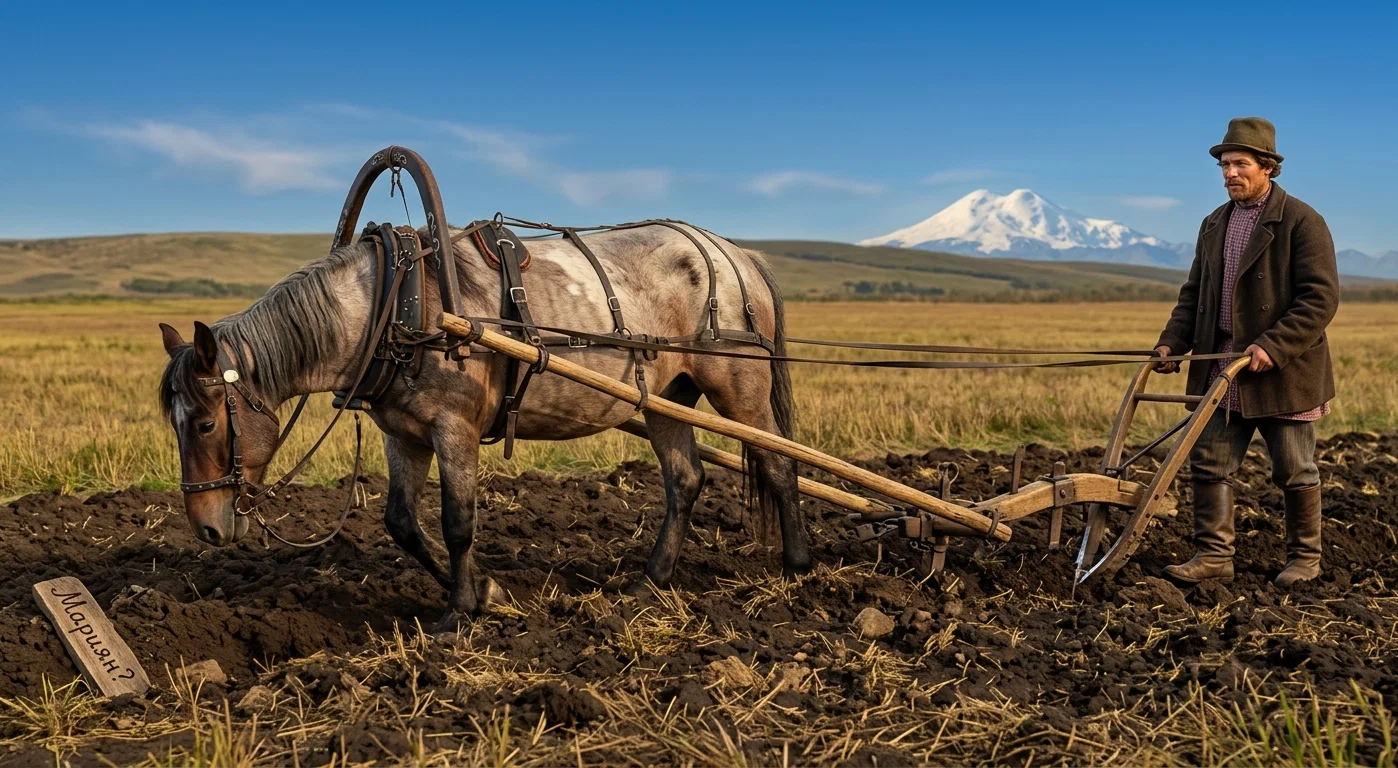
OCTOBER 15-20 the delegates of the South Russian Conference, and about twenty representatives of the Middle Russian Mission, had their annual meeting in Alexandrodar, Caucasus, one of the German colonies in a fertile farming country, whose climate, soil, and productions much resemble those of Kansas or Oklahoma. Snow-capped Mt. Elbrus, towering more than eighteen thousand feet above the level of the sea, stood in plain sight to the southeast, and by walking a few rods up the hill to the west of us, we could easily see the nearer half of the entire Caucasian range. Renowned and picturesque Vladikavkaz, the famous health resort, was only a few hours' distant by train. The weather was pleasant throughout the meeting; the air remained pure and balmy,—a typical Indian summer of the West, save that the “dreamy and magical light” so often accompanying this season in the States, was lacking; the sun shone by day, and the clear atmosphere beautifully revealed the diamond-studded heavens at night. The simple life of the two thousand colonists in the neighborhood, their warm-hearted hospitality, their easy-going habits, the cattle driven to pasture in the morning, and their return at sunset, the cackling geese and crowing cocks of the farmyard, the ever-vigilant watch-dog whose serious duty it is to warn of approaching horse thieves, the stalks of sorghum and pumpkins and Indian corn upon the ground, the low, tile-roofed, newly whitewashed, mud-walled houses, whose lofts contain the season's stores of wheat and oats and rye, and the peace and quiet that everywhere prevailed, all contributed their part in making this one of the most pleasant experiences I have had since I have been on this side of the Atlantic.
In addition to the regular laborers of the South Russian Conference, and the three brethren of the Middle Russian Mission who are working among the native Russians, Elders Conradi and Huenergardt were present. The Russians met by themselves in the house of one of our brethren. The meetings for the public were conducted in German, and part of the time they were held in the village schoolhouse, with a good attendance. In Alexandrodar about six different denominations are represented,—none of them the established church of Russia,—and at a gathering in which all these took part, it was decided that it would be very unwise for any one to report a sister denomination to the police, as the trouble which such a course might occasion would, perhaps, bring about government interference, and restrict or entirely abolish the toleration of them all. Thus far, our people in this part of Russia have not had so much difficulty. Indeed, very great favors are granted us by a princely landowner farther to the south, as he is glad to have our brethren work his lands. We have a church of about one hundred and fifty members at that place. It is in this neighborhood that one of our brethren who has spent some time at the school in Friedensau has opened a small, self-supporting health institute.
The subjects dwelt upon at this conference were, chiefly, practical godliness, church, organization, missionary and Sabbath-school work, the necessity of educating more native laborers, and the importance of increasing the regular conference funds. Several young people are to attend the school in Friedensau. The efforts which our people in this field have put forth to develop their tithe are certainly pleasing to God, and have been crowned with success. In 1902 the tithe of the South Russian Conference was $1,752; donations, $336; during the first nine months of 1903 the tithe was $2,035; donations, $336; 69 new members have been received. The Middle Russian Mission's tithe during 1902 was $144.30; no donations were reported; 12 members were received during 1903 (the first three quarters, of course), tithe, $455; donations, $14; additions, 45. The present membership of the South Russian Conference is 785; of the Middle Russian Mission, 280. The territory of the South Russian Conference includes the German colonists in South Russia, numbering about 1,000,000; while the Middle Russian Mission contains all the native Russians in Russia, about 100,000,000.
A RUSSIAN-FARMER
We will not stop to enumerate all the resolutions passed at this time, but simply refer to them. There was special reason why thankfulness should be rendered the Heavenly Father, because of the freedom and protection which our workers have enjoyed in this field. Appropriate resolutions were passed concerning the circulation of “Christ's Object Lessons,” and increasing the material fund for that book; entering fields hitherto unwarned by the third angel's message; expressing gratitude to the German Union Conference for financial aid rendered in the past; devoting the First-day offerings to the German East Africa Mission the coming year; and indorsing the health reform movement.
The health of Elder H. J. Loebsack is such that he now is able to do much more active work in visiting the churches than last year. He was again elected president.
The work for the future promises well, and we would especially ask that our people keep the Russian field ever in mind; for it is a great field, an important field, a promising field, and a hard field. Yet God is greater than the obstacles, and he hears the prayers of his children in behalf of the gospel in that mighty empire.
Hamburg, Germany.
En Route to Honan, China
By H. W. Miller
A Day in Japan
H. W. MILLER, M. D.
WE reached Yokohama harbor, at noon, October 19. After being inspected by two Japanese physicians, we moved out of quarantine quarters, and anchored one-half mile from the coast. Then about fifty Japanese sampans rushed out, each trying to reach the side of our ship first. The Japs began to board our steamer from every quarter, bringing with them all manner of things to sell to the passengers, such as cakes, souvenirs, jewelry, paintings, etc. For the Chinese they brought two roasted pigs. These they readily purchased. The pig is roasted by putting a pole through it after it is dressed, and then slowly turning it round and round over a charcoal fire. They were cut up into small pieces. Each Chinaman grabbed a piece, and ate it greedily. Some soup was eaten with the pork. All the bowls were washed in the same pail of water.
We were all looking very anxiously for Professor Field, and he came up almost before we knew it. How glad we were to see him, and to place our feet on dry land once more! Brother and Sister Burden also came on the vessel to see us. As Brother Burden could speak the Japanese language, he acted as our guide. We did not have long to stay in Yokohama, but were able to visit many points of interest. The fortresses are fine, and have ideal locations, but one is not permitted to take photographs of them.
We arrived on shore at 1 P. M., and spent the first hour riding through the city in jinrikishas. Everything was interesting to us. The streets are narrow, but good. Some have no sidewalks. Where they are very narrow, they are nicely graded. The policemen are very polite, and maintain good order. The people and their customs attracted us first. The women wear a loose garment, not14made up, but draped around them. The children are dressed loosely, but always look neat. The mother carries the babe on her back, fastened in her clothing, and secured by her sash. She will do her washing with the child bobbing up and down on her back. The infant’s head is shaved completely. At the age of two or three years it is shaved only around the margins, the hair on the central part being left to grow. I tried to secure a picture of several children, but as soon as I turned my camera on them, they would turn and run. I hired a little girl to stand and pose for me. She had a baby on her back. Then two little girls came out, and I caught them with my kodak. The men wear broad-brimmed hats, and tight-fitting trousers reaching only to their knees, and some of them not so far. The rest of the leg is bare. They do not wear shoes, but a sandal, which has two straps attached to the wooden base. One strap fits over the large toe, and the other over the rest of the toes. When he goes to the store, the Jap must take off his sandals before he can enter, receiving a check similar to a parcel check. After he is through trading, he will claim them again.
As we passed down the streets, we saw their one-story houses, with bark roofs and sliding windows, the latter closed at night, so that no ventilation is provided for. Everything in Japan seemed to be done backward to us. In the restaurant the kitchen is in front, the dining-room in the rear. In building a house, the roof is placed first, and propped up until the sides are made. In cutting wood the saw is made to cut when pulled backward.
The fruits are oranges, persimmons, grapes, apples, figs, pears, and bananas. Much of it is placed on the market green. Peas are pulled when they are very small and undeveloped. Several varieties of beans are raised, three or four of which are very good. Rice and sweet potatoes are abundant, and the markets are well stocked with eggs. Peanuts are plentiful, and they are much larger and better than those in America. We bought them for two cents a pound, roasted. Apples were two and one-half cents apiece. Persimmons were four cents a dozen. Milk is scarce, and sells at ten cents a quart. Grapes are very poor. This is the month for the chrysanthemum, the national flower. Its stalks are from five to twelve feet high, and the flower is beautiful.
The bridge works are equal to those in America. There are English settlements in all the Japanese towns, where American architecture is carried out. And even many buildings in the Japanese quarter are on this plan.
At 5 P. M. we went to the dock, and took a launch for the “Empress of India.” We visited for a while on board the steamer. But as it was now late, Professor Field and company had to leave us. The visit was a very pleasant one, and long to be remembered. We learned that our church in Tokyo numbered fifty members. Ten were baptized last year. Our friends went home by railroad from Yokohama to Tokyo, a distance of thirteen miles. The fare is third-class, one cent a mile; second-class, one and one-half cents, allowing sixty pounds baggage; first-class, two cents a mile, eighty pounds baggage. If you have much baggage, it is cheaper to buy more tickets than to pay excess baggage.
It was 10:30 P. M. before the vessel left the harbor, so we had a chance to look upon Yokohama in the night. There was a grand display of electric lights. The gunboats were signaling to one another by means of these lights. We retired for the night, having spent one of the most pleasant days of our lives. This old world is still filled with many things of interest.
The Message in the River Plate Conference
By J. W. Westphal
J. W. WESTPHAL
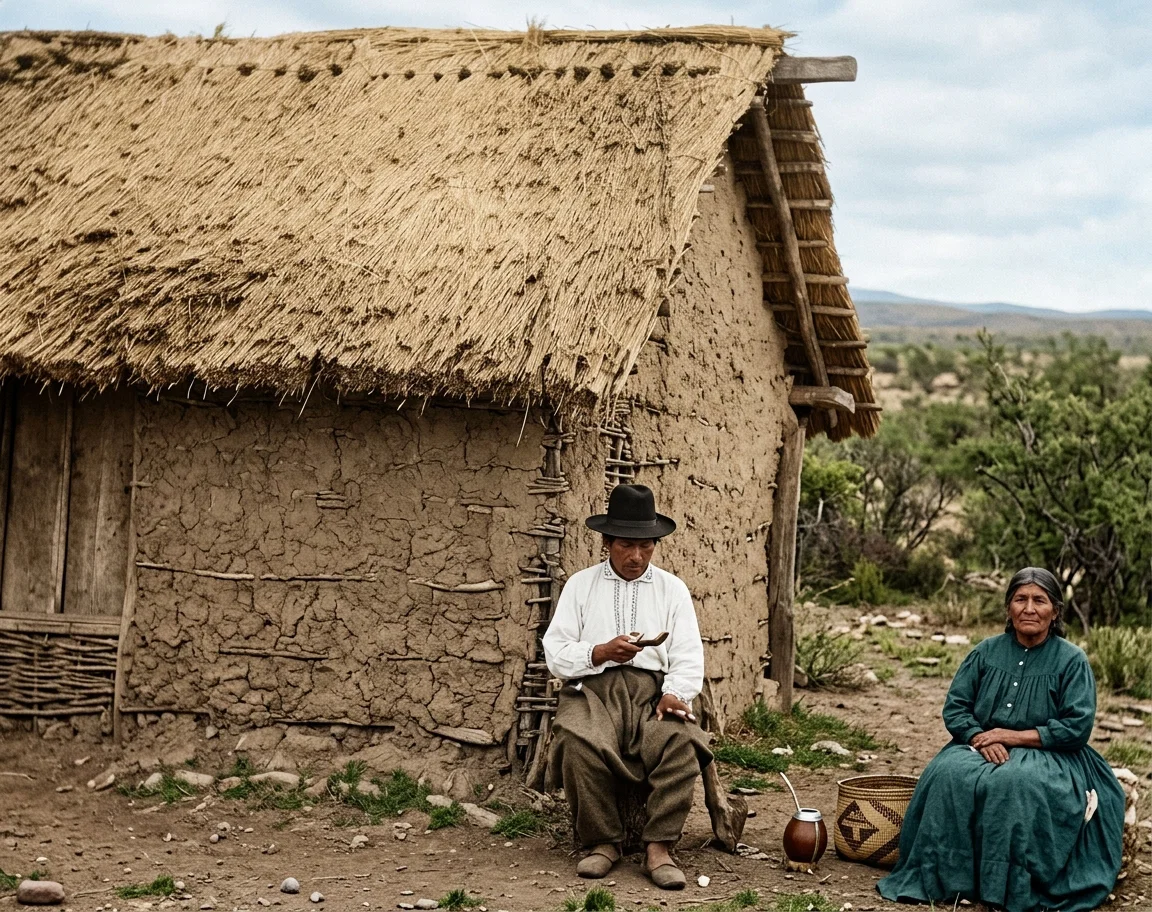
NATIVE HUT, ARGENTINA
We are pleased to report progress in the work in this field. I reached home from Brazil, August 23, after an absence of five months. To economize time and to avoid unpleasant ocean travel, I came across the country by river boat and railway. When another fifty miles of railway line is completed, at which the Brazilian government is now working, and at the present rate of progress, it is said, will require about six years to finish, we shall be able to go to and across the State of Rio Grande do Sul from Argentina by rail. This will save both time and expense. At present the fare by water is about the same as by land; but my love for ocean travel does not seem to increase with experience.
After spending a few weeks at home, during which time I gave several lessons in the school on the early history of our work, its rise, etc., as foretold in prophecy, and attending a ten days' general meeting at Crespo, at which several were baptized, I went to Urdinarrain, October 1, to engage in a tent effort with Brother John V. Maas. Near this place our camp-meeting was held last fall, and an interest was manifested among the people in the vicinity. Since then Brother Maas has labored there considerable. He was preacher, doctor, and nurse among them, and in all, he has done a good work. Two families have accepted present truth, and five persons have been baptized.
We pitched the tent in a small country village among the German-Russians, about ten miles from the place where the camp-meeting was held, and the meetings were continued over four weeks. During this time fifteen were baptized, nearly all heads of families. They took their stand in the face of most determined opposition, and in some instances persecution. As individuals were prepared, we had baptismal service, and thus we baptized five the third Sabbath of the meeting, three the fourth, and seven the fifth. This, together with an ordinance service in the tent the next to the last Sabbath, had no little influence to bring some to a decision. The Lord was especially present on these occasions, and solemn, lasting impressions were made upon hearts. Four of our brethren from Crespo, a long two days' drive, came to assist us during the first ten days of the meeting, and seven from the same place came to spend the third week with us. Their visits to the homes of the people, eating with them, praying with them, studying the Bible at their firesides, and relating their own conflicts and experiences in accepting and obeying the truth, as well as their assistance in the meetings, were a great help. Their sacrifices in leaving home and work for a short time will not be lost. Much more of this kind of work ought to be done by all who love the third angel's message.15
There are four or five others keeping the Sabbath who will be baptized soon. Some others are interested, and we believe they will accept the truth before long. Brother Maas will continue his labors there for a time. Owing to special circumstances, we thought it best to organize them into a church at once. Accordingly, an organization of twenty-two members was formed, eighteen of whom are new Sabbath-keepers. A happier church I never saw. During the last Tuesday of the tent-meeting, we had three meetings during the daytime, at which nearly all the Sabbath-keepers were present. We presented the spirit of prophecy as revealed in the Bible, and connected with this the rise of our work, and our responsibility to carry the last warning to the world. The tithing system, offerings, and health reform were all presented to them. If this church continues to walk in the light, there is every prospect that the Lord will greatly increase their numbers.
This is the first prolonged effort that I had made in a new field for several years, and I enjoyed it much. The message never seemed more clear or dear to me.
After spending the month of December in Buenos Ayres and Uruguay, I will go to the West Coast about January 1 to spend about ten weeks there, since it has been necessary for Elder Ogden to leave that field on account of the serious ill health of his wife. Thus our working force of three or four men among ten millions of people is greatly reduced. That field should be especially remembered by our brethren, that the right person may come to push the triumphs of the cross among its benighted millions. 'The harvest truly is great, but the laborers are few.'
Diamante, Entre Rios, Argentina.
India
By W. A. Barlow
SIMULTALA.—Our hearts are full of praise and thankfulness to God for his love and kindness to us during the past few months.
We have a small band of native Christians among the Santals, who give their tithes and observe the Sabbath, and I trust we shall be able to form a native church in the near future, and have a quarterly visit from one of our elders, to administer the ordinances of the Lord's supper, etc., and thereby give more encouragement to the few who may volunteer to take their stand for God and present truth.
We are in urgent need of Hindi tracts on the Sabbath, tithing, baptism, and other important subjects, for use here.
I wish to thank the brethren for their prayers and practical aid in supporting a number of students. May God bless them and all in the wide harvest-field, for Jesus' sake. W. A. BARLOW.
Norway
By Oscar Einarsen
BERGEN.—Since leaving Denver, Colo., more than six months ago, the Lord has given me a good experience, and with the psalmist I praise our kind Heavenly Father for his tender mercies to us all. “Bless the Lord, O my soul, and forget not all his benefits: who forgiveth all thine iniquities; who healeth all thy diseases; who redeemeth thy life from destruction; who crowneth thee with loving-kindness and tender mercies.” Ps. 103: 2-4.
For some time here in my native city, I have been busy with the work in the Young People’s Society. We took a club of fifty copies of the Gospel Messenger, and the young people are doing so well in selling these valuable papers that we intend to increase the club to seventy-five or one hundred copies. Several six months’ and yearly subscriptions have already been obtained. One lady buys the paper, reads it, and then sends it to her husband, who is sailing as second mate on a steamship on the coast of China.
On account of a recent big labor strike which lasted for six months in this city, the times are very hard; but I have for some time been canvassing with a number of our good tracts, and the Lord is blessing this effort with success, and thus valuable gospel truth is brought before many of my native people, and I am more glad than words can tell to have a part in this closing work of the third angel’s message. The Lord has also blessed in giving a number of Bible readings.
One young man, a bricklayer by trade, was baptized last Sunday, December 6, about thirty of the brethren and sisters and a number of persons from the neighborhood being present at the baptism. After the solemn ceremony was performed, we walked from the river to Brother Jordal’s house, where a good testimony meeting was held, after which we walked back to the city, and had a good meeting in the evening at the Young People’s Society. The things that I saw and experienced that day will long remain in my memory, and will help and encourage me to push onward in the great battle against the archenemy. May we take the shield of faith, wherewith we shall be able to quench all the fiery darts of the wicked, and at last together sing the song of Moses and the Lamb. Brethren, remember me before the throne of grace. OSCAR EINARSEN.
Oregon
By B. C. Tabor
THE DALLES.—Our labors here practically began in October. We found some of the members of two families still loyal to the truth, although no services had been held for nearly two years. The first thing we did was to organize a Sabbath-school. Our present attendance is seventeen.
While returning from a visit at the home of a discouraged Sabbath-keeper and his loyal companion, I became very much worn, and called to rest at a tidy farm cottage. The lady, while getting me some refreshments, asked, “Are you a minister? Will you not come and preach for us?” Since then several services have been held, the family have become much interested, and have assured us that we always have an open door for meetings. Two of their neighbors are now ready for baptism. The discouraged soul has renewed his covenant with the Lord, and he and his wife are now members of our church.
In a house where we stayed for a short time, awaiting an opening for a more central location, we left some soiled copies of the Signs and the REVIEW; last week a woman called and said that she had read the old papers we left, and wanted to know if she could borrow some more. Since then we have visited16her, and planned to hold some Bible studies as soon as Mrs. Tabor sufficiently recovers from her long illness, which we hope will be in a few days. Hundreds of homes are being visited with The Signs of the Times. Some orders are secured, and many openings are made for Bible talks. Sister Ruby Roberts is conducting a successful school in the family of Sister Kurtz. May we not believe that the Lord of the vineyard may water the seed soon in spite of all our physical and human weaknesses? B. C. TABOR.
Egypt
By Ella McIntyre
CAIRO.—The Lord has been good to me since I left Ohio, and on my journey here gave me kind friends, who helped me much in making change of boats at Naples. Though not of the same church, we were blessed in Bible study every day. Our aims were mutual, they being missionaries of the Brethren Church, bound for India. At Naples we united in a praise service for our pleasant and safe voyage.
In crossing the Mediterranean Sea we were permitted to pass through a severe storm. But the Pilot of Galilee brought us safely through, for which we could only praise our faithful Heavenly Father. I reached here November 4, and am glad to join our missionaries in working for these precious souls.
Truly the harvest is ripe. We need ten workers to be learning the language, where now we have one. Mrs. Wakeham is trying to answer the appeal for help in Kenah, Upper Egypt. They are eager for teachers for the children. May the Lord give us all richly of his spirit of service. ELLA MCINTYRE.