The Youth’s Instructor, Vol. 65, No. 21.

Norwegian Captain's Daughter Held Aboard German Submarine

The Youth’s Instructor

May 22, 1917

Review and Herald Publishing Assn. · Takoma Park Station, Washington, D. C. · May 22, 1917

Norwegian Captain's Daughter Held Aboard German Submarine
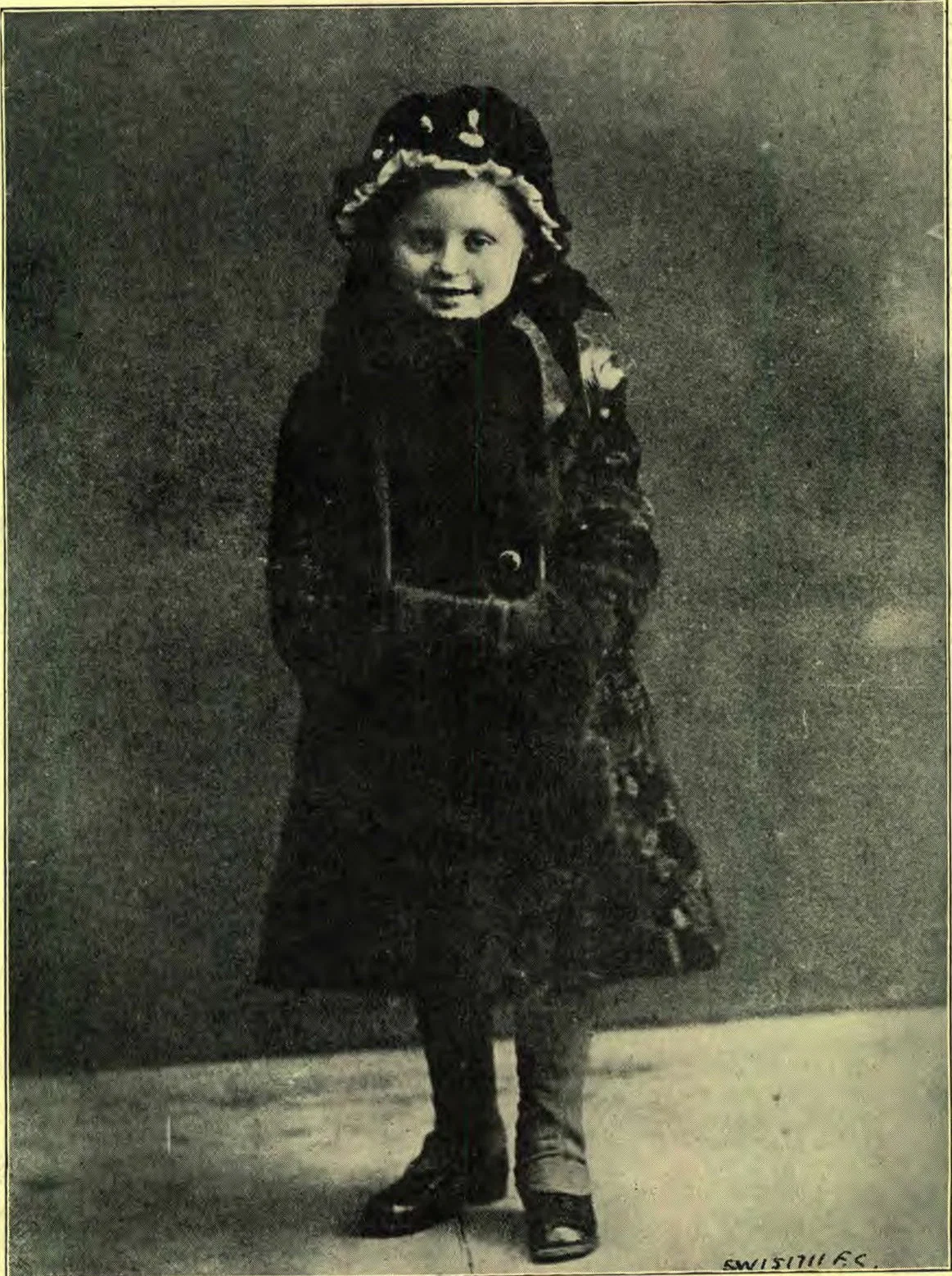
CAPTURED AND HELD BY A GERMAN SUBMARINE FOR EIGHT DAYS
This little lady enjoys a distinction that is shared by no other girl in the world. She, with her parents, was captured and held by a German submarine for eight days. When the bark “Thor II,” a Norwegian, was sunk by a German submarine, her captain, Isaak Jacobson, his wife, and six-year-old daughter were compelled to board the U-boat and remain there for eight days. The daughter of the Norwegian skipper soon captured the hearts of all on board from the commander down, and enjoyed the freedom of the ship. When she and her parents were transferred to another vessel, she was presented with an armful of presents contributed by the crew. So far as is known, this is the first girl to live on board a fighting submarine while it was on a war cruise.

Cement Wear Tests and Mix Proportions

As a result of extensive experiments it has been proved that cement work containing the largest proportion of cement mixed wet, shows the least wear.
There is said to have been an average of one convert to Christianity in Korea every hour for twenty-five years.
An electric-lighting plant has recently been installed in Mammoth Cave, Kentucky, and adds immeasurably to the wonder of the scenery.
The Interstate Commerce Commission from the data in hand for nine months has estimated that the net operating income of American railroads was $1,098,000,000 for the year 1916.
Hens’ eggs vary in size to the extent that seven of one size may make a pound, while nineteen of another are required. Because of this difference in size, it is claimed that eggs should be sold by weight.
Historic St. John’s Protestant Episcopal Church, just across Lafayette Square from the White House, in which more Presidents and men prominent in Washington official life have worshiped than in any other church in the national capital, celebrated its centennial anniversary this year.
Fifty years ago the first wood-pulp paper in the United States was manufactured, and it would be difficult to estimate the benefit this has conferred upon the world, for it was a step in the dissemination of knowledge, particularly current news, just as was the invention of movable types and the printing press.
When Jenny Lind arrived in New York in 1850, wharves and streets were packed with people. It is said that 30,000 serenaded her at her hotel, headed by a band of 130 and hundreds of red-shirted firemen. At her first concert 5,000 crushed into the hall, one man paying $600 for a ticket. In less than a year she amassed $3,000,000.
More than a quarter of the active volcanoes of the world are on United States soil. We have the distinction of possessing about sixty volcanoes in Alaska and in the Aleutian Islands just off the coast. In the western United States, in the Philippines, and in the Hawaiian Islands we have nearly as many more, making over a hundred volcanoes that we possess—not that we place any value upon their possession. There are but four hundred and seventeen throughout the entire globe.
A missionary who suffered from various attacks of fever, her temperature often reaching 106 degrees, gives a glimpse of her experience during one of these illnesses. The physician administered a medicine which broke the fever, and caused the perspiration to flow, thus saving her life. She says, “That night I lay on a low bed feeling perfectly happy, although a whole family of rats danced over me till dawn. A tin traveling box acted as a table beside my bed. On it lay a candle, a water bottle, a match box, and the powder which I had to take at a certain time. The rats ate the candle, knocked over the water bottle, saturating the matches, making it impossible to strike a light or mix my powder. In the morning a baby rat was found drowned in a basin of water near my bed.”
A famous French preacher is very absent-minded. He does many funny things, about which he is the first to laugh heartily afterward. On a Sunday morning, preaching before a large congregation, he several times carefully wiped his perspiring forehead with a folded pair of socks he had put in his pocket instead of a handkerchief before going out, and he never noticed his mistake until he was told at home. He had a good laugh over it, but went on putting in his pockets the most assorted articles, which were as puzzling to him as to his visitors or hearers when he proceeded to wipe his ever-perspiring forehead.
A little girl on her deathbed surprised the attending physician by asking him if he loved the Lord and would be saved when Jesus came. The doctor made some hopeful reply, though he was not a professed Christian, whereupon his little patient assured him, “If you are there, I will pick the loveliest bouquet I can find and give it to you.” At a previous time, appreciating his service, when he had set a broken arm for her, she said to him, “It seems to me that God and the angels and doctors know everything.” The physician remarked that it was the first time he had ever been so honored in his associations.
The Secretary of Agriculture proposes to enlist an army of 2,000,000 city boys to work on farms. We hope our boys, whether in country or city, will do their utmost to add to the nation’s resources by gardening and farming. While the nation will gain by their effort, the boys themselves will be enriched more than the nation, for there’s health, knowledge, and good cheer in an energetic and wise effort to make the ground bring forth its best gifts.
The one-celled, microscopic, red snow plant of northern regions is said to give the waters of Lake Morat in Switzerland a blood-red color every tenth year. For centuries the Swiss regarded this phenomenon with superstitious dread; but science has discovered that every tenth year the plant begins to propagate, and so quickly does it grow that in a short time the whole lake is crimson.
A prospector of the Yukon region, while on a trail, recently died from exposure and heart failure. His body was not found for at least ten days after his death, yet his two faithful dogs had remained with him, one on each side of the body. The dogs were too weak to stand when found, but they had suffered no wild beast to molest the body of their master.

Reputation Versus Character Before God

“REPUTATION is what men think we are; character is what God sees we are.”

The Broken Fog

L. MYRTLE SOURS
The sun broke through the fog, A round, clear orb so bright; It lit the mist-dimmed trees With strangely radiant light; And the sky, which the mist had hidden, Looked down, where the sun broke through, All flecked with shadowy forms of white Where the clouds were afloat in the blue.
Oh, the tree tops! the tree tops bare, That lifted their branches high, And the one old pear tree top That reached far up through the sky!— The trees, all bathed in mist, Foggy, and heavy, and gray,— What a glory gilded their tops As the thick fog vanished away!
So the sun will break through your fog, O Soul, hid in shadows and mist, And your sky will shine clear, and more blue Than the purpled amethyst, Look up through the fog to heaven, And Jesus, the shining light, Will break through the dark and the mist With his love and his glory bright!

The Reward Worth While

L. M. GREGG
Two men of advanced years and broken health met at a mountain resort. One was wealthy, and had accumulated his fortune with little regard for the golden rule. The other had been a teacher in a Christian college on a meager salary. He was a man of unselfish spirit, and wrought his noble character into the lives of scores of young men.
The rich man, on various occasions, observed that the teacher received a large number of letters, while he had only an occasional message from some member of his family. He noticed also that the teacher manifested considerable emotion as he read his mail, sometimes wiping the tears from his eyes. Finally the wealthy business man said, “I see you sometimes appear greatly moved as you read your mail. You say nothing of any sad news from home, but my interest has been aroused.”
The teacher replied: “I believe I have told you that I was a teacher in a Christian college for a good many years. While the compensation was small, the opportunity to impress young life was large. I sought to be faithful as an instructor, but I was equally zealous, both by precept and example, to impress the boys with the importance of righteous character. These young men are now widely scattered over our country. Many of them, I am glad to say, have been successful in business and professional life, and they seem to cherish generous sentiments for their old teacher. They have seen, through our church papers, that I am not well, and that I am here in the hope of improving my health. Most of my letters come from these men. They express their abiding interest in me, and their solicitude for my recovery; most of them are generous enough to write that they owe much of what they have been able to accomplish in the world to the instruction and impressions received in my classroom. Several write that they are aware that a teacher in a Christian college cannot save much money, and they are solicitous that I shall have the comforts of life, so they inclose checks, requesting me to accept them, not as charity, but as an expression of love, and as a partial compensation for services rendered years ago, and more highly valued as the years pass. “This is the explanation of my emotion; I could not refrain from shedding tears of joy and gratitude.”
The rich man said: “I would give all my fortune if I could feel the emotions that stir your soul. I have money, nothing more. You have all the money you need, and, besides, you have what is more valuable—friends and an approving conscience.”
Isa. 41:6 reads: “They helped every one his neighbor; and every one said to his brother, Be of good courage.” Suppose every individual in a certain town should live this text for just one week. What changes would be wrought! what transformations would take place! how many wrongs would be righted; what happiness brought into homes! We should hardly recognize the place. It would be getting back a little nearer to Eden and God’s plan for humanity. Would it be worth while?
There is really no higher aim in life than that of being a blessing to others in one’s own place. Every noble, spirited young person is ambitious to live well and helpfully, to do something worth while. But not all the really heroic things bring fame in this world. One may be a hero in God’s sight, and yet never hear a word of praise from human lips. One boy will leave home to defend his country, rise to honor, and return with high rank. A younger brother stays at home, cares for his widowed mother and the younger children, living as a common farmer, without fame, but, with God, no less a hero.
It is not only what we do, but even more what we are, that makes our lives count in their helpfulness. Paul speaks of certain of his friends as “men that have been a comfort unto me.” He was in prison, and in his loneliness these men had cheered him. He speaks of Aristarchus as “my fellow prisoner.” Perhaps he voluntarily stayed with the old minister in prison. Some one has defined a friend as “the person who comes in when all the world has gone out.” This is what Aristarchus had been to Paul.
In one of his journeys a young man had become discouraged and returned home, but we are glad to read later on that Mark so lived that he regained the confidence of Paul, and was a “great comfort” to him, not, perhaps, by lessening his sufferings or burdens, but in making him braver and stronger to endure.
It is written of Jesus, “He went about doing good,” and “he that saith he abideth in him ought himself also so to walk, even as he walked.” All around are those needing help. Some need just a kindly word and helping hand; others a sympathetic ear to listen to their troubles; still others need help which can be given in sickness; and everywhere are those who need the help and comfort which can be given by only those who have received the comfort which comes through suffering. 2 Cor. 1: 3-7.
The “cup of cold water” may be used in winning souls to the Master, but greater effort may be necessary to win others. We may not always have the privilege of seeing the results we should like in this world, but we are told:
“The redeemed will meet and recognize those whose attention they have directed to the uplifted Saviour. What blessed converse they have with these souls! ‘I was a sinner,’ it will be said, ‘without God and without hope in the world, and you came to me, and drew my attention to the precious Saviour as my only hope. And I believed in him. I repented of my sins, and was made to sit together with his saints in heavenly places in Christ Jesus.’ Others will say: ‘I was a heathen in heathen lands. You left your friends and comfortable home, and came to teach me how to find Jesus, and believe in him as the only true God. I demolished my idols, and worshiped God, and now I see him face to face. I am saved, eternally saved, ever to behold him whom I love. I then saw him only with the eye of faith, but now I see him as he is. I can now express my gratitude for his redeeming mercy to him who loved me, and washed me from my sins in his own blood.’”
“Others will express their gratitude to those who fed the hungry and clothed the naked. ‘When despair bound my soul in unbelief, the Lord sent you to me,’ they say, ‘to speak words of hope and comfort. You brought me food for my physical necessities, and you opened to me the Word of God, awakening me to my spiritual needs. You treated me as a brother. You sympathized with me in my sorrows, and restored my bruised and wounded soul, so that I could grasp the hand of Christ that was reached out to save me. In my ignorance you taught me patiently that I had a Father in heaven who cared for me. You read to me the precious promises of God’s Word. You inspired in me faith that he would save me. My heart was softened, subdued, broken, as I contemplated the sacrifice which Christ had made for me. I became hungry for the bread of life, and the truth was precious to my soul. I am here, saved, eternally saved, ever to live in his presence, and to praise him who gave his life for me.’”
“What rejoicing there will be as these redeemed ones meet and greet those who have had a burden in their behalf! And those who have lived, not to please themselves, but to be a blessing to the unfortunate who have so few blessings,—how their hearts will thrill with satisfaction! They will realize the promise, ‘Thou shalt be blessed; for they cannot recompense thee: for thou shalt be recompensed at the resurrection of the just.’”—“Testimonies for the Church,” Vol. VI, pp. 311, 312.
Opportunities await us on every hand to lighten the burdens, and our prayer should ever be, “Make me a blessing today.” This will bring joy and happiness continually, and the reward is surely worth while.

From Penitentiary to Pulpit

THOUGH most educational institutions are closed during the hot summer months, the Moody Bible Institute had during the summer 656 students working in its regular day department, besides about 100 specials who came from all parts of the country to study the Bible and kindred subjects. When we closed in August for a month’s vacation, one of our men, named John Steffens, started on a trip, the account of which reads like a romance. He came in to tell me his plans the other day, and I give his story as nearly as I can in his own words:—
“I was born in Rumania. My father died when I was eight years old, my mother in 1905. She was a praying woman, a member of the Greek Catholic Church. I ran away from home, and came to this country. I became a professional gambler.
“In December, 1907, I was in Martin’s Ferry, Ohio, and fell in with four bad young men. For two weeks we associated together, drinking and gambling constantly. One day we got into a quarrel, and I heard one of them say, ‘Let us get that fellow off the face of the earth.’ Soon one of them started at me with an open knife. I ran across the street, and he ran after me. As he drew near me, I turned and shot him. He fell, and the other men ran away. The man died, and I was arrested, tried, and sentenced to the Ohio State Penitentiary for life. The prosecuting attorney tried to send me to the electric chair, but the jury gave me life imprisonment.
“One day in May, 1909, while I was in the penitentiary at Columbus, I read in a newspaper an article concerning a man named Herman Billick, who was sentenced to be hanged in Chicago for poisoning his wife. He applied for a second trial, and a second time was condemned to death. He applied for a third trial. Meantime his mother, a godly woman, came frequently to pray with him in prison. She would put her arms about his neck, and say: ‘My son, I am sure God will not let you die. The blood of Jesus Christ is sufficient to atone for all your sins.’ Finally the mother died of a broken heart, but a day or two before Billick was to be executed his sentence was changed by the governor to life imprisonment. The article went on to say, ‘After all, the mother’s prayers were answered, though she did not live to see it.’”
“As I read that story, I said, ‘If God can answer prayer for one murderer, he can for me;’ and I fell on my knees in my cell, and began to pray. As I prayed, God forgave my sins, and revealed himself to me so plainly and so personally that from that day to this, I have never doubted that I am one of his redeemed ones. I began to read the Bible in order to learn more about God and his will for me. I found the psalms of David most helpful, for somehow I felt that David could sympathize with me, having been a murderer himself. I read all the religious papers and books and tracts that I could get hold of.
“The warden and all the prisoners saw the change in me, and gradually I was promoted to positions of responsibility. I became a sort of assistant to the chaplain, looking up the new prisoners, and urging them to attend the religious services. I told them what God had done for me and how much help I had obtained by reading the Bible and religious books. Many of them were helped, and some were converted and began to read the Bible.
“In 1912 the warden sent me out to work on the State Hospital Farm at Dayton, Ohio. I was still a life prisoner, but was paroled on my word of honor. I worked on the farm a few months, when the hospital superintendent, Dr. D. E. Baber, took me off the farm to be his private coachman. For over two years I occupied this position, and the people of Dayton saw me driving around the city by day and night, and I came to be pretty well known. During this period Rev. Mr. Smith, pastor of the United Presbyterian Church of Dayton, called on me, and invited me to attend his church. I did so, and became a worker in all the church activities so far as my time would permit.
“One day when I was driving some of the members of the State official board to the station they asked me when I was going to get out. I said: ‘I don’t know that I will ever get out. I am in for life, and I haven’t a friend in the world.’ They encouraged me by saying that I had made a good record, and told me to let them know when I made an application for pardon.
“Dr. Baber also said to me, ‘John, when you get ready to apply for a pardon, I will write you a letter of indorsement.’ Thus encouraged, I made an application. Dr. Baber wrote me a strong letter. I showed it to Rev. Mr. Smith, who drew up a petition in my behalf, and asked his congregation to sign it; and they did. Thus, in answer to five and one-half years of prayer, and through the help of Christian people, I was pardoned in 1914, after having served a sentence of six and one-half years. I called on Governor Cox, who had signed my pardon, to thank him for what he had done. He was glad to see me, and said: ‘Now you are a free man, John. What brought you to the pen?’”
“‘Booze,’ I said; ‘but by the grace of God I’ll never touch another drop.’”
“After I got out of prison I wanted to tell others what God had done for me. I wanted to do something for men in prison, and so I prayed that God would send me to some prison evangelist. After five months, during which time I was working on a farm in Nelson, Wisconsin, God led me to ‘Lucky’ Baldwin; the prison evangelist of Chicago. For three months I worked with him in his mission. He told me what the Moody Bible Institute had done for him, and advised me to apply for admission.
“I came to the superintendent, Rev. H. W. Pope, in September, 1915. I told him my story, and how anxious I was to enter the school, but that there were three reasons why I could not do it. First, I had no money; second, I had no education; and third, I could speak only very broken English. He encouraged me by saying that as to the money he would get me a loan of fifty dollars, and with that help I could work my way through school. As for the English, he said the school gave first-class instruction in that study; and as for the education, my experience of sin and redeeming grace was in itself a valuable education for one who purposed to work among criminals. Thus in five minutes’ time all my mountains of difficulty disappeared, and I entered the school, September, 1915.
“I soon found work, and with some help from friends in Pittsburgh and McKees Rocks, Pennsylvania, I have worked my way through the first year of my course. For six months I have had charge of the Sunday services in the Clark Street jail, and God has blessed the work abundantly. Several times I have spoken in the Cook County jail, and three times in the Bridewell to twelve hundred prisoners. On some occasions as many as fifty men have been converted at a service, so far as we could judge. My experience in the penitentiary gives me a great advantage in talking to prisoners, and my desire is to spend my life in working among them. I was once in their condition, but now by the grace of God I am a free man. My sins, which were many, are forgiven, and I can look into God’s face with a clear conscience, and earn my bread with clean hands.
“My plan for vacation is to go to Dayton, Ohio, and preach on Sunday in the United Presbyterian Church, whose pastor and members petitioned the governor for my release. Then I go to Columbus, and speak in the penitentiary where I was confined as a life prisoner; then to Pittsburgh to visit the friends who helped; and all along the line, always and everywhere, to tell everybody I meet what God has done for me, and what he will do for any sinner who will forsake his sins and put his trust in him.”
Such stories as this ought to encourage God’s people to work on patiently, for God has a thousand ways we know not of to bring the wanderer home.—Rev. Howard W. Pope, in Christian Endeavor World.

A Prisoner’s Promise

“If I ever felt the unmistakable call to do a particular duty that no one else would do or could do,” said William T. Stead, editor of the Review of Reviews, “it was when I assailed the criminal vice of London, in the Pall Mall Gazette.
“It brought me into very difficult places; it threatened me with utter ruin and destruction. But I was delivered through all my tribulation, and found that my prison cell was the antechamber to a larger place of usefulness throughout the world than ever I had dreamed of.
“In the whole of that campaign there was nothing from which I recoiled with such dismay as having to stand up in the dock at the police court and defend myself against an odious criminal charge imputing to me the very crime that I had been exposing in order to secure the reform of the law.
“I well remember the shrinking of heart with which I went down to the court. I had never been in a police court before in my life. Everything was strange and depressing.
“But before I went into the dock, I read the first chapter of the book of Joshua, and rose marvelously comforted from the perusal; and why?—Because I took to myself—as I truly think every man that is doing what he believes to be God’s work against great odds is justified in taking to himself—the oft-repeated message to the leader of the hosts of Israel on the eve of the crossing of the Jordan. How splendidly the promise rings to this day in the ears of those who prepare themselves for the fray!”

Why Should Missionaries Fight Fire?

At a serious fire which occurred in the city of Kia-ting, Szechuan Province, west China, the people were so much impressed by the efforts put forth by the men members of the missionary community that they proposed doing several things to show their gratitude. After the usual native procrastination, about five months after the fire, each member of the foreign fire brigade received a large white scroll upon which was inscribed a long eulogy, one sentence of which reads as follows: “Although these foreigners owned no goods or houses in the danger zone, nor were in the least concerned, yet they ran to do this public service. They earnestly looked upon the dangers of another people as if they were the urgent pain of their own skins.”—The Missionary Review of the World.

Life Written Upon the Human Face

LIFE writes its history upon the face, so that all those who have had a like experience read and understand. The human face is the masterpiece of God.—Elbert Hubbard.

Things as They Are

“You know,” Clotilda gave warning, “I say dreadful things sometimes.”
“I think I can stand the shock,” Miss Sheldon replied. “Are you wanting to say some dreadful things just now?”
“That’s just it,” Clotilda replied, lifting her brows perplexedly. “I never want to say dreadful things. They never sound dreadful at all to me—only to other people. I’m just trying to say things the way they are.”
“That,” Miss Sheldon responded, “is about the most difficult thing in life, Clotilda.”
“It is?” Clotilda’s voice was full of amazement. “Why, I think it’s easy—if only people would let me.”
“I’ll let you. At least, I won’t be shocked. What did you want to tell me, Clotilda?”
“Well,” said Clotilda, settling into a confidential attitude, “there’s Miss Raeburn. She looks so sweet, but she doesn’t do anything except that everlasting crocheting,—balls and dolls and such things,—for church fairs, I suppose. Think of being in mountains like these and seeing nothing except work! She never goes on any trip anywhere.”
Clotilda paused a second for Miss Sheldon to make some comment, but no comment came, and so she went on to the next thing:
“Then there’s Beatrice Pemberton. I heard that she was very artistic—but the clothes she wears! Why, Miss Sheldon, they are awful. They don’t match—the colors—and they don’t suit her in the least. Some of them are fussy and frilly. No one could really be artistic and wear such clothes!”
“Clotilda,” Miss Sheldon said, “did you ever think it would be fun to be a detective?”
“Didn’t I—just!” Clotilda responded. “How did you guess, Miss Sheldon?”
“It wasn’t guessing—it was suggesting. Why don’t you do a little detective work for yourself—discover why Miss Raeburn sees nothing except wools and Beatrice Pemberton wears frilly clothes?”
“I wonder what’s up?” Clotilda remarked reflectively to the landscape. “But I’ll try—it will be fun.”
Two days later Clotilda rushed in—Clotilda all penitence and humility.
“Miss Sheldon, wasn’t I just horrid! Why do I jump at things so, never waiting to find out? Miss Raeburn, with that spinal trouble and never a word about it! And sending boxes and boxes of Christmas presents to poor little schools and places!”
“Did you find out why Beatrice Pemberton likes ‘frilly’ clothes when they don’t suit her?”
“She doesn’t—she hates them. She wears them because a cousin sends them to her, and she’s putting a little sister through college. Miss Sheldon, I feel just about one inch high.”
Miss Sheldon smiled—it was a smile that was full of understanding, and it comforted Clotilda.—Youth’s Companion.

Courtesy Town

IN that rich country where the West and East meet is a small city that is more widely known than any other of its size in the Mississippi Valley. One can travel over a dozen States and hear of that town—and never once hear a complaint. It is always praise. The town is prosperous in a quiet, steady way. It is clean; it is beautiful. It has excellent public buildings, in good taste. But the thing that lingers with the visitor, the thing that leaves a distinct, pleasurable feeling, is the courtesy of the town.
A stranger arrives, feeling a little lonesome and blue. It is a thousand miles to his home. He does not know how business is going to be, but he knows how bad it has been. He has had a bad night in the sleeper. He is ready to hit back on the slightest provocation.
He starts up the street. A well-dressed, busy-looking man passes him.
“Good morning, sir!” He gives his hand a friendly wave.
The stranger half turns and looks after him.
“Must have thought he knew me,” says the blue visitor; but half a block farther on he meets another man.
(Concluded on last page)
(Concluded from page six)
“Fine morning!” The citizen nods and smiles. Directly the visitor begins to feel a change in his spirits. This is a friendly town; and that is a nice park over there—the squirrels are at play in the trees and the grass is very green.
Now it is no concerted action on the part of the inhabitants of this town. It is a spirit of friendliness, started somewhere, sometime, which has bred a general courtesy and consideration for each other, and for the stranger within their square.
Visitors, entire strangers without any special claim to consideration, will be pleasantly greeted half a dozen times in walking round the square. And much oftener than not, if one starts to board a street car the man in front steps to one side and waves the stranger in first.
A man may fight fiercely to hold his own in business; but he does not need, at least in a small town, to fight to get ahead of some one in the elevator, or up the car steps, or at the post-office window. And no matter how strong the competition in a town is, business and personal courtesy make it easier and pleasanter for everybody.
The stranger feels it and remembers it; and now and then it causes one to buy a corner lot and build, and another to come back half across a continent and locate in this town of pleasant memories.—Selected.

Yes, Politeness Pays

DAY after day, in fair weather and foul, through sun and snow, he stood at the corner of Monroe and Division Streets, Grand Rapids, Michigan, waving traffic onward with a white-gloved hand. He greeted every one with a smile, yet his gestures were as authoritative as those of any traffic cop on the thoroughfare. Also when you offended against the laws and ordinances he did not act as if he had caught you robbing a bank or kicking a cripple. Instead of humbling one before a crowd, the cop with the smile explained gently the breach, the law, and the reason for the law, until you felt as contrite and ashamed as if caught cheating by your wife.
One day a bank president drove past the corner—this is a true story, too, but so far it sounds like one of Oliver Optic’s books for good boys; the bank president observed the stanch figure and kindly countenance of our hero. Upon inquiry he discovered that the smile was not bestowed upon him alone because he chanced to be a bank president, but went out to the occupants of all vehicles from plutocrats to dump carts. So the bank president summoned the traffic cop and gave him a job showing people around his new bank, at more kopecks per week. Now that Cornelius Wyman has traded the fresh air of his street corner for the inside of a bank, he may lose his rosy cheeks, but the smile has weathered too many gales to wear off indoors. If this story needs a moral let it read, “How to be a gentleman though handling traffic.”—J. C. De Oude.
Continue reading: THE BOY WHO SANG FOR HIS BREAKFAST