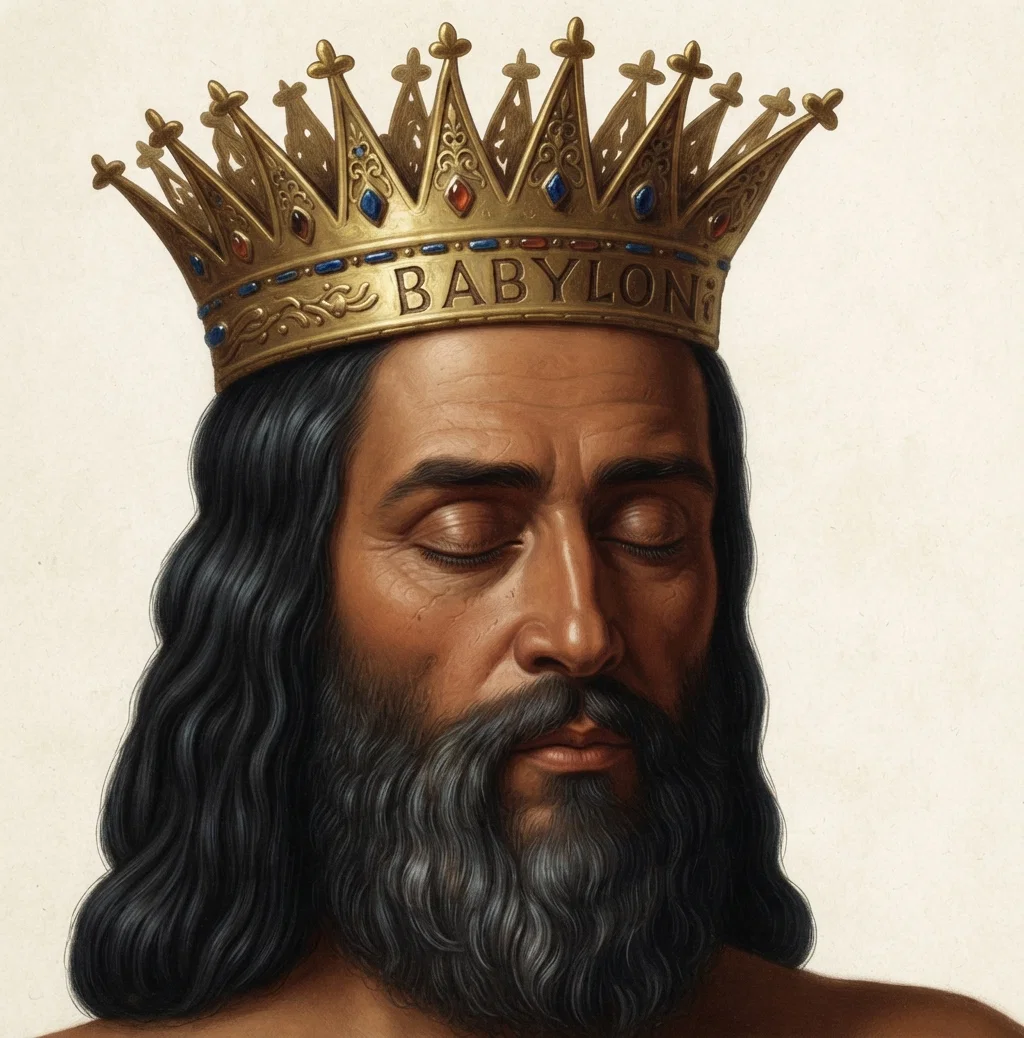
TWENTY-SIX centuries ago was founded the Babylonian empire by Belesis, otherwise called Nabonassar, and known in Scripture as Baladan. Isa. xxxix, 1. B. C. 747. It arose from the ancient empire of the Assyrians, founded by Nimrod, [Gen. x, 9, 10.] which had governed Asia for about thirteen hundred years. Having reached the summit of its greatness and glory under Nebuchadnezzar, who overran Asia Minor, Phenicia, Egypt, Syria and Palestine, it became connected with the people of God, as an instrument in his hands for their punishment and is hence introduced into prophecy.
In the year B. C. 606, Jeremiah prophesied of the coming of Nebuchadnezzar against Judah and Jerusalem, and the captivity of seventy years that was to follow. This accordingly came to pass. In the same year, Jerusalem was taken and many of its inhabitants carried away captive to Babylon. Among these were Daniel, Hananiah, Mishael and Azariah.
A revelation of the world's history now opens. A succession of events is unfolded, reaching down to our own time, and a little beyond, which has employed the pens of all historians from that day to this, and will continue to employ them till the great consummation of all things. Here then let us commence to note these events as they transpire along the course of time; having the assurance that the same lamp of prophecy which at this point shines so full upon our path, will light us all the way.
Nebuchadnezzar ascended the throne of Babylon on the death of his father Nabopollasar, B. C. 605. In the second year of his reign, as related in Dan. ii, he "dreamed dreams wherewith his spirit was troubled and his sleep brake from him." The magicians and astrologers having failed to comprehend the matter, it was revealed to Daniel, and he made known to the king the dream and the interpretation thereof. He stated to him a fact which is a source of rejoicing to God's people even to the present day; namely that there is a God in heaven that revealeth secrets, and maketh known what shall be in the latter days. He told him that he had seen a great image whose brightness was excellent, and form terrible; that its head was of fine gold, its breast and arms of silver, its belly and sides of brass, its legs of iron, and its feet part of iron and part of clay. A stone cut out of the mountain without hand smote the image upon the feet (this point we shall notice particularly hereafter) and the iron, clay, brass, silver and gold were dashed in pieces, and like the chaff of the Summer threshing-floor, were blown away. In the interpretation which follows, the Prophet addressed the king with these words: "Thou O king, art a king of kings; for the God of heaven hath given thee a kingdom; power and strength and glory . . . . Thou art this head of gold."
This is enough. We now know that the image which the king saw, was a symbol of earthly governments, and that he (or the kingdom which he represented, the king being here put for the kingdom) was the first of them, for, said the Prophet, referring to his kingdom, power and strength and glory, "Thou art this head of gold." Thus clearly, with dates and starting points all-well defined, are we set upon the track of truth.
Nebuchadnezzar reigned forty-three years. He was succeeded by his son, Evilmerodach, who reigned two years. Evilmerodach was followed by Neriglisar, who reigned four years. He was succeeded by Laborosoarchod, who being put to death after nine months, his reign is not counted in the Canon of Ptolemy. This brings us to the reign of Nabonadius, who is the Belshazzar of Daniel. He reigned seventeen years.
In the first year of Belshazzar, Daniel had a dream and vision of his head upon his bed, [Dan. vii, 1.] in which were revealed the same essential events as set forth in the image shown to Nebuchadnezzar. He saw the four winds of heaven strive upon the great sea, (the sea denoting peoples and tongues, and the four winds, wars and civil commotions among them, Rev. xvii, 15) and four great beasts came up diverse one from the other. The beasts are declared plainly to be four kings (or kingdoms) which should arise out of the earth. Verse 17.
The first was like a lion, having eagle's wings, representing the first universal or Chaldean empire, the same as the head of gold. Daniel beheld till the wings thereof were plucked and it was lifted up from the earth, and made stand upon the feet as a man and a man's heart was given to it. Verse 4. On this verse Scott has the following note:
"The Chaldean empire as advanced to its summit of prosperity under Nebuchadnezzar, and as declining under Belshazzar, was intended by this beast. The lion was an emblem of Nebuchadnezzar's courage and success in acquiring the dominion over his neighbors; and perhaps of his superior generosity and magnanimity, with which he ruled over the nations. The eagle's wings denoted the rapidity and unabated vigor with which he prosecuted his victories. But as the Prophet saw him, he observed 'that the wings thereof were plucked.' After the death of Nebuchadnezzar, the Chaldeans made no more conquests; several of the subjected nations revolted; the Medes and Persians soon began to straiten them; till at length Babylon was besieged and taken, and so that monarchy was terminated. No longer did this beast appear rapid in conquest as an eagle, or courageous and terrible as a lion; but it was changed as it were into a human creature; it 'stood on its feet as a man, and had a man's heart given to it.' After Nebuchadnezzar's death, the kings of Babylon became less terrible to their foes and subjects, and more cautious, and even timid; till at length Belshazzar shut himself up in Babylon, not daring to face Cyrus, as a man would not venture to face a raging bear, which a lion would despise."
Gold is the noblest of metals, the lion the noblest of animals; so the Chaldean was the noblest of earthly governments: not indeed in the duration of its existence or the extent of its dominion, but in its grandeur and glory. Babylon, its renowned metropolis, became under Nebuchadnezzar one of the wonders of the world. But like the transient dream which soon vanished from the mind of the king and was forgotten, and like the empty metal of the lifeless image, so empty was all this earthly glory and so soon to pass. While the kings of Babylon were rolling in luxury within its impregnable walls, in the broad regions round about was God marshaling his agents by which great Babylon, "the glory of kingdoms, the beauty of the Chaldee's excellency" was to be brought even with the dust. Isa. xiii, 19. Everything was done which human wisdom could devise for its preservation, but God's appointed time for its fall was approaching. His people were held captive by that arrogant power; and he had declared that when their seventy years were accomplished, he would punish that nation and the king of Babylon. Those years drew near their termination; and it was not, neither is it, in the power of human wisdom to frustrate his decrees.
(To be Continued.)
Combination against the Sabbath—Mr. Fillio and the Spiritualists.
By James White
Since the publication of the review of Mr. Fillio, a pamphlet has been placed in our hands, entitled "Design and tendency of Modern Spiritualism upon Revealed Religion. Delivered in Battle Creek, Michigan, May 8, 1853." His text is, "By their fruits ye shall know them." In this pamphlet he states eighteen articles of the "Theology of Spirits," which stand in opposition to God's word, or "Revealed Religion." The last is as follows:
"XVIII. The law of the Sabbath is of no binding force, and its observance ought to be disregarded.
This follows from the rejection of the Bible as the rule of duty; and the "mediums" and "seers" pay no more regard to the Sabbath than any other day.—Many "circles" devote it to rapping, dancing, and card-playing; and in their writing there is not the least reference to its sanctity."
By this comment on the teaching of the "spirits," Mr. Fillio places a disregard of "the law of the Sabbath" as a consequence of the rejection of the Bible. Yet he professes to believe the Bible, while he teaches that the very institution of the Sabbath was "peculiarly Jewish," and that "the law of the Sabbath" is not binding. In a course of five lectures on the subject he made "not the least reference to its sanctity," and at other times he has preached that there is no sanctified time in this dispensation. "By their fruits ye shall know them."
His synopsis of the spiritual creed is as follows:—
"Such are the religious views inculcated by the 'Spirits.' From the 'Great Harmonia' of A. Davis, down to the last of these productions, their 'communications' are filled with the most loathsome infidelity. No creation—no depravity—no conversion—no Divine Redeemer—no atonement for sin—no miracles—no word of God—the Bible a source of corruption—no devils—no hell—no resurrection—no day of judgment—Christianity a curse—ministers hypocrites—down with the churches—down with all civil governments—down with the Sabbath—down with every thing that is lovely, and fair, and of good report."
We stated in our review of his no-Sabbath lectures that in his lectures was laid the foundation of infidelity; but we were not aware that he had already given such a description of his compeers with whom he has joined in the cry of "down with the Sabbath." A few passages may be read to profit in connection with his text:—
Rom. ii, 21-23. "Thou therefore which teachest another, teachest thou not thyself? thou that preachest, a man should not steal, dost thou steal? Thou that sayest, a man should not commit adultery, dost thou commit adultery? thou that abhorrest idols, dost thou commit sacrilege? Thou that makest thy boast of the law, through breaking the law dishonorest thou God?"
Rom. xiv, 22. "Happy is he that condemneth not himself in that thing which he alloweth."
We hope that those who regarded his lectures with so much complacency will consider well their "tendency against revealed religion," and now "keep the Commandments of God, and the Faith of Jesus."—Rev. xiv, 12. J. H. W.
MEETING WITH THE DISCIPLES.
By R. F. C.
Bro. Smith: Some weeks since, Bro. Wheeler preached a number of discourses at the Disciples' house in Lancaster, Erie Co. N. Y., which had the effect to call forth an appointment from a Disciple preacher on the Sabbath question. At the time appointed I found myself at liberty to attend, but learned that the minister had preached his promised discourse a week previous to the time appointed. However, another preacher was present, and I remained to hear on another subject.
The Disciples have, from their very first introduction in this part of the country, stoutly advocated the no-Sabbath doctrine. You may therefore conceive something of my surprise, when, at the close of their Sunday school, the minister gave out a hymn commencing:
'This day belongs to God alone,
This day he chooses for his own;
And we must neither work nor play,
Because it is God's holy day.'
To hear those who have repeatedly affirmed that there was no holy time under the gospel dispensation, and could not be all over the habitable surface of this revolving globe, now teaching the young that Sunday is God's holy day, might well produce astonishment. I could scarcely help wishing to revise the next verse, for their use, as follows:
'Tis well to have one day in seven
To think of God and Christ and heaven;
Since God divorced his day of rest,
We take the day the Popes have blest.'
The discourse was on the subject of man's nature and destiny. The speaker made a very just distinction between destruction and annihilation, but represented his opponents as teaching that the wicked will be annihilated, whereas we only affirm that they will be burned up root and branch, and be ashes under the feet of the righteous. If this is true, (and who will deny it, since the word of God affirms it,) they certainly will have no conscious existence, unless ashes have. As persons they will not be, i. e. they will not exist; but this is not saying that their dust will not exist.
He proceeded to affirm that "man is a triune being," consisting of body, soul and spirit. I never heard a Disciple confess faith in the doctrine of the trinity; but why not, if man consists of three persons in one person? especially, since man was made in the image of God? But the image he said, was a moral likeness. So man may be a triune being without proving that God is. But does he mean that one man is three men? I might say that a tree consists of body, bark and leaves, and no one perhaps would dispute it. But if I should affirm that each tree consists of three trees, the assertion would possibly be doubted by some. But if all admitted that one tree is three trees, I might then affirm that there were ninety trees in my orchard, when no one could count but thirty. I might then proceed and say, I have ninety trees in my orchard, and as each tree consists of three trees, I have two hundred and seventy. So if one man is three men, you may multiply him by three as often as you please. But if it takes body, soul and spirit to make one perfect, living man; then separate these, and the man is unmade.
He defined soul as signifying animal life, and said that beasts have soul and body. Consequently he did not claim immortality for the soul, but for the spirit. And to prove that the spirit of man is not the breath of life, he quoted some passages where the word is used, in which it will not do to substitute breath; such as unclean spirits, unclean breaths, &c. He seemed to forget that no one definition will in all cases, answer for either soul or spirit, as used in the Bible. It still remains a fact that soul, in its primary use, includes the whole person; (Gen. ii, 7;) and that the spirit of man, in its first sense is the breath of the spirit of life, which God breathed into his nostrils. See Gen. vii, 21, 22. Job xxvii, 3. He affirmed that "spirits are never said to die." He must have forgotten, just here, that beasts have a spirit as well as man; so that if this argument proves the immortality of man, it proves that of brutes also. It is not strange that the spirit of man is not said to die, for the term is seldom used as signifying anything that has life, but generally means the life principle in man. Sometimes it means the whole man; as, "The spirits of just men made perfect," means just men made perfect, soul, body and spirit, in the resurrection state. But the spirit can fail if it cannot die. The Lord says, I will not contend forever, neither will I be always wroth; for the spirit should fail before me, and the souls which I have made. Isa. lvii, 16. Here spirit is used in the singular number, for all have one spirit—"all have one breath." And should this spirit fail, as a consequence, all the souls that God has created would fail also.
In speaking of what Jesus said to the thief upon the cross, in order to show that the term to-day could not qualify I say unto you, he said that, in the Greek, to-day begins with a capital letter, and that the sentence is marked as a quotation. Now I have often said that punctuation is not inspiration. If I am mistaken, I wish to be corrected. Were the Greek Scriptures first written without points, and wholly in capital letters? If so, what sort of proof are the capitals and quotations in a modern Greek Testament? Does it approach any nearer to inspiration than the same thing in English?
But the most outrageous thing of all was, he branded our views as "Sadduceesim." The Sadducees say, there is no resurrection, neither angel or Spirit. Now did he not know that we give more prominence and importance to the resurrection than any other people? Certainly he did. Did he not know that we believe in angels as ministering spirits, and also that the spirits of devils are working miracles all over the land? He understood this well. Why then the charge of Sadduceesim? Simply because we do not hold the popular notion of man's immortality.
But I would not be severe. The man is of a mild and gentle turn, and seems quite candid. And I should really expect him to embrace the truth, were it not for the overwhelming influence against it, with which he is surrounded. In one point, if no more, he is far in advance of professed christians generally. He sees no propriety in attempting to sustain earthly governments, while we are looking for a kingdom which will overthrow all these as usurpers. God bless the man with the light of present truth.
R. F. C.
PRAYER.
By John Byington
I HAVE thought much of late on the important duty of prayer. Jacob wrestled in prayer until the breaking of the day, [Gen. xxxii, 26,] and said, I will not let thee go except thou bless me. The answer is, Thy name shall be called Israel, for as a prince hast thou power with God and with men, and hast prevailed. Elijah prays and there is no rain for three years and six months. James v, 17. Again he prayed and the heavens gave rain. At the house of Mary where the church were praying, prayer was so effectual that the angel of God comes down and the prison gates are opened and Peter goes free. Acts xii, 7. Our Saviour prays until he sweats great drops of blood and an angel comes down to strengthen him. Luke xxii, 43. He prayed, saying, Father, if thou be willing remove this cup from me, nevertheless not my will, but thine be done. Here commences the shedding of his blood by which atonement will be made for all that truly repent, and here no doubt the Saviour would have died had not the angel of God come to strengthen him, and thus the cup of his sufferings did not pass until he hung upon the cross and said, It is finished.
That this is the object of our Saviour's prayer is clearly proved by Heb. v, 7, which says, Who in the days of his flesh when he had offered up prayers and supplications with strong crying and tears unto him that was able to save him from death, and was heard in that he feared. He is our example in prayer, and is touched with the feeling of our infirmities, therefore he will make a way for our escape, in every trial till our work is done. Let us therefore come boldly to a throne of grace that we may obtain mercy and find grace to help in time of need.
John Byington.
Union City, Mich., Nov. 3d, 1857.
Watch and Pray.
By Joseph Clarke
WHEN does Satan get the advantage over me and lead my heart away from God? When I neglect secret prayer. When do worldly thoughts and desires rule in my mind, and thus crowd out thoughts of God, and holiness, and heaven? When does temptation assail, and overcome, and darkness cover the mind, and despair fill the heart? When is family worship a mere formal ceremony? When am I impatient under opposition? When do I neglect duty and conform to the world around? When I lack a prayerful frame of mind. When I cease to watch and be sober. When is the Bible to me a sealed book? When I read it without prayer.
When is the word of God precious and sweet to my soul? When I read it, praying, "Open thou mine eyes, that I may behold wondrous things out of thy law." When does light, and joy, and peace attend me? When do the heavens smile to me with gladness, and all the promises of God become to me yea and amen? When do I subdue self and gain an easy victory over besetting sins? When is my conversation free from guile, and my hopes and evidences bright, my head clear and my heart joyful and free? When can I diffuse a good and healthful influence around? When am I patient and compassionate towards those that oppose the truth, and when does success crown my efforts? When does my faith reach forward to the resurrection of the just with assurance of hope? When I watch and pray.
JOSEPH CLARKE.
Portage, Ohio.
LETTERS
By C. W. Sperry
"Then they that feared the Lord spake often one to another."
From Bro. Sperry.
Bro. Smith: Since coming West, the subject of the Third Angel's Message has been of deep interest to me. When I look at the disappointment of 1844, being led as we were to that time, and then left to the temptations and buffetings of the enemy, not knowing where we were, and feeling like asking as did ancient Israel, "Wherefore has the Lord led us out here to perish?" taunted with jeers by some, and pitied by others who thought it a rash move; feeling as did Israel while at the waters of Marah, the Lord sent us the Third Angel's Message, when we could best appreciate and recognize it, which lighted up our pathway and gave us a lively hope in the Advent faith.
I look at the rise of the message, the efforts put forth to get out the thrilling testimony, also the gathering of the few at the first conference, and contrast it all with the present means for getting out the truth, and feel an assurance that this is the Lord's work and not man's. While the inventions of this age facilitate the works and affairs of men, the work of God will not, or should not, lag behind. With interest and courage I see the work, as to its course, is in harmony with the prophecy, i. e., ascending from the East. I am thankful to see what it has done in the West.
When I see and hear those who after hearing this Message receive and rejoice in its glorious truths, exclaiming, "How long since you have seen these truths? and why has not this reached our ears before?" it makes me feel like pressing onward, knowing that there are still others who would rejoice could they hear. "And how can they hear without a preacher; and how can they preach except they be sent." But who is sufficient for these things? Who are willing to take their lives in their hands, and leaving all, go forth without the camp, bearing the reproach, trials, and conflicts, and rejoice in the privilege of suffering for Christ, that when his glory shall be revealed they may be glad with exceeding joy.
I feel like putting forth my feeble efforts for the spread of this truth. Although I have not seen all that I would have been glad to, yet I have been free and made to rejoice in trying to present the truth to hungry souls in the West.
"Let me but know where'er I roam
That I am doing Jesus' will,
And though I've neither friends nor home,
My heart shall glow with gladness still."
It is temptations, conflicts and trials that work experience which gives us a firm hope. We are apt to do as did Israel, when we come to trials, and ask, "Is the Lord among us?" and feel like turning back into Egypt. The Lord wants us to have a higher estimate of eternal life than to sell it for a little "mess of pottage," or to give it up, because of a few trials and conflicts. May the Lord give us the spirit that Paul had when he said, "Who shall separate us from the love of God? Shall tribulation, or distress, or persecution, or famine, or nakedness, or peril, or sword? As it is written, For thy sake are we killed all the day long, we are counted as sheep for the slaughter. Nay, in all these things we are more than conquerors through him that loved us;" and added, "I am persuaded that neither death, nor life, nor angels, nor principalities, nor powers, nor things present, nor things to come, nor height, nor depth, nor any other creature, shall be able to separate us from the love of God, which is in Christ Jesus our Lord." Rom. viii, 35-39.
Our eyes need anointing that we may better understand the work of God, and what it takes to purify us and make us fit subjects for the kingdom. Light shines the best when in a dark place; virtue is the most brilliant in the midst of afflictions. We cannot know our virtues unless tried by opposite means. We do not know what patience is, without tribulation; for the Word tells us that tribulation worketh patience. "Couldst thou discover benevolence if there were no sorrows to be soothed? What were power without an enemy? or mercy without an object? The characters of God were but idle, if all things around him were perfection. And virtues might slumber on like death, if they lacked the opportunities of evil."
May the Lord help us to understand our calling. There is no reward in suffering for our faults; but says the Apostle, When ye do well and suffer for it and take it patiently, this is acceptable with God. And when we suffer for Christ's sake happy are we, for hereunto were we called; because Christ also suffered for us, leaving us an example, that we should follow in his steps. 1 Pet. ii, 20, 21. Do not let these things pass hastily from the mind. Again Paul instructs us not to be moved from our faith by afflictions, "for yourselves know that we are appointed thereunto, for we told you before that we should suffer tribulation." 1 Thess. iii, 3, 4. "Yea, and all that will live godly in Christ Jesus shall suffer persecution," for which we ought to rejoice that we are worthy to suffer for Christ's sake. But alas! how poorly qualified we are to glory in bearing reproach for Christ's sake. We will not suffer patiently even for our faults; and especially feel ourselves much hurt and murmur if we do not get applause when we do well, instead of patiently bearing buffeting for it, and counting reproaches greater riches than the treasures of Egypt. And instead of being kind to the unthankful and evil, and heaping coals of fire on our enemy's head, by feeding him, a flame of enmity and hatred is kindled in our own bosom, and we are overcome of evil, instead of overcoming evil with good, and we are led to see our poverty and destitution of the righteousness of Christ, or white raiment.
It is often repeated that "Here are they that keep the Commandments of God and the Faith of Jesus." It does not say, Here are they that acknowledge them, but keep them. We cannot know that we possess the spirit of them until tested by the presentation of objects, which are of an opposite character. We might think ourselves in possession of much of the love of Jesus, when we love every one because every one loves us; but let any one hate us and despitefully use us, then we shall know how much we have of the Faith of Jesus.
We have reached a time, definitely so, when it is not enough to say, Lord, Lord, only, but we must practice and live by every word that proceedeth out of the mouth of God. It is not enough to refrain from labor on the Sabbath, but it should be our delight to remember to keep it holy, and not speak our own words. It is not enough that we go to meeting to make resolves, or for a mere flight of feeling, but we should realize that these resolutions are vows made unto God, and not to man, to be carried into practice during the week; and we should seek for a deep feeling and preparation of heart to follow the Lamb whithersoever he goeth, and to do or suffer the will of God.
A man's profession is good for nothing, unless he reforms by practice. Our leaving the world or nominal church will make us no better, unless we reform. Alas! how much profession, but how little vital godliness practiced. We often see ourselves in the gospel glass, but go away and soon forget what manner of persons we are. When will we reform? I hope all will read carefully the piece in No. 25, headed, "Christian activity to be aroused," especially the first sentence, and see if we have reformed in these things with which they charge themselves guilty. If we were not guilty of some of these things we never should have merited the rebuke from the faithful and true Witness.
How long will we suffer ourselves to be overcharged with the cares of this world? How long will we suffer the love of the world to choke the word? How long before we learn that when cares press most, we should watch and pray most? But alas, we pray the less, and the Spirit is grieved and hurried away. If we contend that all we do is necessary and cannot be avoided, why is there not more supping with Jesus and he with us? Why do we have to confess when the hurry is over, that we have been on the back ground? A religion that is governed by such circumstances, I fear will not stand the coming storm. May God help us to reform before we are spued out of the mouth of God.
O that we could realize that the judgment is set, and for every idle word a book of remembrance is kept, and when we jest or joke, feel that the books are open. And while in the field or in the shop, or engaged in domestic affairs, buying or selling, know and realize that "thou God seest me." And when talking privately about a brother or sister, remember that God will bring every secret work into judgment, and that our religion is vain when we do not bridle our tongue; for when we speak evil of a brother we speak evil of the law, and judge the law. How? Because the law says that we must not do it, and when we do it, we put the law under our feet, and become its judge. The Lord grant that there may be less judges, and more doers; for the Apostle says, Thou art not a doer, but a judge. If the Bible be our creed, let us live by it, and walk more faithfully in the narrow road, the only one that leads to eternal life. And while the last act is being performed in the plan of salvation, let us make haste to search out our sins, put them away; and get on the whole armor which we shall need for the coming conflict before us. Let us bare our faces to the storm and not give the battle over until we reach the gate, when the crown and diadem will be given to those "who turn the battle to the gate."
Yours striving for victory.
C. W. SPERRY.
Round Grove, Ills., Nov., 1857.
The Progress of Bible Truth
By George Washington Holt
From Bro. Holt.
Bro. Smith: I am not a little comforted to hear of the prosperity of the church of God, and the progress of Bible truth in different portions of the vineyard of the Lord, through the columns of the Review and Herald. Although the progress of the present message containing the Commandments of God and the Faith of Jesus, progresses slowly, we feel assured that every victory it now gains will be eternal.
If the Laodicean church strictly and universally heed the counsel of the faithful and true Witness, they will be a peculiar people indeed. They will be the children of Abraham, who left all to obey the voice of God, and went out not knowing whither he went. They will walk by faith, and not by sight, and willingly offer upon the altar of sacrifice, the dearest thing which they hold on earth, and give glory to God as they see the smoke ascend upward to the throne of heaven. They will be like Moses who forsook Egypt with all its treasures, not fearing the15wrath of the king, but had respect unto the recompense of reward. Like Caleb and Joshua who followed the Lord fully, and brought back a good report from the promised land, and said, We are able to go up and possess it. Like Gideon's army of picked men, who took the camp of Midian; and like David, who in the name of the God of the armies of Israel, slew Goliath and put to flight the Philistine host, and was a man after God's own heart. And in conclusion, they will possess the faith once delivered to the saints, and be imitators of the multitude of worthies spoken of by Paul in the eleventh chapter of Hebrews. They will be heirs of God and joint-heirs with Jesus Christ. Yes, they will have power over the nations, and sing the song of Moses and the Lamb on the sea of glass before the throne of God, ere long.
How cheering the thought that our journey is almost at an end. The last battle will soon be fought, and the last victory won. God will soon turn the captivity of his people, and the cities of the nations will fall, and the last trump awake the righteous ones that sleep in Jesus, when the shining hosts of heaven will gather, and bring them with shouts of victory over death and the grave, to their eternal home. I would like to be there and see that holy and happy throng, and to hear their sweet songs of praise to God and the Lamb.
G. W. Holt.
Bloomingville, Ohio, Oct. 31st, 1857.
'THE LIFE—THE TRUTH—THE WAY.'
Thou! who unseen didst guide my youth,
In pleasant paths of wholesome truth—
And when I turned away
Rebellious—to the world—to find
Food for a discontented mind—
And e'en forgot to pray—
Preserver! thou who ne'er forsook
Me in my wandering ways—nor took
Just vengeance on me then—
O hear the prayer I raise to thee!
And even now forget not me—
O guide me forth again.
Forgive my base ingratitude,
O thou most mighty—thou most good—
Bear with me once again.
A wicked, fearful child of clay,
I at thy feet most humbly lay
The talent thou hast given.
All unimproved, debased it lies,
Too wretched for thy sinless eyes—
I with a broken heart
Come—for I've nowhere else to go—
Earth's brightest visions end in woe—
E'en pleasure hath a smart.
At th' 'leventh hour I come to thee—
O Father, cast me not away—
Sick, heavy, faint, I come;
Through all my life thou'st watched o'er me;
But blind, I knew not that 'twas thee—
O Saviour, take me home!—Sel.
SAMUEL HASKELL
By Samuel Haskell
From Bro. Haskell.
Bro. Smith: I can say, Blessed be the name of the Lord for his tender mercy in showing me the way in which I should go. Two years ago I received a few books and some papers from my friends in Green Spring. From those I learned that I was living in rebellion to that Father in heaven who is better unto us than any earthly parent. From the light of those papers and books, the advice of our friends and our Bible, my companion and myself commenced keeping the Sabbath. It was a heavy cross for us. There was not a brother within sixty miles of us; but as time has rolled on, the message has gone forth, and now within six months, societies have sprung up, and there are brethren and sisters within eight miles of us. I feel that the word of God will prevail. Let us pray the Lord to send more laborers into his harvest.
I am not sorry that I have taken a stand to do the will of him who has done so much for us. What promises he has given us! If we are faithful and keep his Commandments there is laid up for us a crown of glory that fadeth not away.
Yours in hope of a better inheritance.
SAMUEL HASKELL
Marion, Ohio, Nov. 1st, 1857.
ABEL TUTTLE
By Abel Tuttle
From Bro. Tuttle.
BRO. SMITH: It is with a thankful heart that I would acknowledge the weekly reception of the Review, which is a light shining in a dark place; yet the darkness comprehends it not. "Light is sown for the righteous," and "the path of the just is as the shining light, that shineth more and more unto the perfect day." Well, this is what I expect.
I have felt thankful to see with what readiness the faithful brethren have met the invitation from Bro. White, to help in establishing the press. Then I think, what have I done? What have we done as a church, in the vicinity of Lorraine and Ellisburgh? In what No. of the Review were there two or three hundred dollars receipted from this church for so glorious a work? Well, I think, there was no receipt of it, from the fact that it was not sent in. But why this fact? I, with the rest must try and answer this question to satisfy our conscience in the fear of the Lord. We have been a favored church, but for some cause have reaped sparingly. I would express my unfeigned thanks to the faithful ministers of the word of the Lord for their untiring zeal for us. Especially would I remember our much beloved brother Samuel W. Rhodes, who has had more than a father's love for us, coming and going, mostly at his own expense. Well, I will not merely confess, but try and forsake past errors; and while we are left without a watchman for a while, try and profit from what we have been taught. For one I can say, I still love the truth, and I mean it shall appear in my daily walk as well as word.
When I commenced to write I thought of saying a few words relative to Bro. White's article on Sabbath-keepers' children. I am afraid some will pass it by as a common place thing, not applying to them. Parents, I feel it belongs to every one of us, though it be cutting. We must receive it, and try and profit by it. I would advise you to keep those papers by themselves and read them often. They are the 14th, 15th, and 16th Nos. of Vol. x. If you want to make any apology to your neighbors for restraining your children from wicked companions, read that article to them. If you are taunted by the school teacher, with your children's being too good to send to school, read that article in reply. Let them know there is something more required of God's people than letting their children go astray as soon as they are born, like the wild ass' colt. I thank the Lord for his faithful servants that will not shun to declare the whole counsel of God.
ABEL TUTTLE
Sandy Creek, N. Y., Oct. 21st, 1857.
Encouragement to Stand on Truth
By Marshall Edson; Maria Edson
From Bro. & Sr. Edson.
BRO. SMITH: We feel thankful for the Review, and the Bible truths that it contains; and we mean to take heed to its admonitions and warnings. Praise the Lord that he has raised up some in these last days to publish and send out the weekly visitor to warn the world of its final doom, and to strengthen and encourage the lonely saints on their pilgrim journey to Mount Zion. Our prayer is that the Lord will help and sustain you under all the trials and perplexities that you have to meet, and that you may be instrumental in the hands of God in bringing souls to a knowledge of the truth.
Dear brethren and sisters, let us be patient unto the coming of the Lord. We have not followed cunningly devised fables in embracing the doctrine of the speedy coming of our Saviour; but we have a sure foundation whereon to rest our hope. We have the prophets and apostles, and Jesus Christ is the chief corner-stone. May the Lord help us as a people to ever stand upon that sure foundation, the word of God, and square our lives by its teachings.
We do praise the Lord for his goodness unto us, that he did not leave us unto ourselves while in a lukewarm state; but he has given us the message to be zealous and repent. We mean to heed the admonition. We want everything removed from the door of our hearts that bars Jesus out, that he may come in and sup with us and we with him. We mean to be overcomers, for the promise is that such shall inherit all things.
Pray for us, that our faith fail not in this dark and trying time; that we may endure to the end and be prepared to stand on Mount Zion. We mean to be there.
Your brother and sister striving for the kingdom.
MARSHALL EDSON.
MARIA EDSON.
Ashfield, Mass., Oct. 31st, 1857