IN May 20, I left the mission for a visit to our out stations, intending also to extend my trip among the Angoni tribes of Central Nyasaland. I spent Sabbath and Sunday at our Monekera out station, where we have three village schools and about twenty baptized members. As at sunset I came up the hill on which the little grass church stands, I heard the songs of the worshipers assembled for their opening Sabbath service. Malinki and Provera have charge of the work at this place. Provera is chief over eight small villages, and Malinki is our head teacher. A few weeks before, a man had been murdered in one of these villages. Malinki and Provera with many others had been called before the magistrate as witnesses in the case, so there was much excitement over the matter, which had resulted in the hanging of the murderer. I took the opportunity to impress on these people the evils of beer-drinking and polygamy, which cause much of the trouble among natives here.
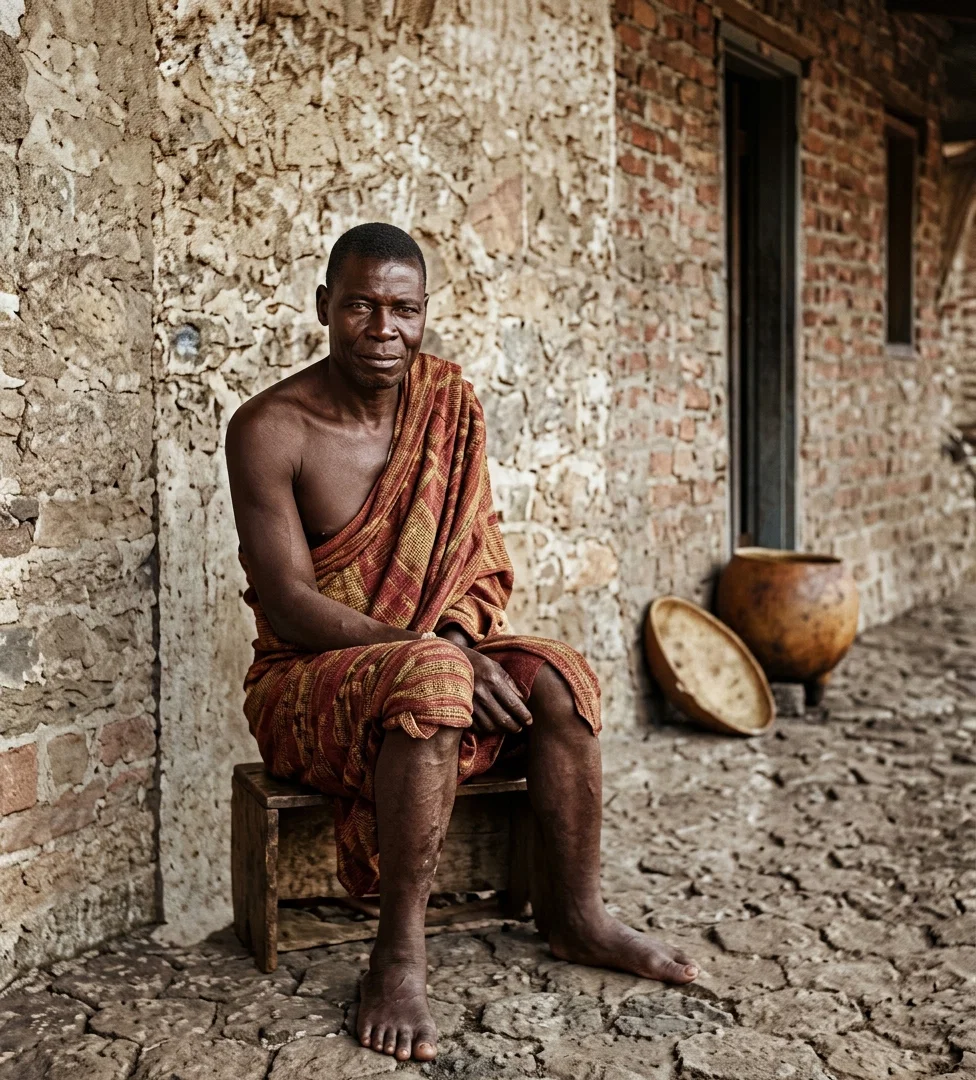
Angoni Chief, Nyasaland. Front of J. C. Rogers's House
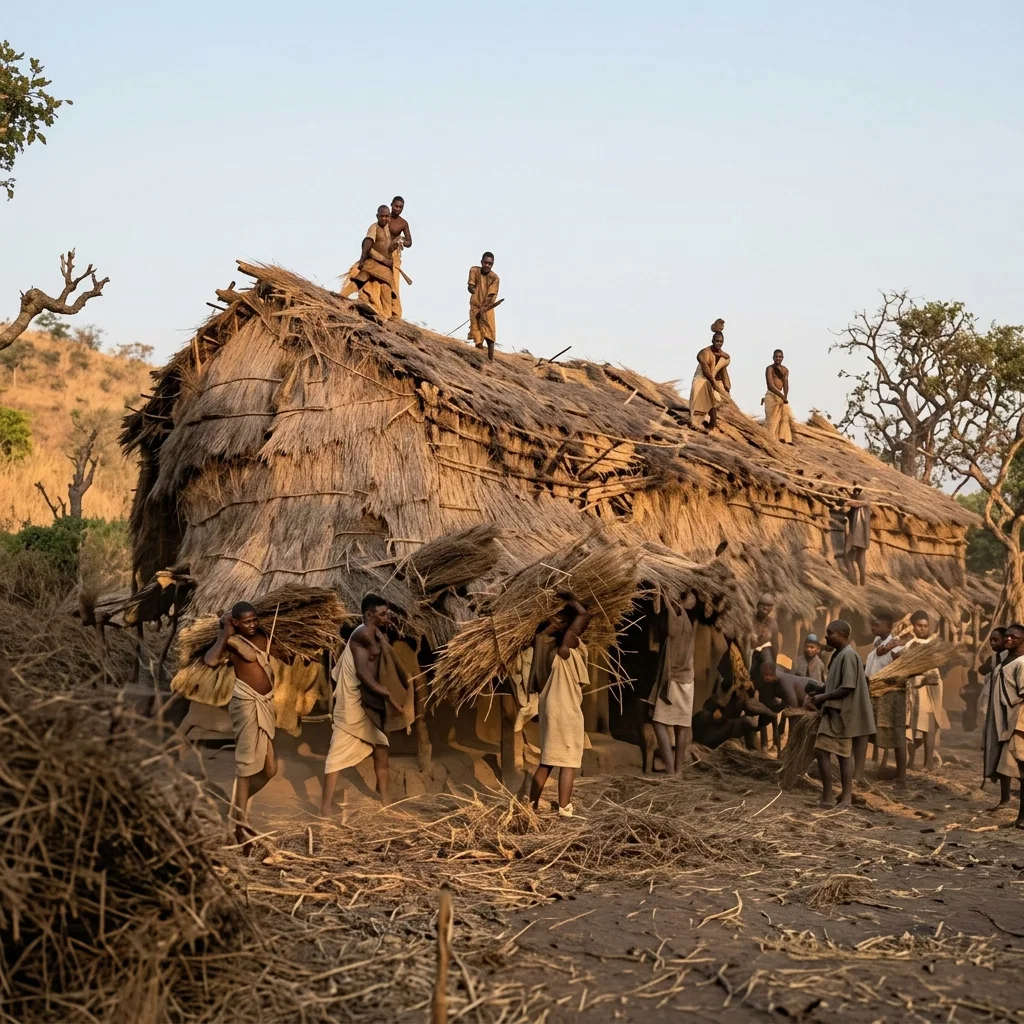
Tearing Down Old Grass Building, Nyasaland
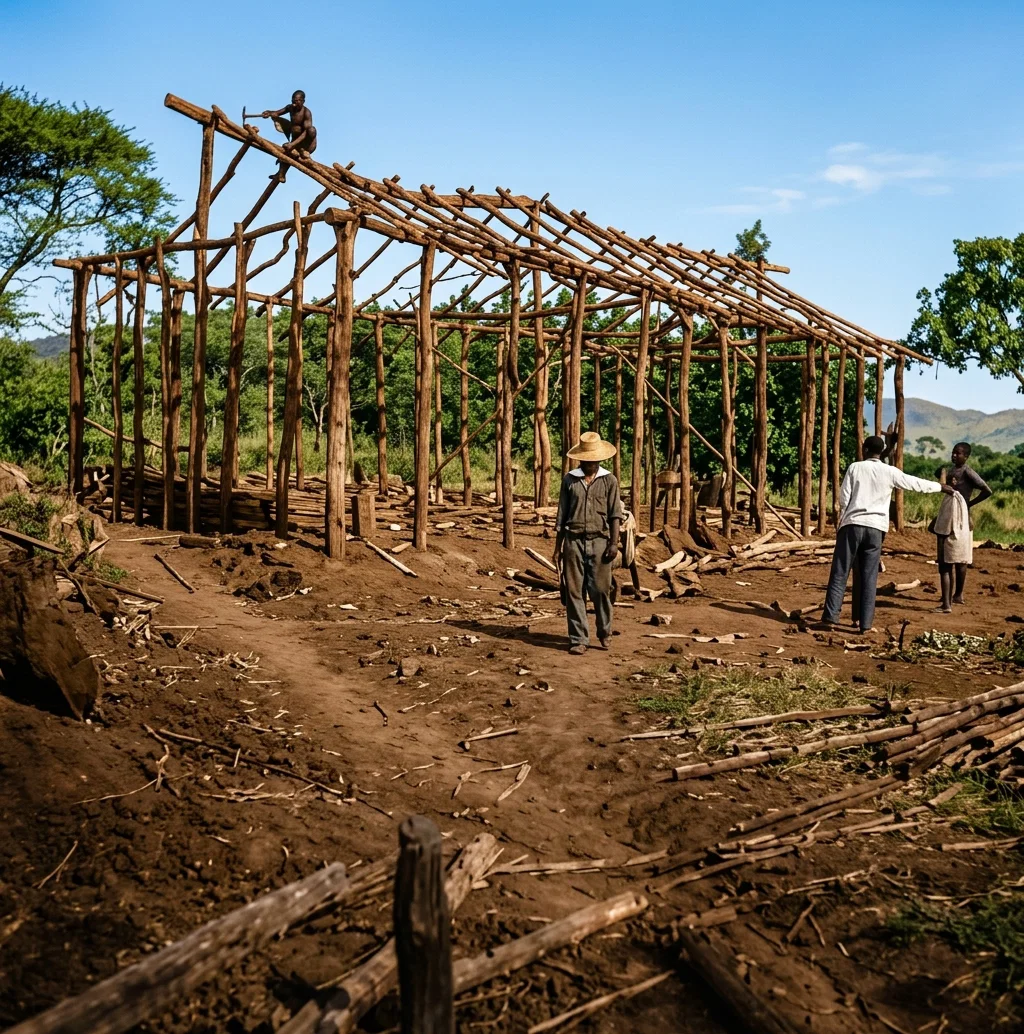
The Frame of the Old Grass Building
With seven men to carry food, bed, blankets, etc., I then proceeded by bicycle to our Matandane out station fifty miles away. As this station is in the mountains and the roads are bad, I had to walk about half the distance. I found Brother and Sister Konigmacher well, and the station looking much better than when they took charge of the place six months before. They have had a good school, and enrolled fifty-two pupils. During the coming year we hope to open two or three schools in the villages near Matandane, and in this way extend our work right up to the Portuguese border. Brother Konigmacher will spend some time during the school vacation visiting among the villages.
After leaving Matandane it was my plan to visit the stations of the Zambezi Industrial Mission and the Dutch Reform Church Mission, while also visiting the villages of the Angoni tribes, from which many of our schoolboys, teachers, and church-members come. My first stops were at two stations of the former mission. Here I found the missionaries and many hired natives busily engaged in gathering the coffee crop, which is the principal industry of this mission.
There was no school at either of these stations, owing I suppose to the urgency of the industrial work, tho many village schools were running under the superintendence of the missionaries. These missions have no boarding-schools, only having a church and day-school for pupils who live in near-by villages. Besides they have a central training-school for teachers. I also visited this training-school, which has about forty teachers in training.
Near these stations I found the home of Peter Nyambo, a native who was two years in our London training-school, and who is now teaching in our Malamulo school. I spent a day and night in this group of villages, having a good chance to learn the home conditions of our natives. Their huts are made mostly of grass, some plastered with mud over the grass inside and outside. As a rule these natives desert one village after three or four years, and build another. Peter’s father was among the descendants of the Zulus who raided much of the country south of the Zambezi, crossing the river northward about 1825. He told me that he was old enough to herd cattle at the time the Zulus crossed the Zambezi. From this fact I suppose he is now about ninety years old. The people of some of these Angoni villages are talking of moving near to our Matandane station. At present there is no school near them, and they want their children in school. It would not be wise for us to place a school where they now are, as this is territory of another mission.
On my return I took another road, which brought me to Zomba, the seat of the colonial government. Here I had the first opportunity of meeting the governor, Sir Alfred Sharpe. I was glad of the opportunity to personally pay my respects to him, and also to represent the cause in whatever way might be offered. After conversing with him, he showed the kindly feeling of the government toward our work by calling my attention to the government grant in aid of native education, in which our mission might share equally with other missions.
After a four weeks’ trip, covering about six hundred miles, I was glad to get back to the mission again. We are now busy preparing for a four weeks’ teachers’ school before the opening of the next school year, August 1. We hope to have twenty or more native teachers present, and shall try to give them the best preparation possible. We have difficulties which we hope will be removed in time. One of the most serious is our lack of books in the native language. One little tract of twelve Bible readings is all that we have of present truth. So we are obliged to depend upon other sources for all school-books. Some of our own books must be translated into this language. May the Lord give time and strength for this work!
Joel C. Rogers.
Malamulo Mission, Cholo, Nyasaland.
June 27, 1909.
LATER.—Twenty-seven native teachers and assistants will work in thirteen schools, in which about 600 will be enrolled.
J. C. R.
New Prices
By Editor
WE have received from the Review and Herald Publishing Association statements similar to what we have made concerning our own, that there must be a raise in the subscription prices of the periodicals which they publish, beginning with the first of January. This comes on account of the great increase in the cost of producing the papers and magazines which they publish. The price of the Review after January 1 will be as follows: 1 year, $1.75; 6 months, 90 cents; 3 months, 50 cents. Any who wish to extend their subscription for any part of or for all of the year 1910 at the old prices, can do so providing their orders are received by the publishers before Jan. 1, 1910. Now is the time to subscribe to save increasing price.
The new rate on the Instructor clubs for Sabbath-schools and young people's societies are as follows: Five or more copies to one address, 75 cents for one year; 40 cents for six months; 20 cents for three months.
The new rate on the Sabbath School Worker in clubs of two or more copies to one address is 30 cents for full year. Only yearly subscriptions on the Worker are received.
Prices on single subscriptions for the Instructor and the Worker remain the same. Subscriptions can be extended for the entire year of 1910, before January 1, at the old price.
Prices of the ten-cent magazines to agents are also advanced. The increased cost in the making of these magazines compels the raise in prices to agents. Five to 40 copies, 5 cents each; 50 or more copies, 4 cents each. These prices go into effect in January. All January ten-cent magazines will be furnished to agents at the new prices. All these arrangements were adopted and approved by the General Conference Council recently held at College View, Nebraska.
Helpful Gift Books
Best Stories from the Best Book.— It opens with a series of easy nature lessons, adapted to the little folks just learning to read. Following this are short stories based on prominent Bible characters. The book is nicely illustrated, some of the pictures being colored, and will prove very pleasing and helpful to the children, impressing lessons that will never be forgotten. Presentation edition, cloth back and corners, with art paper sides, 75 cents.
Christ Our Saviour.— This book gives the story of our Saviour from the manger to the cross, telling in a pleasing way of the many interesting incidents of His life; who His parents were, where He was born, how He spent His childhood days, the precious lessons He taught, the wonderful miracles He performed, and His kindly words and deeds. It contains nearly 200 pages, is finely illustrated, and attractively bound in cloth at 75 cents or board at 50 cents.
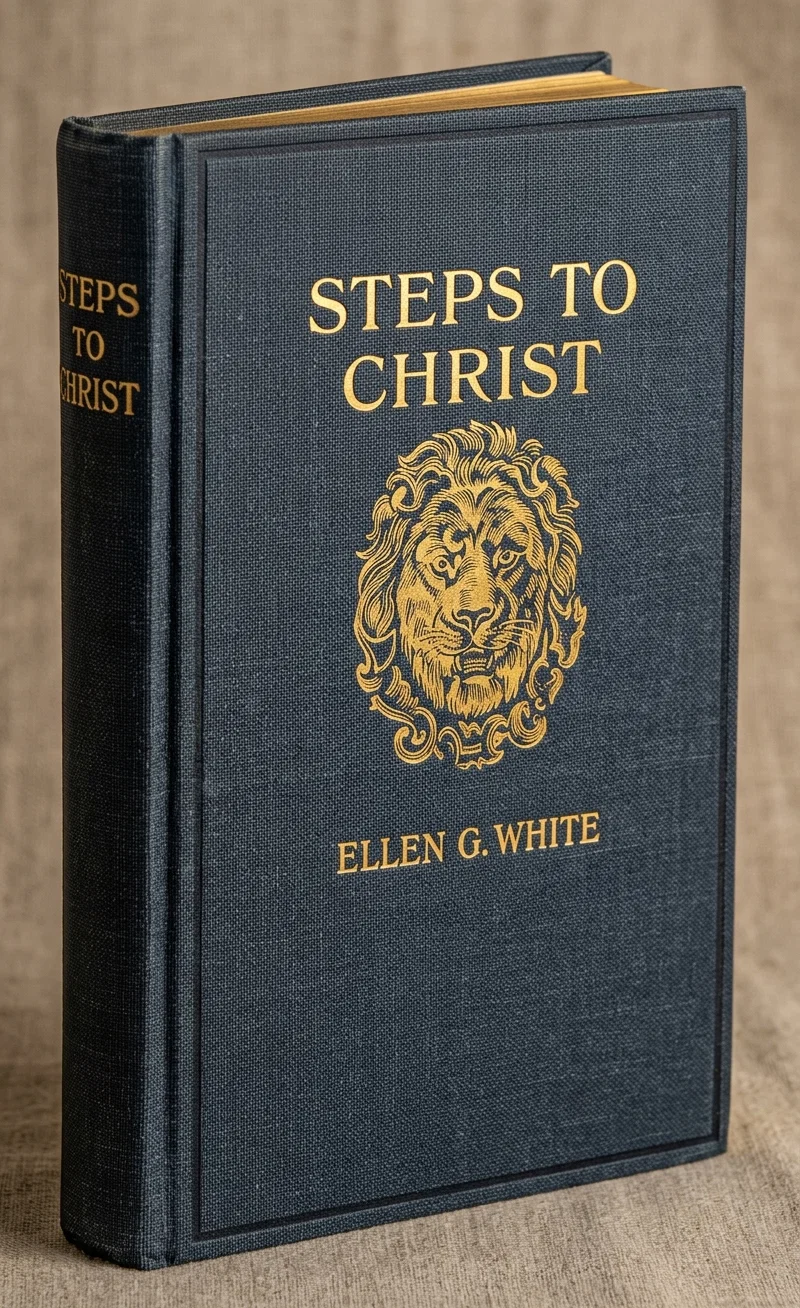
Steps to Christ.— This beautiful little book tells how to find the Saviour, and become acquainted with Him. To many the “Father’s House” seems a long way off, the road difficult and uncertain. This little treasure-house tells how very near the Saviour is, and so reveals His great love as to remove our doubts and fears. It contains fifteen chapters, is newly illustrated, and bound in fine cloth at 60 cents, or this elegant presentation edition with gilt edges at only $1.00. Published in more than twenty languages.
Uncle Ben’s Cobblestones.— Familiar talks with boys and girls about the common articles of every-day use. Handsomely bound. Price $1.00.
New Testament Primer.— An illustrated alphabet, New Testament trees, flowers, birds, and insects, and a brief account of the life of Christ. Board 35 cents; cloth 60 cents.
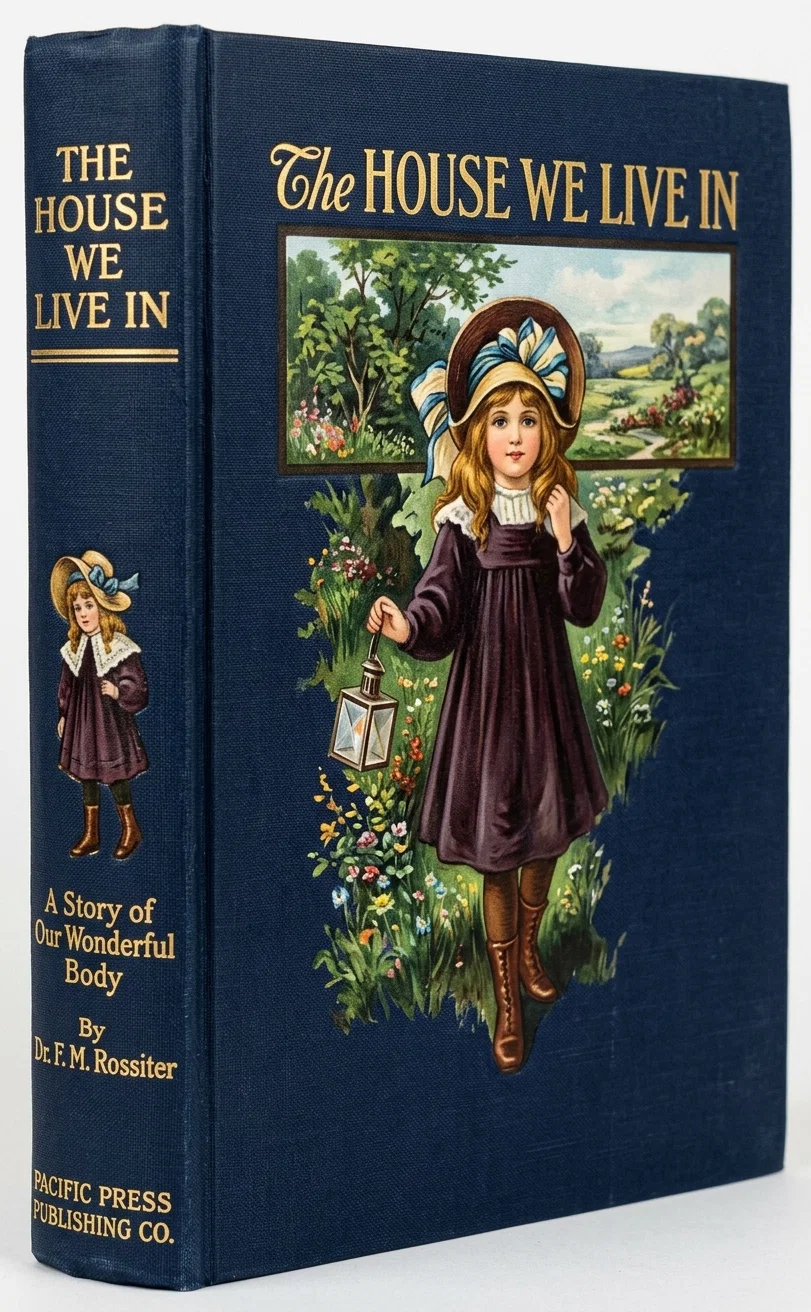
The House We Live In.— A most important and instructive book for the young. It tells about the wonders of our physical house and how to care for it properly. Price $1.00.
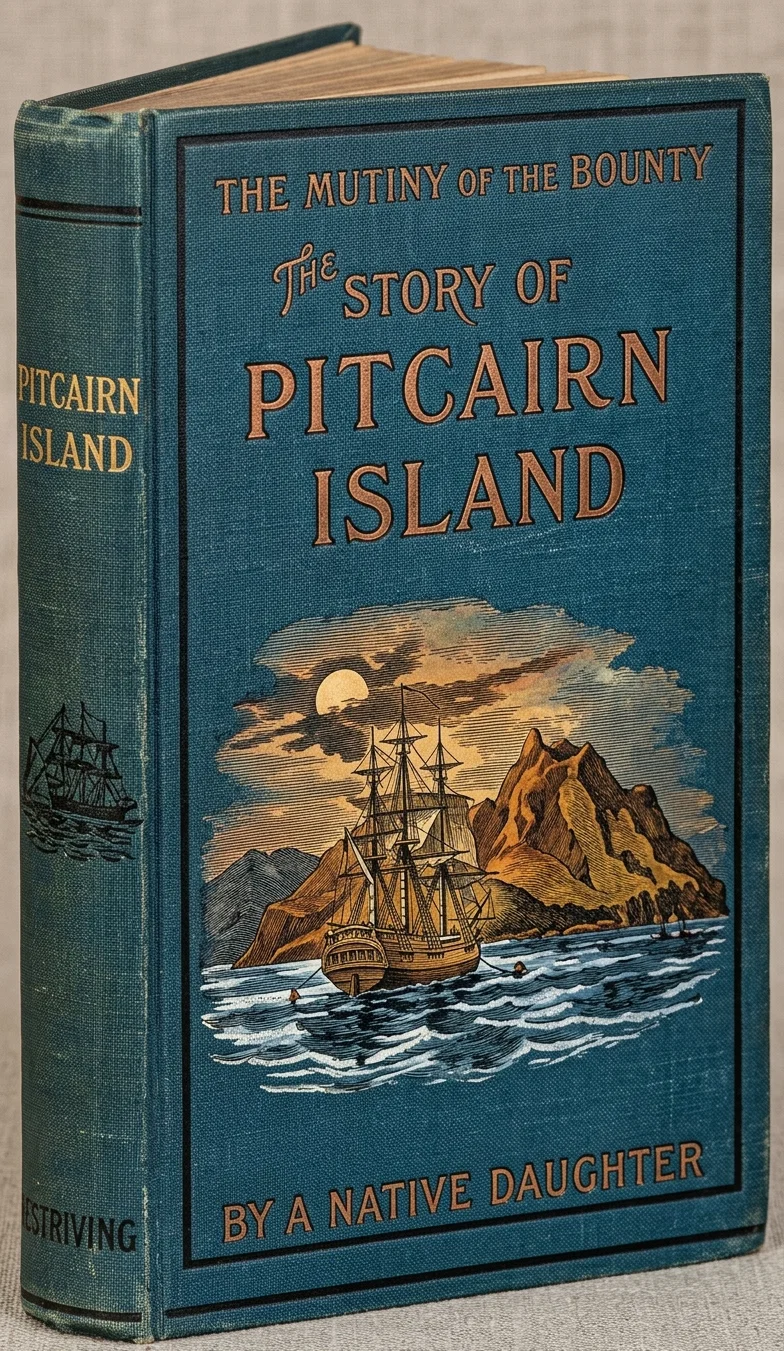
Story of Pitcairn Island or The Mutiny of the Bounty.— By a native daughter. In simple but beautiful language the writer unfolds this story of hate and love, crime and its punishment. Price $1.00.
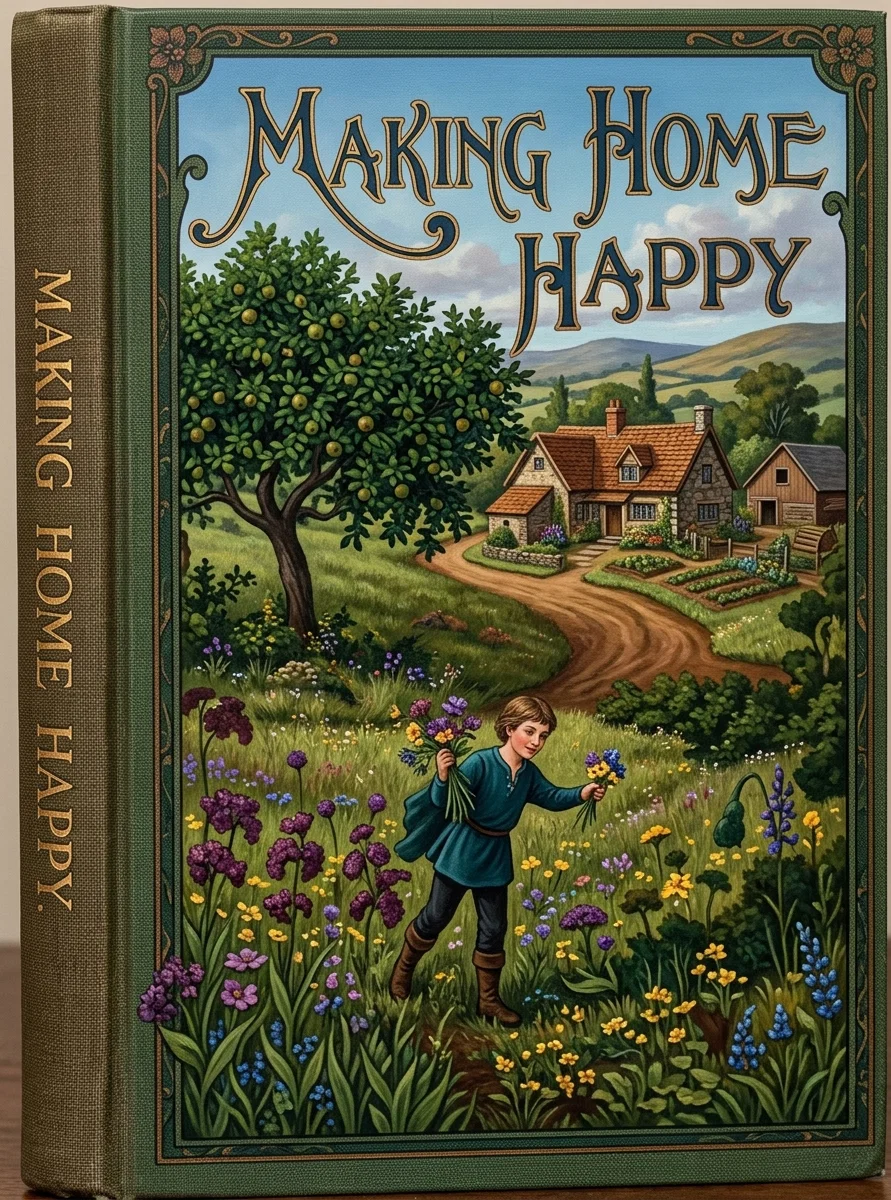
Making Home Happy.— The actual experiences of a certain family, and how their home grew from a place of discord to one of peace. Price 50 cents.
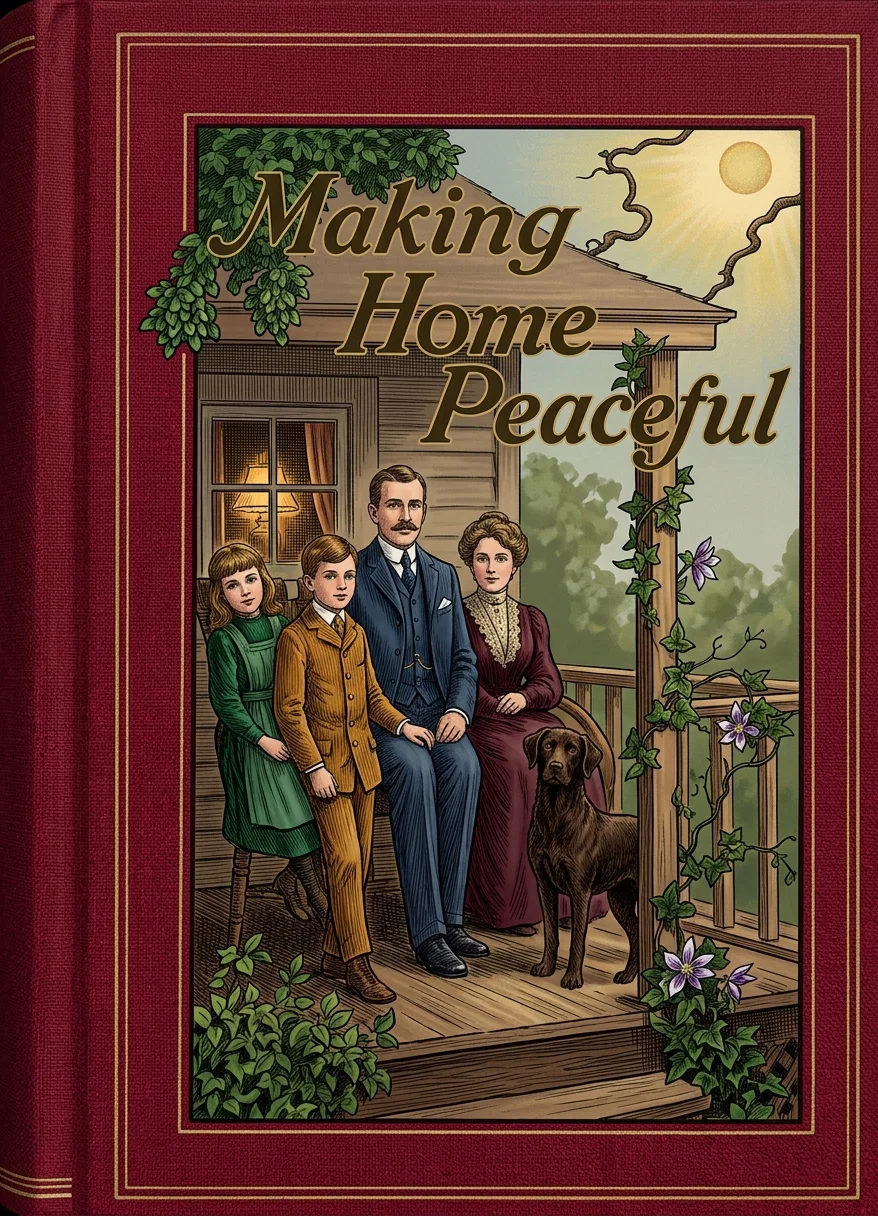
Making Home Peaceful.— A sequel to the above, telling the outcome of the family mentioned in the first book. Great changes have taken place. Price 75 cents.
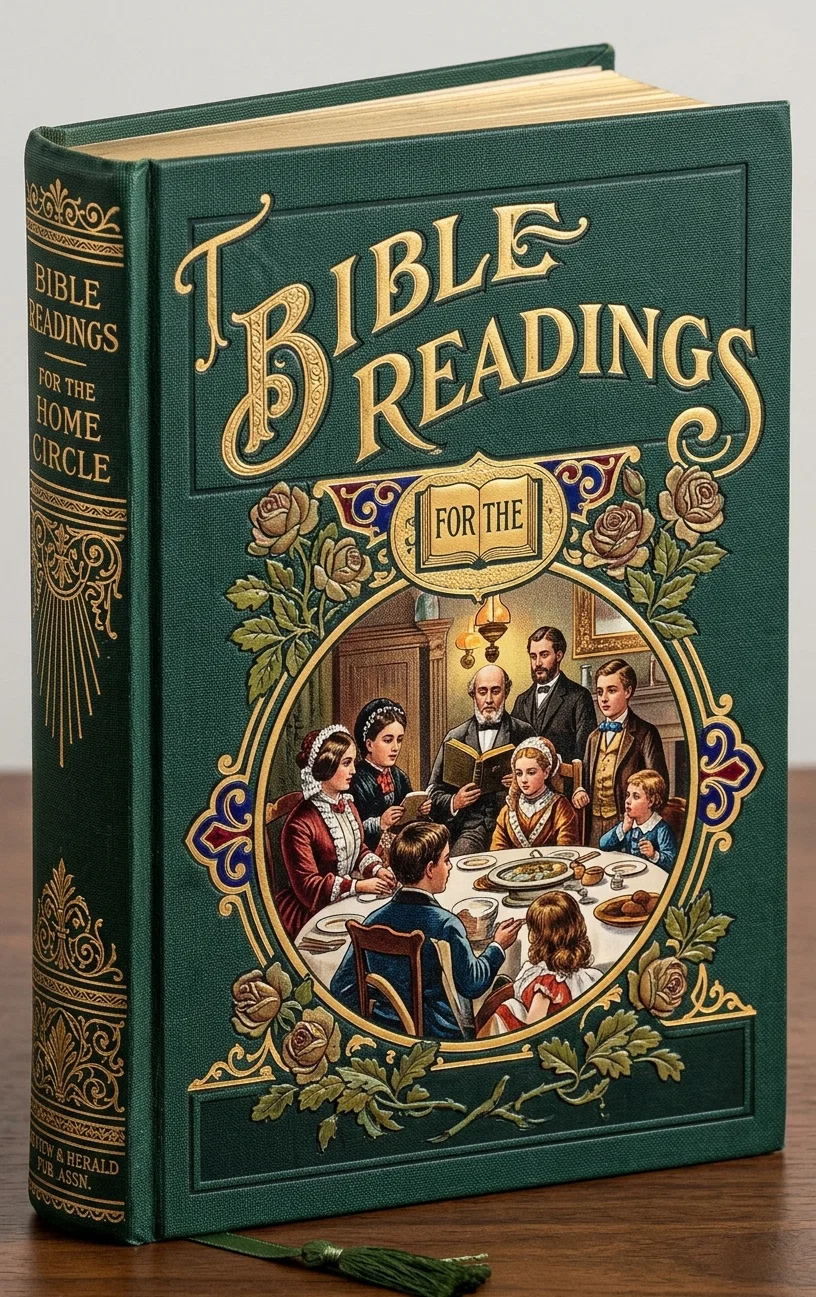
Those Bible Readings.— There is an attractiveness in the arrangement and presentation of these readings that holds the interest of all, old and young, to the very last chapter. Price 75 cents.
Elo the Eagle and Other Stories.— Ten stories of animal life—life histories of the author’s boyhood friends. Fully illustrated and handsomely bound. Price $1.00.
Address your state tract society, or
Pacific Press Publishing Assn.
MOUNTAIN VIEW, CALIFORNIA
Portland, Ore. Regina, Sask., Canada Kansas City, Mo.
Prices in Canada 10 per cent higher on account of duty.
Paper covers, 30 cts. Cloth, plain, 60 Cloth, gilt, $1.00
Cloth covers, 50 cts.
Cloth covers, 75 cts.
Cloth covers, 75 cts.
Board covers, 35 cts. Cloth covers, 60
Board covers, $1.00
Cloth covers, $1.00
Board covers, 50 cts. Art edition, 75
Board covers, 50 cts. Fine cloth, 75
Cloth covers, $1.00
Cloth covers, $1.00
Board covers, 25 cts. Cloth covers, 50
The Man Who Never Made Mistakes
Mr. Jervis, the assistant bank cashier, was about to close for the day the little window behind which he stood, the door suddenly swung open and a man walked hastily in. “Young man,” he said, “you made a mistake this morning when you cashed that check for me.” Mr. Jervis glanced severely at the speaker, a middle-aged man, in plain farmer’s attire.
“We never make mistakes, sir,” he answered, haughtily.
“You ‘never make mistakes?’” repeated the farmer.
“No, sir. If there is anything wrong, you should have mentioned it when you drew the money.”
“Just so, but, you see, I was in a big hurry. I glanced it over, and thought it was all right, but when I got home I found—”
“We can’t help that,” interrupted the cashier; “you might have lost or spent it, for all we know. If there has been any mistake, it is yours, and can’t be helped now, it being our inflexible rule not to rectify errors made by customers after leaving the bank.”
“All right,” said the farmer, buttoning up his coat and turning to the door. “My name is Johnson. I live just five miles out on the Middleton Road. It is a long way to come, but I don’t mind it. I feel more than repaid by the chance it has afforded me of seeing what I never expected to look upon in this life—a man who never makes mistakes.”
The following day the cashier sat examining his balance sheet, a look of perplexity and dismay in his countenance. Every check taken by the bank was before him, every dime paid out had passed through his hands, and yet, in spite of all his efforts there was a deficit of forty-five dollars. Where could the money have gone, and what should he do about it? Suddenly there flashed upon his mind the recollection of the man who had called the day before. Could it be possible that the mistake was against the bank? Yes; it must be so. There was no other way to account for it.
An hour later, as Mr. Johnson sat in his garden resting after a day in the hay-field, his acquaintance of the day before turned in at the gate and strode up to him.
“My name is Jervis. I am cashier of the Bloomingdale Bank,” he began, confusedly.
Mr. Johnson stood up. “O, yes, I remember,” he said, “the man who never makes mistakes. Proud to see you at my home, sir. My dear,” turning to his wife, “this is the young man I was telling you about. As I was saying, we do not meet such people every day.”
Mr. Jervis turned very red. Dropping into the chair that Mr. Johnson considerately placed for him, he blurted out:
“Mr. Johnson, I am forced to acknowledge that I did make a very serious mistake yesterday morning, when I cashed that check for you, giving you a fifty-dollar bill instead of five.”
“That was what I supposed after I got home, and thinking you would be uneasy, I lost no time in going back to make the matter right. I should hardly have taken so long a ride, however, at such a busy season, had I known your rule to be so inflexible as to the rectifying of mistakes.”
“But I want to have it rectified,” was the alarmed and excited response. “It is no joke with me, but a serious matter.”
“I am far from regarding it in the light of a joke,” said the farmer, coolly. “Still, I see no reason why any difference should be made because the mistake happened to be in my favor.”
“Come, father,” interposed Mrs. Johnson, “why do you tease the poor fellow so? You know you put the money away for him. Do go and get it.”15
Thus adjured, Mr. Johnson got the money from the house and handed it to the cashier.
Mr. Jervis’ fingers closed over it with feelings of joy and thankfulness that he vainly strove to put into words.
“One moment, young man,” said Mr. Johnson, as his visitor turned to leave. “Solomon says, ‘He who answereth a matter before he heareth it, it is folly and shame unto him.’ If you had waited a moment and heard what I had to say yesterday, you would have been spared this mortification and trouble. To this counsel, let me add something of my own: Don’t be so sure again that you never make mistakes.”—Exchange.