The Youth’s Instructor, Vol. 65, No. 1.

Wedding Gifts in Japan Versus America
Earlier text: Carrying the Gospel to the World

God Saves and Protects

(Texts for January 7 to 13)
In a world of sin there are dangers on every hand, dangers from without and from within. There are foes to face and griefs to bear. Sometimes we are tempted to say:—
“What can it mean? Is it aught to Him That the nights are long and the days are dim? Can he be touched by the griefs I bear, Which sadden the heart and whiten the hair?”
There is a story told of two pictures meant to represent peace. One was the picture of a stagnant pool, in the midst of the silent forest, with not a ripple upon its surface. The other was that of a little bird upon its nest in the branch of a tree, which hung just over a foaming cataract.
The Master did not pray that we should be taken from the world of tribulation, but should be kept from the evil. Happy is the child of God who can follow the poet in answering the above questions:—
“O wonderful story of deathless love! Each child is dear to that Heart above. He fights for me when I cannot fight; He comforts me in the gloom of night; He lifts the burden, for he is strong; He stills the sigh and awakes the song; The sorrow that brought me down he bears, And loves and pardons, because he cares.”
What peace and comfort fill our hearts when, amid dangers that threaten us, either from the elements of nature let loose or because of the wrath and cruelty of men, we can trust God for salvation and protection.
MEDITATION.—Have I made a full submission of myself to God? Is it my great purpose that my life shall reflect his glory? Am I willing to suffer pain or even to die if that would glorify him? If my life and my work are entirely in his hand, then I can surely trust him to care for me in any danger or save me from any difficulty into which his providence may lead me.
SPECIAL PRAYER.—Almighty God, my Maker and my King, help me to so surrender myself to thee that thou canst lead me day by day. Choose thou for me my way. When temptations come to try me, save me from sinning. In the midst of trouble may I be comforted. When dangers threaten, may thy right hand uphold me. May all the experiences of my life glorify thy name, whether they be pleasant or unpleasant to me. Help me to trust in thee in the darkness or in the light.
M. E. KERN.

The Budget Plan

EVERY successful business house makes an estimate of its expenses and its probable income, and shapes its plans accordingly. Many families nowadays carefully estimate their income, and decide how much they can afford for living, clothes, improvements, gifts, etc. Working to such a plan, they are able to live within their means and at the same time discharge their obligations. Many individuals follow the same plan. Every one should.
How many professed Christians toss a few cents into the offering basket when they happen to be where it comes, and think little of the debt they owe to God to help him in saving a lost world! Is it right? Should we give a little when we happen to feel like it, or when it is made especially convenient for us, and ease our consciences with the thought that we have contributed to the Lord’s work? If your mother were old and poor, and feeble, would you consider that you had discharged your obligations to her by giving in this way? As Christians, are we under less binding obligation to support the cause of God than we are to care for our earthly parents?
How can we be accounted as faithful stewards of our Lord’s money if we do not plan to return to him regularly a portion of that which he has given us? And if we do not plan for it, and give regularly, do we really give very much? The Lord accuses his people of robbery. He says we rob him by withholding our offerings (Mal. 3:8), and I suppose the question of whether we do it carelessly or deliberately does not alter the guilt.
The North American Division Missionary Volunteer financial goal for 1917 is $35,000. That is a large sum,—more than the whole denomination gave to missions thirty years ago. But our host of young people can easily do it. I fear that if we could see things as God sees them, we should see that our Seventh-day Adventist young people spend that much money each year needlessly. If we do, what an account we shall have to render for squandering our Lord’s money!
Your Conference Missionary Volunteer secretary will assign your society a portion of this goal. That will be your foreign mission budget for 1917. Will you raise it? How? The Division Department is suggesting the following—

Plans for Local Society

“1. After a careful presentation of the plan, and an earnest season of prayer, let members (and others who desire) state on slips of paper how much they purpose to give each week; or, let a personal canvass be made by the secretary-treasurer, or some one especially appointed.
“2. The pledges are recorded by the secretary-treasurer in a special book, and an estimate made as to whether the amount is sufficient. If not, then further effort should be made to secure the pledges of others, or larger pledges from those who have already pledged. (In this case a personal solicitation should be made if it has not already been done.)
“3. An offering for foreign missions should be taken each first, second, and third meeting of the month (the fourth meeting—and fifth when there is one—is left open for offerings for local society work). A member who has pledged, should always put his offering in an envelope, and write his name on the outside. (The regular church offering envelopes should be used.)
(Concluded on page fifteen)
(Concluded from page thirteen)
“4. The secretary-treasurer will credit each member with his offering each time, and at the close of the month hand each one a statement of his standing, if in arrears. (Pads of blanks—“Offering Statement Blank”—can be secured through your tract society.) This will enable each member to know each month how he stands and give him a chance to make up the deficit. If behind at the time of the Midsummer Offering, Harvest Ingathering, or at the week of prayer, the statement from the secretary of his deficit, will be a special incentive to large giving.
“5. The church treasurer’s receipt for missionary offerings will be accepted by the secretary-treasurer and counted on the pledge. (The secretary-treasurer will of course mark it “receipt,” so as not to get confused in regard to his cash.)
“6. Money not in envelopes or not marked would, of course, be credited to no individual, but would count on the goal just the same.
“7. The pledge should not be considered as a debt if not fulfilled at the end of the year, but is rather a plan of systematic giving to which to work.”
Surely this plan will appeal to all our Missionary Volunteers as something definite and helpful in forming the habit of right giving. May it be the great privilege of every Missionary Volunteer to hear from the lips of Jesus, “Thou hast been faithful over a few things, I will make thee ruler over many things: enter thou into the joy of thy Lord.”
M. E. Kern.

What the Morning Watch Will Do

THE Morning Watch will help you everywhere in everything.
It will sweeten your pleasures, lessen your sorrows, and multiply your power for service.
It will strengthen your heart, your hand, your mind for all the day may bring.
It will give you each day a precious gem of eternal truth.
It will cause harmful pleasures to lose their fascination.
It will cause wealth and fame to fade in the light of eternal things.
It will help you to keep sweet when things go wrong.
It will give you a word “in season” to speak to a friend in need.
It will so change you that you will love to do right and find life’s deepest joys in pleasing your Saviour.
It will do more than any other one thing to fortify your heart against the enemy.
It will draw you each day into a little closer friendship with the Master, whom to know is life eternal.
For these reasons and others that you may think of we urge you to observe the Morning Watch during 1917. Will you? MATILDA ERICKSON.

Missionary Volunteer Society Programs for Week Ending January 13

THE programs for this date, with notes, illustrations, and other helpful material, will be found in the Church Officers' Gazette for January.

Question Box

Is there any reward or certificate offered for reading the Bible through in 1916? If so, how do we secure it?
Yes, the same as for 1915. It is the William Miller Bible Year Card. It is a beautiful half tone of William Miller’s old Bible, printed on a white card 5 x 7 inches with round corners. The reverse side has a facsimile of a stanza written by William Miller after the disappointment in 1843.
There is nothing new to offer those who secured this card in 1915. Any one who has read the Bible through again, already has a reward more valuable than the Missionary Volunteer Department could offer.
We have decided to offer the Bible Year Card to those who began in 1915 and finished in 1916.
Those having finished the reading should fill out a “Bible Year Certifying Card” and send to their conference Missionary Volunteer secretary, or in case such a card has not been furnished you, write a letter to the secretary.

The Bible Year

Senior Assignment

January 7: Genesis 23 to 25. Marriage of Isaac; Jacob and Esau.
January 8: Genesis 26, 27. Jacob deceives Isaac.
January 9: Genesis 28 to 30. The vision of angels; marriage of Jacob.
January 10: Genesis 31 to 33. A changed heart and a changed name.
January 11: Genesis 34 to 36. God’s covenant renewed to Jacob.
January 12: Genesis 37 to 39. From sonship to slavery.
January 13: Genesis 40 to 42. From prison to palace.
For notes on this assignment, see the Review for January 4.

Junior Assignment

January 7: Genesis 14. Abraham pays tithe.
January 8: Genesis 15. The promise to Abraham.
January 9: Genesis 17:1-5; 18. Visited by angels.
January 10: Genesis 19:1-28. Lot escapes from Sodom.
January 11: Genesis 21:1-21; 22:1-19. Ishmael; Abraham and Isaac.
January 12: Genesis 23. The cave of Machpelah.
January 13: Genesis 24. Rebekah.

How to Read the Bible

Do you like to hear and read stories? When I was a boy, I was very much interested in stories my grandfather would tell of the things that happened when he was young, about moving into the forests of Indiana; about the panthers and many other things. Later I became interested in books that told of things that happened before grandfather lived, in the early days of the United States. Then I read of what happened in the world before this country was known. By and by I found that the Bible is the most interesting storybook in the world. It is the oldest book we know, and tells about what happened thousands of years before the events which other histories tell about. Indeed it tells about the beginning of the world and even what happened in heaven before the history of this world began. And best of all, we know that its stories are all true, and that they teach us valuable lessons.
How shall we read the Bible? First, I think it is good to read it regularly. We should form the habit of reading the Bible every day, then it becomes easier. This makes it more interesting too, for we can remember from day to day what we read, and join the stories together.
We should read the Bible thoughtfully. Sometimes we miss the most interesting things when we hurry. We should try to imagine we see the characters mentioned and the countries described. Every Bible ought to have maps for us to look at when we read. That helps us to remember and understand better. Good pictures also help sometimes.
We should read the Bible prayerfully. The Bible is the Word of God, and we should always ask him to help us understand it and get the lessons which we should learn from it. It is said that Walter Scott, a great English writer, when he was dying, said to a friend, “Bring me the Book.” “What book?” the friend asked. He replied, “There is but one Book—the Bible.”

The Name “Bible”

The word “Bible” is not used in the Scriptures. Bible comes from the Latin word biblia, which means books. This is from the Greek biblia, the plural of biblion, which is the diminutive of biblos. The reason the Greeks called a book biblos (the singular form) was because the ancient books were written on material made from the byblos, or papyrus, reed. Just as we speak of the printed sheets of paper with the news printed on them as “the paper,” so they spoke of a scroll of byblos sheets with writing on them as “the biblos,” and a number of them would be biblia (plural).

Learning the Books of the Bible

Every one should memorize the names of the books of the Bible. If you will notice carefully, you will see that the books of both the Old and New Testaments have been grouped largely according to what they contain; thus the historical books are together, the poetical books, etc. Some one has said that all the books can be arranged around four words: precept, practice, principle, and prophecy. The groups of both the Old and New Testaments come in this order, as you will see:—
The Old Testament The New Testament
The Pentateuch Books of Precept The Gospels
Historical Books Books of Practice The Acts
Poetical Books Books of Principles The Epistles
Prophetical Books Books of Prophecy The Revelation
Learn the names of these groups this week.

Abraham

Abraham is perhaps the most noted character in the Bible aside from Jesus. He was the father and head of the Jewish nation. The story of this nation occupies four fifths of the book of Genesis and nearly all of the Old Testament. Trace his journeys on a map. What shows that Abraham was a better man than his nephew Lot? M. E. K.

II — The Council at Jerusalem (Concluded)

(January 13)
LESSON SCRIPTURE: Acts 15:22-41.
MEMORY VERSE: “Go ye into all the world, and preach the gospel to every creature.” Mark 16:15.

Questions

1. What was the council at Jerusalem pleased to do? Who were chosen to go to Antioch? What is said of these men? Acts 15:22.
2. What was sent by these brethren? To whom were the letters addressed? In what places did these brethren live? Verse 23.
3. What report did the brethren in council say had come to them? How did they show that such men had no authority from them? Verse 24.
4. What seemed good to the chief brethren to do? Verse 25.
5. What did they write of Barnabas and Paul? Verse 26. What were the names of others sent with them? How would they confirm what was written? Verse 27.
6. Who made the rules for the Gentile Christians? Verse 28.
7. What four things did they ask them to abstain from? What are the closing words of the letter? Verse 29.
8. To what church was the letter taken? To whom was it read? What effect did it have on the Christians there? Verses 30, 31.
9. What gift of the Holy Spirit did Judas and Silas possess? In what ways did they help the brethren? Verse 32.
10. After a time which of these laborers left Antioch? Verses 33-35.
11. What did Paul say to Barnabas some days after this? Verse 36.
12. Whom did Barnabas wish to take with them? Verse 37. Why did Paul not think best for him to go? Verse 38.
13. What did this lead Barnabas to do? Verse 39.
14. Whom did Paul choose as his companion? What countries did he visit? Verses 40, 41.

Questions for Diligent Students

1. What epistle begins with words similar to those found in the letter in this lesson?
2. How many copies of letters do you find in the Bible? By whom were they written? Name the materials used in writing letters in Bible times.
3. What will help us to settle all disputes?

—Harriet Prescott Spofford

Creation

I LIKE to think of the blest hour When waiting universes lay Within God’s thought as some great flower Waits for the sun to call the day.
“Let there be light!” the Lord God said, And light sprang forthright at the word; So some fine spirit might be sped, Answering the summons that he heard.
The shining thing all perfect gleamed, Though but in instant dream ’twere wrought; And still more beautiful it seemed Since it had lain within God’s thought!

—Harriet Prescott Spofford

American Missionaries in Japan

VISCOUNT KANEKO, of Japan, is not a Christian; but he considers Christianity as a life force, superior to Buddhism. He is therefore doing all he can to extend the influence of Christianity. He is a friend to the American missionary, but claims that Japan demands educated missionaries; for he says that in his boyhood, Christianity was at a low ebb in Japan owing to the bigotry and poor education of the missionaries. They treated the Japanese as inferiors. “Some of the missionaries,” says Mr. Kaneko, “were much less educated than the people they tried to reach. This condition I explained to my friends in America, on both visits, pleading for men of sound education in addition to seminary training. The present missionaries are much superior in this respect, and are not only gentlemen but are our equals in secular education. But the missionary to Japan is not dealing with South Sea islanders or Chinese of the coolie class. Mission boards should continually strengthen their demands for a wide training on the part of the men they send to Japan, for there are Japanese today, as there were in my school days, who will sneer at Christ because of the lack of education on the part of the Christian missionary.”

Motto: Keep Mum, Trust, and Work

Motto

FEEL glum? Keep mum, Don't grumble. Be humble. Trials cling? Just sing. Can't sing? Just cling. Don't fear; God's near. Money goes? He knows. Honor left? Not bereft. Don't rust! Work! Trust! — Selected.

The Morning Watch and the Psalms

It has been said that the book of Psalms was both the prayer book and the hymnal of the Jewish people. This wonderful book of poems enters so fully into all the religious experiences of the soul that it has been loved as much by Christians as by the ancient Jews. The Hebrew title to the book means “book of praises.” “The book begins with benedictions and ends with praise — first, blessing to man, and then glory to God.”
It has become the great privilege of those who observe the Morning Watch to spend a year with the Psalms. Aside from the Morning Watch Calendar, which gives the texts for study day by day, would it not be well for every one to procure a vest-pocket edition of the Psalms? This can be obtained in agate type, cloth bound, cut flush, round corners, and plain edges, for five cents. Order from your tract society.
M. E. KERN.

A Lazy Boy and a Warm Bed

“A LAZY boy and a warm bed are hard to part.”

Things Worth While

THE last words John's father said to him as he left him at the railway station were:—
“Emphasize what is worth while.”
John had been in college six months, and the secretary of the college Young Men's Christian Association had asked him several times if he would do some work in a mission school for factory workers in the college town. The last time the secretary called he had pressed the matter rather strongly.
“You know, Blake, I wouldn't be so insistent if I didn't set a high value on your services. You are a good language scholar, and those Russians down there need some one like you to teach them. You could learn their language while you teach them English, and they are pitifully in need of Christian training. You used to work in the church and Sunday school at home. I wish you would give us the same service here.”
And Blake had replied, “O Calvin, I don't have time to do that sort of thing here. Why, my schedule is all made up. I can't possibly do it.” So Calvin had gone away very much disappointed.
Then for some reason John had turned to his day book and glanced over his engagements of the week before, where he had jotted down, according to his father's suggestion, the main events of each day in college.
The record ran something like this: “Monday — Basket ball game with Colfax. Score, 27 to 19. Tuesday — Hike to Round Hill. Wednesday — Spread and sing at night. Thursday — Movies, evening. Friday — Debate at Society Hall; subject, “Preparedness.” Lost on affirmative. Saturday — Class play. Sunday — Lay in bed until noon. Went to vespers at 4 P. M. Stayed in evening to practice mandolin for next glee club concert.”
It was a commonplace record; he had done just what most of his friends had done, but somehow he was not proud of it.
He looked it over again, and grew more and more ashamed as he thought of the Russian settlement and its dull, sordid factory environment.
“I am not living up to father's advice very well,” he said to himself.
John remembered his father's confidence in his boy's faithful response to the old family ideals of service and purity and general manliness, and in the dusk he knelt and prayed as he had not prayed since he left home. Then he went round to call on Calvin.
“Put me at work next Sunday, Calvin,” he said. “I'm a candidate for the Russian diploma. I want to do something ‘worth while.’”
He is doing it every Sunday now, and in between, too, and his heart glows with deep satisfaction, for he is using his spare time to help in making Christian citizens out of some of the elements that go into Uncle Sam's great “melting pot.” In their turn they will perhaps do great things for this Republic.—Youth's Companion.

Make the Best of Everything

MAKE the best of everything; think the best of everybody; hope the best of yourself.— Robert Louis Stevenson's Motto.
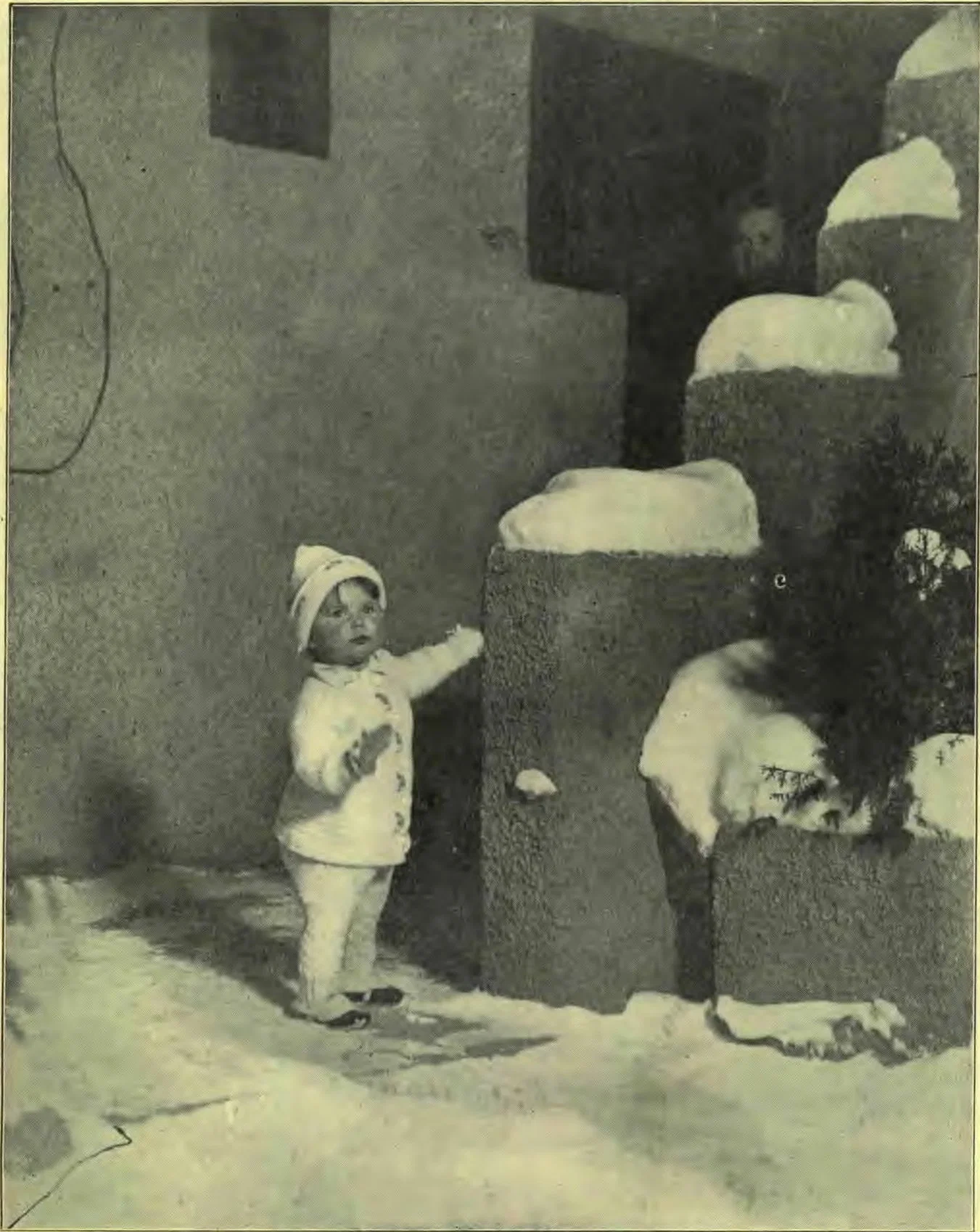
“WHERE IS ANY REINDEER?”
THE EARLY MORNING OFTEN FOUND JESUS IN SOME SECLUDED PLACE, MEDITATING, SEARCHING THE SCRIPTURES, OR IN PRAYER.

You have reached the end of this edition.

The Youth’s Instructor · Jan 2, 1917