In giving to man the Sabbath, God bestowed upon the race a wonderful gift, for great blessings are bound up in the Sabbath. The Creator made man first, and then made the Sabbath for him. God blessed the day for man's sake. He gave to man the other six days of the week, but he reserved this one day as his own, putting his blessing upon it in a special manner.
The Sabbath was sanctified and made holy and given to man, so that upon that one day in particular the created might become acquainted with the Creator, and partake of his holiness of character.
Sabbath Keeping an Act of Loyalty to God
There is constant danger that we shall lose sight of the importance of keeping the Sabbath holy. As we reverence the day, striving to keep it as God has instructed that it should be kept, we come into special relationship with him, and he commands special blessings to flow out to us. It honors God to thus keep the day he has set apart. The Sabbath affords weekly an opportunity of holding precious intercourse with God, and showing our loyalty to him.
“Wherefore I caused them [the children of Israel] to go forth out of the land of Egypt, and brought them into the wilderness. And I gave them my statutes, and showed them my judgments, which if a man do, he shall even live in them.” Then the Lord goes farther, and specifies particularly concerning the Sabbath: “Moreover also I gave them my Sabbaths, to be a sign between me and them, that they might know that I am the Lord that sanctify them.” Eze. 20: 10-12.
Do you want to know that God has accepted you as his child? Keep his Sabbath day holy. “Verily my Sabbaths ye shall keep.” Ex. 31: 13.
The Sabbath to Be a Delight
We cannot look to the world for an example in keeping the Sabbath. Neither may we look entirely to our brethren and sisters to know what is proper and right in Sabbath keeping. There is great danger even that the people who profess to be Sabbath keepers will little by little drift away from true Sabbath keeping.
While true Sabbath keeping does not consist in the strict conformity to some rigid set of rules, there must be a conscientious regard for the underlying principles governing the observance of the day, or our Sabbath keeping will fail entirely in meeting Heaven's requirements. The day is not to be a burden, but a delight, a day appreciated by all, both old and young.
In “Testimonies for the Church,” Vol. V, page 431, we find these words, which were addressed to a man and his wife who loved the world more than they loved God:—
“I greatly fear that by your self-righteousness you are building around your souls barriers that nothing can break down. You have been no nearer to God, no more working his works, no more imbued with his Spirit, than the professors in the nominal churches. You have had no real sense of the sacredness of the Sabbath, and God has not accepted your observance of his holy day. You have had no true consecration, no sincere devotion. God has not been honored by either of you; you have not known him experimentally. . . . You have so long cultivated worldly tastes and habits that it will not be easy for you to bend your mind in an opposite direction.”
The deep principle underlying true Sabbath keeping is here illustrated. Simply keeping the seventh day as a sabbath while the “tastes and habits” are worldly and the steps tend worldward, has no saving virtue in it; nor is it accepted by Heaven for Sabbath keeping. All such must turn squarely about and go in the “opposite direction” in order to be counted as separate from the world. Sabbath keeping will be the sign to designate them as God's children.
Divine Directions for Sabbath Keeping
The Lord has given very explicit directions regarding the observance of the Sabbath. His instruction comes close to the heart of every believer. It touches that which is most sacred in the soul—the conscience and thoughts.
“If thou turn away thy foot from the Sabbath, from doing thy pleasure on my holy day; and call the Sabbath a delight, the holy of the Lord, honorable; and shalt honor him, not doing thine own ways, nor finding thine own pleasure, nor speaking thine own words: then shalt thou delight thyself in the Lord; and I will cause thee to ride upon the high places of the earth, and feed thee with the heritage of Jacob thy father: for the mouth of the Lord hath spoken it.” Isa. 58: 13, 14.
Notice that we must put away our pleasure, our words, our work first. It is not until “then” that the Lord promises to do anything above the ordinary for us. It is when we make his holy day our delight, when we put aside all that we must truthfully term “our pleasure” (and God repeats this thought); when we lay aside our conversation upon our own common, everyday affairs, our farm work, our shop work, our home work,—it is then, and not until then, that we experience the Eden-bestowed blessing stored up for us in the weekly return of the holy Sabbath.
Truly it means much to keep the Sabbath holy, thus honoring God. Many things which are proper and right for us to do on any of the first six days of the week, given us, become sinful when done on the seventh day, God's time.
“All heaven was represented to me as beholding and watching upon the Sabbath those who acknowledge the claims of the fourth commandment and are observing the Sabbath. . . . Those who sanctified the Lord God in their hearts by a strictly devotional frame of mind, and who sought to improve the sacred hours in keeping the Sabbath to the best of their ability, and to honor God by calling the Sabbath a delight,—these the angels were specially blessing with light and health, and special strength was given them. But, on the other hand, the angels were turning from those who failed to appreciate the sacredness of God's sanctified day, and were removing from them their light and their strength. I saw them overshadowed with a cloud, desponding, and frequently sad. They felt a lack of the Spirit of God.”—“Testimonies for the Church,” Vol. II, pages 704, 705.
Giving and Relinquishing
“So Mr. Jones gave $5,000 to missions at his death, did he?” was asked of a minister the other day. The answer was: “I did not say he gave it, but he left it; perhaps I should more explicitly have said that he relinquished it, because he could no longer hold it.” The distinction needs to be kept in mind: one “gives” only when living; he “relinquishes” at death.—Selected.
Success in Doing One’s Best
By Henry Coyle
BEFORE God's footstool, to confess,
A poor soul knelt, and bowed his head:
‘I failed!’ he wailed. The Master said,
‘Thou didst thy best—that is success!’
— Henry Coyle.
Our Neglected American Indians
By T. E. Bowen
T. E. BOWEN
It is fully demonstrated that work carried on among the Indians, the native inhabitants of our Western Hemisphere, yields a rich fruitage in souls gathered as subjects for the kingdom of Christ. The work Brother and Sister Stahl have accomplished in Peru, among the downtrodden descendants of the once-powerful Inca Indian tribes, where we now have a loyal church membership of over three hundred, shows what may be accomplished by earnest, persistent effort put forth in the fear and love of God.
There are many Indians within the borders of the United States who not only have not heard the third angel’s message, but know nothing of the gospel of Christ. Many of these tribes are on reservations within the boundaries of our union conferences, which have strong working forces and large memberships.
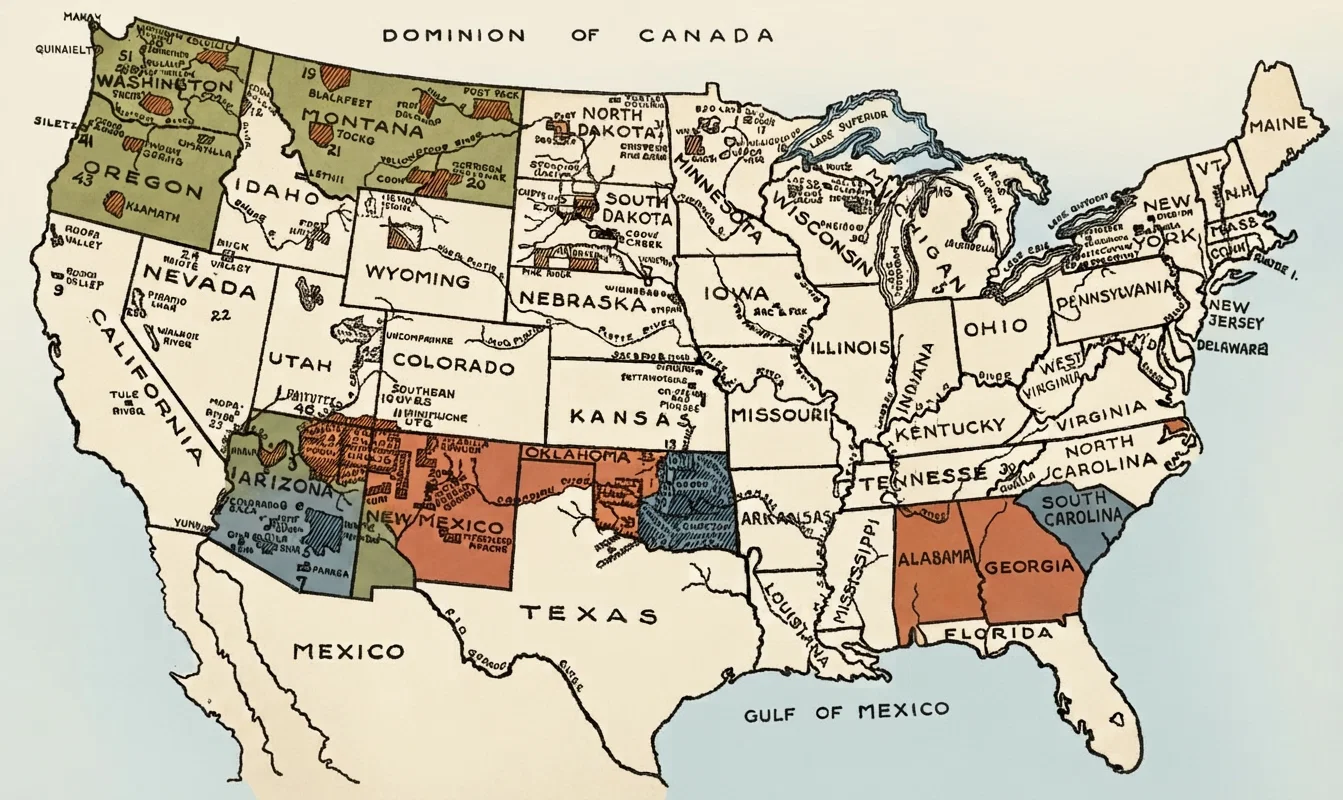
In looking over some carefully compiled statistics recently published in the Missionary Review of the World, showing by an accompanying map the location of these reservations, and giving the number of Indians residing on them and the number who had not received the gospel, it seemed as if it were high time that we as a people should carefully study the question of giving these people the truth for this time. We are sending volunteers to many distant lands to give the message to the people there, many of whom are no more susceptible to its influence and uplifting power than are14these Indians at our very doors. Are there not some of our strong young men and young women who will volunteer to go among these Indians, study and acquire their languages, and give them the third angel’s message?
Below is the table, giving the names of the Indian tribes, where each is located, and the number belonging to it. “Provided for” or “unprovided for” indicates whether or not missions have been established among them.
Neglected and Unevangelized Indians of the United States
(The numerals refer also to the location on the accompanying map.)
TRIBENO. OF INDIANS
ARIZONA
1. Chemchuevi; Colo. River Agency, Parker, Ariz. ................................ 151
2. Hualapai; Truxton Canon and N. W. ............................................. 483
4. Navajo; northern part of reservation (see New Mexico Navajo); number unprovided for, estimated at .......................................................... 3,000
5. Apaches; Coyotera, 556; on San Pedro River, 300; on Lower Gila River, 300 .......................................................... 1,156
6. Apaches; Geronimo and Cibique ...................................................... 700
7. Papago; nomadic and in villages, southern Arizona; number unprovided for, estimated at .......................................................... 1,000
8. Apache-Mohave; in Rio Verde Valley and southeast of Prescott ............ 400
CALIFORNIA
9. Tribes and bands north of Tehachapi Pass; unprovided for, estimated at 5,000
COLORADO
10. Southern Utes; Capota and Moache ................................................ 367
11. Winimuche Ute; near Navaho Springs .............................................. 493
IDAHO
12. Cœur d’Alene and Spokane ............................................................ 614
KANSAS
13. Pottawottomi and Ponca; Prairie Band .............................................. 745
15. Pottawottomi of Huron ................................................................. 78
16. Chippewa and Ottawa; partially provided for; estimate of unevangelized .................................................................................. 1,500
MINNESOTA
17. Bois Forte Chippewa; Nett Lake and Vermillion Lake ........................ 646
18. Lake Superior and Pigeon River; unprovided for, estimated at ............ 2,000
MONTANA
19. Blackfeet; unprovided for, estimated at .......................................... 1,000
20. Northern Cheyenne, of Tongue River; unprovided for, estimated at .... 600
21. Flatheads; unprovided for, estimated at .......................................... 1,200
NEVADA
22. Tribes and bands not under agencies, unprovided for, estimated at ...... 2,000
23. Pah-Ute, Washoe, and Winnemucca; near Reno, Nev. .......................... 275
24. Paiute; Ft. McDermitt ................................................................. 336
25. Moapa River; near Las Vegas ........................................................ 125
NEW MEXICO
26. Pueblo; of 15 villages, partially provided for, estimated unevangelized .................................................................................. 4,000
27. Navajo; of northwestern part of territory, partially provided for, estimated unevangelized (see also Arizona) ........................................ 1,500
28. Navajo; of Canon City ................................................................. 195
NEW YORK
29. Iroquois; Cattaraugus reservation; unevangelized, estimated at ............ 400
NORTH CAROLINA
30. Eastern Cherokees; unprovided for, estimated at ............................... 600
NORTH DAKOTA
31. Chippewa and Sioux; unprovided for, estimated at ............................. 800
OKLAHOMA
32. Peoria and Miami; partially provided for ........................................ 359
33. Osage; partially provided for ........................................................ 800
34. Ponca; partially provided for ........................................................ 591
35. Oto and Missouri; partially provided for ......................................... 435
36. Tonkawe; of Ponca Agency, 48; Kaws, 158 ........................................ 206
37. Sac and Fox, 561; Iowa, 80 ............................................................ 641
38. Tribes of eastern Oklahoma, Kiowan, Modoc, Ottawa, Quapaw, Eastern Shawnee, Seneca, Wyandot; unprovided for, estimated at ............ 800
41. Siletz; Grand Ronde, Oregon ............................................................ 429
42. Modoc, Paiute, and Pit River bands ................................................... 375
43. Scattered bands on public domain, near Roseburg, unprovided for, estimated at .................................................................................. 1,000
SOUTH DAKOTA
44. Ogalala Sioux; Pine Ridge; unevangelized, estimated at ...................... 1,000
UTAH
45. Ute, Uintah, Uncompahgre; White River; unprovided for, estimated at .................................................................................. 800
52. Chippewa; unprovided for, estimated at ............................................ 1,500
53. Menominee; unprovided for, estimated at ........................................... 800
54. Winnebago; unprovided for, estimated at ............................................ 500
Total estimated number of Indians unprovided for ................................. 47,253
Number of tribes and bands without Christian missions ............................ 78
Total number of Indians unclaimed as adherents of the Christian faith (including the above) ........................................................................ 175,000
Cannot our union conference committees give some attention to this important work, and place some laborers among the tribes of America’s original sons and daughters?
A Good Sabbath With the Kafirs
By W. B. WHITE
W. B. WHITE
SABBATH, July 10, was a good day among the Kafirs of South Africa. For a number of years our Maranatha Mission, located about twelve miles from the Kafir reserve, has maintained a school for them. This school has been quite successful, as have also two or three outschools located in Kafirland. Through the influence of these schools and the labors of our teachers and evangelists, both white and native, a goodly number of these heathen Kafirs have become Christians and accepted present truth.
A few months ago many of them were what is known as Red Kafirs, called this from the fact that they are always dressed in orange-colored clothing, and cover their bodies with a red-clay ocher, which gives them a rather wild and hideous appearance. These Red Kafirs are not easily reached with the gospel, preferring to follow their old heathen customs. All denominations have found it very difficult to get them to yield to the claims of Christianity, but God is working among them by his Spirit, and some are opening their hearts to the reception of truth.
Our native church at Maranatha had attained a membership of one hundred and twenty-five members, the most of these being native brethren and sisters living on the reserve. At each quarterly meeting they had been very faithful in attending the services and taking part in the ordinances, but many could not walk the long distance of twelve miles; and as the Lord had given us some leading men among them who could act as church officers, it seemed to us that the time had come to organize a church among them, and to lay its burdens and work largely upon them. With such an organization, we felt that they would develop faster than under entirely white supervision.
MINA
At a meeting of the Maranatha church, seventy of these native believers asked for letters to form a church in their own land. Sabbath, July 10, we all went down from the mission to organize this company of believers. The day was beautiful, and at this service, coming just at the close of our Kafir Bible school, all our native and white workers in the country were present. There was no room large enough to hold the congregation, so the meeting was held outside in the open. Under a small tree was placed the little pulpit and the chair for the preacher, with other seats near for the visitors. Bringing their mats from their huts and spreading them on the ground, our native people sat on these during the service. It was a unique and interesting sight to see this large crowd of people so recently sitting in the darkness of heathenism, now clothed and listening eagerly to the word of God.
The writer brought before them the responsibilities and duties of the members of Christ's church, their obligations to God and to one another, after which a church of seventy members was organized, called the Temba Seventh-day Adventist Church. Three elders were elected, two native and one European, also a deacon, a clerk, and a treasurer, and all were duly ordained to their several offices. After the business was transacted, the native believers formed in line, and, passing before the elders and visiting evangelists, were given the hand of fellowship.
Near the close of the service we noticed a small company of native women sitting a little apart from the rest. These had not yet yielded to the claims of the gospel. A call was then made for any who had never yielded to God to do so, and we rejoiced to see two arise and with weeping give themselves to Christ. Angels of God were surely present to witness this scene, and it was good to be there. How good it does seem to labor among this needy people! How happy they seem in their new-found faith! and how they rejoice that God has sent them the light! It surely is a joy to work with and for them. This is probably the largest native church ever organized in Africa, and we trust it may be a faithful, working church, and bring many to a knowledge of the truth.
God is working in this great black belt of South Africa, and our union conference is now laying plans to push the work in the Kafir nation as never before. God has blessed the work we have undertaken among this people, and with courage we shall endeavor to press forward until all this nation of a million and a half have an opportunity to hear the glad tidings of the soon-coming Saviour.
Our Broken Walls
By Lanta Wilson Smith
OVER a winding wayside wall,
Ragged, and rough, and gray,
There crept a tender and clinging vine,
Tireless day by day.
At last its mantle of softest tint
Covered each jagged seam;
The straggling wall, half broken down,
Became, with that leafy, tinted crown,
Fair as an artist’s dream.
Oh for the kindness that clings and
twines
Over life’s broken wall,
That blossoms above the scars of pain,
Striving to hide them all!
Oh for the helpful, ministering hands,
Beneficent, willing feet,
That spread rich mantles of tender
thought
O’er life’s hard places, till time has
wrought
Its healing—divine, complete.
—Lanta Wilson Smith.
Value of School Influences
OUR boy! Ah, how we treasured him, trusted him, loved him!
In our eyes he was well-nigh perfect, a model of good behavior, one who could do and dare almost anything.
Should we send our boy away to school? Would it pay? Could the school really do much to improve him? These were questions which to us, as parents, were unanswered.
But after long hesitation and a great deal of prayer, we decided to make the venture, and permit him to go. We trusted that he would at least be returned to us as good as when he bade us good-by.
The few weeks immediately following his arrival at the academy were to us days of anxiety, of varied hope and fear. And when his earlier letters came, our fears resolved themselves into positive doubts, and we were constrained to believe we had made a serious mistake in allowing him to leave us.
We shall long remember his first messages. They spoke of narrow and exacting regulations, of curtailed social privileges, of low-grade work under poor teachers, of annoyance and unhappiness. He evidently felt repressed, circumscribed, and —
Well, the truth was, if he had spoken only a trifle more strongly, we should certainly have encouraged his return.
Erelong, however, we noted a change. There was little of criticism, somewhat of commendation, and much of the spirit of contentment and real good will. And soon began to appear positive words of approbation. A new light had dawned. Larger views of the great questions of life were entertained, and a certain maturity of thought, of word, of act, was manifest. The letters began to assume a polish and refinement not previously known to us.
More than this, a freedom of expression regarding the kingdom of God and its work took the place of that reserve which so frequently marks the life and experience of the youth. Our boy freely opened up his heart, and told of his ambitions to enter the work of God. And, further, he began to counsel us to make changes in our lives.
Perhaps this last feature annoyed us a bit; nevertheless we admired and cherished what he said.
The year quickly passed, and our boy was again with us. But was he really our son? Such transformations had taken place that we were scarcely able to recognize him as the boy of a few months before. In fact, he was no longer a mere boy, requiring such care as nearly all boys do. He had developed into a young man.
We particularly noted a refinement of manner, which, coupled with a sincerity of purpose and gentleness of life, made him to us a source of refreshing and comfort. Somehow, he had become one whom we looked up to as to a superior. And yet our boy never assumed to be in the least above us.
Not only did he have about him a polish in general conduct and behavior, but also he evinced a stability of purpose and solidity of character belonging to one of more advanced years. There was no craving for the light and chaffy, but rather a reaching out after those things which make for high ideals and true accomplishments. He was, in truth, a Christian.
This was the product of one year in a Christian school. What was the chief factor in the remodeling of the one we loved? The answer is brief: The silent influence of Christian association. Daily contact with teachers and students of strict integrity and of true culture had, all unconsciously to him, caused him to adopt new principles, new methods, new plans for life. Old ideals — those which
we had placed before him in our imperfect home — were undermined by the ceaseless ebb and flow of the tide of Christian influence, and had fallen into decay. And forth from the wreck had sprung a new creation.
Not so much the books, not so much the study, not so much even the opening of the Word of God, as the patient working of beautiful influences radiating from the lives of Christian teachers and students, had brought our boy up and away from the cheap, the worldly, the low, to things of lasting value, of heavenly origin, of lofty height.
We have come to appreciate greatly the merits of our Christian schools. We hope the dear teachers will understand that many parents are praying for them, earnestly seeking God to make their lives even more wonderfully attractive, that thus our children and youth may be constrained to find the Lord Jesus and enter his service.
We pray for high standards of class work, for perfected curriculums, for wise management; but, most of all, we pray for refined, devoted Christian teachers. It is the language of consecration which brings our children to Christ.
From Far Szechuan
CHUNG-KING, in Szechuan, is a two-thousand-mile journey, much of it by house boat, from Shanghai. It is as far distant, by days, from that center as Shanghai is from New York City. Less than two years ago Brethren Allum and Warren, leaving their families in Shanghai, went on a “path finding” expedition to this inland province, which borders Tibet on the west. A few months later, they made the journey again, this time with their wives and families and a number of native workers. A letter recently received from Mrs. Allum contains a promise to “write an article for the Home department soon.” Meanwhile, knowing something of the cares that fill her days, and believing that many would be as interested in reading her letter as was the one who received it, we have decided to share it with you: —
“You would be surprised, if you could come up here, to see the number of houses that are built foreign style in this inland city. From a distance the city looks quite modern; but when one gets into it, the streets are just as narrow as in any other Chinese city. However, I must say that they are much cleaner than in any Chinese city that we have been in before. Chung-king is lighted with electricity, and as the city is built on the side of a hill, it is a very pretty sight indeed at night. We truly appreciate the blessing of electricity, but even this modern convenience is regulated by the East. The authorities charge, not for the amount of current consumed, but for each light used. Moreover, the lights come on at sunset, and are turned off at about two in the morning. The householder has no way of turning off the light, but has to wait until it is cut off by the department.16
“Szechuan is certainly a very progressive province, and the Chinese here take readily to Western ideas. One sees foreign cloth everywhere, although mostly of an inferior quality. A great many of the natives accustom themselves to eating foreign food, and a number of Chinese shops do a flourishing trade in foreign foodstuffs of all kinds. The Japanese do a thriving business with all kinds of perfumes, medicines, toilet soaps, and fancy articles. There is a large glass-blowing establishment, a soap factory, and a flourmill. The Singer Sewing Machine Company has an agency here, as have also two foreign tobacco firms. There are a number of large hospitals and dispensaries, an International Institute, institutions for the blind and deformed, homes for the aged, and a large reformatory.
“The United States, England, Germany, France, and Japan have consuls here, and five missions besides our own are in operation. As far as we have been able to learn, the church members gathered out of heathenism are not of the best class. The standard does not seem to be so high as is in Honan, and the ministers themselves acknowledge that they do not expect a great deal of their converts.
“When we first came here, a great many Chinese came seeking work. We could have had many church members if we had not taken the trouble to send inquiries around to their respective churches. We found a good many were disgruntled members or attendants elsewhere, and that they were more anxious to have a change, and perhaps gain some personal advantage, than anything else. However, we are made glad to know that the Lord is gathering out his own in this place, and we now have a little company here. Not long ago four were baptized. These are all earnest Christians, and have been keeping the Sabbath for a year. One of these is a blind man from a charitable institution near by; now the authorities have turned him out, telling him that he has joined our church, and the foreigners ought to look after him. Another is a well-to-do woman, who owns a number of houses in the city. One of these houses she built with borrowed money, and now she cannot get the rent from the people who are living in it. The man from whom she borrowed wants his money immediately, though she had arranged to pay it in installments. He says that now she has joined a foreign church, she can get the money from the foreigners and pay him; and if she does not, he will have a lawsuit over it. She has not told us about this, but we have heard it from others, and that she is greatly troubled.
“Just now Mr. Allum is busy superintending the building of the mission homes. The workmen are erecting two of the houses, the third one is to be built later. We have chosen bungalows for our homes here, as we have always preferred them for convenience, and so have the Warrens and a number of others with whom we have talked about the matter. We have a splendid cellar six feet high, well lighted and ventilated. In this we have our laundry, a workroom for Mr. Allum, and storerooms. On the first floor we have a sitting room, a dining room, a kitchen, Mr. Allum’s office, two bedrooms, and a bathroom, with a ten-foot porch at the front and an eight-foot porch on one side. Upstairs there is a good attic, which opens onto a sleeping porch. The six-foot basement is of stone, the rest of the building being brick.
“These houses are being well and substantially built, and Mr. Allum does not expect them to cost more than one thousand dollars gold each. The mission property is in a beautiful location, fronting the river, within half an hour’s walk of our chapel in the city, and having a lovely view on all sides. The land, which has room for three houses, with an extra piece for a vegetable garden, did not cost quite fifteen hundred dollars gold. Most of the stone being used is taken right out of our own land. The stone-masons here do beautiful work, and it would really be cheaper to put up a stone house than any other kind, if we could wait so long.
“Our windows look out on a very busy street, and one feels tempted to spend a good deal of time studying Chinese life, for this is the only thoroughfare leading out of the city on the land side. Executions are very frequent here, and the victims, with the accompanying soldiers and crowds of people, all pass this way. As many as fifteen are executed at a time some days, political offenders being shot, while robbers and outlaws are decapitated. All funerals go past our gate, as well as a good many weddings. Some days over thirty funerals pass, with their accompanying wailing and clatter and bang. Some are quite gorgeous, as thousands of taels are spent on a single funeral where the relatives of the deceased are rich. There are some handsome stone graves outside this city, some occupying more space than our house will have, with fancy stone arches, and stone tables and chairs in the inclosures, which are bordered with pine trees. Many tall stone pillars, often thirty or forty feet high, surmounted by stone lions, have been erected by relatives of deceased persons who had secured a literary degree.
“We find a variety of good things to eat up here. In season we have had oranges, mandarins, pomelos, apples (very poor), grapes, Chinese pears, persimmons, cherries, peaches, plums, apricots, and wild raspberries, with potatoes, tomatoes, beans, peas, eggplant, cabbage, carrots, bamboo sprouts, and foreign onions. Fresh peanuts and walnuts are now in, and we are laying in a year’s supply. We make our own corn meal, wheat meal, and rice flour. Of course we make our own bread also. We do not need to get much from Shanghai except sugar, butter (in tins), oatmeal, flavorings, crisco, salt, and soap. We are planning to get an order of food from Montgomery Ward for next summer’s use; for while we get a variety here in the course of the year, no one thing is in season long at a time. Next year I shall know better how to plan. I was so delighted to find we could get foreign onions, and bought them twice, but when I tried to get them the third time, there were no more to be had. It was the same with tomatoes. There seemed to be so many, and I was planning to can some, but in two or three days they were all gone. At present (September 19) there are no vegetables at all except potatoes.
“Today the weather is fine, for the first time in six weeks. The rainy season here is surely wet—you should see Mr. Allum come home from the mission property each day. I never saw such mud. I have just finished hanging out the washing. We haven’t any yard, only a sui t’ai about eight feet square on the top of the house. At present we are living in three rooms over our chapel, with no yard for the children, and it surely keeps me busy looking after three lively boys in such narrow quarters. I keep Wallie busy with his lessons almost half the time each day, and when it is not too wet, Mr. Allum takes one of them with him. Szechuan agrees with the children, and they are all well. The baby is such a happy little fellow, running all around now, and the liveliest of the three. As I have all their sewing and my own to do, and Wallie’s lessons to hear, I keep pretty busy. Twice a week I teach for an hour in the boys’ school, have charge of the young people’s meetings, and the Sabbath school class of women, besides receiving visitors at all hours during the week. I only wish that I could do more for the Chinese, for these poor women do sorely need our help.”