Review and Herald, Vol. 12, No. 11.

FLAVEL'S TOUCHSTONE
Earlier text: WHAT DID CHRIST ABOLISH?

Present Truth in Central New York

From Bro. & Sr. Lane.

Bro. Smith: We are still striving to overcome by the blood of the Lamb and the word of our testimony. The way seems straight; and thank our heavenly Father that it is so; we would not have salvation on our own terms, for we know that our heavenly Father knows best. When we look at the past, since we embraced the present truth, we can see his providence manifested in every event of life, and we still feel to trust him for the future. We feel to say in truth, that when we have asked in faith according to his will, our prayers have been abundantly answered, yea, more than our faith deserved. We feel to pray earnestly with all the sincerity our hearts are master of, to be just what our Lord would have us be, and thus obtain the tried gold, white raiment, and eye-salve; be prepared to stand in every trying hour, and finally stand with the redeemed on mount Zion.
We prize the Review very highly, and read it with deep interest, for we have no meetings to attend with those of like precious faith. Indeed, it hardly seems possible that there should be a tract of country in Central New York some fifty or sixty miles in diameter, with but one family in the belief of what is termed present truth; yet such is the case, as far as we know. May the day soon come when there will be here a goodly number sealed with the seal of the living God.
Will Bro. Wheeler, or any one who feels disposed to, call upon us while traveling through this part of the State? Here seems to be a good field for labor, and the way seems opening for the spread of the truth; still we desire to do his commandments if we have to go alone, that we may have right to the tree of life, and enter in through the gates into the city.
E. S., & B. A. Lane.
E. Genoa, N. Y., July 6th, 1858.

MAHALA J. JUNE

From Sister June.

BRO. SMITH: I have long felt a desire to address the brethren and sisters through the Review. I love to read the cheering communications from the dear saints scattered abroad. It encourages me to press on toward Mt. Zion.
Many years ago I felt a pardon of all my sins, and joined the United Brethren church. We had good meetings, and I believe the Lord was with us; but we did not realize our selfishness. I see it now. Then I used to go to meeting and carry my pipe. I thought I could not do without it. But by the assisting grace of God I have been enabled to overcome this, for which I praise his name. Under the preaching of Brn. Waggoner and Bates I became convinced of many truths which I believe will stand amidst the wreck of nature. It was there that I was taught the lesson of self-denial. I feel determined now to go on. I do not wish to go back. I want to go home. I want a part in the “better inheritance.” I want to rest with Jesus in his blessed kingdom.
Dear brethren and sisters, be faithful ; let us try to meet on Mt. Zion.
Your sister striving for eternal life.

MAHALA J. JUNE

Burlington, Mich., July 6th, 1858.

MARTHA D. NICHOLS

From M. D. Nichols.

BRO. SMITH : I love to read the Review, and hear from the dear brethren and sisters, and I also believe it advocates the truth. It has been over three years since we have attended one of our meetings, and nearly three years since we had seen a Sabbath-keeper, until a brother called and stayed over the Sabbath on his way home from the Conference.
I love to keep the holy Sabbath. I feel very unworthy of the least of God's blessings. My prayer is that I may be wholly consecrated to God and to his service. I confess that I have made many crooked paths, but I do pray that God will forgive me. I want to be more separate from the world, that I may enjoy more of the smiles of Jesus. You that have the privilege of attending meeting on the Sabbath, do you realize the privilege you enjoy? There are a good many here that would like to hear, and over twenty families have read the Review. I hope some one will come this way soon, for we want to be baptized.
Your sister striving for eternal life.

MARTHA D. NICHOLS

Striving for Eternal Life

From M. R. Nichols.

DEAR FRIENDS: It seems a long time to me since I have had the privilege of enjoying the society of those who are keeping the Commandments of God and the Faith of Jesus; but God has been with us, and I feel to praise his holy name. I believe that those who put their trust in God, he will never leave nor forsake. O let us live nearer the Lord. I believe we shall have all we can do to get through to the kingdom. Let us work while the day lasts, and be prepared to meet him in peace.
O who would not give up this wicked world? My prayer is that I may overcome and get the victory over every temptation, and reign with him in glory. With the help of the Lord I mean to meet you where parting will be no more.
Yours striving for eternal life. MARY R. NICHOLS.

Determined to Endure to the End

From Bro Miles.

DEAR BRETHREN AND SISTERS: I trust that I am on my way with you to mount Zion, and by the help of God I am determined to endure to the end. It has been about three years since I embraced the Sabbath. I feel to thank God for the light he has bestowed upon me in understanding the present truth. I believe we are living in perilous times, and that the time of trouble is fast approaching. We must be up and doing while the hour of probation lasts. I mean to gird on the whole armor, and fight manfully for the Lord, that when Christ shall come I may be received into his kingdom. Although we are beset with temptations on every hand, yet if we are faithful in trying to keep all the commandments of God, he will make a way for our escape. I am determined to stand fast in the liberty wherewith Christ has made me free, and never again to be entangled in the yoke of bondage.
Your brother. Glover, Vt. C. H. MILES.

A Request for Prayer

Bro. Robert Sawyer writes from Port Byron, N. Y., July 13 h, 1858: “I am willing to identify myself with them who are trying to keep all the commandments, and I feel to bless God for his great mercy in permitting me to see the present truth. I want to heed the counsel of the true and faithful Witness that I may have on the wedding garment when he returns from the wedding. O pray for me.”

Do We Live in the Nineteenth Century.

A few days ago we received a pamphlet entitled, "THE Sabbath, a Festival: appointed for recreation and enjoyment." This document is written by a man who calls himself a clergyman, and is no more nor less than an argument for the desecration of the Sabbath. The only comment we care to make on this work is contained in the caption of our paragraph, "Do we live in the nineteenth century?"—N. Y. Ledger.
Yes, we do; and a century it is, characterized by evil, and that almost wholly; a century foretold by the prophets, as days when love should wax cold, and iniquity abound; a time of departing from the faith; a time of giving heed to seducing spirits, and doctrines of devils; a time of the bringing in of damnable heresies, and denying the Lord that bought them; a time when evil men and seducers should wax worse and worse, deceiving and being deceived; a time when no lengths should be too great for the deceived and corrupted race of man to run, when Babylon's sins are reaching unto heaven, and earth is filling up her cup of iniquity. And yet the writer of the above paragraph is so overwhelmed at the idea that a clergyman should endeavor to prove Sunday (we suppose it is) a festival, that he can only lift up both hands in mute astonishment. Has he ever contemplated the midnight blackness into which Spiritualism is driving its votaries? and does he know that among them, and in full fellowship with all their blasphemies, are many clergymen? Were he attentive to the word of Inspiration, he would learn that those who keep the commandments of God will be but a little few, a remnant, with whom the dragon will be wroth. To be overwhelmed at the thought of Sunday's being considered a festival, argues an unacquaintance with the prophetic delineations of these last days; it argues a blindness to the prophetic word, and to those towering sins which, while they cast their dark shadow over the land, cry aloud for vengeance.

Secret Societies.

As some of our brethren have been inquiring concerning the propriety of holding a connection with secret societies, we publish for their benefit the following extract from an article on the subject, written by Bro Waggoner in 1861. It was in reference to the "Sons of Temperance," but will apply to all associations of a similar nature. We extract what is said under the heads of Social and Ecclesiastical.
"1. SOCIAL—The rules of the order are not in accordance with common benevolence.
"1 It circumscribes benevolence. That cannot be charitable which denies aid to objects of charity. Whenever one class is selected as proper subjects of benevolence, to the utter exclusion of any other class, the action denotes selfishness, and not benevolence. The individual or institution acting on an exclusive principle fails to evince that disinterestedness which characterizes benevolence, and alone distinguishes it from selfishness.
"2. The means of the poor are given to the rich. If a division be composed mostly of poor members, and amongst them should be a rich member, in case of sickness the rich member receives the contributions of the poor. The object of benevolence is to apply means where they are really needed.
"3. The money raised is applied in a manner foreign to benevolent purposes. This is shown in part by the fact last stated; it is further proved in that a large amount is laid out for emblems, regalia, &c., which neither benefit the wearers nor the community. Again, in the midst of great sickness the order has accumulated a large fund, which to answer the ends of benevolence, should have been given to the destitute.
"4. The order is but an agent for mutual aid.—Its charity does not extend beyond its own members. In this respect its benevolence is on a par with that of any mutual insurance company—and no higher. Mr. Vinton, in his lectures in this place, said that no member had to ask the gift of any sum for his benefit; he had it there in deposit—it was his own, and he had a right to claim it. This is undoubtedly correct. And the order does not, on an average, disburse to the amount of its receipts, as is plain from the fact that a large amount is expended in unnecessary articles, besides accumulating a fund in reserve; thus we see that the recipients of this pretended benevolence do not, on an average, receive as much as they are entitled to. As well might the clerk prefer claims for benevolence who returns to his employer the amount entrusted to his care.
"And 5. Their discussions are in secret. It is often urged that they do good by means of their discussions and lectures; but these are all carried on in secret meetings, so that the majority of that class who are really in need of their instructions are deprived of the benefit of them.
"II. ECCLESIASTICAL—It is opposed to the spirit and teachings of the Gospel.
"1. Its union, or brotherhood, is founded on an unscriptural basis. There are two, and only two senses in which mankind are or may be brethren. First, by birth, or in and through Adam, our first parent. But the order does not found its union on this basis, for they exclude some, while this relation embraces all mankind. The second, and only other mean of brotherly union, is in and through Christ—whereby all the followers of Christ are brethren. But the order does not make Christianity a test of fellowship. Therefore it is on an unscriptural and unauthorized basis.
"2. It assists those and those only who are able to pay. The Gospel, in its teachings on this point, is very explicit; 'When thou makest a dinner or a supper call not thy friends, nor thy brethren, neither thy kinsmen, nor thy rich neighbor; lest they also bid thee again, and a recompense be made thee. But when thou makest a feast, call the poor, the maimed, the lame, the blind.' Luke xiv, 12, 13 Here is a precept of pure benevolence. But the order, as an institution for mutual aid and honor, acts directly contrary to this divine injunction—its action being faithfully delineated by the Saviour in Luke vi, 34; 'for sinners also lend to sinners to receive as much again.'
"3 It possesses and maintains a secret. Christ declared, John iii, 21. 'He that doth truth cometh to the light, that his deeds may be made manifest, that they are wrought in God,' and in verse 20, 'Every one that doth evil hateth the light, neither cometh to the light, but his deeds should be reproved.' Some may think we judge too harshly, and deny that there is any wrong connected with their secret meetings. Of this we have no means of judging; but no professed Christian can complain if we make the application of a rule laid down by Christ: 'Men love darkness rather than light, because their deeds are evil,' and his word will judge them in the last day.
"It has been urged, as an extenuation, that all individuals and families possess secrets. But individuals or families do not preserve their identity by virtue of any secret they may possess; neither are our proper relations in life, with our fellow men, sustained by secrecy, but by that which is open and known. But if you deprive the order of its secrecy, and throw it open to the gaze of the world, that moment as an order, it must cease to exist. But further, the fact that a man possesses a secret, never entitles him to any praise, but on the contrary, to blame, if the publication of that secret would benefit his fellow men; if it would not benefit others, it should not be divulged at all, but suffered to die with its possessor."

Meeting at Hastings

Bro. J. Byington now designs meeting with the church at Hastings, next Sabbath.

Church Appointments at Hillsdale and Colon

Bro. and Sr. Hutchins design spending Sabbath, July 31st, with the church in Hillsdale; and Sabbath, August 7th, at Colon.

The Paper Chart

Now READY.—The Paper Chart—a Pictorial Illustration of the Visions of Daniel and John, on a sheet 20 by 25 inches. Subjects: Daniel, chapter ii, Daniel, chapter vii, Daniel, chapter viii, The Time, Explanation of Prophetic Time, The Law of God Illustrated, Revelation viii and ix, Rev. xii and xiii, Revelation xiv, and The Sanctuary. Price, single copies, 25 cts., five for $1, $2 per dozen.

Music Submissions for the Supplement

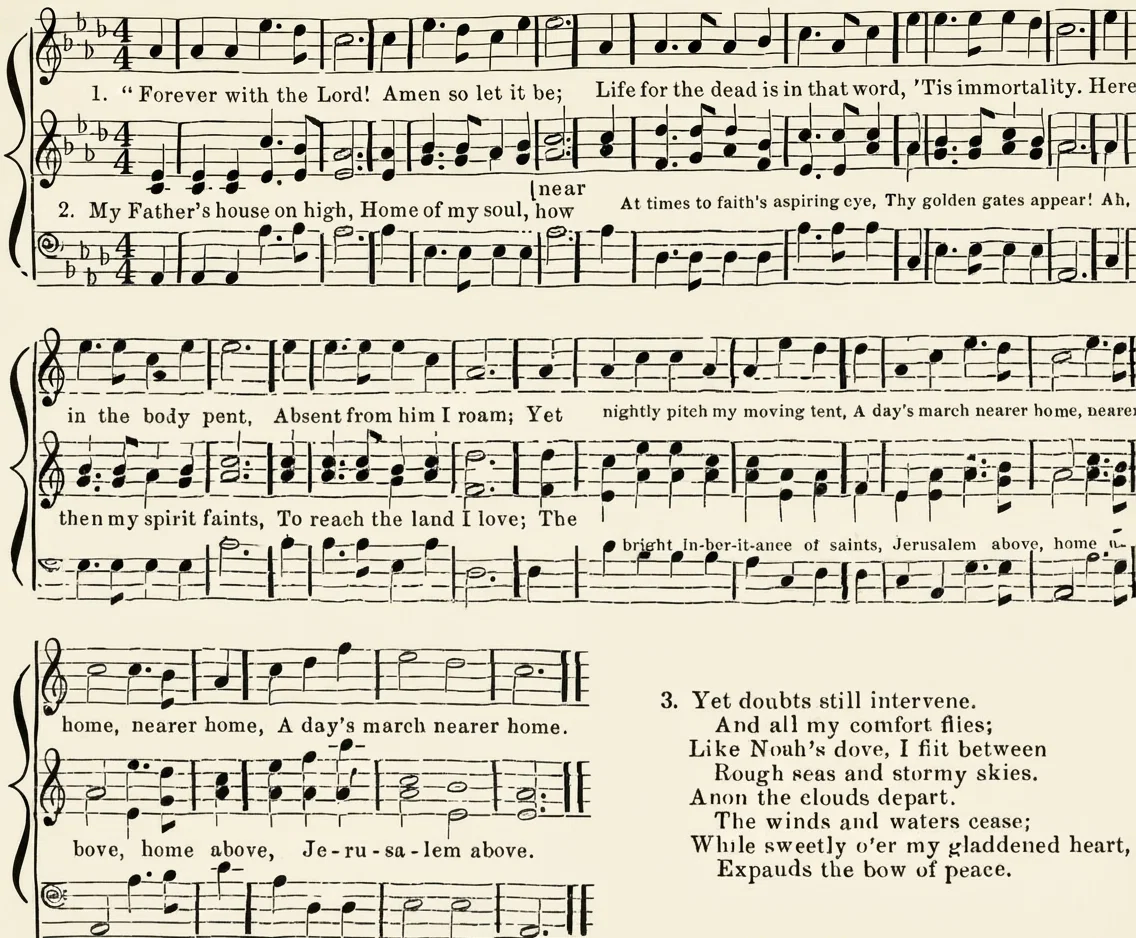
We would say to those sending in music for the Supplement, that we have in our possession The Lute of Zion, The New Lute, The Hallelujah, The American Vocalist, The Dulcimer, N. Y. Choralist, The Shawn, Cantica Laudis, Carmina Sacra, National Psalmist, and Psaltery; and if the tunes they wish to send are in either of these books, they need not take the trouble to copy them, but simply refer us to the page.

Business Items.

Mary E. Haskell:— Anna E. Newton's paper has not been stopped at, but regularly mailed from this Office, up to the present time.
M. Borden:—The paper you refer to was stopped last March.
D. C. Brunson:—Where is P. B. Bostwick's INSTRUCTOR sent?
A. A. Marks:—Please give us the P. O. address of the eight individuals concerning whom you write?

FOR REVIEW AND HERALD.

J. Whitmore (for Jos. Whitmore) 0,50,xiii,10. J. Ponfret 0,25,xii,23. M. E. Haskell (for A. E. Newton) 0,50,xiii,1. A. J. Emans 1,00,xii,20. A. J. Emans (for H. Clarke 1,00 xiv,11; for T. Wood 1,00.xiv,11) 2,00. D. Ferry 1,00,xiii,11. G S. Ray 200,xiv,1. D. T. Shireman 1,00,xiii,11. A. Faber 2,00 xiii,1. W. Hyde 3,00. xiv,1. R. Garrett 1,00,xiii,11. W. Farrar 2,00,xiv,11. A. A. Marks 1,00,xiii,1. B. Marks 0,40,xii,11.
FOR POWER PRESS.—A friend in Steuben Co., N. Y. $5. L. M. C. $5.
FOR REVIEW TO POOR.— A. Burwell $2,50.
FOR HOLLAND TRACT.—A. Burwell $2,50.

Receipts.

Annexed to each receipt in the following list, is the Volume and Number of the "Review and Herald" to which the money receipted pays. If money for the paper is not in due time acknowledged, immediate notice of the omission should then be given.

You have reached the end of this edition.

Review and Herald · Jul 29, 1858