In the issue of the New York Independent of August 14 is an interesting article by a singularly well informed and apparently impartial Italian writer, Salvatore Cortesi, on “The First American Mission to the Vatican.” This writer is in close touch with American affairs, and his article indicates a keen insight into the matters of which he writes.
The declaration that this mission to Rome was a business one solely and not diplomatic has not been taken seriously either by the Vatican or the European powers. “Judge Taft,” says Mr. Cortesi, “was provided with credentials and with an autograph letter from President Roosevelt to Leo XIII., exactly like Mr. Whitelaw Reid for the coronation of King Edward VII., or like Lord Denbigh, the special envoy of England, who, similarly to Judge Taft, congratulated the pope on his twenty-five years of pontificate. The American representative seemed in reality more of a special envoy than the other two, as he even had a present from the President to the pope, consisting in a set of the literary works of the former; and the instructions given him by Secretary Root ended precisely as follows:—
“Any assistance which you may require, whether on the part of officers of the civil government or of military officers, to enable you to perform the duties above described [the negotiations with the Vatican] in a manner satisfactory to yourself, will be afforded.”
“It is out of the question,” continues Mr. Cortesi, “that no ambassador, no envoy extraordinary, has such powers as these. Besides, when in Rome, Governor Taft thought it his duty to be the first to pay visits to the ambassadors of France, Austria, Spain, and Portugal, accredited to the Holy See, thus putting himself on an equality with them. A few days after he arrived in the Eternal City there was a consistory at the Vatican, which is one of the most gorgeous and important functions of the Roman church, and Governor Taft accepted an invitation to assist at it in the diplomatic tribune, together with the ambassadors of the great Catholic powers, he being styled the Envoyé Extraordinaire of the President of the United States.”
Thus it appears that notwithstanding the announcement that this mission to Rome was a business and not a diplomatic one, the governor conducted himself in every way as if he were in the diplomatic service, an ambassador accredited to the Vatican, and took his place among the ambassadors of other countries who were openly accredited to the ecclesiastical government at Rome. It is certain also that the Vatican regarded him as such—in fact the Vatican would be expected to do so; for his credentials were all that an ambassador could require. The result of this has been to establish negotiations between the head of this government and the head of the Church of Rome of such a complicated nature that they will practically be interminable, and will result, as it was intended by the Vatican they should result, in the establishment of permanent diplomatic relations.
Nor will this be an offense in the eyes of the Italian Government, as some have supposed; for other governments, as Mr. Cortesi points out, most friendly to Italy have long maintained diplomatic relations with the Vatican, and Italy herself recognizes a certain sovereignty in the person of the pontiff. Germany, which is Italy’s ally in the triple alliance, has two legations accredited to the Vatican, and Italy has given no sign of a desire to dissolve the alliance because of that fact. Such a course as the establishment of diplomatic relations with Rome would not be out of harmony with present tendencies manifest in this government. So, whatever the intentions of the individual men concerned on the part of the United States, it is an indisputable fact that the mission of Judge Taft to Rome became of a diplomatic nature, and has set a precedent and opened the gate for recurring diplomatic missions in the future until permanent relations of that character shall be deemed expedient and necessary.
Some hold that Rome has made a grave blunder and lost a grand opportunity by not settling the matter at once with Judge Taft and closing the negotiations, thereby receiving on the friars’ behalf the lump sum of some eight or ten million dollars with which to push her religious work in the islands. But Rome does not figure it out as a loss. Archbishop Ireland, who is said to have originated the idea of the negotiations at Rome, does not regard the outcome as a loss to the Church. With the outcome as it is, Rome has gained more in influence among the nations of the world than she has lost in money, and the money will be taken care of later.
The Literary Digest, of August 16, in introducing a compilation of European opinions on the matter, says:—
Mr. Roosevelt’s positive statement that the negotiations with the Vatican are not of a diplomatic character has been received in the European press with disrespectful amusement. It is admitted that he may call them undiplomatic so far as he and his mission are concerned, but need the pope and his cardinals be undiplomatic? European papers answer this query in the negative. The Paris Temps says: “De Tocqueville and Laboulayé would shudder in their graves if apprised that the land of the separation of Church and State had upon its own initiative rushed so near the peril of an adulterous union of the civil power and the spiritual power.” The same journal declares that the plan which Governor Taft was charged to urge upon the Vatican “amounts to a concordat,” and asks whether the object sought by the United States is worth such a price as “the conclusion of a sort of concordat, or treaty, with the Holy See.”
Into this bewildering maelstrom has the government entered, and from the strong grasp of its centripetal whirl escape is well-nigh impossible. It is following in the wake of “the powers,” and all are being carried closer and closer to the vortex of papal domination. The nations are giving more and more attention to representation at the Vatican, and this means more and more influence and interference of the Vatican in their governments. The claim of the pope is that of sovereignty over all kings and peoples. It will be recognized before the end for a brief period (See Rev. 17:12-18) and influences are now at work to bring it about.
FOURTH OF JULY CASUALTIES.
The Tribune’s record of Fourth of July casualties gives the number of injured as 2,649; of killed 31, and the total damage done by fire $250,155. Analyzing the table, we find that fireworks were responsible for 731 casualties, skyrockets for 110, cannon for 368; firearms for 546, gunpowder for 422, and runaways caused by explosions of various kinds for 29. In Philadelphia 439 persons were injured and one killed, giving that city the record for injured. The largest number of killed was in Chicago—four—but there the list of injured was comparatively light, the total number being but 111. In New York no one was killed and only 73 injured. The greatest fire loss was in Lee, Illinois, where the damage was estimated at $100,000. Boston lost $10,000 by fire; Dixon, Illinois, $50,000; Kansas City, Missouri, $26,000; Kansas City, Kansas, $2,000; Los Angeles, $18,000; Leadville, $1,500; Milwaukee, $2,000; Mansfield, Ohio, $10,000; New York, $3,000; Providence, $3,000; Rochester, $1,500; St. Louis, $3,000; Syracuse, $3,000; Stockton, California, $1,500; St. Joseph, Missouri, $3,000; Toledo, $2,500; Troy, $2,000, and Wilkes Barre, $2,000. Twenty other towns and cities reported losses of less than $1,000.—Public Opinion.
STEPPING TOWARD THE THRESHOLD.
CARDINAL GOTTI, who has been Prefect of the Sacred Congregation of Bishops and the Regular Discipline, has been appointed Prefect of the Propaganda. This is the most important post in the gift of the pope, and is universally considered as indicating that Leo XIII. desires him to succeed him in the pontificate. It is claimed by the superstitious that a certain famous prophecy clearly designates Cardinal Gotti for that post, as eight centuries ago Malachy9O'Morgair, Archbishop of Armagh, Ireland, wrote a book, which was discovered after his death, and which contained a motto for every pontiff from the year 1143 until the end of the Papacy. These people say that the prophecies have been verified. There are mottoes for only eight pontiffs, more in the Papacy after the successor of the present pope. Then, says Malachy, “the earth will pass away,” unless the popes are cut off as in ancient times. This cuts off all opportunity for us to ascertain whether his prophecy is fulfilled or not, and if so to insert it in our list of coincidences!
WILL BEAR WATCHING.
The Christian Advocate (Methodist Episcopal) remarks (July 3, 1902): “The country has borne with ill grace the negotiations between Governor Taft and the Vatican for the purchase of the church lands in the Philippines. It would be a great deal better had the negotiations taken place through intermediaries.” In a later issue, July 10, it says that the negotiations “will bear watching” by the government—“from the president to the last officer concerned in them.” “Who else should watch them?—The American people, including the Protestants in the islands. The friars, the entire Catholic hierarchy, and all politicians in their interest are watching them. Therefore all others should do so, to the intent that ‘our new possessions’ may not be either a wooden horse or a Pandora’s box.”
“POOR QUEENSLAND.”
Troublous times are being experienced in many parts of the world. While it is earthquakes and volcanic eruptions in some localities, storms in others, wars and rumors of wars in other parts, labor troubles in others, famine is also on the list. Pastor W. A. Colcord, writing to the Union Conference Record, of Sydney, N. S. W., says:—
The drought has been bearing down very heavily on poor Queensland now for a number of years, until the country begins to feel the calamity in earnest. The past summer has been a hot and dry one. Abundant rains last spring made things look bright and hopeful, and everything gave promise of a prosperous year and a change in affairs for the better, especially in southern Queensland. The famous Darling Downs looked a garden. But as warm weather came on the drought set in again, and for months and months at a time the country has seen hardly a drop of rain. While in some parts the wheat crop was pretty fair, many of the later crops were almost a complete failure. Passing through the country one could see the vast fields of corn in farm after farm burned into worthlessness.
The season getting late, and hoping there would soon be rain, many farmers planted large fields of potatoes, only to see the seed rot under the dry, hot clods. Some, seeing no rain come, to save total loss, dug up the potatoes which they had planted, while others have lost tons and tons of seed in the ground.
As in New South Wales, prayers for rain have been offered in many churches, in some places the prayers continuing till midnight; but up to the present little or no rain has come, tho Mr. Wragge, the weather prophet, predicts that we are likely to get some soon. The ground for the most part is dry, sun-cracked, and brown as a berry. The prolonged drought is thinning out the ranches and the flocks in the interior. Millions upon millions of sheep have died in the State during the past few years, and unless a change comes before long, inevitable want and suffering must come to many of the people. Stealthily the time of trouble and the day of the Lord are creeping upon the world. Few realize what all these things mean, so gradually evils multiply.
But all these things naturally have their effect. They produce hard times. We feel it in many ways.
The Growth of the Chicago Tribune
In the issue of the Chicago Tribune of July 23 is a striking object-lesson of the wonderful growth of this country, as well as of the paper itself and the city in which it is printed. The issue mentioned is a special containing fifty-two pages, and in addition to its regular news and business service, gives an interesting history of the wonderful growth of Chicago, and incidentally of the Chicago Tribune, established there in 1847, when Chicago was a little town of 16,000 inhabitants. That town has now grown in population to 1,800,000. In that time the Chicago Tribune has grown from an unpretentious sheet to one of the most completely equipped newspapers of this dynamic age. The quarters of the Tribune in 1847 were unpretentious in the extreme. It now occupies a magnificent twelve-story steel-and-brick structure, with basement and sub-basement thirty feet below the street, and foundations resting on rock formation fifty feet below the floor of the sub-basement. To print that paper, six of the most modern perfecting presses are required, in addition to a mammoth seven-cylinder color press, all of which operating one single hour are able to turn out 328,000 sixteen-page papers, finished, folded, and counted. This is a wonderful achievement; but we are living in an age of wonders, the culminating age of this world, an age full of meaning and full of lessons to the child of God.
Cardinal Gotti’s Life and Career
Cardinal Gotti is sixty-eight years old. His father was a dock laborer. His mother helped him to study at a Jesuit College. When sixteen he became a member of the order of the Carmelites. After graduation he taught theology and also mathematics in the naval school at Genoa. Many of his pupils now command vessels in the Italian navy. . . . He . . . is a distinguished orator, speaking French perfectly, and Latin with as much grace as Leo XIII.—Christian Advocate.
Chinese Boy Challenges School Segregation
A suit at law has been brought in the United States District Court, in San Francisco, that will test the constitutionality of a California State law. The suit is in behalf of Henry Wing Him, a Chinese boy aged 11 years, who has been denied admission to a white public school. The action is against the principal of one of the grammar schools and the board of education, to restrain them from preventing his attending the school. His counsel alleges that Section 1662 of the Political Code, which provides that separate schools shall be established for Mongolian and Chinese children, is in conflict with the fourteenth amendment of the Federal Constitution. A final decision of this case is of widespread interest, as it concerns the principle of separate schools for white and colored children, throughout the country.
The Conservatory’s School of Literature and Oratory
The New England Conservatory in Boston, is not only an institution for the teaching of music in its various branches, it has for many years maintained an excellent school of Literature, Elocution, and Oratory. With the opening of its new and splendid building this autumn, it has arranged superior accommodations for a new school of Literature, Interpretation, and Expression, under instructors of the highest attainments and wide experience. The aim is to instruct the youth in refined but forceful oratory. It sets a high standard in music, literature, and oratory.
Civic Improvement League Convention
The annual convention of the American League for Civic Improvement will be held this year in St. Paul, Minn., September 17 to 19. The aim of the League is municipal and civic improvement of every form pertaining to comfort, health, beauty, and utility. The organ of this work is Home and Flowers (monthly), printed in Springfield, Ohio.
Berlin Prepares for King of Italy’s Visit
BERLIN is making great preparations for the expected visit to that city of the King of Italy.
General Miles to Inspect Philippines Army
It is announced that General Miles will soon sail for the Philippines, for the purpose of inspecting the army there.
Plot to Assassinate the Sultan
A REPORT from Vienna states that a committee has been organized in Macedonia for the purpose of effecting the assassination of the Sultan of Turkey.
Forty-Story Office Building Planned
A FORTY-STORY office building has been planned for New York City, and will soon be in process of erection, the cost of which will be about $10,000,000.
Pulp Mill Explosion Kills Nine
Nine workmen are known to have been killed and five are missing as a result of an explosion in a pulp mill on the Christiana River, in Delaware, on August 19.
San Francisco’s First Chinese Divorce Suit
THE first Chinese divorce suit ever entered in the city of San Francisco was filed by Lee Sun on August 18. The decree of separation was asked on the ground of desertion.
Steel Trust Seeks Foundry Combination
EFFORTS are now being made by the United States Steel Corporation, the great steel trust, to effect a combination of all the malleable iron foundries of the country. Should the deal go through, another immense industry will be closely linked with the great steel trust.
General Chaffee Seeks Peace With Moros
GENERAL CHAFFEE is still seeking to avert a conflict with the Moros of the island of Mindanao, hoping to bring about their acceptance of American rule by peaceable means. Attacks by the Moros on American outposts continue, and also in the island of Luzon the native constabulary continue to be attacked by ladrones.
Spanish King's Irreverence for Sacred Relics
Boyish freaks of the young King of Spain and his irreverence for the sacred relics of the Catholic Church have caused reports to be circulated throughout the world that he is insane.
Battleship Maine Sets Speed Record
The new first-class battleship Maine has been sent over her official trial course, and developed a speed of over 18 knots an hour, making her the fastest battleship in the American navy.
Knox to Examine Panama Canal Securities
Reports from Washington indicate that Attorney-General Knox will soon sail for France to assist in the examination of the Panama Canal securities, previous to their purchase by this government.
Another Eruption of Mont Pelée
At noon on August 21 another violent eruption took place from the crater of Mont Pelee. The eruption was followed by total darkness five miles away from the volcano, which lasted for about twenty minutes.
Governor Taft Welcomed in Manila
GOVERNOR TAFT arrived at Manila on August 22, and was given an ovation by the populace. The day was made a holiday, and the city was decorated, eight large arches having been erected in the streets. Thousands of natives from adjoining provinces took part in the demonstrations.
Ambassadors Protest Seizure of Foreign Sailors
The British, German, and French ambassadors at Washington have entered protests to the State Department against the impressment of seamen of their several nationalities in ports on the Pacific Coast. The ambassadors ask that this government take steps to prevent forcible and surreptitious seizure of sailors in American ports.
Repairs Needed at St. Paul’s
The fall of the Campanile at Venice has caused the guardians of many other large structures to examine carefully the condition of these buildings. It is stated that $1,100,000 will be necessary to make the needed repairs on the famous old building of St. Paul's in London. These repairs, it is stated, are imperative in order to insure the safety of the structure.
Cotton Growing in Upper Egypt
The British Cotton-Growing Association which is endeavoring to make Great Britain independent of the United States in the matter of the production of cotton, is now paying special attention to Upper Egypt, where it is asserted that a cotton belt can be developed exceeding that of the Southern States. Experiments that have been conducted along the Upper Nile in cotton growing indicate that cotton can be grown there that will equal that produced in any part of the world.
Native Unrest in South Africa
The natives of South Africa are causing much anxiety to both the English and Boers. The Boers are now unarmed, but the natives have retreated to their homes with their rifles and are threatening trouble. Continued attacks are reported on Boer farmers and assaults on Boer women by the natives. Formerly natives committing assaults on Boer women were promptly shot, but the disarming of the Boers has made the natives fearless, and they are taking their revenge in many places.
Manufacturers’ Trust for Canal Supplies
In view of the fact that a great canal is soon to be built across the Isthmus which will require an enormous amount of manufactured material of numberless kinds, American manufacturers are already planning for such an understanding among themselves as will preclude competition in bidding for the furnishing of the supplies needed. By the time the government is ready for bids, there will be a virtual manufacturers’ trust prepared to do the bidding for the business without fear of competition.
Conscription and the British Army
THE serious falling off in enlistments in the British army has caused a revival of the talk of conscription. Many whose term of enlistment in the South African war had expired are walking the streets of London seeking employment, but showing no sign of a desire to re-enlist. The Saturday Review frankly admits that the army is too small for the requirements of the empire, and then declares: “Whether we like it or not, conscription is bound to come, and the country might as well get used to the idea as quickly as it can.”
Colombian Revolt and Venezuelan Advances
The Colombian gunboat Boyaca, which had been missing for some weeks, with 300 men on board, was captured by the insurgents, and is now being used by them to guard the entrance to Panama harbor. The Colombian Government is seeking to compel an English steamship company operating in Central American waters to carry its troops from place to place. The company objects to furnishing transportation for the Colombian soldiers, and as England seems to uphold the objection of the company, international complications are threatened. The revolutionists of Venezuela have succeeded in capturing another city, the government troops evacuating the place without a battle.
The Naval Strategy Battle
The great naval strategy battle which was carried on for four days along the New England coast came to a close on August 24, the attacking squadron being captured by the defenders. The former under commander Pillsbury was required to make some harbor of the coast and remain there six hours without being confronted with a superior force. It was unable to accomplish its purpose. This is the first real lesson of the American fleet in playing at war. Hereafter the army is to be brought into requisition in connection with the fleet, and be put through such evolutions as it would be required to go through in case war had been declared by some foreign power. Preparing for war is the occupation of this generation, as the Scriptures have plainly stated that it would be.
Congress Urges Action Against Trusts
THE Transmississippi Commercial Congress closed its sessions at St. Paul, Minn., on August 22, after adopting a strong resolution urging the President of the United States to use all the power vested in him as executive against the growing power of the trusts, to the end that the power and influence of these organizations may be destroyed. The resolution also urges upon Congress the enactment of more stringent laws to suppress this growing evil.
Volcanic Eruption at Torishima
The island of Torishima, off the coast of the largest island of Japan, was overwhelmed by a volcanic eruption between August 13 and 15, and all the 150 inhabitants were killed. The island is covered with volcanic debris, and all the houses on it have disappeared. The eruption is still in progress, accompanied with submarine eruptions in the vicinity, which make it dangerous for vessels to approach the island.
Aluminum as a Substitute for Paper
In France experiments are now being made with aluminum as a substitute for paper. It is said to be possible to roll the aluminum into sheets four-thousandths of an inch in thickness, in which form it weighs less than paper. These thin sheets can then be used for book and writing paper. The metal will not oxidize, is practically water and fire proof, and is indestructible by worms.
Champerico Deserted Amid Earthquake Fears
The German steamer Kambyses, which arrived at San Diego, Cal., on August 24, reports that all the inhabitants of the Guatemalan city of Champerico have deserted the place on account of earthquakes and threatened volcanic disturbances. The lights of active volcanoes could be plainly seen by the passengers of the Kambyses many miles at sea along the Guatemalan coast.
Philippine Schools and Catholicism
The chief of instruction in the Philippines has made an exhaustive report of the conditions in the islands, completely refuting the charge of certain Catholics that the school system of the islands was used as a proselyting agency against the Catholics and generally to the prejudice of Catholicism. The chief of instruction states that not one material charge of the statement is true.
Smallpox Plague in Barbados
A REPORT from Barbados states that there is a plague of smallpox on that island, which is spreading so rapidly that the medical authorities are unable to check its ravages. Doctors of Barbados anticipate terrible developments in the spread of this disease. Quarantine has been established against that island, and interisland trade has been crippled in consequence.
British Limits on Pauper Emigration
The British Government proposes to keep paupers out of South Africa. It is now issuing no permits for passage to South Africa except to those who have in their possession $500, or who are able to satisfy the government of their ability to support themselves after arrival in that country.
The White Star Liner Cedric
The largest steamship ever set afloat was launched at Belfast, Ireland, on August 21. She is the White Star Liner Cedric, of 21,000 tons. Her length is 700 feet, breadth 75 feet, and depth 49 feet. Her carrying capacity is 18,400 tons and she has accommodations for 3,000 passengers.
Menelek to Exploit Abyssinia’s Resources
A DESPATCH from Paris states that Emperor Menelek has decided to grant no more concessions to Europeans. This does not mean that Menelek will not adopt European innovations and improvements, but that he will do his own exploiting of Abyssinia’s resources.
Alaska’s Useless Submarine Cable
THE submarine cable recently laid from Skagway to Juneau, Alaska, and later turned over to the government, has been found practically useless, and there will be no further attempts to repair it. The cable has been broken in numerous places, grounding the current.
Spanish Gold Unearthed Near Uvalde
A CHEST of Spanish gold coins amounting to about $100,000 is said to have been unearthed by Mexicans near Uvalde, Texas, recently. It is supposed that the money was buried by a paymaster of the Mexican army during Texas’ struggle for independence.
Turkey Concedes U.S. Demands
An order has been issued by the Sultan of Turkey commanding that all the demands made by the United States upon Turkey be conceded, and the relations between the Porte and the United States have resumed their normal condition.
Southern Pacific Earnings Increase
THE gross earnings of the Southern Pacific Company for the year ended June 30, according to figures just made public, amounted to $83,000,000, an increase of more than $6,000,000 over the earnings of the previous twelve months.
Murder of English Missionaries in Hunan
ANOTHER murder of foreign missionaries is reported from the province of Hunan, China. The missionaries were both Englishmen. They had been warned of the outbreak by friendly natives, but failed to heed the warning.
Indians Purchase Land in Mexico
A COMPANY of Indians, of Indian Territory, have purchased a tract of land in Mexico amounting to about 1,600,000 acres. These Indians will move onto their possessions as soon as the details of the transfer are completed.
Venezuela Ignores Protests Over Port Blockade
transfer are completed.
ENGLAND, France and Germany have entered strong protests to the government of Venezuela against the blockade of Venezuelan ports; but that government has decided to ignore the protests and keep up the blockade.
Volcanic Eruption and Earthquakes
A VOLCANO has broken out in Calabria, Italy, and is emitting vivid flames and showers of stones. Violent earthquake shocks are reported from the vicinity of St. Petersburg, Russia.
OLIVES: THEIR CULTURE AND PREPARATION.
By One of Experience
[By One of Experience.]
THE medicinal or curative properties of the oil of the olive, as well as the nutritive qualities of the berry, were more generally known and appreciated in the days of Jesus than at the present time. The olive tree is dignified in the Old and the New Testaments with remarkable frequency, as Bible readers are doubtless aware; and the oil which was used not only in ceremonials, but as a remedial agent for physical hurts, fills an equally important place in sacred history. Indeed, the olive tree is so closely and, in some instances, tragically associated with the life of Jesus and the utterances of the prophets, that it justly deserves a distinctive and distinguished place in church and Christian annals.
It may not be uninteresting to know that in Palestine, Spain, Italy, France, and California the berry of the olive tree is at its best just prior to and during the holiday season. (A most instructive exercise for young students of the Scriptures will be found in their efforts to accurately enumerate the number of times the names of the olive tree, the olive, and its oil appear on the pages of Holy Writ.)
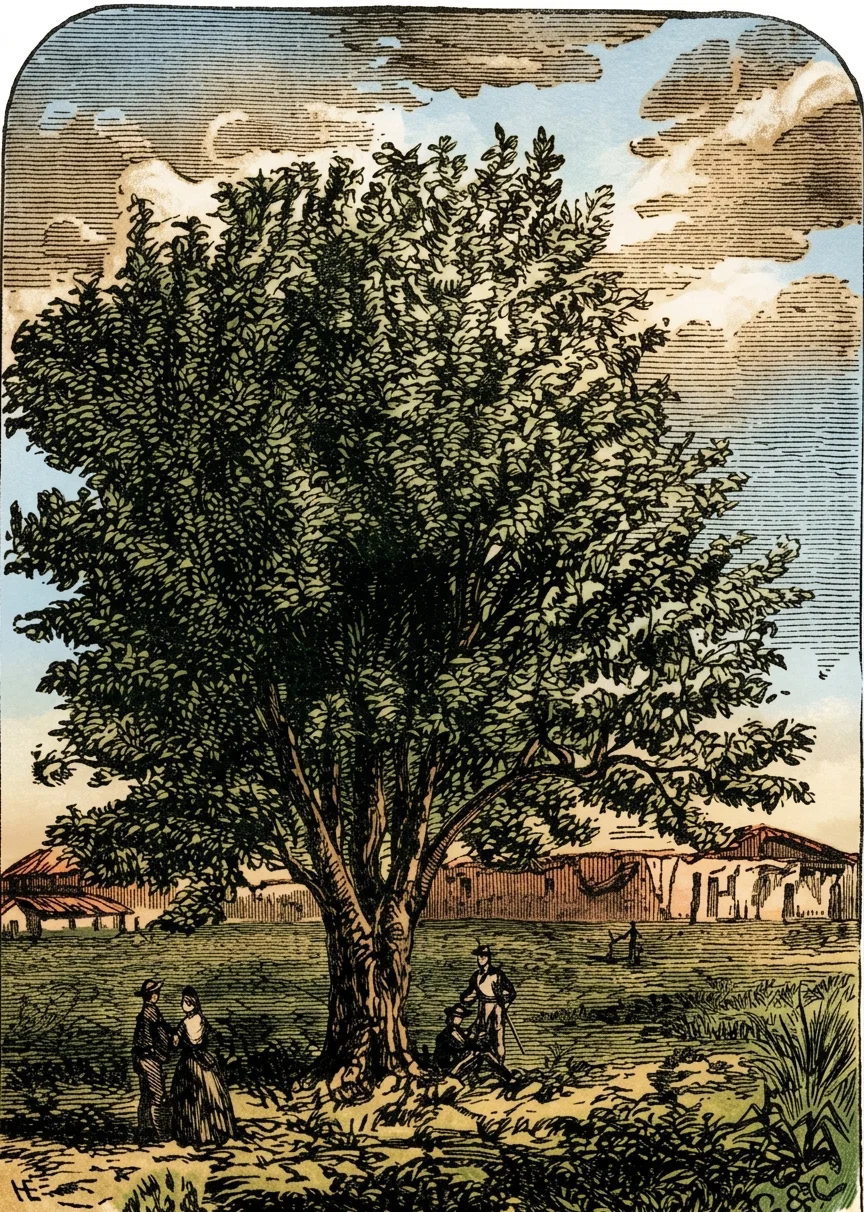
The history of the olive tree in California is brief and quite well known. The Mission olive tree tells the story of its own transplanting, and serves to limit the period, so far as the past is concerned, during which an important industry has been added to the acquired resources of the State. The annual output of oil and ripe pickled olives is steadily increasing in California, and the plantations do not now, as they did up to twenty-five years ago, consist alone of Mission trees, but embrace scores of varieties indigenous to the soils of France, Spain, and Italy.
With the increase in the consumption of ripe olives, and the use of oil, both for table and cooking purposes, a knowledge, first, of how these two delightful and healthful edibles are correctly prepared for the consumer, and, second, of how the consumer should care for them after they have been added to his larder, will not, we hope, come amiss. At this point, the writer would add that the information written herein was acquired on an olive plantation in the foot-hills of Placer County, and that the oil output of this establishment, while not large, is famous, and has largely advertised, not only in the United States, but throughout Continental Europe, the excellence of California oils. The ripe olives prepared on this ranch are also considered the best in the market, and invariably fetch from fifteen cents to twenty-five cents per gallon more than any other ripe pickled olives sold in San Francisco. The writer has reason, therefore, to believe that the methods about to be briefly and generally described are of the best.
How Oil is Made.
An Olive Tree.
Olives for oil are raked from the trees, knocked off with poles, or sometimes, when the tree is young and the crop light, picked by hand. The olive should of course be ripe before it is gathered, and, during the process of picking, it is allowed to fall upon canvass spread on the ground around and about the tree. The fruit is next taken to the warehouse, adjoining the oil room, where it is passed through a cleaner and relieved of clinging and loose leaves, twigs, and other foreign matter. The berries are then spread out in bins, where they are kept in a warm temperature until they begin to shrivel—a condition that evidences the evaporation of a part of the water of which they are largely composed. They are then, in lots of 250 pounds, placed beneath a huge stone similar in all respects to the great stones seen in flour mills, with this difference, that the oil stone stands on its edge. As the stone revolves in the circular basin in which the berries have been placed, it slowly crushes them, pit and all, into a pulpy mass, which looks very much like blackberry jam. The pulp is then placed by hand in circular mats of Italian grass, twenty inches in diameter. These mats have openings three inches in diameter, above and below, and are loosely woven. Into each fifty pounds of pulp are placed. When thus stuffed, they are called cheeses.
To make a pressing ten cheeses are taken to the oil room and placed one on top of the other in a metallic and circular pan some two and one-half feet in diameter. Upon the top of this stack of cheeses the end of a huge, wooden beam, mechanically geared, is slowly lowered until its weight holds the stack firmly, and additional power is given the beam until the pressure it exerts equals 7,500 pounds to the square inch of the surface resting upon the top of the stack, and the work of expressing the oil has begun. As the pulp grows more compact, the oil streams through the interstices of the mats—the beam meanwhile following the stack as the latter shortens. It requires from two to two and one-half hours to express the oil from a single stack; and when the operation has ended, the pulp in the mats is nearly if not quite as hard as sun-baked clay. The beam is then raised, the mats removed, and emptied of their contents. The dry pulp is used as food for pigs, and chickens, for fuel, and often goes back to the olive tree as a valuable fertilizer.
When the oil pours from the mats it passes from the holding-pan through a pipe to the first settling vat. There it is allowed to stand for twelve hours, at the end of which time it is skimmed. The residuum consists chiefly of water, and is stored in other reservoirs. It is allowed to stand thus for two days, and is then, in small quantities, filtered through blue litmus paper, literally a drop at a time. The oil is next bottled, neatly wrapped and packed, and is ready for market.
How to Tell Good Oil.
The following simple rules may prove of some service to users of bottled olive oil:—
Never purchase a bottle of oil that has been exposed to the light on the shelves of your grocer. Ask him to give you a wrapped bottle, and see that it is taken from the case.
When not in use, keep the oil well covered in the dark in a pantry or room of even temperature. Your oil will then retain its delicate flavor until consumed.
How to Pickle Olives.
Ripe olives are carefully picked by hand and immersed in cold water for a period of six to eight hours. They are then put in a bath of lye and water, and are allowed to remain four hours. The lye extracts the bitter essence of the berry known as olivite, and deposits itself in the berry instead. To separate the lye from the olive, the berry is kept submerged in cold water, the bath being changed every four or five hours, day and night, for three days, twice a day for a week, and once a day for another week. It is then placed in a mild solution of salt and water, and allowed to swim there for still another week. It is now ready for shipment, and, having been put in commercial packages, the kegs and barrels containing the fruit are filled sufficiently to float the berries with a strong brine—the water having first been sterilized.
Suggestions and Information for Consumers.
To keep ripe olives firm and prevent disintegration, the consumer should always, on taking his purchase home, no matter how large or how small, place the olives in a thoroughly cleansed wooden vessel or crock, and wash them gently and carefully in cold water. Let them stand over night before using, and in the morning one will find their salty flavor almost gone. Then mix a fresh brine and replace the olives. It will not take them more than an hour to absorb the salt, and thus one may “salt them” to suit the taste just as he would an egg.
Never permit ripe olives to stand in the same brine longer than a week, and never fail to thoroughly cleanse the vessel containing them once a week. Keep them in a cool, dark room, and loosely covered, so as not to interfere with the natural evaporation of the bath. Take as good care of your olives as you do of your highest-price butter, and it will repay you.
Moreover, remember that the ignorance and neglect of the shop-keepers who retail ripe olives is doing more, not only to spoil the olive itself, but to injure its reputation abroad, than any other known agency.
If you can not plainly taste the oil in a pickled olive, do not purchase it—for the reason that the lye used in its preparation has destroyed the oil. A pickled berry so prepared has no more flavor than sawdust, has no nutritive qualities, and will rapidly spoil.
Do not think a brown or light-colored olive is not a ripe olive. A black-ripe olive, owing to the action of the lye, will often assume a chocolate brown or even a lighter color.
RICH IN THE LORD.
God draws a cloud over each gleaming morn—
Would you ask why?
It is because all noblest things are born
In agony.
Only upon some cross of pain and woe
God’s Son may lie;
Each soul redeemed from self and sin must know
Its Calvary.
Yet we should crave neither for joy nor grief;
God chooses best;
He only knows our sick soul’s best relief,
And gives us rest.
More than our feeble hearts can ever pine
For holiness,
That Father, in His tenderness divine,
Yearneth to bless.
He never sends a joy not meant in love,
Still less a pain;
Our gratitude the sunlight falls to prove,
Our faith, the rain.
—Anon.
A TRIUMPH IN BLASTING.
By the blasting of a huge bowlder twenty feet below the surface of the northwest corner of Central Park, New York, two shafts through solid rock, begun one thousand seven hundred and twenty-five feet apart, were joined. The work was carried out with such exactness that the junction was as clean cut as if the mining had been along one continuous stretch. The engineers have had to exercise much care, and the blasting has proceeded with the greatest caution, one of the principal fears being that they would come upon a change in the texture of the rock. This is not always to be foreseen and may cause fatal accidents.—Christian Advocate.