An Up-to-Date Pamphlet on the Principles of Religious Liberty.
This book can not fail to be of great value to all in the study of the series of S. S. Lessons on Religious Liberty for the last three months of 1895. It was not written to go with these lessons, but it is fortunate and timely that it should be published at this time.
“THE RIGHTS OF THE PEOPLE” contains fifteen chapters, the following being a portion of the chapter headings:—Christianity and the Roman Empire—What Is Due to God and What to Cæsar—The Powers That Be—How the United States Became a Nation—What Is the Nation?—Who Made the Nation?—Religious Right in the United States—Religious Rights Invaded—The People’s Right of Appeal—National Precedent on Right of Appeal—Sunday-law Movement in the Fourth Century and Its Parallel in the Nineteenth—Will the People Assert and Maintain Their Rights?—Religious Rights in the States.
In the four appendixes to the book are given the Declaration of Independence—The Constitution of the United States—The Dred Scott Decision, and the “Christian Nation” Decision.
This is a book of permanent value for reference and study and one that all should possess. It contains 384 pages, with several illustrations, is issued as No. 32 of the Religious Liberty Library, and is bound in paper covers. Price 40 Cents.
A FINER EDITION on laid paper is also ready. It is neatly bound in cloth. Price One Dollar.
This new edition is just off the presses, and orders for hundreds of copies are waiting, so great has been the demand for the book.
The Third Edition is printed on heavy laid paper, the engravings being on the finest enameled stock, and are 25 in number.
The Appendix, which has been added to this edition, contains Miss Rosalind A. Young’s letter of recent date to the N. Y. World, also an article from Henry Robinson Palmer, which appeared not long ago in Harper’s Weekly.
The Binding is of neat, new colors of vellum cloth.
PRICE $1.00
SPECIAL INDUCEMENTS
Are now offered to agents to push the sale of this book.
Address,
PACIFIC PRESS PUBLISHING CO.
OAKLAND, CAL.
43 Bond Street, N. Y. 18 W. 5th St., Kansas City, Mo.
TEACHING TRUTH
By Mary Wood Allen
By Mary Wood Allen, M. D.
National Lecturer W. C. T. U.
A little brochure brimful of helpful suggestions to parents who wish to teach their children the truth in regard to the mystery of life.
Price, 25c. . .
PACIFIC PRESS PUB. CO.
Oakland, Cal.
LESSON 6.—SABBATH, FEBRUARY 8, 1896
“Study to show thyself approved unto God.”
LESSON 6.—SABBATH, FEBRUARY 8, 1896
BABYLON.
REVIEW QUESTIONS.—(a) By what is the union between Christ and his church symbolized? (b) By what means was this union to be maintained? (c) What took place in the church soon after the apostles’ day? (d) To whom did she turn?
1. What message follows the message of Rev. 14:6, 7.
“And there followed another angel, saying, Babylon is fallen, is fallen, that great city, because she made all nations drink of the wine of the wrath of her fornication.” Rev. 14:8.
2. What is there declared of Babylon?
3. Why did Babylon fall? Ans.—Because of rejecting Christ and committing fornication with the kings of the earth.
4. What is Babylon called in other scriptures?
“And a mighty angel took up a stone like a great millstone, and cast it into the sea, saying, Thus with violence shall that great city Babylon be thrown down, and shall be found no more at all.” “And the woman was arrayed in purple and scarlet color, and decked with gold and precious stones and pearls, having a golden cup in her hand full of abominations and filthiness of her fornication; and upon her forehead was a name written, MYSTERY, BABYLON THE GREAT, THE MOTHER OF HARLOTS AND ABOMINATIONS OF THE EARTH.” Rev. 18:21; 17:4, 5. See note .
5. What does the term as here used symbolize? Ans.—An apostate church.
ORIGIN OF TERM.
6. What is the origin of the term “Babylon”?
“And the beginning of his kingdom was Babel, and Erech, and Accad, and Calneh, in the land of Shinar.” “Therefore is the name of it called Babel; because the Lord did there confound the language of all the earth; and from thence did the Lord scatter them abroad upon the face of all the earth.” Gen. 10:10, margin; 11:9.
7. What was the original meaning of the word to the natural man?
Ans.—The original word from which Babylon came was Bab-ilu, which in the Semitic language means the “gate of God,” the way to heaven. See “Story of the Nations—Chaldea,” by Ragozin (Putnam), pp. 225, 249; “Manual of Ancient History of the East,” by Lenormant, vol. 1, p. 24.
8. What was the object and the motive of the people in building the tower of Bab-ilu?
“And they said, Go to, let us build us a city, and a tower, whose top may reach unto heaven; and let us make us a name; lest we be scattered abroad upon the face of the whole earth.” Gen. 11:4. See note .
9. What did the Lord pronounce this scheme of self-salvation to be?
“Go to, let us go down, and there confound their language, that they may not understand one another’s speech. So the Lord scattered them abroad from thence upon the face of all the earth; and they left off to build the city. Therefore is the name of it called confusion; because the Lord did there confound the language of all the earth; and from thence did the Lord scatter them abroad upon the face of all the earth.” Verses 7–9, margin. See note .
10. What spirit has been characteristic of Babylon both literal and symbolical through the world’s history? Ans.—Self-righteousness, self-exaltation. See Dan. 4:30; Isa. 47:8, 10; Rev. 17:4; 18:7. Compare with 46:9.
11. In whom does this spirit of self-exaltation find its source?
“How art thou fallen from heaven, O Lucifer, son of the morning! how art thou cut down to the ground, which didst weaken the nations! for thou hast said in thine heart, I will ascend into heaven, I will exalt my throne above the stars of God; I will sit also upon the mount of the congregation, in the sides of the north: I will ascend above the heights of the clouds; I will be like the Most High.” Isa. 14:12–14.
“Thine heart was lifted up because of thy beauty, thou hast corrupted thy wisdom by reason of thy brightness.” Eze. 28:17, first part.
12. What is the true spirit of Christianity in contrast with this?
“Then said Jesus unto his disciples, If any man will come after me, let him deny himself, and take up his cross, and follow me.” Matt. 16:24.
“Let nothing be done through strife or vainglory; but in lowliness of mind let each esteem other better than themselves. Look not every man on his own things, but every man also on the things of others. Let this mind be in you, which was also in Christ Jesus: who, being in the form of God, thought it not robbery to be equal with God; but made himself of no reputation, and took upon him the form of a servant, and was made in the likeness of men; and being found in fashion as a man, he humbled himself, and became obedient unto death, even the death of the cross.” Phil. 2:3–8.
13. How was this spirit of self manifest in the early apostasy?
Ans.—The bishops of the Christian church multiplied rites and ceremonies and holy days. They said by this that God’s word and wisdom were not sufficient; it required their wisdom and their words to make God’s plan effectually the “gate of God;” but, as of old, God pronounced it Babylon—confusion.
14. What was the next inevitable step for Babylon to take?
Ans.—The church turned from the Lord and sought power of the state. She left her lawful spouse and committed fornication with the kings of the earth. Compare 2 Cor. 11:2 with Rev. 14:8; 17:2. This was the last step in her separation from Christ. Out of this came persecution of those who did not subscribe to her creed.
15. What especial heathen custom was adopted by the church, and why?
Ans.—Observance of Sunday, the day dedicated by the heathen to the sun. “That very day was the Sunday of their heathen neighbors and respective countrymen, and patriotism gladly united with expediency in making it at once their Lord’s day and their sabbath.”—North British Review, vol. 18, p. 409. See “The Lord’s Day the Test of the Ages,” pp. 90–95.
16. What did the apostate church secure from the state?
Ans.—The very first Sunday law of which we have record was made on March 7, 321 A.D., by Constantine: “On the venerable day of the sun let all magistrates and people residing in the cities, rest, and let all workshops be closed. In the country, however, persons engaged in agriculture may freely and lawfully continue their labor, because it often happens that another day is not so suitable for grain sowing, or for vine planting, lest by neglecting the proper moment for such operations, the bounty of heaven be lost.”—Schaff-Herzog Encyclopedia of Religious Knowledge, Art. Sunday Legislation.
17. What important decision was made by the Council of Nice, convened by Constantine? Ans.—That Easter should always and everywhere be observed on Sunday. See note .
18. Who was bishop of Rome during this part of Constantine’s reign? Ans.—Sylvester, from January 31, 314, to December 31, 335.
19. What did he decree by “apostolic authority” shortly after the Council of Nice? Ans.—That Sunday should be called the Lord’s day. See “History of the Sabbath,” p. 351.
20. What was decreed by the Council of Laodicea, A.D. 364? Ans.—That if Christians should rest on the Sabbath, “let them be accursed from Christ.” See “Prynne’s Dissertation on the Lord’s Day,” pp. 34–44.
21. What followed these decrees?
Ans.—A more rigid law followed, in 386. The church teachers in 401 petitioned the emperor that “public shows might be transferred from the Christian Sunday to some other day of the week, that the faithful might not be disturbed,” and that the people might be restrained from attending the theaters, which were “vastly more frequented than the church.” In fact, the same reasons for a Sunday law were given then as are used now. These shows were first prohibited by law in 485. (See “Rights of the People,” pp. 215–237.) Thus the church appealed to and received aid from the state, which she never would have needed, says Neander, if it had not been for “that secular spirit which in this period seized upon the church.” Babylon was in unlawful union with the kings of the earth.
22. What grew out of this? Ans.—The full development of the “man of sin,” the “mystery of iniquity,” foretold in 2 Thess. 2:3, 4, 7.
NOTES.
INTERNATIONAL SUNDAY SCHOOL LESSON
“Take heed unto thyself; and unto the doctrine;” “that thy profiting may appear to all.”
41. And why beholdest thou the mote that is in thy brother’s eye, but perceivest not the beam that is in thine own eye?
42. Either how canst thou say to thy brother, Brother, let me pull out the mote that is in thine eye, when thou thyself beholdest not the beam that is in thine own eye? Thou hypocrite, cast out first the beam that is in thine own eye, and then shalt thou see clearly to pull out the mote that is in thy brother’s eye.
43. For a good tree bringeth not forth corrupt fruit; neither doth a corrupt tree bring forth good fruit.
44. For every tree is known by his own fruit. For of thorns men do not gather figs, nor of a bramble bush gather they grapes.
45. A good man out of the good treasure of his heart bringeth forth that which is good: and an evil man out of the evil treasure of his heart bringeth forth that which is evil; for of the abundance of the heart his mouth speaketh.
46. And why call ye me, Lord, Lord, and do not the things which I say?
47. Whosoever cometh to me, and heareth my sayings, and doeth them, I will show you to whom he is like:
48. He is like a man which built an house, and digged deep, and laid the foundation on a rock; and when the flood arose, the stream beat vehemently upon that house, and could not shake it; for it was founded upon a rock.
49. But he that heareth, and doeth not, is like a man that without a foundation built an house upon the earth; against which the stream did beat vehemently, and immediately it fell; and the ruin of that house was great.
(Memorize verses 47-49.)
Golden Text: “Why call ye me, Lord, Lord, and do not the things which I say?” Luke 6:46.
NOTE.—The lesson includes Luke 6:12-49. In connection with this may be read the Sermon on the Mount in Matthew 5, 6, and 7. The sermon in Luke is sometimes called the Sermon on the Plain, and is held by some commentators to have been given at a different time than that recorded by Matthew. Preceding the instruction of the lesson text is the choosing of the twelve apostles, the healing of the people on the plain, or “level place,” and blessings and woes, and special rules of conduct spoken to all. “A mountain”—in the original “the mountain”—is believed by some to be the mountainous region in the vicinity of Capernaum.
SUGGESTIVE QUESTIONS.
(1) What question did Jesus ask? Verse 41. (2) How did he say some might question a brother? Verse 42. (3) What excellent advice did Jesus give on this point? Same verse. Note 1. (4) What fruit is expected from a good tree, and what from an evil tree? Verse 43. See Matt. 7:17. (5) How may a tree be known? Verse 44. (6) How is this point illustrated? Same verse. (7) What application did Jesus make of these statements? Verse 45. Note 2. (8) What other reproof did he give? Verse 46. (9) To what did he liken his true disciples? Verses 47, 48. (10) What did he say of the opposite class? Verse 49. Note 3.
NOTES.
1. Cast out first the beam, etc.—One of the most common evils is finding fault with the acts or words of others. This is illustrated by Jesus under the figures of the mote and the beam. A very critical eye it must be that detects the mote—a splinter, or small particle—in the character of the other man, when in his own eye, or character, is a beam,—log, stick of timber,—that is, a fault far outweighing that of the other. The fact is the vision is considerably affected in such cases, and the lesson shows14clearly that pointing out error in a faultfinding way is indicative of something radically wrong with the would-be reformer, for such criticism borders on judging. Jesus judged no man, and his true followers will indeed follow him. See Rom. 2:1. We all have imperfections, and we may feel sure if we seek him for that purpose that the Lord will point them out to us for correction. Recognizing this, charity will have place for her work. Constant faultfinding is indicative of an extremely selfish nature. But the power of the Lord is able to remove even this.
2. Of the abundance of the heart, etc.—This is a principle everywhere and always true. Men may try to cover up their evil ways, and may indeed succeed for a time in deceiving others as to their true character, but sooner or later it will show forth. Sincerity can not forever be simulated. On the other hand, truth never pretends to be anything it is not. The good will ever bring forth good, and the evil will manifest evil. The saying, “The fountain can never rise higher than its source,” is true in this lesson. The wise man says, “Even a child is known by his doings.” Prov. 20:11.
3. Is like a man, etc.—Jesus illustrated the same principle in the parable of the sower. Matthew 13. See also Matt. 7:21-23. Note that two things are necessary to be a true follower of Christ,—the hearing and the doing. The hearing alone will enable one to say, Lord, Lord, look at our works. This is what Cain did, and what Saul did, and many others after them. In fact, this will be the prevailing attitude of the professed Christian world as the end approaches—“Having a form of godliness, but denying the power thereof.” 2 Tim. 3:5. The cause of all this evil is men’s selfishness, preferring their own course to the way pointed out in God’s word, because that way is contrary to the natural desires. To all this there can be but one end,—the destruction indicated in the lesson text. “For not the hearers of the law are just before God, but the doers of the law shall be justified.” Rom. 2:13.
HOW TO GET GOOD BOOKS CHEAP
Special Offers to “Signs” Subscribers.
Steps to Christ.—By Mrs. E. G. White. This most valuable work has been published in six different languages in the United States alone, while chapters from it have been issued in tract form in some countries. Only those who have carefully read its contents can estimate its great worth. Neatly bound in cloth, 75c.
The Rights of the People.—An up-to-date pamphlet on religious liberty, and of permanent value for reference and study. Paper covers, 40c.
Testimony of History to Truth of the Scriptures.—By Geo. Rawlinson, M. A. An excellent and instructive pamphlet on recent archæological discoveries. Paper binding, 35c.
Dictionary of the Bible.—By Wm. Smith, LL.D. A very complete dictionary of the Bible, although small. 467 pages of closely written matter, well and attractively bound, Jewish calendar, map of Palestine, and other valuable features. Price, 85c.
Special Combination Offers.
The Signs of the Times one year, and “Steps to Christ” or “Bible Dictionary,” $1.50.
The Signs of the Times one year, and “Rights of the People,” or “Testimony of History to the Truth of the Scripture,” $1.25.
Address
SIGNS OF THE TIMES, Oakland, Cal.
The Testimony of History to the Truth of Scripture.
By Rev. George Rawlinson, M.A., author of “Seven Great Monarchies.” This is a pamphlet of 240 pages, takes up the most recent archaeological discoveries, and shows how thoroughly they agree with the Bible record. “The religion of the Bible, unlike almost all other religions, has its roots in the region of facts,” are his opening words in this valuable work, and the whole book is just as forcible and to the point as this opening sentence. We say again, it is a valuable aid to those who wish to briefly study the subject.
Price, paper covers, 35 cents.
PACIFIC PRESS PUBLISHING CO., Oakland, Cal.
CHRIST OR DIANA
By Franklin Edson Belden
SEVEN 2-cent stamps secures (postpaid) the beautiful and pathetic picture . . printed on velvet enameled paper, 9½x12½ inches, with crimson bordered background tint, and descriptive corner lettering. This masterpiece of art, representing eternal interests suspended by a single thread of principle which the individual may sever in a moment, ought to adorn the walls of every home, as a forcible object lesson for children, friends and neighbors.
“Silence seals the assembly. Again the gray-haired priest repeats the conditions: ‘Let her cast the incense, one grain, and she is free.’” When ordering, state if you are parents or teachers of young children, and a beautiful picture will be sent for them, free of charge, with “Christ or Diana.” F. E. BELDEN, 6034 Wharton Ave., Chicago, Ill.
FOR SALE.
FIVE acres orchard in Vacaville for sale cheap, on small payments. Address J. J. Hannam, 1536 Brush Street, Oakland, Cal.
CHRIST AND THE SABBATH:
Or Christ in the Old Testament and the Sabbath in the New, by Elder James White. Paper covers, fifty-six pages, sent post-paid for ten cents.
Address, PACIFIC PRESS, Oakland, Cal.
TO OUR SUBSCRIBERS.
By Editor
Upon examining our mailing list, we see that many subscriptions expire during the month of January. Please look at the date on the address label of your paper and see if yours is one of them. If so, it will be necessary to send in your renewal at once to save missing any numbers.
We feel sure that none of our subscribers want to miss any of the valuable instruction that is being printed in the SIGNS from week to week; therefore we ask all to notice the date on their address label, that they may be sure to renew in time to save any break in the subscription.
Early renewals save us trouble as well as yourselves.
Can you not send us one or more new subscriptions with your own? To any one sending us three new subscriptions, with $3.00 to pay for the same, we will send the SIGNS for one year free. This offer applies to yearly subscriptions only.
Acceptable Service
What kind of service God accepts and how we may render it. Order Apples of Gold Library, No. 21. Price 50 cents per hundred or one cent each in small quantities. Address PACIFIC PRESS PUBLISHING CO., Oakland, Cal.; Kansas City, Mo.; or New York City, N. Y.
CATALOG OF PUBLICATIONS.
Our New Catalog of English Publications is now ready. Send stamp for it.
PACIFIC PRESS PUBLISHING CO., Oakland, Cal. Kansas City, Mo. N. Y. City, N. Y.
Your Life Work
Is it of Men or of God? A new tract in the Apples of Gold Library. Order A. G. L. No. 20. Price, 50 cents per 100 or one cent each in small quantities. Address, PACIFIC PRESS PUBLISHING CO., Oakland, Cal.; Kansas City, Mo.; or New York City, N. Y.
Teachers’ Bibles
GENUINE OXFORD EDITIONS
From $1.25 to $20.00 in price. Send for price list.
PACIFIC PRESS PUBLISHING CO.
OAKLAND, CALIFORNIA.
Kansas City, Mo.
New York City, N. Y.
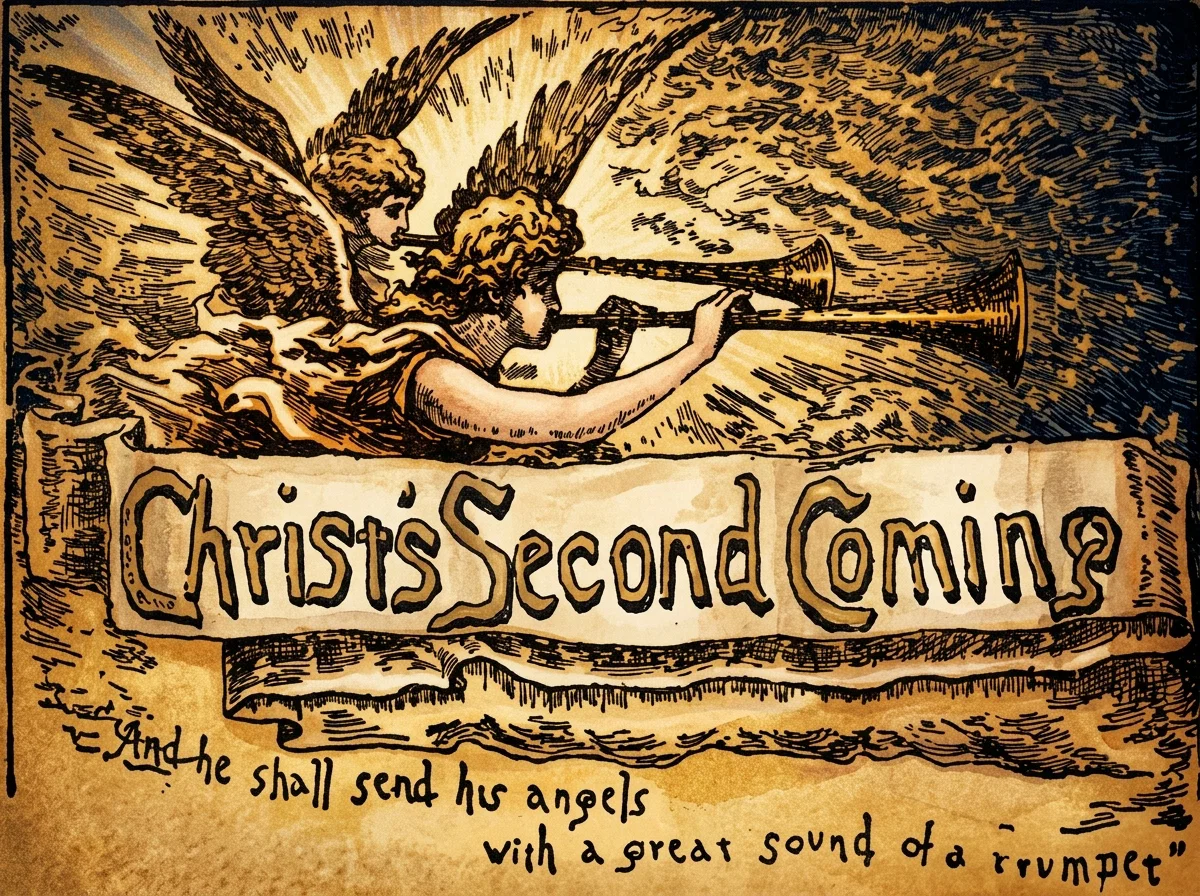
PUBLICATIONS ON THE SECOND ADVENT.
HIS GLORIOUS APPEARING. An illustrated commentary on Matthew 24, containing 96 pages and 20 full-page illustrations. It takes up Christ’s great prophecy of his own second coming, and the signs of the times are clearly pointed out in their relation to that event. This is an attractive and instructive booklet, and is especially valuable at this time. Bound in boards with cover design in colors, 25 cents. Bound in fine English cloth, lemon edges, 40 cents.
HELPS TO BIBLE STUDY. Sixth edition. Contains readings on the following subjects: Home of the Saved, Second Coming of Christ, The Sanctuary, The Judgment, Seal of God, Third Angel’s Message, State of the Dead, The Two Laws, Second Advent, and Binding of Satan, etc., etc. These readings are what the title indicates, “Helps to Bible Study,” and will be found especially valuable for the Bible worker and family. Bound in fine cloth at 50 cents; same contents in pamphlet form, 25 cents.
SURE WORD OF PROPHECY. A consideration of the important prophecies of the book of Daniel, the last chapter of which brings us to the “time of the end,” just previous to Christ’s second coming. 96 pages, paper covers. Bible Students’ Library No. 131. Price, 10 cents.
SUN OF RIGHTEOUSNESS. A brief résumé of the advents of Christ and the prophecies which cluster around these events. Two diagrams assist in the study. 80 pages, paper covers. Bible Students’ Library No. 97. Price, 10 cents.
CHRIST OUR ADVOCATE. Showing the work that Christ accomplishes in the sanctuary in heaven, before his second coming. 112 pages, paper covers. Bible Students’ Library No. 128. Price, 10 cents.
MATTHEW 24, OR THE SECOND COMING OF CHRIST. An exposition of the twenty-fourth chapter of Matthew’s Gospel. 96 pages, paper covers. Bible Students’ Library No. 58. Price, 10 cents.
THE SECOND ADVENT. By Elder James White. This tract very clearly points out the nearness of Christ’s second coming, and proves conclusively that this coming will be a literal coming, known by all, and not a spiritual coming to those in the “secret chambers.” Bible Students’ Library No. 31. Price, 4 cents.
MANNER OF CHRIST’S COMING. By M. C. Wilcox. This gives the original Greek of such words and terms as refer to the different “comings” of Christ, proves conclusively that the second coming of Christ will be personal and visible, and shows the harmony of Scripture teaching on this important subject. It is an excellent number to place in the hands of professional men and persons of education and culture. Bible Students’ Library No. 124. Price, 2 cents. Send for complete catalogue with description, and price list of other publications on this and kindred topics.
THE JUDGMENT: ITS EVENTS AND THEIR ORDER. By J. N. Andrews. This pamphlet gives in six comprehensive chapters, The Investigative Judgment, Examination of the Books, God the Father the Judge, Offices of Christ, Messages to the World, The Sanctuary in Heaven, The Crowning of Christ, The Executive Judgment by Christ, The Saints Sitting in Judgment. The value of this work can be appreciated only by him who has read it. 134 pages, paper covers. Bible Students’ Library No. 55. Price, 15 cents.