LETTY was out under the big elm tree watching the kitten playing with the autumn leaves that were on the ground.
Suddenly something struck Letty on the shoulder. She looked around quickly, thinking that somebody had thrown a stone at her. No one was in sight, though she looked all about, and even up in the tree. Then she noticed that the kitten was rolling something with its paws. She stooped, and picked up what looked like a little bunch of elm leaves. She thought it strange that they should be stuck together; and when she found that the bunch was quite heavy, she was still more surprised.
She carried it into the house to show to her mother. “What is it?” she asked. “It came down off the tree, and hit me on my shoulder. Is there a stone inside it?”
“No,” said her mother; “it is a chrysalis. Some worm that lived on the elm tree drew these leaves together, and spun a little case inside; and when the leaves were ready to fall, the chrysalis came down with them.”
“What kind of worm do you suppose it was?”
“I do not know, but it must have been a large one, or the chrysalis would not be so heavy. We will keep it, and in the spring, when the worm has turned into a butterfly and comes out of the case, perhaps we can learn what its name is.”
“But how will it get out?” asked Letty, anxiously. “It is so hard and tough. I tried to pull off one of the leaves, and it stuck on tight.”
“Yes,” said her mother, “it is very tough, and you could not tear it open with your fingers, even if you tried very hard. But the butterfly throws out some kind of fluid that softens the silk,—for it is a kind of silk, you know,—and makes a hole large enough to crawl through. It does not have to be very big, as the butterfly’s wings are soft and wet. It has to let them dry, and grow strong and stiff before it can fly.”
The chrysalis was put in a safe place, and Letty forgot all about it for many months, which was not strange when there were so many things for her to do all through the winter and early spring.
But her mother did not forget; and one day in June she called Letty in from her play, telling her that she had something to show her.
“Do you remember the elm chrysalis?” she asked, as she put it in Letty’s hand.
“Why, how light it is!” she cried. “The butterfly has come out! Where is it?”
Her mother led the way to the plant-stand. “See, on that begonia,” she said.
“Oh, oh!” cried Letty, “what a beautiful butterfly!”
It was very large, nearly five inches across when its wings were spread. It was dull-yellow, with darker shadings, a little red in waving lines, and a gray stripe along the front edge of its outer wings. It was quite furry, especially the large yellow body. Each of the four wings had a transparent eye-spot, and the under-wings had a good deal of black about these little round windows, as Letty called them.126
“And mama, see! It has beautiful little dark-blue eyes.”
“Yes, it has, but I did not notice them before.”
“Well, what kind of butterfly is it?”
“It is not a butterfly at all.”
“Not a butterfly?” said Letty, surprised.
“No; it is a moth. Have you noticed its antennae—the horns on the front of its head?”
“They look like feathers,” said Letty; “no, like ferns.”
“So they do,” said her mother. “Well, that is how we know it is not a butterfly; for they have thread-like antennae, with a little knob on the end. Moths fly by night, and that is probably why this one stays so still now.”
“I wish I knew its name,” said Letty.
“If you will take my card and run over to the public library, and ask the librarian to give you a book that tells about moths and butterflies, we will find out.”
Letty came back in a little while with the book, and her mother began to look in it.
“Oh,” she said, pretty soon, “our moth has such a long name that I am afraid you can’t remember it. It is Telea polyphemus.”
“I’ll call it Polly for short,” said Letty.
When they had learned all they could about the moth, Letty asked what they should do with it.
“This book says it does no very great harm,” said her mother, “and it is so beautiful that I think we will let it have its liberty.”
So the Telea polyphemus was carried out, and placed on a tree trunk, where it stayed all the rest of the day. But the next morning when Letty went to look for it, it was gone.—Susan Brown Robbins.
WHAT CAN WE DO FOR OUR BROTHERS AND SISTERS IN JAPAN?
By Laura De Lany Garst
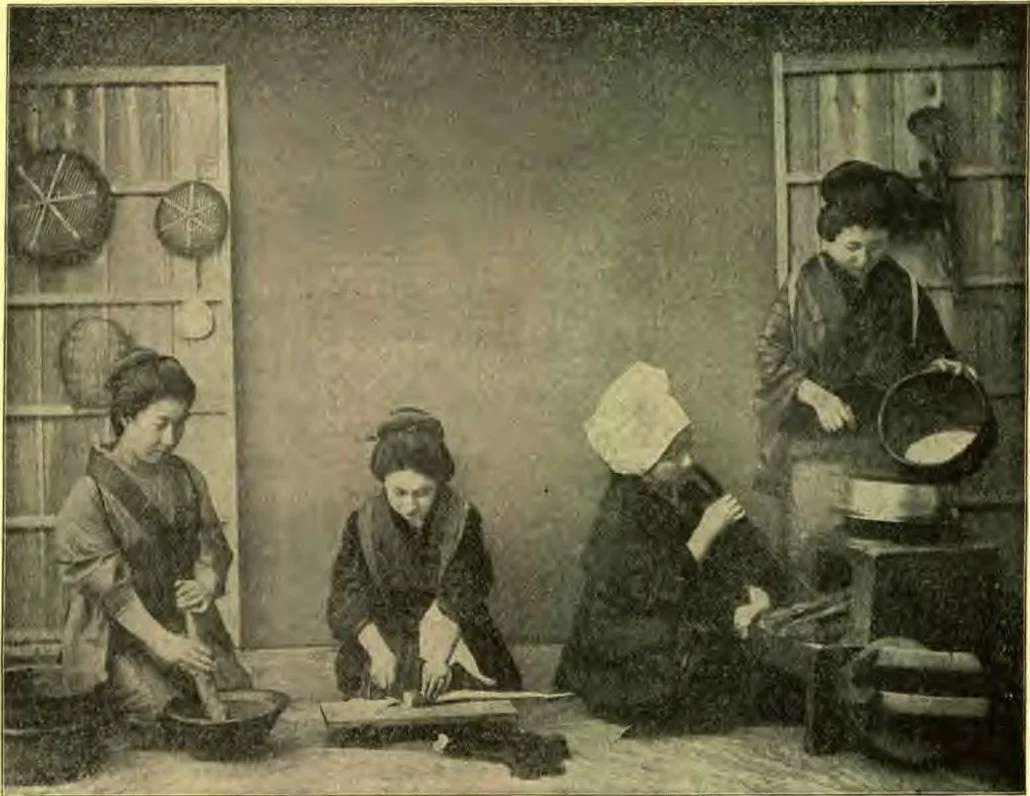
It might seem from this that the little people in Japan have just as comfortable and happy a time as the little people in the United States. Of course, in Japan, as elsewhere, there are all sorts. Some homes are real homes, but as we understand the term, there are very, very few homes in that country. The Japanese language has no word for home. The mothers do not know nearly so much about caring for their children as do most mothers in this land. The mothers are not loved and honored by the fathers as in this land.
There are more than thirty-eight million “common people” in Japan, many of whom are extremely poor. Many families have not more than five dollars of our money to live on a month—the whole family,—and some have not that much. Their food is not nourishing and wholesome. It consists mainly of rice, which is poorly cooked, and not usually well masticated. Salty pickles, cucumbers, egg plant, etc., including a monstrous radish called dai-kon, peculiar to Japan, are eaten with the rice. The better grades of fish are too expensive for the masses to use commonly. The poorer grades do not appear very appetizing.
The dish most commonly prepared for the sick is the gruel poured off the cooked rice. You get mother to put extra water on the rice some day, and before taking up the rice, pour this off. Don’t put any salt in it, but drink it, and imagine yourself with little else to eat during days of illness, and then decide how the lot of the sick little Japanese brother or sister compares with yours.
The public schools in Japan, which are government schools, are said to be “free,” but in fact a small tuition is charged. It is not more than fifteen cents a month, probably, but that is impossible in a good-sized family where the income is so small as I have indicated. So thousands of children do not go to school. To have these children playing in the streets, and often around the idols in the temple inclosures, is a sad thing. Many missionaries have felt this a great burden on their hearts, and about two hundred charity schools have been established. These are open sometimes only half a day, as the parents wish the children to work the rest of the time. There are night schools too for older ones who must work all day and can only have a little leisure in the evening for study. The Bible is taught in these schools. The children memorize a great deal of scripture—the ten commandments, the beatitudes, the sermon on the mount, and many other portions. Often the children go home and tell the parents what they have learned, and as a result many a father and mother has come to meetings and found the way to Jesus.
IN A JAPANESE KITCHEN
Here in the United States we have very many people to do Christian work in school and church, but in Japan the force is small as yet,—only one missionary to about one hundred thousand persons. The Japanese do a great deal, but they need much help. Especially in matters of home life and the training of children, they need the illustration of a Christian family. It is a very little way to help, too, but is worth while, to save your pretty scripture cards, get an address of a missionary or nature worker, and mail him a bundle tied up, not sealed, carefully weighed and stamped. And the children can specially guard against all that Jesus would not have them do by thinking they would like to set a good example for their far-away relatives. Some day you may go and help to teach them the way to God.
LAURA DE LANY GARST.
QUESTIONS AND ANSWERS
By W. S. Sadler
(Concluded)
8. How is it hurtful to read novels?
If we did not have the Bible, and if we did not possess an abundance of instructive literature on Biblical subjects, as well as upon biography and the natural and other sciences, there might be some excuse for spending our time in reading the books written wholly from the imagination, and largely by irreligious men and women. Such novels fascinate the mind without feeding it; they stimulate the emotions, but fail to strengthen the soul. They sometimes make one feel sympathetic, but at the same time they fail to impart that true and genuine sympathy which proceeds from the human heart when the love of God is shed abroad therein. Occasionally they lead the reader to weep, but the tears thus shed are not tears of gratitude to God for grace and mercy, neither are they shed from sorrow for sin. Novels lead their readers to indulge in the pernicious habit of building air-castles, but it may be seriously doubted if they supply aught with which character can be built.
The young man or woman who would acquire useful training for this life and build a character for the next, will do well to avoid spending spare moments in perusing fiction, and turn to the word of God, with its mighty principles, and the open book of nature, with its beautiful illustrations and inspiring lessons.
9. How can I control my appetite?
This is a question which has been asked a number of times. Originally, man was created with power to control himself and everything on the earth. His dominion over all things in this world was complete. Through sin, man has lost this power; and to-day he probably possesses less of it than at any other time in the history of the human race. It is very evident that to-day man does not possess the power to control his appetite. But through the plan of salvation, man does possess the power to choose the mind of Christ, which has power to control the human appetite. As Christ lived upon this earth two thousand years ago and brought human appetite under the perfect control of God, so he will live to-day in human flesh, and subdue and bring under control everything which the individual will submit to him. With us it is a question of will rather than of control. If we are willing, he will begin the work of controlling. See 2 Cor. 8:12. If you are not able to control your appetite, and find that it is controlling you, hand it over to One who is stronger than you, even to Christ, and then, just as long as you maintain a willing mind, he will continue to control your appetite. Of course we must remember that we are free beings, and that at any time if we should cease to will to have Christ control our appetites, at that moment the divine control would cease, and we should again find ourselves helpless victims to the clamorings of a perverted taste.
10. WHAT do you think of attending parties and other entertainments, composed mostly of worldly young people?
Occasionally there might be an opportunity to do good at some of these gatherings, but we think it would be an exceedingly dangerous practice to form the habit of attending such parties. The Christian youth should go only to such places where he can exert a positive influence for Christ; to influence, rather than to be influenced. As a rule, such gatherings afford very little opportunity for disseminating truth and shedding light; while they afford numerous occasions for compromising principle and hiding one’s light under a bushel. It would be an excellent plan for every Christian young person to keep himself so busy in health-giving and soul-inspiring work that the enemy will find little opportunity to tempt him to spend his time in such a manner. Idleness, with its pleasures and amusements, has proved to be the “little fox” that has destroyed more than one vine of a youthful Christian experience. W. S. SADLER.
1926 Wabash Ave., Chicago.
BEREAN LIBRARY STUDY
Revelation 19; “Thoughts on the Revelation,” pages 680–686
(April 21–27)
The Marriage of the Lamb.—Dan. 7:13, 14, speaks of the Saviour’s being brought in before the Father, and there being given him dominion, glory, and a kingdom. A kingdom consists of land, or territory; people, or subjects; and a headquarters, or capital city. The kingdom of God is no exception to this. The earth is the territory, the redeemed are the subjects, and the heavenly Jerusalem is the capital. When the investigative judgment closes, the number of the redeemed is made up: it has been decided who will be the subjects. The Lamb’s book of life contains only the names of loyal subjects of the kingdom. Then the Saviour comes before the Father, and the marriage takes place. Christ is presented with the Holy Jerusalem as the bride, the Lamb’s wife (Rev. 21:9, 10), the capital of the kingdom. The subjects, in person, are still in the land of the enemy. Many are held in the prison-house of the grave, but as Christ has espoused them unto himself, he is their lawful husband (2 Cor. 11:2); and he has the keys of hell and the grave, and will loose them and take them to himself. He has a perfect right to take possession, for the land is married to him.Isa. 62:4. He is spoken of as being married to both the land and the subjects, and the city is also called the bride. So the marriage is the taking of full power over all three—land, subjects, and city. This is given Christ at the marriage of the Lamb in the heavenly sanctuary at the close of probation. He then comes “from the wedding” to gather his people. Luke 12:35–37; 19:15. He will set the kingdom in order, and make it a fit dwelling place for the redeemed. Matt. 13:41.
The Marriage Supper.—“Blessed are they which are called unto the marriage supper of the Lamb.” When the Lord returns from the wedding, he clothes his people with immortality, purifies the earth and covers it again with robes of Eden beauty, and establishes the glorious city forever. Then the work is complete. At that time the table is spread, and the Saviour calls, “Come, my people, you have come out of great tribulation, and done my will; suffered for me; come in to supper, for I will gird myself, and serve you.” The table of pure silver many miles in length will be laden with the luscious fruits of the new earth.
Armies of Heaven.—God is a God of order; the angels are marshaled under leaders, and all submit themselves to the great Commander. Satan, who once occupied a commanding position in heaven, is well acquainted with the order of heaven, and has tried to counterfeit it in the perfect discipline and order in the armies of earth. But earthly armies are drilled to kill and destroy, while God’s armies are disciplined to work in harmony for the good of the universe, and to praise and glorify him.
The Beast and the False Prophet.—These two powers, representing the European powers, or the divisions of the old Roman nation; and the false prophet, or the United States, go alive into the127lake of fire. They are the leading powers, under whom the whole earth will be marshaled when Christ comes.
The Supper of the Great God.—What a contrast between this and the marriage supper of the Lamb! Every one living when Christ comes will take part in either one or the other of these suppers. They will partake of the marriage supper, or else they will form food for the fowls of the air in the supper of the great God. Where will you be? Which supper will you take part in?
IN THE VORTEX
A FEW evenings ago, after my chores were done, I strolled down to the bridge which spans a small creek a short distance from my home. I found the creek greatly swollen by the recent melting of the snow; and as I stood gazing listlessly into the dark water, I noticed a log reaching out into the stream, and in front of this log was a little vortex, or whirlpool, in which was floating a bit of foam. It kept sailing around the vortex, and appeared to be trying to get over a small obstruction and escape, but the vortex always sucked it back. I also noticed that it nearly always brought back more particles of foam.
As I looked at it, I thought that it resembled life. The vortex represented wrong; the foam, the life of a person who knows he is wrong, but lacks strength to turn from his evil ways, and nearly always leads another into the path of wrong.
Are we like the bit of foam? Are we in the wrong, and too weak to get away? If we are not, let us remember that there are others who are, and let us do everything we can to help them.
Goethe on Shaping a Noble Life
By Goethe
Wouldst shape a noble life? Then cast
No backward glances toward the past;
And though somewhat be lost and gone,
Yet do thou act as one new-born;
What each day needs that shalt thou ask;
Each day will set its proper task.
— Goethe.
IF SO WHY NOT BUY
Is $65 Worth Saving?
IF SO WHY NOT BUY
“THE CHICAGO” for $35.00
“The Chicago Typewriter” is a mechanical triumph, a rare combination of highest quality with lowest price. Visible writing, standard keyboard, interchangeable steel type. A marvel of simplicity, compactness and durability. Performs the best services for the longest time at the least expense.
GOLD MEDAL awarded to “CHICAGO” at PARIS Exposition in open competition with all Typewriters.
If desired, we can also furnish with “The Chicago” a complete course of the popular Gregg shorthand taught by mail for $5 additional.
WRITE US FOR FULL INFORMATION.
Chicago Writing Machine Co., Dept. L, 94-96 WENDELL ST., CHICAGO, U. S. A.
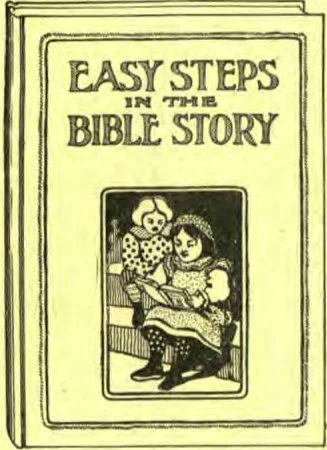
Easy Steps in the Bible Story
By Adelaide Bee Cooper
By Adelaide Bee Cooper, Editor of the Youth’s Instructor
Introduction by Elder S. N. Haskell,
Contains the Bible stories from Creation to the Giving of the Law. It is the first of a series of books for children, to cover the entire Bible narrative. The second Book of the series is now in preparation.
The early Bible stories never lose their beauty, freshness, and charm. They bring new inspiration to those advanced in years, and are read with pleasure and eager delight by youth and children. The principles revealed in the lives of the early Bible characters will, if instilled into the minds of the young, make an indelible impression for good, that neither time nor later associations can erase. Mothers, read them to your children.
WILL BEAR READING MORE THAN ONCE
That best of all Bible books for children—“Easy Steps in the Bible Story”—gains the unqualified approval of the children themselves; and that is the best possible testimony in its favor. They are glad to read it more than once. And the book will bear reading more than once; that is its strength. —Elder A. T. Jones, in Review and Herald, Jan. 8, 1901.
OAKLAND, CAL., Jan. 17, 1901.
REVIEW AND HERALD PUB. CO.,
BATTLE CREEK, MICH.
Gentlemen: I am pleased with the author’s success in briefly touching the salient points in the long period covered by “Easy Steps in the Bible Story,” and connecting them in such a way as to lead the minds of the little folks along with increasing interest. I hope thousands of children will be provided with this book.
ELDER A. G. DANIELLS.
The book contains 160 pages, table of contents, and list of illustrations. Our artist has prepared 150 beautiful pen-drawings, illustrating the text of the book. It also contains many full-page illustrations. Beautiful cover design. Two styles of binding.
PAPER COVERS, — 25 CENTS
CLOTH, — 50 CENTS
Order of your Tract Society; the
Review and Herald Pub. Co., Battle Creek, Mich., or the Pacific Press Pub. Co., Oakland, Cal.
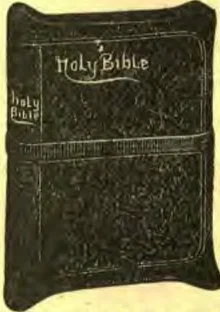
SELF-PRONOUNCING S.S. Teachers’ Reference Bible
By Editor
Contains the Celebrated Teachers’ Helps,
Comprising nearly 400 pages. Also a complete series of fifteen new maps.
DESCRIPTION
IMPERIAL SEAL BINDING, TUCK EDGES, known as “DIVINITY CIRCUIT,” ROUNDED CORNERS, FULL RED UNDER GILT EDGES.
We offer this Bible, postpaid, for only six new yearly subscriptions at 75 cents; or twelve new six months’ subscriptions at 40 cents.
We will also send it, postpaid, with the INSTRUCTOR one year for $2.25. For 20 cents extra we will stamp your name in gold upon the cover. Address—
1. WHAT is the sanctuary called in which Jesus, our high priest, is serving? Heb. 8: 2.
2. There was once a sanctuary on earth. By what name is it called? Heb. 9: 1.
3. Why did the Lord desire the worldly sanctuary built? Ex. 25: 8; note 1.
4. When they built the sanctuary on earth, what pattern did they have to follow? Ex. 25: 9, 40.
5. When the Lord was in that sanctuary, he dwelt “among” the people. In what other way did he desire to dwell with them? Isa. 57: 15.
6. To whom is he looking for a place to dwell? Isa. 66: 1, 2; note 2.
7. What is God’s temple on earth now? 2 Cor. 6: 16.
8. What kind of temple is this said to be? 1 Peter 2: 5.
9. In building this temple, what pattern is to be followed? 1 Peter 2: 21, 22; note 3.
10. In order to understand what the pattern really is, what must we do? Heb. 12: 2; note 4.
11. How did the Lord desire the offerings for the earthly sanctuary to be given? Ex. 25: 1, 2.
12. What lesson is there in this for us? Rev. 3: 20; note 5.
NOTES
1. God loves his people with the tender love of a mother. And just as a parent desires to be with the children, so the Lord desired to be with his people. He had just brought them up out of Egypt, out of bondage, out of darkness and idolatry. He saw that they had almost lost the knowledge of their Heavenly Father, and he wanted to teach them; and in order to teach them of his holiness and goodness, he wanted a place in which he could meet with them. But what he did for them was also done for us; for the sanctuary and all its services were pictures which he desires us to look at, that we may know all about the sanctuary in heaven, and how we may be saved.
2. The Lord would find no joy at all in dwelling among his people if he could not dwell in them. It is the heart that he desires. He dwelt with them that he might get the doors of their hearts open, and make them glad and willing to invite him in. But when the time came that the people of Israel thought more of the building than they did of the One who dwelt in it, the Lord said he would no longer do as he had done, but that he would look for a resting-place in the heart of him who was poor and needy. The only place that our Heavenly Father prizes is a place in the heart of each one of his children. Will you disappoint him? O dear young friend, open your heart, and let him in. If you will do so, you may be sure that he will be faithful, and not one stain of sin will be left uncleaned to keep you from dwelling with him in heaven. Remember what he wants: he wants now to dwell in you, and take out all the sin, that he may take you out of this sinful world to dwell forever with him.
3. The Lord told Moses to follow the pattern shown him in the mount. The pattern shown him was the sanctuary in heaven. The sanctuary on earth was to be just like the one in heaven. So it is to-day. Each one of us is to build a character sanctuary, and it must be like the pattern, Christ Jesus.
4. We must daily study the pattern. The life of Jesus, the example he set for us to follow, is of no value unless we carefully look at it, study all the little points, and then seek to imitate them. God’s word is to be our constant guide.
5. The Lord desired only willing offerings. He can not dwell in any temple that is not gladly turned over to him. He can not come into our hearts until the door is opened, and the door is not opened until we will it to be open. When we will to open the door, and give Jesus free and full possession, then he comes in and abides with us.
Lady Agents Wanted for Household Sales
By W. S. Dann
LADY agents wanted. I have the best line on earth. Sells in every house. If you give good references, credit given. W. S. Dann, 1509 Burt St., Omaha, Neb.
GRAND TRUNK R'Y. SYSTEM.
By W. C. Cunliffe
Taking Effect Dec. 16, 1900.
Trains leave Battle Creek.
WEST-BOUND.
No. 9, Mail and Express, to Chicago. 12.15 P. M.
No. 1, Chicago Express, to Chicago. 8.30 A. M.
No. 3, Lehigh Valley Express, to Chicago. 5.30 P. M.
No. 5, International Express. 2.17 A. M.
No. 75, Mixed, to South Bend. 8.30 A. M.
Nos. 9 and 75, daily, except Sunday.
Nos. 1, 3, and 5, daily.
EAST-BOUND.
No. 8, Mail and Express, East and Detroit. 3.45 P. M.
No. 4, Lehigh Express, East and Canada. 8.22 P. M.
No. 6, Atlantic Express, East and Detroit. 2.10 A. M.
No. 2, Express, East and Detroit. 6.50 A. M.
No. 74, Mixed starts from Nichols yard. 7.15 A. M.
Nos. 8 and 74, daily, except Sunday.
Nos. 4, 6 and 2, daily.
W. C. CUNLIFFE, Agent,
BATTLE CREEK.
PROPER SELF-RESPECT
By M. A. S.
THERE are some who feel that all regard for self is wrong, but a little reasoning will show you that this can not be.
Man was made in the image of God. He was endowed with noble faculties, with the possibility of the highest attainments. And although sin has marred and bruised the form and nature of man, he still retains to a degree the image of God, and should he not be respected for that? Yes, you say, but it must be toward others, not ourselves, that we should show respect. Listen:—
“It is not pleasing to God that you should demerit yourself. You should cultivate self-respect by living so that you will be approved by your own conscience and before man and angels.” “As sons and daughters of God, we should have a conscious dignity of character, in which pride and self-importance have no part.”—Mrs. E. G. White.
Self-respect is not pride nor self-indulgence; it is that kind of regard for one's self that leads him to keep his body in the best condition health-wise,— to give it the best food and drink, to keep it clean and well-clothed,— that he may be as perfect a representative of the Father as possible. It does not lead him, like the poor heathen, to abuse his body or clothe it in filth and rags.
Self-respect leads one to be kind and courteous to all. Do you know that a true gentleman is courteous to his inferiors, and even to animals? Discourtesy shows your own character, not the character of the one to whom you are discourteous.
Self-respect leads one to have a true appreciation of his own God-given powers, not to overestimate them, but to see them as they are, and make the most of the talents given him. Listen to the same writer again:—
“If you form too high an opinion of yourself, you will plead individual independence, which borders on arrogance. If you go to the other extreme, you will feel inferior, and leave an impression of inferiority which will greatly limit your influence for good.”
Self-respect leads one to keep his mental faculties keen and sharp, so that they can quickly discern the difference between truth and error, and can understand the deep truths of God’s word.
Self-respect leads one to cultivate his moral and spiritual nature so that it may in the fullest sense reflect the character of Christ.
All this is included in the term self-respect. We are under obligations to God to make of ourselves, with his help, the most noble, manly, self-reliant, intelligent beings that it is possible to be; and he has put within us the power to do this. Man is not a puppet, to be ordered about and turned and twisted as any other human being may direct. He is a son of God, with that one spark of divinity—the will—in him, which raises him at once from the lower scale of being in which the beasts belong, to the highest of all intelligences.
Then let us bear in mind that while humility is the crowning grace of the Christian, servility has no place in his life. Christ was meek and lowly of heart, but there was dignity and self-respect in his bearing. He was not servile.
We may respect ourselves for our likeness to God; for the talents he has placed in us to be improved; for the intelligence that he has given us; for the character that may be ours through the working of the Holy Spirit in us. Would you not respect these things in others? Then respect them in yourself, but never, never let them make you proud or boastful or arrogant.