The Youth’s Instructor, Vol. 47, No. 47.

THE RIVER THAMES

The Youth’s Instructor

Nov 30, 1899

Review and Herald Publishing Company · Battle Creek, Mich. · Nov 30, 1899

THE RIVER THAMES
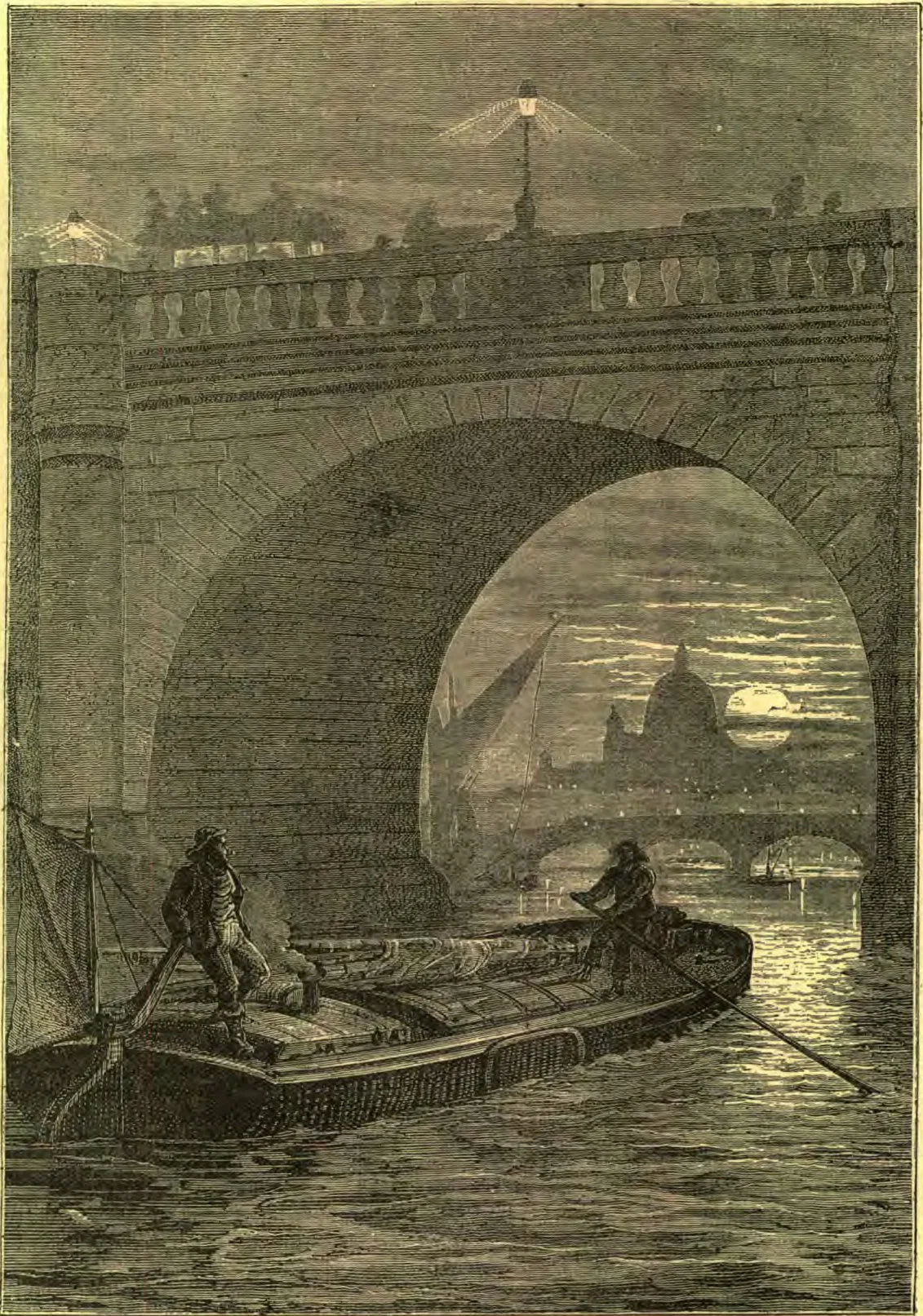
A SCENE ON THE THAMES.
The most important river in Great Britain is the Thames, on which is situated London, the nation's capital and the world's metropolis. The total length of this river, from Thames Head to London Bridge, is one hundred and seventy miles, and to Sherness, at its mouth, two hundred and twenty-eight miles. Because of its comparatively level course, its source being only three hundred and seventy feet above the level of the sea, it is navigable almost its entire length.
At Lechlade, twenty-four miles from its source and two hundred and fifty feet above the sea, navigation may properly be said to begin. From this place to Teddington, nineteen miles from London Bridge, this commercial use of the river is carried on by means of locks. Of these there are thirty-two below Oxford. The length of the locks is about one hundred and thirty feet, and a vessel of sixteen feet beam can pass through them as far up the stream as Oxford, to which place a small steamer also runs. There are many excellent opportunities for boating along the river, and both sail- and row-boats are numerous. With some friends the writer enjoyed a pleasant hour's recreation in this way while visiting at Reading, about halfway between Oxford and London.
The action of the tides is seen in the last fifty miles of the river. From its mouth to London, the tide travels in about two hours, reaching Teddington in two hours more. At London the depth of the river at high tide is thirty feet, but at low tide it is only twelve feet, with a corresponding decrease in width. This is at London Bridge; but below that point the depth and width increase rapidly. Deep-sea steamer navigation begins but a little below, while vessels of any size come as high as Deptford.
From London to the sea, traffic on the river is great. One does not notice the crowding so much a few miles below the city, where the width allows plenty of room for navigation; but as the narrower part is approached, in coming up the river, it seems almost impossible to get through the floating babel. We came up the river on a large excursion steamer, and darkness began to settle on us before we reached the city. For several miles we ran at half speed; and as we entered this conglomerate mass, the speed was still further reduced, till we moved no faster than a walk. As it grew still darker, a sailor was stationed at the bow of the boat, to keep a sharp lookout. He continually called out the condition of the course, and his words were repeated by an under officer stationed at the front of the higher deck. This officer could be heard by the captain on the bridge, still higher. Many heavily loaded barges were floating down with the tide. These were especially difficult to avoid, because, not having power of their own, they could not be controlled like a boat that can be quickly reversed, or whose speed can be varied. Just as we passed several large boats, which shut off our view for a few minutes, the man in front called out that a barge was headed directly for the ship's bow. As our boat was at this point close to the river's bank on our right, and the barge was coming down upon us at an angle from the other side, it seemed almost impossible to avoid a serious collision. After the facts were made known to the captain, and he could himself see the boat, not a word was spoken; but all concerned at once did their part to avoid the difficulty. The engineers were signaled to stop; the steamer was turned as far as possible away from the coming barge; and several sailors threw the ends of large ropes over the side of the boat, at the place where it was seen that the barge must strike. The barge, too, was turned somewhat down stream; and as she struck, the ropes relieved the blow so that no damage was done, only a dull thud being felt and heard as the smaller boat was turned aside, and passed by. When the danger was passed, our captain called out to the skipper of the barge, “What do you want—a damage?” The question implied that the careless skipper had allowed his boat to get in the way of the large steamer, hoping to be run down, and thus open the way for collecting damages, which he doubtless would try to prove were much more serious than they really were. The steamer would of course be held more responsible than the unwieldy barge.
As we approached the Tower Bridge, the smoke-stack of the steamer was lowered by sliding the top part into the bottom, something as a telescope is closed. The tide being so high that there was still danger of its striking, the whole pipe was turned backward, and we then noticed for the first time that it was arranged with hinges for this purpose. We afterward noticed that all the smaller steamers that run up the river have the same arrangement for passing under bridges.
Tower Bridge, the one farthest down the river, was opened in 1894, it being found necessary to relieve the immense traffic on London Bridge, a little farther up. As sailing boats with high masts have the right of unrestricted navigation as far up as the old London Bridge, it was found necessary, when Tower Bridge was built, to make it movable, so that these boats could pass it, although they could gain only a short distance farther up the river by so doing. This requirement was accomplished by building the center span in two sections, which just meet at the middle when down level. These are so arranged that they can be raised to an almost perpendicular position, thus allowing boats to pass between them. The number of boats making this opening necessary, however, is comparatively small. In one month, July, 1895, the bridge was opened only ninety-four times, or an average of three times a day. London Bridge is built of stone, and is of course stationary, as are all the other bridges above it.
Our illustration shows a barge passing under Waterloo Bridge, which crosses the river from the great Waterloo Station of the London and Southwestern Railway to Victoria Embankment and the Strand. Farther down, Blackfriars Bridge can be seen; and a little farther to the left are the huge outlines of St. Paul's Cathedral, with the rising moon just behind it. There are ten bridges crossing the Thames in London, besides three tunnels,—two for railways, and one, now almost abandoned, for foot-passengers. Notwithstanding all these means of passing from one side of the river to the other, some of the bridges are crowded with an almost continuous line of vehicles during the day.
It can not now be told who first sailed up the Thames. Much of the local history of the river and its surroundings is lost in antiquity, English literature not dating back far enough to preserve a record of events that would be very interesting to us in this age. But we are told that Julius Cæsar visited London fifty years before the time of Christ; and since his time the stream has always been one of the greatest highways of humanity, constantly increasing in importance.
H. E. SIMKIN.

BEREAN LIBRARY STUDY

(December 3-9)
The regular Outline of these studies is published in the Review and Herald and also in the Missionary Magazine. What is here given is only supplementary, and should be studied in connection with the Outline.

NOTES ON LESSON 1

1. What We Are Studying.—The Bible is the real basis of the study of present truth, and “Thoughts on Daniel” has been chosen only as a text-book to aid in the study. In this book are brought together, in convenient form, the historical statements that show the fulfilment of the prophecies of Daniel. In studying the first lesson, read Dan. 1: 1-21, the “Introduction” and Chapter I in “Thoughts on Daniel;” then fix in mind the points in the Outline.
2. Sketch of Daniel.—But little is known of Daniel’s boyhood, but it is probable that he descended from the royal family of David. When a youth, he was carried captive by Nebuchadnezzar from Judea to Babylon. He, with three companions, was chosen to reside at the court of the king, where he found favor with those in authority. After completing the course of education there given him, he received honorable appointment in the royal service. Under the reign of Belshazzar, he was proclaimed the “third ruler in the kingdom;” and later, when Darius the Mede took the kingdom, Daniel was made the first president of his one hundred and twenty princes. But above all other honors was that bestowed upon him by the God whom he served, in admitting him to a knowledge of the counsels of heaven. His prophecies not only related to the affairs of that time, but reached through the future centuries, giving an accurate history of the world from that time until the end. That he wrote the entire book which bears his name, there is little reason to doubt. His character is one of the most spotless upon record. In youth and in age he was alike devoted to God. He maintained his integrity under the most trying circumstances, confessing the name of God before heathen princes. He would have died a martyr’s death in the lions’ den, but for the miracle wrought in his behalf. He is supposed to have died in Persia, not having returned to Jerusalem at the time his people were released from captivity, his advanced age being the probable reason. For additional facts concerning Daniel’s life, read the introductory chapter of “Thoughts on Daniel,” and his biography as given in any Bible dictionary, or in the summary of the books of the Bible, which is found in most Bibles containing “Helps.”
3. Accuracy in Dates.—Study the mention of dates in Dan. 1: 1 and Jer. 25: 1, reading in connection the first paragraph on page 25 of “Thoughts on Daniel.” Those who read the Bible carelessly often stumble over an apparent discrepancy; but the careful student discovers the true harmony and accuracy that exists.
4. A Prophecy Fulfilled.—It is written in Eze. 12: 13 concerning the “prince in Jerusalem,” that when the city should be taken, and the inhabitants thereof removed into captivity, he should be brought to Babylon, to the land of the Chaldeans; “yet shall he not see it, though he shall die there.” History records the exact fulfilment of this prophecy. After enduring a two-years’ siege of Jerusalem, the king attempted an escape, but failed. He was captured by the Chaldeans, and his sons were slain. His eyes were put out, and he was then taken to Babylon, where he died in captivity.
5. The Youth of Israel.—The question will most likely come to every mind, Why were not native Babylonians selected for the positions filled by Daniel and his companions? This was not a mere caprice of the king. The qualifications are thus stated: They must be young men “in whom was no blemish, but well favored, and skilful in all wisdom, and cunning in knowledge, and understanding science, and such as had ability.” Nebuchadnezzar must have had evidence that the Chaldean youth could not compete successfully with those of Israel in the qualifications desired, else such a choice would not have been made. Integrity to God, and a strict adherence to his plans in the matter of education, manner of living, etc., will do for our young people to-day what it did for those in olden time,—make them the best and wisest young people in all the world.
6. Daniel and Joseph.—An interesting study is the comparison of the lives of Daniel and that other faithful boy, Joseph. Read the life of Joseph, in Genesis, from the thirty-eighth to the forty-first chapters, noting the similarity to the life of Daniel in events and character.
7. What Is It to Us?—A Bible study is profitable to us only when we can recognize our own relation to the truths we are learning. If we consider the life of Daniel simply as a record that concerns us in no way, we are not personally benefited by the study. Let us remember that there is no experience that came to him but what might be ours; no promise made to him but what we can claim; no deliverance that was his but what is possible to us; no power given him to do right but what is freely offered to us. In studying his life, we are only considering the possibilities of our own. In fact, we are now daily proving true or false to the principles involved in this study.

CHOICE INSTEAD OF NOTION

In the fulness of time God purposed to make a masterly stroke, to shed light on the pathway of a haughty king and a proud nation. In selecting the human agent who should be conspicuous in carrying out this divine purpose, he chose one whose actions in daily life were not controlled by whims, fancies, or notions, or even by the opinions of others, no matter from how influential a source they came; but he did select one who had a purpose clearly and decidedly settled in his heart, even upon such questions as those of eating and drinking.
Daniel appeared on the stage of action at a time when there was a crisis in the history of God’s chosen people. God is no respecter of persons; he always lets men reap the harvest of their respective sowings. Therefore if we can learn what Daniel sowed, and sow the same seed, we may be sure that we shall reap the same harvest. One important thing that we do know about his sowing is that he allowed God to give birth in his heart to an overmastering determination that he would avoid, at any cost, the king’s dainties and delicacies, and would co-operate with that divine power that was illuminating his mind, in eating only the simplest and most nutritious food. The word “pulse” has the same general meaning that is now conveyed by the words “seeds” and “grains.” Daniel well knew that as a loving mother seeks to stow away in her boy’s trunk, as he leaves the parental roof, the things most useful to him, so God has stored away an abundance of his strength in the foods represented by the simple bill of fare that he provided for his first children in the garden of Eden. He knew this diet was conducive to mental clearness, moral power, and physical strength.
The fact that when Daniel took his first examination, he knew ten times more than his teachers is clear evidence that he must have been taught from a higher source than his human instructors. The fact that he possessed giant moral power is well illustrated in that thrilling incident of his having to face without flinching the fierce, angry, hungry lions. We have a clue to his physical condition when a prejudiced judge was forced to admit that he and his associates were fairer and fatter than all the picked children whom the king had selected for himself on account of their superior qualifications.
Reader, would you not like to have Daniel’s experience repeated in your life? Does not the world sadly need just such object-lessons to-day? Be assured that God is anxiously waiting for some one to sow similar seed with the same determined resolution, and he will as certainly grant the same glorious harvest.
DAVID PAULSON.

THE FALLING LEAVES

LIGHTLY He blows, and at his breath they fall,— The perishing kindreds of the leaves; they drift, Spent flames of scarlet, gold aerial, Across the hollow year, noiseless and swift. Lightly he blows, and countless as the falling Of snow by night upon a solemn sea, The ages circle down beyond recalling, To strew the hollows of eternity. He sees them drifting through the spaces dim, And leaves and ages are as one to him.
—Independent.

“AS AN ENTERING WEDGE”

THAT is the exact expression used by the Spirit of God in telling us what the health reform principles would be. Here is the complete quotation: “We begin to comprehend better the light given years ago,—that health reform principles would be as an entering wedge to be followed by a religious influence.”
One of the most pleasant recollections of my childhood is the days spent in the woods of Indiana, watching my father split rails. An old-fashioned, zigzag rail-fence surrounded the farm, and each year a small supply of new rails was needed. The cutting of the trees was a work of thrilling interest, the climax being reached when the huge trunk began to sway unsteadily, ending in the crash and heavy thud accompanying its fall. Next the tree was sawed into proper lengths for rails; then it was a tree no longer—only “logs.”
But the cutting of the tree and the sawing of the logs were never so wonderful to me as the splitting of the rails. The logs were sometimes two feet and more in diameter. Several wedges were used,—a small iron one, and a number of wooden ones of varying sizes called “gluts.” Which one do you think was used first in making an opening into the log? Yes, the small iron one every time. The larger wooden ones never would have answered the purpose, although they were just as necessary when the time came to use them. It was my delightful task to hold the pointed edge of the iron wedge on the log, very near the end, while my father gave it a few taps to “set” it. Then strong and steady would the blows fall for a few minutes, and the fibers of wood would first crack and then break. When the opening was large enough, one of the gluts would be placed in the crevice; and when that was driven in, it was succeeded by a larger one; and so on until the log was split. To me it seemed the accomplishment of the almost impossible.
And health reform principles are to be “as an entering wedge to be followed by a religious influence.” They have been just that in numberless instances. Many people have been led to the light of present truth who never would have accepted it had not this entering wedge been properly used.
It seems very fitting that we can begin our Reading Circle studies with a lesson that involves these principles. The health reform practised by Daniel and his companions was the entering wedge in proclaiming the truth of God to the Babylonians. It was that which first set them apart as a peculiar people in the eyes of the officers of Nebuchadnezzar’s court. Let us each purpose in our heart, as did Daniel, that we will so live that the health reform principles, as taught by us, both in precept and by example, may prove to be an entering wedge into the hearts of others, to be followed by a religious influence.
MRS. L. FLORA PLUMMER.

The Field

December Study: Part I

(December 3-9)
1. The Basis of Study.—The study of the field and its needs will consist of one lesson each month, based upon the previous month’s issue of the Missionary Magazine. For convenience, the study will be divided into four parts. For Part I, read “My Early Experiences in Argentine,” “A Polyglot Field,” and “Pioneer Canvassing in South America,” pages 480, 489, and 493 of the Missionary Magazine for November. Additional reading this month, “Our South American Cousins,” by William Taylor. If you do not have access to this book, read the best work you can secure on the Neglected Continent, or Argentine, or Brazil.
2. The Neglected Continent.—South America, with a population of over thirty-five million, has at least thirty million who have never seen the word of God. Of those who have looked upon this wonderful book, only two million have had the privilege of hearing its message of salvation. May not this country well be called the “Neglected Continent”? Lying not far from our shores, related to us by commercial interests, in its political constitution a group of republics much like the United States, is it not especially the heritage of the Christian people of this country? In missionary effort this vast field has been largely overlooked. It presents a picture of destitution and spiritual need perhaps even greater than that of China. There are about four hundred missionaries of all denominations, of whom at least two hundred are native workers.
3. The Prevailing Religion.—Roman Catholicism of the darkest and most enslaving type holds sway in the more civilized parts of the continent. There is a marvelous difference between Roman Catholicism in the United States and England and Roman Catholicism as found in every republic of South America. The people are not allowed the word of God; and if it is found in their hands, it is taken away by the priests. They have no spiritual religion, the little that is found in this faith elsewhere having degenerated here to the grossest image-worship, not far removed from heathenism. Many of the people can neither read nor write. The priests concern themselves only with the performance of the outward rites of the church, leaving the people to interpret them as they may. Truly, here is a people for whose salvation we are responsible.
4. A Polyglot Field (page 489 Missionary Magazine).—It is said that South America offers more languages (four hundred) and more difficulties than either Africa or Asia. We are now laboring among the Scotch, English, French, Spaniards, Germans, and Portuguese, as well as the native Indians. The baptism of a number of Brazilians was reported last spring. To those who think of making South America their future field of labor, a missionary of long experience suggests that the study of Latin be made a specialty, as the Portuguese and Spanish languages are based upon it. If possible, study these languages also, as a knowledge of them will bring you in touch with the people.
5. A Touching Incident.—An agent of the American Bible Society reports one touching incident illustrating the readiness with which some who have never seen the Bible respond to its invitations. On one occasion where he held a gospel meeting for the first time, about one hundred persons knelt down, and confessed their sins to God. How many of these truly repented and believed in the Lord Jesus will be revealed when the work is completed; but to this worker it was not only a most beautiful sight, but an encouraging omen.
6. Beginning of the Third Angel’s Message in Argentine.—About two years before our pioneer canvassers went to Argentine, four men, all heads of families, were led to study the Sabbath question in their Sunday service. They soon learned that the seventh day is the Sabbath, and at once, with their families, began its observance. This occurred before they had received a line of literature on the subject. One of the canvassers who visited them about two years later wrote that it did his soul good to see the earnestness and devotion manifested by these people. They had then accumulated quite a sum of money for the promulgation of the message in their field.
7. Drinking Mate (page 481, Missionary Magazine).—Maté, or Paraguayan tea, is consumed in large quantities throughout South America. In Argentine alone the consumption amounts to thirty-seven million pounds a year, about thirteen pounds to each person. Although used by the Indians from time immemorial, the Jesuits were the first to undertake its cultivation. The name “maté” originally meant the calabash in which the tea was served, but has gradually come to signify the thing itself. The Gaucho of the plains will travel on horseback for weeks, asking no better fare than dried beef, washed down with copious drafts of maté. Maté has much the same effect upon the system as tea. In drinking it a metal or reed tube six or seven inches long is used. A bulb made of extremely fine basket-work, or of metal perforated with minute holes, to prevent the particles of tea leaves from being drawn up into the mouth, is fastened at one end of the tube. Persons who are fond of maté, drink it before each meal, consuming about one ounce of the leaves a day. This intemperance must be overcome by the third angel’s message.
8. First Convert in Argentine.—The first convert in Argentine was a young man who became a successful canvasser. After selling books for some time, he went to the sanitarium at Battle Creek, where he completed the nurses’ course. With his wife, he sailed last month for Argentine, where he will again engage in the work.
9. Young People as Missionaries.—Young friends, if you take hold of the work right where you are at the present time, doing what you can, be sure that you will have the help of Jesus. Begin the work by laboring for your companions. Ministers or church-members advanced in years can not have one half the influence over your young associates that you are capable of exerting. Those who have themselves tasted the sweets of redeeming love will not, can not, rest until all with whom they associate are made acquainted with the plan of salvation. The work of our foreign missions is to be extended; and if the converting power of God shall come to our youth, we shall see them pressing into the ranks of workers.—Spirit of Prophecy.

Daniel's Example Open to Every Believer

Not until it is impracticable to obey conscience, to practise self-denial, to bring and keep the body under subjection to the soul; not until it requires an uncommon order of endowments to stand firm as an anvil beneath the hammer, daring to abide in one’s place, holding fast to duty, and obedient to one’s honest judgment of right and wrong; not until God is the helper of an elect, aristocratic few, and afar off from the needy soul, and the prayer of the destitute is a mockery of his own helplessness, will the example of Daniel be beyond the imitation of every human being who has the will to follow it.—Pierson.

Accuracy and Thoroughness in Everyday Work

“ACCURACY in detail is the one thing lacking with many mechanics, as well as business men,” says the Scientific American. “They perform their tasks in a perfunctory way, and are satisfied with general results. Thoroughness is one of the greatest needs of this superficial age. Everything is done in a hurry, and every one seems possessed with the idea of covering the most ground in the shortest time. Work is estimated by its surface measurement, rather than by breadth and depth. The tendency is a mischievous one, and should be guarded against. The man who masters the details of his profession builds upon a foundation that will withstand the severest tests of time and circumstance.”

HYGIENE OF DIGESTION

Our eating and drinking are of sufficient importance in God’s mind to be mentioned in his word; and many times, too. Luke mentions “surfeiting and drunkenness” as a danger especially to be avoided in the time of the second coming of Christ. “Surfeiting” is overeating; excess in eating and drinking; gluttony. The study of physiology, the nature of our physical condition, and the laws that govern our being, make clear why God warns us against this evil, which, we are told, “is the sin of the age.” God says that overeating is to be guarded against. Why?—Lest “that day come upon you unawares.” What day?—The day when the destiny of every soul will be decided forever. “What!” you say, “has my eating to do with the day of judgment? Let us see (I quote from “Healthful Living”): “If we overeat, the brain power is taxed to take care of a large quantity of food that the system does not demand, the mind is clouded, and the perceptions are enfeebled. Feebleness results because the vital powers are exhausted in throwing off the excess of food. Overeating of even the simplest food benumbs the sensitive nerves of the brain; it has a worse effect upon the system than overworking. The energies of the soul are more effectually prostrated by intemperate eating than by intemperate working.” These words are worth heeding.
It may not at first seem possible that our food affects our minds; but when we study the relation that the stomach sustains to the brain, we see light on the subject. The brain being “clouded,” the mental and moral faculties are stunted and half-conscious; and our actions are therefore what we regret in more sober moments. The bondage of appetite is a fearful one, and, if not controlled and overcome, it will result in eternal oblivion.
In nearly every home there are those who are in the habit of constantly nibbling at fruit, nuts, cake, or candies; some even carry these dainties to school to eat. This is a pernicious habit, and children should be earnest in conquering it. “Not a morsel should pass the lips between meals.” Eat what is “sufficient for strength” at your regular meal-time, allowing at least five hours between meals, and six if it seems advisable. School-children, while growing fast, may need three meals a day. If so, the supper should be light and simple. Avoid hasty eating. Take time to chew the food thoroughly, remembering that starchy foods are digested only in the saliva and the intestinal juices. Cold drinks at meals are unsafe, because by their use the stomach and peptic glands are chilled, and their action is thus retarded. It is better not to take fluid during meals; but if one is in good health, a little warm drink, taken in sips occasionally, may not be harmful. Select such food as is nutritious, and be satisfied with three or four kinds. Too much variety is undesirable. Chemicals in foods are dangerous. Baking-powders and saleratus are unwholesome, and generate carbonic-acid gas when moistened. Fried foods are not the best.
The diseased condition of cattle is so plain a lesson against meat-eating that one need not refer to the instruction the Lord has given through the Spirit of prophecy on this subject. The use of vinegar is very hurtful, as a poison called acetic acid is present. Vinegar is often adulterated with oil of vitriol and other mineral acids. Pickles, mustard, pepper-sauce, and all condiments irritate and tend to inflame the delicate lining of the stomach and digestive organs. The excessive use of sugar is strongly to be condemned. Sugar is often adulterated. Syrup, honey, and maple sugar are subject to adulteration, and even a “pure-food” law does not always insure purity. But even if pure, sugar and other sweets are not easily digested in other than moderate quantities.
Eat and drink to God’s glory; keep the body in subjection; cleanse the body and spirit from all filthiness, “perfecting holiness in the fear of God;” and remember that “he who overcomes on the point of appetite will conquer every other temptation.”
I solicit correspondence with our dear young people; and if I can be of service to them in explaining this important subject more fully, I most gladly offer my services; for I am convinced that there is danger ahead for many, who are ignorant of these principles.
MRS. M. D. McKEE.

THE PARABLE OF THE TALENTS

II

God calls for missionaries. Those who know and love the truth should let their light shine to those who are in darkness. And in doing their appointed work, God will be to them wisdom and power. He will glorify himself by working with those who wholly follow him.
“If any man serve me,” he says, “him will my Father honor.” To every man God has given capabilities for work. To some he entrusts five talents, to others two, and to others only one; but he gives to every man according to his ability to use them. Are you who have named the name of Christ identifying yourself with him, and following his instruction? What are you doing with your Lord’s entrusted capital? Your God-given advantages are to be carefully cherished, that you may do the best work in the Master’s service.
Will you study the fourth chapter of Zechariah, and learn what the two olive branches mean? In this chapter the features of the work in which we are engaged are clearly set forth.
“And the angel that talked with me came again, and waked me, as a man that is wakened out of his sleep, and said unto me, What seest thou? And I said, I have looked, and behold a candlestick all of gold, with a bowl upon the top of it, and his seven lamps thereon, and seven pipes to the seven lamps, which are upon the top thereof: and two olive-trees by it, one upon the right side of the bowl, and the other upon the left side thereof. So I answered and spake to the angel that talked with me, saying, What are these, my lord? Then the angel that talked with me answered and said unto me, Knowest thou not what these be? And I said, No, my lord. Then he answered and spake unto me, saying, This is the word of the Lord unto Zerubbabel, saying, Not by might, nor by power, but by my Spirit, saith the Lord of hosts.”
We have no power nor efficiency in ourselves. The work must be done in the power of the Spirit of God. Zerubbabel could not understand this mystery; and as a little child, he confessed his ignorance, and placed himself as a learner. Then the word of the Lord came to him, “Not by might, nor by power, but by my Spirit, saith the Lord of Hosts.” Man’s weakness is no obstacle to the work God would have done; for he can save by many or by few.
“Then answered I, and said unto him, What are these two olive-trees upon the right side of the candlestick and upon the left side thereof? And I answered again, and said unto him, What be these two olive branches which through the two golden pipes empty the golden oil out of themselves? And he answered me and said, Knowest thou not what these be? And I said, No, my lord. Then said he, These are the two anointed ones, that stand by the Lord of the whole earth.”
Great responsibilities rest upon those to whom the Lord has entrusted his goods. These gifts are to be cherished carefully. Our talents are not to be used to please and glorify self, but to honor him from whom the talents come. When our talents are appreciated and used, they will increase. The fulness of Christ awaits every receiver. Christ is waiting for us to ask him for the gift of the Holy Spirit. I may say, You will receive; but my word is not enough. You must take the words of Christ, and understand his willingness to bless and strengthen you, and give you the fulness of his riches. The more the precious treasures of grace are drawn upon, the more anxious shall we be for all to enjoy these riches. According to our capacity of understanding and appreciating them, will be our ability to impart. We are to draw from the inexhaustible source, and gladden starving souls by presenting to them the bread of life. We are to receive the holy oil from the heavenly messengers, and impart it to our fellow men.
Every youth should consider himself of value with God, because he has been entrusted with the richest gift that can be given. It is his privilege to be a living channel, through which God can communicate the treasures of his grace, the unsearchable riches of Christ.
Our sins may be as mountains before us, but if we humble our hearts in confession of them, trusting in the merits of a crucified and risen Saviour, we shall be forgiven, and shall be cleansed from all unrighteousness. The depth of a Saviour’s love is revealed in our salvation. If we will accept this salvation, our testimony will be, “We have redemption through his blood.” The law of the Spirit of life in Christ Jesus has made us free from the law of sin and death. We are more than conquerors through him that loved us, and gave himself for us.
It is here, right here in the world, that our talents are to be used. We are to lead souls to “the Lamb of God, which taketh away the sin of the world.” It is our work, and should be our pleasure, to present in our lives the unsearchable riches of Christ. We may make daily progress in the path of holiness, and still find greater heights to be reached; but every stretch of the spiritual muscles, every tax on heart and brain, will bring to light the abundance of the supply of grace essential for us as we advance. The more we contemplate eternal things, the more we shall reveal the merits of a Saviour’s sacrifice, the protection of his righteousness, the fulness of his wisdom, and his power to present us before the Father without spot, or wrinkle, or any such thing.
The words of the apostle to Timothy, “Take heed unto thyself, and unto the doctrine,” may well be spoken to every church-member. The golden oil is the pure, unadulterated truth. When we receive and believe and practise the word, we shall be prepared for the great work that is waiting to be done, and we shall be fitted for the service we shall render to God through all eternity.
We are living amid the perils of the last days. There is need now of workers who will not fail nor be discouraged. We must be diligent in using the talents entrusted to us, that we may give back to God his own with usury.
MRS. E. G. WHITE.

A DELIGHT

O to be strong! Each morn to feel A fresh delight to wake to life; To spring with bounding pulse to meet Whate’er of work, of care, of strife, Day brings to me. Each night to sleep The dreamless sleep that health can give. No weary ache, no wearing pain,— Ah! then, indeed, ’t were joy to live!
O to be well! The red, red blood To swiftly course through veins of mine, And wake anew hope and desire, Each breath like draft of sparkling wine; No more to dread the coming day, Nor, hopeless, wait the morning light, To hail with joy the night of rest,— O, then to live were keen delight!
— Selected.
Continue reading: WHY LEAVES FALL