THE dream and the events which led to its relating by Daniel were given in our last issue. It should be read in connection with this article which explains the king's dream.
The Interpretation of the Dream.
“This is the dream; and we will tell the interpretation thereof before the king. Thou, O king, art king of kings, unto whom the God of heaven hath given the kingdom, the power, and the strength, and the glory; and wheresoever the children of men dwell, the beasts of the field and the birds of the heavens hath He given into thy hand, and hath made thee to rule over them all; thou art the head of gold.
“And after thee shall arise another kingdom inferior to thee; and another third kingdom of brass, which shall bear rule over all the earth.
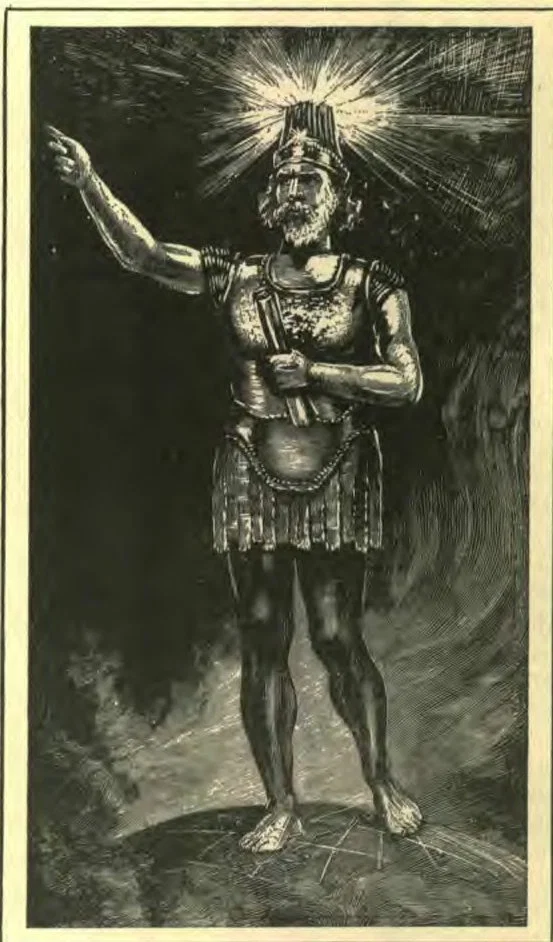
“And the fourth kingdom shall be strong as iron; forasmuch as iron breaketh in pieces and subdueth all things; and as iron that crusheth all these, shall it break in pieces and crush. And whereas thou sawest the feet and toes, part of potter's clay, and part of iron, it shall be a divided kingdom; but there shall be in it of the strength of the iron, forasmuch as thou sawest the iron mixed with miry clay. And as the toes of the feet were part of iron, and part of clay, so the kingdom shall be partly strong, and partly broken. And whereas thou sawest the iron mixed with miry clay, they shall mingle themselves with the seed of men; but they shall not cleave one to another, even as iron doth not mingle with clay.
“And in the days of those kings shall the God of heaven set up a kingdom which shall never be destroyed, nor shall the sovereignty thereof be left to another people; but it shall break in pieces and consume all these kingdoms, and it shall stand forever. Forasmuch as thou sawest that a stone was cut out of the mountain without hands, and that it brake in pieces the iron, the brass, the clay, the silver, and the gold, the great God hath made known to the king what shall come to pass hereafter; and the dream is certain, and the interpretation thereof sure.” Dan. 2: 36-45, A.R.V.
“Thou art the head of gold” clearly shows the application of the beginning of this prediction. Nebuchadnezzar, Chaldea's greatest ruler, represented the Babylonian empire, the “golden kingdom of a golden age,” standing in barbaric splendor at the head of four successive world-wide empires, which it would infuse and fashion with its principles for all time. Roger tells us: “No capital in the world has ever been the center of so much power, wealth, and culture for a period so vast. It is indeed a brilliant cycle of centuries.” God's prophet has told us, “Babylon hath been a golden cup in the Lord's hand, that made all the earth drunken; the nations have drunken of her wine; therefore the nations are mad.” Yet God would “heal Babylon,” and He began, as He doubtless had before, with her mightiest king. Jer. 51: 7, 8.
But Babylon, despite her mighty protecting walls; despite her abundant supply of water; despite her proud kings, her rich and splendid palaces, her glorious temples to her gods, her army, the plans of her military men, must pass away. Only the righteous by choice shall exist forever. Only Love Incarnate is fitted to reign eternally. The golden kingdom was alloyed by the rust of depraving idolatry, cankered by selfishness, and eaten by the leprosy of sin, and it must pass away. “In the way of righteousness is life; and in the pathway thereof there is no death.” Prov. 12: 28. It is the work of the Gospel to restore man to righteousness; “for therein [in the Gospel] is the righteousness of God revealed from faith to faith.” Rom. 1: 16, 17. God was most emphatically preaching the Gospel to Nebuchadnezzar, and thru him to all generations. Babylon's continued reign depended on Babylon's acceptance, as individuals, of God's righteousness; Babylon's rejection of the Gospel, as individuals, of course, meant that that kingdom should be superseded by another. The golden kingdom must pass away. The riches, the splendor, the glory, the growing weakness and effeminacy and licentiousness of the tropical Euphratean valley were succeeded by the hardy frugality of the mountaineer peoples of Persia, combined with Media, in B.C. 538, symbolized by the breast and arms of silver.
Following Medo-Persia came Grecia, B.C. 331, symbolized by the belly and thighs of brass reaching to the knees. The successor of Grecia, of which the symbols were the legs of iron and the feet and toes of iron and clay, was Rome, in united and divided state to the end.
Note particularly that the different empires are symbolized, not by any special features of the anatomical parts of the body mentioned, but by the different metals. The image was materially that of a man; it represented the KINGDOM OF MAN; it naturally had a head, a breast, arms, sides, thighs, legs, feet, and toes; but it was the head of gold which symbolized Babylon; the breast and arms of silver which symbolized Medo-Persia. The two arms did not indicate the union of the two powers; this is indicated elsewhere. The arms are incidental, not objective, the same as the two thighs in Grecia, and the two legs in Rome. If the two legs represent Eastern and Western Rome, as some suppose, Rome should have been divided from the beginning, even as the legs, which begin at the knees. But for the greater part of its more glorious career, Rome was a unit.
Rome's union and strength are fitly represented by the iron. Iron can be fused together even as gold and silver; it can be welded. It fitly represents a strong, imperial empire, even as was Rome when she came in fullest connection with the work and people of God.
Rome became a divided kingdom. As a matter of prophecy and history, she became divided into ten kingdoms; but take particular notice that this division is no more symbolized by the toes than Eastern and Western Rome are by the two legs. The division of the fourth kingdom is symbolized by the coming in of the clay. “And whereas thou sawest the feet and toes, part of potter's clay, and part of iron, it shall be a divided kingdom. . . . And as the toes of the feet were part of iron, and part of clay, so the kingdom shall be partly strong, and partly broken.” Men would try to unite the divided parts. Marriage and intermarriage should take place; they would intermix themselves with men of any nation (Boothroyd) to endeavor to unite the discordant elements; “but they shall not cleave one to another, even as iron doth not mingle with clay.”
The clay is of the earth. It represents republicanism, democracy, socialism; plenteous, but weak and brittle. It can not unite with imperialism and retain its nature. Iron will not mix with clay. From the first division of Rome, beginning in the fourth century, the clay entered as a constituent element. From that time to the present, the European states,—the old Roman Empire,—have been partly strong and partly broken. Men have tried to unite them in one great empire, as Charlemagne and Napoleon; princes and diplomats have endeavored to unite them by intermarriages of royal families; “but they shall not cleave one to another, even as iron doth not mingle with clay.”10The word of God is mightier than all the ingenuity and diplomacy and wisdom and power of man. Imperialism and socialism will not mix, and this divided state will continue even unto the end. If the toes symbolized the kingdom and were all of iron, they would unite. If all of clay, they would unite, but the diverse elements continue to the very end.
Studies in the Book of Daniel
(Continued from Page 9.)
The Last Kingdom of Earth.
All these powers, diverse in nation and form and manner, each in turn demonstrates by its unrighteousness that it possesses no right to exist forever. The seeds of decay and death in each and every one have been sown and tended with care, and have borne the sure crop—ruin. But this earth shall not continue to be cursed. When the last divisions of the Roman kingdom demonstrate their unfitness to reign, when lawlessness, anarchy, and ruin shall sweep over the earth in spite of all human wisdom and power, God will interpose and erect His kingdom. “In the days of those kings shall the God of heaven set up a kingdom.” Note particularly,—
1. That this kingdom was not set up at the first advent, nor at Pentecost; for Rome was not then divided. It does not mean that it will grow thru the influence of the church till it converts the world; for it breaks in pieces and consumes all these kingdoms. It succeeds the utter ruin of all earthly rule, demonstrated to be unfit to reign forever.
2. The Stone of that kingdom is Jesus Christ, the “Tried Stone,” the “Sure Foundation.” He is now, as Priest upon His Father's throne, gathering the subjects of His everlasting kingdom. Those are His subjects who submit to His reign here,—in whose hearts is the throne of Christ Jesus, upon whose hearts is inscribed God's holy law. Thus choosing God from among all nations, tongues, and kings, in the midst of temptations to the contrary, they are fitted to reign with Him. Isa. 28: 16; Zech. 6: 12, 13.
3. It is to be a literal, earthly kingdom, tho not the less spiritual. It covers the territory of the four great empires. The earth, with its children who receive Christ as Saviour and King, is regenerated, recreated, made a spiritual home for a spiritual people. See Psalm 37.
4. It will be an everlasting kingdom. “Nor shall the sovereignty thereof be left to another people; . . . it shall stand forever.” Its inhabitant shall not say, “I am sick.” No fearful dream of future change shall trouble its King. No monarch shall oppress its people. No sorrow or sighing will be there; for sin and death are banished. Jesus Christ, the Saviour of men, the King of Peace, shall reign forever over the now children of tribulation, then and forever shining immortals. “The dream is certain, and the interpretation thereof sure.”
Nebuchadnezzar has taken another lesson in the Gospel school. He acknowledges that Daniel's “God is the God of gods, and the Lord of kings and a Revealer of secrets, seeing thou hast been able to reveal this secret.” Dan. 2: 47. But the haughty king does not yield himself to God. He honors Daniel, he admits the superiority of the prophet's God, but no more. He is like many others, who, in a political way, are Christians. The heart and the ambition of the king are not yielded to God.
Nevertheless God's Gospel is preached before the courts of Babylon and the world. Daniel, His servant, is honored, and given wider opportunity to preach the word. His three companions arise from obscurity to assist the prophet in the work. The people of God may prove false and deny Him, His law, His Gospel, yet will His glorious truth be preached, and will, by winning souls, vindicate His word.
The same God is a Revealer to-day. To-day He is telling rulers and statesmen that earthly kingdoms are soon to pass away, with all their ephemeral and evanescent glory; that righteous rule only is worthy to persist; that the kingdom of God is at hand. And He beseeches all of them to learn the lessons He taught the proud king of Babylon, and share in the glorious, eternal kingdom to come.
[Our next lesson will be “God the Deliverer.”]
The Image of Nebuchadnezzar’s Dream.
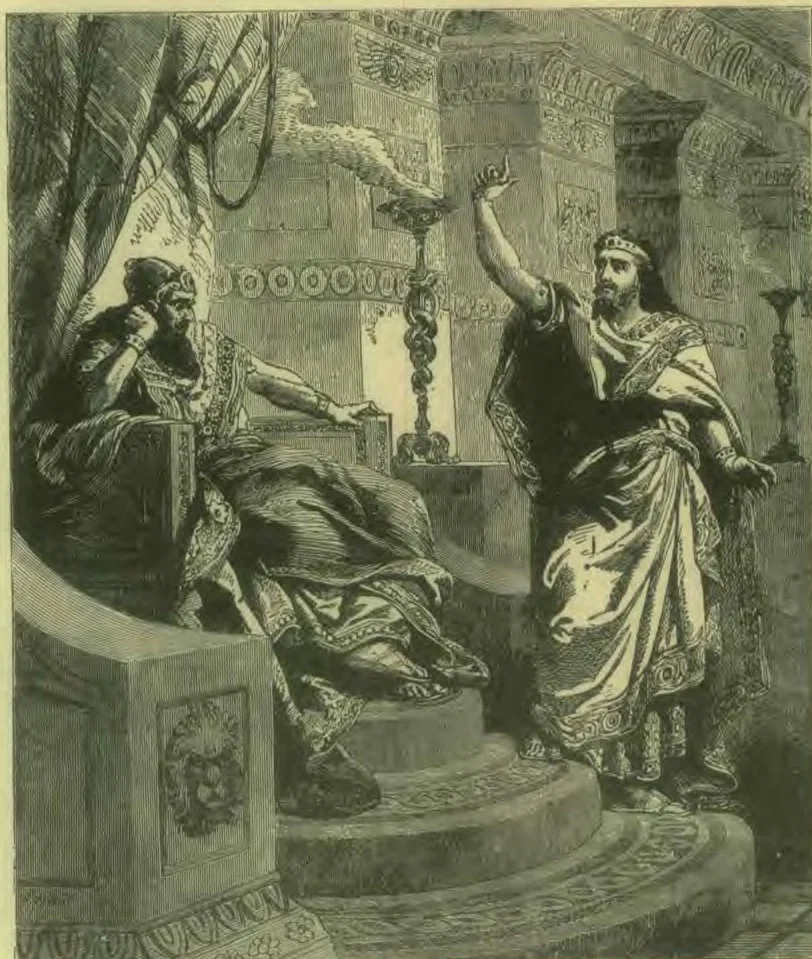
Daniel Interpreting Nebuchadnezzar’s Dream.
International Socialist Congress in Stuttgart
By Jean Vuilleumier
(From Our Own Correspondent.)
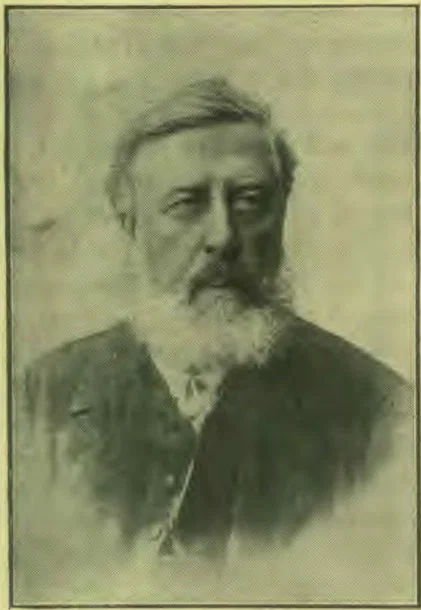
The late W. Liebknecht, founder of German Socialism. Was in the German Reichstag for years as a representative of the Social-Democrat party. He was the author of numerous well-known works.
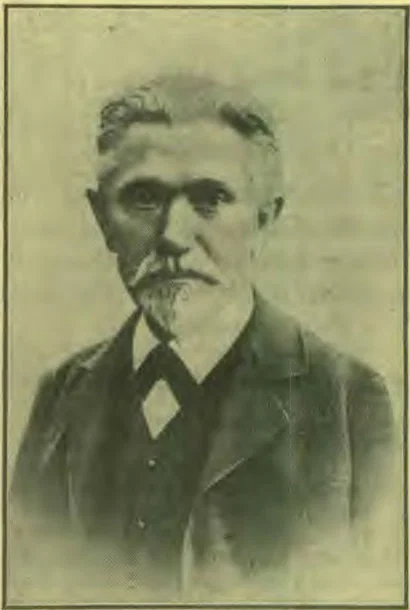
Ferdinand August Bebel, author of numerous Socialist works. Has served as Socialist member of the German Reichstag, and was delegate from Germany to the congress at Stuttgart.
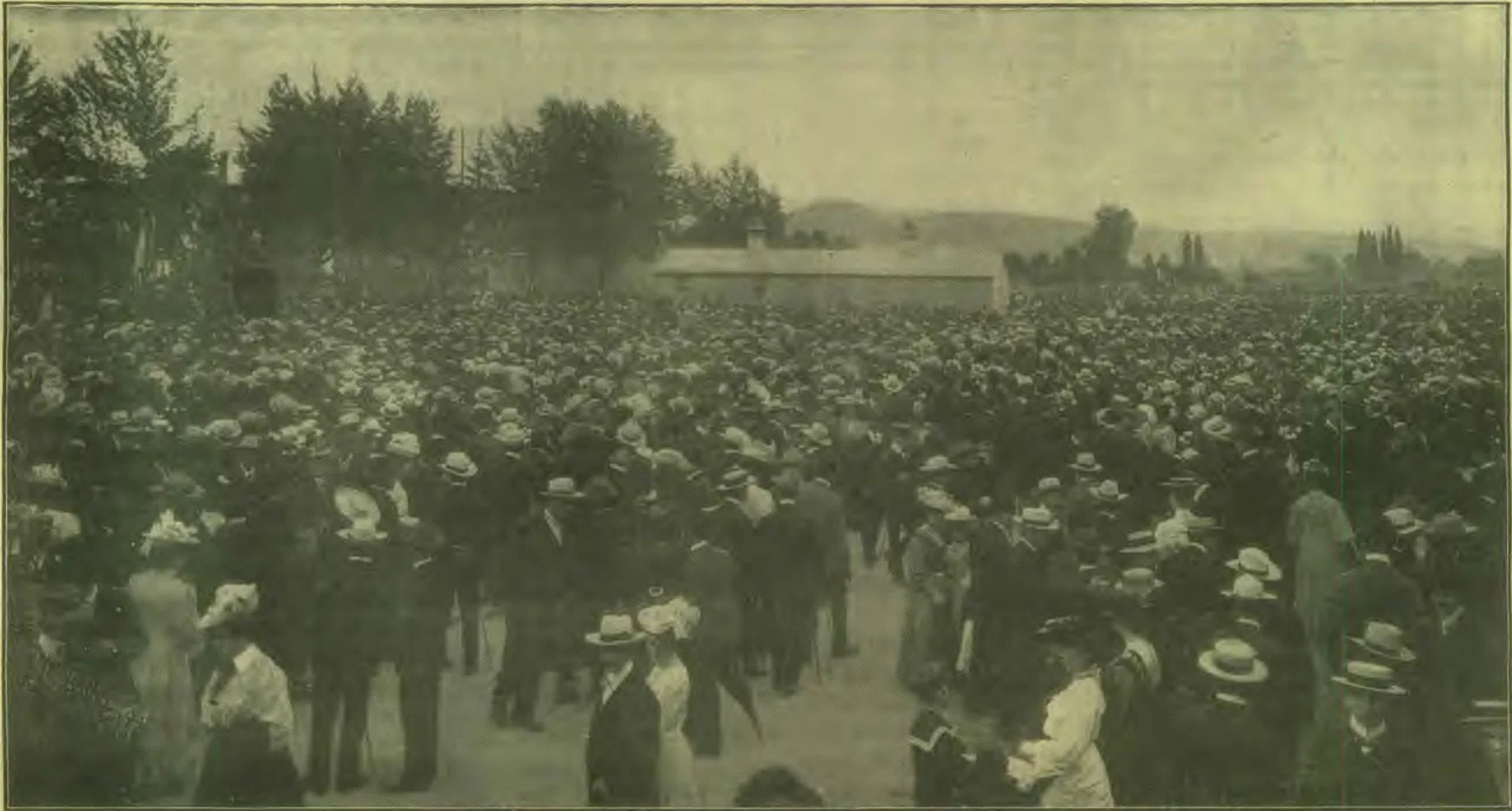
The Socialist Mass Meeting at Stuttgart, Germany, at Which Were Assembled Between 40,000 and 50,000 People.
SOCIALISTS on the continent have been busy this year (1907); they have held a national French Congress at Nancy; a national German Congress at Mannheim; and an international congress at Stuttgart.
These various gatherings have shown that Socialism is a growing power in the nations of Europe. The French Socialist party has sent to the Chamber of Deputies fifty-two members instead of thirty-seven. In England, the first Socialist deputy has entered Parliament. In Finland the ballot has been extended to women. And Germany, altho somewhat beaten in the number of her Social-ist deputies, has seen this party grow from 350,000 to 500,000 members; while the German labor unions, which counted in 1894 only 246,500 members, and in 1905, 1,366,000, number to-day 1,800,000 members.
Growth of Unionism.
I have before me the labor unionist "Correspondenz-Blatt" of Aug. 17, 1907. It contains several pages devoted to the statistics of the unions, giving minute details respecting the standing of the central organization and five other smaller organizations. Labor unionists in Germany are divided among sixty-six various trades, and the number of members belonging to each trade is given. Their growth in each of the last twelve years, as well as the amount of contributions and the amount paid out are given in exact figures.
I will give here a few of these figures to show the financial power of these unions. In 1906, the amount paid to unemployed members was $631,484.45; to sick members, $781,059.12; to life invalids, $89,581.08; for sickness and death, $281,145.12; to party papers, $379,850.14; to strikers, $3,276,-931.66. Grand total of receipts for 1906: $9,901,499.48; and grand total expenses, $8,797,239.89. These figures do not include the financial operations of the five smaller labor union organizations, which amount to about $1,190,000.
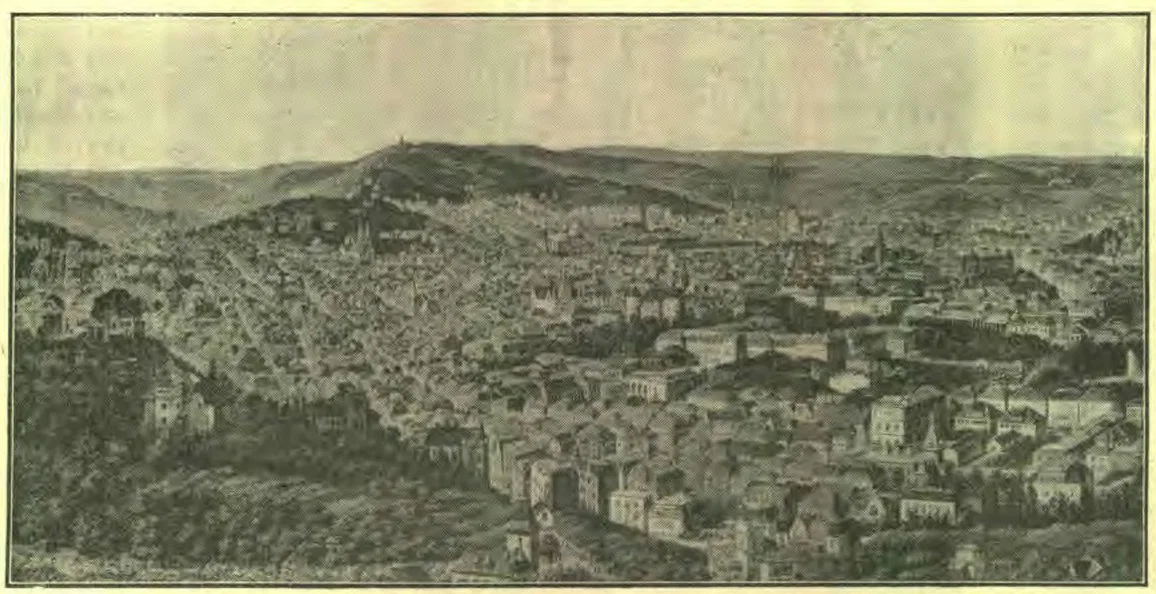
The International Socialist Congress convened from August 18 to 24 in Stuttgart, the pretty capital of Württemberg, a well-known seat for religious and missionary institutions. The congress was preceded by a grand mass meeting which took place on Sunday in the open air, about three miles out of the city. It was a grand success. Between forty and fifty thousand people flocked to the spot. The leading Socialist orators endeavored to make themselves heard of that human sea. Bebel and Jaures and Singer were the heroes of the day.
11
Earlier International Socialist Congresses.
The city authorities had some misgivings about such a gathering; but everything passed off quietly. It must be remarked that a Socialist congress had never before been held in Germany, on account of the refusal of the government to grant permission. The first international congresses held by the Socialist party were as follows: Geneva, 1866; Lausanne, 1867; Brussels, 1868; Basle, 1869; The Hague, 1872; Paris, 1889; Brussels, 1891; Zurich, 1893; London, 1896; Paris, 1900, and Amsterdam, 1904.
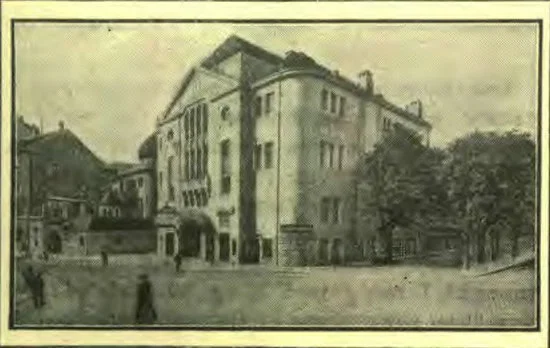
The city of Stuttgart was so full of strangers that your correspondent had to find a room in a private family. But he had no difficulty in finding the headquarters of the congress. As he came out of the station, he was met by a large decorated panel announcing in big letters the date and place of the meeting. From distance to distance, Socialist "oriflammes" hung on poles led you unmistakably to the spot, namely the "Liederhalle." This is a fine and imposing concert hall, with all the necessary dependencies, such as restaurant, dining-hall, vestries, committee rooms, etc.
Socialist Literature in Many Languages.
In one room was to be found an exhibition of Socialist literature; while another room, devoted to correspondence, was made noisy by the sound of a dozen typewriters. Stationery and a full supply of Socialist books and publications were not lacking. Everything seemed to be thoroughly organized.
Panorama of Stuttgart.
"Liederhalle," Where the Congress Was Held.
Let us stop a few moments in the Socialist book exhibition room. Here are to be seen on their respective tables or stands complete sets of Socialist publications in various languages, books, pamphlets, tracts, leaflets, almanacs, and periodicals. I jot down, as I pass, the following languages: Polish, Yiddish (low German in Hebrew letters), Flemish, German, Czechic-Slav, Norwegian, Hungarian, (forty-five different Socialist periodicals in this one language), Dutch (fifteen periodicals), Swedish, Bulgarian, English (United States and England), Servian, Russian, Armenian, Finnish, and Spanish.
At the main entrance, a crowd of people stands looking curiously on the delegates as they pass in. They are an interesting sight, representing, as they do, from fifteen to twenty various nationalities. Each one wears a badge.
The hall itself, including the galleries, can seat a few thousand people. Sitting at a long table kept for the representatives of the press, behind and above the presidential rostrum occupied by twenty or thirty leaders, we look down upon the assembly of would-be regenerators of society. Nine long tables run parallel from one end of the hall to the other. Around these, seven or eight hundred delegates are sitting or standing, talking and smoking. Each one has before him paper and ink and a pile of books and documents. There are ladies and gentlemen, young, old, and middle-aged. Here and there are to be seen long beards, blond, brown, and gray. As a rule, these people look remarkably intelligent, energetic, and decided. From the galleries, about three hundred people are looking down.
The Work of the Congress.
The work of the congress proceeded very slowly, every speech or motion having to be translated into two languages besides the language of the speaker (German, English, and French) by two specially appointed translators, speaking perfectly German and English or German and French, respectively.
As I entered the hall, President Singer was trying to put to a vote some previously discussed resolutions. His was no small task, amid the noise of conversation and the blue haze of tobacco smoke. A difficulty arose as to whether the majority or the minority report should be voted on. The president explained his point of view. His two translators did not understand him or else were not understood by the audience. Confusion arose. An English delegate shouted: "We do not understand what is going on," and tried to suggest his idea. His voice was drowned by the noise and the president's big bell. With impatient tone and gesture, a vice-president approached President Singer and endeavored to make him understand that he was making a blunder. Singer listened a few seconds, shook his gray head negatively, and then agitated his bell again with all his might to quell the growing confusion and din among the delegations.
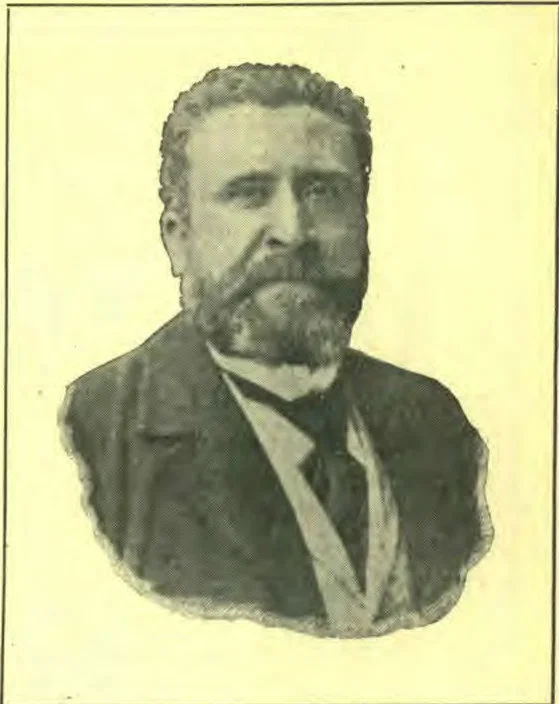
M. Jean Jauros, Deputy of the French Chamber, and Delegate from France to the Socialist Congress at Stuttgart.
Harmony Is Wanting.
When, at last, one hour and a half or two hours had been spent in procedure and technicalities, it happened that a majority of only 15 or 20 votes had been secured from several hundred ballots! "What does such a vote mean?" I asked myself. If in union there is strength, where is the strength of this movement, representing millions of people aiming at the reorganization of the world? And yet, here is this army of representatives like a roaring sea threatening to destroy the existing order of things, to abolish private capital, and to "place the wealth and industries of the world under control of all the people." And supposing they should succeed, what then? This control will have to be placed in the hands of a few men for the mass of the people. And who knows whether these few men in each community will not betray the confidence vested in them and become capitalists in their turn? And thus we will be brought back to the present state of things after passing thru such scenes of revolution, civil war, and bloodshed as have never been acted out on this earth, not excepting the French Revolution.
How foolish, childish, and dreamy, yea, how criminal these Socialistic schemes! For no one can think for a moment that the expropriation and redistribution or control of wealth will take place without a deadly struggle which will threaten the very existence of society.
The Core of the Matter.
How sad to think that this whole mistake resolves itself into a religious error, which a correct knowledge of the fundamental truth of the Gospel would have prevented. "MAN IS GOOD, BUT SOCIETY IS BAD," says the Socialist; "hence society must be reconstructed." No! says the Gospel of Jesus Christ; society would be all right enough if man were good; society is only what man makes it; man can never make a better society, not even should Socialism have its way. MAN IS BAD, here is the whole secret; MAN is selfish; MAN is sinful; HE needs reconstruction; HE needs conversion; HE needs to be changed by the grace and spirit of God; and when society is made up of such men, then, like in apostolic days, social conditions will be transformed, and equal privileges and comforts will be provided for all, because all will be looking for the interests of each, and not each one for his own interest.
The Leading Questions Discussed.
The leading questions discussed at Stuttgart were: (1) Militarism, shall it be utterly condemned by Socialists? (2) Shall colonization by national force be countenanced or not? (3) Shall the general strike be approved and prepared for or not? (4) Shall not trade unionists unite closely with the Socialist party?
(Continued on Page 12, Column 3.)
12
International Socialist Congress in Stuttgart.
(Continued from Page 11.)
On each of these questions—several of which would immediately involve Socialists in grave difficulties with each government—the majority, led by Bebel, Jaures and Vandervelde, voted resolutions taking a medium and prudent ground between extreme opinions.
On the military question, the debate between Herve and Bebel focused the interest of the congress. Herve claimed with pitiless logic that, in case of war, Socialists should not be found shooting at each other; while Bebel maintained with good common sense that refusing to serve would lead every Socialist behind prison-bars.
On the colonial question, both majority and minority stated, tho in different terms, that "the congress condemns this policy of robbery and conquest; this shameless application of the right of the strong trampling underfoot the rights of the vanquished races ... while increasing the dangers of international complications and war." Some one might have remarked here that the main reason of the European governments in conducting a colonial policy is the necessity for new markets in order to keep busy the millions of working people who make up the Socialist party.
A Significant Address by a Lady from India.
One morning an Indian lady, dressed in yellow silk, was addressing the congress. Vehemently she was pleading "for that one-fifth of the human race which is starving under English tyranny." While she was speaking, I happened to look toward the gallery; half concealed in a special box, methought I recognized King Edward VII, who was then somewhere in Germany at a bathing resort; his whiskers dyed in brown, he was listening earnestly and soberly to the speech
13
of the Hindu lady, while now and then exchanging a few words with a lady sitting with him and looking at him with evident respect. Whether I was mistaken or not about King Edward, I could but think of the tragic forebodings that such a gathering and such speeches must awaken in the hearts of kings who are looking on and who may from one day to the other be hurled down from their thrones by the waves of international revolution.
The Only Remedy.
In conclusion, the Socialist movement appears to us as a natural consequence of the present situation caused by the increase of wealth on the one side and of poverty on the other; by the merciless spirit of greed and oppression on the part of capital, and the increase of drunkenness, vice, and laziness among the working classes. Looking at this problem from the human side, the only outcome would be a deadly and universal conflict. The only remedy is the one announced in the Holy Scriptures: the second coming of Christ as King of Kings to put an end to injustice and sin. And of this blessed and long-looked-for solution of earthly evils, Socialism and the lamentable conditions it seeks to remedy are nothing but one more among many of the glaring signs of our times.
JEAN VUILLEUMIER.
Gland, Switzerland, Dec. 17, 1907.
Tibet No Longer Mysterious
One of the closed lands, and land of mystery for centuries, has been Tibet, but now it seems that telegraph lines are to enter Lhassa, its capital, and the telephone with its bells will be installed. The great mysterious lands of the world are mysterious no longer.
Swedish and Danish-Norwegian Specials
Swedish and Danish-Norwegian Specials.—The publishers of "Sions Vaktare" and "Evangeliets Sendebud" have issued special numbers of these papers something after the order of the Missions Special of the SIGNS. Splendid articles, good illustrations, and careful editing make these numbers good material with which to interest those who speak these languages. Address International Publishing Association, College View, Neb.
Our Work and Workers.
BROTHER LEE S. WHEELER closed the year's work in Boston, Mass., by baptizing fifteen.
TWELVE young people were baptized at Keene, Texas, December 22, by Brother Sorenson.
TEN have taken their stand for the truth thru the labors of Brother E. A. Merrell at Poplar Bluffs, Mo.
THE company at Walker, W. Va., has been increased by fourteen thru the labors of Brother W. R. Foggin.
AT Folsom, Cal., five have received the truth as the result of a tent effort conducted by Brother and Sister C. H. Moler.
DECEMBER 28 a church of thirty-seven members was organized at Kincaid, Kan. They have a new church almost completed.
BROTHER L. F. STARR reports a good work in Exira, Iowa, where twenty-three young people were baptized and received into the church.
THE attendance in Union College, College View, Neb., has reached the five hundred mark, and gone beyond, the largest in many years.
BROTHER T. GODFREY writing from Osceola, Iowa, Dec. 26, says, "The work is onward here. I baptized ten last Sunday, and others are waiting baptism."
THE church at Sutley, S. D., has experienced a revival among the young people, thirteen of whom recently gave themselves to the service of the Master as reported by Brother C. L. Benson.
FOR many years the headquarters of our denominational work in Great Britain has been in London. Now those in charge of the work there have moved to Stanborough Park, Watford, about fifteen miles from London, where a fine estate has been purchased, and the work established.
NOTICE has come to us of the marriage of Dr. Harry Willis Miller, our missionary to the interior of China. Dr. Miller's first wife died at her post in China about three years ago. He has now, as the needs of the field demand, united in marriage with another devoted daughter of the Lord, Marie Elizabeth Iverson, of Falmouth, Me. They expect to enter their field again about the first of March. May the Lord's blessing go with them.
Annual Meeting of the Pacific Press Publishing Association.
THE fourth annual meeting of the members of the Pacific Press Publishing Association will be held at the office of the Pacific Press Publishing Company, in Mountain View, Cal., Monday, Jan. 27, 1908, at 11:00 o'clock A.M.
This meeting is called for the purpose of electing a board of seven directors and transacting such other business as may properly and legally come before the meeting.
M. C. Wilcox, President. E. A. Chapman, Secretary.
Notice of the Annual Meeting of the Stockholders of the Pacific Press Publishing Company.
NOTICE is hereby given to all whom it may concern, that the annual meeting of the stockholders of the Pacific Press Publishing Company, a corporation, organized, and existing under, and by virtue of, the laws of the State of California, will be held at the office of the company, on Villa Street, in the town of Mountain View, County of Santa Clara, state of California, on Monday, the 27th day of January, A.D., 1908, at 9:30 o'clock A.M.
The election of directors for the ensuing year, the advisability of amending, repealing, or adopting new by-laws, and such other business as may be necessary or proper to be transacted will come before the meeting. By order of the directors.