Your ShelfYour Projects

The Youth’s Instructor, Vol. 43, No. 4.

HOLLAND AND THE HOLLANDERS

The Youth’s Instructor

Jan 24, 1895

S. D. A. Publishing Association · Battle Creek, Mich. · Jan 24, 1895

HOLLAND AND THE HOLLANDERS.
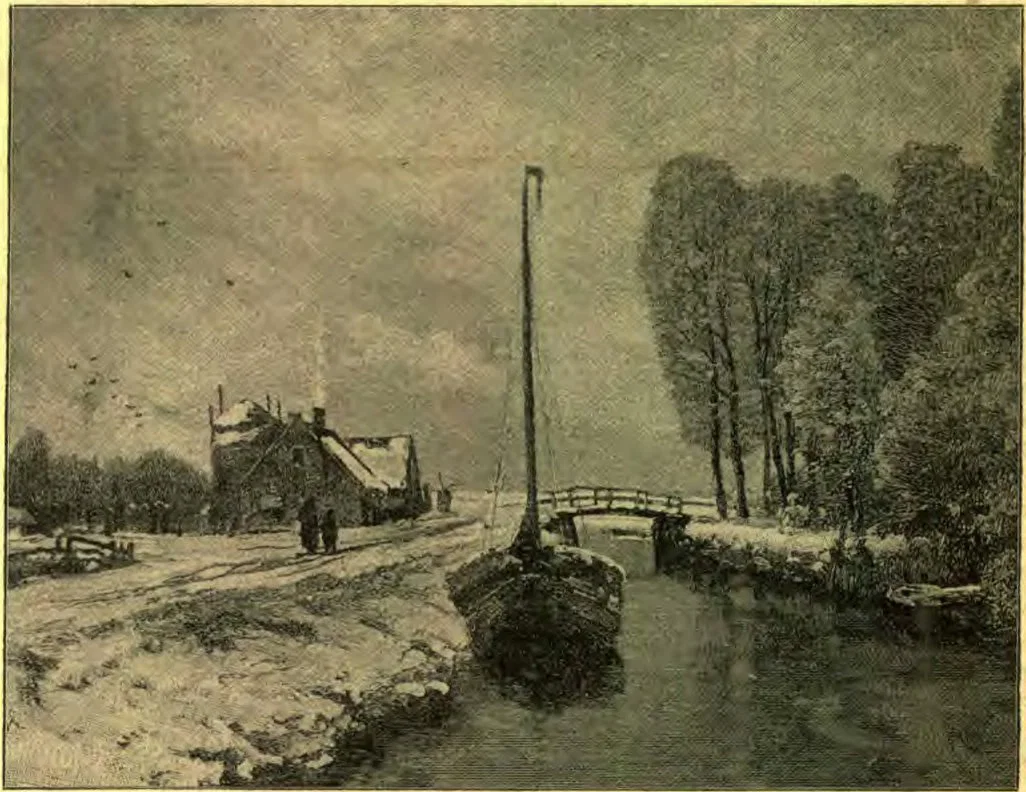
To the Hollander there is no place in the whole world so dear as Holland. It is the land for which he has fought and must ever fight; for right there before him, winter and summer, year in and year out, making constant warfare, is his great enemy, the sea.
But the Dutch are good fighters, and this enemy is met with those tremendous bulwarks, the dikes. These dikes, built with piles made from trunks of immense trees driven deep in the earth, and surrounded by solid masonry of granite and cement, form, as it were, great walls behind which the people live. Outside, these slanting walls are covered with flat stones in such a way that the harder old ocean beats and lashes against them, so much firmer they become.
Inside there are steps leading to the top, where the space is ample for buildings, carriage-roads, etc. Of course there are windmills here too; for Holland wouldn’t be Holland without them, and they are seen not only on the dikes, but everywhere else. They are used for draining the land, the lakes, the rivers, for making oil, grinding rock, cleaning grain, sawing wood, making starch, rope, paper, mustard, flour, meals, paste, etc. Sometimes they are grouped together, and sometimes they stand alone. Even a man’s wealth is often estimated by the number of windmills he has. A lady stopping once to watch them in a town containing four hundred, said it seemed, when their great arms went round and round and round, almost as if the whole landscape were in motion.
WINTER IN HOLLAND.
WINTER IN HOLLAND.
There is perhaps nothing the Hollanders enjoy more than their canals, which penetrate, in every direction, not only the country, but all the cities and villages, making veritable watery roadways. They are picturesque, too,—bordered with lovely trees and quaint tile-roofed houses, and crossed by numerous bridges. Many kinds of boats sail these waters, from the pleasure-boat of “Mynheer,” which he fastens near his house as an American does his horse and carriage, to the water omnibus, carrying passengers, and freight-boats, carrying anything one needs to buy for the home. But however much enjoyment is found in the boats, it is tame compared with the fun when the canals are frozen. Here the click of wooden shoes is forgotten, for everybody skates: old men and old women, youths and maidens, boys and girls; the men to business, the women to market, the doctor to visit his patients, the schoolmaster and the children to school, and everybody to church on Sunday.
Turn to your histories, and read how the Dutch soldiers conquered the Spanish because the latter, though knowing much about fighting, did not know how to wage war on skates. Then when you turn to your art books, and study of Rembrandt and Steen and Paul Potter, do not forget that Holland gave them to us.
Holland has well been called a queer country, but a more interesting one cannot be found. The Hollander loves his pipe, his ale, his cheese; but on a kinder-hearted people the sun never shone. Even the birds seem to understand that not only are the children taught from infancy not to disturb them, but that the law protects them as well.
Nowhere can the storks find more peaceful homes than in Holland. From this people, who are often called slow, but who, to protect their homes, have fought the waves with a perseverance and endurance elsewhere unknown, we can all learn lessons of patience and pluck. — Miss M. L. Butler, in the Wellspring.

ORKNEY AND THE ORCADIANS.

The Orkney Islands, north of Scotland, are upward of sixty in number, contain from four hundred thousand to five hundred thousand acres, and have a population of about forty thousand, according to the census. Twenty-five of the islands are inhabited, and to these only the name of “island” is generally given. Those not inhabited, and used only for pastures, are called “holms.”
The general appearance of the group is flat, and, to some extent, tame. The only very high hill is Holy Head, which is upward of thirteen hundred feet above the level of the sea.
Pomona, or Mainland, is by far the largest of the Orkney group; its length from east to west is thirty miles, and its breadth in some places six to eight miles. The two largest towns of Orkney are in Pomona—Stromness, in the southwest, with a population of about three thousand, and a very fine harbor; and Kirkwall, the capital of Orkney, which lies on the north side, and contains about four thousand inhabitants, many good shops, three banks, two newspapers, churches and schools in proportion to the population, and a very fine cathedral.
Within an easy walk from Kirkwall is Wideford Hill, from the top of which nearly all the island may be seen; and no one who goes there on a pleasant day will hesitate to admit that the scene before him, looking seaward, is one of exquisite beauty and rare grandeur.
From Wideford Hill you can cast your eye upon structures that are memorials of every form of religion that has ever existed in Scotland. Stennis and its Standing Stones are in sight, eight or ten miles off. Nearer to you are some of those inscrutable mounds called Picts’ houses.
The Standing Stones in Stennis are still about thirty in number, forming portions of two circles, the larger of which measures about a hundred yards in diameter, and the smaller about thirty-four. These circles are not now complete, as many of the stones have fallen, and many have disappeared.
The habits and modes of life of the islanders were very primitive, even fifty years ago. The chimney of the cottage was simply a hole in the roof, and the fire was in the middle of the floor, so that the smoke had to find its way out as best it might.
Such fire-places have, I think, almost disappeared from Orkney, or at least I do not remember seeing one.
The islanders are brave and hardy. During the season of egg-gathering they may be seen at one time climbing a precipice to rob a nest; at another, swinging from the face of a rock, with nothing between them and almost certain death but a rope around their waists. They thus naturally acquire the habit of talking of danger, and even of death, in a way that seems to indicate an indifference to both.
Probably few, however, reach the degree of coolness exhibited by an old man who went out one day with his son to gather eggs. The son descended the face of a high rock with one end of a rope around his waist, the other being fastened to a stake above, while the old man remained in his boat at the base, in case of accident. The precaution was not unnecessary, for the rope gave way, and the lad fell into the sea.
There was a considerable ground swell, and the poor boy had sunk once or twice before his father could rescue him; but at last, just as he was going down for the third time, the boat pulled alongside, and, reaching out with one hand and steadying himself with the other, the old man coolly grabbed the boy by the hair, and landed him in the boat almost lifeless. This elicited from the father the simple remark: “Eh! I’m thinking thou’s a bit wat, Tam.”
The saying that “those born to be hanged will never be drowned,” is probably no truer of hanging than of other deaths. Tam was reserved for a different but scarcely less enviable fate. An acquaintance of the old man, years afterward, reminded him of Tam’s escape, and asked what had become of him, to which the father replied in the same indifferent tone:—“Tam?—our Tam? O! Tam gaed awa’ to a far country, and the haithens ate him!”
This anecdote I know to be perfectly true, and I have as reliable authority for another of the same kind.
I have only to add one word on the people. They are, of course, first-rate sailors. In appearance, there is not any very striking indication of their descent, though now and then you see a decidedly Scandinavian face. Scott describes them as known by—
“The tall form, blue eye, proportion fair, The limb athletic, and the long, light hair;”
and this type you not unfrequently find.
I was much struck by the exceeding gentleness of the working classes. A brawny, bearded man, who has not a particle of cowardice or sneaking in his composition, speaks to you with all the softness of a woman. Swearing is a vice from which, so far as I could judge, they are singularly free. Their dialect is Scotch, with some unusual words and a slightly peculiar accent, which no doubt are the remains of the Norse.
In talking to each other, the common people use the familiar and kindly “thou,” instead of “you,” and their bearing toward each other is gentle and pleasing.
I was one day crossing a frith in a pretty rough sea. The smack was steered by one of the passengers, as the whole crew were required for other duties. He had a difficult task, but he managed it well, and one of the men said in banter: “Robbie, I’m thinking when thou was a young man, thou could steer a boat a little.” “Weel,” he replied, “my han’ has been oot o’t for some time, but when I was a younger man and i’ the way o’t, if anybody had said that I kent naething about it, I wud hae lookit at him.” In many other parts of Scotland the “wud hae lookit at him” would probably have taken an uglier form.
When the resources of the country are developed, as they will be in the course of a few years, by the stimulus of regular leases and kindly encouragement on the part of the proprietors, they will be better known and appreciated by dwellers on the mainland than they are now.—John Kerr, in Home Guard.

FADING SCENES.

BRIGHTEST roses when in blooming Fill each breeze with fragrance rare, With fresh sweetness each perfuming All the soft and balmy air; And the warblers sing their chorus While the dewdrops sparkle bright. Gladsome is the scene before us, Turning hearts to glad delight.
But these earth-scenes soon must vanish — All is transient here below; Earthly joys our God will banish With each beauty that shall glow; Earthly hopes are soon to perish, Youthful prowess e'en will flee; For they're idols that we cherish — Are the toys of vanity.
But the time is onward speeding, When no fading scenes appear; And our Saviour now is pleading — List his gentle voice; O hear: “Come, ye heavy-laden, weary, Now prepare for mansions blest. Leave these fading scenes so dreary; Come, and I will give you rest.”
JONATHAN SPENCE.

Scraps of Astronomy: The Ecliptic and the Zodiac

SCRAPS OF ASTRONOMY.—NO. 2.

The elliptical circle which the earth describes in its annual revolution around the sun, is called the ecliptic; a plain of this path of the earth is the plain of the ecliptic. This plain includes the earth’s path, and also the eastward apparent path of the sun among the stars, through the entire zodiacal circle during the year; or in other words, the sun and earth are always in the plain of the ecliptic.
The sun being luminous, while the earth is dark and intransparent, we see that only the half next to the sun would be in the light at one and the same time; while the earth sends out a shadow which always points in opposition to the source of light. Hence the shadow, also, would be in the same plain.
As the earth revolves on its axis, it turns us alternately through the shadow and into the sunlight, making the day and the night. The sun’s apparent motion being eastward (among the stars), it enters all the constellations of the zodiac in turn, during the year, as they rise and set with the sun.
The sun enters the sign Aries in the spring (March 21), when this constellation rises and sets with the sun; hence the Chaldean shepherds named it “Aries [the ram] from their flocks, their most valued possession.” The earth being always in the opposite side of the ecliptic from the sun, the opposite constellation, Libra, is seen rising in the evening, coming to the meridian at midnight.
As the sun enters Taurus (the bull) about April 21, the opposite sign, Scorpio, is seen rising in the evening.
The sun enters Gemini (the twins) about May 21, when Sagittarius (the archer) will rise in the evening. These two constellations, Taurus and Gemini, were named from their herds, which were esteemed next in value to their flocks.
The next constellation in order is Cancer (the crab), which the sun enters June 21, and thus reaches his most northern declination (which is the distance north and south of the equator), making the longest day of the year. At this point the sun seems to stand between its northern and southern course (hence the name solstice, from sol the sun, and sto to stand); then begins to move backward, crab-like, toward the south.
Therefore the name “Cancer” was given to this constellation, and was named the tropic of Cancer for the same reason. As it still pursues its journey, the earth reaches Aquarius (the waterman), when the sun will be in Leo (the lion), July 21—“the brooks being dry, the lion leaves his lurking-place, and becomes a terror to all.”
Virgo (the virgin) comes next in order, which the sun enters about August 21, when the virgins “glean in the summer harvest,” hence the name given to this constellation. The earth being in the opposite sign, Pisces rises in the evening, and reaches the meridian at midnight. As the earth still plunges on, at the rapid rate of eighteen miles a second, it reaches the constellation Aries, on the twenty-first of September, at the autumnal equinox, where the sun appeared to be when the earth was at the vernal equinox, in the opposite side of the ecliptic whence we started; now, vice versa, the sun is in Libra (the balances), so named because the days and nights (again being twelve hours each) are equally balanced.
We notice that all the constellations except this one are named from living creatures, hence the name “zodiac,” from the Greek, zoon, living creature, or animal.
The next constellation is Scorpio (the scorpion), which the sun enters about October 21, when vegetation decays, just as the sting of the scorpion causes sickness and death. The earth being in the opposite sign, Taurus rises in the evening. As the sun entered Sagittarius about November 21, it told them of their hunting months, when deer and other animals are prime.
As the earth moves on in its orbit to Cancer, the sun reaches his most southern declination, or winter solstice, which gives rise to the shortest day in the year, when he enters the opposite constellation, Capricornus (the goat), December 21. As the goat “delights in climbing lofty precipices, it denotes how, at the winter solstice, the sun begins to climb the sky, on his return north.” J. M. AVERY.

AN INTERNATIONAL POSTAGE STAMP.

THE German government is about to place a proposition before European countries relative to the issuing of an international postage stamp. It is believed that such a stamp will be a boon to all who carry on any foreign correspondence. At present, if any one wishes information from a foreign country, he knows it would be a waste to send a postage stamp for the reply, since no country will receive a foreign stamp as postage on an outgoing letter. One is therefore compelled to depend upon his correspondent’s generosity to pay the return postage. The United States consuls in Europe, for example, are in receipt of thousands of letters of inquiry every year, not one of which contains postage for the reply. The German minister of ports has designed such an international stamp, and has arranged a plan for its adoption. The stamp will contain the names of all the countries in which its value as postage is recognized, together with a table giving its value in the money of each of these countries. It is thought that only certain European countries will adopt this system, but it is to be hoped the United States will also enter the agreement.

Barons Who Signed the Magna Carta

OF the twenty-six barons who signed the Magna Charta, three wrote their names and twenty-three made their marks. This is all changed now. Every baron can write, but only a few succeed in making their mark.

Marriage and Status of Men in Corea

In Corea every unmarried man is considered a boy, though he should live to be one hundred. No matter what his age, he follows in position the youngest of the married men, despite the fact, perhaps, of having lived long enough to be their father.

MUSIC FROM THE SPHERES.

Above the din of sin and strife, Which oft surrounds our earthly life, Rise sounds of sweetest melody, Rich notes of heavenly harmony.
Those tones so deep, so full, so clear Full often soothe the weary ear; They're magic songs that are ne'er sung By tuneful harp or mortal tongue.
They're songs from bright celestial bands, Sent from the holy, heavenly lands To turn our thoughts from earth-born woe To joys which from life's river flow.
LORETTA REISMAN.

OWLS

While owls possess some of the general characteristics of other birds of prey, they also have peculiarities of habit in which they differ from other breeds of their order, and which render them more useful to mankind than the hawks.
One of their distinctive characteristics is that they seek their prey at night when rabbits, rats, mice, shrews, moths, and many other foes of the farmer, upon which they feed, are more active and more readily discovered. Another is that their feathers being very downy, their flight is noiseless, which enables them more easily to swoop down and seize small animals unawares. We have often seen numerous tracks of mice in the snow, showing where they had been running about during the night, but frequently one of these tiny trails would come to an abrupt termination. How did the mouse escape from the spot without prolonging its tracks? A few faint wing marks in the snow on either side of the last footprints of the rodent, tell the story. It was picked up by an owl.
No more life-like description of the manner of owls in seeking their food could be written than the following extract from a letter by Rev. Gilbert White, of England. It is dated July 8, 1773, and is found in the “Natural History of Selborne”:—
“About an hour before sunset (for then the mice begin to run), the owls sally forth in quest of prey, and hunt all round the hedges of meadows and small inclosures for them, which seem to be their only food. In this irregular country we can stand on an eminence and see them beat the fields over like a setter dog, and often drop down into the grass or corn. I have minuted these birds with my watch for an hour together, and have found that they return to their nest, the one or the other of them, about once in five minutes.”
He refers to what he calls the white owl; he also states the following was told him by a gentleman from the county of Wilts:—
“As they were grubbing a vast hollow pollard ash that had been the mansion of owls for centuries, he discovered at the bottom a mass of matter that at first he could not account for. After some examination he found that it was a congeries of the bones of mice that had been heaping together for ages, being cast up in pellets out of the crops of many generations of inhabitants. For owls cast up the bones, fur, and feathers of what they devour, after the manner of hawks. He believes that there were bushels of this kind of substance.”
The following vivid and interesting story is told by Mr. S. E. Todd, in the Audubon Magazine: “Many years ago, when I owned a farm, owls were accustomed to come to my barn in late autumn, and remain in the barn during the entire winter. I never allowed one to be killed nor to be frightened by any one, as they destroyed more mice than a cat would catch. I had been taught that owls could not see during the time between sunrise and sunset; but I learned by personal observation that they can see in the daytime as well as I can. Here is a case in point: My barn was forty feet long, having posts eighteen feet high, with steep roof. I went on the mow, at the south end of the barn, to pitch some sheaves of oats to the barn floor. An owl was standing on the purlin beam at the north end of the barn. As I took up the first sheaf with the pitchfork, I saw a large mouse winking and blinking as any person winks and adjusts his vision when he steps from a dark room to the sunlight. But before I could throw the sheaf of oats down, and get the pitchfork ready to strike the mouse, that owl came like a dart from the farther end of the barn (not less than forty feet distant), swooped down and caught the mouse, and returned to his perch. Any person who is familiar with barn mice knows that they are swift of foot; consequently, if an owl must fly forty feet and seize a mouse before the little victim could get ready to run away, the bird would have to fly swiftly, which it did. Since that time I have always said, Do not destroy the owls.”
The screech owl (Aluco flammeus) is one of the most widely spread of birds, and is the owl that has the greatest geographical range, inhabiting almost every country in the world, Sweden and Norway, America north of latitude forty-five degrees, and New Zealand being the principal exceptions. Some specimens are brownish red, and others are gray. The variations of color are said to have no relation to age, sex, or season. This bird is a valuable friend to the farmer. It comes around his buildings in the evening in quest of mice, rats, and English sparrows. It will not molest our native song birds, unless its food supply becomes very limited. It lives very largely upon beetles, moths, grasshoppers, and other injurious insects when they can be obtained. At other times, mice, shrews, moles, rats, and chipmunks become its victims. In mild weather in winter it hunts very industriously, and stores up its game for use during the prevalence of storms or severe cold waves. In summer it also feeds to some extent upon reptiles and fish. It is too small to commit any serious damage among poultry, unless it be to small chicks, which are usually concealed under the maternal wings when it makes its nocturnal visit to the farmyards. So rarely does it attempt to carry away chickens or game fowl, that it may be regarded as perfectly harmless.—American Youth.

Wonders of the Moon.

WHEN we view the moon with a powerful telescope, and see her extensive plains and mountain chains, her extensive shore lines and dry ocean beds, her thousands of volcanic craters and their central cones, it is difficult to realize that we are gazing into another world, brought by the power of the telescope almost within our grasp. Strange as it may seem, we are more familiar with her mountains than with those of our own world. On this side of the moon, though two hundred and forty thousand miles away, there is not a mountain whose height has not been measured, nor a crater whose diameter and depth are unknown. Save a few chains of mountains, the scenery of the moon is totally unlike that of the earth. The naked eye sees the moon flecked with dark patches which by the exercise of fancy become the “Man in the Moon.” But, it is needless to say there is no “man” there, nor life of any sort. The dark, naked-eye portions were, before the invention of the telescope, looked upon as seas. But the telescope has shown beyond doubt that they look like ocean beds, with their shore lines still plainly visible, though, on this side at least, not a single drop of water may be found. Neither does the moon have an atmosphere, though she may once have been thus enveloped. Though both earth and moon are solid globes, they have little or nothing else in common. To her mountains we have given the names of the mountain systems of our world, as the Alps, the Apennines, the Caucasus, etc., and their scenery consists largely of elevated rings, surrounding deep cavities or craters, of which the telescope reveals the existence of over one million of all sizes, from those of a few rods to the largest (Shickard), one hundred and forty-nine miles in diameter, and, in depth, from those of a few yards to the deepest, over four miles down.

A SHIP PIERCED BY A SWORDFISH.

A CURIOUS account of the injury sustained by a vessel from the thrust of a swordfish has recently been reported by the captain of the Norwegian bark “Lorenzo.” The sword, or projecting bone, of the fish passed through the metal sheeting of the hull, through six inches of planking, and three inches of inside ceiling. The sword was found firmly wedged into the hole it had made, and when extracted with some difficulty, it was found to be twenty inches in length and of an oval shape. The larger end measured five inches in diameter, and the sharp point two and one-half inches in circumference. The water made a passage for itself at the side of the sword, and it was found necessary to work the pumps at intervals of six hours to keep the vessel afloat.—Scientific American.

Forming Good Habits in Childhood

GOOD habits formed in childhood are easily carried up into manhood.

Restraint Is the Golden Rule of Enjoyment

RESTRAINT is the golden rule of enjoyment. — L. E. Landon.

The Root of All Discontent

THE root of all discontent is self-love.— J. F. Clarke.

THE SAINTS SHALL INHERIT THE EARTH.

The most glorious encouragement in God’s word for those who desire to be saved is found in the precious promises given by God through his beloved Son: “According as his divine power hath given unto us all things that pertain unto life and godliness, through the knowledge of him that hath called us to glory and virtue: whereby are given unto us exceeding great and precious promises; that by these ye might be partakers of the divine nature, having escaped the corruption that is in the world through lust.” 2 Peter 1: 3, 4.
It is useless to speculate on things which God has not revealed, but it is the good pleasure of our heavenly Father that we should diligently read and dwell upon the precious truths and promises given in his word. For this purpose they were written, and to do this is, through the blessing of God, a powerful means of strengthening our faith. “The secret things belong unto the Lord our God: but those things which are revealed belong unto us and to our children forever.” Deut. 29: 29.
“Eye hath not seen, nor ear heard, neither have entered into the heart of man, the things which God hath prepared for them that love him. But God hath revealed them unto us by his Spirit.” 1 Cor. 2: 9, 10. The Holy Spirit having guided the prophets and apostles in revealing heavenly things, we may now proclaim them for the encouragement of the children of God. “For the prophecy came not in old time by the will of man: but holy men of God spake as they were moved by the Holy Ghost.” 2 Peter 1: 21. “Blessed is he that readeth, and they that hear the words of this prophecy, and keep those things which are written therein: for the time is at hand.” Rev. 1: 3.

THE PROMISE OF GOD.

“And the Lord said unto Abram, after that Lot was separated from him, Lift up now thine eyes, and look from the place where thou art northward, and southward, and eastward, and westward: for all the land which thou seest, to thee will I give it, and to thy seed for ever.” Gen. 13: 14, 15. “And I will give unto thee, and to thy seed after thee, the land wherein thou art a stranger, all the land of Canaan, for an everlasting possession; and I will be their God.” Gen. 17: 8. The promise of God to Abraham cannot be moved. He has promised unto Abraham and his seed all the land of Canaan for an everlasting possession. This precious promise was repeated to Isaac: “Sojourn in this land, and I will be with thee, and will bless thee; for unto thee, and unto thy seed, I will give all these countries, and I will perform the oath which I sware unto Abraham thy father; and I will make thy seed to multiply as the stars of heaven, and will give unto thy seed all these countries; and in thy seed shall all the nations of the earth be blessed.” Gen. 26: 3, 4.
God gave unto Abraham the promise of Messiah, “And in thy seed shall all the nations of the earth be blessed.” Gen. 22: 18. This seed is Christ. Gal. 3: 16. But God has also promised all these countries to Abraham, and he has affirmed his promise with an oath; and just as surely as the promise concerning Christ was fulfilled in due time, so surely the promise of the land will also be fulfilled in God’s own time. The Lord has given the heirs of the promise two immutable things as a sure foundation for their hope,—the immutability of his counsel, and the oath which he sware unto Abraham. Heb. 6: 17, 18; Gen. 22: 16, 17.
This promise was also repeated to Jacob: “I am the Lord God of Abraham thy father, and the God of Isaac: the land whereon thou liest, to thee will I give it, and to thy seed.” Gen. 28: 13. Abraham, Isaac, and Jacob will obtain the land of Canaan for an everlasting possession. This is the sure promise of the Scriptures, and they cannot be broken.
The beginning of the first part of the promise,—“In blessing I will bless thee, and in multiplying I will multiply thy seed” (Gen. 22: 17),—he obtained through faith and patience. He obtained a son, Isaac, of whose seed Christ was born. “And so, after he had patiently endured, he obtained the promise.” Heb. 6: 15. But the second part of the promise,—that Abraham and his seed should inherit the land,—he has not obtained yet. “When his [Abraham’s] father was dead, he removed him into this land, wherein ye now dwell. And he gave him none inheritance in it, no, not so much as to set his foot on: yet he promised that he would give it to him for a possession, and to his seed after him.” Acts 7: 4, 5. “By faith Abraham, when he was called to go out into a place which he should after receive for an inheritance, obeyed. . . . By faith he sojourned in the land of promise, as in a strange country, dwelling in tabernacles with Isaac and Jacob, the heirs with him of the same promise: for he looked for a city which hath foundations, whose builder and maker is God.” Heb. 11: 8–10. “These all died in faith, not having received the promises, but having seen them afar off, and were persuaded of them, and embraced them, and confessed that they were strangers and pilgrims on the earth.” Verse 13.
Abraham looked for the city which God has built, the heavenly Jerusalem. He knew that it would come down from heaven to adorn the new earth, and to be the great joy of the people of God. Abraham was a stranger and pilgrim on the earth, but he understood from the promises of God that he would obtain a better country. “For they that say such things declare plainly that they seek a country. And truly, if they had been mindful of that country from whence they came out, they might have had opportunity to have returned. But now they desire a better country, that is, an heavenly: wherefore God is not ashamed to be called their God: for he hath prepared for them a city.” Heb. 11: 14–16.
The eternal home of God’s children is called a heavenly country because the heavenly city will beautify the new earth when it is filled with the glory of God. The new earth is the heavenly country which God has promised Abraham, Isaac, and Jacob, and their seed, or all of God’s dear children, for an everlasting possession. This is seen further by the following precious promise: “For the promise, that he should be the heir of the world, was not to Abraham, or to his seed, through the law, but through the righteousness of faith.” Rom. 4: 13.
This text shows plainly that the promise takes in not only the land of Canaan, but the whole earth. It also reveals the blessed fact that the promise is made ours by faith—faith in the dear Redeemer who gave his life on Calvary for you and me. He invites every one to look and live. How precious! There is life in a look. And if we continue to look to Jesus, we shall be made like him; for we are changed by beholding, from glory to glory, until we stand before the throne of God, robed in immortality. 2 Cor. 3: 18.
J. G. MATTESON.

TRUE BEAUTY.

There are beautiful minds that love the Lord, And seek to understand his word; There are beautiful lives that truly show The life of Jesus here below.
There are beautiful hands, so brave and true, Willing ever kind deeds to do; There are beautiful eyes so full of love, That seek to lead to God above.
There are beautiful feet that gladly go To lift up those who've fallen low; And beautiful faces shining so fair, Because the love of Christ beams there.
MRS. A. L. FORBES.

Heirs of God: The Inheritance of the Earth Made New

NOT what others are, but what we are and continue to be, is the test of our discipleship as true followers of Christ.
OPPORTUNITY is given for poor sinners to become heirs of God, and obtain an eternal home in the earth made new. Let us praise God for his glorious plan of salvation. Let us accept his merciful offer, and not reject it in unbelief. “Take heed, brethren, lest there be in any of you an evil heart of unbelief, in departing from the living God. But exhort one another daily, while it is called To-day; lest any of you be hardened through the deceitfulness of sin.” Heb. 3 : 12, 13.
“THOSE that wait upon the Lord, they shall inherit the earth;” “The meek shall inherit the earth; and shall delight themselves in the abundance of peace;” “Their inheritance shall be forever;” “For such as be blessed of him shall inherit the earth.” Ps. 37 : 9, 11, 18, 22. “Thy people also shall be all righteous: they shall inherit the land forever.” Isa. 60 : 21. “Nevertheless we, according to his promise, look for new heavens and a new earth, wherein dwelleth righteousness.” 2 Peter 3 : 13.
WHEN our sins are forgiven through faith in the blood of Christ, and the commandments of God are written in the heart (Heb. 8 : 10), then we delight in the law of God after the inward man. Rom. 7 : 22. And when we through the Spirit overcome evil, we are indeed the sons of God. Rom. 8 : 13, 14. “And if children, then heirs; heirs of God, and joint heirs with Christ; if so be that we suffer with him, that we may be also glorified together.” Verse 17. “And if ye be Christ’s, then are ye Abraham’s seed, and heirs according to the promise.” Gal. 3 : 29.
JESUS has made us his heirs if we are meek. He made a testament, or will, and died for us; and by his death his will becomes of force. “For this cause he is the mediator of the new testament, that . . . they which are called might receive the promise of eternal inheritance. For where a testament is, there must also of necessity be the death of the testator. For a testament is of force after men are dead: otherwise it is of no strength at all while the testator liveth.” Heb. 9 : 15-17. Therefore Jesus said, the night he was betrayed, “For this is my blood of the new testament, which is shed for many for the remission of sins.” Matt. 26 : 28. This is “the blood of the everlasting covenant.” Heb. 13 : 20. It is received by faith; for without faith it is impossible to please God. Heb. 11 : 6.

LESSON 6.—THE WORLDLY SANCTUARY (CONTINUED); ITS SERVICE.

(February 9, 1895.)
MEMORY VERSES.—Lev. 16: 29, 30, 33.
REVIEW QUESTIONS FOR HOME STUDY.—Before taking up the service of the sanctuary, it would be well again to go over the ground that was covered by the first five lessons, asking such questions as the following: Who had charge of the work of building the sanctuary? What were its dimensions? Of what were its walls composed? What made them firm? How was it covered? What was the size of each apartment? How large was the court? How made? What furniture did it contain? Which was nearer than the other to the sanctuary? What stood at the right as the priest entered the tabernacle? At the left? In front? How were the priests selected? How dressed?
SUGGESTIONS FOR STUDY.—1. Read Leviticus 4, and note what verses tell of sin offerings for a priest; for the whole congregation; for a ruler; for the common people. In each case, who slew the victim? What was done with the blood? with the fat? with the carcass? What choice of animal was given to the common people? 2. Besides these special offerings for sin, what offerings were made every day? Ex. 29: 38–42; 30: 1–8. 3. The great day of atonement is a subject that should be thoroughly mastered. Its services are described in Leviticus 16. Read the chapter carefully, and note how the services differed from the services on other days. Note carefully the points of difference. What was this service for? How was the day observed? Lev. 23: 27–32 will tell you what the day was called. 4. Heb. 4: 14; 8: 1, 2; 9: 9–11 will tell you what the services meant. Read the texts, and decide for yourself. 5. Please begin to read at the bottom of page 351 of “Patriarchs and Prophets,” subscription edition, or at the bottom of page 329 popular edition, and you will find very interesting and profitable reading on this subject to the end of the chapter.

OFFERINGS FOR SIN.

1. If a priest sinned, what offering was required of him? Lev. 4: 3.
2. What was first done with the offering? Verse 4.
3. What was done with the blood? Verses 5–7.
4. If the whole congregation sinned, what service was performed? Verses 13–21.
5. When a ruler sinned, what offering was required of him? Verses 22, 23.
6. When one of the common people sinned, what choice was given him in making an offering? Verses 27, 28, 32.
7. What promise was made to those who brought the required offering? Verse 35.

DAILY MINISTRATION.

8. What ministration was performed day by day throughout the year? Ex. 29: 38, 39, 42; 30: 1, 7, 8. (See note .)
9. Where was this service performed? Heb. 9: 6.

DAY OF ATONEMENT.

10. Who only went into the second apartment of the sanctuary? Verse 7.
11. How often did he enter there?
12. What offerings were made at that time? Lev. 16: 2–5.
13. What was done with each? Verses 6–10.
14. What was done with the blood of the goat of the sin offering? Verses 15, 18, 19.
15. What was accomplished by this service? Verses 16–19. (See note .)
16. What was then done with the live goat? Verses 20–22.
17. At what time in the year was this service performed? Verses 29, 30. (See note .)
18. How was the day to be observed? Verse 31.
19. What was it called? Verse 33; Lev. 23: 27–32.

THE ANTITYPE.

20. What is that tabernacle and its service called? Heb. 9: 9.
21. In what did the service consist? Verse 10.
22. How long was it to continue? Same verse.
23. When was the sanctuary destroyed? Dan. 9: 25, 26. (See note .)
24. What sanctuary has taken its place? Heb. 8: 1, 2.
25. How does it compare with the worldly sanctuary? Heb. 9: 11.
26. Who ministers in it as our High Priest? Heb. 8: 1, 2; 9: 11; 4: 14.
Continue reading: Can Christ Save Us from Committing Sin?