Your ShelfYour Projects

Review and Herald, Vol. 81, No. 46.

WHERE TO ORDER
Earlier text: Note and Comment

Scandinavia in the Line of God’s Providence

Experiences of Former Days— No. 17

Scandinavia in the Line of God’s Providence

J. O. CORLISS
In the month of June, 1857, Elder Loughborough was holding tent-meetings in Mackford, Wis. While in that region, he made the acquaintance of Philander Cady, a First-day Adventist, whose home was at Poysippi. Upon hearing the truth, Brother Cady embraced it with all his heart, and became its zealous advocate till the day of his death, which occurred in the latter part of 1896.
When he received the truth, he had a very firm friend, by the name of John Matteson, who, through Brother Cady’s influence, heartily received the truth. Brother Matteson was well educated, and in his study of the message he kept in view the people of his own nationality, and, as the truth brought increasing light to his mind, he put that light into tract form in the Norwegian tongue. Not being fully satisfied with these abbreviated productions, he prepared manuscript for a larger work, which he entitled “Liv og Dod” (Life and Death.)
This accomplished, a great barrier seemed to rise in the path of the man, which at first he saw no way to remove. His time in preparing these manuscripts was lost, unless he could find some way by which they could be printed. He had not the necessary funds for such an enterprise, and how to secure them became the problem of his life. To solve this, he laid by every penny not actually needed for current expenses, until quite when a sum was saved. The amount collected, however, fell far short of being sufficient. In the meantime, precious moments were passing, and his people were not privileged to read the truth in their native tongue.
Having waited as long as he felt that he could for the opportune time, the intrepid young man gathered up the sum of his earnings, and started for Battle Creek, to make some arrangement by which he might see his manuscript in form for distribution among his countrymen. At that time (1860) no one was employed at the Review Office who could intelligently read his productions, and so his word had to be taken for the orthodoxy of the matter.
But there was still another hindrance to its production, which, aside from the money consideration, made the prospect rather shady. Among the limited force of office employees in those days, no one was qualified to set the type for a foreign language. When this condition of things was made known to Brother Matteson, he hesitated but a moment, then said that he himself would learn to set type, and so be able to set up his own tracts and book. This was agreed to, and in due time his productions appeared in type.
These gave an impetus to the Scandinavian work in America that it had not felt before, and soon friends of the message were sending these printed expositions of the truth to their friends in Norway and Denmark. People there soon began to respond to the call of God in these books, and appealed for further enlightenment for themselves and their neighbors.
In considering the call of that distant country, there was no choice of men to send. Only one was thought of for that work, and that one was Elder John Matteson. Accordingly he sailed for that country in the year 1877, and began work in Christiania, the metropolis of Norway. Here his audiences were very large and attentive, resulting, in the course of a year, in the formation of a large and flourishing church.
From there the work spread to other parts of Scandinavia, and even to Finland, calling for a large force of workers. After a score or more of years, the pioneer of that work retired from the field, disabled. After spending considerable time in Colorado in a vain search for the restoration of health, Brother Matteson sought relief in the Pacific coast climate. But there, too, he failed to find the object of his search, and shortly gave up the struggle in Southern California.
In reviewing the life-work of such men, one must think of what the Lord said of Abel: “He being dead yet speaketh.” It is worse than folly to deny that the Lord made them instruments through whom the voice of the Infinite might be heard. With this thought in mind, one must become more firmly grounded in the message of truth for these days. But to be thus, all must partake of the same spirit of sacrifice and deep devotion that filled these men.

The Sanctuary

(Continued)
Now I pass this part of the subject, and turn to some familiar texts in Exodus. In the eighth and ninth verses of the twenty-fifth chapter we read: “And let them make me a sanctuary; that I may dwell among them. According to all that I show thee, after the pattern of the tabernacle, and the pattern of all the instruments thereof, even so shall ye make it;” again, in the same chapter and the fortieth verse: “And look that thou make them [all the furniture] after their pattern, which was showed thee in the mount.” “Let them make me a sanctuary; that I may dwell among them.” Could not he dwell among Israel unless they made him a sanctuary? If that text reads all right, I do not think he could. “Let them make me a sanctuary; that I may dwell among them.” Did he not dwell with Abraham, Isaac, and Jacob?—Yes. We will see if we can find why he did not dwell with Israel. If Jacob’s sons had not sinned, and their judgment become so perverted that they could sell Joseph, they never would have gone into Egypt, but because their minds were blinded by sin, and they fell so far from appreciating God, he permitted them to go into Egypt, and when they got down to Egypt and saw before them continually the worship of the gods of Egypt, they became permeated with those principles of heathen worship, and God could not dwell with them until it was cleansed out of their heart. God took three steps to do it. The first one was to demolish the gods of Egypt, and show there was no power in them. The ten plagues that came upon the Egyptians were directed against their gods. God showed by those plagues that there was no power or salvation in their gods to withstand the judgments that he brought upon them. Ex. 12:13; Num. 33:4.
Next the Lord brought them to Mount Sinai, and spoke the ten commandments to them. Let me read you a few verses to show the effect it had on them at that time: “And the Lord said unto Moses, Go unto the people, and sanctify them to-day and to-morrow, and let them wash their clothes, and be ready against the third day: for the third day the Lord will come down in the sight of all the people upon Mount Sinai. And thou shalt set bounds unto the people round about, saying, Take heed to yourselves, that ye go not up into the mount, or touch the border of it: whosoever toucheth the mount shall be surely put to death: there shall not an hand touch it, but he shall surely be stoned, or shot through; whether it be beast or man, it shall not live: when the trumpet soundeth long, they shall come up to the mount.” Ex. 19:10-13; see also Ex. 20:18, 19. Now what kind of impression would that make on Israel?—It would teach them that God was holy, and in his presence sin could not exist. The mount became so holy that the man or beast that touched it would die. Would not that give them an experience, a realizing sense of the character of God, of his holiness, of his righteousness? When they heard God speak the ten commandments, they said to Moses, “Speak thou with us, . . . but let not God speak with us lest we die.” Why would they die?—Because of sin in their hearts. When a man gets a genuine experience, it affects him—heart, head, and body—spiritually, mentally, and physically. True holiness includes physical cleanliness. 2 Cor. 7:1. They were to build the sanctuary to perfect holiness. It was that the Lord might dwell among them. It would give them an experience in the hatred of sin, and an exalted idea of the holiness of God.
In all their typical arrangement, in their eating, their clothing, in cultivating the soil, there was something to impress their mind with the sacredness of Jehovah. And so repeatedly he says, “Ye shall be holy: for I the Lord your God am holy.” If an unconsecrated person even touched or looked upon the ark, he was smitten. When that ark was taken by the Philistines, over fifty thousand men were slain for looking into it, and they exclaimed, “How can we dwell with such a holy Lord God?” The priest was consecrated to his office by blood placed upon the tip of his ear, showing that his ear should be consecrated to God, and upon the thumb of his right hand, that he would not engage in anything but the service of God, and upon the toe of his right foot, that he would run in the way of the commandments of God. This was the impression the building of the sanctuary would have upon Israel,—it was that God was holy, and those that approached God and approached his services must consecrate themselves to God. In all the services of the sanctuary there was a penalty of death if they did not do as God directed. Why?—Because God had come down to dwell with them, and this represented God’s dwelling-place in heaven.
Now I want you to see that the building of that sanctuary would give them an experience far different from what they had ever had before. It would require a heart consecration. It would give them a genuine experience, and in that building God dwelt. Over and over again he commanded them to do this and to do that, that they might be holy. Here was a marked distinction between the people and the sanctuary and its services that made them holy. They never were the sanctuary. And while there is a sense that man becomes a temple of the Holy Ghost, man never becomes the antitypical sanctuary. It is contrary to all the Scripture teaching. The Israelites were required to be holy. And what made them holy?—It was a faith in the sanctuary and its service; and those services which they performed were only a shadow, to show them how they could approach the God in heaven. It pointed to the real sanctuary which was above.
I might read you scripture here by the hour to show you that every ceremony given was that they might be holy. There was a transforming power in their faith in God’s dwelling in that building on the earth that imperceptibly transformed their character and made them holy. Can you not see why they were to build a sanctuary? “Let them build me a sanctuary; that I may dwell among them.” It would wipe out of their hearts the last vestige of heathenism. Language fails me in expressions to show the importance of believing in a God that is something, and that dwells somewhere. The devil well knows the power of such a faith, and every idol temple is but a counterfeit of the true.
Fifteen hundred years later Christ went up to heaven. I read from Heb. 8:1, 2: “Now of the things which we have spoken this is the sum: we have such an high priest, who is set on the right hand of the throne of the Majesty in the heavens; a minister of the sanctuary, and of the true tabernacle, which the Lord pitched, and not man.” You might just as well say that Christ turned to nothing when he went up to heaven, as to say that he did not take his place on the right hand of the Father in the tabernacle which the Lord pitched, and not man. What happened when he got there? Turn with me to John 16:7: “Nevertheless I tell you the truth; it is expedient for you that I go away: for if I go not away, the Comforter will not come unto you; but if I depart, I will send him unto you.” It was necessary for Christ to go away in order that the Comforter might come to them. Read John 15:26. “But when the Comforter is come, whom I will send unto you from the Father, even the Spirit of truth, which proceedeth from the Father, he shall testify of me.” Again, Acts 2:33: “Therefore being by the right hand of God exalted, and having received of the Father the promise of the Holy Ghost, he hath shed forth this, which ye now see and hear.”
Where did Christ go to receive the Holy Spirit?—To the Father. Then when he took his position at the right hand of the Father, as an high priest in the heavenly sanctuary, there was the outpouring of the Holy Spirit. Was not there an experience that was far greater than they had when they built the sanctuary? Did they not get something there which made them a separate people, and which they carried with them until the gospel went to the ends of the earth? The Saviour said, “And greater works than these shall ye do because I go to my Father” in the heavenly sanctuary. And when he took his place at the right hand of the Father, they received the baptism of the Holy Ghost. This greater work was a manifestation of the Spirit in the conversion of souls because Christ had taken his place at the right hand of the Father. And when they received the Spirit, it continued with them.
When Paul came to those brethren at Ephesus, he said, “Have ye received the Holy Ghost since ye believed? And they said unto him, We have not so much as heard whether there be any Holy Ghost.” It gave them a realizing sense of sin they had never experienced before. See Acts 19:2-6, also Acts 8:13-24. It is to the opening of the temple of God in heaven, and the entering of Christ into the most holy place, before the ark of his testament, that we owe our existence as a people. God has something now for his people, as he had for the believers in Ephesus. They said, “We have not so much as heard whether there be any Holy Ghost.” He said unto them, “Unto what then were ye baptized? And they said, Unto John’s baptism. Then said Paul, John verily baptized with the baptism of repentance, saying unto the people, that they should believe on him which should come after him, that is, on Christ Jesus. When they heard this, they were baptized in the name of the Lord Jesus. And when Paul had laid his hands upon them, the Holy Ghost came on them; and they spake with tongues, and prophesied.” They believed that they had received something, and they had something.
So when Peter went down to preach to Cornelius, they received the Holy Ghost. “While Peter spake these words, the Holy Ghost fell on all them which heard the word.” The Holy Ghost came upon them just as it had come upon the believers on the day of Pentecost.
The experience of receiving the Holy Ghost took hold of men’s thoughts. When Peter said to Simon, “Thou hast neither part nor lot in this matter: for thy heart is not right in the sight of God. Repent therefore of this thy wickedness, and pray God, if perhaps the thought of thine heart may be forgiven thee,” Simon was frightened, and said, “Pray ye to the Lord for me, that none of these things which ye have spoken come upon me.”
If we had more of the Holy Ghost, there would be a power that was manifest in the early experience of this work. We lack the Spirit of God. Why did the early Christians have it?—It was because of their faith that grasped the Saviour at the right hand of the Father in the heavenly sanctuary. That experience would have been worth nothing had they not believed in the special work at that time. It was their faith in Christ’s position in heaven that brought them the Spirit on the day of Pentecost. It made them a separate company. It originated the gospel church. There on the day of Pentecost, when they had confessed their sins and put them away, God set his seal to the work as Christ took his position at the right hand of God.
When Brother Butler suggested that we might obtain sixty-five thousand dollars during the week of prayer, I thought that one hundred thousand dollars would be a small sum if we had the same experience that we had when we first believed. If we were to receive the experience that God has for us, as I shall presently show you, from Christ’s entering into the most holy place, we could raise five hundred thousand dollars. How much urging had to be done to get the early Christians to give for the gospel work? Their faith in Jesus Christ, who went to the heavenly courts at the right hand of the Father, laid hold of their pocketbooks. It gave them an experience in God. It gave them a far greater experience than Israel obtained in the wilderness. Why?—Because they had reached that stage when Christ took his place at the right hand of the Father. We read about apostolic times, but it will take more zeal to go through to the kingdom than they had in that time.
(To be concluded)

A Season of Consecration

S. H. LANE
Several years ago, when the week of prayer was first instituted among our people, the leading thought occupying the minds of those who appointed the season, was to set apart a period of time in which all might enjoy the privilege of drawing near to God by fully consecrating themselves to his service anew each year.
It was seen that should such be the case, selfishness would receive a stunning rebuke; and as this should occur, benevolence would bud, blossom, and mature into gifts to the cause of God; and it was wisely decided that the foreign missionary fund would be the most fitting receptacle into which the golden fruit should fall.
The plan has been so successful that there is danger of our looking at the results, and not to the cause which produced it. The result has been thousands of dollars, which, through the blessing of the Lord, have carried the truth to thousands in the fields beyond. The cause of this influx of means has been devotion and consecration to God.
Some have urged the importance of the result, rather than the consecration productive of it; and as a sequence some have been tempted to think the week of prayer is a scheme to raise means. We can not for a moment harbor the idea that those who have had the work in charge have been actuated by such a motive. Being situated so they could and did see and feel our lack of power to warn the world of its impending doom, and realizing that this power is to be secured only through devotion and consecration to the Lord, they did, and I trust we all may, realize that a week of drawing near the Lord would result in an increase of spiritual power, which will be productive of laborers and means to forward the work.
When one gazes upon the wonderful Capitol building at Washington, or on the grand houses of Parliament in London, and considers the significance attaching itself to Congress and Parliament, and the power lodged in these legislative bodies, he is astonished; yet all this dwindles into insignificance compared with the responsibility that rests on those who are commissioned to carry the gospel of the kingdom to all nations, and through its saving influence prepare a people to meet and greet the King in his beauty.
Earthly courts endeavor to enact laws to administer justice and equity, but the legislators being erring mortals, their best laws are defective, and sometimes laws are based in selfishness, and enforced through policy, and then work hardships for the people. Not so with the gospel of Christ; for “it is the power of God unto salvation,” and in it are contained the highest lessons of honor, liberty, wisdom, and justice.
Fortunate are those who enjoy the blessed privilege of engaging in spreading the gospel of peace when nations are angry, when the political heavens are overcast and heavy with dark war clouds, when greed is blighting benevolence, when sensuality is defaming virtue, and men are lovers of pleasure more than lovers of God.
Intensity of action has seized all earthly affairs. We view it in the remarkable zeal manifested in the accumulation of wealth. In order to gain it, men resort to questionable methods. The war spirit is raging intensely, so much so that we behold the spectacle at the present time of nearly half a million men facing each other in deadly array, and with shot and shell hurled from the most recently invented death-dealing machines, sweeping each other by thousands into eternity.
The only true remedy for this terrible state of human affairs is the divine gospel of peace as embodied in the last message of mercy before the close of probation. The dove of peace may seemingly hover over peace congresses, but with her keen eyes she can but discern to her grief the dark war clouds concentrating to form a cyclone so terrible in its force that eventually it will sweep peace from the face of the earth, and terminate in the battle of Armageddon.
Earnestness, born of heaven, should now take possession of God’s people. Every sermon should be founded in present truth, marked with seriousness, and delivered in cheerfulness. Every prayer should constitute an earnest, solemn appeal to heaven for divine aid to make every advance move in the cause effective in the salvation of precious souls.
Every meeting should be characterized with consecration, and our time, talent, and means should be laid on the altar of sacrifice, to be used as the Lord may direct. Shall not each meeting of the week of prayer be of this blessed nature? As we shall listen to the readings, let us not think they are written for the purpose of raising means. They will lay before us the necessities of the fields, which is highly proper, as no one can understandingly donate unless he is informed concerning the demands of the field.
We should remember, however, that money, like sunshine, is the gift of God. It can not bless the many unless distributed. Hoarded, it benefits no one. Like the loaves and fishes in the hand of the Saviour, it multiplies. The little lad who listened with thousands of others to Jesus as he spoke on the mountainside near the Sea of Galilee, might have kept his five barley loaves and two small fishes to himself, and as far as he was concerned, about five thousand men besides women and children would have returned from the meeting hungry; but as the lad gave his little to Christ, he and thousands of others went home well fed, and blessed spiritually. In like manner, if we give as did the lad, we shall not only be blessed ourselves, but cause thousands of others to share the blessing.
When we all are fully consecrated to the Lord, sanctified through the truth, and are happy in his imparted righteousness, and full of that faith which purifies the heart, then the eighty thousand dollars requested to aid in the spreading of the truth will soon be raised; it will come as the result of these Christian graces. May the Lord bless us with consecrated lives and liberal hearts, and may we ever realize that to fear God and keep his commandments is the whole duty of man.

Another Opportunity

E. W. WEBSTER
Another week of prayer, with its blessings and privileges, its opportunities and responsibilities, is upon us. Are we prepared, or preparing, to share in all these? Not because it is the custom to hold it, not simply because it is the time we are expected to give for missions, should we improve this opportunity well, but because of the pressing needs of the cause we profess to love, because the opportunity, once lost, will never come to us again, and also for our own soul’s good.
The mile-stones of the way are flying past like telegraph poles seen from a swiftly moving train. As the train nears the union station, it seems to increase its speed, and the objects about us barely flash upon our vision, and are gone. As the sub-stations are passed, but a moment’s stop is made, if any, in such a hurry seems our train to get us to our destination. So it is with this on-speeding message.
My brother, my sister, do you realize how swiftly we are going on toward eternity, the car of truth carrying us to the city of God? Already we have passed the four great sign-boards,—Babylon, Medo-Persia, Greece, and Rome; passed the ten kingdoms, and the work of the little horn; passed the speaking of the “great words” it was to utter, and are only waiting to see it cast into the lake of fire at the coming of the Lord. Dan. 7:11.
While we have been waiting for this, we have had a work to do—to hasten with this message of the kingdom to every nation and kindred and tongue and people. We have been slowly doing this; and all along the way others have united with us, to join in the closing work of the third angel’s message, and to have part in the glorious results. These have all helped to swell the work, and to-day self-sacrificing, faithful messengers are hastening to all the world with the cry, Get ready, get ready, get ready. Many who can not go themselves are nobly sacrificing to send forth those who can go. They will all be rewarded together.
But there is a great work yet to be done. Thousands upon thousands of people are yet to be warned of the coming day. Many are to take part in the great and noble effort to give the warning, and to share at last in the glorious rewards. But the lines are closing in about us, the way is becoming harder, the labor more difficult. And still there are open doors more abundant, and hands outstretched to plead the harder for help. The longer we wait in giving this help, the harder and more callous will men’s hearts become. If we do our duty now, and do it quickly, the sooner and more easily will it be accomplished, and we be at rest in our Father’s house.
What is our duty? And are we ready for that duty? The answer to the first question comes from the lonely, struggling, weary brother and sister whom we have sent to the front. See them toiling almost night and day amid ice and snow and bitter, howling winds, or under the burning heat of a tropical sun in malaria-laden lands, struggling on in their strenuous efforts to give the last message to a sin-laden and unappreciative world. See the faces, the care-worn brows, forms bending under the load that we, and God, have laid upon them! See them toiling from early morning till late at night; and when others are sleeping, hear them pleading with God for the salvation of the souls for whom they are laboring, and for the success of the work their brethren in their home lands have sent them to do. Perhaps the last boat did not bring them the funds which they expected, and which they needed for their work and for their food and clothing. And deeper marks of care appear upon their beloved faces. But I see them again, after another season with God, a calmer trust, a more determined purpose, and a glow of happiness lighting up their features.
And hark! I hear a song of joy, shouts of praise and victory, as the truth, through their earnest labors, wins souls to Jesus. Then, from amid the trials and fears, the burdens and wants, the arduous labors and heartaches, come cheering reports to our home papers, telling of the advancement of the truth, breathing forth such courage and faith and cheer that our own hearts are made to rejoice, but carefully hiding all the dark shadows of mission life and work. In this land of liberty and plenty we do not know the pressing cares and wants and difficulties coming to them. And perhaps the Lord uses the words of cheer and hope born of these difficulties and trials, maybe even of imprisonment, to stir up and stimulate us in our comfort and ease. O, if we only knew all, how quickly we would speed the help which we have in abundance that would rejoice their hearts, make their work lighter, prolong their lives and useful services, and hasten the glorious rest! Our duty is plain in this opportunity.
We ourselves, brethren, must answer the question, Are we ready for that duty? Now is the time to know clearly what our individual duty is, and to be ready to answer its call, and answer it aright. If we are not fully ready for that duty, now and during this week of prayer is the time for us to prepare for it. Set the heart to meet the responsibilities and share the blessings. Be determined to gain a deep experience at this time. How much for this life and for eternity may turn on the manner in which we improve this opportunity!
Aside from the aim of securing rich spiritual blessings, and also to make sure of those, we should plan now to make such a liberal offering as will rejoice the hearts of our lonely, sacrificing laborers far from home, and will help to speed on their work to a glorious consummation. Never again will this opportunity come; 1904 will soon be past forever. What will its closing record be in our individual accounts in heaven of the manner in which we improve this last grand opportunity of the year? We shall each decide what that record will be. Let us show our faith in this closing work of the everlasting gospel (Rev. 10:7) by our works, and thus make that faith perfect.

Go, Work

O HIDE not thy talent! go use it with care, Secure for the Master the usury fair; Go spread for the Saviour his message abroad, Go earnestly, bravely — so teacheth the Word. The harvest is white, but the laborers few. “Go work in my vineyard;” he says this to you. Go gather the lonely ones, wandering by night, The erring ones turn into paths that are right. The reward is in readiness, linger no more; Go work for the Master, who stands at the door; Go help right the wrong; go lighten the woe; And soon the blest joy of the Lord you shall know. — Selected.

A Sharp Tongue

“A SHARP tongue is the only edged tool that grows keener with constant use.”

Insulated for God’s Message

A TELEGRAPH wire must be completely insulated before it can convey the electric communication. So we must be separated from the world before God's message to sinners can have free course through us.— George F. Pentecost.

Return of the Prisoners From Bermuda

O. O. FORTNER
From a letter recently received from Elder James A. Morrow, who is laboring in Bermuda, I learned that five of the Boer prisoners sent to those islands had accepted the truth, and become firm Seventh-day Adventists.
About a year ago the prisoners remaining there were allowed their freedom on the islands, the only restriction being that they were not allowed to return to this country [South Africa] until they had signed the oath of allegiance. About that time Elder Morrow and his wife met several of these ex-prisoners, and began working for them. He says of those who accepted the truth:—
“I believe these men to be men of God. In all my labor for souls I have never found my heart more closely knit with other hearts than with these men. I began to visit them from the time they were put ashore, Aug. 11, 1903, and tried to help them in their distress. The Lord opened the way remarkably for me to begin Bible studies with them. One of their number was able to act as interpreter, and the Lord certainly did help me to explain the message to these men of another tongue.”
As four of these men were returning to South Africa, Brother Morrow asked us to look them up and make their acquaintance as they passed through Cape Town. He says: “My heart is full of praise to God that we can send these men back to their homes with something that is more precious than riches—the truth of God.”
We were more than pleased to meet these brethren here last Tuesday, August 16, as they arrived in Cape Town on the steamship “Kenilworth.” We found them to be, as Brother Morrow assured us, well versed in the message, zealous for the truth, and grateful for the light that had come to them. Brethren Bornman, Dumini, and Sevenster were on their way to their former homes in the Orange River Colony, while Brother Van de Burgh was wondering what he would find of his home in the Transvaal. On Tuesday afternoon we took them out to Kenilworth, and visited the college and a few of our members in the vicinity. They seemed so glad to meet with some of our people, and to see the places of worship. We hastened back to town in the evening, and, after an enjoyable day, our friends went up country by the evening train.
Over and over again these four brethren expressed their gratitude to God for leading them into captivity, that they might receive the light of the message and the true freedom in Christ. They left their native country as prisoners of the British government, but they now return as “prisoners of hope.” Let us pray that as they go to their homes, they may so present the truth to their families and friends that they, too, may walk in the light of God's commandments. The Lord will yet raise up laborers for the Dutch people.
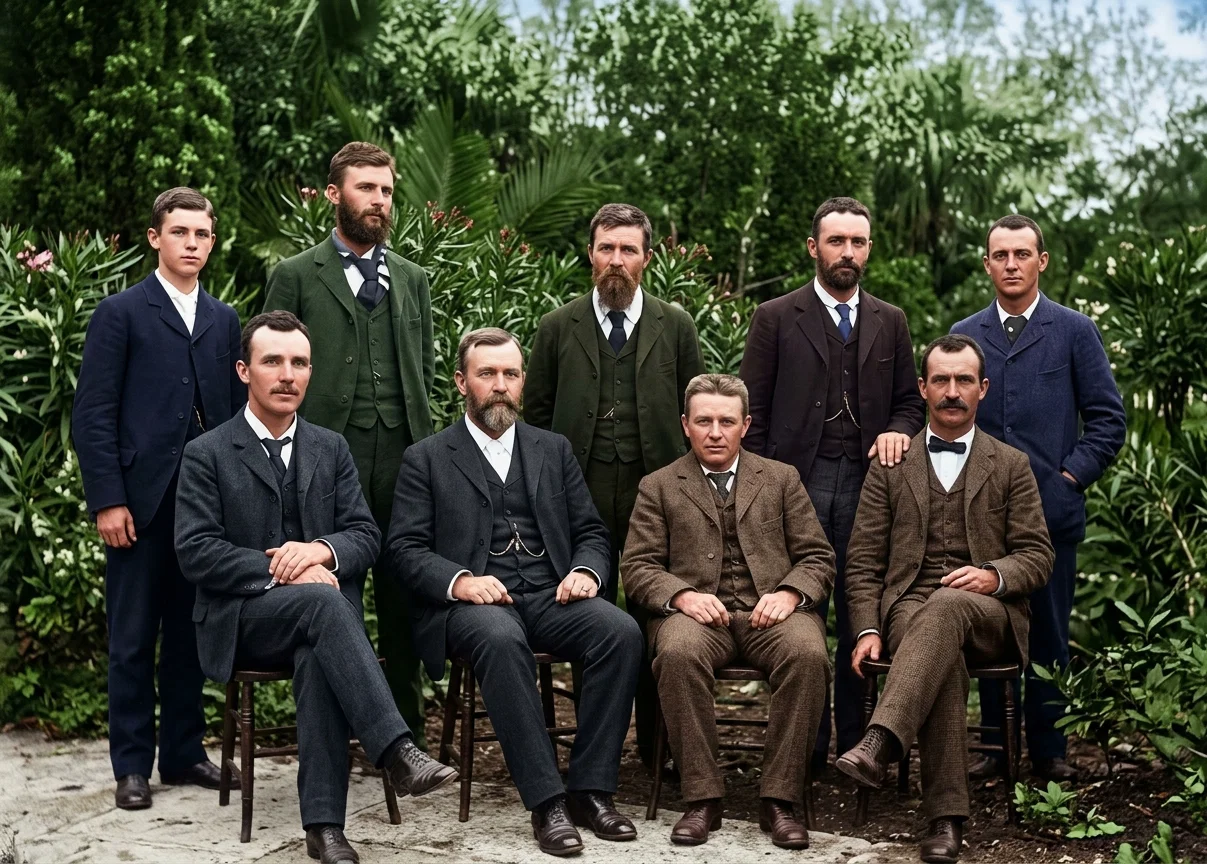
BOER BRETHREN IN BERMUDA

F. W. SPIES

Brazil

F. W. SPIES

It was decided by the conference committee that I should visit the province of Espirito Santo, so I started for that province on June 21, accompanied by Brother Richard Ohm, who was to make Espirito Santo his future field of labor. The trip was a slow and unpleasant one, owing to the poor connections which we made, and not until the night of July 14 did we reach the home of Brother W. Ehlers.
The next evening the general meeting for that province began. It was appointed to continue over two Sabbaths. But the first part of the meeting was but poorly attended, the majority of our brethren having planned to attend only the latter part of it. The preaching of the Word was greatly blessed. The business sessions passed off in harmony and unity until the question came up of having Brother Ehlers, the only ordained minister in the province, go to the Rio Grande do Sul Province to labor. At this juncture there arose considerable opposition. But as the importance and reasonableness of this was placed before the brethren, they finally consented to it. At this meeting the brethren subscribed for a club of fifty Arautos, our Portuguese paper, and donated two hundred and twenty-five milreis, or about fifty-six dollars in United States gold, toward our five thousand milreis fund for the publication of Portuguese literature.
The removal of Brother Ehlers to Rio Grande do Sul would leave this province without the labors of an ordained minister for about a year. Hence it seemed good that we, before leaving the district, should visit the different churches and companies, and see that all things were, as far as possible, in good running order.
We accordingly visited the Santa Joanna district. Here we remained over two Sabbaths, and on the last Sabbath, August 6, it was our privilege to organize a church of twenty-nine members. It was four years since I had been in this section, and I was indeed very grateful to see such a large company as had meanwhile become obedient to the truth.
From Santa Joanna we came to Guandu and Manteiga, where we visited the scattered believers, then came to Serro Pellado. The brethren at Serro Pellado had just finished getting timber ready for a good-sized building, which was to serve as a home for their church-school teacher, and then also as school and meeting-house. The building will no doubt soon be under roof.
From Serro Pellado we visited the companies at Sapucaia and Rio Chucu, then also the church at Santa Marie, after which I started on the return trip. Arriving at Rio de Janeiro, I found that, on account of sickness, I could not do much there at that time, hence I came to Rio Claro, Sao Paulo, and Santa Cruz.
I hope soon to reach Santos, and then go to Rio de Janeiro and finish my work there. I will then return to the work that is awaiting me in the province of Parana.
Although many things seemed strange and dark on this trip, yet it is enough to know that God is in all things that concern his children, and that even these, to us perplexing things, work together for our good. We trust our labors have been blessed of God to the encouraging of his children, and then our desire is fulfilled. Glory be to his name!
Rio de Janeiro.

A Convert in Uganda

A CONVERT in Uganda was asked if he would undertake a certain work. He replied: “Is it for me to choose my work? Tell me what to do. I am ready to obey.” — Selected.

Missionary Magazine for the Blind

The Society for the Propagation of the Gospel, a missionary organization in England, proposes to issue a monthly magazine for the blind. It will be devoted to the interests of missions.
Continue reading: Colporteur Work in South Africa