Signs of the Times, Vol. 43, No. 1.

Rapid Developments in the Philippines
Earlier text: HOW DO WE FACE THE NEW YEAR?

Embraced in Redemption

By J. N. LOUGHBOROUGH
WEBSTER defines “redemption” as “deliverance of sinners from the bondage of sin, and from the penalties of God’s violated law”; and “redeem,” “to purchase back; to regain possession at a stipulated price; to re-purchase; to rescue and deliver from the bondage of sin and the penalties of God’s law.—‘Christ hath redeemed us from the curse of the law, being made a curse for us.’ Gal. 3: 13.”

SOLD TO DO EVIL

The Scriptures represent mankind as “under sin,” sold to do evil, and that with no profit. Of idolatrous Israel we read that they “sold themselves to do evil in the sight of the Lord, to provoke Him to anger.” 2 Kings 17: 17. Isaiah said to them, “Ye have sold yourselves for naught; and ye shall be redeemed without money.” Isa. 52: 3. Of his own experience Paul said, “I am carnal, sold under sin.” Rom. 7: 14.
The work of grace Paul said was to “redeem us from all iniquity” (Titus 2: 14), “to redeem them that were under the law” (Gal. 4: 5). Of such the psalmist said, “None of them can by any means redeem his brother, nor give to God a ransom for him.” Ps. 49: 7.

REDEMPTION FROM DEATH

Mortality to the whole race was the result of Adam’s transgression, and death is the future penalty for the personal sins of men; but the Lord said, “I will ransom them from the power of the grave; I will redeem them from death.” Hosea 13: 14. As mankind are “sold under sin,” they must be bought—the ransom price paid—before they can be redeem. No man can give to God the ransom price for his fellow man, so the price must be paid by some one superior to man, and not in the same condition as man. The apostle said: “Ye are not your own; for ye are bought with a price: therefore glorify God in your body, and in your spirit, which are God’s.” 1 Cor. 6: 19, 20. “He that is called, being free, is Christ’s servant. Ye are bought with a price; be not ye the servants of men.” 1 Cor. 7: 22, 23.
This is how it was accomplished: “Christ . . . gave Himself for our sins, that He might deliver us from this present evil world.” Gal. 1: 3, 4. He “loved me, and gave Himself for me.” Gal. 2: 20. Christ shed His blood—which is the life—gave His life, for our forfeited life, that He might redeem us. So our redemption is “the redemption that is in Christ Jesus.” Rom. 3: 24. “Ye know that ye were not redeemed with corruptible things, as silver and gold; . . . but with the precious blood of Christ, as of a Lamb without blemish and without spot.” 1 Peter 1: 18, 19.
So “we have redemption through His blood, the forgiveness of sins, according to the riches of His grace.” Eph. 1: 7. See also Gal. 1: 4. The praise ascribed in heaven, by the representatives of all the finally saved, is, “Thou . . . hast redeemed us to God by Thy blood out of every kindred, and tongue, and people, and nation.” Rev. 5: 9.

A NEW EARTH INVOLVED

In this redemption work, not only recovery from sin and death, but also the restoration of Eden, and a new—renewed—earth, are involved. To the believers it is said, “After that ye believed, ye were sealed with that Holy Spirit of promise, which is the earnest [pledge] of our inheritance until the redemption of the purchased possession, unto the praise of His glory.” Eph. 1: 13, 14.
On this we note the statement made to the Romans: “We know that the whole creation groaneth and travaileth in pain together until now. And not only they, but ourselves also, which have the first fruits of the Spirit, even we ourselves groan within ourselves, waiting for the adoption, to wit, the redemption of our body.” Rom. 8: 22, 23. When all promised in the redemption is accomplished, it can indeed be said of Christ that He has “obtained eternal redemption for us.” Heb. 9: 12.
How sad that, in this very time when Christ is about to complete this glorious restoration for His people, “higher critics” should be “denying the Lord that bought them”! 2 Peter 2: 1.

Choosing Blind Guides

By A. C. GILBERT
WHO, in making a journey through a difficult country, would choose a blind man for a guide? The idea is absurd, and its absurdity would be all the more manifest were the journey known to be attended with much peril.
Explorers usually supply themselves with competent guides. They select those who know the way, both by study and by experience, and can present the proper credentials. Travelers depend almost wholly upon the judgment and knowledge of their guides. Therefore the need of exercising the greatest care in making a choice in so important a matter.
Dishonor, treachery, villainy, murder, would stigmatize the character of the guide who would prove untrue to his trust, and mislead those who were depending upon his guidance.

THOUSANDS ARE FOLLOWING BLIND GUIDES

There are thousands of travelers to-day who are following blind guides. It is a serious matter indeed. They are listening to the counsel of those who are leading them to certain ruin. How strange, how sad, that men and women will permit themselves to be thus led! In the majority of cases, they have not asked nor sought the credentials of the one who professes to be their guide. They have not compared his offers to serve them, with the standard, to see if he be a competent guide. Why so careless?
I refer to spiritual travelers, who want to go through this difficult, sinful world to the heavenly country. To reach that land eternal requires careful direction during the whole journey. The guidebook, which is the standard, the test of efficiency, is the Bible.
All guides who offer to lead men and women through the darksome vale and over the rugged mountains that intervene between the present and yonder home, must allow their credentials, their knowledge and instruction, to be proved by the standard guide,—the Bible. If they do not agree, the assumed guide is not safe. He can never bring us to the home land for which we sigh. Should he vary in only one point, he is not to be trusted. A lack in one essential will mean eternal ruin and loss.
Is your guide a safe one? Is he following the plain word of God, or is he running after the luring will-o’-the-wisp of higher criticism, church creed, or individual opinion? It will pay you to investigate before you go farther in your journey. Be serious, be devotional, in this question of paramount importance. A good rule by which to measure your investigations, is Isa. 8: 20: “To the law and to the testimony: if they speak not according to this word, it is because there is no light in them.”

Love

GOD is love. There is no fear in love. The Majesty on high is not a stern judge, but a God of love.
In the Book of books, we find these words: “The Lord, the Lord God, merciful and gracious, long-suffering, and abundant in goodness and truth.”
“God’s love is written upon every opening bud, upon the petals of every flower, and upon every spire of grass. Though the curse of sin has caused the earth to bring forth thorns and thistles, there are flowers upon the thistles, and the thorns are hidden by roses.”
How His heart of love yearns for the erring, that they might find shelter under the shadow of His wing, and by His power be kept from the grasp of the archenemy!
The promises of the Infinite are rich and many; and every inducement of His great heart of love is held out to finite man, that he might obtain the riches of the everlasting kingdom. He will give “abundantly above all that we ask or think.” What more can a loving Father do than He has done to rescue fallen humanity? And all He asks in return on the part of man, is willing obedience to His just requirements.
“When we doubt God’s love, we distrust His promises. We dishonor Him, and grieve His Holy Spirit.”
H. E. Sawyer-Hopkins.

The Gentle Touch of Charity

“MANY a strong heart has been broken by a gentle touch of charity.”

THE NEW WORLD OF SOUTH AFRICA

Pioneering and Pioneer Life in That Dark Continent—Building Homes in the Frontier Wilderness—Explorations and Discoveries, and What They Mean
This is the first of twelve interesting articles we have in hand from Elder Spicer, descriptive of his recent visit among our workers in South Africa. Next week, he will tell of “Colonial South Africa.”
EDITOR.
It was in a new world, truly, that I found myself, making the rounds of our South African mission stations.
The trip takes one over karoo,—like our sagebrush country,—through desert, and across veldt, on northward beyond the Zambezi, two thousand miles from Cape Town.
In all parts, there is the spirit of the new country; and on the far frontiers, the pioneer and the settler are still home-making in the wilderness.

THE NEW WORLD OF AFRICA

Yes, it is new. The Western Hemisphere does not hold all the New World. Long hidden from the eyes and knowledge of Europe, this South African world was brought to light in the era of navigation and exploration that came with the Reformation.
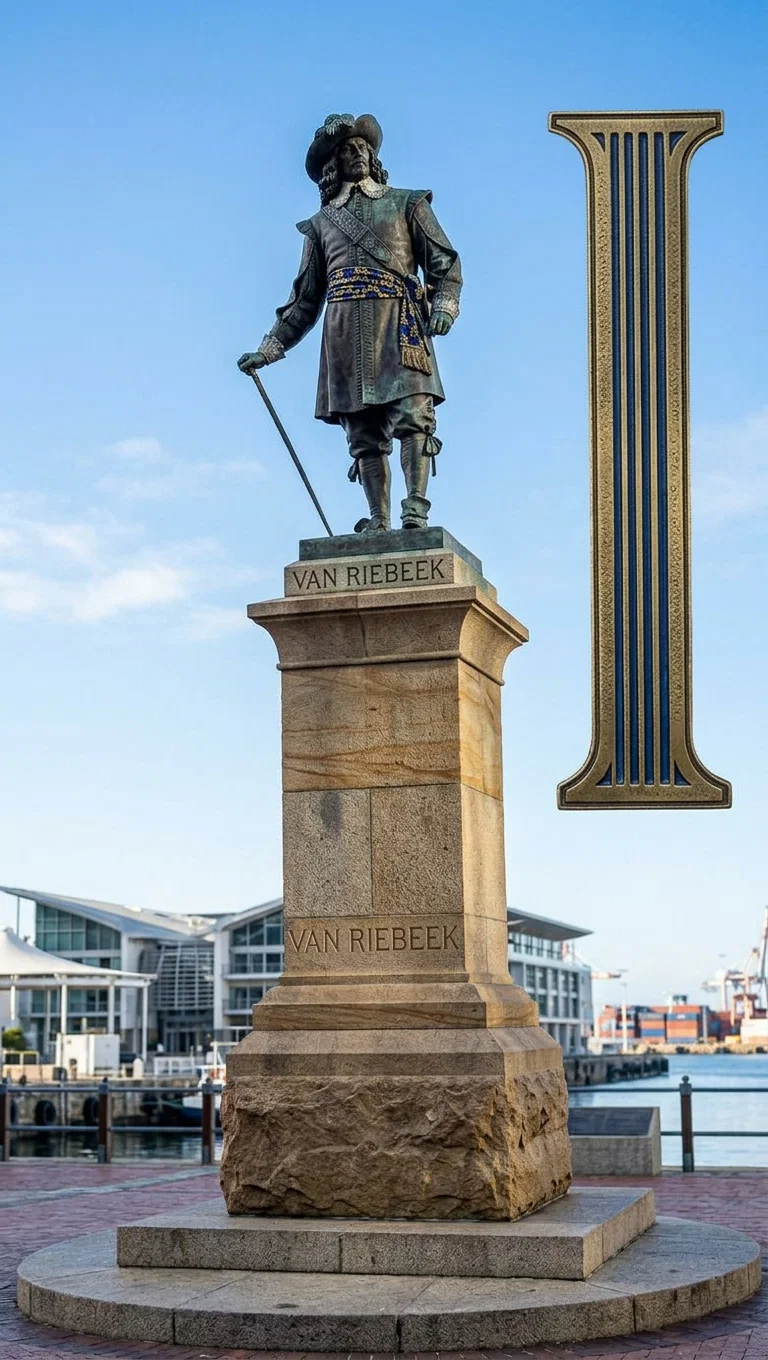
STATUE OF VAN RIEBEEK
CAPE TOWN
STATUE OF VAN RIEBEEK CAPE TOWN
The reform era was an era of world discovery. No sooner had the time come for light to stream forth from the newly opened book of God, than the hand of Providence beckoned men to go forth and open doors into all continents, so that the light might shine in upon all nations and tribes.

TWO OF THE GREATEST EVENTS

In the old book “The Wealth of Nations,” Adam Smith says: “The discovery of America, and that of a passage to the East Indies by the Cape of Good Hope, are the two greatest and most important events recorded in the history of mankind.”—Book 4, chapter 7.
In 1486—six years before Columbus discovered America—the Portuguese navigator Bartholomeu Dias landed at a little bay five hundred miles north of the southernmost cape of Africa. The name he gave the bay is still on our maps—Angra Pequeña, “Little Bay.”

SEARCHING A WATER ROUTE TO INDIA

Dias, like Columbus after him, was searching for a water route to India. He very nearly succeeded. Having been driven south and around the cape by storms, he made the east coast of South Africa by sailing northward. He would have pushed on eastward still; but his crew were fearful, and demanded that he turn back.
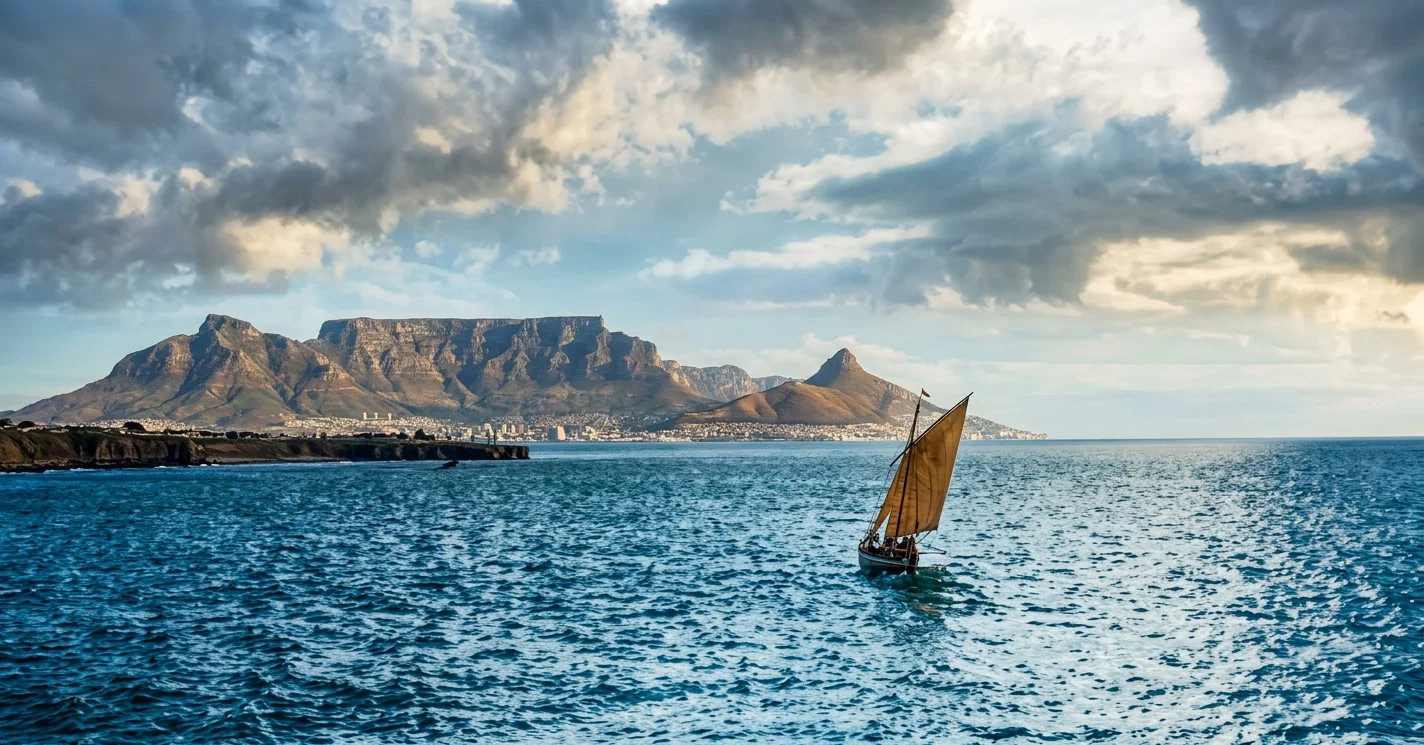
So from about the spot where the Indian Ocean glitters within sight of our Maranatha Kafir Mission, Dias sailed for Europe. On the return, he coasted around the magnificent promontory of which Table Mountain is the chief ornament. He named this point the Cape of All Storms, tormentos being the expressive Portuguese word. But in joy at the discovery of the southernmost part of Africa, with open sea to the eastward, the king of Portugal renamed it Cape of Good Hope, as it is to this day, the doorway through which hope and light have found their way into regions before unlighted.
“Cape of Storms, thy specter fled, See, the angel Hope, instead, Lights from heaven upon thy head.”
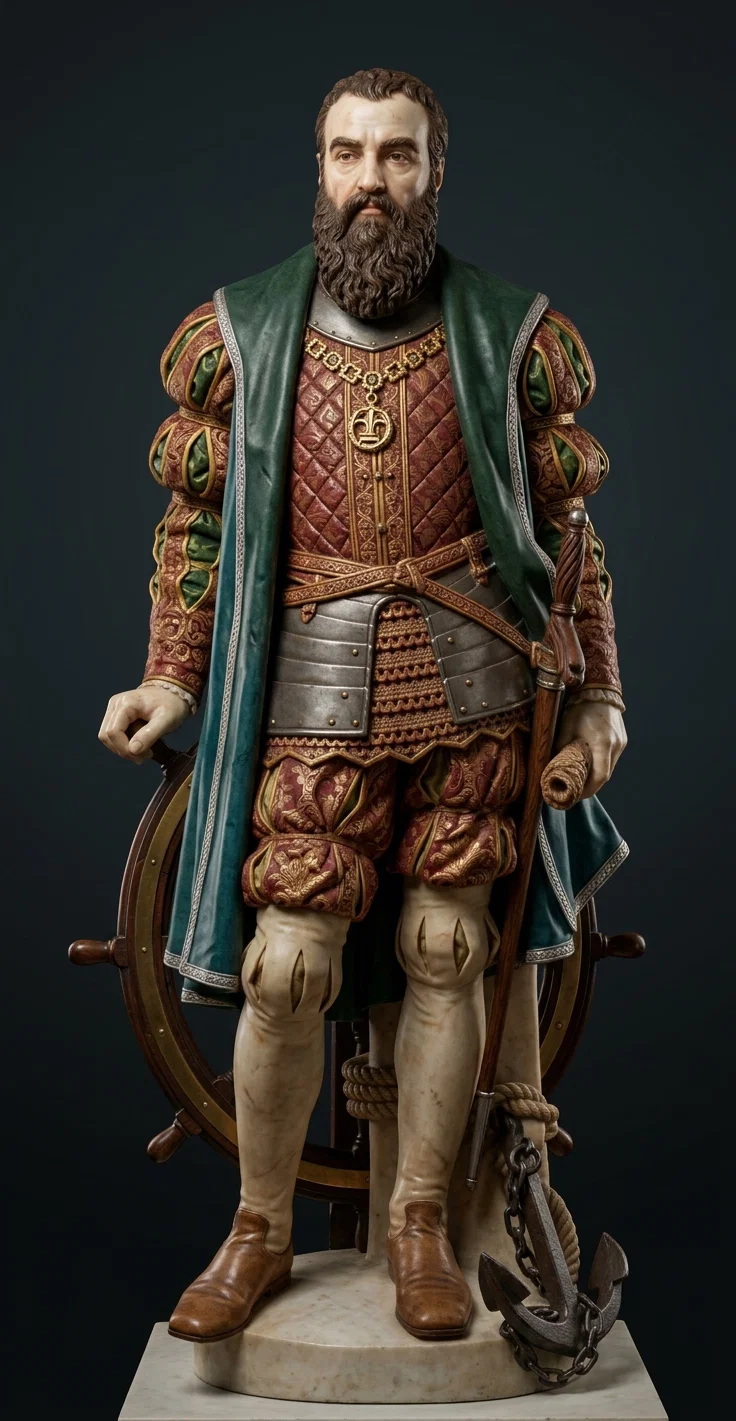
In 1497, ten years after the return of Dias, another and larger expedition sailed from Lisbon, to search for the route to India by the southern seas. Vasco da Gama commanded. Six months later, he anchored in Table Bay. Rounding the cape, he worked up the east coast to the Arab settlements about the mouth of the Zambezi, where he found a pilot who steered his squadron to India. Second only to the discoveries of Columbus, and of greater immediate results to commerce, this achievement was celebrated with great rejoicings when the expedition sailed up the Tagus to Lisbon once again. So Da Gama’s is the statue that stands looking seaward from Lisbon, memorial of Portugal’s leading part in world discovery.

SIX MONTHS REDUCED TO EIGHTEEN DAYS
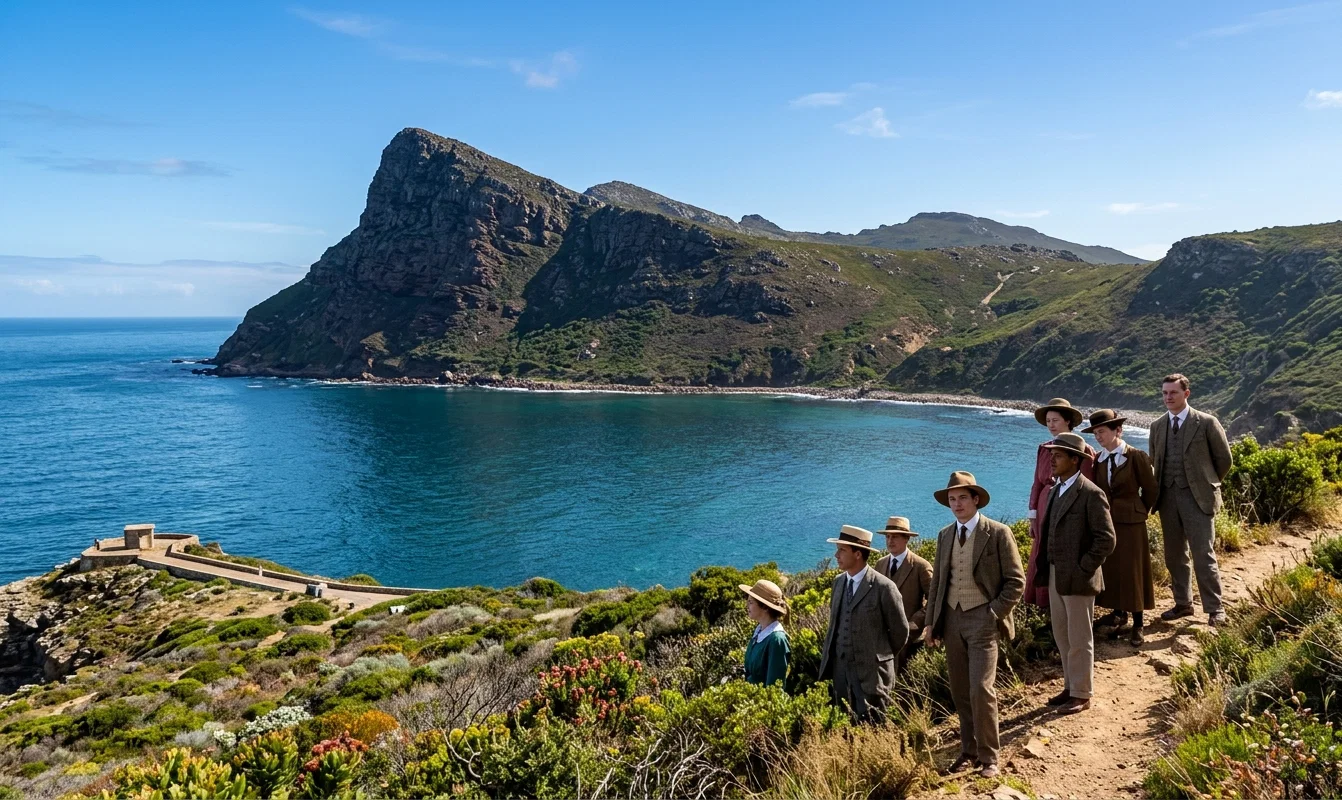
To-day on the swift mail boats of the Union Castle Line, we leave the chalk cliffs of England behind, and in eighteen days or less, may anchor alongside Table Mountain, under that famous constellation, the Southern Cross. In those old times, the voyage meant six or eight months of tossing in the tiny wooden hulls. In a marvelous way, the road has been opened up for us to the ends of the earth in this time when the gospel is due to reach all peoples. And while rejoicing at the facilities and comforts of world travel in our day, we can the more gladly recognize the brave spirit of the old navigators who were impelled to dare the perils of the unknown seas in order to make the first paths for the new time.
“Oh, ye that now in giant barks o’er subject oceans speed, Give to the men that dared them first their peril-purchased meed! Oh, ye to whom, in later times, the sea brings few scant fears, Honor as best befits their fame those staunch old pioneers!”
“Oh, how those sailors’ simple hearts with pious hope beat high, When first they saw the sacred cross hung in the southern sky! And soon the gladdening tidings had leaped from lip to lip, That heaven itself was smiling on the devious voyaging ship.”
“Deep was the joy that crowned their hopes, when high above them reared, Wreathed in its folded films of fog, the mountain bold and weird— The mountain under whose bleak brow the great seas bask or break, And round whose rock-built basements now vast fleets their courses take.”
Table Bay, South Africa
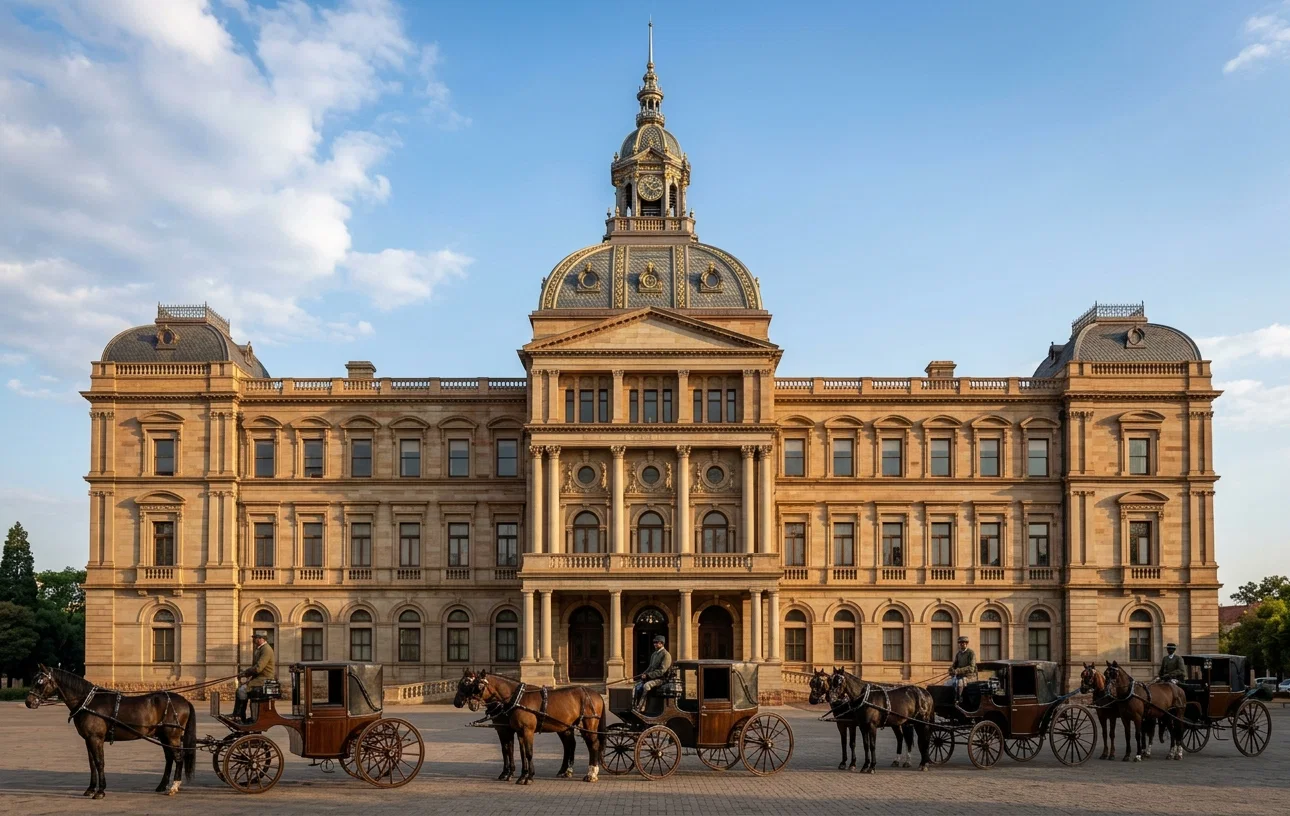
GOVERNMENT BUILDING, PRETORIA, TRANSVAAL
The Portuguese founded no settlement at the cape. Thus the history of South Africa really begins with the coming of the Dutch. The sturdy Netherlands people had a large trade with the East Indies; and as their ships called at Table Bay for water, it seemed wise to found a permanent settlement. So in 1652, a company arrived from Holland, to make homes in the new world of South Africa. Dr. Jan van Riebeek was their leader; and he proved himself equal to the task of cheering the colonists on through privations and sicknesses, until the foundations of a new commonwealth were laid. He is honored as the father of the new country, and the local poets celebrate lovingly even his frailties.
STATUE OF VASCO DA GAMA,
LISBON
STATUE OF VASCO DA GAMA, LISBON
“Quick tempered, keen of eye and ear, the little doctor seems— In belted coat and buckled shoe—more of romance and dreams.”
This work began about forty years after that other Netherlands expedition had founded the New Amsterdam, on Manhattan Island, which was to grow into the great city of New York. The South African pioneers had the wilder region to subdue.
“The lions roared by garden gates, the leopard watched the path, And the vanished pools of Cape Town were the lumbering hippo’s bath.”
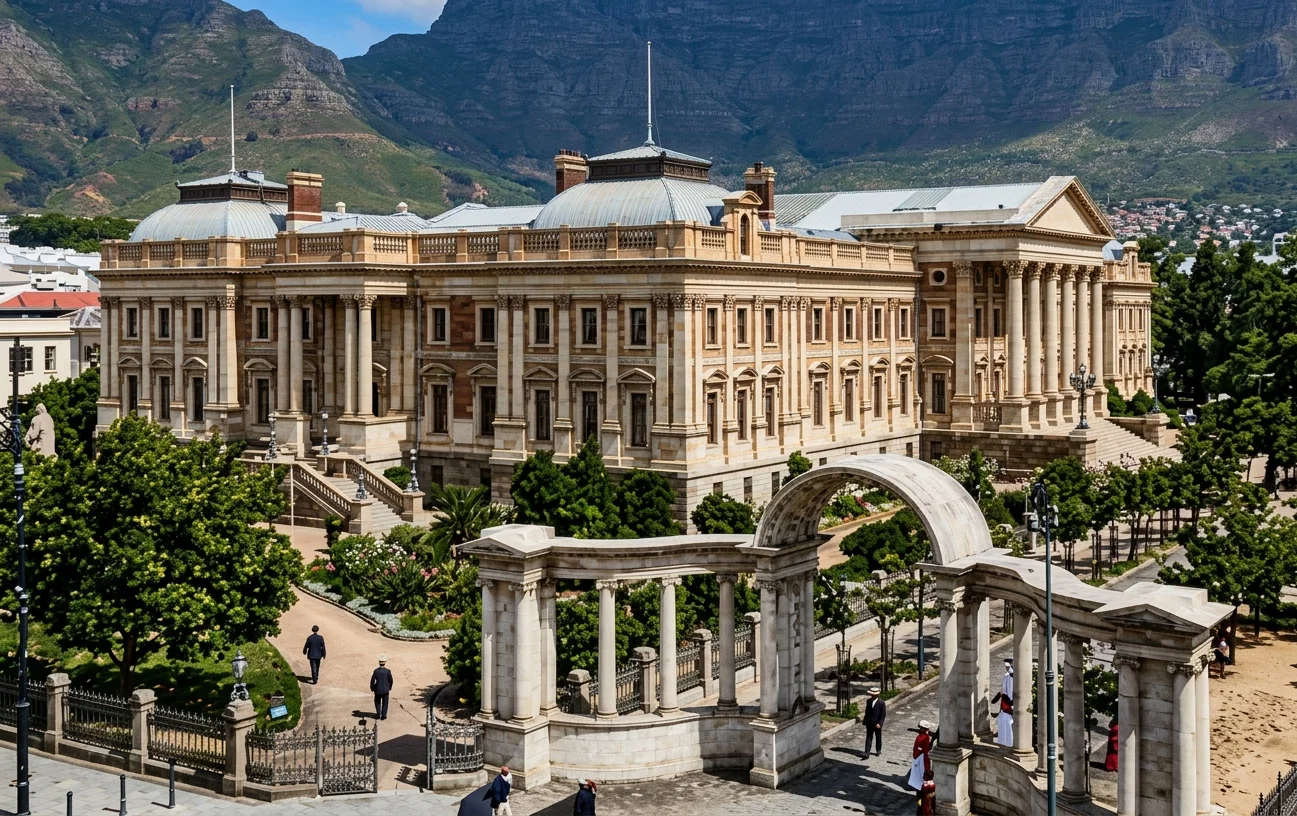
Now the statue of Riebeek, on the harbor front, looks toward Table Mountain, over one of the fine cities of the world. Cape Town is the legislative or parliamentary capital of the Union of South Africa. The executive capital is Pretoria, in the Transvaal.
In Cape Town I found the headquarters of our own work in South Africa, the offices of the South African Union Conference. This union conference organization is composed of the Cape Province, Orange Free State, and Natal-Transvaal conferences, with missions to the Kafirs of the Cape Province, the Basutos of Basutoland, the Zulus of Natal, and the missions among the tribes of southern and northern Rhodesia and of Nyasaland.
Cape of Good Hope
Cape of Good Hope
As Cape Town has been the historical base in the founding of this over-sea British dominion, so it has been the base of our missionary operations. Landing in the city after a ten-thousand-mile journey, I found myself at home among believers in the “like precious faith.”
The first hours ashore took me into the Wednesday evening prayer meeting at the old Roeland Street church. As I listened to the songs of Zion and to the prayers and the testimonies, I said to myself again, How true are those words of Paul, “The word of the truth of the gospel; which is come unto you, as it is in all the world; and bringeth forth fruit, as it doth also in you.”
I heard the same note of joy and thankfulness for the truths for which this Advent Movement stands, that is heard in other lands. One after another, some with deep emotion, told what a blessing this message of Christ’s soon coming had been to them. It had brought a deeper experience to those who before had known Christ, it had saved others from the world, and had wrought reformation of lives. To all, the bright hope of the soon-coming Saviour was the dearest hope on earth, and the power that was leading them to devote their lives and every resource to the spreading of the good news of the coming kingdom.
And this ringing keynote that I caught at Cape Town as I landed for the first time in South Africa, I heard repeated in all parts of the dominion.
The “sure word of prophecy” nearly two millenniums ago said that when the last days came, a people keeping “the commandments of God and the faith of Jesus” would be springing up in all lands, proclaiming the message of preparation for the coming of the Lord. That word of prophecy is fulfilling before men’s eyes to-day.
W. A. S.
PARLIAMENT HOUSE, CAPE TOWN
Continue reading: THE DAY BREAKS