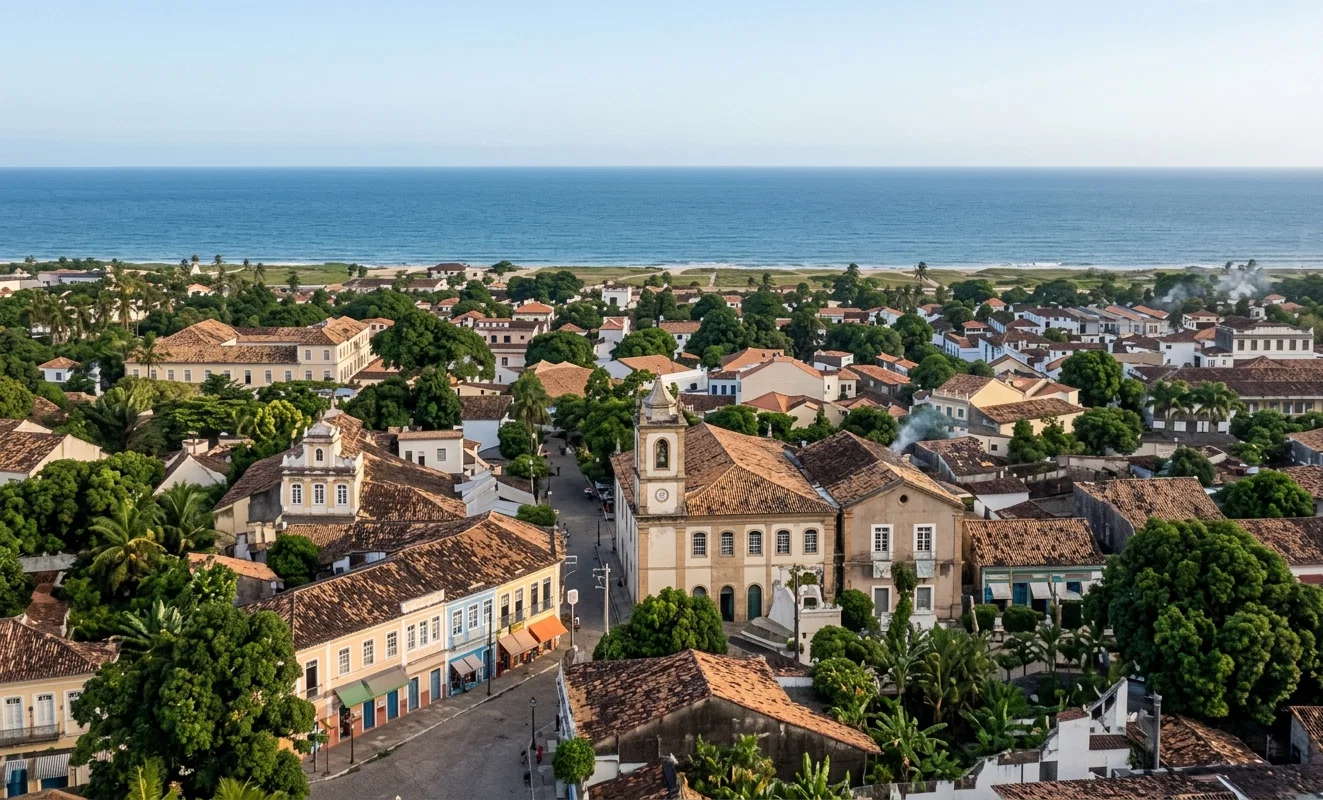
Such beautiful things in the heart of the woods!
Flowers, and ferns, and the soft green moss;
Such love of the birds in the solitudes,
Where the swift wings glance, and the tree-tops toss;
Spaces of silence, swept with song,
Which nobody hears but the God above;
Spaces where myriad creatures throng,
Sunning themselves in his guarding love.
Such safety and peace in the heart of the woods,
Far from the city's dust and din,
Where passion nor hate of man intrudes,
'Nor fashion nor folly has entered in.
Deeper than hunter's trail hath gone,
Glimmers the tarn where the wild deer drink;
And fearless and free comes the gentle fawn,
To peep at herself o'er the grassy brink.
Such pledge of love in the heart of the woods;
For the Maker of all things keeps the least,
And over the tiny floweret broods,
With care that for ages has never ceased.
If he care for this, will he not for thee—
Thee, wherever thou art to-day?
Child of an infinite Father, see;
And safe in such gentlest keeping stay.
—Margaret E. Sangster.
MRS. I. H. EVANS
By Mrs. I. H. Evans
The White Slave Traffic—No. 1
MRS. I. H. EVANS
In November of last year there appeared in one of the leading magazines an article entitled “The Daughters of the Poor,” charging the existence in New York City, under political patronage and protection, of an organization, or syndicate, having for its object the recruiting and sale of young girls, especially of aliens, for purposes of infamy. It was further charged that the leaders in this business had “established recruiting systems in every large city in the United States.”
So serious and far-reaching were the accusations made, that a special grand jury was impaneled the first week in January to investigate the so-called white slave traffic. At the time of the appointment of this grand jury, of which John D. Rockefeller, Jr., was chairman, the opinion was widely expressed by men in high positions in New York City that the charges were either wholly false or greatly exaggerated. Mr. Rockefeller himself has been widely quoted as saying, “If these stories are true, they should be proved; if they are false, they should be silenced.”
As time passed, less was said about the falsity of the statements made; and in February an appropriation of $25,000 was voted by the board of estimates for the purpose of carrying on the work of the grand jury. Arrests, indictments, and a number of convictions followed.
However, in view of the gravity of the charges made, the report finally submitted by the grand jury has been called “distinctly inconsistent, contradictory, and unsatisfactory.” Certain politicians and political papers are openly exultant at what they term the “vindication” which the city has received at the hands of the grand jury in its statement of its failure to find any “evidence of the existence in the County of New York of any organization or organizations, incorporated or otherwise, engaged as such in the traffic in women for immoral purposes,” etc. Yet this exultation would appear to receive slight encouragement from the report itself; for it immediately goes on to say, in the most forcible language, that “a trafficking in the bodies of women does exist, and is carried on by individuals acting for their own individual benefit, and that these persons are known to each other, and are more or less informally associated.”
Continuing, the report says: “We have also found that associations and clubs, composed mainly or wholly of those profiting from vice, have existed, and that one such organization still exists. These associations and clubs are analogous to commercial bodies in other fields, which, while not directly engaged in commerce, are composed of individuals all of whom as individuals are so engaged.”
Mrs. Rose Woodallen Chapman, writing in the Union Signal on the results of this investigation in New York City, says:—
“The results may seem meager. Two facts, however, must be borne in mind: First, that the evidence now required under the law to secure conviction is of such a character as to make it almost impossible for it to be obtained. Certain definite facts must be proved. The testimony of the victim is not enough; it must be corroborated by another witness. But the very character of the acts is such that a man would see to it that no one else was put in a position to have knowledge of them. Hence, in numberless cases where guilt is morally certain, it can not legally be proved.
“Second, the restricted meaning which it seems must necessarily be placed upon the word ‘slave,’ enables7the statement to be made with some show of reason that there are very few ‘slaves.’ Too many of these unfortunate girls are ready to say that they are in the life willingly. Some say it through fear of their keepers, doubtless, while others have become so hardened to the life that, seeing nothing else for them, they speak the sad truth.”
On the difficulty of securing legal evidence, the report submitted by the grand jury has this to say:—
“Owing to the publicity given to the inquiry at its inception, it has been difficult to get legal evidence of the actual purchase and sale of women for immoral purposes, and our investigators have been informed in different quarters that a number of formerly active dealers in women had either temporarily gone out of business, or had transferred their activities to other cities. However, five self-declared dealers in women had agreed upon various occasions to supply women to our agents; but, because of their extreme caution, and the fear aroused by the continued sitting of this grand jury, these promises were fulfilled in only two instances, in each of which two girls were secured for our agents at a price, in the one case of $60 each, and in the other, $75 each. Indictments have been found against these two persons; one pleaded guilty, and the other was convicted on trial.
“All of these parties boasted to our investigators of their extensive local and interstate operations in the recent past. They specifically mentioned the cities to which they had forwarded women, and described their operations as having at that time been free from danger of detection. Our investigators also testified as to the methods and means used by these people in replenishing the supply of women, and in entrapping innocent girls.”
A study of a few of the cases in which definite information was secured will give a better idea of what this traffic really is than can be gained in any other way:—
“The first conviction was that of Guiseppi Picone, who induced fifteen-year-old Wanda Boshka to leave home with him, and afterward forced her to support him. The next was that of Emilio Dicico, who, with Joseph Marfio, took three young girls on a trip to Hartford, Conn., and sold them to the keeper of a resort.
“Samuel Buckle abducted his sister-in-law, who was fifteen years old, and brought her from Philadelphia to New York, and sold her into a life of infamy.
“The stories of these girls, when secured in detail, are most pathetic. Take, for instance, the case of Louise Gunderman, a comely Swedish girl, who came to this country to be married to the faithful sweetheart who was at last able to make a home for her. Through some misunderstanding of his directions, she found herself alone on the streets of New York. Her inquiries brought her no knowledge of her lover’s whereabouts. She found her way, however, to the house of some of her countrywomen, and soon secured an honest position. At a social gathering she met Gustave Lagerman, one of the most noted cadets and panderers in Greater New York. He used all his arts of fascination upon the poor, lonely girl, painted a rosy future for her, and, telling her great tales of the different customs of this new land, succeeded in getting her to come and live with him. It was not long before she was forced upon the streets to earn the shameful money that enabled him to live in idleness.
“On the last night of the old year, the poor victim suddenly met her old sweetheart face to face. To him she sobbed out the story of her misery and shame, and he promised to aid her to a reformation. They were starting away together; but Lagerman, who had been spying upon them from a doorway, drove the lover away at the point of his revolver, and chased the girl to her room, where he beat her cruelly, and then destroyed most of her clothing, that she might remain a prisoner.
“With hope newly aroused, however, the girl did not give up, but managed to send word to her brother-in-law, who rescued her, and caused the arrest of her ‘master.’
“Unlike the stories of most of these victims, this one has a happy ending. The ‘slave-driver’ was sentenced to five years in the penitentiary. The victim was married to her faithful lover, and sailed with him for the old country, where in time she might forget a part, at least, of her terrible experiences.
“In contrast to this finale is the fate of the girl wife of eighteen, who refused to return to a life on the streets to support her husband, just released from the Elmira reformatory, and was shot by her husband as a consequence.
“Another case was that of a young girl of fine family who came from Venezuela to go on the stage. She has stated upon oath that she was forced into a life on the streets at the point of a revolver; she bears marks which she asserts were received in beatings which the man gave her; and since her escape from his clutches, she has lived in constant fear for her life. Threatening letters which were written her by the man were put in the hands of the district attorney.”
These few instances give some idea of what is going on in New York City, and in greater or less degree in other large cities, especially the port cities, of this favored “land of the free.” While it is a fact that the grand jury found no evidence that would be accepted in a legal court, of an organization or syndicate engaged, as such, in this unholy traffic, yet a consideration of the evidence submitted, by the wider court of Public Opinion, must certainly result in a verdict of “Guilty” to the defendant.
The influence of the investigation conducted by the grand jury was not confined to New York City. Other large cities took up the work with good results. As indicating the extent of this traffic it may not be out of place to cite in this connection the statement of Elmer E. Todd, United States district attorney at Seattle, Wash. He says: “There are between seven and eight hundred men in Seattle who live from the revenue from the white slave traffic, almost all of whom could be reached by the State courts, if proper efforts were made.”
Facts such as these, which might be added to almost without limit by every court of inquiry on this subject, form a dreadful warning to fathers and mothers, and to all others who prize innocent girlhood and virtuous young manhood.
Takoma Park, D. C.
Hot-Weather Hygiene
By DAVID PAULSON, M. D.
DAVID PAULSON, M. D.
DURING the heated season one can hardly pick up a daily paper without reading a list of heat prostrations. In nine cases out of ten these could have been avoided by giving heed to a few simple principles.
A Cooling Diet
Avoid mustard, pepper, and highly spiced foods that taste hot when they are cold. Such continue hot after they are swallowed, and even after they are absorbed into the blood. Mustard plasters may properly be applied externally, but they should not be used internally.
The department of health of the city of Chicago gives the following advice as to hot-weather dietetics: “Be temperate in all things. Drink plenty of water. Far more important than anything else, eat lightly; cut your usual winter rations in half. Eat soups, vegetables, and buttermilk. Avoid particularly meats, butter, and heavy foods of all sorts. Keep your bowels open, your stomach empty, your skin clear, and you will avoid sunstroke.”
Move Outdoors
Many a housewife sweats her life away hovering over a red-hot stove in a stuffy kitchen, never dreaming that she might just as well move her kitchen out under the trees, or out on the shady side of the house. It would be a little more inconvenient, but a thousand times more comfortable. Try it, and you will wonder why you did not make the move before.
This is also the time of year to form the outdoor-sleeping habit. Move your bed out on the veranda. Screen the bed with netting, or, better yet, screen the whole porch with wire, to exclude flies, mosquitoes, etc. After you have slept outdoors a few nights, you will wonder how you ever existed in the close, sultry bedroom; and when you discover how beneficial and restful such sleep is, you may possibly venture to stay out all winter, or at least until the holidays. And that will mean deliverance from your annual crop of colds.
Cool Bathing
Some years ago on a hot July day a patient said to me, “O, I wish I was at home to-day! I am afraid I am going8to have a spell.” I inquired if she thought it was any cooler at home. “O, no; but you know if one is to have something awful happen to her, she prefers to be at home.” I asked if she would not enjoy some delightful May weather, and she assured me she certainly would. So I told the nurse to take her down and give her a prolonged dose of May weather. The patient looked at me, half wondering whether I was in earnest, but the nurse understood.
She took her to the bath-room, put her in a bath that was just the temperature to feel as comfortable as a May morning. Her dinner was served on a tray put on a board placed across the bath-tub. In the middle of the afternoon a cool breeze came up, and she was taken back to her room. I saw her later: she was all smiles, and said that it was the best day she had had since coming to the institution. She said the provoking part of it all was that she had a bath-tub in her own home, and it had never occurred to her to get into a bath-tub and cool off when suffering from these spells that came when she was overheated.
Do not be afraid to take a bath that is comfortable. The skin is wet on the inside all the time: it will not do it any harm to get wet on the outside. Very hot baths are relaxing, very cold baths are depressing; but a bath that is near the temperature of the skin is restful and refreshing. Be sensible, and you will enjoy the summer just as much as the winter.
Hinsdale, Ill.
Russia
By J. T. Boettcher
J. T. BOETTCHER
Our meetings this spring were full of interest. The public press gave excellent reports of our work, even desiring our pictures. We are also receiving encouraging reports from the field. Four families from Siberia write: “Since 1910 we have decided to pay a tithe to the Lord. There is yet time to give of our gold and silver to this cause. [Each of the four families sent tithe for the first time, although they are not yet members.] There are a number of families near us who also wish to be baptized and unite with us. Can you not send a minister to establish us in the faith?”
A TOWN IN SIBERIA
In about a month I hope to be in Siberia , and expect to visit some of these people. It is wonderful how they find the truth. Sometimes it is through a friend who sends them some reading-matter; or a simple conversation with some one starts them to investigating; and again they find the truth all alone from studying the Word of God.
A brother, an ordained minister, is also ready to go to Harbin as soon as we can arrange to enter that field. The brethren from that far-off country send their tithe regularly to our office in Riga. The minister who goes there will remain some time, organizing those who are ready, and interesting others. We are glad that we can enter China from the north, and pray that the influence of the work done may spread to many other places.
The tithe received for the first three months of this year was nearly double that of the first quarter of 1909. Our conference supports about twelve workers, besides paying two tithes to the union. We are thankful to God for this. The field is so great that we have dozens of governments, or states, without a single worker. So every dollar increase of tithe assures us that the Lord will have the message go to these fields.
“The harvest truly is plenteous, but the laborers are few; pray ye therefore the Lord of the harvest, that he will send forth laborers into his harvest.”
Riga.
North Brazil Mission
By JOHN LIPKE
JOHN LIPKE
The harvest is great, but where are the laborers? This we can truly say of our large field. Many calls from interested persons come to us, but we are not able to answer because we lack laborers. Our mission consists of one part of the state of Minas Geraes, the state of Bahia, and all the states north of this,—a very large territory with only one ordained minister. Think of it! I will give you some facts in order to show you how needy we are:—
The State of Bahia
The work in this state was begun by a Brazilian who, by reading the Bible, became convinced that he should keep the commandments, observe the Sabbath, and be baptized. He began to keep the Sabbath, thinking there was no one else in the world who kept it. He talked and preached about what he had learned from the Bible, and the result was that others accepted the truth. When Brother F. W. Spies finally visited them, he found five persons ready to receive baptism.
One man, a sergeant, had heard our brother speak about the truth, and had received some literature from him. Later this sergeant went far into the interior of the state of Bahia. There he spoke to some of his friends about the Sabbath, and gave them copies of the Arauto da Verdad (Herald of Truth). An interest was aroused, and one man began to keep the Sabbath. This man wrote to the brother, who provided him with more literature for others, and now three more are keeping the Sabbath. These four and many other interested ones are waiting for a minister to come and instruct them in the truth and baptize them. The brother who first accepted the truth wrote that every month for a whole year, at the time when the steamers were due, he sent a man with animals a day’s journey, expecting a minister to come, but none came. Brother E. Schwantes started once, but could not get a steamer, and had to return. The people desire to obey, but they have no teacher. A9minister ought to go there as soon as possible to harvest the ripe grain. He would have to travel from the city of Bahia two days by train, fifteen days by steamer, and one day on horseback.
In Jeguie, a town of Bahia, there is a church whose members have shown an interest in the truth. This interest was aroused by one of our brethren who wrote articles on the Sabbath question for one of the papers. After the people had read these articles, they became convinced, and began to keep the Sabbath; but as no one could visit them to establish them in the truth, they lost their hold again. This church ought to be visited by a minister of the gospel.
In Margem Grande, Olho d’Agoa, Arreias, and near Ilheos are interested persons. At Peruype, where Brother Schwantes held meetings, one hundred have declared themselves ready to obey. If we had some one to labor there, for a time, souls would be gathered. At the capital, where the writer lives, we must by all means work.
VIEW OF MACEIO, BRAZIL
Is not this large state of Bahia, with its 236,666 square miles, too much for one minister?
The State of Alagoas
We have a work at Maceio, the capital of the state of Alagoas. One of the members of the Rio de Janeiro church, a government nurse, was sent from there to the city of Maceio. He began to speak about the truth to others, and soon souls were interested. Brother Spies worked there for a time, and a number were baptized. A public effort was made later, and others took their stand. Not long ago we received word that four others are ready for baptism. We ought to have one laborer for the state of Alagoas, who could build up the work.
The State of Pernambuco
I wish to tell you of an interest at Recife, the capital of Pernambuco. One of our brethren moved from Bahia to Pernambuco, to make that state the center of his business operations. Soon he became acquainted with some Protestants, who came to him for instruction. Sabbath after Sabbath the number of interested ones grew until he had on Sabbath at his house a regular attendance of about thirty persons. He wrote for a minister to come and finish the work, and the writer is now in Recife, expecting to baptize the believers and organize a church. Though not yet members, some are already paying tithe.
News of this movement has spread into the interior of the state, and at three different places there are more than thirty interested persons who ought to be instructed. One is an employed local minister. We ought to have a worker to stay right here in Pernambuco. If I could divide myself into several parts, so as to do the work that is needed, I would be glad to do so.
The Lord is working, souls in need are calling for help, and many of our brethren in the United States have means to divide with this so long neglected field. There are some conferences with many laborers who could surely spare us a few. It is true that Brazil is a hard place to work, on account of the climate and many inconveniences; but we have been here now for more than twelve years, and are still able to work. Why can not you, strong young men whom the Lord has called to do his work, lay yourselves on the altar for service? Leave your good homes and the many comforts you have in the United States, and come over to Brazil and help us. The harvest is great, and the laborers are few. If you were in my place, you would understand why I so earnestly appeal to you for help. We are in need; and if I could, I would write this appeal in your hearts with a pen of fire.
The Baptists and Presbyterians have missionaries in almost all the states of north Brazil, who labor with success for the Brazilians, and have built up some good churches. Can not we do the same?—Certainly we can. Give us men and means, and with the help of God we will plant the standard of our Lord Jesus in these states.
We are glad that two of our members from Pernambuco expect to move to the state of Amazonas. They will be witnesses in the “farthest north” of Brazil.
The States of Maranhao and Ceara
These are two states north of the state of Pernambuco from which our pioneer canvasser has lately returned. He reports good sales, and interested ones in Sao Luiz, the capital of Maranhao, and in Fortaleza, the capital of Ceara. A minister ought to locate in Ceara.
I plead with you to send us the needed help in men and means. This large field, with its many interests, is too much for one man. He may break down under the burden, and there is no one ready in the field to take it up again.
Sao Paulo.
How to Choose Friends
IN a matter so important as the making of friendships, there should be the greatest care. A distinct choice should be made. We think it would be well for young people to observe a few rules in the choice of friends. Let the following, at least, be thought of:—
Never choose others as friends simply because they have money, or belong to what is called “good society.” There are many belonging to wealthy families and moving in fashionable circles who are entirely worthy of confidence; but they should be selected for their worth, and never for the material advantages their friendship seems to offer.
Never choose others as friends merely because they dress well, or are attractive in appearance. Young people often make serious mistakes in choosing their friends by externals.
Never choose as friends those who make a mock of religion. True friendship and religious reverence are twins.
Never choose as friends the superficial or the selfish. True friendship must have depth of nature, and must be as willing to give as to receive.
Choose as your friends the pure, the good, and trustworthy, no matter what their station in life, or the amount of money they may have at their command. And, having chosen, hold your friends as a sacred possession.— Selected.
Institutes in Korea
By MIMI SCHARFFENBERG
MIMI SCHARFFENBERG
I visited Soonan recently, where we held a one week’s teachers’ institute. Eleven native church-school teachers were present. A good spirit prevailed, and we had a very profitable time together. Papers were read, which were followed by interesting discussions, showing that the native teachers are full of good ideas. Many would tell also about their own experiences in teaching the different branches, and this was helpful to the others. All returned home with a determination to work more faithfully than ever before.
Following the teachers’ institute we had a three days’ Sabbath-school convention in Pyeng Yang. All who were present voted to give all their Sabbath-school donations for foreign mission work, and also to use their influence to help increase these donations. Elder C. L. Butterfield and Miss May Scott were present to help in these meetings.
From Pyeng Yang ten Korean women who had gathered there from different places left with me for Chinnampo, where we were going to hold a Bible institute for women. As the river was frozen, we had to go overland. We had five horses, and took turns walking and riding. We made the journey in two days. The first night we had to stop in a village where there was but one hotel. We managed to get some rooms, and nine of us slept on the floor, as all Koreans do, in a room eight by sixteen feet. The following night eleven of us slept in a room eight by ten feet. I managed to lie next to the door, and hoped to get a little fresh air once in a while; but as soon as I would open the door a little, some one would exclaim, “Please close the door; it is cold, and I am catching cold.” During the institute we lived and held our meetings in the Chinnampo Girls’ School.
Our attendance, including women, girls, and our native Bible workers, was about thirty most of the time. Some could not leave their homes for any length of time, so would stay only for a week, but the majority stayed through the whole month. I gave special instruction to our Bible workers, and they in turn helped take charge of other meetings. Living all together as we did, I had a good opportunity to become better acquainted with them. The four Bible women and I occupied a room eight by ten feet. The room next to ours had from ten to twelve occupants, and the rest of our company stayed in a house near by.
The work of the day began with the rising-bell, at 6 A. M. Morning worship was held at seven o’clock, conducted by one of the workers. An interesting feature of this service was that each one present was called upon to repeat a Bible verse of her own choice. About once a week all present would repeat as many verses as they could remember. Breakfast was at eight; a workers’ meeting was held at nine; and at ten o’clock10two meetings were held, one for the children, and another for the older ones. A general Bible study was given at eleven o’clock, and at 2:30 P. M. another meeting was held for the children. Dinner was served at half-past five, and the public Bible study held at seven-thirty. The retiring-bell at nine-thirty, and “lights out” at ten o’clock, closed the program for the day.
From one o’clock till four each afternoon we worked among the people in Chinnampo. One thousand invitations were distributed every afternoon, telling the people the subject of our evening Bible study, and inviting them to come. This gave the Bible workers an opportunity to put in practise what they had learned in the morning. At the same time four or five went out canvassing. This was a new experience for the women here in Korea. A number of books and tracts were sold. More might have been done had I gone with them oftener, and given them more instruction. But one month was too short a time to give them instruction in all branches. I have found that, by going with them, much might be done in the canvassing work if we only had a suitable book for which to canvass. What we have so far is not suitable for the people in general, who know nothing about our truth. I found that the average number of books sold was three to every ten canvasses given. Two persons have decided to keep the Sabbath, as the result of our evening Bible studies.
As far as our own people were concerned, perfect harmony prevailed. All felt that they had been greatly blessed during the month’s study, and were sorry when the time came to part.
A week before the close of the institute Elder C. L. Butterfield and Brother R. C. Wangerin came to Chinnampo. On the last day of the meeting nine precious souls were buried with their Lord in baptism. One dear sister, sixty years of age, who is the mother of one of our Bible workers, had desired baptism for a long time. When she heard that Elder Butterfield had come to Chinnampo, and that we were going to have baptism, she left home and came at once. She had to walk a distance of thirty li, and being very feeble, the journey was too much for her, so that she was laid up the next day, and not able to receive baptism with the others.
When this sister arrived, she was so glad to see me that she put both arms around me. I said, “You make me think of my own dear mother at home.” Her daughter said to me, “You know Jesus is coming soon, and it will not be very long till you can meet all your loved ones, nevermore to part.” To hear these words of comfort from a Korean sister did me more good than I can tell. Our people here in Korea are beginning to realize more what this truth means to us as a people. It is true, there are only a few so far who realize this, but they have had little opportunity to learn the truth. They have to be patiently taught the same thing over and over.
Every time I go out among the people, I learn to love them better, and I wish I might work among them all the time. But the translating work keeps me at home a great deal. I am thankful to be here, and have enjoyed much of God’s rich blessing.
Seoul.
Chile Conference
By J. W. Westphal
J. W. WESTPHAL
This conference, the first that has been held in the south, was held at Gorbea, March 25 to April 3. It was the largest meeting Chile has ever had, about one hundred fifty being present more or less of the time. As there is no church at Gorbea, all came to devote all their time to the meeting, and this resulted in a good, regular attendance. Besides the writer, Elders N. Z. Town and A. N. Allen attended from abroad. All the Chile laborers were present.
The outside attendance was not large. Elder F. H. Westphal and the writer each held a meeting among the Boer colonists three leagues and a league and a half respectively from the city. We think the way is open for further work among them.
On the first Sabbath the funeral of a Boer sister from South Africa was held from our place of meeting, Elder Westphal preaching the sermon. Before the conference closed, her husband and children began to observe the Sabbath. In all, eighteen persons were baptized, the largest number ever baptized at a single conference in Chile. The meeting was a success in every way. The counsels of Elders Town and Allen were appreciated, and the former's assistance in planning for the book work will materially assist in its healthy development.
The Chile Conference had made progress during the year. The membership had increased about one hundred. The income, including tithe and all donations, had increased nearly one thousand dollars. The tithe was $2,308.41 gold (nearly $11,000, pesos chilenos), an increase of $480.55 gold over the previous year. Not so many papers were used as during the previous year, but the book sales were much larger.
A resolution was adopted accepting the invitation to assist in raising the $300,000 for institutional work in foreign lands, and 534 chilenos (over $100 gold) was paid or promised. A fund was begun to assist sick canvassers. Several hundred pesos was pledged, besides promises of monthly payments.
A fund was started for the purpose of building a meeting-house in Santiago, and 1,165 chilenos ($250 gold) was promised. The conference decided to endeavor to raise 2,000 chilenos by means of Sabbath-school donations during this year. Last year the donations were over 1,700 chilenos. In these enterprises the brethren took an active and enthusiastic interest. The conference by a unanimous vote supported the recommendation of the union conference to unite the west coast printing work with the River Plate press at Florida, Buenos Aires.
The old officers were re-elected, and the number of the conference committee was enlarged to seven. There is prospect of a prosperous year in the work before the brethren in Chile. Harmony reigned in all the deliberations; and if this continues, it can not but bring the blessing of the Lord into the work.
Buenos Aires.
A Hindu Temple in San Francisco
The religions of India are invading the United States. There has lately been completed in San Francisco a Hindu temple which is three stories high, and has in its chapel a seating capacity for three hundred persons. This is only one step in the advance that heathen and Oriental religions are making in America. What the people of that city can find worthy of following in that religion, is hard to understand.
This seems to verify the expression that it matters not what is preached, some will believe it, and fancy they have found something that is wonderful. Every system of religion that does not grow and expand is doomed to destruction. Perhaps the Hindu leaders understand that principle, and, regarding America as a good missionary field, are sending hither their missionaries.
We have much to do. The foe is actively engaged in his work of destruction.—Selected.
A Brahman’s Conversion to Christianity
In a certain village of North India there resided an aged Brahman, skilled in the use of mantras,—magic spells to work good results or ill,—and especially in the art of casting the evil eye on any whom his clients wished to harm. He was resorted to from far and near by those who desired his services, and derived from them a fair income. He had taught the "black art" to his son, and at his death left to him his books and papers. It chanced that in some way this young man obtained an old copy of the Bible in Roman characters. In order to read the book, he learned the Roman alphabet, with which he was not previously acquainted. The result was that he gave up casting the evil eye, destroyed his books of magic, and was found by a missionary to be already a confessed Christian, although unbaptized.—Selected.
Religious Book Sales in Africa
THE tract society office at Cape Town, South Africa, seems to think something rather unusual has seized the people up about the Somabula Mission, for an order for four hundred thirty-five books came in unexpectedly upon them, and besides this one large order, some side orders took all the books they had on hand of several other kinds. Evidently something is being done in the sale of books in the vicinity of some of our African missions. The distribution of religious literature is a valuable agency in the world's evangelization.