To Be Crowned King Before His Father’s Throne—The Event Marks the End of All Gospel Work—Christ’s Coming Will Follow Shortly After—Are there Events on Earth to Indicate When the Crisis Is Reached?
By T. E. BOWEN
Many are impressed that some great and important event is about to take place. This is true. That event is the end of this world’s career of sin. A burning question is, May we know when that period is about to begin which is spoken of in the Bible as the time when Christ receives His kingdom? With what event does it begin? While the Bible points out the event at its beginning, the exact time is nowhere given.
In Heaven, Not on Earth
The great event that begins the reign of Christ as King takes place in heaven. It is the event that was uppermost in the minds of His followers during the ministry of Jesus; namely, His entering upon His reign as King. On several occasions, the disciples were ready to crown Jesus king; but He would not permit them to do so. He knew it was not the purpose of His Father that He should enter His kingdom at His first advent. To Pilate’s question, “Art Thou the King of the Jews?” Jesus said, “To this end was I born, and for this cause came I into the world.” But He puzzled Pilate, as well as His followers, by adding, “My kingdom is not of this world,” in the sense of His ruling as king over any nation in their present sinful state.
This Time a Secret of the Father
While Jesus was born to be King, He abides His Father’s time. He told His disciples, before leaving them, that the time when He should take the kingdom, the Father kept in His own power. Acts 1:4-7. They did not know then that the entering upon His reign as King meant the end of all earthly kingdoms as such. But this is the truth. The time when the reign of Christ begins is when He goes to His Father in heaven to receive of Him the earthly kingdom—the rule of the whole earth. Shortly following this coronation ceremony is the visible coming of the Son of God to this earth as King in power and great glory to get His subjects.
When Christ goes to the Father to receive His kingdom, He will have ceased His ministry as Priest. This brings the end of the gospel on earth. This is identical with the closing of the ark’s door in Noah’s day. The door of mercy for sinners, the opportunity for sinners to find life, will then cease forever. That time comes at last to all on earth suddenly, as a thief in the night. Of that day and hour knows no man. Not even Jesus Himself, nor the angels in heaven, nor God’s people on earth, know the time until it is announced by the Father, and the events to take place in connection with it begin to come to pass. This occurs, however, some time prior to Christ’s personal advent to this earth to get His people—the subjects of His kingdom.
Jesus Receiving the Kingdom
“I beheld till the thrones were cast down, and the Ancient of days did sit. . . . I saw in the night visions, and, behold, one like the Son of man came with the clouds [angels] of heaven, and came to the Ancient of days, and they [the angels] brought Him near before Him. And there was given Him dominion, and glory, and a kingdom, that all people, nations, and languages, should serve Him: His dominion is an everlasting dominion, which shall not pass away, and His kingdom that which shall not be destroyed.” Dan. 7:9-14.
As Jesus leaves His mediatorial work as Priest, nothing stays the pouring out of the vials containing the wrath of God, placed in the hands of the seven angels commissioned to pour them out “into the earth.” Neither is there anything to hold the winds of war and strife, that they should not blow upon the earth.
Events on Earth
The questions arise at once: May we know, by events on earth, when this important one in heaven is about to take place? Is there any clue by which we may know the time is about reached for Jesus to be summoned by His Father to come before Him to receive His kingdom?
A VETERAN TURKISH CAVALRYMAN OF THE BALKAN CAMPAIGNS ON HIS WAY TO JOIN HIS TROOP
For more than fifty years, Seventh-day Adventists have proclaimed to the world that there was one event to take place among nations that would be the last to occur, as recorded in the word of God, before Christ should take His kingdom. They have held that from the information given the prophet Daniel twenty-five hundred years ago by the angel Gabriel, that one event yet unfulfilled was bound up in the government now known as the Ottoman empire, or more familiarly spoken of as Turkey. Not that this nation was or is the most important of nations—not that! The solution seems to be found rather in that this nation, at the time of the end, should occupy territory counted as strategic, and that because of this, God foretells us what some of its last movements would be. When these should take place, then we might know that the next great and important event would be Christ’s standing up in heaven to receive the kingdom given Him by His Father.
An Important Event Foretold
We shall not go into the technical points leading up to the text giving us this light, but will simply state that the eleventh chapter of Daniel records the principal events among nations from the opening of the Persian kingdom, followed by Babylon, where Daniel was then standing, on down to the close of human history, or the end of all nations as such.
And further, we understand that this entire chapter has been transferred to the pages of history, except the last verse, which reads: “And he [Turkey, occupying territory north of Palestine, and hence designated as the king of the north] shall plant the tabernacles of his palace between the seas in the glorious holy mountain; yet he shall come to his end, and none shall help him.” The next clause, verse 1, chapter 12, adds, “And at that time shall Michael [Christ] stand up.”
The palace of Turkey is now at Constantinople. The expression “between the seas in the glorious holy mountain” is understood to mean Jerusalem—so long held by the Jews as God’s sacred and glorious dwelling-place. Therefore we understand this scripture to mean that when the seat of the Turkish government is forced from Europe, either immediately or at some later time, Jerusalem will be chosen as the seat of this government; and that the next event—although it should be emphasized that no one knows, even then, how long afterward—the next event will be this very important one of which we have been speaking—Jesus’ receiving in heaven His kingdom, as presented to Him by His Father.
The World’s Outlook
Do events point in this direction? Are there indications that the Turk’s power is waning in Europe, and that he will be forced to remove his seat of government elsewhere? Every one who has given it any thought, knows that this is so. Russia for years has sought an outlet from the Black Sea through the Dardanelles. England has opposed this until this late war. Now England and Russia are allied in opposing Germany. Turkey has entered into the war arena, backed by the foe of Russia and of England. What the outcome may be, no one knows; but here775is a significant statement, taken from the Washington Star, under date of November 4, 1914: “Emperor Nicholas, of Russia, has left for the front, after issuing a manifesto, in which he says that Turkey’s action [of bombarding Russia’s Black Sea ports] opens the way for Russia to accomplish her historic mission on the Black Sea.”
This refers to instruction of Peter the Great many years ago, that Russia must secure this warm water outlet.
Why has Turkey remained so long in Europe, especially when even two years ago, during the Balkan war, the war slogan was that the Turk must go? Evidently God has had a hand in it. Apparently now the entire situation is changed; and with England bombarding Turkish forts, the prospects are that this waning power will not be able long to hold its strategic position in Constantinople, unless Germany should in some manner enable Turkey to do so a while longer. At all events, this is the last recorded change given us in the Book of God, to occur among nations before Christ takes His kingdom. Coincident with Jesus’ receiving the kingdom on high, many events press in for fulfilment on earth; but in this one event God gives His believing people a token by which they may know that the end is at hand.
Kingdom Transfers
The prophet foretold when Babylon should pass away and the kingdom be transferred to the Medes and Persians. Many years before this happened, the Lord named Cyrus, and pointed out that the river gates to that proud city would be left open in the siege that would seal Babylon’s doom. Literally that was fulfilled.
Again, Jesus very definitely indicated by a token to His disciples the time when Jerusalem, their beloved city, should be destroyed. Forty years later, that literally came to pass.
Among many other very striking conditions that would prevail at the time of the end, when all earthly kingdoms were about to be transferred to Jesus, one event is singled out by the angel Gabriel to Daniel as a token by which we may know that this most important event is very near—so near that the Word puts it, “at that time.”
Jesus’ Exhortation to His People Down at the End
Looking down to this very hour in which we now live, Jesus said: “But of that day and hour knoweth no man, no, not the angels of heaven, but My Father only. . . . Watch therefore: for ye know not what hour your Lord doth come [from His ministry as Priest to receive of the Father His kingdom]. But know this, that if the good man of the house had known in what watch the thief would come, he would have watched, and would not have suffered his house to be broken up. Therefore be ye also ready: for in such an hour as ye think not the Son of man cometh.” Matt. 24:36, 42-44.
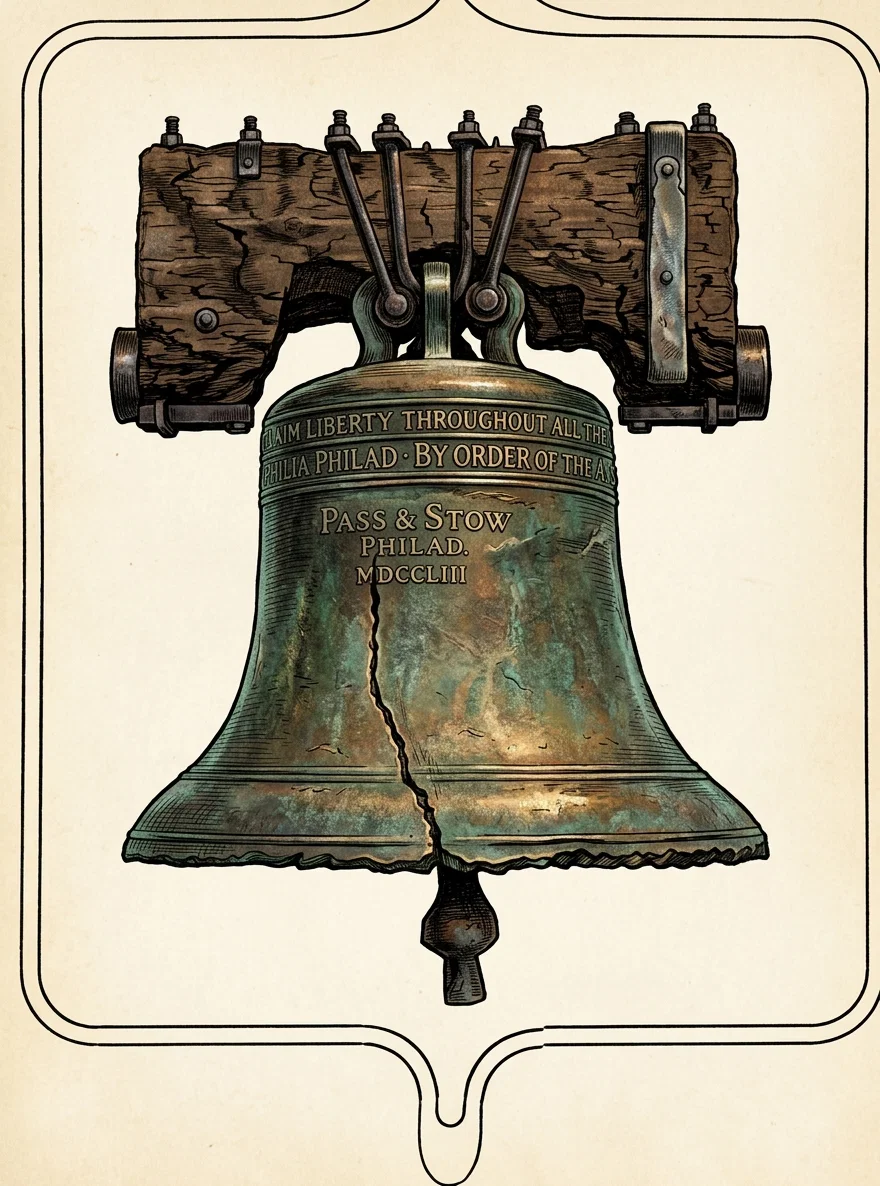
PROCLAIM LIBERTY
By C. S. Longacre
THROUGHOUT THE LAND
This Soul-Encouraging Proclamation Is from Above — The Decree Will Finally Be Universally Enjoyed
By C. S. LONGACRE
Editor of “Liberty Magazine”
God is the Author of liberty. His enemies introduced bondage and oppression into the universe. Christ came into this world to set all men free, and to proclaim liberty to the captives.
It was His original plan that all His creatures should remain free from the taint of sin and the pangs of bondage. He created every being a free agent, and perfect in form and attributes; but having the power to choose good or evil, some, in the course of time, frustrated God’s purpose concerning their welfare.
After sin and bondage were introduced into this world, a voice from heaven was the first to speak hope and a promise of deliverance. When the inhabitants of this earth were oppressing one another everywhere, the Lord stood up for them, and sent the following message to Moses in Mount Sinai: “Proclaim liberty throughout all the land unto all the inhabitants thereof.” Lev. 25:10.
WAITED LONG TO REALIZE IT
The world waited in chains of cruel oppression to earthly sovereigns for 3,268 years after this wonderful proclamation was made from heaven, before there was a legislative body that had the moral courage and Christian charity to affirm this same truth of universal freedom, and make it a possibility in civil government.
Individual liberty in civil government is of divine origin. God was the sole Ruler of all His creatures in the beginning. By virtue of being the Creator of all, He was entitled to sovereignty over all. There was a time when God had no rival rulers. He was the supreme and only Ruler of the universe. His only-begotten Son, by virtue of His position as Son, as well as agent of the redemption of the portion of His Father’s creation that sinned, is to become a joint Ruler of the universe.
“THE PRINCE OF THIS WORLD”
God made this world a principality, and gave Adam dominion over all of it in the beginning. But Adam, by sinning, delivered it over to Satan, and thus Satan became “the prince of this world.” John 14:30. All the inhabitants of this world became the captives of Satan at his will. 2 Tim. 2:26. “Shall the prey be taken from the mighty, or the lawful captive delivered?” asked the prophet. The Lord answered His servant: “Thus saith the Lord, Even the captives of the mighty shall be taken away, and the prey of the terrible shall be delivered: for I will contend with him that contendeth with thee, and I will save thy children.” Isa. 49:24, 25.
From this we may learn, upon the authority of God’s word, that God rules in the affairs of this world, and “worketh all things after the counsel of His own will.” Eph. 1:11. Some day we shall all know “that the heavens do rule,” and that the will of God will “be done in earth, as it is in heaven.” God’s original purpose will be fulfilled, and all who have been subjected in hope “shall be delivered from the bondage of corruption into the glorious liberty of the children of God.” Rom. 8:21.
GOD IS AT THE HELM
While this world is drifting, like a vessel among dangerous rocks, through “the rapids,” yet God is at the helm. No human agencies or devices can save this world of sin from utter wreck and ruin ultimately, but God can and will turn repentant man’s hopeless condition and failure into a glorious triumph. We are not left in darkness as to the outcome of the conflict between truth and error, between right and wrong, between liberty and bondage, between Christ and Satan; for God will triumph over every foe. All who accept Christ will triumph with God and His truth. “If the Son therefore shall make you free, ye shall be free indeed.” John 8:36.
Eternal Torment
By M. A. H.
JOHN 3:16: “Whosoever believeth in Him should not perish, but have everlasting life.” Does “perish” mean, to live in torment?
According to what God says in this verse, we can not receive any other wage for sin than death. Rom. 6:23. And “death” does not mean life, temporal or eternal.
If “death” means life, then “life” means death. What, then, is the difference between the rewards of the just and those of the unjust, when God promises life to one and death to the other?
Surely God means what He says, and will give life eternal to the righteous, and death eternal to the wicked. Jude 6, 7.
M. A. H.
Return Unto Me: The Promise of Redemption
“I HAVE blotted out, as a thick cloud, thy transgressions, and, as a cloud, thy sins: return unto Me; for I have redeemed thee.”
Numbered With the Transgressors: Christ Bearing Sin
“He was numbered with the transgressors; and He bare the sin of many, and made intercession for the transgressors.”
The Thief in Paradise
By Allen Moon
The thief was not with Christ in Paradise on the day of the crucifixion. The day ended at sundown, and the thief was not then dead. When the soldiers took him down from the cross at the beginning of the Sabbath, they had to break his legs to prevent his escape.
Besides this, on the third day after His crucifixion, Jesus had not yet been to heaven, for He said to Mary, “Touch Me not; for I am not yet ascended to My Father.” John 20:17. Therefore the thief could not have been with Jesus in Paradise on the day when this promise was given.
Jesus could, however, give the thief the assurance, even on that day when He hung upon the cross, and to all human appearances had no power to give salvation to any one — even under such circumstances He could assure the repentant thief that he should yet be with Him in Paradise. “I say unto thee to-day, Shalt thou be with Me in Paradise.” Luke 23:43. ALLEN MOON.
Fatal Admissions Concerning Sunday Sacredness
By G. B. T.
It is noted in the Scriptures of truth that “the seventh day is the Sabbath of the Lord thy God.” Ex. 20:10. This is the unanimous testimony of the Bible. This is what God says on this question. The One who made the Sabbath at creation, who spoke the Decalogue from the smoking summit of Sinai, declares this. In tones which shook the globe, He declared to quailing humanity that the “seventh day” is His day. It is not the Jews’ Sabbath, but the Sabbath of the Lord.
Opposing Jehovah’s Statement
It seems strange that against the statement of Jehovah, men would seek to oppose their dicta on this question. Some do, nevertheless; and in their efforts to bolster up a counterfeit Sabbath, they are led to make some very strange statements. “Binney’s Theological Compend” (improved) contains a most astonishing example of this. We call attention to this particularly, as it is a standard work, endorsed and published by one of the large evangelical denominations. That the author is a scholar of note we may conclude from the preface, in which we are told that “the author’s increased knowledge of theology during his long Christian ministry, and especially his studies in the New Testament during the fifteen years in which his sole employment has been the preparation of a popular commentary, have qualified him to recast and enrich his ‘Compend,’ and fortify its statements by more abundant references to the word of God.”
We will note some of the statements concerning the Sabbath question from this enriched and recast “Compend.” On page 169 the author says, “The day appointed of God, at the close of creation, to be observed by man as a day of rest from all secular employment, because that in it God Himself had rested from His work. Gen. 2:1-3.” In this statement, the learned doctor is evidently quite correct.
Again on page 170 he says, “The original law of the Sabbath was renewed and made a prominent part of the moral law, or Ten Commandments, given through Moses at Sinai. Ex. 20:8-11.”
In this also he is in harmony with the word of God. And let it be noted that this “original law of the Sabbath” clearly states, “The seventh day is the Sabbath of the Lord.”
Continuing on the same page, the author says, “This seventh-day Sabbath was strictly observed by Christ and His apostles previous to His crucifixion.”
We are led to wonder how one who makes such a clear and convincing argument for the perpetuity of the Bible Sabbath, the seventh day, even admitting that the example of Jesus and all the apostles is in favor of the seventh day, could himself keep another day, or produce any argument in favor of so doing.
On pages 180, 181, he makes the following astonishing yet truthful statement: “It is true there is no positive command for infant baptism, nor is there any against it, as there should have been if Christ intended to abridge the rights of Jewish parents under the Abrahamic covenant. Nor is there any for keeping holy the first day of the week (italics mine), or for family devotion, or for women to receive the Lord’s Supper. The reasons are obvious; there was no controversy in either case that called for it.”
No Command for It
Note he says that there is no command “for keeping holy the first day of the week.” Then why should a Protestant who takes the Bible as his sole guide, observe a day that the Bible nowhere tells him to observe? How does he arrive at the conclusion that he should keep it? There is no command for Sunday any more than for Wednesday or any other day of the week, the author says. One must be as holy as the other, then; for surely no day can be holy without a fiat of the Almighty.
On page 171, however, he puts forth the claim that Jesus changed the Sabbath, and gives what he considers the evidence. I quote his exact words: “Jesus, after His resurrection, changed the Sabbath from the seventh to the first day of the week; thus showing His authority as Lord even of the Sabbath (Matt. 12:8), not to abrogate or break it, but to preside over and modify, or give new form to it, so as to have it commemorate His resurrection when He ceased from His redeeming work as God did from His creation work. Heb. 4:10.
“When Jesus gave instructions for this change we are not told, but very likely during the time when He spoke to His apostles of the things pertaining to His kingdom. Acts 1:3. This is probably one of the many unrecorded things which Jesus did. John 20:30; 21:25.”
Astounding Confession
This is a most astounding confession. Think of a lawyer coming into court with such evidence to vindicate his client. “When Jesus gave instructions for this change we are not told.” Seeing we “are not told,” how are we to ascertain, in this century, that Jesus ever said anything about it? We surely “are not told” anything about it in the Bible, for the canon of inspiration is as silent as the tomb concerning any change.
“This is probably one of the many unrecorded things which Jesus did.” Think of the trembling penitent facing the Judge of all the earth, standing on a probability. What a foundation! The command for Sunday one of the “unrecorded things”! The learned doctor is forced by candor to admit there is no record in all the book of God about any change in the Sabbatic institution. Surely those who revere the Bible, and desire to stand on the eternal rock of Scripture, will be glad to abandon an unscriptural institution, and take their stand for one for which there is a recorded command handed down by the God who made the world. See Ex. 20:8-11.
“What says the Bible, the blessed Bible?
This should my only question be.
Teachings of men so often mislead us!
What says the book of God to me?”
G. B. T.
WHAT IS CHRISTIANITY?
By J. O. C.
Is Christ Divine in No Higher Sense than that Some Men Are Divine?
Is there No Divine Power Outside of Man to Lift Him Up?
Is Christianity a definite personal quality, or is this a generic term by which to distinguish between civilization and the lower grades of humanity? From much that is written, one would almost conclude that the latter view obtains in the estimation of many who claim to stand in behalf of Christian service.
In a recent volume by Prof. Rudolph Eucken, entitled, “Can We Still Be Christians?” he proceeds to answer his question in the affirmative on a basis of his own arranging, rather than by the criterion of divine sentiment. This is his statement: “We can and must be Christians on the one condition that Christianity is recognized as a progressive historic movement still in the making, that it be shaken free from the numbing influence of ecclesiasticism, and placed upon a broader foundation.”
If the conditions here named mean anything, they must have their apparent import, which is the elimination of such vital779teaching as the divine indwelling and an entire dependence upon heavenly support for success in one's religious leanings. This would be to have a Christianity without Christ in the life, while recognizing Him as a personality of historical “preeminent significance.” But if that is all Christ is to be in one's Christianity, what influence can He have in regulating the life, any more than George Washington or Thomas Jefferson, both of whom were personalities of historical preeminent significance?
That the comparison here used is not irrelevant, may be seen from a statement by this Jena professor. He says that “the fact which is more than all else responsible for the shattering of ecclesiastical religion is that the truth which it once championed as fundamental—that, namely, of the incarnation and the mediatorial office of Christ—is no longer tenable in the present phase of our intellectual developments.” With Christ thus eliminated from Christianity, what part of it is left for faith to grasp?
ONLY A HUMAN DIVINITY
To preserve a semblance of the old way-marks, the author attempts to maintain the divinity of Christ, but only in the sense in which an exceptional man has divinity. This is to place man on an equality with Christ, and so raise him above the need of Christ's power to save him from the consequences of the fall. This is but another addition to the rapidly extending force of believers in the “religion of humanity,” under the name of Christianity.
As the theory of democracy grows in importance in civil matters, the strong tendency is to apply its principles to religious topics, and thus bring the church and the state near to each other. So “humanism,” or trust in human power, is making great progress toward establishment as a great religious system, in fulfilment of prophetic declaration. One has only to study the thirteenth chapter of the book of Revelation to get an inspired comment upon the present situation. It is there foretold that a two-horned beast would appear to advocate certain tenets of religious belief, and attempt to oblige every one to accept the same, under penalty of death. Summing up the whole history of this beast, the prophet declares that the number or sum of this beast is that of a man.
THE RELIGIOUS CRISIS
As early as 1908, Dr. Rodolphe Broda published, in the International for March, a review of the world's progress. In that article was this statement: “One of the most significant features of our own times is the religious crisis through which all the civilized races are now simultaneously passing.” The principal cause of this world-wide crisis, Dr. Broda asserts, is the discoveries of modern science, which, he says, “in demolishing the legends of the creation of the world and man, have also uprooted in the educated mind the faith in the divine inspiration of the books and traditions which taught these legends, and which were the basis of all the accepted religious beliefs.”
He sees in the present movement a unification of all the old “positivist religions,” of every kind, and concludes that “at last the time must come when a single world federation of religion, the church of man, will rise out of the ruins of the ancient faiths, when the great religious crises of the world will be at an end, and the strife between the logical necessity of the modern scientific world concept and the psychic necessity of religion will be solved in the ultimate harmonization of both.”
WOULD DO AWAY WITH FAITH
No one can fail to see that this propagation of the “solidarity of man” leads directly to the rejection of such Scripture teaching as the necessity of faith in Christ's indwelling power, to save one from final destruction. It also does away the thought of individual salvation, by creating the impression that salvation is a collective or social affair. This doctrine aims to set aside the consequences of sin in men, without getting rid of the sin itself. While it gives Christ recognition as a great historical character, in some mysterious sense divine, yet it allows Him no place in the human heart, to put away sin. In other words, He is not recognized as having assumed human form, in order to taste death for every human soul.
Further extravagances of this modern religious view might be cited, but enough is contained in the foregoing to show the dangerous tendencies it metes out to all who adopt it. For if, as Mr. R. J. Campbell, pastor of the London City Temple, says, every human being has within himself the only and infallible source and judge of truth, then man can not look to any higher source for help in time of need, and no necessity exists for a divine revelation to point the way from earth to heaven. It is well to distrust all such theories; for they can never comfort the inner man, as the good “old Book” has ever done. It is better to stay by the old landmarks, and leave the result with the God who rules on high.
J. O. C.
A WORD TO OUR READERS
By Editor
We send no papers from this office to individuals without pay in advance. When persons receive copies without ordering them, they are sent by other parties, and we can give no information in regard to them. Persons thus receiving copies of the SIGNS are not indebted to the office, and will not be called upon to pay for them. Please read the papers you may receive, and hand them to your friends to read.
DATE OF EXPIRATION
The SIGNS wrapper bears date of last issue due on your subscription. Unless renewed in advance, paper stops with expiration date.
If herewith is an order-blank, you will know you have overlooked sending renewal. You will not wish to miss a single issue. Back numbers often can not be furnished.
SCRIPTURE QUOTATIONS
Our authority for the doctrines we teach is the Bible. Quotations are usually from the King James Version or the American Standard Revised.
SUBSCRIPTION RATES
By G. C. Hoskin
Three months $0.50
Six months .90
One year (50 numbers) 1.75
With “Questions and Answers” 2.00
With Bible Atlas (maps only) 2.25
With Bible Atlas (maps and text) 2.50
With Bible Dictionary 2.50
One new yearly subscription and one renewal, or two new, sent at one time, $3.00.
Two new yearly subscriptions and one renewal, or three new, sent at one time, $4.00.
Three new yearly subscriptions and one renewal, or four new, sent at one time, $5.00.
Five or more copies to one person, six months, each $0.60.
Five or more copies to separate addresses, six months, each $0.65.
Weekly and Monthly SIGNS one year, $2.25.
G. C. HOSKIN, Circulation Manager.
SYSTEMATIC BIBLE STUDY
We have the book of Jonah in this week's reading. Skeptics have made a great deal of sport of it; but the Master Himself placed the stamp of approval on this book, when He was here in person. The trouble with men who jeer at such utterances as are made in the book of Jonah, is that they are not acquainted with the God of the Bible—they have not taken pains to observe His infinite power as shown in the great things He has created. Any being who could make a world like this upon which we live, and who can form millions of suns, around which other worlds are circling, is certainly able to form a fish that would be capable of rescuing the prophet. For note that the Word says the Lord had prepared a great fish to swallow up Jonah. The record does not speak of an ordinary fish straying along at the particular time when Jonah was thrown overboard, and incidentally swallowing him; but the infinite God, who had created suns, and systems of suns, and worlds to revolve about them, had performed upon that occasion the much smaller task of preparing a fish for the purpose of swallowing Jonah. There was nothing difficult for Him about this; nor is it difficult for the individual who understands the God of the Bible, to believe.
Read three chapters each week-day, and five on the Sabbath.
63—BENEFIT OF UNKNOWN TONGUES
What benefit is the gift of unknown tongues to us who speak one language? There is a sect here that claim to speak with unknown tongues, and claim that one can not speak this tongue unless possessed with the Holy Ghost. They get on the floor and roll for the Holy Ghost.
J. H.
The gift of tongues the apostle Paul seemed to have had more trouble with than any other in the church, because it gave rise to more confusion, and was subject to more deception. Sometimes it seemed to edify the man who spoke, but was not to be compared in value to prophesying, or speaking for God. 1 Cor. 14: 1-5. He intimates that if he came speaking with tongues, it would be of no worth unless it were explained. Of what good is a trumpet unless it is understood? Five words with his understanding would be better than ten thousand in an unknown tongue. Verse 19. See also verses 23, 24. Tongues in the early church seemed to convince unbelievers who heard in their own tongue. Verse 22. Compare with Acts 2: 8-11.
The gift of tongues under the control of the Spirit of God does not bring folly or confusion. 1 Cor. 14: 33. If there was no one to interpret the unknown tongue, speakers were to keep silent. Verses 27, 28. Most of the modern manifestations of “unknown tongues” reveal no such order.
The man who truly and wisely seeks the gifts of the Spirit of God will do it by yielding himself to God for service; for it is for better, wiser, holier service that God bestows His gifts, not as the man wills and seeks, but as God will. See 1 Cor. 12: 7, 11, 18. The soul that is determined to have a particular gift is not seeking in God’s way, and is putting himself in the best possible attitude to be deceived by the devil, who has counterfeits for the genuine. It has been demonstrated again and again of late years that persons believing they had the gift of the Chinese or Hindu or some other tongue have gone to these countries only to learn they were deceived. In some cases the “unknown” language was a constant repetition of a very few primary syllables utterly meaningless. “The best gifts are those we can best use to glorify God and edify humanity.”