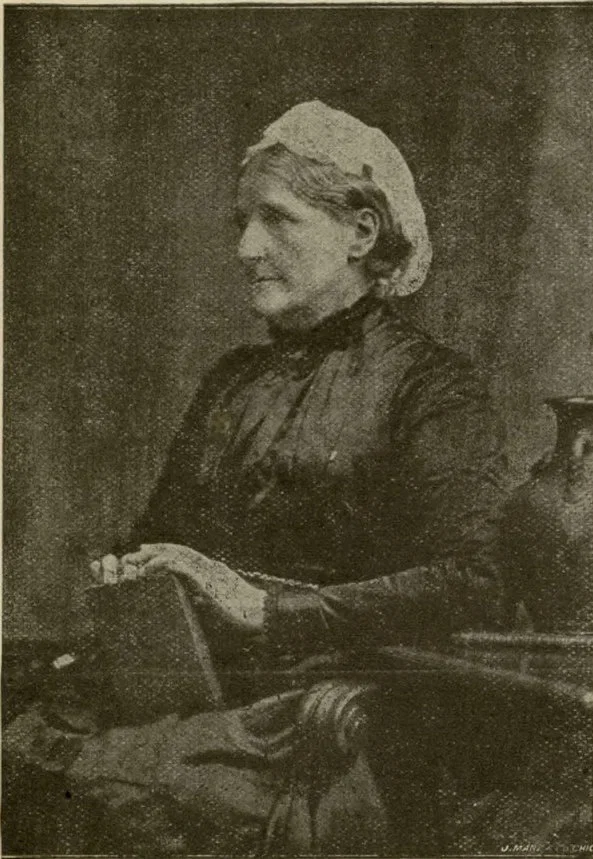
HAGERMAN.—Since my last report, I have organized a church of nine members, all adults, at this place. One was baptized last Sabbath. I hope that others will soon follow in baptism. The work in this field moves slowly; still, I am encouraged to find people who are anxiously inquiring to know the way of salvation. Brother E. A. Morey has recently arrived here from Kansas, and he reports the tent pitched and meetings begun at Las Vegas. On account of my health, I have thought it best to seek a little rest.
The Spanish Methodist minister at Santa Fé, who began to observe the Sabbath last fall, is still firm, and there is reason to believe he may yet become fully established in all points of the third angel’s message. Pray for the work in this field. MATTHEW LARSON.
KANSAS
By R. H. Brock
At the general conference of District 5, held at Wichita, Kan., last November, it was decided that I should again make the Kansas Conference my field of labor. Accordingly, January 7 I brought my family to Arkansas City. January 15 I visited the church at Jefferson. A few meetings were held, during which time the ordinances were celebrated. There were four additions to the church. I next went to Udall. In the meetings there I was assisted by Brethren Crane and Howell. January 26 we dedicated the new house of worship. As there was some outside interest, a few more meetings were held. Two united with the church, one by baptism.
January 7 I joined Brother Field near Elsmore, Allen county, where he had an interest already started. We continued there until March 29. As a result of our work there, about twenty decided to keep the Sabbath, six of whom received baptism the last day of the meeting. March 31 I went to Columbus, and two days later three were received into the church and four were baptized as the result of the recent labors of Brother Beeson. The first Sabbath and Sunday in April I held quarterly meetings with the church at Buffalo. Five were added to the church, four of them by baptism. Since then I have held meetings with the churches at Oswego, Galena, Chetopa, and again at Columbus. At the last-named place, and at Oswego, the ordinances were celebrated. Three united with the Oswego church, and the same number were baptized. From April 29 to May 10 Brother Field and I labored for the benefit of a small company of our people at Berlin, Bourbon county. They were much encouraged, but we thought best not to organize a church there yet. May 11 I returned to Elsmore. Several meetings were held there. The duties and regulations of the church were set before the company, and on the 24th a church of fifteen adult members was organized and officered.
The blessing of God attended us in all these meetings. The brethren and sisters generally were encouraged, and sinners were converted to God. To his holy name be all the praise.
R. H. Brock.
Upper Columbia.
By D. E. Scoles
Last June I located at North Yakima, Wash., a city of thirty-five hundred people. I found a small church of our people, and a house of worship partly built. It is very windy here, and consequently unsafe to hold tent-meetings, and so the securing of halls is necessary. Two series of meetings have been held in the city since I came here, Brother W. A. Kinney assisting in one, and Elder R. S. Donnell in the other. Thus far, twenty-four have signed the covenant. Quite a number of these have moved away, and several have fallen away from the faith; but the church has steadily increased. Our church building is now completed, and we have a Sabbath-school of forty-three members.
I have also held two series of meetings in valleys near here. At the first one of these, seventeen took their stand for the commandments of God and the faith of Jesus. For the other series, I secured the use of the Congregational church, and held meetings six weeks. Thirteen signed the covenant, and others are keeping the Sabbath. They have a thrifty Sabbath-school of thirty members. The enemy is very angry, and the church has been closed against us. Some of the church people stirred up the baser sort of the community to break up our meetings. Our lamp chimneys were stolen, and many other insults were offered; but the Lord gave us grace to bear it all with a quiet spirit, and it has only made friends for the truth. Some of the people then secured the services of a man who abolished the righteousness of God to their satisfaction; but “all things work together for good to them that love God,” and the leaven of truth is still working, and the honest are being gathered out. The company of believers is growing in the love of God and the knowledge of the precious, present truth, and is being strengthened by these attacks on the truth of God. The spirit of persecution is working westward. Since I came here, the ministers of this city have, by rather questionable means, secured the Sunday closing of all regular business houses, shops, and saloons, and it is rumored that Adventists will soon be made to feel the majesty of these “righteous laws.” We expect it soon, for “all that dwell upon the earth shall worship him [the beast], whose names are not written in the book of life.” May the Lord help us to be prepared for the close combat with the “beast and his image,” and for victory.
D. E. SCOLES.
THE IOWA CAMP-MEETING.
By J. H. Durland
This meeting was held in the suburbs of Des Moines, on the same grounds as last year. The attendance was about the same as last year, according to the Sabbath-school report for the last Sabbath. The spiritual interest was good from the first. There was a deep moving of the Spirit of the Lord all through the meeting, reaching the climax the last Sabbath. The whole congregation was deeply moved, and about two hundred came forward for prayer. Many of these were young people.
The business meetings of the conference passed off very pleasantly. Six churches, with a membership of 142, were admitted into the conference. The conference now has one hundred churches, with a total membership of 3175. The increase in membership was 222 during the past year. Owing to the financial depression, the tithe came short about one thousand dollars of what it was the year before. Yet after settling with the laborers, the balance was about the same as at the close of the last conference year.
Elder E. G. Olsen, who has served the conference faithfully as president the past three years, was called to labor for his own nationality. This necessitated a change in the presidency, and Elder Clarence Santee, who had recently come to the conference on the recommendation of the General Conference, was chosen to fill this responsible position. He starts out in his new official duties with the confidence of the brethren, and we trust God will bless him to the advancement of the cause in Iowa.
The offerings for foreign missions during the camp-meeting amounted to $280.06, $89 of this coming from the Sabbath-school.
Two brethren, J. W. Adams and L. F. Starr,397were set apart to the work of the ministry. This conference has a large number of young men who are entering the ministry. If they live devoted lives and seek to improve, we shall expect soon to see a large force of competent ministers in this conference.
Although an effort was made to have all candidates baptized at home, in cases where baptism could be administered, fifty-two souls were buried with Christ. If these are faithful to their profession, they will be a help in carrying forward the work in their homes and vicinity.
Elders J. H. Morrison, O. A. Johnson, Luther Warren, L. A. Hoopes, Drs. Paulson and Loper, and the writer, were the laborers from abroad who bore responsibilities in the work during the camp-meeting. Drs. Paulson and Loper labored in the interests of the sanitariums at Battle Creek and College View. Elder Hoopes devoted his time to the interests of Union College. The Lord blessed the efforts of these brethren, and quite a number are preparing to enter these institutions for a more thorough training in the work of the Lord.
Thus another camp-meeting has closed in the Iowa Conference. The laborers start out with good courage for another year's work. The brethren and sisters go to their homes expecting to be more faithful than they have been the past year. May the Lord bless all to the conversion of souls, and increase the faith of all to believe the Lord more and trust in self less.
J. H. DURLAND.
WISCONSIN
By J. B. Scott
MAY 10 Elder O. A. Johnson and the writer visited the company at Stanley, where we held a tent-meeting last summer, and organized a church of thirteen members. Returning to them on the 20th, we baptized seven precious souls in the Wolf River. Despite several protests, one sister went forward who had been sick, and was scarcely able to reach the water; but she came forth from the watery tomb a victor over sin and disease. New strength had been given her; the power of disease was broken, and she felt and appeared like a new person.
Following the baptism, we celebrated the ordinances, and the Lord came near by his Spirit in melting power. This was the first opportunity of this kind for this church, and it was a season long to be remembered. The members of this little body are truly in love with Jesus and one another, and remind us of the state of the Ephesian church when in the full enjoyment of her first love. If possible, the church will erect a house of worship this summer. Long may the angel of peace spread his bright wings above this little flock!
Reaching Spooner, we found five faithful souls there holding forth the word of life. Two of these we baptized. Being the first baptism in the place, several witnessed it. An old Presbyterian sister remarked, with a shudder, that they evidently had more religion than she had, thus to enter such a cold, cheerless stream. We replied that our ability and willingness to do and bear for Christ’s sake depended altogether upon the amount of love we cherished in our hearts for him and his glorious, soon-coming kingdom. Next we spent a few days with the company at Cumberland. Here one more took a decided stand on the Lord’s side of the great controversy. The ordinances were celebrated, and the occasion was a precious season to all who partook of the Lord’s Supper.
Northern Wisconsin is a hard field in some respects. The manufacturing interests keep many from obeying who believe and know the truth. Still, the truth is gaining ground here. Many new openings appear, and English and Scandinavian laborers may here find much to do and bear for Christ, and a harvest of souls for the everlasting kingdom of love.
J. B. Scott.
The Indiana State Institute.
By A. O. Tait
The workers in the Indiana Conference have recently held a very profitable and successful institute. In a private way, I learn that brethren who attended the meeting say they never enjoyed a better meeting in all their lives. But the most interesting feature of the meeting to me was the discussion among the ministers that was given to the subject of the canvassing work and the circulation of our publications, generally speaking. The ministers in the Indiana Conference go out into the field to work for the circulation of our publications as never before.
There was a time when our ministers considered it one of their most important duties to see that every family of our people had the REVIEW, that every company of Sabbath-keepers had a club of the Signs, and further, that our brethren were supplied with tracts, pamphlets, and other publications, not only for their own use, but for missionary purposes. We believe that a great deal has been lost because our ministers for the last few years have not taken a deeper interest in the circulation of our publications. It has been left too much to the tract society secretaries and the State agents and the canvassers; but the canvassers are recruited from the rank and file of our people, and if our ministers look at the matter of the circulation of our publications as a matter of secondary importance, the people will soon catch the spirit of it. But there is nothing of more importance in connection with our work than the circulation of our publications. If other evidence were lacking, the Testimonies abound in statements in regard to what may be accomplished by the judicious distribution of our literature. We trust that our ministers and other conference workers all over the field will give all the attention possible to this important subject. A. O. Tait.
REFLECTIONS
By A. O. Tait
I do not often express any reflections that I may have in regard to the canvassing work, but a report recently received from one of our central States causes me to break over the rule. The report referred to gives a list of twenty-one canvassers who had worked in the State during the year. There was one who worked 129 days; another, 111 days; and still another, 103 days. All the rest worked less than 100 days, the least time put in being forty days. Now as this is a report of all the time that they spent in canvassing during the entire year, it will be seen that only a small part of their time was employed in the canvassing work.
It is usually considered that there are 313 working days in the year; but since the canvassers observe the Sabbath, and can do but little if anything on Sundays, the number of working days in the year for them is reduced to 261. While it may not be expected that they can spend all of these 261 days in the field, should not more time be spent in the work than is reported by the highest in this report? and is it not possible that a great many failures in the canvassing work are due to the fact that it is taken hold of in such a half-hearted way by some, and with others not a sufficient amount of time is spent in the field?
From this same report, the figures show that the average sales of one of the canvassers amounted to $14.32 a day. This would give him a gross profit of $7.16 for himself. Another’s receipts were, on an average, $11.82 a day, which would give him a gross profit of $5.91. Still another’s sales amounted on an average to $11.36 a day. Another sold $10.40 worth a day, and others sold $6, $7, $8, or $9 worth a day. The smallest average made by any one was $3.40 a day. But by far the larger number sold from $6 to $14 worth a day.
Now an individual who can sell from $6 to $14 worth of books a day, and receives half of that sum for his trouble, cannot only make a good living while engaged in that work, but can do very much better than the ordinary laborer who works by the day or the month. Yes, he can do even better, from a financial standpoint, than the most of the very best mechanics. And when there are such possibilities before our canvassers as these figures actually demonstrate, is it not true that individuals who may engage in this line of work should carefully and prayerfully consider their duty to God in this time, when so many are perishing for the lack of the knowledge of the present truth? It is a fact that the circulation of our publications, more than any other line of work, is instrumental, in the hands of God, in bringing the knowledge of the present truth to the world. Will not our canvassers, as well as our other workers, take these matters to heart, and strive to do more faithful and continued service in the Master’s cause?
A. O. TAIT.
THE CANVASSERS’ INSTITUTE.
From a private letter from Brother Zach. Sherrig, the General Scandinavian Canvassing Agent, College View, Neb., we are permitted to make the following quotations:—
We have not been favored this spring with the help of Brother Mead or anybody else, to carry the responsibility of this institute, so I have been alone; but the Lord has been with us, and for this we are glad. We started in with little more than thirty students, but we now have forty-five enrolled, and it seems as though the Lord inspires these dear young souls with a determination and zeal to that extent that even some who have no money at all say that they will walk to their fields of labor if there is no other way to get there. Their only confidence is in the Lord. From present crop prospects it seems that the Lord is going to give the canvassers one more chance to sell some books, and by his help we mean to improve it. Our company here is made up of four different nationalities,—fifteen English, eleven Germans, seventeen Scandinavians, and two Icelanders. Some who have already left this college for the canvassing field are having excellent success.
Our institute will close soon, and the workers be scattered over several States. Most of them will go to Iowa or Missouri. The rest will stay in Nebraska, with the exception of a few who go to the Dakotas, Minnesota, and Colorado. May the Lord go with them, and bless their efforts. Difficulties are in the way, but the Lord can remove them, and therefore we will say with David of old, “Hitherto hath the Lord helped us,” and he will help us to the end.
When you speak to the Lord, speak a good word for the canvassers.
News of the Week.
FOR WEEK ENDING JUNE 20, 1896.
NEWS NOTES.
June 17, at midnight, the British steamer “Drummond Castle,” from Cape Town to London, struck a ledge of rock off the coast of Brittany, France, and sank in three minutes. There were 144 passengers and a crew numbering 103 on board at the time. Only three persons are known to have been saved. There was great excitement at the company’s offices in London when the news arrived there. The cause of the disaster appears to have been that the captain, to make a shorter voyage, hugged the coast of France too closely, when he might have had all the sea room he needed. It is thought that the ship struck so hard that all her water-tight compartments were torn open, and then she passed over the ledge and sank in the deep water beyond. Important witnesses in the Jameson trial, and many leading miners from South Africa were on board.
One of the most impressive scenes at the Republican convention was at the time when the men representing the free-silver element of the Republican party made their plea for the restoration of silver. Some of them were affected to tears, particularly Senator Cannon, of Utah, who made an eloquent plea for the restoration of silver, and wept bitterly as he took his leave of the party. The States represented by the silver men are, California, Colorado, Idaho, Montana, Nevada, North Carolina, Utah, and Wyoming. Mr. Cannon said that there would be no use of the Republican party’s trying to carry his State in the coming election. At the close of the speech of Senator Teller, who is the leader of the silver men, the delegates who favored the remonetization of silver marched out of the convention in a body, while the large audience hissed and cheered. Since then they have issued a call to the American people to form a new party, and have named Senator Teller as their choice for president.
The German empire consolidated by William II, is not without its jealousies. The southern part of Germany does not take kindly to the idea that it is under the emperor. This feeling was plainly manifested at a reception tendered to Prince Henry, brother of the emperor, in connection with the Moscow coronation. The master of ceremonies was so unwise as to speak of the German princes as members of the “suite” of Prince Henry. The princes from the south of Germany resented this speech, and Prince Ludwig, of Bavaria, heir to the throne, arose and made an indignant denial that he and the other princes were the vassals of the emperor. He declared that they were the allies, and that the “old emperor” always so regarded them. Then these princes left the table, and the reception came to an abrupt termination. The emperor is reported to be much stirred over this unpleasantness, and the press of Germany is discussing, with more or less rancor, this rupture of good feeling and the conditions which have given rise to it.
The reason why France is bestowing so much sympathy upon Spain in her efforts to suppress the Cuban rebellion, appears to be because of the immense sums of money which Frenchmen have invested in Spanish securities. Nearly all the railroads in Spain are owned by French investors. So are the gas-works, electric-light plants, etc. Frenchmen also hold about $80,000,000 in Spanish government bonds, and Spain is now asking for more money to carry on the war.398Should the Cubans gain their independence, and thus the great source of Spanish revenue be cut off, Spain would be unable to pay her indebtedness. In that case the French investors would find Spanish bonds as worthless as they did the Panama Canal bonds, in which they lost hundreds of millions. Therefore Frenchmen hope for Spanish success; but they have lately become alarmed at the slow progress of the Spanish arms in Cuba, and refuse to loan the Spanish government any more money before November. By that time they think they will be able to determine whether it will be safe to lend Spain any more money, or not.
June 8 the Egyptian Mixed Tribunal rendered the important decision that the expenses of the Anglo-Egyptian expedition up the Nile must be paid out of the British treasury, and not out of the Egyptian reserve fund. This fund is a sum of money amounting to £2,500,000 which Egypt borrowed for various purposes, the payment of which is guaranteed by the powers, and hence they, through their commissioners, have the right to decide how the money shall be used. By a vote of the commissioners, England was permitted to draw upon this fund to defray the expenses of the Nile expedition. The French and Russian commissioners voted against this use of the money by England, and though they were defeated, they appealed the case to the high court at Cairo, known as the Mixed Tribunal. The decision is against England, which has already drawn a large sum from this fund. This is a great victory for France, and it will also further arm the English Liberals with another argument against the Nile expedition. The hand of M. Hanotaux, who has lately taken again the portfolio of French minister of foreign affairs, is plainly seen in this. His policy has always been one of intense hostility to England.
ITEMS.
— General Fitzhugh Lee is looking very closely after the welfare of the American prisoners in Cuba.
— Another seeker after cheap notoriety jumped from Brooklyn Bridge, June 13. He was uninjured.
— Colonel H. B. Beecher, son of the late Henry Ward Beecher, is on trial for forgery in New York City.
— The trial of General Barietieri, who was so signally defeated by the Abyssinians at Adowa, is proceeding at Massowah.
— The American Horse Exchange in New York City, was burned June 11, and horses to the value of $80,000 perished.
— The British ship of war “Bonaventure” while on a voyage lately from Colombo to Pondicherry, lost seventy men by sunstroke.
— French officers have arrested what they believe to be an Italian spy. He is an Italian captain, and was studying the French defenses.
— Reports from Spanish sources declare that Gomez has been defeated, losing five hundred men, and that the Spanish lost only four killed.
— The protracted stay of the king of Corea at the Russian legation in Seoul is not pleasing to all his subjects, and a rebellion is organized there.
— Emperor William of Germany gave a grand reception to Li Hung Chang, June 16, and bestowed upon him the grand cross of the red eagle.
— The Spanish government has consented that the crew of the “Competitor” shall have another trial. They can employ counsel and summon witnesses.
— At a late meeting of the British Chamber of Commerce in London, the Canadian delegates manifested a very unfriendly disposition toward the United States.
— A contract for the building of the Tehuantepec railroad was lately signed in Mexico City, the contracting parties being the Mexican government and Pearson & Sons.
— A large party of ladies representing the idea of woman suffrage, were at St. Louis, to ask that the rights of women be considered and embodied in the forthcoming platform.
— The mattresses of the new American steamship “St. Paul” are filled with air. If thrown into the water, they will hold up as many persons as can cling to a life-line which runs clear around them.
— Canadian delegates to the British Chamber of Commerce expressed a desire for the American system of money reckoned by dollars and cents rather than for the British system of pounds, shillings, and pence.
— The government of the United States and the government of Mexico have made an arrangement by which the troops of either country can pursue Indians or criminals across the border. This will be a great advantage to both countries.
— M. Kruger, president of the South African Republic, has released the four principal Johannesburg conspirators, upon the payment of $125,000 each. “Oom Paul” knows a good thing when he sees it, and he has drawn a goodly sum of money into the treasury.
— Mrs. Ballington Booth is doing a good work among the inmates of the State prison at Sing Sing, N. Y. She has captured the hearts of the prisoners, and they always give her a royal welcome when she visits the prison.
— Venezuelan troops have entered the territory in dispute with England, and driven away a party of English engineers. The British public is considerably stirred over this, and there has been an inquiry in the Commons in regard to it.
— June 18 William McKinley was nominated for president by the delegates at the Republican convention at St. Louis. He had 432 votes more than all his competitors. Garret A. Hobart, of New Jersey, received the nomination for vice-president. It is estimated that the convention cost $2,000,000.
— June 12 Lord Salisbury, in response to questions in Parliament, announced that Egyptian and English interests demand that the Egyptian flag shall again float over Khartoum. Thus the real object of the expedition, to retrieve the Egyptian provinces lost at the time of Gordon’s death, is made known. However, he only proposes to go as far as Dongola the present year.
— M. Hanotaux, who again occupies the place of French minister of foreign affairs, has written a very interesting article on Africa. While conceding that English and German explorers and settlers have done much for Africa, he contends that France has done more for Africa than has any other nation, and has greater rights there. Still he thinks there is room for all.
— M. Kruger, president of the South African Republic, has formally declared to the British high commissioner that from the evidence in his possession, Hon. Cecil Rhodes, Alfred Beit, and Dr. Harris were all equally responsible with Dr. Jameson for the raid into the Transvaal. He demands their arrest and trial, and that the Chartered Company relinquish its charter to England.
— The island of Yesso, which is the most northern of the Japanese group, was shaken by an earthquake and washed by tidal waves, June 17. The disturbance lasted twenty-four hours, and during that time there were 150 shocks, generally about eight minutes apart. Tidal waves swept over several towns on the coast, drowning nearly all their inhabitants. It is estimated that ten thousand persons perished.
— With characteristic audacity, the pope demanded of the czar that his representative should be granted the most important place at the coronation. The czar, like his father upon a similar occasion, refused to grant this request. Then the pope threatened that he would not send any deputation; but when he learned that the coronation ceremonies would not thereby be delayed, he relented, and sent Mgr. Agliardi.
— June 14 the city of Havana was startled by two explosions, which affected the entire city. It was found that an attempt had been made to blow up the stone bridges supporting the aqueduct by which the city gets its supply of water. The attempt was not entirely successful. There is evidence that Havana will soon be subjected to a kind of siege by the insurgents. They will prevent all fresh provisions from entering the city. Provisions are now very high in Havana.
THE GERMAN WORK IN DISTRICT 5.
By J. W. Westphal
It is nearly a year since, by the recommendation of the General Conference, I came to this district to labor among the Germans. I have labored in Missouri, Kansas, Oklahoma, and Colorado. While the German work in these different conferences is not making all the progress that I should be glad to see, I am thankful that I can see some advancement.
At Senate Grove, Mo., a German church organization had previously been effected, and last June a church building was dedicated there. During the winter Elder A. A. Meier and Brother Riffel have labored at Wadlam, and their labors have resulted in the conversion of a number, and it is hoped that an organization may be effected there soon. In Kansas a number have accepted the truth. At Tampa four have been added to the church, and others are awaiting baptism. At Hillsboro several have taken their stand with us, and united with the church, and some others are interested, for whom we have good hopes.
As the result of an effort at Mound Ridge, two are earnestly serving the Lord. At Pretty Prairie one family has united its interests with us. Farther west in the State two families have received the third angel’s message as the result of Brother Philip Mohr’s work, and they are now awaiting baptism. Near Medicine Lodge three souls are rejoicing in the truth. Besides these there are some other isolated cases.
In Oklahoma I recently organized two churches, one at Lahoma and the other at Isabella. The first, of twenty members, is entirely German, while the latter, of fifteen members, is composed of both Americans and Germans. In both churches there are prospects of an increase of membership. Some of these were from churches in Kansas, while others accepted the faith in Oklahoma. Besides these, some of the older churches have been added to.
At Wentz, Weld Co., Colo., there is a company of ten keeping the Sabbath. Most of these accepted the truth three years ago as the result of missionary work done with our German paper in Russia seven years ago, and later canvassing work in Colorado. These I was privileged to visit last winter. What we stand greatly in need of is earnest, devoted, trained young man of ability to carry the message to this people. J. W. WESTPHAL.
DEDICATION
Appointments.
“And he said unto them, Go ye into all the world, and preach the gospel to every creature.”—Mark 16:15.
DEDICATION
THE church building at Birch Run, Saginaw Co., Mich., will be dedicated June 26-28. Meetings will commence Friday evening, the 26th. Elder Evans will be present, and perhaps other ministerial help. Surrounding churches are invited.
S. M. Butler.
CAMP-MEETINGS FOR 1896.
DISTRICT 1.
Location
Month
Dates
Quebec, Waterloo,
June
17-29
Virginia, Charlottesville,
Aug.
7-17
New York,
Sept.
3-17
West Virginia,
"
17-28
New England, Leominster, Mass.,
Aug.
27 to Sept. 7
Maine, Augusta,
"
27 " 7
Vermont, Rutland,
"
20-31
DISTRICT 2.
Location
Month
Dates
District camp-meeting (Chattanooga),
July
17-27
Tennessee River, Clarksville, Tenn.,
"
31 to Aug. 9
Florida, Tampa,
"
7-15
DISTRICT 3.
Location
Month
Dates
Ohio, Findlay,
Aug.
6-17
Indiana,
"
20-31
Illinois, Southern (Conference),
Sept.
17-27
" Northern,
Aug.
27 to Sept. 6
Michigan,
DISTRICT 4.
Location
Month
Dates
Manitoba, Portage la Prairie,
June
29 to July 6
1South Dakota, Madison,
"
22-29
1Nebraska, "Chautauqua Grounds,"
Fremont,
Aug.
30 to Sept. 7
Nebraska (local), Crawford,
July
9-19
DISTRICT 5.
Location
Month
Dates
Texas, Keene,
July
23 to Aug. 3
Oklahoma, Guthrie,
"
30 to " 10
Arkansas, Morrillton,
Aug.
5-17
Colorado, Denver,
"
19-31
Kansas, Council Grove,
"
26 to Sept. 7
Missouri, Sedalia,
Sept.
9-21
DISTRICT 6.
Location
Month
Dates
Upper Columbia, Walla Walla,
June
18-29
Utah, Salt Lake City,
July
7-13
Montana, Helena,
"
16-27
DISTRICT 8.
Location
Month
Dates
Norway, Frederikssstad,
June
23 to July 5
Denmark,
July
7-19
Germany,
"
21 to Aug. 2
Switzerland,
Aug.
6-16
Switzerland, institute for,
"
16-30
Turkey,
Sept.
29 to Oct. 31
Publishers' Department.
JUST FROM THE PRESS.
THE German “Gospel Primer” is now ready for delivery, and all orders will be filled promptly. The book contains 128 pages, and is bound in two styles: heavy board, 25 cents; cloth, 50 cents. Address all orders to tract societies or publishing houses as usual.
GENERAL CONFERENCE PUB. CO.
SPECIAL NOTICE! SAVE YOUR MONEY.
THE REVIEW has often had occasion to caution its readers against sending money to this Office in bank bills, postal notes, or in any shape in which it can be appropriated by thieves. We now give the caution again, with more emphasis than ever. There appears to be at the present time an epidemic of mail robberies. We are receiving almost every day, notices from those who have sent money to this Office, which has been lost on the way. It is doubtless quite inconvenient in many cases to procure a post-office money-order, express order, or draft; but better be to a little trouble rather than throw money into the hands of thieves. The Office is unable to stand the deficit of money lost in the mails, and must insist on the rule that money sent in bills is at the sender’s risk. Please bear this continually in mind.
DID YOU GET ONE?
ONE what? you will say. Well, that is just the question that we are anxious to answer, and we will answer it by simply asking you, Did you get a copy of the small index to the writings of Mrs. E. G. White? This book was published a few months ago by the International Tract Society, and when it was first issued, a large number of our people supplied themselves with copies. Perhaps a great many more thought they would get one “as soon as they should have the399money to spare,” and, knowing the treachery of the human memory, we thought we would venture again to call the attention of all such to the book, by this little note. You will remember from former notices that appeared in regard to it that it is a little book that is so arranged that you can readily find any scripture quoted in the writings of Mrs. White; and those who are acquainted with her writings know how much light her quotations and comments throw upon the Scriptures. If you have not yet secured a copy of this book, send and get one right away. Address your State tract society, or any of our publishing houses. It is bound in two styles. Cloth, sixty cents; full morocco, gilt edges, one dollar.
REVIEW AND HERALD PUB. CO.
Special Notices.
By I. D. Van Horn
SPECIAL NOTICE FOR OHIO.
THE Ohio Conference Committee has, after careful consideration, decided to hold the Ohio State camp-meeting and conference at Findlay, Hancock Co. We have the use of the fair-ground south of the city, and we think that with perhaps one exception, the want of shade, the location will please our people. At the time of their quarterly meeting in July, all our churches should choose their delegates to represent them in the conference. Credentials showing their election should be made out and sent immediately to the conference secretary, E. A. Merriam, 249 Cedar Ave., Cleveland, O., or given to the delegate to bring to the meeting. Let all lay their plans now, and prepare to attend this annual camp-meeting. Later we will tell what the railroads will do for us, and how to get to the camp when you arrive at Findlay. Watch the REVIEW for this instruction. I. D. VAN HORN.
"The Christian's Secret
By Hannah Whitall Smith
A HAPPY LIFE,"
By Hannah Whitall Smith,
Hannah Whitall Smith
Is one of the most helpful books that has ever been written for those who are struggling against sin.
The opening paragraphs of the book say:—
"No thoughtful person can question the fact that, for the most part, the Christian life, as it is generally lived, is not entirely a happy life. A keen observer once said to me, 'You Christians seem to have a religion that makes you miserable. You are like a man with a headache. He does not want to get rid of his head, but it hurts him to keep it. You cannot expect outsiders to seek very earnestly for anything so uncomfortable.' Then for the first time I saw, as in a flash, that the religion of Christ ought to be, and was meant to be, to its possessors, not something to make them miserable, but something to make them happy; and I began then and there to ask the Lord to show me the secret of a happy Christian life.
"It is this secret, so far as I have learned it, that I shall try to tell in the following pages."
The style of the book is simple and easy to understand; 175,000 copies have already been sold, and many a person bound in the chains of sin has found peace and joy by reading its pages.
Neatly bound in cloth, plain edges . . . . . $ .75
Cloth, full gilt edges . . . . . . . . . . . . 1.00
Also in German (cloth) . . . . . . . . . . . . .75
Address, Atlanta, Ga. 39 Bond St., N. Y. 18 W. Fifth St., Kansas City, Mo.
OAKLAND, CAL.
REVIEW AND HERALD PUB. CO.,
Battle Creek, Mich.
PACIFIC PRESS PUB. CO.,