The Youth’s Instructor, Vol. 64, No. 38.

Household Suggestions from Here and There
Earlier text: The Mail on Corridor Three

XIV — Review

  • (September 30)*
LESSON SCRIPTURE: Acts 1:1 to 8:3.
MEMORY VERSES: Review the memory verses for the quarter.
  1. What books of the Bible were written by Luke?
  2. Whose acts does the book of Acts record?
  3. What is said of Jesus in the first lesson?
  1. Describe the ascension of Jesus.
  2. What promise was given in connection with it? By whom was it made?
  3. In what way did the disciples spend their time while waiting for the Holy Spirit?
  1. Describe the experiences on the day of Pentecost.
  2. Of what promise was it a fulfilment?
  1. Mention two points in Peter’s sermon on the day of Pentecost.
  2. What was the result of his preaching?
  1. Tell briefly the story of the healing of the lame man.
  2. By what power was the cripple instantly healed?
  1. What did Peter and John do when arrested?
  2. Relate their experience while on trial.
1. Relate the experience of Ananias and Sapphira.
1. Give an account of the trial of the apostles before the Sanhedrin.
1. Through whose influence were the apostles set free?
  1. Why were persons selected to attend to the business of the church?
  2. Give an account of Stephen. By whom was he opposed? What testimony did God bear for Stephen before the council?
  1. Give a brief history of Abraham as Stephen told it.
  2. Tell the story of Joseph’s early life. What gave him success in Egypt?
1. Give the story of Moses as Stephen related it.

Acts 7:47 to 8:1-3

1. Of what did Stephen next speak? Of what did he accuse his hearers? How did they silence his testimony? How did the church in Jerusalem suffer after this?

Memory Verses

“Ye shall be witnesses unto me.” Acts 1:8.
“This same Jesus, which is taken up from you into heaven, shall so come in like manner as ye have seen him go into heaven.” Act 1:11.
“Whosoever shall call on the name of the Lord shall be saved.” Acts 2:21.
“For the promise is unto you, and to your children, and to all that are afar off.” Acts 2:39.
“Repent ye therefore, and be converted, that your sins may be blotted out.” Acts 3:19.
“There is none other name under heaven given among men, whereby we must be saved.” Acts 4:12.
“Lying lips are abomination to the Lord: but they that deal truly are his delight.” Prov. 12:22.
“The angel of the Lord encampeth round about them that fear him, and delivereth them.” Ps. 34:7.
“We ought to obey God rather than men.” Acts 5:29.
“Blessed are ye, when men shall revile you, and persecute you, and shall say all manner of evil against you falsely, for my sake.” Matt. 5:11.
“I am the Lord thy God . . . which leadeth thee by the way that thou shouldst go.” Isa. 48:17.
“Thou shalt have no other gods before me.” Ex. 20:3.
“Be thou faithful unto death, and I will give thee a crown of life.” Rev. 2:10.

Chinese Proverbs

THE greatest conqueror is he who overcomes the enemy without a blow.
Those who know do not speak; those who speak do not know.
Better do a good deed near home than go far away to burn incense.
He who rides a tiger is afraid to dismount.
Patience and a mulberry leaf will make a silk gown.
When the thunder is very loud, there is very little rain.
The ungrateful son is a wart on the father's face; to leave it is a blemish, to cut it off is painful.

Children’s Beer Song

(Tune: “‘Tis Love That Makes Us Happy,” “Christ in Song,” No. 567)
I HEARD my papa talking ’Bout beer amendment three. It made me sad, for poor old dad Could never then be free.

CHORUS:

Beer is bad, ’tis bad for little children; Beer is bad, ’tis bad for all around; It makes us all unhappy; We’re always in the way; It makes ma sad, it makes pa mad; He’ll drink it every day.
We all have been so happy Since prohibition came; For pa’s been good, and we’ve had food. Why can’t it be the same?
Oh, stop this beer amendment! Think of the children, do! And vote it down, in every town. Wish we could vote, don’t you?
When I am big, I’ll fight it; No other drink you’ll see But water pure, of that I’m sure, Wherever I may be.

CHORUS FOR LAST STANZA:

Water’s good, ’tis good for little children; Water’s good, ’tis good for all around; It makes us all so happy; We’re never in the way; It makes us glad, when we are sad; We’ll drink it every day.
MRS. A. T. ROBINSON.

Don’ts for Writers

Don’t tell the editor that he may fix up your manuscript to suit himself; it is your business to fix it up to suit him.
Don’t prepare your manuscript carelessly, writing with pencil on odd sheets of paper, folding it criss-cross and jamming it into too small an envelope. If you care no more than that for your work, how do you expect any one else to value it?
Don’t say of a story, “This tale is based on actual experiences.” Every story worth reading is true to life, though every word of it may be “made up.”
Don’t write poetry — at least, don’t send poetry to editors — until you know what poetry is. You can learn this only by the wide reading and deep appreciation of the very best poets; to name only a few, Browning, Tennyson, Wordsworth, Shelley, Spenser, Milton, Shakespeare, Chaucer. And don’t write on any subject unless you have something new to say, or something old that you can say in a new way.
Don’t send a manuscript to an editor before studying his periodical. Would a commercial traveler try to sell groceries to a jeweler? Yet authors are constantly making this grotesque mistake.
Don’t send out your first story, or your second, or your tenth. Story-writing is a difficult art. Would a young cook expect to sell her first pie — or to eat it, for that matter? Practice, practice, practice! And lay aside your first efforts till you can see how crude they are.
And finally,—though I have much more to say,—if you feel moved to write, write! It is a blessed form of self-expression. Don’t give up, if you cannot all at once express yourself fully or move others. Rome was not built in a day — nor was “In Memoriam.”—Caleb Cobweb.

Service Only

How may I to my Redeemer Render service, due to him? How may I here in my weakness Show the love I owe my King?
All my gold and all my silver, All the wealth that I can show, Cannot make an able offering To repay the debt I owe.
Only will my willing service, Humble faith, and true belief, Give to him, my loving Saviour, True relief from pain and grief.
E. C. JAEGER.

Clouds

CLOUDLESS lives are not the most beautiful. A life with clouds of struggle and sorrow, all lighted up with the rays from the Sun of Righteousness, far excels in beauty any sunset ever seen. The spray thrown up by the rushing torrent of Niagara greatly adds to the beauty of the falls, because the sun paints rainbows upon it. And so lives with Niagara torrents of struggle are the more beautiful for the clouds raised by such struggle, if they are flooded with light from heaven. There is one place where clouds are never seen, and that is the desert of Sahara. Desolation and death are twin monarchs there. The lives which have been richest in good works have been like the life of the Man of Sorrows, full of clouds, and a bow of promise on every cloud.—Dr. A. C. Dixon.

Kept Standing

A WELL-KNOWN officer who had just left the Guards, expressed to Lord Radstock his conviction that, being worldly by nature, it would be quite impossible for him to confess Christ, as he would disgrace him by falling away. Lord Radstock replied by taking out his pencil case, and holding it upright on the table, he asked Captain A. why it did not fall. “Because you hold it,” was the answer. “Then no inherent power in the pencil, but a power outside, is that which keeps it. God, seeing the utter ruin of man, did not tell him to stand upright, but brought in an external power, himself. And the question of falling depends not on the power of man, but on the Almighty, who ‘is able to keep you from falling, and to present you faultless before the presence of his glory.’” The message went home. The following year, as the train drew up to the platform at Stockholm, Lord Radstock was greeted by the officer with the words, “God has never let the pencil go for one minute.”—Lord Radstock’s Life.

Four Centuries of Luther in Pictures

As a part of the four hundredth anniversary in celebration of the Lutheran Reformation, a religious exhibit is being planned to demonstrate the growth of Protestantism through the four hundred years since Luther bade defiance to the Pope. The exhibit will be grouped about a collection of pictorial and other remains of the Reformation period, with replicas of famous scenes and buildings, giving a complete graphic presentation of the Reformation. Around this central group will be arranged exhibits, giving a survey of what has been done and what is being done in every line of religious endeavor by every branch of the Protestant church, and by all the organizations in which the churches unite. The exhibit will be shown first in Greater New York, and later in other large centers of the country.—The Christian Herald.

Luck and Labor

Ask no favors of “luck”—win your way like a man; Be active and earnest and plucky; Then your work will come out just about as you plan, And the world will exclaim, “Oh, how lucky!” —Nixon Waterman.

Planning Versus Worrying About Business Affairs
“THE clear-headed planner has his mind on his business; the worrying failure has his business on his mind.”
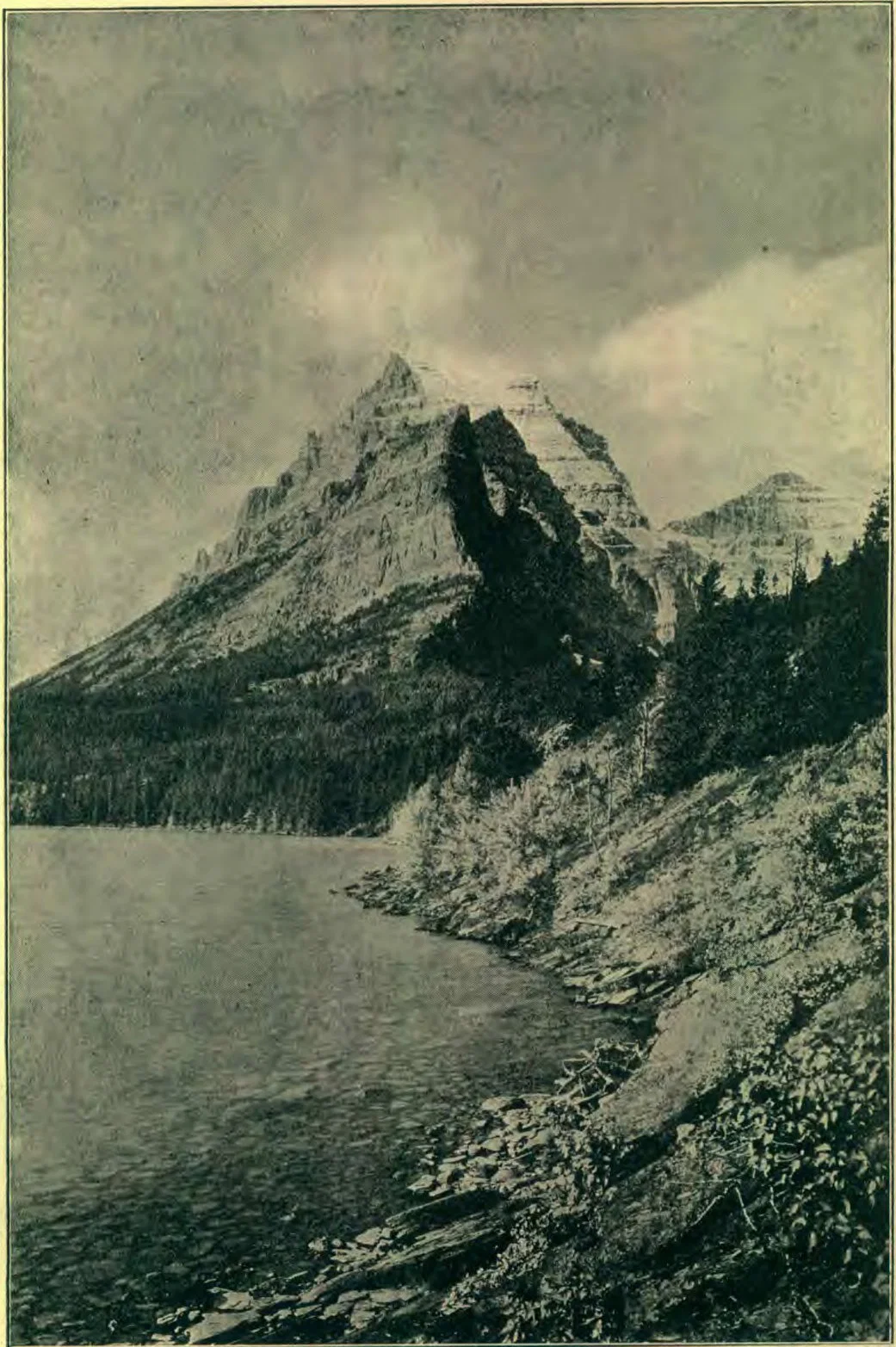
GOING UP TO THE SUN MOUNTAIN GLACIER, NATIONAL PARK
THE EARLY MORNING OFTEN FOUND JESUS IN SOME SECLUDED PLACE, MEDITATING, SEARCHING THE SCRIPTURES, OR IN PRAYER.

You have reached the end of this edition.

The Youth’s Instructor · Sep 19, 1916