The Youth’s Instructor, Vol. 66, No. 22.

News Items from Recent Wartime Events


Earlier text: Stand Up for Jesus

GEORGE MORRILL, OF GASTON, OREGON, AND THE PRODUCTS OF HIS CANNING SKILL

We have seen nothing that appeared to excel in quality this display of canned goods.

Keeping at It

A LITTLE fellow stood, cap in hand, before a well-known magnate who sat at his desk busy with a hundred pressing matters all demanding attention.
“Do you want a boy?” asked the lad respectfully. “Nobody wants a boy,” was the curt reply. “Do you need a boy?” was the next question. “Nobody needs a boy.”
Nothing daunted, the lad persevered. “Well say, mister, do you have to have a boy?”
Such persistence was too much for the magnate. “I’m sorry to say we do,” he admitted, “and I guess you’re about what we want.”
Plucky lad!
Persistence is bound to win. The boy or girl who has learned to persevere in spite of difficulties, has acquired one of the finest habits in the world. Watch such boys and girls, and you will find them succeeding in whatever they undertake. They are in demand everywhere.
But what about that other class who give up at the least trifle, and say, “There’s no use. I can’t do it”? Would the magnate have hired a boy like that? No, indeed, for he couldn’t be depended on. When asked to do a piece of work, likely as not he would drop it before it was half finished. However desirable he might be in other respects, that one bad trait of leaving things half done would always be a hindrance.
Which kind of Junior would you prefer to be, one who perseveres until he accomplishes what he sets out to do, or the one who begins a great many things but leaves them unfinished?
One more question. Did you start out to take the Junior Bible Year at the beginning of 1918? and are you keeping up-to-date?
“Yes!” is the cheery response I imagine I hear from a host of Juniors in reply to that last question. But if any of you have fallen behind, don’t be discouraged; begin today to catch up.
“Say ‘I will,’ and then stick to it; That’s the only way to do it.”

The Junior Standard of Attainment

I wonder how many of you have been studying for the Junior Standard of Attainment this spring. Since we have such a fine little study manual to help our boys and girls, it is twice as easy as it used to be to become a Junior Attainment member. Haven’t you found the manual a help?
It is nearly time for school to close, and no doubt you are very busy; but don’t fail to take the Junior Standard of Attainment examination before the month of May closes. You know there will not be another examination till next December, so do not miss this opportunity. Your conference Missionary Volunteer secretary sends out the examination papers. If you do not go to church school, but wish to take this test, the elder of your church will be glad to send for the test questions if you will ask him. Wouldn’t it be a fine thing if several hundred Juniors should earn Attainment certificates this spring? You can be among the number if you will.

Hurry Up!

Our boys and girls will be sure to say that the new Junior Reading Course for 1918-19 is one of the nicest we have ever had. You will soon hear more about it. Hurry up and finish the course you are now reading and get your certificate, so that you will be all ready to begin on the new one. It is delightful!

Why Not?

There is one conference in New England where there are no Senior Missionary Volunteer Societies at all, because there aren’t enough young people; but there are plenty of boys and girls, we are glad to say, and seven Junior societies have been organized. Isn’t that splendid? If there isn’t a Junior society in your church, why not organize one at once?

Those Empty Chairs

A band of Juniors whose numbers were small decided to have an “empty chair” rally to increase their membership. Empty chairs were placed all ready and waiting for new members, and each Junior tried to bring some one to help fill the empty chairs. It was such an interesting campaign, and how they enjoyed it! But best of all, they doubled their membership in this way. Just try the plan in your society.
E. I.

Our Counsel Corner

[All our Missionary Volunteers are invited to contribute questions to Our Counsel Corner. The Young People’s Missionary Volunteer Department will be glad to answer, through these columns, questions on subjects of interest to young people.]
We have been attending a revival at one of the churches. I should like to know the stand our people take in regard to the altar service in the churches. E. H.
I know of no better answer to this question than is found in “Early Writings,” pp. 124, 125: “I was shown the necessity of those who believe that we are having the last message of mercy, being separate from those who are daily imbibing new errors. I saw that neither young nor old should attend their meetings; for it is wrong to thus encourage them while they teach error that is a deadly poison to the soul, and teach for doctrines the commandments of men. The influence of such gatherings is not good. If God has delivered us from such darkness and error, we should stand fast in the liberty wherewith he has set us free, and rejoice in the truth. God is displeased with us when we go to listen to error, without being obliged to go; for unless he sends us to those meetings where error is forced home to the people by the power of the will, he will not keep us. . . . I saw that we have no time to throw away in listening to fables.”
From this emphatic statement, it is very clear that we should not make a practice of attending and participating in such meetings. If we go at all, it should be with a definite purpose of making the present truth known to those who are ignorant of it. M. M.
I have noticed as I give reading matter to the young people, they give us books to read. Now, some of these are not unfit to read, but they are of no profit to any one, and on returning them the owners will ask us how we liked them. What do you think we should do under the circumstances? J. W.
The situation presented in this question requires tact. We may close the door to our efforts by appearing to assume that we are all right and others wrong, that they ought to read our literature but we have no use for theirs. On the other hand, we should never feel under obligation to read fiction in order to induce our friends to read our books. It is well to make it known when discussing the question of reading, that we do not care to read fiction. If what they ask us to read is not injurious, we may at least examine the book sufficiently to discuss with them in a pleasant way things we may approve or disapprove in it. M. M.
Should Seventh-day Adventist young people read love stories or other stories in worldly magazines and newspapers? H. S.
Aside from our companions there is nothing perhaps that influences us more than what we read. For as a man “thinketh in his heart, so is he.” Prov. 23: 7. And as a man reads, so he will think. One who habitually reads light, sentimental literature will be light and sentimental. Here is a very solemn warning on this question: “One of the greatest reasons why you have so little disposition to draw nearer to God by prayer is, you have unfitted yourselves for this sacred work by reading fascinating stories, which have excited the imagination and aroused unholy passions.”—“Testimonies for the Church,” Vol. I, p. 504.
Those who are reading useless and harmful literature should take up our Missionary Volunteer Reading Courses with a determination to break the evil habit before it is too late.
“Say firmly, ‘I will not spend precious moments in reading that which will be of no profit to me, and which only unfits me to be of service to others. I will devote my time and my thoughts to acquiring a fitness for God’s service.’”—Id., Vol. VII, p. 64.
Those who are interested in this question should read Missionary Volunteer Leaflets Numbers Two, “From Which Fountain,” and Thirteen, “Guiding Principles for the Young,” and the Reading Course leaflet for 1915-16. M. E. K.

X — Joseph’s Brethren Sent Again to Egypt

(June 8)
LESSON SCRIPTURE: Genesis 43.
MEMORY VERSE: “He that handleth a matter wisely shall find good: and whoso trusteth in the Lord, happy is he.” Prov. 16: 20.
STUDY HELPS: “Patriarchs and Prophets,” pp. 227, 228; “Bible Lessons,” McKibbin, Book One, pp. 119, 120.
*“God rules, who in all seasons and events, Through fiery evil and o’erwhelming woe, Forever works the good.”*

Questions

1. When the supply of corn was gone, what did Jacob again ask his sons to do? Gen. 43: 1, 2.
2. Of what did Judah remind him? Verses 3-5.
3. What question did Jacob then ask? How did his sons answer it? Verses 6, 7.
4. What offer did Judah make to his father? Verses 8-10.
5. What did Jacob then tell them to do? What permission did he give concerning Benjamin? Verses 11-15. Note 1.
6. What command did Joseph give the ruler of his house when he saw Benjamin with his brothers? Verse 16.
7. Why were the brothers afraid when they were invited to Joseph’s house? Verses 17, 18.
8. What explanation did they make to the steward? Verses 19-22. Note 2.
9. How did the steward quiet their fears? Who was brought to them? Verse 23.
10. What was done for their comfort? What did the brothers do while waiting for Joseph? Verses 24, 25.
11. Describe their meeting with Joseph. For whom did Joseph make inquiry? Verses 26-28.
12. With what gracious words did he greet Benjamin? How was he affected by the meeting with his younger brother? What was he obliged to do? Verses 29-31.
13. How was the company arranged for dinner? Why did they not all sit at one table? Verses 31, 32. Note 3.
14. What arrangement caused the brothers great surprise? Verse 33.
15. What strange favor did Joseph show Benjamin? What shows that the brothers were not jealous of the favor shown to Benjamin? Verse 34. Note 4.

Things to Think About

How does this lesson show that the brothers believed that Joseph would keep his word?
What fault did Jacob find with his sons?
Was his reproof just?
How did the steward get the money for the corn which the brothers had bought on the first journey?

Notes

Angel Stories

WHAT interesting stories angels can tell when the redeemed of earth gather in Eden! An experience cited by the vice-president of the South American Union is only one of innumerable instances of divine protection that could be related.
Once when Elder F. H. Westphal was visiting interested persons in Brazil, he went to Brusque. Owing to opposition no building could be obtained for holding the Sabbath services, so the friends met, as did Paul and the Philippian believers, by the riverside. However, for the Sunday evening meeting a merchant offered his home. While Elder Westphal was speaking, a shower of heavy stones came through the open window before which he was standing. Although the servant of God stood with his back to the window and in full view of the infuriated mob, not a stone struck him.
“At the close of the meeting, the friends protested against his going to the hotel where he was stopping; but as he wanted to leave the city about midnight for his home, he felt that he must go. After a little further talk and a season of prayer, he bade the brethren farewell and started out, telling them that he would not go alone, having in mind Psalm 34:7, which says: ‘The angel of the Lord encampeth round about them that fear him, and delivereth them.’ He went forward alone, saw and heard nothing, and reached his hotel in safety. It was later ascertained through the confession of one of the mob that they were in waiting for him, planning to stone him as he passed a lonely place in the road. Each man was provided with heavy stones, and occupying a place of advantage, stood ready to throw; but as Brother Westphal drew near, they saw two men instead of one. They were seized with fear, and did not dare to throw a stone.”
The angels of God are ever near to protect and succor the missionary. The history of missions seems but a record of the marvelous deliverances and opening providences of God. Our superintendent of the Inca Union Mission, when on his way to visit a sick child, lost the path. The night was dark. Suddenly a flash of lightning revealed that he was on the edge of a precipice, hundreds of feet deep. Another step, and he would have gone to his death. The flash of glory from an angel’s wing, as it were, saved the servant of God from the fatal step.
Elder W. H. Anderson, of Africa, when pressing his way into new territory, was endangered by an uprising of savage Matebeles. One night he heard a voice saying, “Go back; take the footpath.” He obeyed, and had scarcely reached the path and hidden in the tall grass, when there came rushing past him down the main road a band of the warring Matebeles. Had he not recognized the heavenly command, his life would have counted for little with the hostile savages.
The missionary needs the constant protection of the angels of God, for as he makes his bed often on the ground, wrapped in his blanket, he would become the victim of wild beasts and reptiles but for divine protection. A snake once crawled into Pastor Anderson’s blanket, but there was one fold between them, and so neither disturbed the other.
The mouths of lions have been stopped by angels for the protection of our own missionaries as verily as for the saving of Daniel. Brother Anderson has had as many as seven lions at one time stalking about his camp.
It has been said that there is no record of a missionary’s having died in foreign lands from snake bite, though thousands of natives die from this cause. Two of our women missionaries in India heard a strange noise one night behind a piece of furniture in their room, and later discovered that this came from a cobra that had been sharing their home, having its abode in the wall. But for the protection of God the reptile could have taken their lives any day, as it had easy access to their room.

Courtesy to the Aged

At a recent meeting an elderly, feeble woman walked almost the length of the room in a vain attempt to find a seat. There were many younger persons present, any one of whom might have offered her a seat; but no. She was left in her embarrassment to continue her course down the aisle. All young men and women, boys and girls, should be very quick to show this courtesy to older men and women in the home, at church, or on the street car. Respect to the aged is the glory of youth.

Odd Moments

MOTHER, how soon will dinner be ready?” asked Louise, impatiently.
“In just about ten minutes,” responded mother, in cheery tones.
“Oh, dear, I do so hate the half hour before meals! I simply can't get settled to do anything.” And Lois proceeded to lounge comfortably in a big chair.
Just then her sister Frances bounded into the room. “Did I hear mother say that dinner would be ready in ten minutes? There, I had planned to use the fifteen minutes before each mealtime for special memorizing in music, and here five of them have gone already!”
To some people the odd moments in the day are a bore; to others they are precious. Splendid opportunities have been overlooked in the odd moments; wonderful results have been accomplished. A great deal depends on the individual.
If there are certain periods in the day which you dread, make up your mind to have some special work for them. Just before dinner is a splendid time to do brain work. Difficult problems have often been solved then; the finer points in education have been mastered. The time that most people throw away, others use for some special advantage.
Try filling these spots with a definite purpose, and you will be surprised how quickly the minutes pass.
—The Visitor.
Photo by Boston Photo News Co.
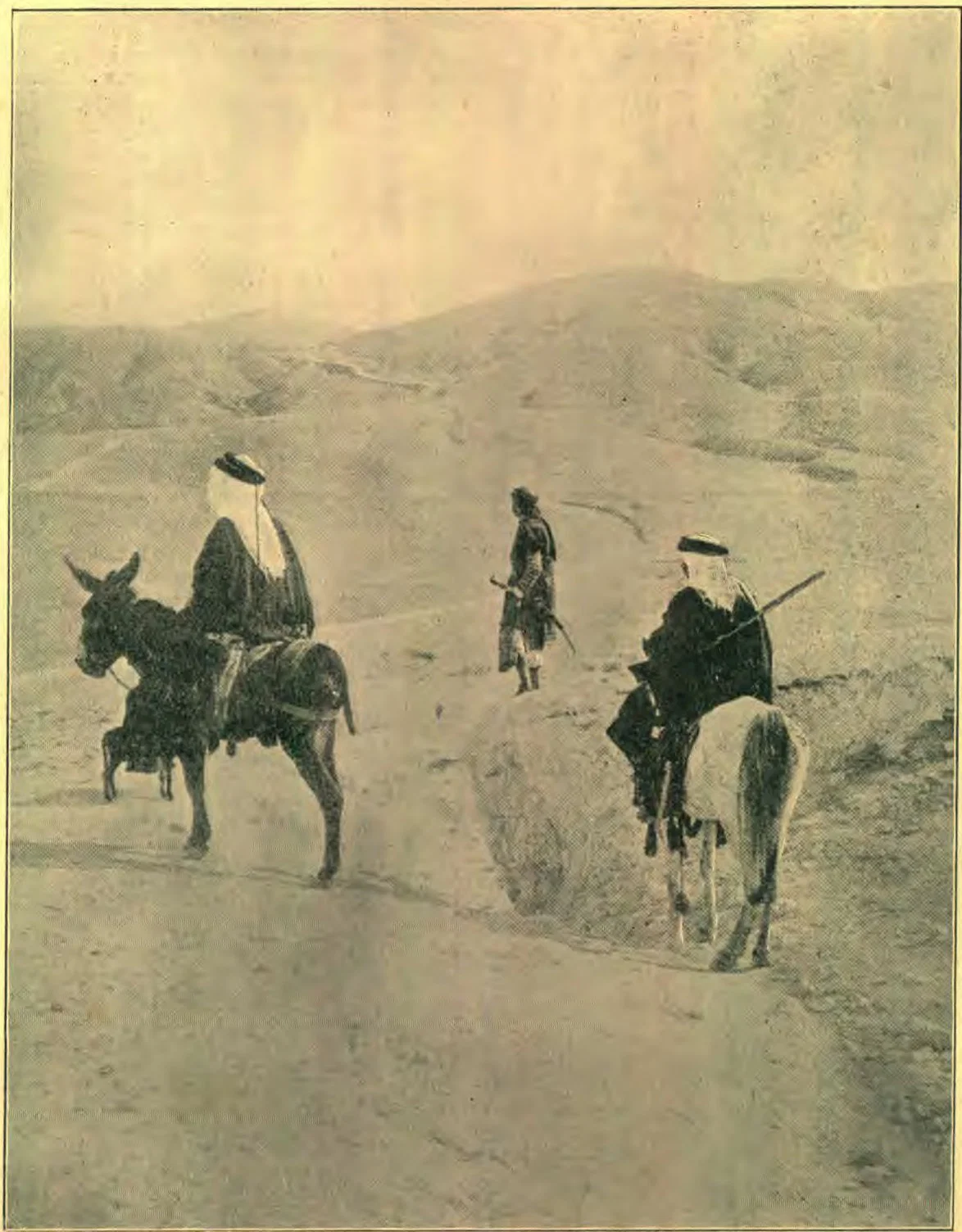
A SCENE IN PALESTINE SHOWING TWO BEDOUINS ON THE ROAD TO JERICHO
They are wearing a white cloth headdress bound with double coil of goat's hair, the use of which dates back to the fourteenth century before Christ
Photo by Boston Photo News Co. A SCENE IN PALESTINE SHOWING TWO BEDOUINS ON THE ROAD TO JERICHO They are wearing a white cloth headdress bound with double coil of goat's hair, the use of which dates back to the fourteenth century before Christ
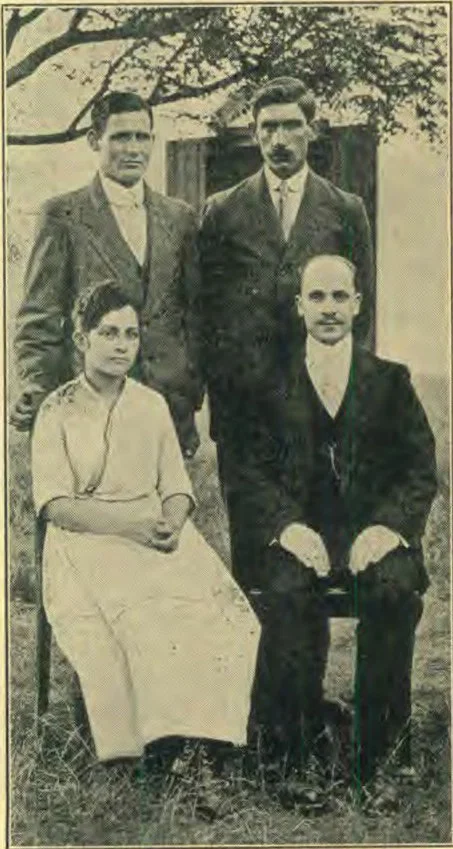
THE 1917 GRADUATING CLASS
Each of these young persons, after graduation, entered some branch of active Christian service.
THE 1917 GRADUATING CLASS Each of these young persons, after graduation, entered some branch of active Christian service.

You have reached the end of this edition.

The Youth’s Instructor · May 28, 1918