The Youth’s Instructor, Vol. 43, No. 17.

GALILEE

The Youth’s Instructor

Apr 25, 1895

S. D. A. Publishing Association · Battle Creek, Mich. · Apr 25, 1895

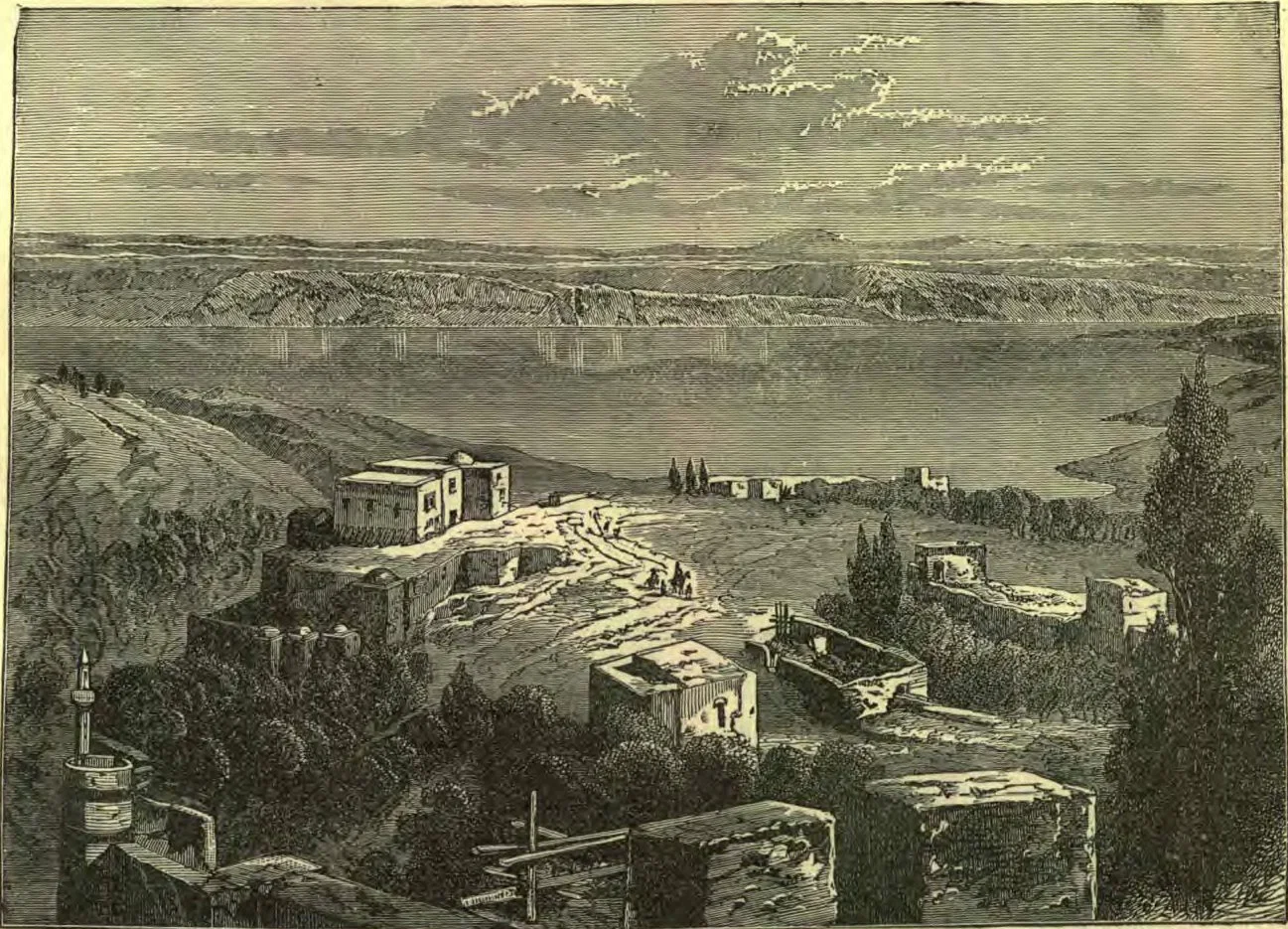
GALILEE

On sacred page I've often read Of distant lands beyond the sea; But none have left such mystic spell As thy dear name, O Galilee. In fancy oft I've walked thy shore; In dreams I've sat beside the sea, And watched thy bright and sparkling waves, O lovely, far-off Galilee!
In rustic garb, with hearts so true, The fishers sailed upon the sea, And cast their nets in waters blue Of thy clear depths, O Galilee. Our Saviour lingered by thy side, And taught the people by the sea, And walked upon thy restless tide, O sacred, hallowed Galilee! Galilee, O Galilee! My Saviour taught beside thy sea; Galilee, O Galilee! Thy name is melody to me!
MRS. J. E. EMERY.

HIDDEN LESSONS OF DAILY LIFE.

God desires to teach us by the every-day affairs of life. Many fail, often, to discern truths in the homely occurrences of a quiet, uneventful existence; and such the Lord would bid search for the hidden beauties of truth in our every-day experiences. To give a common example or two:—
THE SEA OF GALILEE.
THE SEA OF GALILEE.
A pan used for heating water over an oil-stove became smoked and dingy, too black and sooty to touch. A few turns on a snowbank, and the pan was partly clean—but the snowbank! Its purity was marred, its spotless whiteness—a constant reminder to us of chasteness and innocence—had been made repulsive to the eye as it beheld the dirty grayness of the mixture. Here is an object lesson on purity. Sin is black and hideous, marring whatever it touches. “Pure religion and undefiled” is to keep one’s self “unspotted from the world,” so the Scriptures say; and our characters are to be like the driven snow,—pure, clean, and “without blemish and without spot.” “Touch not the unclean thing,” and “let this mind [of purity] be in you, which was also in Christ Jesus.” “Whatsoever things are pure, . . . think on these.”
On warm July days people are seen coming from every direction with pitchers and pails to get water from a well, famous for its refreshing contents, cool, pure water! How gratefully it is procured, and how satisfying in its effects! This well, inanimate object though it be, daily preaches the gospel. The observer recalls the scriptures: “Ho, every one that thirsteth, come ye to the waters.” “With joy shall ye draw water out of the wells of salvation.” “Whosoever will, let him take the water of life freely.” “Blessed are they which do hunger and thirst after righteousness: for they shall be filled;” “for He satisfieth the longing soul;” “for I will pour water upon him that is thirsty.” We think of the “river of water of life,” and ask God for this spiritual thirst.
It is said that a lady and two gentlemen were boating on the river above Niagara Falls, and drifted slowly and imperceptibly along, until they were in the rapids; and in spite of their most heroic and united efforts to save themselves, they were soon carried to a dreadful death as they went over the falls, and were dashed upon the hidden rocks in the foaming abyss below. Does the observer see any lesson in this? Let us see if we can find it.
To many, life seems a placid, gently flowing river; and to glide slowly along on its brightly mirrored bosom, beholding the delights on either shore, oblivious to any danger that may lurk beyond, is to them a pleasant way to pass their early years. They laugh and joke, and idle away the hours, indulging in congenial companionship, and fail to develop stability of character, and that degree of strength so necessary to meet successfully the conflicts before them. But look! They are nearing the rapids! Can they pull back, and escape being drawn into this powerful and fatal current?—No; for they have allowed little sins, little defects, to creep into their character, which, as they were cherished, have taken deep root and strengthened with growth, until they cannot now, at the time of trial, be uprooted. They work bravely, and struggle with might and main, but the eddying currents foil their every attempt, at the same time deceiving them into the hope that they are making some headway toward the saving shore; but in reality they are whirled round and round, each turn bringing them nearer the awful whirlpool of destruction below. They see, at last, how hopeless are all efforts to regain the safe grounds of their first experience, when they might have avoided the rapids by taking a Pilot;—but now; alas! with a wild cry of horror and despair, they disappear from sight, swallowed up in the immensity of waters, or crushed on the rocks below.
Great is the fall of any soul who wanders away from the “still waters,” and finds companionship with those whom the Lord will, at his coming, “dash in pieces as a potter’s vessel.” The path of obedience is the only path of safety. MRS. M. D. COUNSELMAN.

SATURDAY NIGHT IN HESTER STREET.

I stood under a lamp-post on Hester street, watching the overtired children as they fell asleep while sitting on the steps, weary of their romping and playing; the men as they smoked and rested; the woman as they dragged themselves wearily along, and purchased a bit here and there to stock the family cupboard for Sunday. On Canal, on Grand street, in Chatham square, along the Bowery, men and women were laughing in good nature as they elbowed each other, and thronged the stores to purchase gaudy fineries and ornaments. Here men and women were sullen and silent, many of them wondering where the barest necessities were to come from.
“If you won’t help me, we shall have to go hungry to-morrow.”
It was a little old woman who had approached so softly that I did not hear her,—a little old woman with hair almost white, with face wrinkled and pinched, and with such an anxious look on her countenance. She was bareheaded, her dress old and faded and mended—one of the thousands of God’s worms who creep and crawl and live and die, and are forgotten in a day in great New York.
“Where do you live?” I asked.
She pointed to a four-story tenement almost opposite.
“Top floor?”
She nodded her head.
“Any family?”
“A sick husband and four children, sir.”
“Very well. Show me the way up.”
“You’ll—you’ll come up with me?” she queried, in surprise.
“Yes.”
She seemed to doubt, however, and she kept looking back with a puzzled expression on her face. In the dark lower hall we stepped over two sleeping men and a child. At the head of the stairs a man sat, brooding and sulking, and grudgingly gave us room to pass. There was a dim light in the second hall, where a half-drunken woman was seeking her room. The two above were dark, and the little old woman went ahead, and kept saying:—
“This way; keep to the rail; we’re almost there.”
As we reached the upper hall, we turned to the right, passed down a blind hall running the other way, and presently she pushed open a door, and we entered a room lighted by a smoking lamp.
“John, it’s a stranger come to see us,” said the woman, as I stood and looked about.
Here were two small rooms, three chairs, a cupboard, an old table, and a wretched bedstead and more wretched bedding, on which lay a man. Across the room was a mattress on which the children were lying as I entered. In the other room I saw a stove, a washtub, and a bucket partially filled with coal.
“Sit down, sir,” said the woman, as she placed a chair for me.
The husband looked to be fifty years old. He had the bright eyes and hollow cheeks of a consumptive, and his hands were white and thin.
“Are you a doctor?” he asked, as I sat down.
“No.”
“The rent is overdue, but we have n’t even enough bread to eat,” he said.
“I am not your landlord nor his agent. I simply came up to see you, to see if you were sick, to see what you needed.”
He looked at his wife in a wondering way, and she, too, eyed me strangely, as she said to him:—
“John, you know how it is. I met him on the street and asked him to help us, and he has come to—to—”
“To see if you were really in need,” I said, as she paused. “Have any of you had any supper?”
“Just a crust for him, sir, but nothing for the rest, and the children have been crying with hunger.”
“Very well. Go out and get something. Here is money. Get bread, butter, tea, milk, sugar, potatoes, and meat.”
“You—you don’t mean it!” she gasped.
The man in bed rose up on his elbow to get a better look at me, and I saw something like alarm in his face. To quiet him, I said:—
“The case is clear enough. You used to get along all right; but sickness came; you could no longer work; you have reached your last penny. Why should n’t I help you a bit?”
“It’s sadly enough we need it, God knows, but—but—”
“But you can’t make out why I came up here?”
“No, sir.”
“Well, don’t worry about it. Queer things are always happening to all of us. How long have you been ill?”
“Over a year, sir.”
“And how have you lived?”
“By using the few dollars I had put by, and by selling whatever we could spare, until we are as you see us. I once earned my three dollars a day, sir, and no man’s family was better cared for.”
“And to-day you are penniless and hungry?”
“That I am, sir; and as I lay here these last few weeks, I could have cut my throat if I had had a knife. When I thought of the thousands buying what they pleased, of the riches in great New York, and us wanting for dry bread, I had some bad thoughts in my mind, sir. I felt that I could rob, and do worse, if I only could leave my bed. I wondered if there was a God and a hereafter.”
By-and-by, as we talked, the mother and the children returned. I heard the latter shouting, even on the lower stairs. Each had an armful of parcels, and the grocer’s boy followed with some of the heavier bundles. The mother piled the things on the table. Poor soul! She was laughing and crying by turns, and to have seen those forlorn children sit down on the floor and eat the dry bread was something to pain your heart.
“It’s real meat, John,” said the woman, as she came to his bedside; “real meat, and real potatoes, and real sugar and tea; and there is a God, after all!”
“Yes, there is a God, Mary,” he whispered, as he wept.
And while I sat there, the wife cooked supper, and the hunger of all was satisfied, and the two smaller children afterward knelt at the bedside and repeated the Lord’s prayer, and were asleep three minutes later.
I never meet vice and wickedness and poverty without feeling to pity, instead of condemn. They who dwell up there in those dark and cheerless rooms, who feel the pangs of hunger, who find despair crowding every other feeling out of the heart, who sometimes do most desperate things, can be forgiven for much. The wheel of time has ever kept turning the wrong way for them.
It was only a drop, only a little ray of hope shining through the darkness and gloom of their poverty and despair; but to have caught that one ray filled them with a new strength to battle in the future, and I had touched elbows with still another phase of humanity.—Christian City.

NOBILITY

TRUE worth is in being, not seeming,— In doing, each day that goes by Some little good — not in the dreaming Of great things to do by and by: For whatever men say in blindness, And spite of the fancies of youth, There's nothing so kingly as kindness, And nothing so royal as truth.
We get back our mete as we measure — We cannot do wrong and feel right, Nor can we give pain and gain pleasure, For justice avenges each slight. The air for the wing of the sparrow, The bush for the robin and wren, But alway the path that is narrow And straight, for the children of men.
'T is not in the pages of story The heart of its ills to beguile, Though he who makes courtship to glory Gives all that he hath for her smile. For when from her heights he has won her, Alas! it is only to prove That nothing's so sacred as honor, And nothing so loyal as love!
We cannot make bargains for blisses, Nor catch them like fishes in nets; And sometimes the thing our life misses, Helps more than the thing which it gets.
For good lieth not in pursuing, Nor gaining of great nor of small, But just in the doing, and doing As we would be done by, is all.
Through envy, through malice, through hating, Against the world, early and late, No jot of our courage abating, Our part is to work and to wait. And slight is the sting of his trouble Whose winnings are less than his worth; For he who is honest is noble, Whatever his fortunes or birth. — Alice Cary.

Delay of Conversion Is Folly

To be converted just one day before death closes our probation, is getting to heaven, as Job has it, “by the skin of one’s teeth.” But since real happiness in this life can only come from genuine conversion of heart, it is the height of folly to put it off a single hour even. Will you not give your heart to Jesus now, my young reader, and experience true happiness and peace of mind? Jesus says, “Come,” to you.

Rabbi Eliezer on Preparing for Death

RABBI ELIEZER said to his pupils they should turn to God and be converted on the day before their death, and they would be saved. They replied: “But, master, who can know the day of his death, so as to prepare on the day before, and be ready to die?”
“Well,” answered the wise rabbi, “then you must do it this very day; for you may be dead by to-morrow.”

Our Minds and Bodies Belong to God

Our minds, as well as our bodies, belong to God, who has given them to us to cultivate and develop in the very best manner possible to be instruments in his service for the good of our fellow-men and the glory of the Most High.

Submitting Fully to God

ONE may have a sense of the greatness and goodness of the Lord, and yet his heart may not be right with God, because he has not fully submitted to God.

Love Expressed Through Labor for God and Others

He who truly loves cannot but labor for the object of his love; if we love God and our fellow-men, we will labor and live in manifestation of this love.

A NATIONAL HYMN AND ITS AUTHOR.

Nearly every country has one or more national songs, which represent the spirit of the nation. England has “Britannia Rules the Wave;” and wherever British soldiers are stationed, there may be heard the song “Annie Laurie,” the singing of which by the English soldiers in the trenches before Sebastopol, on the night preceding the assault on the Russian works, has been so graphically described by the American poet Bayard Taylor in the poem entitled the “Song of the Camp.” Germany has the “Watch on the Rhine,” which reflects the spirit of her people against the aggression of France. France has the “Marseillaise,” written in the heat of the early days of the French Revolution by a young French officer, and carrying in its impassioned call to arms (aux armes) the spirit of France, when she sent out her fourteen armies, and toppled to the ground the thrones of so many European tyrants.
The United States of America, too, has her national hymns. The “Star Spangled Banner” was written by Francis Scott Key while on a British ship of war, when, after having listened during the night to the bombardment of Fort Mc Henry, he saw in the morning the flag of his country still floating over its battered walls. There is another American national hymn, and just now public attention is attracted to its venerable author.
In 1832 a young student at the college in Andover, Mass., was poring over a book of German patriotic songs, which had been sent him to translate by the well-known music publisher, Lowell Mason, of Boston. As he read them over, sang the music, and saw how perfectly the words and music blended together, the impulse came to him to write an American patriotic song. Half an hour later the national hymn, “America,” was upon paper, and soon after it was sent, with the translations, to Mr. Mason. The next the author heard of it, the school children of Boston were singing it at a Fourth of July celebration. Since then it has become as widely known as any poem in the English language, and is generally considered to be the American national hymn. A copy of this song in the author’s handwriting was exhibited at the World’s Fair in Chicago, and since then the managers of various institutions of learning in Europe have asked for copies, which he has granted them, one going to the Vatican library.
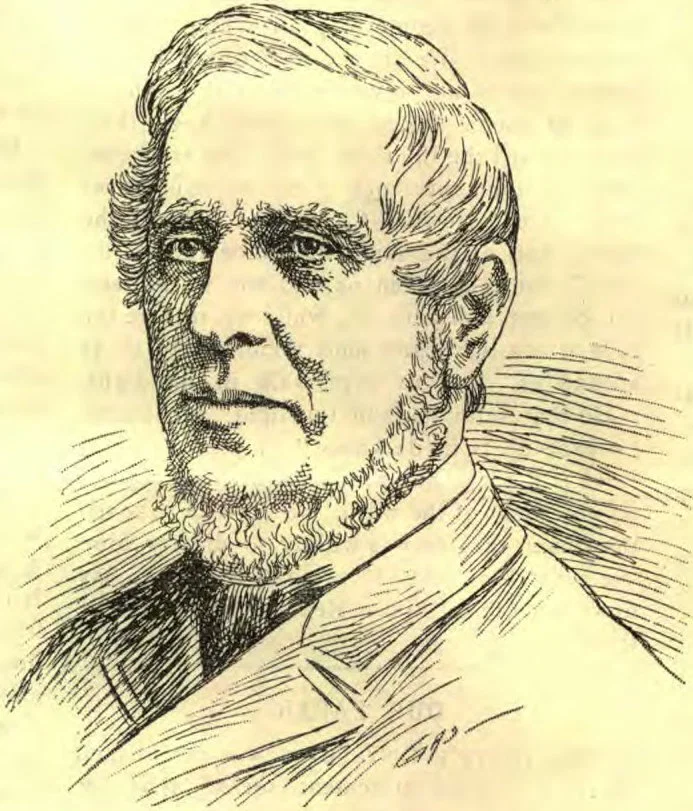
REV. S. F. SMITH.
REV. S. F. SMITH.
The author, Rev. S. F. Smith, now in his eighty-sixth year, is one of the best living representatives of the New England people of former days. Born in 1808, he is a living, connecting link between the past and the present. He was a classmate of other men of world-wide fame, among whom were James Freeman Clark, William Ellery Channing, and the genial poet, wit, and philosopher, Dr. Oliver Wendell Holmes. The latter was the class poet when they were in college, and in a poem descriptive of the different members of the class, he introduced Dr. Smith, then a young man like himself, in the following manner:—
“And there’s a nice youngster of excellent pith; Fate tried to conceal him by naming him Smith! But he chanted a song for the brave and the free— Just read on his medal, ‘My country,’ of thee!”
However, Fate failed to conceal him; for if he had never written anything but the hymn “America,” he would be remembered as long as the United States flag shall float over a free and enlightened nation. But Dr. Smith has written much besides the song “America,” and has all his lifetime been engaged in literary work. He was ordained to the Christian ministry of the Baptist Church in 1834, and has been the editor of several Baptist publications. His writings include some fine missionary hymns.
He was the son of a widow, and supported himself through college by translating and other work, and at the time of his graduation, had not only entirely paid his own way, but had a small sum of money saved. So it may be seen that Dr. Holmes’s estimate of his character, when he said he was of “excellent pith,” was not overdrawn. He reads fifteen languages, converses in several of the principal modern languages with ease and fluency, and now, at the advanced age of eighty-six, he is studying Russian, one of the most difficult to acquire of modern languages.
April 3 a large assemblage of people from many parts of the United States gathered at Boston, Mass., to do honor to the author of “America.” Dr. Smith lives in an unpretentious house at Newton, Mass., which he has occupied for fifty years. He came to Boston at the solicitation of his friends, as the exercises in his honor could better be carried out in that city. There was an address by ex-Governor Long, letters were read from distinguished men who were unable to be present, and the aged poet and his wife were made to feel that their friends were not numbered simply by their acquaintances.
It gives sadness to know that the high ideal breathed in this song is not cherished by all the people of the United States, and that because of this, some sections of our beloved country are far from being at the present time a “sweet land of liberty.”

AMERICA

My country! ’t is of thee, Sweet land of liberty, Of thee I sing; Land where my fathers died! Land of the pilgrim’s pride! From every mountain side Let freedom ring!
My native country, thee, Land of the noble free, Thy name I love; I love thy rocks and rills, Thy woods and templed hills. My heart with rapture thrills Like that above.
Let music swell the breeze, And ring from all the trees Sweet freedom’s song; Let mortal tongues awake; Let all that breathe partake; Let rocks their silence break, The sound prolong.
Our fathers’ God! to thee, Author of liberty, To thee we sing. Long may our land be bright With freedom’s holy light; Protect us by thy might, Great God, our King!
—S. F. Smith.

The Truly Good and Christlike

THE only truly strong and noble are the truly good and Christlike.

Perfect Rest Through Perfect Trust in God

PERFECT rest can come only through perfect trust in God.

MEXICO AND GUATEMALA.

THE settlement of the contention between the above-named countries without recourse to arms should be a cause of much satisfaction to the lovers of peace. Like many other international quarrels, the cause was a disputed boundary. Mexico accused Guatemala of trespassing upon Mexican territory, and Guatemala held that she had not crossed the line. Guatemala finally yielded to Mexico.
These boundary lines are often run when the country through which they pass is entirely new, perhaps they are never really surveyed, and consist simply of a description of an imaginary line. Sometimes, when they are surveyed, the description given of the line is not very definite, and there are many mountains, lakes, and rivers which will answer to the same general description, so that there is a degree of uncertainty in regard to the exact location of the line. This being the case, it often happens that the interested powers take advantage of these circumstances to get all they can, sometimes going to war, and if not, they carry their contention dangerously near to the war point. We see the same thing enacted on a small scale, when two men quarrel over a disputed line between their farms, go to law, and sometimes actually fight, with more or less evil results.
Mexico and Guatemala were not agreed as to the location of their boundary line, and said a good many sharp and hateful things about each other, but as neither was prepared for war, cooler counsels prevailed, and a calmer discussion finally resulted in a peaceful settlement.
War is a disaster to any country, and it would have been especially so to these countries, just emerging into civilization. They will now have an opportunity to exert their energies and to spend their money to a better purpose than warring upon each other. There are thousands of miles of roads to build, mines to be opened, new industries to be developed, and above everything else, schools are needed to teach the children, that they may not grow up in ignorance, like so many of their parents. Both of these countries have done something in this direction, and much more remains to be done.

STUDIES ON THE FIRST EPISTLE OF JOHN.

GOD IS LIGHT.

"This then is the message which we have heard of him, and declare unto you, that God is light, and in him is no darkness at all. If we say that we have fellowship with him, and walk in darkness, we lie, and do not the truth." 1 John 1 : 5, 6.

QUESTIONS ON THE TEXT.

What is the message that has been heard of him? Verse 5.
Is there any darkness mixed with this light?
What is it that we can say? Verse 6.
What is the evidence that what we say is untrue?
In this condition, what do we fail to do?
God is light.—It is said of God that he is "dwelling in the light which no man can approach unto; whom no man hath seen, nor can see." 1 Tim. 6 : 16. One version reads, "inhabiting light unapproachable, whom no one of men ever beheld, or can behold." His person is enshrouded in light that no fallen individual can approach unto and live. Yet by his light, his majesty, holiness, perfection, and blessedness are manifested, as when celestial light is transmitted to us, there is nothing fairer, cleaner, purer, or more comfortable. Of the latter it is said, "Truly the light is sweet, and a pleasant thing it is for the eyes to behold the sun." Eccl. 11 : 7.
Christ is light.—Jesus said of himself, "I am the light of the world." John 8 : 12. But he was the Son of the Most High, the incarnate Word. He was "the true Light, which lighteth every man that cometh into the world." What is light?—It is life. It is Christ himself. Having him, you will find that your soul lives because of him. But he is God manifested in the flesh. He is the Word of God, therefore he must partake of the nature of him who dwelleth in light unapproachable. "He that followeth me shall not walk in darkness, but shall have the light of life." As in God, so it is in the Son; they are light, and in them dwells no darkness at all.
The Scriptures are light.—"Thy word is a lamp unto my feet, and a light unto my path." Ps. 119 : 105. It is a lamp to show us our privileges, dangers, and responsibilities. It is a lamp for our personal use, that each one for himself may hold it for his own guidance in dangers and conflicts. The written word of God is a light to shine upon the whole path of life, discovering to us its length and breadth, its difficulties and dangers, from the beginning to the end.
This light which the Bible gives to our path is a divine light, a perfect light, a sufficient light, a penetrating light, a constant and unvarying light. It is a light which serves in youth, in middle age, and in the declining years. And why?—Because God and Christ are its source. It is the word of God, it is life everlasting, and it is powerful. Heb. 4 : 12.
"God is light, and in him is no darkness at all." If we have fellowship with him, we are in the light. But fellowship is close relationship It is being where we can freely converse with God, and hear his words to us. Such is the condition of the Christian who studies God's word.
The Believer is a light.—"Ye are the light of the world." He who walks with God reflects his image and glory to those with whom he associates. After Moses communed with God in the mount for forty days, the people could not look upon his face. The glory of God was there, which caused the skin of Moses's face to shine. The people who had just rebelled against Jehovah and Moses could not endure the presence of the Almighty as revealed in the countenance of Moses. And so we should daily have that connection with Christ that his presence will be manifested in our countenances. "Let your light so shine before men, that they may see your good works, and glorify your Father which is in heaven." Matt. 5 : 14, 16. Our good works are not to be seen that others may applaud us; but it will be so if we, in ourselves, do the work. It will be only human, and the human will receive the praise. But if Christ works in us, he will lead the people to glorify him. He is the true light. We are the reflectors. But reflectors are of no service without the light in front of them. They must ever keep their faces toward the light and those who are benefited by their presence. So we must ever keep our eyes toward Christ, the light of the world, and at the same time face the world. But Christ is between us and the world, and will be seen and admired, while we receive the rays of his light, and send them out to those around us. Let us ever walk in the light. "He that saith he is in the light, and hateth his brother, is in darkness." 1 John 2 : 9-11. Love is the fire that produces the light. Jesus was the light of the world, because he so loved the sinner that he was willing to die for him. We must have this love, so that we can lay down our life for him. Reader, have you done this? J. H. D.

OUR PAPER.

The YOUTH’S INSTRUCTOR was established in 1852. This statement means that for forty-three years it has been going out, most of the time weekly, to instruct the young people of the Seventh-day Adventists, and others in regard to divine truth, and also giving general information of a practical and beneficial character. To say that no mistakes have ever been made in the management of the INSTRUCTOR, or that nothing has ever been admitted into its columns that would better have been left out, would be saying too much; but this will not prevent us from saying that we know of no youth’s paper so free from mistakes, and whose contents are so generally instructive and elevating as the INSTRUCTOR; and it will be the constant aim of those who have it in charge to maintain and if possible, to improve its high standard of excellence.
That it may be seen how the INSTRUCTOR is regarded by an entire stranger, the following extract from a letter lately received from a gentleman in England is submitted:—
“From a sister of mine, at present staying in Montevideo, I received the holiday number of your most excellent paper, the YOUTH’S INSTRUCTOR, Dec. 20, 1894. I felt after reading it that I must send a line to express my great pleasure both with its elevating and fascinating contents, and its circulation in so dark a part of the world as South America. Englishmen are apt, I know, to think that wisdom belongs to them and their country, but your paper literally teems with ripe information, a veritable repast for hungry intellects; and all through it the thread of divine benevolence and goodness runs and appeals like the blood coursing through our systems. I venture to predict a great sphere of usefulness and blessing for such a paper, and may He who aids such causes direct and guide your efforts in the paths of glorious success.”
We feel exceedingly grateful for such words from an entire stranger in distant England, and it seems to us that if our own people could have such a keen sense of appreciation of the INSTRUCTOR, it would be the means of greatly increasing its circulation.
Think of the amount of valuable matter which a year’s subscription to the INSTRUCTOR will afford a family! Fifty numbers containing four hundred large pages filled with the choicest reading, both of poetry and prose, embellished with hundreds of beautiful pictures! They can be, after they are first read, saved, kept clean, and for a small sum be bound into a book for future use.
Where can an equal amount of such interesting and profitable reading be obtained for so small a sum as one dollar?—We do not know. Certainly those who have the interests of the youth at heart should make an earnest effort to increase its circulation.
While no one should be prevented from engaging in a canvass for the INSTRUCTOR, and all should be encouraged to do so, it would seem to be a very proper and fitting work for the young people of Seventh-day Adventists to engage in to secure subscriptions for this paper among their young friends and acquaintances. The older people labor to secure subscribers for our other papers; why not the younger people do the same for the INSTRUCTOR, as missionary work? Whoever is the means of putting the INSTRUCTOR into a family for a year does that family a kindness. A weekly visitor of such a character cannot fail to do good. Try it, young friends; a little effort on the part of each one would double our subscription, and then we could afford to make the paper still better.
Will not all our people, old and young, give the INSTRUCTOR their prayers, their good-will, and their earnest efforts in its behalf, that it may be prospered in its mission as an instructor of youth, “that our sons may be as plants grown up in their youth; that our daughters may be as corner-stones, polished after the similitude of a palace”? M. E. K.

Belshazzar's Pride and Daniel's Message from God

It would appear from our Sabbath-school lesson that Daniel had been forgotten by the wicked and corrupt Belshazzar and his court, and he was probably living in retirement. The queen, who remembered him, is supposed to have been the widow of Nebuchadnezzar. But although unknown to the court, the servant of God did not fear to declare the message from God, which the handwriting on the wall revealed. The question addressed to Daniel by Belshazzar showed that the great lesson which God had taught his grandfather, that there was but one God, the Most High, had done him no good; he still believed in the “gods.” Daniel, therefore, very properly referred him to Nebuchadnezzar’s experience. Then he added: “And thou his son, O Belshazzar, hast not humbled thine heart, though thou knowest all this.” He should have profited by his grandfather’s experience, but he did not. Since he had had all the knowledge of his grandfather’s experience, God would not bear with him as long as he did with his grandfather, who knew nothing of the true God until after he became a king.
Continue reading: LESSON 6.—THE HANDWRITING ON THE WALL.—DANIEL 5