Review and Herald, Vol. 93, No. 55.

What Do These Things Mean?
Earlier text: The Signs of Christ’s Coming Fulfilled and Fulfilling

The Glorious Appearing of Christ

“Some great events have taken place since Adam crossed the threshold of his Eden home for the last time. That was a momentous hour when, because of the wickedness of man, the Lord opened the windows of heaven and with the besom of destruction swept man and his vileness from the earth.”
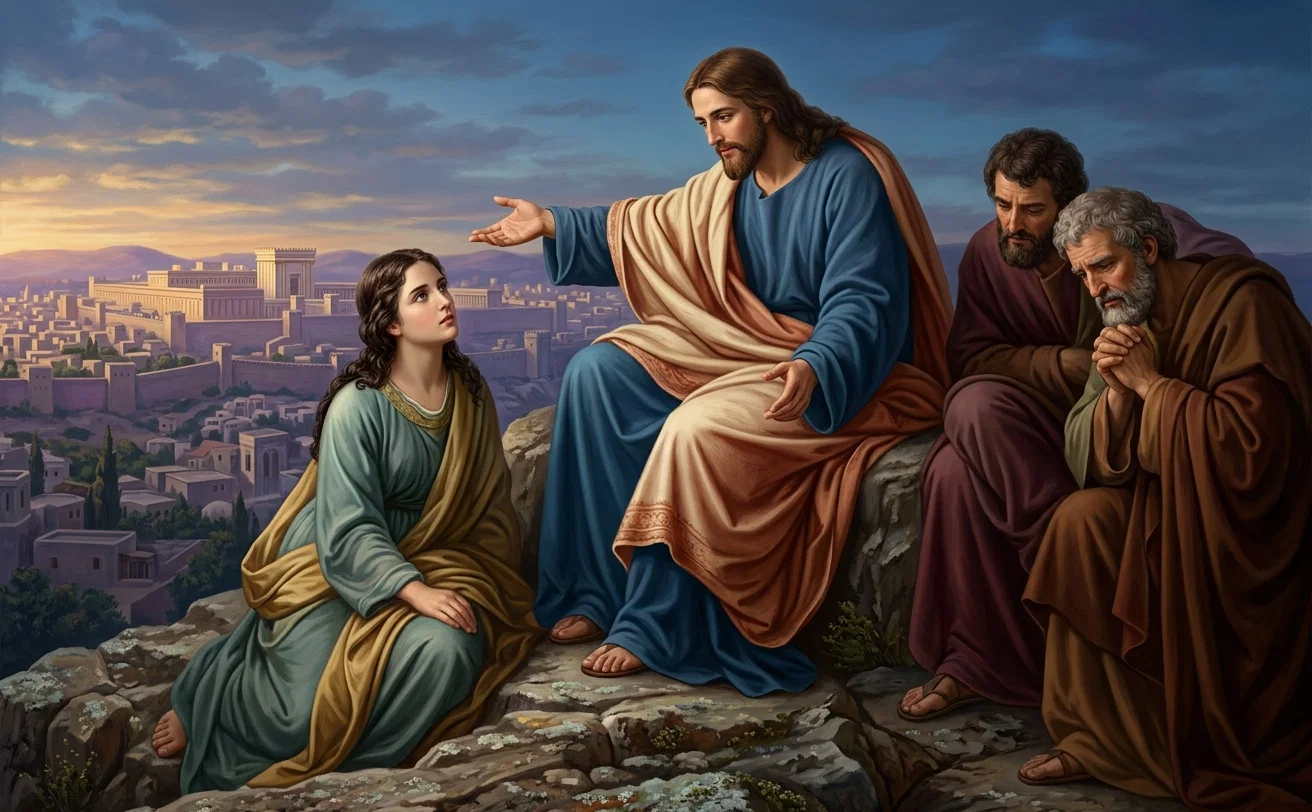
CHRIST TEACHING HIS DISCIPLES CONCERNING THE DESTRUCTION OF JERUSALEM AND THE SIGNS OF HIS COMING
That was a great event when, from the blazing top of Mt. Sinai, amid darkness and thick clouds, the flash and lightning and the roll of thunder, the Lord in majesty and power spoke his law to quailing humanity, and handed down to Israel its precepts, traced on stone by the finger of God.
That was a great hour when Elijah, at whose word the rain had been chained, stood before the four hundred prophets of Baal, and sent out that challenge to settle the question as to who was the true God—Baal, or the God whom Elijah worshiped. That was a tense hour when, the false prophets having failed, Elijah, who had in a sense locked up the treasures of nature, having prepared the altar, looked up into heaven “at the time of the offering of the evening sacrifice, . . . and said, Lord God of Abraham, Isaac, and of Israel, let it be known this day that thou art God in Israel, and that I am thy servant, and that I have done all these things at thy word. Hear me, O Lord, hear me, that this people may know that thou art the Lord God, and that thou hast turned their heart back again.” 1 Kings 18: 36, 37. The flame descended like a lightning flash, illuminating the mountain top and devouring the sacrifice and the altar stones.
That was a great event when the disciples of Christ were all with one accord in one place on the day of Pentecost, waiting for the fulfilment of the promise. “And suddenly there came a sound from heaven as of a rushing mighty wind, and it filled all the house where they were sitting. And there appeared unto them cloven tongues like as of fire, and it sat upon each of them. And they were all filled with the Holy Ghost, and began to speak with other tongues, as the Spirit gave them utterance.” Acts 2: 2-4.

The Greatest of All Events

But the greatest of all events will be at that awful and sublime hour when the Saviour returns the second time in all his glory, calls forth the righteous dead, changes the righteous living from mortality to immortality, destroys the wicked, and with the redeemed ascends to the city of God. Before this solemn event, whose glory no pen can describe, all other events pale like the stars before the noonday sun. Inspired writers have spoken of it as follows:—
“Whosoever shall be ashamed of me and of my words, of him shall the Son of man be ashamed, when he shall come in his own glory, and in his Father’s, and of the holy angels.” Luke 9: 26.
“The Son of man shall come in the glory of his Father with his angels; and then he shall reward every man according to his works.” Matt. 16: 27.
“The Lord himself shall descend from heaven with a shout, with the voice of the archangel, and with the trump of God; and the dead in Christ shall rise first: then we which are alive and remain shall be caught up together with them in the clouds, to meet the Lord in the air; and so shall we ever be with the Lord. Wherefore comfort one another with these words.” 1 Thess. 4: 16-18.
Many questions in the social, political, and religious worlds are absorbing the attention of men, but no question that could occupy the human mind is of so great importance as that raised by the disciples as Jesus sat on the Mount of Olives. “Tell us, when shall these things be? and what shall be the sign of thy coming, and of the end of the world?” Matt. 24: 3. The coming of Christ transcends all other events, for it is wrapped up in the eternal destiny of the human race, and the conclusion of the history of the world.

A Blessed Hope

When Jesus told his disciples that he was soon to leave them, they were filled with sorrow. To comfort them he said: “Let not your heart be troubled: ye believe in God, believe also in me. In my Father’s house are many mansions: if it were not so, I would have told you. I go to prepare a place for you. And if I go and prepare a place for you, I will come again, and receive you unto myself; that where I am, there ye may be also.” John 14: 1-3.
All who believe these wonderful words of the Master must believe in his second advent. The promise of his second coming is as explicit as the promise of the first advent. And no more beautiful and encouraging theme could be contemplated. Truly the return of the Saviour will rejoice the heart of every true Christian. He who hung on Calvary’s cross for our redemption, and who longs to have his people with him in the heavenly mansions, will return in glory and power. What a glorious hope to every believing, trusting child of God!

The Hope of God’s People in All Ages

The return of Christ has been the hope of God’s covenant-keeping people in all ages since sin divorced this planet from the continent of heaven. Through all the perplexity, affliction, sorrow, and trouble to which flesh is heir, the trusting children of God, during the six millenniums of the reign of sin, have looked by faith beyond the veil which dims their vision, and have rejoiced in the hope of the fulfilment of the promise that the One who died on Calvary and came forth as a mighty victor over the tomb and ascended to heaven with a retinue of holy angels, will come the second time.

Enoch

Enoch walked with God; but as he saw the human family falling into the tomb, he was troubled concerning their future. To him the Lord revealed the return of the Saviour in glory and the resurrection of the dead. “Enoch also, the seventh from Adam, prophesied by these, saying, Behold, the Lord cometh with ten thousands of his saints.” Jude 14.

Job

Job in his affliction exclaimed, “O that my words were now written! O that they were printed in a book! that they were graven with an iron pen and lead in the rock forever! For I know that my Redeemer liveth, and that he shall stand at the latter day upon the earth: and though after my skin worms destroy this body, yet in my flesh shall I see God.” Job 19: 23-26. Though forsaken and suffering affliction, and apparently soon to pass down into the dusty prison house, the grave, yet Job knew that he had a living Redeemer, who at the last day would come again. At that day he expected to come forth from the grave clothed in immortality, to behold the One who had redeemed him.

David

David, the sweet singer of Israel, exclaimed, “Our God shall come, and shall not keep silence; a fire shall devour before him, and it shall be very tempestuous round about him. He shall call to the heavens from above, and to the earth, that he may judge his people. Gather my saints together unto me; those that have made a covenant with me by sacrifice.” Ps. 50: 3-5. This was not Christ’s first advent, for fire and tempest did not attend him then.

Isaiah

Isaiah, the seer, bids us comfort the hearts of the feeble with a cheering message. He says: “Strengthen ye the weak hands, and confirm the feeble knees. Say to them that are of a fearful heart, Be strong, fear not: behold your God will come with vengeance, even God with a recompense; he will come and save you.” Isa. 35: 3, 4. To every worn, struggling soul, the blessed hope is indeed a comfort.
Then blind eyes will be opened to look upon the surpassing beauty of the new earth; deaf ears will be unstopped to listen to the song of the angelic choir; the lame will walk amid the waving flowers of the heavenly land; the tongue of the dumb will be unloosed to pour forth the praise to him who has redeemed them from the hand of death.

Paul

Paul, that mighty hero of the cross, in the decline of life, his locks gray, his form bent by trials, persecution, and vicissitudes of life, wrote from a Roman dungeon, where he was awaiting his execution, these triumphant words: “I am now ready to be offered, and the time of my departure is at hand. I have fought a good fight, I have finished my course, I have kept the faith; henceforth there is laid up for me a crown of righteousness, which the Lord, the righteous judge, shall give me at that day: and not to me only, but unto all them also that love his appearing.” 2 Tim. 4: 6-8.

A Crown in Waiting

A crown laid up for him, awaiting that day when Jesus will return! Glorious crown! “Triumphant day! Then, too, a crown awaits all those who “love his appearing.” The writer was in London when George V was crowned. He saw the king and queen, and many of the mighty men of the empire, and witnessed the gorgeous display of national power and greatness. Here in the world’s metropolis were gathered the largest number of people ever congregated in one city. Then he thought of all the kings and queens, of all the ages in this world’s history, their subjects and their kingdoms, and of the dynasties of the past. Where are they? Time has blotted them out. Over their tombs pass the hurried footsteps of millions. And all these millions will soon be in that land of silence from which no monarch or subject ever returns. From beyond the veil separating between the living and the dead, none return to tell us what is there.
As the writer thought of all this, he rejoiced in the hope of the second coming of the King of kings, for he had the assurance in his heart that he was a citizen of the everlasting kingdom which will be established when the Saviour comes, and that a crown is waiting for him “over there.”
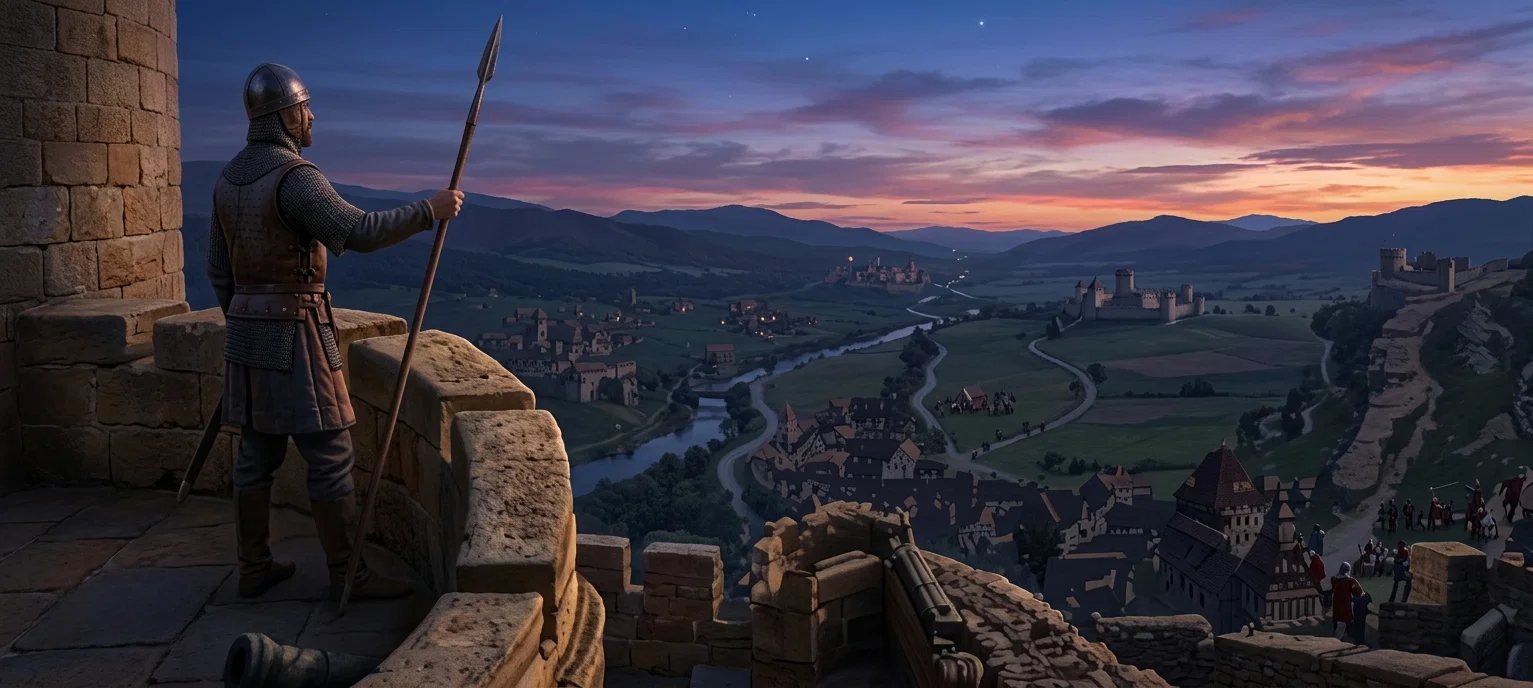
WATCHMAN, WHAT OF THE NIGHT?

Watching and Waiting

By D. L. Moody
We have the same authority for the second coming of Christ that we have for his birth, his death, and his resurrection. People say it is wonderful. It is as wonderful as that he should be born of a virgin, live a life of humiliation, and then be spat upon and crucified! I think that is a great deal more wonderful than his second appearing. Look at 1 Thess. 4: 15-18: "We which are alive and remain unto the coming of the Lord shall not precede them which are asleep. . . . The dead in Christ shall rise first." And then in 5: 1-6: "Of the times and seasons, brethren, ye have no need that I should write unto you. For yourselves know perfectly that the day of the Lord so cometh as a thief in the night. . . . Therefore let us not sleep, as do others; but let us watch and be sober."
Now, I want to say that no man will ever be disappointed if he does just exactly what the Lord tells him to do. There is one thing the Lord has taught us to do, and that is to watch for his coming. If he tells us to run, we are to run; and if he tells us to stand still, we are to stand still; if he tells us to walk, we are to walk; and if he tells us to watch for his coming, we are to watch.
I want to call your attention to this one fact: We are not taught to watch for death, but we are taught to look for the Lord himself. That is the true attitude of every child of God on earth. From Adam clear down to the present time—except during the thirty-three years that Christ was here—the people of God have been told to look for a Man from heaven. When he finished his work and was raised on high, he taught his disciples to look for that blessed day when he should come again. As he was leaving them, he said: "Now, you watch, and I will be back again. Keep looking."
If there is any child of God that is watching for Antichrist—watching for the millennium—you are not doing what the Son of God tells you to do. He tells you to watch for himself—the bright and morning Star.
Then another thing: We can't go to the Lord's table as we should without thinking of his return. Perhaps some of you never thought of that. See 1 Cor. 11: 26: "As often as ye eat this bread, and drink this cup, ye do show forth the Lord's death till he come." The Lord's table is a long table, isn't it? It reaches from the cross to the future glory. Then see Luke 19: 13: "He called his ten servants, and delivered them ten pounds, and said unto them, 'Occupy till I come.'" By this Christ tells us that we are to use our talents until he comes. See 1 Tim. 6: 12-14: "Fight the good fight of faith . . . until the appearing of our Lord Jesus Christ." In 1 Thess. 2: 14-19 we are to endure tribulation until he comes. In James 5: 8 we are to be patient till he comes. In 2 Tim. 4: 8, we are to wait for the crown he will bring with him when he comes. It is going to be a crown of glory. Peter tells us. In 1 Thess. 4: 17, 18, we are to wait for a reunion with our loved ones when he comes.
We are to wait till Satan shall be bound up—that is going to take place when he comes. Lots of glorious things are going to take place when he comes. That is the reason we are to watch, and pray, and wait. When his coming will be, we don't know. The true attitude of every child of God is just to be waiting and watching. We can get an idea of what the glory of those mansions will be which he is preparing for us from the length of time he is taking to get them ready. Maybe he is massing his forces for the final victory. "The time of our redemption draweth nigh."—"Moody at Home," pp. 176-178.

The Needful Preparation

If an earthly sovereign were coming, and we were to meet him and be ushered into his presence, we should make a careful preparation. In like manner there is a preparation needed to meet the King of heaven. In view of this time the exhortation is given through the seer of Patmos: “Remember therefore how thou hast received and heard, and hold fast, and repent. If therefore thou shalt not watch, I will come on thee as a thief, and thou shalt not know what hour I will come upon thee.” Rev. 3: 3.
“The fashion of this world passeth away.” 1 Cor. 7: 31. In these words the inspired apostle expresses the transitory, fleeting character of earthly things. One writer tells us that “the literal translation of the word rendered ‘fashion’ is the shifting of the scenes in the playhouse, as one scenic representation succeeds another in rapid succession.”
“All the world's a stage,\nThe men and women merely players;\nThey have their exits and their entrances.”
The scenes of life shift in quick and rapid succession. All that we see around us is but a spectacle which will soon give place to scenes of a far different character.
About us everywhere are faces that have been swept with the lights and shadows of fifty years or more. Ask him on whose head the whitening snows of threescore years and ten have fallen, if he can recall any changes in life's drama. Ask him if his experience bears testimony to the truthfulness of the words, “The fashion of this world passeth away.” Bring down from the tomb him who went down beneath the icy hand of death a century ago, and ask him if he sees any changes since he fell asleep. He would perhaps fail to recognize the place of his birth.
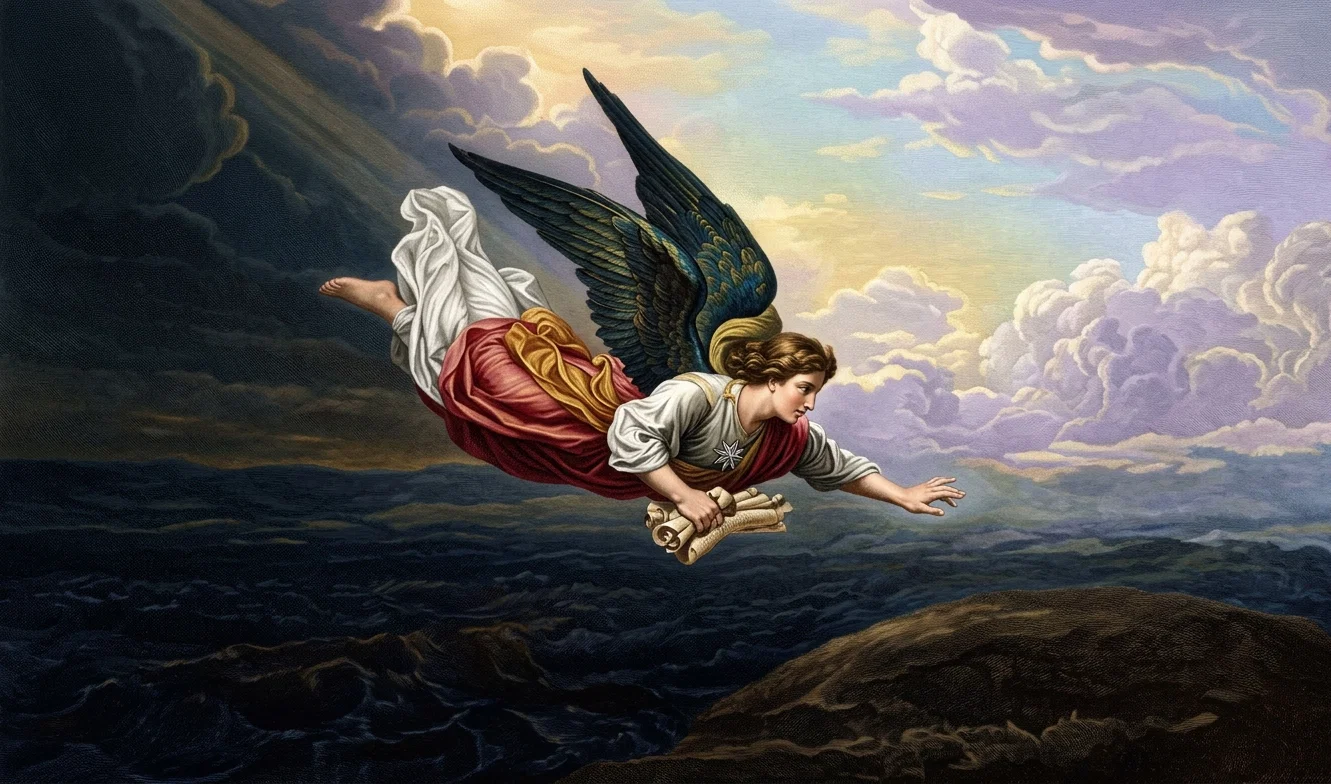
THE HOUR OF HIS JUDGMENT IS COME
Everything earthly shows the mold of decay. Nations pass away. Sand engulfs the monuments of the proud and mighty Pharaohs. There are deserts now where gardens of flowers once bloomed. Babylon has passed away, though once the proud mistress of the ancient world. Medo-Persia, Greece, and Rome have also gone down under the triturations of time. Nineveh, that great city that Jonah warned, is dug from her grave by the spade of the explorer.
Another has truly said:— “A mysterious curse, created by sin; not part and parcel of the original creation, wastes down and wears out all the workmanship of man's hands; and time rushes along a resistless stream; and floating down its bosom, like driftwood, are palaces and hovels, are sceptres and scythes and crowns; and every voice we hear, and every scene we witness, only authenticates and impresses the solemn aphorism, ‘The fashion of this world passeth away.’”
Wealth, which the avaricious heart of man covets, takes wings and vanishes. Costly palaces crumble into ruins. Rulers and statesmen, on whose word the destiny of a nation may have hung, die and are soon forgotten. Nothing endures. Soon everything will be wrapped in the consuming fire of that day when the earth will melt with fervent heat, and everything in it be burned up.

A Better Day

But there is a brighter day beyond, when sin shall be no more, when the very springs of sorrow shall be dried up, when the curse and all that goes with it shall cease to be.
“I saw a new heaven and a new earth: for the first heaven and the first earth were passed away; and there was no more sea. And I John saw the holy city, New Jerusalem, coming down from God out of heaven, prepared as a bride adorned for her husband. And I heard a great voice out of heaven, saying, Behold, the tabernacle of God is with men, and he will dwell with them, and they shall be his people, and God himself shall be with them, and be their God. And God shall wipe away all tears from their eyes; and there shall be no more death, neither sorrow, nor crying, neither shall there be any more pain; for the former things are passed away.” Rev. 21: 1-4.
It is not wealth, position in society, or a profession, that will enable us to stand when the Son of man appears. It is a clean heart. It is those who walk uprightly, and work righteousness, and speak the truth in their hearts who will ascend the hill of the Lord. The sweetest words that can ever fall on human ears will be the welcome of the Saviour when he says to the redeemed throng on his right hand, “Come, ye blessed of my Father, inherit the kingdom prepared for you from the foundation of the world.” Matt. 25: 34. The saddest word will be, “Depart.”
The Saviour is still our mediator. He still bids us come to him and be forgiven of all sin, to wash in the blood from Calvary and be clean. He will give to us freely that perfection of character which will enable us to stand before him in peace, clothed in his righteousness. In that glad day, some will say: “Lo, this is our God; we have waited for him, and he will save us; this is the Lord; we have waited for him, we will be glad and rejoice in his salvation.” Isa. 25: 9. Reader, you can be among this number.

You have reached the end of this edition.

Review and Herald · Nov 6, 1916