Your ShelfYour Projects

Review and Herald, Vol. 81, No. 5.

Tracts That Will Answer
Earlier text: Washington (D. C.) Medical and Sanitarium Interests

A Blessing in the Home

IN many a home, that woman of varied endowment, the maiden aunt, plays her quiet role of unrecorded and most valuable service, and her beneficiaries are scarcely aware of her sacrifice of time or personal enjoyment, or of the check she has put on her individual preferences or opinions in order to carry out the family rule, which she often neither approves nor sympathizes with. She is ever ready to take the helm when illness or absence forces the heads of the homes to yield it to other hands. If she has an independent income, this boy goes to college, and that girl receives the musical education for which she longs. Too often, even in grateful young hearts, no inquiry is made as to what might have come into her single, and, in some ways, lonely life had she used the money to gratify herself. She is dear and good and generous—they fully understand that; but where she would have traveled, what she would have taken delight in possessing—books, pictures, a home which was her very own, in which to express herself—they do not think or dream of these. “How could she be happier than she is?”
Beside a sick-bed she keeps her close and tender watch, and when the mother, refreshed by sleep, made beneficial by her perfect trust in the care which supplements her own, returns to her post, she sees with unjealous eyes the joy with which the patient welcomes back the best-beloved. Never to be the very nearest and dearest, and yet gladly and cheerfully to fill all the offices in which many a brave and high-hearted single woman serves her family, calls forth the very highest type of character, and belongs to the noblest class of human endeavor.
It would surprise many a household, and even astonish the minds of many a mother, to know how often a lovely and richly endowed sister or daughter shuts the door of her heart against the entreating affection which would woo her to come forth into a freer life and world of her own, and stands valiantly at a post where she feels she is needed. Unrecorded, except in those angelic tablets where we love to believe human endeavor is never without comprehending recognition, to-day, and every day, fair girls mature, but at the most receptive and perfect stage of life's experience see before them the way to their hearts' full satisfaction, and deliberately turn back to keep the cup of joy full for a mother or father, otherwise desolate. “I thought they cared for each other, but I am glad to say there is nothing in it.” How often have you heard some dependent mother say this?
Can we not readily bring to mind homes which are absolutely permeated by the patience and enduring love of one strong, devoted heart? Have you not seen flaxen locks grow gray, and the straight carriage of a beautiful figure change to the stoop of an old, bent woman, without one faltering moment or backward look toward a past youth, while the burden of labor and administration and the fond bearing of burdens went on from decade to decade? And yet no man called this faultless woman wife, nor did any child name her mother. Not until the great summing up of human achievements shall be made, will the true estimate of such heroic lives be known. — Mrs. James Farley Cox.

Visited Upon the Children

EUROPEAN scientists have recently given much attention to the physical degradation among children, which they believe to be the result of intemperance on the part of the parents. A startling example was recently published in the London Daily News, on the authority of M. Hughs Leroux, a famous French publicist, who made his statement in the following terms:—
Some months ago a workman and his wife, accompanied by a small boy of four, waited on Dr. Garnier, the physician who presides over the insanity ward at the Paris Depot, or Central Police Station. The parents were in great distress, and the story they had to tell was that on two occasions the lad, their son who was with them, had attempted to murder his baby brother. On the last occasion the mother had just arrived in time to prevent him from cutting the baby’s throat with a pair of scissors.
Examined by Dr. Garnier, the child declared that it was quite true that he wished to murder his brother, and that it was his firm intention to accomplish his purpose, sooner or later.
Taking the parents into an adjoining room, Dr. Garnier said to the father, “Are you a drinker?”
The man protested indignantly. He had never been drunk in his life. His wife backed up his assertion. Her husband, she said, was the most sober of men.
“Hold out your hand at arm’s length,” said the doctor.
The man obeyed. After a few seconds the hand began that devil’s dance to which alcohol fiddles the tune.
“As I thought,” said the doctor. “My poor fellow, you are an alcoholique.”
He questioned the man, who, with tears in his eyes, related that, being a brewer’s drayman, it was his duty to deliver casks of beer to his master’s customers, carrying the casks up to various stages. A glass of wine was occasionally offered him as a pourboire. The total quantity so absorbed by him amounted to a liter or a liter and a half a day. This had been going on steadily for several years.
“With the result,” said the doctor, “that you, who have never been drunk, have become so completely alcoholized that you have transmitted to that unfortunate baby in the next room a form of epilepsy which has developed into homicidal mania.”—National Advocate.

Children's Common Diseases

Scarlet Fever and Measles

EULALIA S. SISLEY-RICHARDS, M. D.
During the winter months these acute infectious diseases are most prevalent. While it is needless to say that a child suffering from either of these diseases should be under the care of a physician, this point should be emphasized, that very much depends upon good nursing and the care with which the physician's instructions are carried out.
Both of these diseases, though not necessarily dangerous in themselves, are frequently followed by serious complications, a fact which renders care and vigilance absolutely necessary. It would be well for every mother to be somewhat informed concerning the nature of these diseases, and the complications which are most likely to follow.
Scarlet fever occurs most frequently in children under ten years. The onset is usually sudden, and may be accompanied by vomiting or even convulsions. The fever rises rapidly, reaching perhaps one hundred and four degrees or one hundred and five degrees Fahrenheit the first day. Usually on the second day the scarlet rash appears, first on the face or chest, but often rapidly invading the entire skin. After a few days the rash gradually disappears, and with it the fever. At the same time the superficial layers of the skin begin to be thrown off in dry scales. This process lasts from two to three weeks. One of the most characteristic symptoms of scarlet fever is inflammation of the throat. It may be but a slight affection, or it may develop into a most intense diphtheritic inflammation.
Inflammation of the kidneys (or acute Bright's disease) often sets in during the second or third week of the disease, and is a serious complication, as it may become chronic, or even cause the child's death. The symptoms are puffiness of the eyelids, swelling of the feet, suppression of urine or the passage of a small quantity of highly colored or bloody urine. Strange as it may seem, the most severe inflammation of the kidneys often follows the milder attacks of scarlet fever. So during convalescence, even in mild cases, mothers should guard the little patient most carefully from exposure to cold or dampness, as such exposure may bring on this complication even after all danger is apparently past. In case it appears, the patient should drink an abundance of plain water or lemon water (from six to eight glasses daily). He should also be given a full hot bath or a hot blanket pack. The bowels must be kept open, and the skin active. Prolonged chilling of the skin must be carefully avoided.
For the relief of the tonsilitis, give hot fomentations to the throat every two hours, with cold compresses frequently renewed between. The throat should be frequently gargled with hot water or some mild disinfectant solution. This is very important, as the inflammation often passes from the throat through the Eustachian tubes into the middle ear. This complication is one of the most frequent causes of permanent deafness.
Nothing need be said concerning isolation, disinfection, or other treatments, as the attending physician will give necessary instruction in these matters.
The early symptoms of measles are usually similar to those which herald the approach of a severe cold,—chilliness, sneezing, catarrh of the nose and throat, redness of the eyes, and cough.
About the fourth day, when the fever has reached its height, the rash appears, continuing two or three days. The most important stage of the disease is convalescence, as it is during this time that the serious lung complications so often make their appearance—bronchitis, broncho-pneumonia, or even tuberculosis of the lungs. It is the frequency of these pulmonary complications that renders measles one of the most serious of children's diseases.
Then in caring for a case of measles, from the very onset of the disease some special treatments should be given to fortify the lungs against these dangerous complications. Perhaps the most efficient measures would be the hot fomentation applied to the chest several times each day. The hot application should be followed by a cold chest compress wrung dry, and thoroughly covered with several thicknesses of dry flannel.

“Soothing Sirups” for Babies

THE dire effect of the so-called “soothing sirups” upon thousands of little innocent babies can scarcely be imagined. The awful crime of Herod, who slew the little children of Bethlehem, shrinks into insignificance when compared with the evil wrought by these drugs upon the infants of our land in every single year.
The essential ingredient of these sirups is some form of opium, to which children are especially susceptible. “Soothing sirups” do indeed soothe the restless, suffering babe; not by removing the cause of pain and healing the disease, but simply and solely by deadening the nerves and benumbing the delicate cells of the brain. Harm is done to the stomach and other digestive organs, and not infrequently permanent injury results. Sometimes the helpless babe is soothed into the stillness of death, as happened in a case some time ago, when a mother unwittingly poisoned her child with “soothing sirup.”—Selected.

An Untidy Girl

SHE comes tripping home from school, rushes into the house, throws her hat on a chair, her cloak on another, and galoshes in the middle of the floor, gives her mama a kiss, and then hurries upstairs to change her dress. Her room is all topsy-turvy, nothing in its place, and mama has to be summoned to try and find the necessary change of wearing apparel. Such a girl is laying a good foundation for an untidy, slovenly life. These habits will stick to her; and should she marry a man who is neat, tidy, and orderly, she will be a domestic thorn in his side continually. Somebody must “straighten up” after such a girl, and usually it is the tired mother who must make the weary steps. Home training has much to do in remedying such habits. Girls, and boys, too, should be taught the value of system—of putting things in the proper place. Such training will be of infinite value in after years. Let all the girls who read this resolve to “have a place for everything, and everything in its place,” and be sure and carry the resolution into every-day life.—Christian Standard.

Why He Was Not Promoted

HE watched the clock.
He was always grumbling.
He was always behindhand.
He had no iron in his blood.
He was willing, but unfitted.
He didn’t believe in himself.
He asked too many questions.
He was stung by a bad book.
His stock excuse was, “I forgot.”
He wasn’t ready for the next step.
He did not put his heart in his work.
He learned nothing from his blunders.
He felt that he was above his position.
He chose his friends among his inferiors.
He was content to be a second-rate man.
He ruined his ability by half doing things.
He never dared to act on his own judgment.
He did not think it worth while to learn how.
He tried to make “bluff” take the place of ability.
He thought he must take amusement every evening.
Familiarity with slipshod methods paralyzed his ideal.
He was ashamed of his parents because they were old-fashioned.
He did not learn that the best part of his salary was not in his pay-envelope. — Orison Swett Marden, in Success.

Out of the Presses of Pain

Out of the presses of pain Cometh the soul’s best wine, And the eyes that have shed no rain Can shed but little shine. — Selected.

A Message From Inland China

E. PILQUIST
The Lord is very good to us here in China. We were anxious to have the medical missionary work started, and so asked for a medical worker; but the Lord knew we needed more, so he sent six consecrated young men and women, full of strength and vigor, to take up the work so much needed here. We are now all located in a small mission compound which I have rented, and which furnishes living-rooms for our workers.
As it looked then, and as we see it now, it was in the providence of God that we were led to locate in this place. From the first, there has been a friendly feeling manifested toward us on the part of both the mandarin and the people. As soon as the mandarin learned that we were coming, he sent his soldiers throughout all parts of the city, with a proclamation to the people, telling them that they should treat us friendly, and that they should never do us any harm; for we were coming to help them. He sent me a gift, which means, “You are my brother, and are to stay here.”
When the mandarin learned of the arrival of the new missionaries, he wanted to meet them, so sent us word that he would visit us in a few days, which he did, coming with his procession of soldiers. He was very glad to meet the workers, and expressed great interest in their plans, hoping that they would soon learn the language, that they might devote all their time to healing the sick in this place; he also said that he needed their services for himself. Two days after this, four of the chief magistrates visited us, wishing to make friends with us.
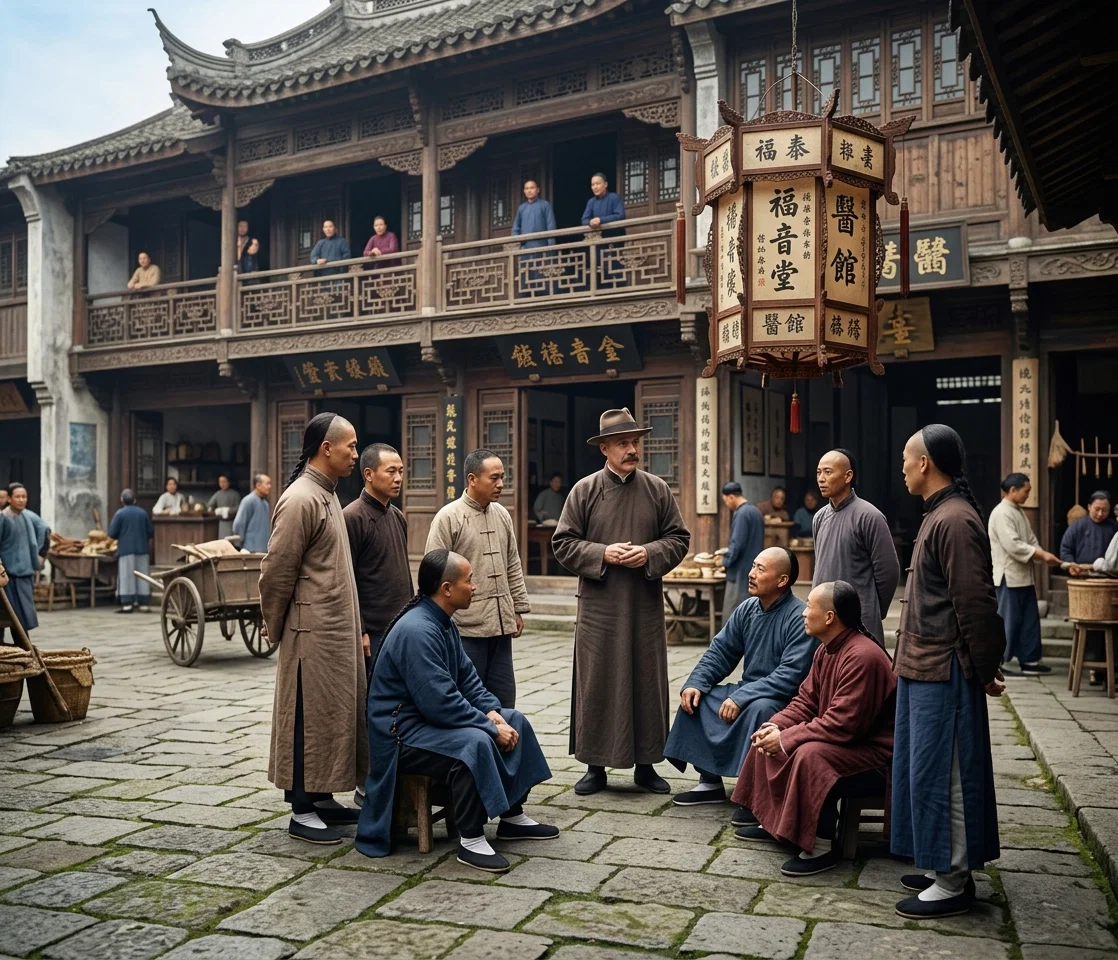
Since the arrival of the workers, a small chapel, which is at the entrance of our mission compound, has been filled with sick people who wish to see a doctor, and we have had to station a boy at the door of the chapel to keep them from crowding into our house. And when any of the workers go out into the city, they are followed by a crowd of people, and are often stopped by the sick, who beg for help. They are in a pitiable condition, suffering from all manner of diseases, the great majority of which are curable. The people in the surrounding country and neighboring cities are in a similar condition, and are constantly asking for help.
Two days ago a woman from a country home came to see us, and to tell us that there were eight in her home, six of whom were sick, and they wanted help. A man suffering from paralysis stopped Drs. Selmon and Miller and myself, and wanted to be cured. I told him that we had not yet had time to found a dispensary, and the medicine had not yet arrived. But he could not wait,—that is contrary to the nature of a Chinaman,—so he came the next day with a large company of sick people, and pounded on the door of the chapel, asking for help. He has come back several times since, with similar companies.
As the workers were coming across the country en route to the station, a stop was made in one of the near-by cities. A crowd of native women soon pressed into the courtyard to see the ladies in the party. They said that our workers must make haste to learn the language, so they can tell them of heaven. Although we stayed there only a few hours, the doctors had time to treat four patients.
Two of the brightest young men among our converts have been looking forward to the time when the doctors should come, so that they could learn to be medical missionaries.
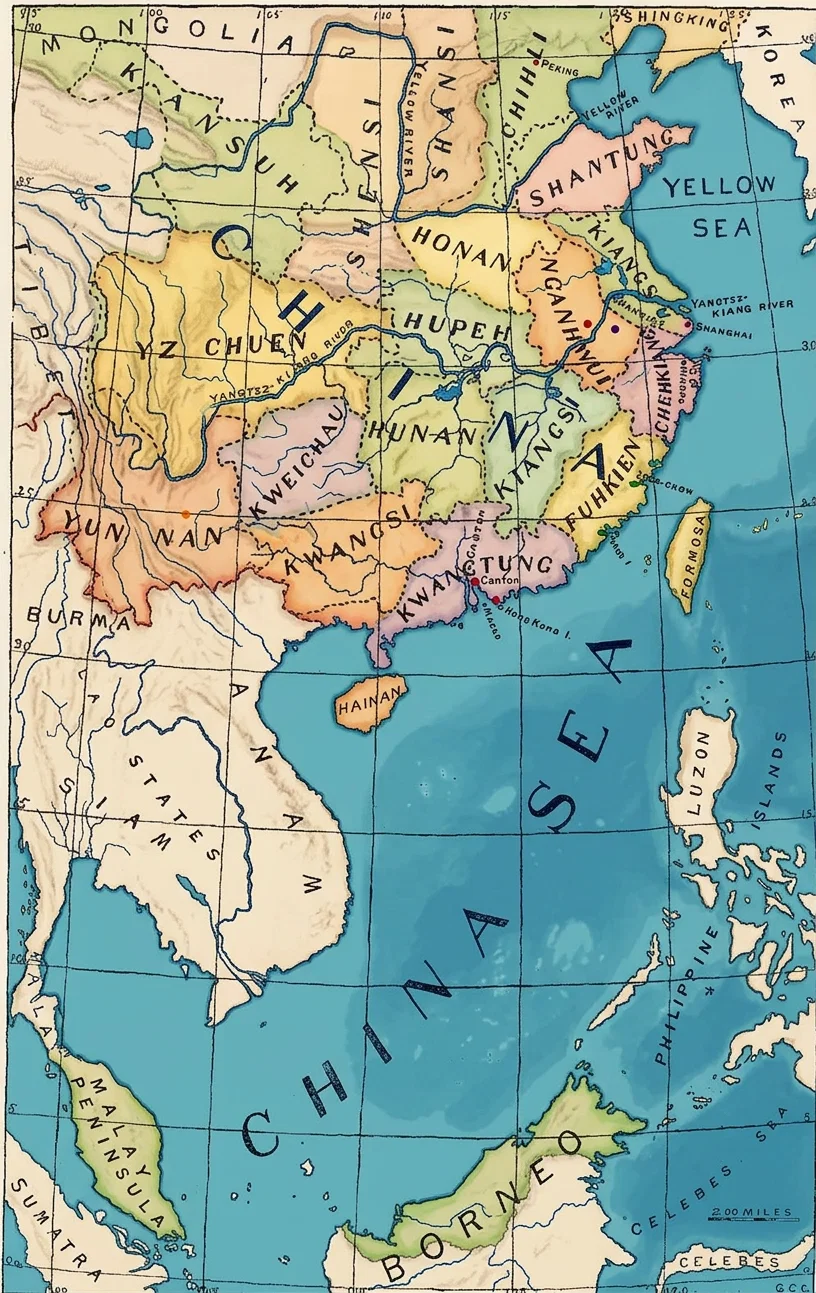
Sin Tsai Hsien is a city of about fifteen thousand inhabitants, located in the center of the “Great Plain,” which is a most fertile region, as well as the most densely populated, in the world, there being eight hundred and fifty people to the square mile. The city has a good reputation, as during the Boxer movement the people had no feeling of hatred toward the missionaries, although they knew of the proceedings in other cities. They say that they will never have a part in any such affair, even if asked to do so by the officials.
Previously to our coming, no missionary work had ever been done in this place; and there are four near-by cities of equal rank with this, that are in a similar condition. There is a river running by the side of our city, which renders other large cities easily accessible from our station.
As another evidence of the friendly feeling manifested, I might state that there was no post-office here, but at my request a postal station was opened, which will enable us to send out our printed matter from this city to all parts of China. The railroad is but a few miles distant, which puts us in immediate communication with Hankow and several large cities, and it will be but a short time until it will be completed southward to Canton and northward to Peking. Thus this seems to be the most favorable point for receiving supplies from without, and for the distribution of our literature in China.
It might be asked why I did not seek a station in one of the railway cities. This question I will answer by stating my experience at Sin Lang Cheo, as I was located there before the railroad and after. The railroad has had a bad influence on the people, as it has brought in a large number of foreigners of the worst class. This has been a great detriment to the people, making it much harder to get them interested in the gospel. Missionaries of other denominations have found the same difficulty in the railroad stations, and are moving to more inland cities.
For some time I have felt that we must have a training station here in the heart of China. We now have a band of faithful workers, and with the arrival of the workers from the States, new fields are opening up before us, so that it makes it necessary for us to plan for a greater work for China. The Lord gave us a printing-press, and we already have some Bible readings translated, and are ready to print them as soon as we can secure a location for our press, and get it in operation. We also have native converts who are now distributing portions of the Gospels, and will make good colporteurs to distribute our tracts. I already have as large a Bible class of bright young men as I can accommodate, and many others desire to come. There is great need of a training-school for the native Christians.
ONE OF THE FOUR HUNDRED MILLIONS
Among the women and girls also there is an interest to learn the gospel, but as yet we have had no place to which we could invite them, to study with them. Last Sabbath Mrs. Pilquist invited them into her dining-room for a gospel talk; but the room was entirely too small to accommodate them. Then the doctors have no place to treat the sick. A dispensary and a small ward at least will be needed. And we need a place for new workers to stay while learning the language. We have good Mandarin teachers. The language of this province is the purest Mandarin dialect spoken in any part of China, and Mandarin is the dialect of fifteen out of the eighteen provinces. After studying the language a few months, the worker can accompany me or one of the evangelists to some of our neighboring stations, and carry on the work there. It is not our desire to concentrate our work and workers in this place. That would not be a wise thing; for the field is too great, and the laborers are too few. We desire to make this a distributing center, to give the workers the training needed with the old workers, and a good start in the language, then send them forth to take charge of the stations, in the way stated above. And we must have a place in which to start the definite lines of work which I have mentioned.
On account of the dense population of Sin Tsai Hsien, it has been difficult to secure a place to open our work. We have asked the Lord to direct, and he has answered our petition. I will tell you how he has wrought for us. We have the offer of a large compound, covering at least one and one-half acres of ground, which is located not more than ten rods from the center of the city. It has a front of over one hundred feet, facing the main street, and two large stores, either of which could be used as a chapel or as a medical dispensary. Back of these is a series of six courts, with a house in each court, all the courts being separated from one another, and opening into one common passage, so they could be used for different purposes,—one for a house for the sick, another for the printing work, another for the training-school for the missionaries, another for the native men’s Bible school, another for the native women’s Bible school, and the remaining court is large enough to accommodate two families. The buildings are in good condition, but would need some repairs to make them suitable for these purposes.
The man offers to lease this to us for ninety-nine years for the very low figure of one thousand string of cash, so we could lease it and fit it up for one thousand dollars. To lease property here is much cheaper than to buy it; and it amounts to the same thing, as it is at the renter’s disposal for ninety-nine years, the same as if he had bought it.
This country, with its teeming millions, is ripe for the closing message, and we must plan to meet their crying needs quickly. The Lord will open the way, if we will only do our part. He certainly directed these workers to this field, and has wonderfully blessed in the efforts put forth thus far. And I know that there are many others in the more favored lands who will be led of him to come to China.
The six workers are all in good health and vigor. They are well pleased, and of good courage, and are taking hold of the work with great enthusiasm. They are anxious to acquire the language as quickly as possible, so they can minister to the physical needs of this people, and feed their souls as well; for on every hand there are opportunities for doing good. These workers have brought to us a great blessing, and will be a great help to us in the work. We feel very thankful to the Lord, and to the friends at home, and especially to the Mission Board for sending so many bright, strong missionaries in one company. I hope that all the friends in the States will remember us, and work together with us for the salvation of souls in China.
Sin Tsai Hsien, Honan.

General Meetings in Brazil

F. W. SPIES
THE territory of the Brazilian Conference being nearly as large as that of the United States of America, it is very difficult—almost impossible—to have anything like a general representation at any one meeting held in this vast field. Hence the plan was conceived of holding a series of State meetings in the different States, or provinces, where we have believers.
Leaving my home in Brusque, toward the close of January, 1903, I started for the Province of Rio Grande do Sul, on the way visiting several of our churches and laboring for them. I arrived at Sao Leopoldo, in time to attend the first of this series of general meetings, which was held April 4-11. At this meeting we enjoyed the Lord’s blessing in rich measure. The different departments of our work received attention, and those present were united as never before in the message entrusted to us by our Lord. Two souls were baptized at this meeting.
Eight days of travel on muleback across the campos (prairies) of Rio Grande do Sul, during which time we usually slept on the greensward with the blue sky for a canopy, or perhaps in some sugar mill, brought us to the place of our next general meeting, Linha Torres, Santa Catharina. This meeting was a great blessing to the people among whom it was held, owing to the peculiar circumstances existing at that place. At the close of the meeting there were five souls buried with their Lord in baptism.
The journey was then begun for the place of the next general meeting, which was held in Joinville, Santa Catharina. On the way to Joinville, Brethren Graf and Westphal had hoped to spend a Sabbath at Gaspar, the home of the writer, where our largest and oldest church of Brazil is located, but reaching there too late, this plan could not be carried out.
The Joinville meeting was also a great blessing to the brethren present, but the attendance was smaller than at the previous meetings. Here also two souls were baptized. From Joinville we traveled to Curityba, where the general meeting was held May 23-30. Curityba is the capital of the province of Parana. The Curityba meeting being attended in part by native brethren and sisters, it was necessary to carry on the work in two languages. But as at the other meetings, so also here, the hearts of the Lord’s people, although the people were of different tongues, were united in the great work before us, and all left the meeting with the resolution to do faithfully their part in warning the world.
When we were about to leave Curityba, Brother Graf became quite seriously ill, and was obliged to remain at Curityba, while Brother Westphal, and Brother Holzle, who had joined us at Curityba, and the writer went on to Itarare, the place of the next general meeting. We were very sorry to leave Brother Graf, but the appointments for the future meetings were out, and we could not delay. We left him in the care of faithful brethren, committing him to the Lord, and I heard nothing further from him until about six weeks later, when I met him in Santos. He had fully recovered.
The Itarare meeting being attended chiefly by natives, everything was done as far as possible in the Portuguese tongue, or was translated into that tongue. At this meeting seven persons were baptized, and as many others made a start in the Lord’s service. Brother Holzle remained at Itarare to follow up the interest created by the general meeting, and a number of others have since started in the Lord’s service.
After the Itarare meeting we were again obliged to part. Brother Westphal went on to the province of Espírito Santo, to attend the general meeting there, while Brother Holzle remained at Itarare, and I returned to Brusque, accompanied by another brother who was going to take Brother Graf’s mules home.
As soon as possible after my arrival at Brusque, I went to Rio de Janeiro to attend the last of the series of general meetings, and the council of the conference committee held in connection with it. The Rio meeting had the least attendance of all the general meetings, yet the gathering was an important one. Many important questions relating to the work of the depository and the general work were decided at this time. We trust that much good will result from the council held at the headquarters of our large field.
The first of September I arrived at my home in Brusque, having attended six of the seven general meetings held in Brazil. I traveled about six hundred miles by water, five hundred miles by rail, and seventeen hundred miles on muleback, and about four months’ time was spent, in attending these various meetings. While on these rides, sometimes a capao (small woods) or an open campo would be our lodging place for the night. It is true that comforts and conveniences, and even at times the necessary food for ourselves and our animals, were scarce, yet upon looking back over these months of wearing labor, we can see that the Lord was with us and blessed our labor. So we press on toward the prize of our high calling, giving him all the praise.
Ribeira, Sao Paulo, Brazil.

Mission Notes

MORE than ever before is there need of prayer, in view of the unprecedented openings for preaching the gospel in all the world, the great need of workers, and the dearth of means. The ministry of intercession is a service in which all may engage, and one which will be a response to our Saviour’s command, “Pray ye the Lord of the harvest, that he will send forth laborers into his harvest.”
Not five years have passed since the British, under Kitchener, recovered Khartoum, then a heap of ruins. It had been a city of seventy thousand inhabitants. Now the Gordon College is completed, and from its position stretches for two miles a street of handsome government buildings and private residences. The Khedival Avenue, with four rows of trees, is being rapidly lined with substantial business and private houses. Bands play in the public gardens, where an exhibition, agricultural and industrial, has just been held. Correspondents are astonished at the progress made, and amazed at the public confidence in the future of this city in the desert. It is reached by a railway of five hundred and seventy-five miles, with sleeping and dining cars. Built as a military road, it is now an artery of commerce. “Khartoum represents Europe transplanted into Africa; Omdurman is still Africa undiluted.” Mission work is not encouraged by the government among the Mohammedans, but is among the tribes to the south. A correspondent says the material on which missionary effort is to be exercised is infinitely more encouraging than the negro of the West Coast. The people are widely different from the negroes, and intellectually far superior. Although they may be fierce and sanguinary, their expression is not vicious. They are well formed in frame, and even handsome in features. The climate is less enervating than in the moist and swamp regions of Africa. Omdurman, just across the White Nile from Khartoum, has a population of fifty thousand, but only a section of the original city is yet reoccupied. Here Christianity may come in contact with representatives of thirty tribes of the better races of Africans.—Selected.
IN 1863—forty years ago—the British and Foreign Bible Society issued a booklet, “The Gospel in Many Tongues,” illustrating the Scriptures it was providing for many lands. It contained John 3:16 in ninety-one languages, and in about thirty varieties of letters or characters. The edition of 1893—ten years ago—contained sample verses from two hundred and eighty-four distinct languages or dialects. In thirty-six cases, a verse occurred a second, or even a third time, in the same language, but in different characters; for the society has often to provide the same translation in more than one kind of letters, to meet the reading habits of distinct sections of a population. The Centenary edition, revised and enlarged, of “The Gospel in Many Tongues,” has just been published. It contains no fewer than four hundred and three specimens. They consist of a verse in three hundred and fifty-nine varieties of languages, and of forty-four cases of this same verse reduplicated in another character. The figures present vivid evidence of the number of tongues in which the Bible has already begun to speak, and the preparation that is being made in all the world for the closing gospel message.
THE American Board (Congregational) reports for the year ending September, 1903, in twenty mission fields that belt the globe and include 75,000,000 souls, 101 strategic centers, with 1,196 connecting outposts. During the year the church-membership, 59,585, contributed for Christian work $176,439, one third of the whole amount appropriated by the Board for these missions. The sacrifice represented by such a gift is worthy of thought, and might stir those who are blessed with so much more of this world’s goods, to greater liberality. Many of these Christians receive only a few cents for a day’s labor, out of which must come the living for their families, which is meager indeed, as well as their gifts. These Christians have not only given until they felt it, but continued sacrificing until they felt the joy of the Father in giving all. This same blessing may be ours if we will but clear out the channel so that it can flow in. Shall we not make 1904 the banner year in sending the gospel to the world? Anything short of this will be displeasing to him who did not withhold heaven’s best gift that through him we might have life, and have it more abundantly.
A RECENT letter from Brother E. H. Gates reports an increasing interest in mission work among our Australian brethren and sisters. They are devoting the fourth Sabbath of each month to a missionary service similar to our second Sabbath missionary service. He says: “Everywhere there is a good interest in our missions, and a willingness to help in this work. I really believe that our churches here are going to do much toward supporting the work in the islands.” The whole wide world is astir to-day.

Oklahoma

THE work in Oklahoma is still onward. The laborers in the field are of good courage, and some of them are having good success. I was recently called to help Sister Syp in her meetings at Concord. At a meeting appointed for prayer for those who were interested and for the success of the meeting, the Lord came near, and we realized that he heard our prayers. After a few more meetings, those very ones for whom prayer was offered took their stand on the Lord’s side. This was a source of great encouragement to the little company here. Only about four of the original members of the Concord church remained, so we reorganized the church, with about twenty members. Four were baptized, and four or five are ready for baptism; the others were Sabbath-keepers who never joined the church before. There is still a good interest, and Sister Syp will continue the meetings.
The Perry church had an increase of about seventeen members lately. Elder Conway baptized thirteen a few weeks ago. The Pauls Valley (I. T.) church, which was lately organized, has had quite an increase since it was organized. Several companies will soon be ready to be organized. The Lord is blessing us, for which we feel very grateful to him who always gives us the victory.
G. F. HAPPNER.

Central America

PORT LIMON, COSTA RICA.—We left Bocas, Nov. 27, 1903, intending to work at Port Limon and along the railroad line to San Jose for the next month. We held a four nights’ meeting in Big Bite, and as a result six young men were baptized, and others are expecting to be soon. During the year since we left our native home for this field, we have had varied experiences, but never for one moment have we wished we had not come. We find men here who are longing for something, they know not what until the truth reaches them; then that longing is satisfied. As we see such so eagerly drinking in the truth, how could we regret our coming here? I used to think I was very busy, but now, with Bible work, visiting, nursing, and acting as secretary for this field, keeping all the books, etc., I can hardly find time to sleep.
The Lord is blessing my efforts in the medical work. One woman who has been unable to turn herself in bed for three months, under our treatment fully recovered in two weeks. Two of our young women, aged twenty-four and twenty-five, natives of Colombia, intend to start for the States in a few weeks to enter a training-school for nurses.
The work is opening up so rapidly that we need help very much, especially some one to help Mr. Knight in his ministerial work. Although in some respects this is an exceedingly difficult field to work, in others it is very encouraging. The people, as a rule, are willing to read and study the Word of God. Our canvassers are successful in selling our publications. The greatest difficulty is in getting our books from the States, as it takes such a long time. There is a great work to be done here, and we feel thankful for the exalted privilege of working with Jesus in giving the last message to the people of Costa Rica and Colombia. Remember this field in your prayers, and send us help.
MRS. I. G. KNIGHT.
Continue reading: Western Washington