The Youth’s Instructor, Vol. 67, No. 17.

Miscellaneous Facts from Around the World

The Youth’s Instructor

Apr 29, 1919

Review and Herald Publishing Assn. · Takoma Park Station, Washington, D. C. · Apr 29, 1919

Miscellaneous Facts from Around the World

Whale fat is being used in making margarin.
Women have been granted the full rights of citizenship in Bombay.
Coffins are no longer sold in Moscow, but are rented for funerals.
There is a mine located in Ohio which produces both coal and sand.
Seven pounds of tobacco per head of population is consumed annually in Holland.
There were 1,357,294 enlisted men discharged from the army between Nov. 11, 1918, and March 15, 1919.
A South American bat, known as the vampire, lives entirely by sucking the blood of large animals.
Women will be entitled to hold any office in the League of Nations, even the chairmanship of the executive council.
Wireless communication has been established between England and Sydney, Australia,—a distance of 12,000 miles.
A mine field, containing 70,000 mines, was laid between the Orkney Islands and the coast of Norway during the war.
Of the first 2,000,000 draftees, 200,000 could neither read their military orders nor understand their letters from home.
The war, including indirect losses, cost $224,000,000,000, according to Edgar Crammond, a prominent British financial writer.
An airplane has been designed for pleasure purposes only, and it is thought it will soon be on the market. The price will be $2,000.
More than 113,000 persons, or about 11 per cent of the entire population, in Petrograd died during the month of February, of hunger and disease.
By injecting a certain serum into the back of a patient, a French surgeon has made possible practically any operation without the loss of consciousness.
It is against the law in England to allow rats in one's corncrib. For this reason, farmers are building concrete cribs as a protection against the pests — and the law.
An airplane recently flew one hundred miles and landed near a point picked out in advance, without carrying a pilot. The machine was controlled by an automatic guide.
There is a bamboo pipe organ in a parish church in the Philippine Islands. It was built about the year 1818, and is still being played. By pouring water into one of the pipes, a birdlike sound is produced. For this reason, the organist on Christmas Eve always has a bottle of water by his side to use when he wants the enchanted birds to sing.
It has been discovered that hens lay more eggs in winter when their pens are illuminated by artificial light. The lights apparently make the winter days as long as the days of summer. By this method, the hens get just as much food and exercise in the winter as in the summer.
Wireless telephone communication was maintained throughout President Wilson’s second trip to Europe between his ship, the “George Washington,” and the naval radio station at Brunswick, New Jersey.
The Sixty-fifth Congress, recently adjourned, passed appropriation bills totaling approximately $57,000,000,000, the equivalent of $570 for every man, woman, and child in the United States.
An airplane was recently launched from a dirigible balloon successfully. The plane was suspended from the balloon by a cable, and cut loose at an altitude of about 3,000 feet.
South Carolina is the only State in the Union where it is impossible to secure a divorce. In Burma, divorce is possible without any reason being given on either side.

Explanatory Note

DUE to the courtesy and co-operation of the editors of the YOUTH'S INSTRUCTOR, the journalism class of Washington Missionary College has been allowed to prepare and edit the copy for this number. The class editors are H. Emory Wagner and Ruth Naomi Wilcox. These editors are responsible for all matter appearing in this issue. JESSIE RUTH EVANS.

The Famous Blind Musician

MARK HAGMAN
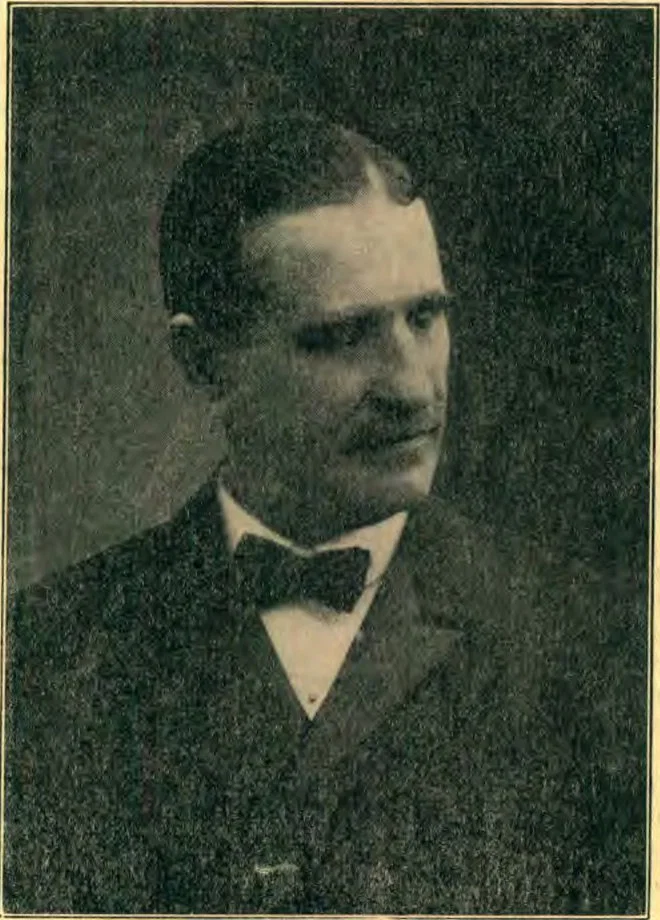
Dr. Adam Geibel is without doubt the greatest living blind composer in the world, and is also one of our most eminent musicians. He has composed much vocal music, both solo and counterpart, and also many instrumental pieces for the piano and the violin. He plays the violin, piano, and pipe organ. Dr. Geibel came to Washington, D. C., a few weeks ago to conduct the presentation of his great masterpiece, “The Incarnation,” which was rendered by a large chorus of students from Washington Missionary College. During the time he was in Washington the writer had the opportunity of obtaining first-hand the story of his life. In spite of his misfortune of being blind, he always seems cheerful. He is very modest, and speaks of his achievements as if they were only commonplace.
ADAM GEIBEL
ADAM GEIBEL
Dr. Geibel commenced his narrative by saying, “I do not know whether it is wise or not for me to say where I was born. I am a thorough American, and it is not my honor, but my misfortune that I was born in Germany.” He was born in the little village of Neuenheim, near Frankfort-on-the-Main, Sept. 15, 1855. When he was nine days old he lost his sight through an incompetent physician, who treated inflammation which had settled in the eyes, with caustic. The solution was too strong and destroyed his sight. For years every possible effort was made to restore the use of his eyes. He was taken to the greatest oculists in Europe, but all in vain. It was too late, and he was compelled to go through life deprived of one of the greatest blessings God has given to man,—the sense of sight.
At the age of six he first began to show his wonderful talent for music. At that time there were in Central Europe a great number of itinerant musicians and wandering minstrels going from village to village. Whenever they came to the town where he lived, young Geibel would listen to them for hours at a time, wholly absorbed in the music. Then he would go home, and with wonderful exactness, play the pieces which he had heard, on the little spinet or harpsichord that was in his home.
In 1862, he with his parents came to America, settling in Philadelphia. Two years later he was admitted to the Pennsylvania Institution for the Instruction of the Blind, where he received practically all his education. Here his natural talent for music soon showed itself. It was found that he possessed a sense of absolute pitch,—something very few people ever acquire. He could instantly distinguish any note or combination of notes that might be struck. He also memorized by ear very readily. At this college he obtained a thorough training in all the various branches of music.
Dr. Geibel says that the blind are not taught by ear, as many people believe. They are taught almost as the sighted are. The only difference is that the blind must be instructed through the eyes of some other person, or by means of raised letters. Their minds are trained for music and literature just as the sighted are trained.
The first instrument Geibel learned to play was the violin. This was followed by the piano and the pipe organ. He had never planned to become a solo artist, but worked along general musical lines. However, when he was graduated in 1874, he was considered an excellent church organist. There were five in his graduating class, and their work was to compose music for the twenty-third psalm as an anthem for both solo and chorus with organ accompaniment. Each was to do the work independently, and a bronze medal was to be given to the winner. Dr. Geibel was awarded the medal.
He remained at the school for two years after being graduated, taking postgraduate work and teaching. For the next few years his time was devoted to teaching the sighted. Harmony and composition had always been his specialties, and he has taught many who are now famous throughout the country. In 1884, there was a vacancy on the staff of this same school for the blind, and being urged by his friends, he applied for the position and was successful in obtaining it. After being absent from the school nearly ten years, he returned to his dear old Alma Mater, where for seventeen years he taught as assistant of the music department.
Dr. Geibel first began to compose music in 1872.
His first composition was a little piano piece called “Evening Bells.” He searched for two years before he found a publisher. It was a success, however, and was the means of introducing him to the music-loving public. In 1875 he wrote a two-part song for ladies’ voices, called “Good Night, My Love, Good Night.” This was produced at the dedication of Machinery Hall on the Centennial grounds July 4, 1875, by a large chorus from the Girls’ Normal School of Philadelphia, accompanied by a large orchestra. From that time on his compositions were well received. In 1882, he received his first foreign order. It was from the house of John Curwin, London, for the preparation of a collection of two-part songs for ladies’ voices. A book, called “The Geibel Album,” was the result of this order. During the next few years he devoted all the time he had aside from his teaching to the work of composing two-, three-, and four-part songs for men’s, women’s, and mixed voices. Most of these compositions have since become well known. In 1897 he began publishing sacred music with Mr. R. Frank Lehman as partner, under the firm name of Geibel & Lehman. His compositions were now so successful that in 1901 he resigned from the school, and devoted his entire time to composition work. Five years later Mr. Lehman retired, and the Adam Geibel Music Company was organized, of which Dr. Geibel is president. The company is located in Philadelphia, and publishes music principally for the church and Sunday school.
Without doubt many will be interested in the way his works are dictated and published. All his compositions are dictated to a copyist, whom he calls his amanuensis. It was the privilege of the writer a short time ago to see him compose and dictate music for a church hymn. After thinking for some time, he began to dictate the music something like this: Key of B flat, six eight time. Soprano—d a quarter, e an eighth, slur, b a dotted quarter; next measure, g a quarter, and so on, until he had given the entire soprano score. Then, in the same way, he gave consecutively the notes for the alto, tenor, and bass. All his compositions are dictated in this way and written in pencil by the copyist. They are then played, and after being corrected, are sent directly to the engraver or typographer for publication.
Among Dr. Geibel’s best-known compositions are the following: “The Storm at Sea,” “Constant Devotion,” “Floating Song,” “The Angel’s Refrain,” “March Forward,” “Our Nation,” and his latest work, “Marnus.” Among his cantatas, “The Nativity,” “Light Out of Darkness,” and “The Incarnation” are the best known. The most popular of his secular numbers is “Kentucky Babe.” This song is sung the world over.
Dr. Geibel has done a great work for the blind people in the United States. For years, three different systems of raised letters were used in this country. In order to be able to read the literature written for the blind, it was necessary for one to learn all three systems, and this was a large task. Dr. Geibel has always been heartily in favor of the French system, which is used throughout Continental Europe. He has been one of the leaders in urging the universal adoption of this system in the United States. After much effort and hard work, the success of this system is now assured. It is being rapidly adopted throughout this country. The adoption of this system is a great blessing to the blind, and it will make their task of obtaining an education very much lighter.
Dr. Geibel spends much of his time now in lecture and recital work. He usually gives a short account of his life, plays and sings selections from his own compositions, and completes the program by composing different music for any hymn the audience may select.

The Real Education

IN the lexicon of youth which fate has reserved for a bright manhood there is no such word as fail.”
This is a time of great opportunity for the young men and women who have decided to follow Christ and consecrate their lives and talents to the salvation of souls and the spreading of the greatest message ever commissioned to man. Before us is a world darkened by sin, and yet waiting with an eagerness which we do not, cannot, realize, for the Word of God which has been, and always will be, the only message of truth and comfort amid the tempests of the changing years. Their call is ringing in our ears; thousands are mobilizing for the issue. The young men and women who fill the ranks are volunteers from all parts of the world. The great battle between the religious leaders of today and the forces of sin hangs in the balance. The crisis is approaching, and the burden rests upon this army of youthful workers to deal the decisive blow. Is it not a matter of supreme importance then that their training be perfect and efficient? Should not their school work be so planned that they may obtain the best preparation possible for the work they are called to do?
There is no doubt that the schools of today offer courses of instruction that are unparalleled anywhere in history. The standards of efficiency have been raised so that they meet the requirements of all who seek enlightenment. With these advantages, the only question that might arise is, “How much time must I spend in school?” A definite answer to this question is impossible. We cannot fix a time limit, but there is a rule, which, when followed by one who has learned to forget self, will settle the question of time, and insure a successful worker.
Practical experience must serve to direct one’s course of education. That is to say, before spending years in college theorizing upon something you know little about, a year or two should be devoted to active work. Learn the needs of the field, and the preparation required of you to meet these needs. Then go back to school, for through actual experience you have learned to know your own limitations, and you can appreciate your school work. Why?—Because you know just what you need. There is an end toward which to work.
Consider the young college student, when, after spending four long, toilsome years in school, he launches out upon the sea of life, filled with a consciousness of his knowledge. But his confidence in himself weakens after a few months of actual work in the field. He learns to his dismay that he is hopelessly unqualified, and realizes when too late opportunities and advantages he has missed in school. O the wasted hours spent in pursuing aimless courses, working with the sole purpose of getting credits! This is true of any profession, whether it be the ministry, medicine, or any branch of the work.
How many young men have failed to make successful preachers because they lacked practical insight into the needs of humanity! How many brilliant normal students fail to make good teachers! Why?— Because they have received their training in the school of science, while the school of art has been neglected. In the school of science the medical student learns anatomy; in the school of art he learns surgery. Just as the successful surgeon must be a student of both schools, so a successful gospel worker must have not only the theory, but the practice of winning souls to Christ.
This principle holds good in colleges, universities, and, in fact, any school after the student has chosen his life work. A certain degree of knowledge, gained from practical experience, is necessary before a student has taken even two or three years of college work; else those years are spent in vain. But after finishing college it is a complete mistake to go on with a course at the university without a few years’ experience. If after that time one thinks it profitable to take a university course, it is all right. He is now competent to judge for himself; he understands his needs. In one year he can acquire that which he would have failed to acquire in two years. Success is sure to come to his work.
Let us remember, however, no matter what we do, that failure to make a complete surrender to the will of God will inevitably draw the eyes from heaven to earth, and selfish motives will creep in. But when we once get a glimpse of our mission and feel our call to service, not one minute will be spent pursuing a course of education that will not in the end make our increased efficiency worth the time spent in school.
First, get a vision of God. Then take a course combining the schools of learning and the great university of life. This is the real education.
JOHN D. NEFF.

Opportunities in the Moslem World

HOW the world has changed! Look at it as it was several years ago; look at it as it is today. What striking differences! How marvelous is the Lord’s power! In less than five years he has brought upon the world the most remarkable changes the human mind could conceive. Despotic nations have fallen, and democracy has risen triumphant over them; autocracy has fallen, probably never to rise again.
Districts where no Christians were formerly admitted, now have their doors wide open for Christian education and training. This is especially true in Mohammedan lands. There is where the Christian’s opportunities have increased more than in any other part of the world. To show the increase in these opportunities, let us consider two things: First, a short sketch of the political standing of the Mohammedans since 1815; second, their religious standing, both in the past and at the present.
About a century ago (1815), Mohammedan dominions, governed by the Turks, extended as far as the Adriatic Sea in the west, and up to, and even past, the Danube in the north, and included vast stretches of land in Asia and in Northern Africa. The present countries of Bulgaria, Rumania, Serbia, Greece, and Montenegro, all belonged to the Turks; the countries of Algiers, Morocco, and Egypt, were all under Mohammedan control; places of central importance in Europe, such as the Dardanelles, Constantinople, and the Bosporus, were held by the Moslems. Thus Mohammedanism held a very prominent place among the nations of Europe and Asia.
This prominence did not endure long, but declined as the years passed. The constant wars with Turkey weakened the power of Islam. Since the fall of the Ottoman supremacy in the middle of the nineteenth century, the empire existed as long as it did only through the sufferance of the great powers of Europe. In the course of years Rumania, Bulgaria, and Serbia were recognized as independent governments. In the Italian-Turkish War (1911-12), Tripoli was snatched from the hands of the Turks. Soon after, 1912-13, in the Balkan-Turkish War, the whole of Turkey in Europe—with the exception of the Dardanelles, the Bosporus, and Constantinople, and a small portion of land lying west of Constantinople—was fairly divided among the several Balkan States. And now, after this recent World War, the remainder of Turkey’s possessions in Europe have been taken from her; Palestine is held by the British, and Armenia is about to regain her independence. So much for the political standing of Islam.
The Mohammedan religion is one of the great missionary religions of the world, and requires each believer to propagate his faith. It has the shortest creed in the world, and one whose utterance has more power over those who believe it than any other. The creed is so brief that it has needed no revision for thirteen centuries. It is taught to infants and whispered in the ears of the dying. Five times a day it rings out in the call to prayer in the whole Moslem world: “La ilaha illa-llahu; Muhammad rasul allahi” (“There is no God but God; Mohammed is the apostle of God”). Besides the repetition of this creed, which is known as confession, the Moslems have four other religious duties. One of these is prayer, which must be offered at the proper hour; namely, at dawn, just after high noon, two hours before sunset, at sunset, and two hours afterward. Fasting is also a prescribed religious duty, the fasting period lasting through the month of Ramadan, July 23 to August 22. In this month the Moslems take no water or food during the daylight hours, but they have an abundant recompense for this self-denial in the nocturnal feasting, which sometimes lasts the entire night. Still another duty is almsgiving, generally observed by pious Mohammedans. This takes the place of the tithing and the freewill-offering plan, and consists of giving one fortieth of the total income to the poor. Finally, there is the pilgrimage to Mecca, which is one of the strongest bonds of union in the whole system of Mohammedanism. This pilgrimage is incumbent on every free Moslem, male or female, who is of age and can afford it. These are the duties of Islam.
Dr. DeWitt Mason, in speaking of the changed conditions that are favorable to Protestant missionary effort among the Moslems, states the following facts:
“1. For the first time in history the whole of Christendom is face to face with the whole of Islam.
“2. Today, we know the character and power of Islam, as never before.
“3. The political power of Islam has collapsed, and almost the whole of the Moslem world is under Christian government.
“4. The social and intellectual status and standards of Islam are changing.
“5. There is a present-day spiritual crisis and opportunity in Islam.”
All these facts reveal our opportunities in the Moslem world, and yield large encouragement for a steady and persistent effort to evangelize the great host of Mohammedans—over 200,000,000 of them—roaming about in ignorance, without any knowledge of the gospel of Christ.
GABRIEL KUPJAIN.

A Successful Leader

RUTH WILCOX
IN choosing leaders for his work, God has always chosen men who were simple in faith and faithful in service. The paths they have walked have not always led them in pleasant and well-traveled roads; many have had to climb up the rugged and rocky mountain of difficulty. Then, when they reached the top, they could encourage and direct more sympathetically those who were still climbing. As Christ was called upon to meet every temptation that comes to us in order that he might sympathize with and help us, so many tests have been given to human leaders that they may be an encouragement to others.
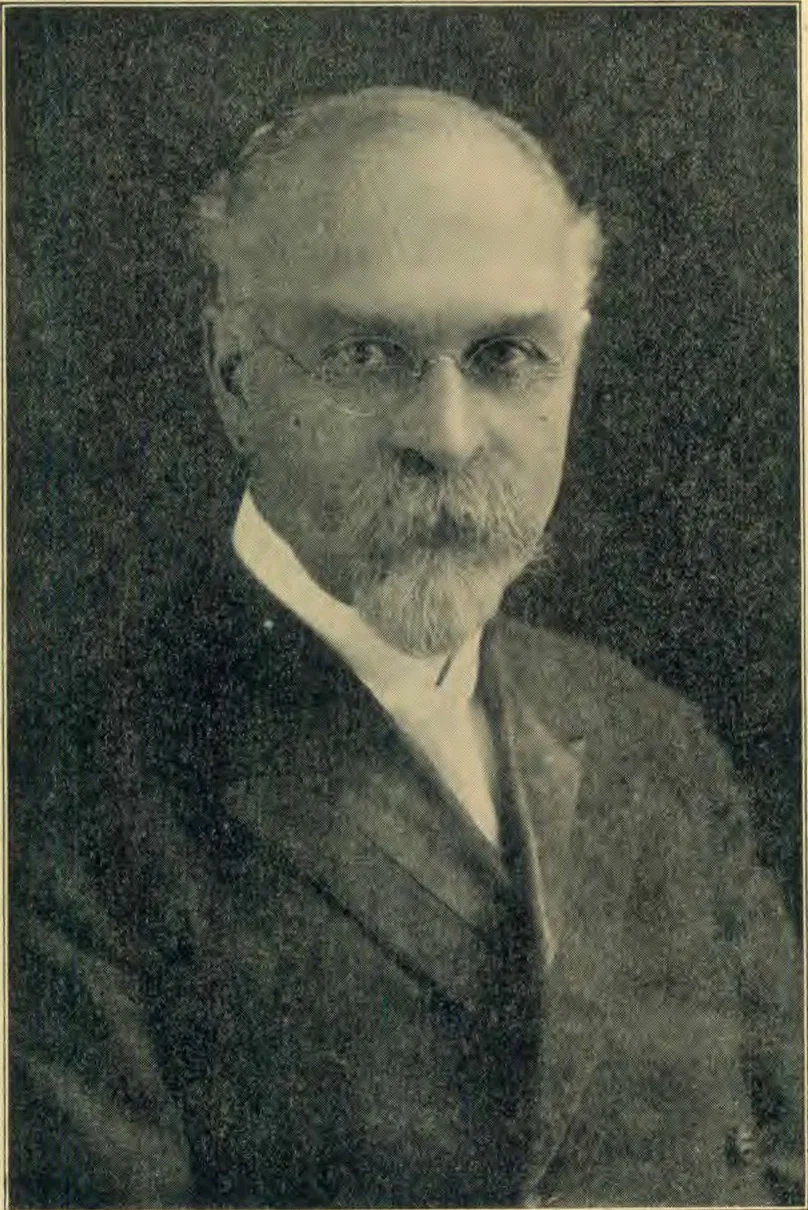
ELDER A. G. DANIELLS
This has been so in every age of the church. Our own denomination affords some notable examples of this principle. We wish to speak of one in this connection; namely, the president of the General Conference.
Arthur Grosvenor Daniells was born in West Union, Iowa, Sept. 28, 1858. His father, a physician, was English. Mrs. Daniells, the mother, was Scotch-Irish.
The country at this time was engaged in a great controversy. The question of slavery was being debated by the North and the South. The climax was reached in 1861 when war was declared.
Answering his country's call, Dr. Daniells left his home and family to minister to the wounded soldiers. A year of anxiety had passed for the mother when word came that her husband was dead.
Mrs. Daniells was left in needy circumstances. For a time separation from her three children was made necessary. Under these circumstances she played the part of a true mother, maintaining the bonds of love between her children. Through prayer and counsel she sought to mold their lives for God. After several years she was able again to establish a home, through a second marriage. In her new country home she was once more united with her children.
Arthur, as the elder son, manfully did his part in the support of the family. In spite of many difficulties he found an opportunity to attend school and lay a foundation for a future education. After availing himself of such privileges as the district school afforded, the way was providentially opened for him to attend Battle Creek College. Difficulties met him here, but he persevered. While others were enjoying their favorite sports, he was sawing wood to help defray his school expenses. By earnest industry he was able to secure the advantages of this school, which did much to determine the purposes and currents of his life.
Elder Daniells's religious convictions dated from early childhood. He always attributed this to the earnest prayers of a godly mother. At the age of ten he was baptized by Elder George I. Butler and united with the Seventh-day Adventist Church. From this time on he had a desire to live a life of usefulness. As he grew older, the desire increased. He longed to devote his life to God's service.
In the early days of our work, when the cause was small and the treasury empty, little opportunity was afforded the young men wishing to enter the ministry. Thus, when Elder Daniells wished to enter this work, instead of being urged on by the leading men, he was forced on by the conviction that he must be connected with God's work.
However, in 1878 he began work in Texas as tent master for Elder R. M. Kilgore. Although he was now connected with God's work and living a life of service, trials came to him as heretofore. The work in Texas was new, material comforts and even necessities were lacking, and wages were low. The young preacher was paid seven dollars a week during the first year. But he kept ever before him his one aim — to make workers. He proved faithful in every detail. Later he returned to Iowa, and in 1880 began his work as a licensed preacher. Having proved his call to the gospel ministry, two years later he was ordained by Elder Butler.
The faithful work of Elder Daniells had so inspired the confidence of the leaders in the homeland that when the call came for a worker to enter New Zealand, he was sent to that field. As a pioneer in the work there, great opportunities were open to him. In spite of prejudice and opposition he organized in that country two good-sized churches and several smaller ones.
Four years later he was called from the presidency of the New Zealand Conference to the larger field of Australia, where he acted as president of the Australian Conference. It was on this large island that the first union conference was formed. Elder Daniells became its first president. During the time he labored in Australia the church grew from a membership of a few Sabbath keepers to one of several thousand believers. A sanitarium and college were established. The printing work which had just been organized was greatly strengthened. Mrs. White, recognizing the importance and possibilities of the Australian work, with her son, joined Elder Daniells in building up a strong conference. As a result, Australia today sends missionaries not alone to the surrounding islands, but to far-off India and China.
In 1900 Elder Daniells returned to the United States as a delegate to the General Conference. Providence had in store for him a still greater opportunity. At this meeting he was unanimously elected president of the General Conference. He has served in this capacity for nineteen years, the longest term of office held by any president. During his administration our work has continued to progress. New fields have been opened, and the work in old fields has grown. Special attention has been given to foreign missions. Under his leadership, mission stations have been built which practically belt the globe. Elder Daniells has personally visited all the great mission fields, with the exception of South America.
A work which is continually expanding needs a strong organization which is capable of adaptability and expansion. This our denomination has. Under the blessing of the Lord, Elder Daniells has been used to lead out in this strong organization. The educational, medical, and missionary work has been greatly strengthened.
A sketch of the life of this leader would be incomplete without particular mention of his wife, Mrs. A. G. Daniells, who has been associated with her husband from the earliest days of his ministry as a faithful helpmeet. She has shared his labors and travels in every part of the world. The preservation of Elder Daniells's health during these trying years is largely due to her wifely care.
In the midst of his busy public life, Elder Daniells has found time to devote to literary work. He contributes to all our large magazines, and has written two books, “The World War” and “A World in Perplexity,” both of which have had a large circulation.
He is working as earnestly today as he ever has in his life, and has led many to devote their lives to service at home and abroad. He has fully accomplished his aim — to make workers.
“Lives of great men all remind us We can make our lives sublime, And, departing, leave behind us Footprints on the sands of time; “Footprints, that perhaps another, Sailing o'er life's solemn main, A forlorn and shipwrecked brother, Seeing, shall take heart again.”

The Social Advantage of College

GOIN’ ter college? I can’t see no reason in that ‘idear,’ says the staid, unimpressionable person from the Northern States, as he tries to throw cold water over the aspirations of his young acquaintance. “Ah reckon ya all thinks ya wanta be too right smart,” complains the easy-going Southerner. “You are gittin’ too nice for us, I see. Want more genteel surroundings,” observes the free, open man of the West.
This, unfortunately, has been the idea of the majority of people regarding a college education. It has been considered an impracticable investment in advance knowledge which isolates one socially from his former associates. The American people are fast breaking away from this false conception. Now the young people are sent to college to secure not only technical knowledge, but also the polish and the social ease which will make the intercourse with their former acquaintances deeper and more enjoyable.
Through its social life the college, as no other place, refines and equalizes the youth. Students come from all parts of the country. The mild Southerner with his soft, slow speech; the progressive, formal Northerner, speaking in harsh, rolling accents; the Westerner with his breezy slang,—all meet in the classroom, and become fast friends in the dormitory. Soon the various provincial tones of accent are blended. They merge into one speech, the pure, cosmopolitan English. The Southerner, as well as the Northerner, speaks with correctness his mother tongue.
As the language of the different college students is blended into one perfect whole, so their lives are broadened and polished to one standard. They come from the farm cumbered with ignorance and awkwardness, and from the city burdened with vainglorious mannerisms and self-conceit. Between the ages of eighteen and twenty-one, when safely past the time when they “know it all,” they are beginning to realize their lack along social lines. With hands and feet always in the way, coats too short, trousers which refuse to keep pressed, a conspicuous feeling always connected with dresses stiff and new; the freshmen stammer over introductions, sit down at the wrong time, and view with amazement the strange transactions in the dining-room. They are at a loss to know how to change their bare rooms into cozy, homelike quarters. How can they ever live nine months, to say nothing of four years, with a strange roommate? How can they become acquainted with the many students and the upper classmates who have such easy, genial ways? Can they ever appear as natural and refined as their teachers? How they long for their parents and old associates who act and talk in their old familiar way!
But college life changes this. Now they learn to meet on a social equality with scores of students. They become acquainted with people from all parts of the country, who teach them many things not found in books. They learn from the pages of life how the other part of the world lives. Their new environment helps them glean lessons of unselfishness and courtesy. They must learn to hide personal feelings. Who cares how one feels? They must greet politely all who drop into their room, even during study hours. Politeness and correctness are college traditions. Unless these traditions are adhered to, one is considered odd. The sharp corners of their rugged dispositions are worn off by the constant rub and wear of the friendly college associates. With the help of refined and sympathetic teachers, with suggestions on correct manners and methods from the preceptor and preceptress, these rough, ungainly boys and girls are changed into refined individuals. They develop into men and women who can meet any condition with ease and grace.
(Concluded on page nine)
(Concluded from page seven)
“But what’s ther use er all this polish? I git along all right without it,” says the unprogressive fossil who thinks in terms of his uneducated grandfathers. It is only the polite who can expect courtesies. Gentlemen and gentlewomen are those who hide their displeasure, who think not of themselves but of others. Politeness is a key which opens all doors. It makes possible the enjoyments of life.
What would Paul, the great teacher of the educated, have been without the polish and ease acquired at the great schools of his day? His social position and knowledge of the prevailing customs, opened for him the Areopagus at Athens. Paul stands next to Jesus as a mighty personality; a refined type of true manhood. Moses, who was educated in all the knowledge of Egypt, with God’s help became the greatest general in the world. God can use the unlearned and uncultured, but he can accomplish much more with one who is educated and refined.
Does Christ want his young people to secure the polish and poise which college gives? Listen! “That our sons may be as plants grown up in their youth; that our daughters may be as corner-stones, polished after the similitude of a palace.” College is the place where our youth, as trees grown, may be cut and fashioned into a palace; where the rough stones cut from the rocks and mountains of this country may be polished and fitted into a temple where God delights to dwell.
We may not enjoy the cutting remarks of our associates, or the grinding duties, but nevertheless college life is pleasant and profitable. It is a fit preparation for the higher course in the school of the hereafter. How beautiful, even in this life, when compared to the rough material in the rude structure of the uneducated, are the shining corner-stones, the graceful columns in the life palace of the college student!
MERLE SILLOWAY.
Continue reading: When the Clock of Time Turned Backward