The Youth’s Instructor, Vol. 67, No. 17.

Miscellaneous Facts from Around the World
Earlier text: When the Clock of Time Turned Backward

VI — Adoption

(May 10)
GOLDEN TEXT: “Beloved, now are we the sons of God, and it doth not yet appear what we shall be: but we know that, when he shall appear, we shall be like him; for we shall see him as he is.” 1 John 3: 2.
STUDY HELP: “Steps to Christ,” chapter “God’s Love for Man.”

Questions

1. What does God call those who are without Christ? Eph. 2: 12; Col. 1: 21.
2. When we accept Christ, instead of being foreigners, to whose household do we belong? Eph. 2: 19.
3. As foreigners, or aliens, how may we become members of God’s family? Gal. 4: 5. Note 1.
4. What enables us to be adopted by God? John 1: 12.
5. When born, or adopted, into God’s family, what may we call God? Matt. 6: 9. Note 2. What does he call us? Does the world understand this relation? 1 John 3: 1. Note 3.
6. At Christ’s coming, what further change will take place in the sons of God? 1 John 3: 2; Rom. 8: 23.
7. How does the Father’s love for his Son Jesus compare with his love for his adopted sons? John 17: 23.
8. What evidence does God give us that he loves us equally with his Son Jesus? Rom. 8: 17.
9. When we are adopted into God’s family, what relationship exists between us and other adopted sons? 1 John 3: 14.
10. What proof does God give us of our relationship to him? Heb. 12: 5-11.
11. How does Jesus regard the children who are adopted into his Father’s family? Heb. 2: 11. Note 4.
12. Because we are sons, what material blessings do we receive from God? Luke 12: 28-30. What present spiritual blessings? Isa. 66: 13; Eph. 3: 12. What future blessing? 1 Peter 1: 3-5.
13. How will a son of God feel toward the other members of the family? 1 John 2: 9-11; 3: 16.
14. How will a son relate himself to his Father’s commandments? 1 John 5: 1-3.

Notes

1. The process by which we become children of God is called adoption, but it is more than that. An adopted child in a human family takes the family name and has the right of inheritance the same as a natural child. But “if any man is in Christ, he is a new creature” (2 Cor. 5: 17, R. V.), or “there is a new creation,” margin. He is not only adopted, but he is born into the heavenly family (John 3: 3-7), and becomes a partaker of the divine nature. See 2 Peter 1: 1-4.
2. “If you call God your Father, you acknowledge yourselves his children, to be guided by his wisdom, and to be obedient in all things, knowing that his love is changeless. You will accept his plan for your life. As children of God, you will hold his honor, his character, his family, his work, as the objects of your highest interest. It will be your joy to recognize and honor your relation to your Father, and to every member of his family. You will rejoice to do any act, however humble, that will tend to his glory, or to the well-being of your kindred.”—Thoughts from the Mount of Blessing.
3. “‘Behold, what manner of love the Father hath bestowed upon us, that we should be called the sons of God.’ What a value this places upon man! Through transgression, the sons of man become subjects of Satan. Through faith in the atoning sacrifice of Christ, the sons of Adam may become the sons of God. By assuming human nature, Christ elevates humanity. Fallen men are placed where, through connection with Christ, they may indeed become worthy of the name ‘sons of God.’ . . .
“The more we study the divine character in the light of the cross, the more we see mercy, tenderness, and forgiveness blended with equity and justice, and the more clearly we discern innumerable evidences of a love that is infinite, and a tender pity surpassing a mother’s yearning sympathy for her wayward child.”—Steps to Christ, pp. 17, 18.
4. “‘God so loved the world, that he gave his only begotten Son.’ He gave him not only to live among men, to bear their sins, and die their sacrifice, he gave him to the fallen race. Christ was to identify himself with the interests and needs of humanity. He who was one with God has linked himself with the children of men by ties that are never to be broken. Jesus is ‘not ashamed to call them brethren;’ he is our Sacrifice, our Advocate, our Brother, bearing our human form before the Father’s throne, and through eternal ages one with the race he has redeemed—the Son of man. And all this that man might be uplifted from the ruin and degradation of sin, that he might reflect the love of God, and share the joy of holiness.”—Id., p. 16.

One of the First Members of the W. C. T. U.

She was a loyal wife, a faithful mother, an unfaltering friend, a gifted writer, an indefatigable worker, and as the crown of all, she was a Christian,” wrote a close friend.
She was born in Pennsylvania, and while she was still young, her father answered the call to preach the gospel to the pioneers and Indians in Illinois.
Her father was her only teacher until she entered Rock River Seminary at Mount Morris, Illinois. It caused her much indignation to think that the boys could go on to Northwestern University, while the girls had to stay behind.
Just three days after Lincoln’s inauguration, she was married, and in company with several others, went to re-establish a college in northwest Iowa. Two years before, all the people at this school had been massacred by Indians.
In 1864 her husband joined the army, returning at close of the war, broken in health. He died soon after, and in three months the baby followed him. This left one girl, the eldest, and two little boys. Friends wanted to take the children, but she determined to keep them together. Again she took up her writing. She had wonderful talent in turning every little incident into a story. Up to this time her life had been that of an idealist, dreamer, and dramatist.
One day she saw her little boy come out of a tall brick building with a handful of dirty candy. She entered, and, to her horror, found that it was a saloon. From that day she took her stand for temperance.
In Ohio, crusades had already been started against liquor. After many sleepless nights and much agonizing prayer, she started, in Rockford, Illinois, the Woman’s Temperance Union. The children were organized into bands called the Cold Water Army. This was the first step toward the organization of what later developed into the Loyal Temperance Legion.
In the fall of this year, 1874, the National Woman’s Christian Temperance Union was organized, with Miss Frances E. Willard as its president. That same year the two workers met, and were fast friends thereafter.
From this time forward she traveled and lectured extensively, organized slum and rescue work, and wrote letters to poor working girls and those in trouble. In her travels in later years, it was a pleasure to meet many of those with and for whom she had worked.
Following this she became, not only a lecturer, but a national evangelist of the W. C. T. U. Her health began to break, but still she struggled on, traveling, speaking, teaching, and writing. A large number of people were converted under her efforts.
One day, while on the way to conduct a meeting, she fell unconscious on the street. It was found that she had organic heart trouble, so she gradually settled down to a contented invalid life.
A friend suggested that she go to the Battle Creek Sanitarium. While there she became a Seventh-day Adventist. One day, while engaging in prayer with others for a young friend, she was impressed to pray for her own healing. Leaning over to Dr. Kress, who knelt by her side, she asked the doctor if she was willing to let her act on the assumption that she was healed, saying, “Dr. Kress, will you release me?” Immediately at the reply, “I will,” she was healed.
She stepped out of her wheel chair and walked up to her room.
Again she took up her W. C. T. U. work. Three years more were spent in travel and evangelical work.
Then while attending a religious conference in Tennessee, she had an attack of pneumonia, from which she never recovered.
Truly no life could have been filled with more varied experiences than hers. MABEL ANDRÉ.

VI — David and Goliath

(May 10)
LESSON SCRIPTURE: 1 Samuel 17.
MEMORY VERSE: “Thou comest to me with a sword, and with a spear, and with a shield: but I come to thee in the name of the Lord of hosts.” 1 Sam. 17: 45.
STUDY HELPS: “Patriarchs and Prophets,” pp. 643-648; “Bible Lessons,” McKibbin, Book Two, p. 65.
“For the God of David still Guides the pebble at his will; There are giants yet to kill, Wrongs unshriven; But the battle to the strong Is not given, While the judge of right and wrong Sits in heaven.”

Questions

1. With what people were the Israelites at war all the days of Saul? 1 Sam. 14: 52.
2. Some time after David was anointed how were the two armies situated? 1 Sam. 17: 1-3. Note .
3. Describe the champion of the Philistines, his armor, and his weapons. Verses 4-7. Note .
4. What challenge did Goliath make to the army of the Israelites? How did this affect the king and the people? For how long a time did the giant continue this? Verses 8-11, 16.
5. Where were Jesse’s three eldest sons? Where was David? Upon what errand was David sent? Verses 12-18.
6. As David drew near to the men of Saul’s army, what did he shout? Where did he leave what he was carrying? As he talked with his brothers, what did he hear and see? Verses 20-24.
7. What did the men of Israel say to David? What words of David express his faith in the Lord? Verses 25-27. Note .
8. How did Eliab, his oldest brother, unjustly reprove him? What did David continue to do? To whom were his words reported? Verses 28-31.
9. When David was brought before Saul, how did he try to encourage the king? What objection did Saul offer? What proof did David give of his courage? In whom was his trust for victory? Verses 32-37.
10. When Saul consented for David to fight the giant, how did he try to prepare him for the battle? After starting, what did David decide he could not do? What preparation did David make? Verses 38-40.
11. As the Philistine came out to battle who was with him? When he saw his boyish-looking enemy, what did he angrily say? By whom did he curse David? What boast did he make? Verses 41-44.
12. What words of boldness did David speak in reply? In whose name did he claim the victory? What did he say the assembled armies should know? Verses 45-47. Note .
13. How did David and the giant approach each other? What did David do as he ran? What was the result? Verses 48-51.
14. How did the Israelites take advantage of the confusion in the Philistine army? Verses 52-54.
15. What inquiry did Saul then make concerning David? Verses 55-58. Note .

The Practical Lesson

Who is our Goliath, or great adversary? 1 Peter 5: 8.
Although we are small in his sight, and only youth, what does the Lord promise us? James 4: 7.
What impenetrable armor is provided for us? Eph. 6: 14-17, first part.
What is our weapon of defense? Verse 17, last part.
“For the God of David still Guides the pebble at his will; There are giants yet to kill.”

Washington Missionary College

It is not often that an educational institution has such a significant name as has Washington Missionary College. It is a name worthy of more than mere passing attention, for in the three words may be found the reasons for its existence. What does this college stand for? What are the advantages of attending it?
WASHINGTON. What does this word mean to the citizens of our country? What does it mean to every Seventh-day Adventist? It means just this—headquarters. It means that our college is located at the capital of our nation. What an inestimable privilege! Students have read, before coming to Washington, about the proceedings in Congress; they have heard of the Congressional Library, with its two million volumes; they have seen pictures of the White House, the National Museum, the art galleries, and scores of other interesting places. But mere pictures have no permanent value; they do not bring learning and culture. However, when an individual enrolls as a student at W. M. C., he may attend Congress at any time and see the machinery of the Government at work; he has free access to the Congressional Library at all times; he may view at his leisure the wonders of antiquity in the museums. The best that our country offers along cultural lines may be found at the national capital.
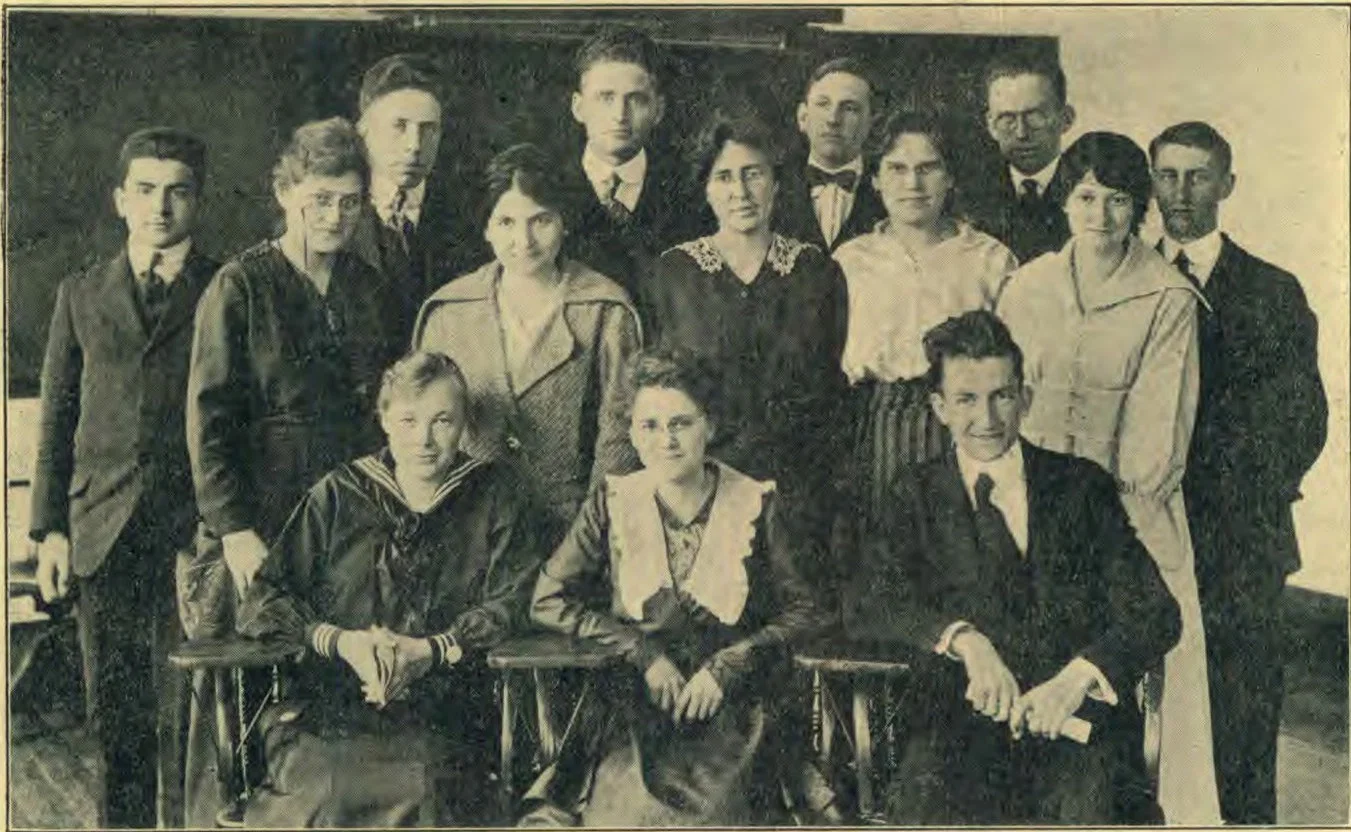
JOURNALISM CLASS OF WASHINGTON MISSIONARY COLLEGE
But this is not all. W. M. C. is situated within one-half mile of the headquarters of the denomination. This gives the college student the rare opportunity of meeting and counseling with our leading thinkers. The leaders of our work are constantly looking for graduates to enter the field,—and behold! here stands the college, ready to supply the need. Truly, W. M. C. is “the gateway to service.”
MISSIONARY. This word is inserted between the words “Washington” and “College,” and stands a little higher; it is written in bolder type than the other two words. This is the heart and core of the name of this school. Not only is here a foreign missionary department maintained; not only are workers of various types trained for the home field; but the true missionary spirit of helping “the one next to you” is fostered and encouraged among the students. Of course, a mere name does not create a condition, but it is the aim of the faculty that this college shall not be known primarily for its advantageous location, nor for its intellectual standards, but for the true, Christian missionary spirit which its students possess. This college stands for whole-hearted, genuine consecration, with the end in view of finishing God’s work in this generation.
COLLEGE. It is recognized that in order to meet the demands of our age, it is imperative that a high standard of scholarship be maintained. This college believes in efficient intellectual training. While it has no room for one-sided, narrow bookworms, yet its doors are always open to those who wish to dig deeply into “things worth knowing.” However, let this be understood, W. M. C. is not a machine that claims it can take all comers, toss them into the hopper, wave a magic wand, and then grind out mental Titans. It is up to the individual to make good.
This institution holds that students are men and women—not mere automata. The honor system of discipline has long been in vogue,—and it works.
In every sense, Washington Missionary College is a college, one that any person may be proud to call his Alma Mater. H. EMORY WAGNER.

Prayer Cannot Replace Lack of Prayer Through Work
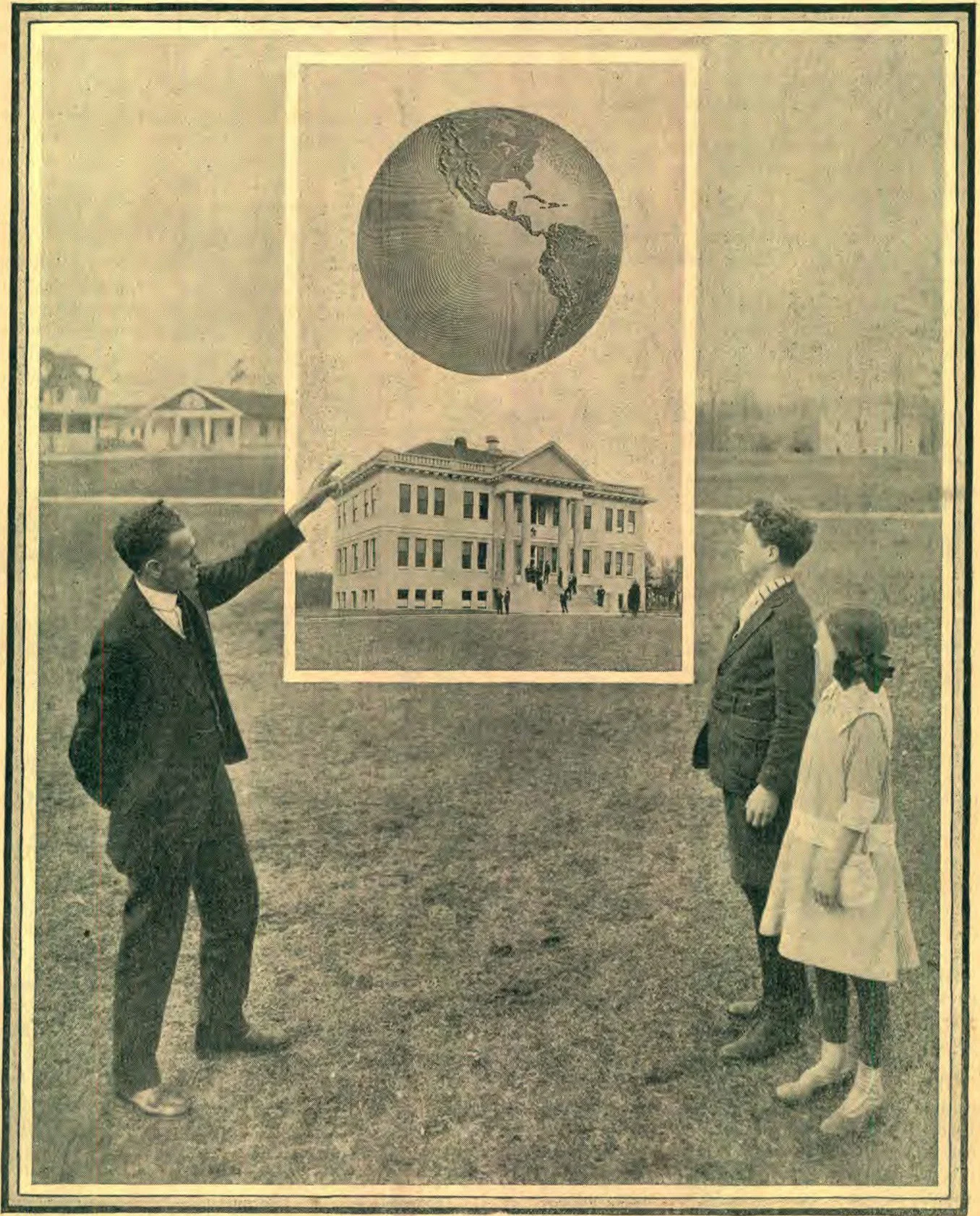
“WE cannot make up for lack of prayer by excess of working.”

You have reached the end of this edition.

The Youth’s Instructor · Apr 29, 1919