How marvelous is the adaptation of Scripture for the race for whom it was revealed! In its pages every conceivable condition of human experience is reflected as in a mirror. In its words every struggle of the heart can find appropriate and forceful expression. It is absolutely inexhaustible in its resources for the conveyance of the deepest feelings of the soul. It puts music into the speech of the tuneless one, and rounds the periods of the unlettered into an eloquence which no orator can rival.
It has martial odes to brace the warrior's courage, and gainful proverbs to teach the merchant wisdom: all mental moods can represent themselves in its amplitude of words. It can translate the doubt of the perplexed; it can articulate the cry of the contrite; it fills the tongue of the joyous with carols of thankful gladness; and it gives sorrow words, lest grief, that does not speak, should whisper to the heart, and bid it break. Happy we, my friends, who, in all the varieties of our religious life, have this copious manual divinely provided to our hand.
—W. M. Punshon.
The Organic Unity of the Old Testament.
Its predictions are not isolated, but features of one great prophetic picture; its ritual and institutions parts of one great system; its history, not loosely connected events, but an organic development tending toward a definite end. Viewed in its innermost substance, the history of the Old Testament is not different from its typical institutions, nor yet these two from its predictions. The idea, underlying all, is God's gracious manifestation in the world—the kingdom of God; the meaning of all—the establishment of this kingdom upon earth. That gracious purpose was, so to speak, individualized, and the kingdom actually established in the Messiah. Both the fundamental and the final relationship in view was that of God toward man, and of man toward God: the former was expressed by the word Father; the latter by that of Servant, or rather the combination of the two ideas, "Son-Servant." This was already implied in the so-called Protevangel; and in this sense also the words of Jesus hold true, "Before Abraham came into being, I am."
—Edersheim, Life and Times of Jesus.
Our London Letter
By M. Ellsworth Olsen
(From Our Own Correspondent)
PARLIAMENT was prorogued August 28, after a long and fruitful session. The Liberal government can point to an excellent legislative and administrative record. Expenditure in the army and navy has been reduced the last two years to the extent of some nine million of pounds, and taxation has been lowered accordingly, while the income tax has been adjusted so as to rest less heavily on those with small resources. The army has been overhauled and remodeled to the satisfaction of all parties concerned, and measures favoring small holdings and removing some of the present abuses in regard to the land have been passed for England and Ireland, the corresponding bill for Scotland being lost thru opposition in the House of Lords. The way has been opened financially for old-age pensions.
The House of Lords.
When Parliament meets for its third session, under the new Liberal regime, in the early part of 1908, the struggle will begin in earnest between the Commons and the Lords. The government is determined to bring in a new education bill and a licensing bill, both of which are likely to meet with strenuous opposition in the Upper House. If this second effort to provide a national education system is rejected by the Lords, Parliament will doubtless be dissolved, and an appeal made to the people based on the arbitrary action of the Upper House. The campaign cry of the Liberals would then be the necessity of curtailing the power of the Lords.
Russian Relations.
The new convention with Russia, which is not popular with Radicals, seems to give some guarantee of peace in central Asia. The respective relations of the two countries in Persia are so adjusted as to give England the southern part for its sphere of influence and Russia the northern. Afghanistan is declared to be a British sphere of influence, and Tibet is given to neither of the two countries. The land of the Lamas is to be left alone for the present. There are to be no concessions for railways, mines, etc., and no "scientific expeditions" for three years to come.
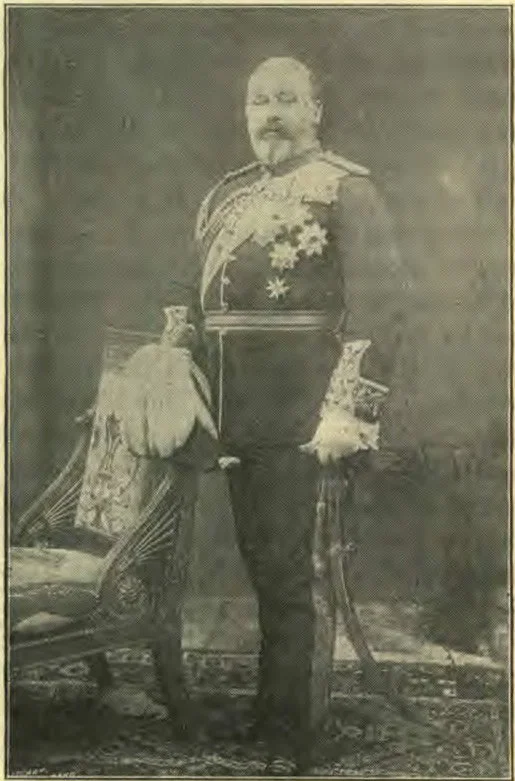
King Edward's visit with the Kaiser at Wilhelms-Hohe was an extremely cordial one, and England is looking forward with pleasure to the return visit which the Kaiser will pay to his uncle. The king's popularity seems to increase every year. He certainly shows admirable tact in winning and holding the affections of all classes. Queen Alexandra is also exceedingly popular, and, in fact, the whole royal family.
Religion and Politics.
The religious situation is fraught with interesting possibilities. Mr. R. J. Campbell has just published a new volume of sermons, in which he further elucidates the principles of the "new theology." The book is more dignified and hardly as aggressive as the one which came out some months ago; but it teaches the same insidious errors. The writer admits that there are divergencies in the ranks of the adherents of the new doctrines. He shows his strong socialistic tendencies in a number of passages. There is a rumor abroad that he will run for Parliament as a Socialist candidate.
Other prominent preachers are giving increased emphasis to social and political matters. Mr. Griffith-Jones, the principal of a well-known theological seminary, in his inaugural address given a few days ago, said that the crying need of college training is "a study of applied theology—that is, a mastery of religious truth in its social and economic aspects. Abstract exegesis must give way to practical programs. The preacher must know something of politics as well as ethics, of economics as well as exegesis; . . . he must be in constant touch with the pulse of the age."
Mr. F. B. Meyer, the president of the P. S. A. (Pleasant Sunday Afternoon) Federation, struck a similar note at the annual conference of that large body. His subject was "Betterment; and How to Secure It." He said that the goal of the race was betterment, and betterment was to be reached thru the conjoint action of God and man. They must cultivate the idea of brotherhood. Socialism was the human quest for brotherhood.
King Edward VII.
Mr. Sylvester Horne, a leading Congregational minister in London, has just published a book on "The Ministry of the Modern Church," in which he takes strong ground in favor of this broader conception of the work of the church. The earlier nonconformity, he tells us, was a kind of monasticism, that is, a retreat from the world in the interests of one's personal salvation. "But even Rome, with all its iniquities, had risen above that idea. . . . It never faltered in the belief that all life was the province of the church." Anglicanism by becoming sacerdotal had largely lost its hold upon the people. There was now "no possible exponent of the religious instincts and convictions of the age, and no possible influence in the commonwealth to give a religious direction to social, industrial, and political movements but the Free Church minister."
Church Federation.
The idea of church federation is rapidly growing. For years negotiations have been under way for the reunion of three branches of the Methodist Church; namely, the Methodist New Connection, the Bible Christians, and the United Methodist Free Church. The work was finally completed in the historic Wesley's Chapel, on City Road, London, the 17th instant. The resulting denomination will be known as the United Methodist Church, and will have 2,421 churches, 180,000 members, and 322,758 Sunday-school pupils. Different ideas of church government and organization were the cause of the split which separated these bodies originally, and it is on church polity that they are still separated from the Wesleyan Methodists and the Primitive Methodists; but a further union is not at all unlikely. In fact, there is talk of a union of all the nonconformist churches into one corporate body, and some would even include the Anglican and Catholic churches, should they be willing to join.
Union and Brotherhood
are watchwords with those who stand in the front rank of popularity. Denominational lines are vanishing; differences of creed weigh very lightly with the majority; what will win universal assent is evidently the only thing worth teaching. The minister must be a compound of the politician, the business manager, and the orator; he must open bazaars and attend committee meetings; he must keep up-to-date in politics at all hazards, and if he has some time left in which to study his Bible, well and good, but that is an after consideration.
The old idea of the preacher as a man with a message from God is dying away. The sense of sin is almost nowhere to be found. Few are calling out, "What must I do to be saved?" The religious indifference of the masses is appalling. And yet churches and ministers generally seem well satisfied. Some even talk of the wonderful spiritual progress the world is making.
Certainly the spirit of brotherhood is in itself good and to be welcomed; but a recognition of human brotherhood is not all there is to Christianity. Socialism can not save from sin, which is the real cause of the misery of this world. The preaching of the Gospel is to the mere Socialist foolishness, but it alone can reconcile a man with God, and fit him for heaven. The Christian, if he is true to his profession, will have a tender care for the poor, and will live a simple, self-denying life; but he will do more than this; he will recognize the fact of sin, and the need of an atonement, and will rest his hope for salvation on the word of God. He will take the Bible as his standard, and weave its saving principles into every detail of his daily life.
Funds are being called for to carry on a National Purity Crusade in the interests of the morals of London and other large cities. The new movement, which is being started under the auspices of a number of prominent men and women, is not intended to replace the work of any existing society, but rather "to supply a great moral impulse to the whole community which will greatly accelerate their work." It is represented that there are laws on the statute book which are a dead letter for want of a strong public opinion to back them up.
"Modernism" in the Church.
English Catholics view with mixed feelings the recent papal encyclical against "modernism" in the church. Of late years a liberal party has been growing up in the Romish church, and there are not wanting priests who advocate the so-called higher criticism. It has been thought by some that Rome has changed, and is ready now to welcome investigation, but such people have reckoned without their host. Roman Catholicism is at heart the same to-day as she was five hundred years ago when her power was unquestioned. She still imposes an arbitrary rule over every one of her professed disciples. Altho the modernism that she fights in this instance is for the most part contrary to true Christianity, this is not the real ground for the attitude she has taken, but rather the fact that free scholarship of any kind always leads away from Rome.
Christian Church, after Explosion.
We have been threatened with a serious railway strike. The Amalgamated Society of Railway Servants has asked for recognition, and threatened to strike if it is not granted. The railway companies at first haughtily declined to do anything; but the public press, for the most part, sympathizing with the men, the companies have recently shown some inclination to yield. Long hours are another source of complaint, but the one point the men will not compromise on is that of official recognition. The organization contains a very large number of the most efficient employees of the railways thruout the country, and if a strike were declared, the railway traffic of the country would be brought to a standstill. Strikes and lockouts seem to be an unpleasant concomitant of our present civilization.
Britain's third battle-ship of the Dreadnought class was launched the other day, and orders have gone forth to build two new ones. Had a reduction of armaments been agreed upon at The Hague, it was intended to lay the keel of only one of these tremendous fighting machines.
M. ELLSWORTH OLSEN.
London, Sept. 27, 1907.
Cottages Half a Mile from Scene of the Explosion.
Explosion of the DuPont Powder Mills at Fontanet, Ind.
By R. C. Spohr
An explosion in the glazing mill of the DuPont Powder Company's plant at Fontanet, Ind., Tuesday morning, Oct. 15, was immediately followed by two others, the wreckage catching fire, and, an hour and a half later, reaching the powder magazine in which it is estimated 40,000 kegs of powder were stored, which also exploded. As a result of the four explosions twenty-five persons are dead, nearly 1,000 more or less seriously injured, and many modest homes destroyed. The property loss in Fontanet is estimated at nearly $100,000 and the powder company has sustained a loss of an equal sum.
In view of the fact that the 1,200 citizens of Fontanet were all in perilous places during the explosion, the mercy of God in sparing the lives of all except twenty-five is worthy of especial note. The majority escaped with slight injuries. Nearly every home is now unsafe and the people are living in tents until other provision can be made for their welfare. The more seriously injured were taken to Terre Haute and are receiving excellent care in the hospitals at that place.
That the Lord permits such disasters in various places for the purpose of turning the minds of the people from this world to Himself, can hardly be doubted. When a town of this size has eleven saloons and three churches, and infrequent services in some of these, the necessity for turning men's minds to the Lord is the more apparent. "Whom the Lord loveth, He chasteneth." The word of the Lord contains many cheering promises for those in affliction. In view of the perilous times in which we live, many ought to heed the warnings which come from a loving Father thru calamities of all kinds, and turn to Him and follow in the footsteps of the meek and lowly Jesus. Truly the old world is one great powder magazine, and were it not for the restraining power exercised by the angels in
Rev. 7:1-3, the magazine would go, bringing ruin to millions.
R. C. SPOHR.
Prohibition Sweeping the South
Prohibition is sweeping in great waves thru the South. Only a short time ago Georgia was carried in on the tide and will be made a dry state on January 1. The loss to the liquor interests has been estimated at $10,000,000. More than half
of Texas is dry. Alabama has some very strenuous liquor laws. Prohibition is rigidly enforced in Kansas. Kentucky has passed a law that certainly looks strongly toward prohibition. There are only seven counties in Missouri where liquor can be procured, and only three in Tennessee. Good! We hope the splendid work will go on.
Methodist Church, Wrecked by Explosion.
"Humanizing War."
One of the things that the Congress has sought hard to attain was to limit the armaments of the nations. Over half of the income of the European nations is now being spent on their armies and navies. The burden upon the people is becoming intolerable. But a recent despatch says: "From the beginning France has fully realized that the jealous suspicion among the powers would prevent the accomplishment of anything in the direction of limitation of armaments."
Shooting and killing men in war can never be humane, no matter how tenderly men may plan for it in their peace discussions. But it would be a grand thing if the support of the great military burden could be lifted from the shoulders of the poor people of the Old World. That thing would certainly be humane. But they think that it can not be done.
Capitalists and Labor Unions.—In an address at Battle Creek, Mich., Oct. 8, 1907, President James W. Van Cleave, of the National Association of Manufacturers, made an authoritative denial of the accusation that the employers' associations of the country are collecting a fund for the suppression of the labor unions, denouncing it as an absurd accusation, and that nothing could be farther from the purposes or the thoughts of the federation. He also denounced emphatically the boycott and the blacklist, stating:
Size of DuPont Powder Mills, Fontanet, Ind., after Explosion, Oct. 15, 1907.
"When I condemn the boycott I condemn it in all its forms and ramifications, including the blacklist, which is only a boycott in another form. When used by labor unions to hurt employers or by employers' associations to hurt workers, the boycott and blacklist are un-American, immoral, and vicious, and have no place in a country like ours. I want to put myself on record by saying that in my lifelong experience as a member and officer of employers' associations, I have never been connected with a concern or an organization employing the blacklist, and I want to put myself on record further in saying that I would not be a member or officer of a corporation or of an organization that employs the blacklist at any time in the future."
And he declared that he spoke for every member of the organization condemning the blacklist, not only as much, but even more than the boycott.
Porto Rico.
By B. E. Connerly
PORTO RICO, once the “Pet of Spain,” with its million of inhabitants, consisting chiefly of three classes, the Spanish, negro, and the Porto Rican, a mixture of the two, came especially to the notice of the missionaries in 1898 at the close of the Spanish-American War. Since that time the different denominations have worked faithfully to scatter the darkness and superstition that brooded over this fair island, and to “lift up a standard among the people,” for they certainly seemed to have none.
As in all Spanish Catholic countries, the work has moved slowly and sometimes very discouragingly.
This “Gospel of the kingdom” began to be preached here in the year 1901 when Brother Fischer and his wife came to the island; but they had only been here nine months when Brother Fischer was cut down by the dread fever, and the work came to a standstill, save what his faithful widow could do alone with no knowledge of the Spanish language.
We landed here in January of 1903, and the following March sent out the first number of El Centinela de la [[FIGURE]] Verdad, the first Protestant paper published in the island. We know that nothing but the special blessing of the Lord, which we sought earnestly with tears, could have made the paper a success, for the people were opposed to anything religious; but for three years and a half now the little paper has gone out with its message of truth, until it has reached13every village in the island, and interested ones here and there are inquiring to know more of what this message may mean for them.
Our faithful canvasser, C. N. Moulton, has scattered tracts, papers, and books all over the island, and we have faith in God that in His own good time and way He will give the increase of the seed thus sown.
We now have companies of believers in San Juan, Mayaguez, and Arcebo.
B. E. CONNERLY.
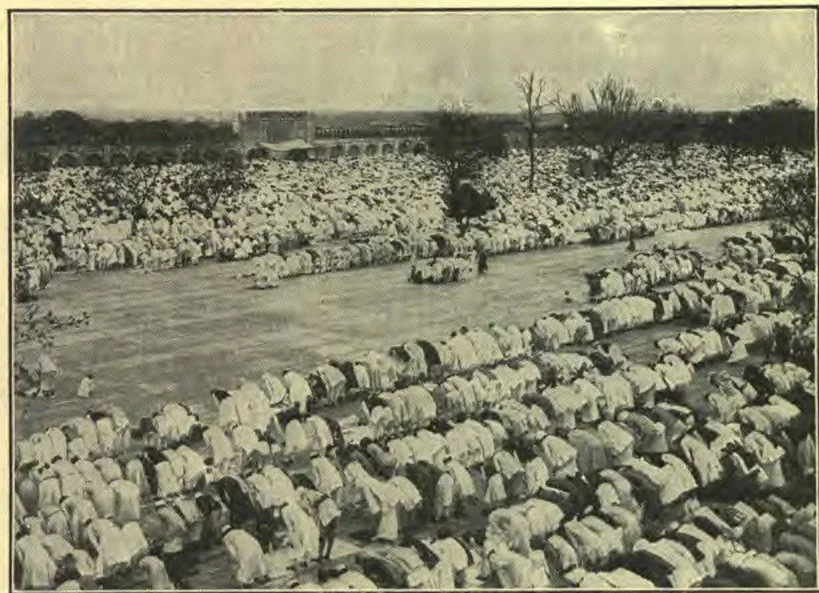
The End Festival at Delhi.
From a Letter from India
By J. L. Shaw
Dear Brother Wilcox:
Again I want to express my appreciation of the interest which the SIGNS OF THE TIMES has taken in the Mountain Mission, and on the part of myself and other workers I want to say that we are extremely grateful to God and to the brethren of the Pacific Press for their willing and continued efforts in raising funds for the Mountain Mission, and for the success which has attended the efforts put forth. We are planning to have the dedication this month, and from reports in, it is evident that sufficient money has been raised to entirely liquidate the indebtedness, so that our first property in India owned by our people may be dedicated free of debt. Thank God for this and all our brethren who have so cheerfully and willingly given of their means.
The last report in the SIGNS OF THE TIMES places the amount received by them at seven hundred and twenty dollars. We have received about a hundred dollars and more at our office in India, and besides this Brother Enoch raised quite a sum, amounting to about two or three hundred dollars. We therefore feel justified in saying that the funds have been raised, and there seems to be a fair prospect of a little surplus which will be very acceptable in making some repairs and alterations. We shall, therefore, sing the jubilee song at our dedication.
We feel very certain that the Lord led us to the Annfield Estate, and the raising of this money and the way we were led in finding a location, together with the present developments of the work, have been to me a clear evidence that God hears and answers prayer; and as the work goes forward by God's help, I am sure it will be demonstrated that the efforts put forth by the SIGNS OF THE TIMES in raising funds for the Mountain Mission were by no means a mistake.
During the past hot season, twenty-six workers, aside from children, have been able to avail themselves of a rest and change at the Mountain Mission Home. Some came for a month and some for a longer length of time. Miss King came up after a hard season of labor in Burma, stricken down with malaria fever. By the help of the Lord and the blessing of the Home, she is now entirely over it and is rapidly growing stronger. Miss Whaley had a serious case of sickness and came up to the Mountain Home and was healed. Brother Hansen came to Mussoorie very badly broken down in health and had been able to do little or no work for several months. He is now getting really strong and finds himself able to do a day's work. At the present time he is making alterations upon the house and adding another room. He finds himself able to work all day and rests well at night. We have also been able to give the benefit of the house to a few who are not of our faith. One man stricken with senile gangrene stopped with us for several months. While here he went over different lines of truth with us and accepted it. Regular services have been carried on three times a week during the whole season, and not without fruits. Tho there is much opposition in Mussoorie, yet two sisters have accepted the message recently, and one desires baptism. Next year we hope to make a more decided effort in this place if we can get help to do so.
Our Mountain Mission Home, India.
You remember, Brother Wilcox, that a part of the plan of the Mountain Mission was to start a school for native people. We have been giving this matter much consideration, and hope to open an industrial Bible school at the beginning of next season and are making plans that way at the present time. We find some of the soil on Annfield Estate very fertile, and Elder Owen, with a number of native men, is preparing the soil, putting in plants and fruit trees. When finished he will probably have a couple of thousand of strawberry vines, half as many raspberries, besides pear, cherry, and apricot trees. This gives work to quite a number of native men, for in the hills everything has to be done by hand labor. The ground can not be plowed except by the coolie in his native style by a hoelike instrument called the kodali. We expect to run a school and teach the boys who work upon the place the word of God and the truth for this time.
We are splendidly situated for an industrial school. There is abundance of lime-stone upon the ground and lime-kilns, and a profitable industry has been carried on in the past in making lime. This will also give employment to a number of native men. It is almost impossible to run a school for the poor people without having an industry connected with it for those who attend to earn their living. The ordinary laboring man in India gets only a few cents a day and with that it is not possible for him to lay aside anything for going to school. The great question is to get food enough to live upon, and the outlook at the present time is that in many places in northern India there will be a famine. In some places during the rainy season there has been little or no rain, and the result is that there will be a famine, for the people have nothing upon which to fall back when the rain fails and the soil refuses to produce.
A week ago last Sabbath I was down to Dehra Dun where the Burgess's are. It is fourteen miles from here. We had a good time together and had some good meetings. The Lord came near and blessed us. One native brother was baptized and another was seriously considering the same step. A Eurasian family have also taken their stand on the message. The Lord is blessing Brother and Sister Burgess in their work, and it is being demonstrated that our literature can be sold among the native people of India. One native brother who was baptized at Annfield about three months ago has since that sold 2,500 copies of a little booklet on lines of present truth. By getting people to buy our literature the work of advancing the truth in India can be greatly hastened and the message can be quickly borne among those who are able to read.
I will not write more at this time. I have added these few items thinking that you might be interested in what is being done in the mountains. If any of our people in America think that the Mountain Mission is to be only a place for rest, we hope that it will be demonstrated that such is not the entire purpose. Our effort is to make it a place of physical and spiritual help to our workers and a means of scattering light and truth among the many, many heathen people in this part of India. We do not know how the work may develop nor do we need to know. God is leading and we are content to follow on, trusting in Him, and believing that if we rightly relate ourselves to Him, He will lead and guide us. I have never been sorry for one minute that I returned to India, tho many thought that I was presumptuous. I am sure the Lord directed; and to have some part in the closing work of the great Threefold Message wherever the Lord may lead, is to my wife and me a great privilege. We, with other workers in the field, are fighting against a stubborn wall of caste and superstition filled with error and doubt, yet in God we trust. 'If God be for us, who can be against us?'
Truly your brother in Christ,
J. L. SHAW.
NOTE.—The SIGNS has forwarded since Professor Shaw wrote the above $1,233.74; it has on hand $114.96, which will be sent forward soon. India needs it all. May God bless donors and laborers abundantly. W.